Category Archives: Records, All

A fitting tribute to a Scholar King

Major-General H.H. Maharaja Sri Sir Jayachamarajendra Wadiyar Bahadur, Maharaja of Mysuru – 18 July 1919 to 23 Sept., 1974

1) The portrait of Jayachamarajendra Wadiyar that was used to sculpt the statue.  2) The life-size Italian marble statue of Sri Jayachamarajendra Wadiyar, sculpted by Arun Yogiraj & team of city, was installed at Hardinge Circle after a 10-hour-long process in the wee hours of June 20, 2016.
1) The portrait of Jayachamarajendra Wadiyar that was used to sculpt the statue.
2) The life-size Italian marble statue of Sri Jayachamarajendra Wadiyar, sculpted by Arun Yogiraj & team of city, was installed at Hardinge Circle after a 10-hour-long process in the wee hours of June 20, 2016.

by R.G. Singh Secretary, Ramsons Kala Pratishtana

Very soon, Hardinge Circle will be known as Jayachamarajendra Circle as the city finally honours the last ruler of the erstwhile Mysuru State with the installation of a full-body portrait statue of the last Maharaja of Mysuru.

Hardinge Circle was named in commemoration of the visit of Viceroy Lord Hardinge to Mysuru. There used to be a flowery hedged circle with a high post with five domed lights in the middle of the crossroads. The circular garden vanished without a trace yet the name remained, ‘Hardinge Circle’, called raucously by bus conductors, ‘Aardinsurkel.’

The location of the Jayachamarajendra Circle at the culmination of the Albert Victor Road is meaningful as we already have the statues of two other iconic rulers of Mysuru in a row. KR Circle, as it is known, is a commemorative statue to His Highness Nalwadi Krishnaraja Wadiyar whose achievements for the well-being and development of Mysuru has been well-documented, likewise the majestic commemorative statue of Chamarajendra Wadiyar in front of the Jayarama and Balarama gate of the Palace.

History seems to have ‘overlooked’ the reign, brief though it was, of Jayachamarajendra Wadiyar. Major-General H.H. Maharaja Sri Sir Jayachamarajendra Wadiyar Bahadur, Maharaja of Mysuru. He was born on 18 July 1919 at the Chamundi Vihar Palace to Yuvarani Kempu Cheluvajammanni Avaru and H.H. Yuvaraja Kanthirava Narasimharaja Wadiyar Bahadur.

Jayachamarajendra Wadiyar had his early schooling at the Lokaranjan Mahal Royal School followed by graduate studies at Maharaja’s College of Mysore University and awarded a BA in 1938.

The death of his father on 11 March 1940 led to the title, ‘Yuvaraja Bahadur’ being conferred on him. The death of his uncle, the Maharaja on 3 August 1940, led to Jayachamarajendra ascending the throne on 29 August 1940 and anointed and installed as the Maharaja of Mysuru on 8 September 1940.

Jayachamarajendra Wadiyar was installed as the ruler of Mysuru at a time when the winds of freedom were blowing across the country. The nascent freedom fighters had already made inroads in various parts of the State. Mysuru was not an exception. Maharaja Jayachamarajendra Wadiyar signed the ‘Instrument of Accession’ on 9 August 1947 and Mysuru became a part of the Dominion of India on 15 August 1947. With an agreement merging Mysuru with Indian Union on 26 January 1950, he ceased to be sovereign.

Later he was installed as ‘Rajapramukh’ of the State of Mysuru and held this post till 31 October 1956. He was made the Governor of Mysuru on 1 November 1956 and continued till 3 May 1964, further he was made the Governor of Madras and he served till 25 June 1966.

The then Maharaja had made certain conditions to the accession of Mysuru to the Republic of India and this assurance made by the then party in power was rudely given a jolt when an Amendment to the Constitution was passed in 28 December 1971 by which the position of countless rulers were deprived of their rights as ‘rulers’ and the privy purse guaranteed under the accession agreement was abolished. Overnight, kings became ‘commoners.’

This betrayal led to an anguished Maharaja forsake the grand Dasara celebrations; placing the royal sword on the throne he retreated to a private forest reserve near Bandipur.

H.H. Jayachamarajendra Wadiyar married twice. The first marriage which took place at the Kalyana Mantapa of the Palace on 15 May 1938 was to Satya Premakumari Devi-ammanni avaru, the daughter of Pratap Singh Deo Bahadur of Jigni. The couple had no children. The Maharaja’s second marriage was to Maharani Tripurasundari Devi Ammanni Avaru, daughter of Balananja Raje Urs, an officer in the Mysuru State Forces. Both Maharanis died at Mysuru in 1983 within a span of fifteen days.

Jayachamarajendra Wadiyar died on 23 September 1974 at the Bangalore Palace leaving behind one son and four daughters (the eldest daughter had predeceased him).

Jayachamarajendra Wadiyar was an accomplished musician in both Karnatak and Western Classical music. He was an excellent pianist and there was a time when he expressed the desire to be a concert pianist and play with the great orchestras of Europe. In 1948, he was elected President of the London Philharmonic Orchestra Society. He was also an Honorary Fellow of Trinity College of Music, London (1946) and a Licentiate of the famed Guildhall School of Music.

Blessed with an ear for music, Jayachamarajendra Wadiyar discovered Russian composer Nikolai Karlovich Medtner. A contemporary of Rachmaninoff and Scriabin, he wrote several compositions, all of which include the piano. Jayachamarajendra Wadiyar discovered Medtner when the latter was living in London and in failing health. The Maharaja founded the Medtner Society with the objective of recording all Medtner’s works and managed to record several concertos with the London Philharmonic Orchestra whose first president was the Maharaja. In gratitude to his patron, Medtner dedicated his Third Piano Concerto to the Maharaja of Mysuru.

The Maharaja was also equally at home in the realm of Karnatak music, both as an instrumentalist and a composer. There are 74 Karnatak compositions by him.

He was also the Vice-Chancellor of Mysore, Madras, Annamalai Universities as well as the Benares Hindu University. Like his forefathers he was a Patron & Chief Scout of Mysuru State between 1940-1956, Chairman of the Wildlife Board of India. He was conferred a Hon LL.D by the Banaras Hindu University (1942), a D.Lit. by the Annamalai University in 1955 and a Hon. D.Lit. from the University of Queensland, Australia.

That he was deeply spiritual can be gauged by his scholarly books: “An Aspect of Indian Aesthetics” (1956), “Dattatreya-the Way and the Goal” (1957), “The Quest for Peace: An Indian Approach” (1959), “The Gita and Indian Culture” (1963) and “Religion and Man” (1965).

It is said that he had visited the ashram of the sage, Ramana Maharishi, in Tiruvannamalai, Tamil Nadu. No Palace diarist has recorded this meeting but what is available is a book published by the ashram, ‘Day by day with Bhagavan’ by one Devaraja Mudaliar. In an entry dated 1945, there is Devaraja Mudaliar and others talking to Ramana Maharishi. Asks Mudaliar: ‘It is said that the Mysuru Maharaja had come to see you.’ Nodding in agreement, the Sage replies: ‘He just sat quietly. He did not ask any questions. After sometime he bowed and took his leave saying that he would like to live here but the call of his people was too strong.’

Maharaja was also a good equestrian and fond of dogs. Regular visitors to the Palace in the late 50s would normally be shocked when they were in the Amba Vilas waiting to see the Maharaja, they would instead be forced into immobility as a pair of giant hounds wandered in and sat flanking the hapless visitor. The Maharaja would arrive, apologise on behalf of the dogs. “They will not hurt a fly” the Maharaja is said to have remarked leading one of the visitors to comment later on, “but I am not a fly.’ The Maharaja was quite accessible to his subjects and visitors.

Those fortunate enough to have met him would unanimously say, ‘A gentleman and a scholar.’

source: http://www.starofmysore.com / Star of Mysore / Home> Feature Articles / by  R.G. Singh, Secretary,  Ramsons Kala Pratishtana  / July 02nd, 2016

Hit the rewind button with Bangalore Storyscapes

SLICE OF THE PAST:This photo of Bengaluru’s old Town Hall features in the Cantonment walking tour organised by Bangalore Storyscapes, an oral history project by the Centre for Public History.— photo: courtesy of G.G. Welling Photography Studios

Oral history project exhibits some of its collections at a conference

When the milkman knocked on the door, one woman was assigned to ensure that he didn’t cheat while milking the cow. In another recording, a woman described the coffee ice-cream at India Coffee House, which was on the menu for the princely sum of six annas. The stories of milkmen, local wrestling legends, entrepreneurs, murderers, and singers finally have a home, thanks to the Bangalore Storyscapes project.

The oral history project, founded four years ago by the Centre for Public History at Srishti Institute of Art, Design and Technology, exhibited some of its work at the International Oral History Association Conference in the city on Wednesday.

“There aren’t very good archives or books on contemporary history,” said Avehi Menon, curator of the Centre for Public History (CPH) and treasurer of the Oral History Association of India. Some of the earliest memories the centre has on record date back to the 1930s, with tales of orchestra pits and silent films.

The project also details how the city felt the tremors of major historical events in their day-to-day lives, said Ms. Menon. For instance, the flour rations distributed during the Second World War resulted in the iconic Koshy’s, which began as a bakery.

How it began

The centre began by collecting stories from residents of the Cantonment area, and the rich oral history they gathered inspired Ms. Menon and her colleagues to create walking tours in the area, featuring audio from their interviews. The walks are designed to bring the stories back to the people of Bengaluru, said Priyanka Seshadri, a tour guide.

“We wanted to allow people to take ownership of public spaces,” said Ms. Menon. “This is history they contribute to.”

The CPH team aims to add to their oral history archive in order to make the collection more representative of the city. Their current sampling features more men than women because of the project’s focus on public spaces. This is something they would like to rectify. “We began by talking to business owners on M.G. Road, and most of them are men,” Ms. Menon said.

As the project gained popularity, the organisers received funding from the India Foundation for the Arts, with the goal of integrating the tradition of oral history with photography, art and cinema.

Even as the centre subsequently shifted focus to cinema in the Cantonment area, women were excluded from the conversation. For instance, one interviewee recalled that his sister was barred from watching Hollywood movies as his grandfather was worried they were too violent.

Domestic matters

To correct this gender bias, the team is now shifting focus to documenting the domestic life in Bengaluru. “Some women tell stories of the milkman coming to their house and cheating them if they didn’t stand and watch him milk the cow,” Ms. Menon said, adding that people like milkmen and plumbers would be invisible to historians without the contributions of women.

One concern is that the project interviews participants only in English, a practice that self-selects those from middle-class or upper middle-class backgrounds.

Keeping these limitations of Bangalore Storyscapes in mind, the organisers are excited to be approached by citizens who contest the version of events showcased in the project. “We ask to interview them also,” Ms. Menon said, explaining that she has created a platform for a multitude of viewpoints. “The way India is moving with the changing of our history books, it helps to remember that there is no single, definitive narrative of what happened,” she said.

We wanted to allow people to take ownership of public spaces. This is history they contribute to.

Avehi Menon,treasurer, Oral History Association of India

source: http://www.thehindu.com / The Hindu / Home> News> Cities> Bengaluru / by Kasturi Pananjady / Bengaluru – June 30th, 2016

Historian draws wisdom from ordinary women

Urvashi Butalia
Urvashi Butalia

Bengaluru :

When oral historian Urvashi Butalia joined the publishing house Zubaan, she was told that it was the first time a woman was being hired in an executive position.

Usually, they only hired women as secretaries or filing clerks.  But today, most important positions in publishing, in terms of content, is held by women, she says.

The author of The Other Side of Silence spoke to City Express about her feminist oral history project.

On her website, Posterwomen, Butalia invites women to share their personal histories.

Activists who fought for causes like women’s empowerment, abolition of dowry and curbing of lesbian suicides shared their struggles with the historian, whose project aims at archiving their wisdom.

What drew her to oral history? Batalia says, “I like listening and talking to people. It find great value in the stories I find, small or big.

But when she started out, it was a challenge to do something different in the field, she admits.

While her family was supportive of her, she knew that as a women, she would not be able to make it to the top. “There were instances of sexual harassment besides the general indifference and disbelief towards high-achieving women,” Batalia shares.

The real struggle, however, was that the women she wanted to connect with often felt they had nothing important to say and their self-confidence was extremely low.

“I have realised that there is a lot to learn from the lives of even ordinary women, such as their way of working, courage and resilience,” she says.

source: http://www.newindianexpress.com / The New Indian Express / Home> Cities> Bengaluru / by Aishwariya Mudaliar / June 30th, 2016

70 graves discovered at Iron-Age site

70gravesBF28jun2016

HIGHLIGHTS

  • Archaeologists have not just discovered 70 burials from the Iron Age in Koppa, Karnataka.
  • Koppa is an early Iron Age megalithic burial site, located on the right bank of the Cauvery in Periyyapatna taluk, Mysuru district.
  • The discovery at Koppa in Mysuru district shows people also grew crops alongside

________________________________________

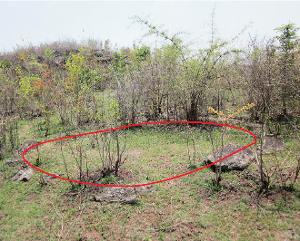
Archaeologists have not just discovered 70 burials from the Iron Age in Koppa, Karnataka, they have, for the first time, shown that people also lived near burials and cultivated ragi and paddy crops. Koppa is an early Iron Age megalithic burial site, located on the right bank of the Cauvery in Periyyapatna taluk, Mysuru district.

“Koppa was discovered in 1868 by captain Cole, who was then the superintendent of Coorg (under Madras presidency). In the same year, he opened up 17 megaliths or burials. Later, KK Subbayya excavated a few more burials in Koppa. We, however, had no information about their habitation. My aim was therefore, to ascertain where people lived and I started my investigations from 2013,” Arjun Rao, archaeologist from the department of archaeology, Deccan College Post Graduate and Research Institute, Pune, told Bangalore Mirror.

Though more than 3,000 burial sites have been identified across the Deccan Plateau and burials range from five to 1,000 at these sites, little is known about their habitation and settlement patterns. The current study is an attempt to bridge this gap. The author initiated explorations across five densely spread megalithic sites across the Cauvery river bank, covering Kushalnagar, Kudige, Ramaswamy Kanive, Heggedehalli and Koppa. Intensive and systematic archaeological explorations were conducted during 2013-2015 in a nine square km area, centring the Koppa burial site.

While archaeologists believed that the megaliths had been destroyed, Arjun during his explorations, discovered that around 70 of them existed in the periphery of the villages in Koppa on granitic escarpments. Bunding of field boulders across the agricultural fields helped in locating the site.

“The ongoing surface survey project has gained enough evidences to consider Koppa as a habitation-cum-burial site, with major offsite activities,” said the findings published in the Current Science journal.

Iron Age in Koppa, according to the research paper, was a dispersed settlement and had a strong belief in megalithism or honouring the dead, which was at the “centre of their habitation and overall functioning of the society”. “The significance of this research is that for the first time, we have an understanding of the landscape and their settlement pattern over the upper reaches of the Cauvery river bank. We can now conclude that people had located themselves within the given natural resources under tropical wet climatic condition of Western Ghats and the control of such resource locations might have played a decisive role in the societal and political functioning,” said Rao.

Till recently, experts believed that either the habitational evidences were covered by forest regeneration, or that the society was largely made up of nomadic or semi-nomadic pastoral communities, resulting in flimsy settlement deposits. However, since a decade, experts are getting a better understanding of their habitation and subsistence activities.

The landscape of the site, water availability and a look at the grain evidences from habitational sites or directly from the burials reveal that ragi and paddy cultivation could have been near the habitation and streams. Abundant supply of newly introduced crops like paddy and ragi (continued from southern Neolithic phase) in the burials substantiates large-scale production and practice of both wet and dry cultivation, says the findings. “Koppa burial excavations have given us the abundant supply of such food grains, so that means that they were locally produced crops,” he said.

source: http://www.timesofindia.indiatimes.com / The Times of India / News Home> City> Bangalore / Mihika Basu, TNN / June 27th, 2016

Bengaluru woman bags titles in chennai pageant

LaxmipriyaBF27jun2016

Bengaluru :

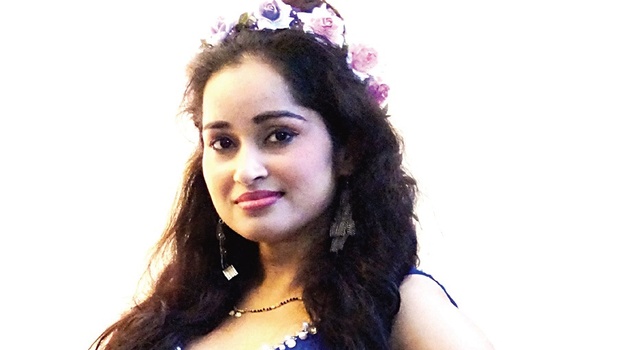
Bengaluru mom Laxmipriya Srivastav bagged the first runner-up and the Mrs Beautiful Smile at Mrs India International contest held in Chennai recently.

The contest saw 40 finalists from across the country. It comprised six rounds and workshops for self-assessment, time management, innovative ways of draping sarees, hair care and styling, followed by yoga and meditation to overcome anxiety and stress before the finale.

Laxmipriya, native of a village near Allahabad, has always admired Sushmitha Sen, former Miss Universe, a single mother, and an independent woman.

Laxmipriya lives in the city with her husband Tanmai and their three-year-old son Vivaan.

She works in Pharmed Limited as Senior Product Manager. Her professional career has been progressive in the past eight years. She has also the title of ‘Junior scientist’ from The National Academy of Sciences India to her credit.

As a teenager, she won a painting competition organised by the Indian Oil Corporation, and represented Allahabad in a play during Natya Mahotsav, a cultural event organised by North Central Zone Cultural Centre (NCZCC).

Writing, painting and acting are among her passions.

She cherishes two years of working with Doordarshan as a 12-13-year-old. Currently, she is editor of her company’s in-house magazine Supermom.

She is also associated with NGOs like Aasra and Global Headstart Mission to address medical needs and contribute to the education of the underprivileged.

source: http://www.newindianexpress.com / The New Indian Express / Home> Cities> Bengaluru / by Express Features / June 22nd, 2016

Mysuru to witness royal marriage of Yaduveer Wodeyar with Trishika

Maharaja of Mysore duing pre-marriage rituals

Mysuru:

Maharaja of Mysore Yaduveer Krishnadatta Chamaraja Wadiyar will today tie the nuptial knot with Trishika Kumari Singh ,  who belongs to a royal family of Rajasthan.

The iconic Mysore Palace Amba Vilas Palace has been decked up for the royal wedding of Wodeyar family scion Yaduveer.

Trishika is the daughter of Harshvardhan Singh and Maheshri Kumari from the Dungarpur royal family in Rajasthan. The marriage ceremony will take place at the kalyana mandapa at the karkataka lagna and savitra mahurat time between 9.05 a.m. and 9.35 a.m.

The elaborate pre-marriage rituals had commenced on June 24.

The groom took a ‘yenne snana’ or oil bath early on Saturday morning, followed by a ‘pada puja’ of Parakala Mutt’s Abhinava Vagheesha Brahmatantra Swatantra Swamy , who is the family’s rajguru.

As per established custom, the rituals began in the Mysore Palace in the presence of Pramoda Devi, the Queen mother and other family elders.

24-year-old Yaduveer was crowned as the ostensible head of the erstwhile Mysuru royal family in a traditional ceremony held on May 28 last year.

source: http://www.timesofindia.indiatimes.com / The Times of India / New Home> City> Bangalore / ANI / June 27th, 2016

Resident Rendezvoyeur : Joining the BandWagon

Researching historical details can get confusing at times. This story for instance, begins in a Scottish city called Glasgow on a street named after the Saracen people from the Middle Ages. It then gets directed to a Victorian bandstand in a historic park laid out by a military engineer in South India’s tech-hub, Bengaluru. And if you think it’s quite knotted up already, that’s not the end of it. But maybe that’s also the fun of it.

Parks historian and author Paul Rabbitts says that the bandstand (or `band house’ as it was first called) was perhaps inspired by popular 18th century pleasure gardens like Vauxhall in London who also offered music pavilions and exotic entertainment including hot air balloons, tightrope walkers and fireworks. The bandstands were envisioned as a decorative focal point for the park and provided acoustic shelter for the brass, wind and military bands that played there. Their rich decorative elements and curved shapes also seemed to reflect oriental influences like the pagodas and chattri’s from the eastern corners of the empire. The first domed structure was reportedly built in 1861 at the Royal Horticultural Society, South Kensington. The concept soon captured the imagination of 19th century Britain where he says, approximately 1,200 bandstands were built between 1860 and WWII. Though these public parks were primarily designed for relaxation, they were also interpreted as an attempt to `humanise’ the grim townscapes that emerged during the Industrial Revolution.

LalbaghGrandstandBF27jun2016

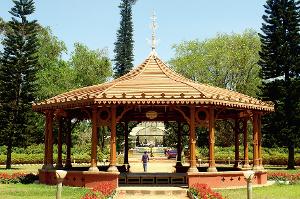
The Cubbon Park bandstand with its traditional octagonal shape sits on the same axis as the Vidhana Soudha, Attara Kacheri and Government Museum. It is said to have been gifted to the park in 1914 by Nalwadi Krishnaraja Wodeyar IV, the Maharaja of Mysore and initially placed near the Seshadri Iyer Memorial Hall. It was shifted to its current location in 1937, over what was once called the Ringwood Circle.

Iron was strong, durable but light. Molten iron could also be poured into pre-fabricated moulds. This enabled accurate replication and extensive repetition. `Cast’ iron therefore became popular for ornamental and commercial purposes. The framework for Cubbon Park’s cast iron bandstand took shape in the Glasgow based Saracen Foundry, owned by architectural iron casters Walter Macfarlane and Company Ltd. The company was set up in a disused brass foundry on Saracen Street in 1851 and soon became a famous designer-manufacturer of ornamental fountains, park and garden seats, conservatories, flower vases, baths, pipes and fittings right up till WWII.

Bandstands fell out of favour following WWII but iconic Macfarlane and Co. Ltd cast iron designs were still spotted around the world. They included the main (northern side) entrance gates to Lalbagh and the conservatory style Glass House.

The Lalbagh bandstand is believed to have been conceptualised during the tenure of Superintendent Mr. William New (1854-1864). He organised the first few `Lalbagh Shows’ around it in the late 1860’s before the Glass House came up in 1890. Mr. John Cameron who succeeded New in 1874 recorded its repair and renovation; a granite platform was also added and the wooden roof was improved.

Old timers recall orchestras and military bands playing regularly at bandstands in the city, including Cole’s Park, while city chronicler Mrs Maya Jayapal mentions that live music was scheduled for the fourth Thursday of every month in the 1920’s. The bandstands now accommodate deep breathing pranayama practitioners in the morning, sleeping somari’s in the afternoon and performances by local school children and classical musicians on weekends. It’s always fascinating to see how our local history runs alongside, intersects with or unites stories of people and places around the world.

The writer is a cultural documentarian and blogs at aturquoisecloud.wordpress.com

source: http://www.bangaloremirror.com / Bangalore Mirror / Home> Columns> Others / by Aliyeh Rizvi, Bangalore Mirror Bureau / June 26th, 2016

University of Texas acquires Raja Rao’s archive

Raja Rao. / Photo: The Hindu Archive

Renowned Indian-American author and philosopher Raja Rao’s archive that includes a broad range of materials from unpublished works to manuscripts of his well-known novels has been acquired by the University of Texas for advancing the study of arts and humanities.

Rao’s estate donated the archive to the Harry Ransom Center, a humanities research library and museum at the University of Texas in Austin.

According to the centre, “It’s a notable acquisition in part because Rao is widely considered to have been one of India’s most noted authors, having received the Neustadt International Prize for Literature and other honours.”

The Harry Ransom Center specialise in the collection of literary and cultural artefacts from the U.S. and Europe for the purpose of advancing the study of the arts and humanities.

Rao (1908-2006), considered one of India’s earliest and most outstanding English-language novelists, was the author of numerous works of fiction, short stories, poetry, talks, essays and The Great Indian Way: A Life of Mahatma Gandhi (1998), about Gandhi’s time in South Africa.

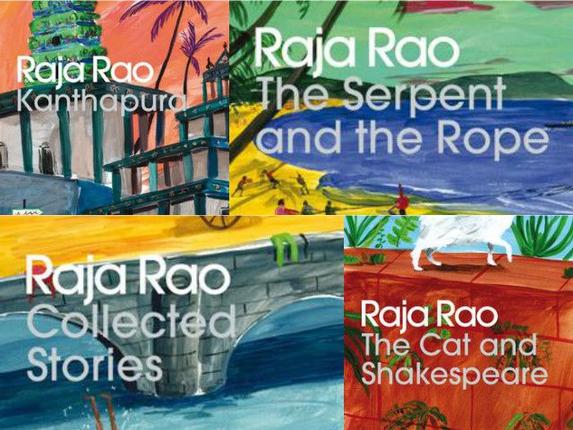
Rao’s archive includes manuscripts of his well-known novels Kanthapura (1938), The Serpent and the Rope (1960) and The Chessmaster and his Moves (1988).

Screenshot of the Harry Ransom Center site shows a photo of renowned writer Raja Rao's 1969 passport.
Screenshot of the Harry Ransom Center site shows a photo of renowned writer Raja Rao’s 1969 passport.

“Departing boldly from the European tradition of the novel, Raja Rao has indigenised it in the process of assimilating material from the Indian literary tradition,” said R. Parthasarathy, professor emeritus of English at Skidmore College.

Educated at the Aligarh Muslim University and the University of Madras and other foreign universities, Rao was already an internationally known author when he was recruited by former University of Texas president John Silber to teach Indian philosophy and Buddhism in Austin.

His archive contains materials in several of the languages that Rao spoke, including English, French, Sankskrit and his native Kannada.

Rao won the Sahitya Akademi Award in 1964 for the philosophical novel The Serpent and the Rope. In 1969, he was the recipient of the Padma Bhushan and in 2007 he was posthumously awarded the Padma Vibhushan.

RajaRao03BF23jun2016

Alongside the archives by Rao at the Ransom Center are manuscript collections of prominent international writers including J.M. Coetzee, Anita Desai, Doris Lessing, Gabriel Garcia Marquez and Amos Tutuola.

source: http://www.thehindu.com / The Hindu / Home> Books> Authors / PTI / Houston – June 16t, 2016

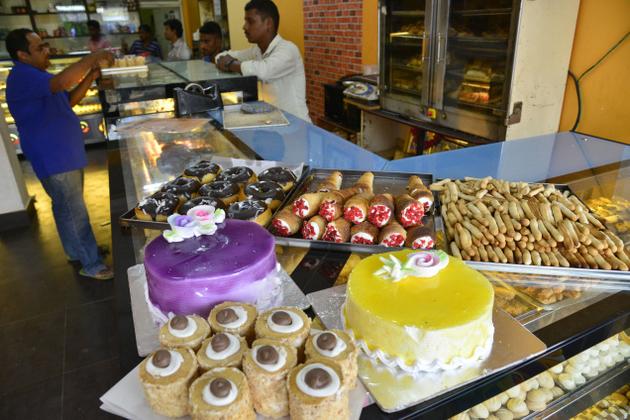
A bite from history

ExcelsiorBakeryBF22jun2016

Over the past seven decades, Excelsior bakery has established itself as the place to be for a slice of cakes, puffs and more

In 1926, the bustling Seppings Road was a rather quiet neighbourhood, very different from the bustling marketplace of today. It was in this neighbourhood that baker Sahadevan in a partnership with a British lady, Emery set up Excelsior Bakery.

The bakery has over the years gone on to establish itself as the must go place in the cantonment to head for cakes, milk breads, puffs and much more. The ownership has passed four generations and the bakery is currently being managed by IT professional turned businessman Saipreeth Muralidharan.

He says, “We have a very loyal clientele. In the preparation of the food items in the bakery, we use a lot of secret recipes that have been passed on from one generation to the other. Many of the residents who have moved away from the locality to places like Hebbal and Jayanagar come here regularly to savour our milk breads, Japanese cakes, puffs and spiced breads. I often meet people bringing their children to the bakery and narrating tales about cakes for their birthday parties as children arriving from Excelsior. We have even had instances of people coming from as far as Chennai to sample food from the bakery.” Saipreeth’s father Muralidaran, one of the owners weighs in, “One of our most popular items are the Christmas plum cakes. We add many special spices and essence. We start preparing the plum cakes for Christmas a month and a half in advance. We used to have people knocking the doors of the bakery at six in the morning for a loaf of bread.”

The family takes personal care to ensure the quality of the product. “I check every batch of puffs, breads and sweets that are created at the bakery. We have put systems in place to ensure that only fresh items are served to customers.”

Saipreeth says that over the passage of time, many functions in the bakery have become mechanised. “In the earlier days, we would have to physically knead the dough for the bread. My grandfather used to have army cadets volunteering for the job, in exchange for a loaf of bread. Many of these processes have become mechanised. However, we have still kept some traditional practices alike and most of our baking is done on a firewood oven.”

Once Saipreeth took over operations a few months ago, the bakery underwent changes. “We introduced a new menu with non-vegetarian components such as chicken puffs, rolls and pizzas. We also added sweets to the menu. We try not to use gels and preservatives in our items.”

Talking about the cantonment being a hub for a clutch of family owned bakeries, Saipreeth quips, “I think it was mainly because there was a large British presence in this part of town. They taught us to bake and eat bread.”

source: http://www.thehindu.com / The Hindu / Home> Features> MetroPlus/ Nikhil Varma / Bangalore – June 22nd, 2016

R.S. Shakuntala Memorial State ranking TT Tournament : City’s Spoorthi wins Triple Crown

Spoorthi posing with trophies.

Bengaluru :

City’s upcoming paddler M.V. Spoorthi taking part in the R.S. Shakuntala Memorial State Ranking Table Tennis Tournament at KGS Club, Bengaluru hogged the limelight by bagging a triple crown on Sunday.

Spoorthi won the women’s singles, youth girls singles and junior girls singles titles. In the women’s singles final, Spoorthi beat Swetha Kumaravel 11-7, 11-9, 7-11, 11-5, 11-6.

In the Youth girls singles final, Spoorthi beat V. Kushi 11-6, 7-11, 11-7, 11-8, 11-7.

Earlier, Spoorthi had won the junior girls singles title and thus completed a fine treble.

In the men’s singles event, Anirban Tarafdar beat city’s Akshay Mahanta 10-12, 14-12, 12-10, 11-7, 11-3 in the quarter-finals while Rakshith beat city’s Vedanth M. Urs 13-11, 11-5, 11-8, 11-5 in another quarter-final.

In the Youth boys singles quarter-final, Nikhil beat Vedanth M. Urs 9-11, 5-11, 11-8, 5-11, 11-8, 11-7, 13-11 to progress further.

source: http://www.starofmysore.com / Star of Mysore / Home> Sports News / June 21st, 2016