Category Archives: Records, All

Byappanahalli once belonged to Visvesvaraya’s ancestors

Sir M Visvesvaraya on his 99th birthday on September 15, 1959 with then chief minister of Mysore B D Jatti

It’s only fitting that an engineering marvel such as Namma Metro should first run through Byappanahalli, a hamlet that was once gifted to the ancestor of Sir Mokshagundam Visvesvaraya, engineer par excellence.

Wonderful nuggets of history came to light when the seventh generation of Sir M Visvesvaraya’s family — the Byappanahalli clan that lives in Jayanagar — was putting together their family tree on the occasion of their matriarch’s hundredth birthday. Savithramma, now 102, is the wife of late Byappanahalli Mokshagundam Lakshmipathaiah. She has eight children, some 15 grandchildren and over 20 great-grandchildren and is the oldest in the clan.

“I’ve heard there is a 112-year-old person in Karnataka. People of our generation are stronger and healthier,’’ said the toothless grand old lady, who eats ragi mudde for meals and can chew chakkli-kodbele (local snacks) with her gums! Barring a recent hip bone fracture which has bound her to the wheelchair, the centenarian is otherwise healthy and her memory razor sharp.

“Tracing the family tree was tough, but we did it,’’ said M Chandrashekar, Savithramma’s son.

Their search for roots through black-and-white pictures and inputs from the oldest surviving members culminated in a comprehensive family tree that originated from Mokshagundam village.

The roots

The Mokshagundam family gets its name from a village in Andhra Pradesh from where Sir M Visvesvaraya’s family hails. Several generations before MV, Lakshmipathi Bhatta was the Dewan of Doddabyrappa, the chieftain (Palegaara) of Avathi near Chikballapur.

The chieftain was so impressed with his Dewan’s work that he gifted him three villages — Byappanahalli, Muddenahalli and Bandepalli, all falling along the Bangalore-Kolar stretch. Bhatta’s property was inherited by three grandsons — Byappanahalli by Chikkavenkappa, Muddenahalli by Thimmappa Shastry, the great grandfather of Sir MV, and Bandepalli by Muddukittappa.

Byappanahalli’s growth

Once a hamlet tucked away between Bangalore and Hoskote, Byappanahalli, later associated with public sector undertaking NGEF, was considered the city’s farthest end. Over the years, it came to be looked upon as Indiranagar’s poorer cousin. But today, Byappanahalli is almost the heart of the city, with Namma Metro connecting this once-anonymous village bursting at its seams with the central business district. After the Metro was commissioned, realty prices shot north, touching Rs 7,000 per sqft.

Savithramma’s sons recall how their father — an amaldar (now called tahsildar) in the erstwhile British and Karnataka governments — would always talk about the family’s lands in Byappanahalli that went unclaimed.
“Since the entire village belonged to our clan, the family had huge tracts of lands. In fact, my father used to often say that we should have searched for the properties and got possession. Of course, nobody really put their heads together and since then, the lands must have changed many hands,’’ said M Prabhakar, retired HoD from the Government Women’s Polytechnic College.

The lands may have gone, but the memories remain. “As far as we remember, my father and Visvesvaraya’s son were in touch with each other and we have a  picture of them together,’’ said Chandrashekar.

Visvesvaraya, who constructed the Krishna Raja Sagara dam in Mysore and was knighted commander of the British Indian Empire by King George V, is held in high esteem in the international engineering circuit. In fact, his birth anniversary which falls on September 15 is celebrated as Engineers’ Day in India.

Savithramma’s husband used to talk about the family’s lands that went unclaimed

source: http://www.bangaloremirror.com / Bangalore Mirror / Home> Bangalore> Others / by S. Kushala / Mar 04th, 2012

M. S. Ramaiah Memorial State-Level TT

City’s Vedanth wins Jr. boys title

VedanthBF08nov2014

Bengaluru :

Mysuru lad Vedanth M. Urs taking part in the M. S. Ramaiah Memorial State Ranking Table Tennis Tournament at Bengaluru won the junior boys singles title on Sunday.

In the final, Vedanth Urs of Vidhyaashram College beat Karan Gollarkeri of Belgaum 11-7, 11-9, 12-14, 11-3, 5-11, 2-11, 11-4 in the final. Earlier in the semi-finals, Vedanth got the better of Rohan Jamadagni of Horizon TT 11-9,11-4,11-9,11-8. In the quarter-finals, Vedanth got the better of Neeraj Raj 11-4, 4-11,11-4,11-13,11-9,12-10.

The results, Junior boys singles – Final: Vedanth M Urs (Vidhyaashram) bt Karan Gollarkeri (Belgaum) 11-7,11-9, 12-14,11-3,5-11, 2-11,11-4.

Semi-finals: Vedant M. Urs (Vidhyaashram) bt Rohan Jamadagni (Hor) 11-9,11-4,11-9, 11-8; Karan Gollarkeri (BNM) bt Shreyas Kulkarni (MSSTTA) 5-11,11-13,11-4,8-11,11-5, 11-1,11-9.

Junior girls singles, Finals: Gayathri Tankasali (MM) bt Koumudi Patankar (CTTC) 8-11,11-9,11-9,11-7,8-11,11-4.

Semi-finals: Koumudi Patankar (CTTC) bt Sejal Kaushik (Joshi) 10-12,11-4,11-7,11-6,11-4; Gayathri Tankasali (MM) bt Anarghya Manjunath(Omtti): 9-11,11-5,11-2,11-5,10-12,11-9.

source: http://www.starofmysore.com / Star of Mysore / Home> Sports News / Monday, November 03rd, 2014

India Masters Golf

City’s Yashas Chandra wins Amateur Trophy

YashasBF08nov2014

Bengaluru :

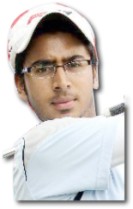
Mysuru lad Yashas Chandra of Jayachamaraja Wadiyar Golf Club (JWGC) taking part in the Asian Development Tour’s TAKE Solutions 70,000$ India Masters at the Eagleton Golf course on Saturday won the trophy for the best amateur golfer in the tournament.

Incidentally, Bengaluru’s S. Chikkarangappa won the title for professionals with a total of 18-under 270 (64,70,69,67).

Yashas Chandra won the trophy for the Best Amateur as he was the lone amateur to make the cut and finished overall 45 with a total of six-over 294.

source: http://www.starofmysore.com / Star of Mysore / Home> Sports News / Monday, November 03rd, 2014

Shariff’s City’s First Home Appliance Store

checks out… but checks into a new location

ShariffsMPOs08nov2014

by S. Kenneth Shishir

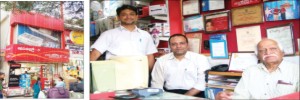
City’s first home appliance store Shariff Electricals, established in 1938, is now on the move. The present store housed in the old building opposite the Bata Showroom on Sayyaji Rao road, which also housed other old popular stores of Mysore like Krishnaswamy Stationeries and Panchacharya Press, is now being vacated as the building is weak and the old iconic stores are finding new locations. And so Shariff’s, the most popular among the shops and the most sought after place for home appliance in city for more than 75 years too is moving out. Luckily for the old customers they are not moving very far from the old. The new store is still on Sayyaji Rao road opposite Devaraja Market main entrance.

M.A. Shariff, Managing Director of Shariff Electricals and his father late Hyder Shariff, were electrical contractors who not only dealt in electrical items but also specialised in wooden electrical casing. Hyder Shariff did most of the electrical casing work in the Mysore Palace and then his son M.A. Shariff ventured into electrical appliance business and took up distribution of GEEP torches, dry cells and bulbs under the name Shariff Sales and General Agencies on Old Bank Road in city. Soon companies such as Philips, Crompton Greaves, Usha and Khaitan came calling noticing that Shariff had become Mysore’s one-stop-shop for basic home electrical items. As business grew, in 1981 they opened their official electrical appliances store, Shariff’s-1. Then the second Shariff’s-2 was opened in 1995. In 2006 Shariff’s-3, a multi-brand and multi-storeyed showroom of home appliances began. M.A. Shariff’s children Maqsood and Faizy now manage these stores.

When M.A. Shariff was asked how he felt about moving out of the old store, he says “it feels bad, but it was bound to happen. The building was old” and adds “but I have to thank our customers in Mysore who made us what we are today.” When asked how he has managed to have such loyal clientele, he says “in sales you must make customer the king…and service is the king- maker. That’s what makes customers keep coming back.”

Speaking of the new challenge posed by online retail, Maqsood, the elder son of M.A. Shariff says, “we have to accept the challenge and we must learn from it. The best way is Omni-line: have both an online store and a brick and mortar shop. This way it removes the hassle of returns and service. It also helps the touch and feel factor which is missing in online stores.” Maqsood says Shariff’s will launch their shopping website soon.

Faizy, the youngest son of M.A. Shariff, speaking about the new multi-floored Shariff’s says that with the large space available now, they can display more products and also stock more. He adds, ” ‘NO, we don’t have that’ is something our customers will never hear from us.” Looks like the mantra of “service is king-maker” rings deep in this family.

source: http://www.starofmysore.com / Star of Mysore / Home> Feature Articles / Monday, November 03rd, 2014

Bhasange Balaga fetes eminent personalities

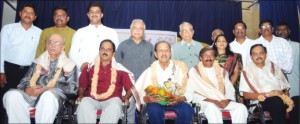
Sitting from left: Pandit Indudhar Nirody, Vidwan Ganesh Bhat, K.R. Mohan, S.K. Laxminarayan and R. Vasudev Bhat are seen with art patron K.V. Murthy, industrialist R. Guru, Balaga President Ganesh N. Sharma, Souvenir Editor C.K. Sanjay Kumar and others.

Mysuru :

As part of its sixth anniversary, the city’s cultural organisation Bhasange Balaga (Bhaanuvara Sanje Geleyara Balaga) feted five eminent personalities of the city at a function organised at Nadabrahma Sangeetha Sabha on JLB road here yesterday.

Those feted were Pandit Indudhar Nirody, doyen of Agra Gharana and State Sangeetha Vidwan Awardee-2014; Vidwan Ganesh Bhat, noted keyboard player; S.K. Laxminarayan (Babu), Secretary, Bidaram Sri Rama Mandira and Treasurer of NIE; R. Vasudev Bhat, Secretary, Vijaya Vittala Institutions, Director of V-Lead and Proprietor of Ramya Creations and K.R. Mohan, a freelance writer.

Art patron K.V. Murthy, who spoke after releasing a souvenir, complimented the Balaga for organising cultural programmes and called upon art lovers to promote Balaga activities by offering sponsorship to programmes.

To commemorate its 50th programme, the Balaga had organised a musical treat of ghazal and bhakti sangeeth by Ustad Faiyaz Khan from Bengaluru. Ustad Faiyaz Khan was accompanied by Pt. Veerabhadraiah Hiremath on Harmonium, Samir Rao on Flute and Bhimashankar Bidanur on Tabla.

Earlier, Industrialist and art patron R. Guru inaugurated the programme. Balaga President Ganesh N. Sharma presided. Office-bearer and Souvenir Editor C.K. Sanjay Kumar and others were present.

source: http://www.starofmysore.com / Star of Mysore / Home> General  News / Monday, November 03rd, 2014

Govt unveils website for kin of deceased abroad

Mangalore :

Ministry of Overseas Indian Affairs (MOIA) has launched a new website to help the kin to apply online for transportation of mortal remains of the deceased emigrant in any of the ECR (Emigration Check Required) countries. The ECR countries are Malaysia, Jordan, UAE, Yemen, Lebanon, Qatar, Oman, Kuwait, Iraq, Bahrain, Saudi Arabia, Afghanistan, Indonesia, Libya, Sudan, Syria, and Thailand.

If Indians in any of these above mentioned nations die, in such case their relatives and legal heirs can now apply at the MOIA website www.moia.gov.in with effect from August 12, 2014, an official press communique from the office of Mangalore City Police commissioner here on Tuesday states. The communique advised people to log on to this website in case of need and obtain necessary assistance from the ministry in their time of distress.

source: http://www.timesofindia.indiatimes.com / The Times of India / Home> City> Mangalur / by Jaideep Shenoy, TNN / November 04th, 2014

The Mysore That Was … Part 24 : Mysore Music Sabhas of Yore

MysoreMusicBF06nov2014

by M.L. Krishnaswami

Naaham Vasami Vaikunte

Na Yogi Hridaye Ravou

Yatra Madbhaktaha Gayanthi

Tatra Thistami Narada

Thus spake Lord Krishna to Narada, the divine messenger who could walk/fly through all the three worlds, with his Tambura in hand. Narada was also acting as a common ambassador for all the three worlds of yore, the Earth, Devaloka, where the gods were supposed to live and the Pathala Loka, below the oceans, where mostly the demons lived. He had an open Visa (strange) to visit any part of the above three worlds and was welcome in all of them. This is aside our topic for the present. The meaning or translation of the above Sanskrit Sloka is:

“I (Krishna) do not live in the heaven

Nor do I dwell in the heart of

the yogi or sage

But I dwell or live there

and there alone

Where my devotees sing

and dance in my praise”

This preface becomes relevant for this article because of the preponderance of music in the social, philosophical and cultural aspects of our land. Music, in all its form — classical (both Karnatak and Hindustani), devotional (Dasa Sahitya and Vachana Gayana) and numerous other disciplines has become a part and parcel of our rich culture and in this cradle, many organisations and Sabhas have come up in Mysore in the last century and some of them have made tremendous progress in the royal city of Mysore.

Down the memory lane, five to six-and-a-half-decades ago, Mysore was a small town with barely less than a lakh of people and the royalty was ruling the Town and the State. Fortunately those who ruled Mysore State were very benevolent people and history has put them on a pedestal enumerating all the good deeds they have done during their rule. The Palace, that marvel of great architectural splendour, was the cynosure of all cultural and related activities and the Maharajas — more significantly — Nalwadi Krishnaraja Wadiyar and Jayachamaraja Wadiyar gave tremendous support to their citizens to perpetuate the art forms of their choice. This patronage helped people to start music and dance halls etc., in the city.

In the above context was established nearly a century ago, Sri Bidaram Krishnappa Sri Rama Mandira in Shivarampet area of Mysore. A compact hall with a squatting capacity of 500-600 rasikas or music connoisseurs with an additional seating capacity of 20-30 on the side verandahs, is what makes this beautiful auditorium with Lord Rama’s benevolent eyes falling on the performing artistes, exactly opposite, and the rasikas scattered in between on floor carpets.

The hall is divided into five enclosures or portions and the side walls decorated at top with wonderful photo-images of the Dasavatharas, five on each side in order. The photos are beautifully framed with Mahagony wood and lit at the top. Lower down, the walls display photos of eminent music composers and musicians of yore. Behind the stage where the artistes sit and perform is a photograph of the founder Sri Bidaram Krishnappa. It is a magnificent hall and such marvel and beauty are absent in any hall in the whole of South India.

Come Ramanavami, it is a major feast for the Hindus and all over the land music Sabhas celebrate this as a festival of music — some times for a week and sometimes for a fortnight. Bidaram Mandira has continued to celebrate this festival for a fortnight in a grand manner inviting leading musicians of the land to perform. Long back they also used to have a dance programme included in the itinerary.

It was in March-April 1944 that I was exposed first to a music concert in the above hall. A young lad of eleven summers, I was gifted a season ticket for the Ramanavami festival by my eldest brother who was a Life Member of that Sabha. Stalwarts performed during the festival and included Ariyakudi, Semmamgudi, Chembai, G.N.B. and Madurai Mani to name a few vocalists who were accompanied by leading violinists and percussionists of the day like T. Chowdaiah, Papa Venkataramaiah, Kumbakonam Raja Manikyam Pillai (all violin) and Madurai Mani Iyer, Palani Subramanya Pillai (a left handed percussionists of repute), Mugaiah (on mridangam). Solo violin concert by the legendary Dwaram Venkata Swamy Naidu was a highlighted programme. The concerts would start at 6 pm and go upto 10 pm and Madurai Mani would even go upto 11 pm and the connoisseurs would sit through till that late hour, when he would regale them with his drum like music. The lone lady Musician I heard then was D.K. Pattammal and later in the late 40s she was joined by M.L. Vasanthakumari, also giving a separate programme.

Artistes used to be brought from Madras to Bangalore on train and then to Mysore by Car. This would normally entail some delay in transit and there would be commotion among the audience some of whom would demand for a refund of their ticket value, by which time the main artiste would come and start singing. The opening programme would invariably be from Ariyakudi — who was called the Gayaka Samrat — accompanied by T. Chowdaiah and Mani Iyer. Ariyakudi and Chowdaiah used to wear diamond ear rings and would have a gold necklace hanging down the neck. In that beautiful illuminated hall, it was a pleasure to see the sparkling diamonds on the artistes.

The concerts were without the menace of loudspeakers and the whole hall would reverberate with the original voice of the artistes. The voices of female artistes like Pattammal and Vasantha Kumari would take a little time to reach the last row of people in the hall after a few seconds and the rasikas would know that the concert has started because of the sound of violin and the mridangam.

Apart from the above Bidaram, music concerts were arranged during Hanumanthotsava by Sri Devendrappa, down the same road in Srirampet and this was also a veritable dais for many local artistes of repute. Besides this in old Agrahara also there used to be concerts on Chavadi Street arranged by Sri Venkatesh Iyengar, father of legendary Veena Doreswamy Iyengar.

Thyagaraja Jayanthi used to be organised in all the Sabhas of Mysore and this programme is being continued even today. Another feature of the programmes of yore was the presence of many of the local musicians on all the days of the festival, which unfortunately is not seen today. In this connection I had the good fortune of seeing Sri K. Vasudevacharya and Rallapall Ananthakrishna Sharma in one of the programmes arranged in Sahakara Bhavana on Chamaraja Double Road by Saraswathi Sangeetha Samaja — an off shoot of Bidaram Krishnappa Ramamandira.

In addition to the above, an organisation by name “Sangeetha Kalabhivardhini Sabha” came into being under the leadership of Sri K. Vasudevacharya and Sri H. Yoganarasimham. This Sabha used to have concerts in the premises of the Sanskrit Patashala, opposite Palace Offices and went on for quite a few years before folding up.

Golden days they were really !

source: http://www.starofmysore.com / Star of Mysore / Home> Feature Articles / Sunday, November 02nd, 2014

The last Yezdi man

Yezdi01BF06nov2014

In the late 1960s, a high-ranking technician from the Jawa motorcycle company in the then-Czechoslovakia came to India. His brief was to train and guide staffers at the Mysore-based Ideal Jawa. The Czech company had a technological collaboration with the Indian firm, which manufactured its motorcycles, including the Yezdi Roadking. In Mysore, the technician, despite the barriers of language, struck up a friendship with BS Shinde, the factory foreman. One cool evening, as young motorcycle-loving men are wont to do, they debated about how fast the Roadking could actually go. The Czech technician was certain that the Roadking would struggle to breach 90kph. He knew the motorcycle inside out, he said, and had been building Jawas for the last decade or so. Shinde didn’t quite agree. He told his blond friend that he, too, had been around and among Jawas since he was a teenager, and that he had ridden it at around 120 a few times.

“He, I think his name was Vesely, couldn’t believe it,” says Shinde. “He immediately got out his stopwatch and laid a bet. If I could do 120 on the bike, he would, he said, give me a bottle of scotch. I accepted the challenge.” The two men, along with a couple of other fellow employees, rode into town. Shinde had to ride from Chamundi Hill to a certain point on the Lalith Mahal Road in a certain number of minutes, and he was to be timed by his sceptical friend. “Mysore was a lovely place to ride in those days; no traffic, very few people. I rode as fast as I could that day, and got that bottle of whisky,” says Shinde, with a mischievous twinkle in his eyes, which are clouded by cataracts.

Yezdi02BF06nov2014

Shinde, a spry 84-year-old, is not fibbing. He doesn’t need to. He has accomplished greater, and, possibly, more fulfilling tasks than riding a Yezdi at great speed. He was among Ideal Jawa’s first employees, and, when the company finally shut down in the mid-1990s, he was, perhaps, the last to accept the inevitable.

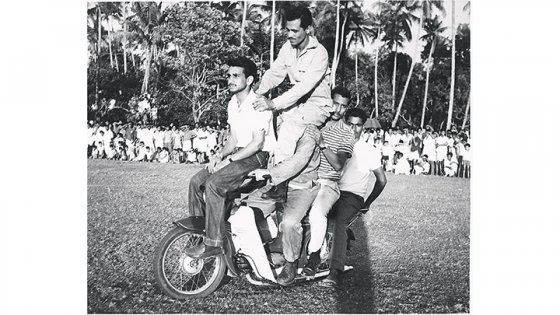
To many readers of this magazine, Jawas and Yezdis might be nothing more than a rumour, a motorcycle their fathers rode, the ones that sounded too loud for the modern age. But, back in the day, and we are talking of the 1960s and ‘70s here, Jawas and Yezdis were trending in India. They were cool, quick and easy to maintain. The actor Jeetendra corralled villains on a Jawa in Humjoli (1970); Amitabh Bachchan rode a Jawa 250 in Parvarish (1977); and Farooq Shaikh romanced Deepti Naval on one in Chashme Buddoor (1981). And, the Jawas and Yezdis young men rode back in those days were probably put together, at least initially, by Shinde.

Ideal Jawa was founded by Mumbai-based motorcycle dealers and enthusiasts Rustom and Farrokh Irani in 1960. It started out by selling Jawa and CZ motorcycles, and later moved to manufacturing the motorcycles under the brand name Yezdi. (The Indian-made motorcycles were named after Yazd, in Iran, where the Iranis hail from.)  Shinde’s association with the Iranis started when he moved to Mumbai from Phaltan, near Satara, as a teenager and started working as a mechanic at their dealership, which sold Jawas, Sunbeams and BMWs. “I didn’t like the British motorcycles much, they were four-stroke, but the Jawas could really go. Two-stroke makes such a difference,” says Shinde, twisting an imaginary accelerator.

Yezdi03BF06nov2014 When the Iranis decided to scale their business and move to Karnataka – they were invited to set up shop by Jayachamarajendra Wadiyar Bahadur, the then maharaja of Mysore – Shinde was assigned the task of setting up the facility. “When I came to Mysore in the early 1960s, there was nothing. Just some barren land and me. Even the watchmen came later,” he says, pointing in the direction of the location of the erstwhile factory, which is about 3km from his home, in the Baimantap Extension, in Mysore, and which today hosts a residential complex.

For the next half a decade or so, Shinde put it all together, crank case by crank case. He was there when the first CKD consignments arrived from Czechoslovakia; he was there when the Iranis started making motorcycles under the Yezdi brand name, and he watched Ideal Jawa grow from a rudimentary assembly setup into a company that sold as many as 5,000 motorcycles a month. He was part of the Ideal Jawa factory team that raced at Sholavaram and won some hard fought victories, and he travelled the world, learning more about two-strokers. In many ways, the former mechanic was, to a bunch of Yezdi enthusiasts in 1970s Mysore, Mr Yezdi himself, and even today, his name crops up in Yezdi forums; he is “a stalwart” every Yezdi-head wants to meet.
Yezdi04BF06nov2014 “My motorcycle was the 61st bike made by the company. I rode it in the rains and in the sun, I raced, I put together motorcycles. I was so obsessed with Yezdis that if one of them passed me by on the road and didn’t sound right, I would have this urge to adjust the air screw,” he says, cupping his ear with his gnarly fingers.

Shinde’s obsessive, blind loyalty to his employer, probably, made him miss the writing on the wall. When Ideal Jawa shut down in 1996, putting around 2,000 people out of their jobs, he was on an official visit to Tanzania, and learnt about the closure, he says, only after he returned to Mysore.

Raian Irani lives in a charming bungalow in the heart of Mysore. A Great Dane and a Dalmatian lope leisurely on its lawns; the living room has period furniture, and there are portraits of horses and framed butterfly displays on its walls. Die-hard Jawa and Yezdi enthusiasts of a certain vintage, especially in sleepy Mysore, regard Irani with a certain ambivalence. They still maintain that Ideal Jawa could have been better run and more prepared for the Japanese invasion of the 1980s, and accuse the Iranis of being lackadaisical in their approach. Raian Irani is a big-built man, with a fondness for single malt and big bikes. He also owns three Yezdis, though he doesn’t ride these days. Irani, who helmed Yezdi for a brief while in the late 1980s, tells me that there was complacency both on part of the owners and the employees. “When the Japanese entered India, the scenario changed completely. It was not just about two-strokes giving way to four-strokes, they introduced this new dimension of fuel efficiency, which had gained ground after the oil crisis in the late 1970s. ‘Kitna deti hai?’ started from there.

Yezdi05BF06nov2014

Could Yezdi have been saved? Would a tie-up with a Honda or a Suzuki have worked? Irani doesn’t think so. The odds, he says, were heavily stacked against the little Indian company. The Japanese ran streamlined, technology-driven operations in comparison to Ideal Jawa, which struggled with rising labour costs and the then government’s socialist policies. “A tie-up would never have worked. They needed scale, we simply didn’t have it.” The employees of Ideal Jawa, says Irani, especially those who stayed on till the end and turned down the VRS, imprudently hoped that things would get back to normal one day. The shutdown of Ideal Jawa was unfortunate, but it, says Irani, had to be done.

The Yezdi has made a comeback of sorts, especially in the last half a decade. Nearly every city in the country has a Jawa/Yezdi club, and July 13th, International Jawa Day, resonates rortily in India as well. And everyone seems to be in search of a ‘good Jawa or Yezdi’, from hipsters to software professionals. A Yezdi even featured in the recent movie Ishaqzaade, which starred Arjun Kapoor. After the closure of Ideal Jawa, Shinde, who was left with no savings of any kind, headed back home to Phaltan, and along with his brother, he started a lodge, which helped him and his family keep their heads above water. Shinde doesn’t have much to do with motorcycles these days. He mostly spends his time in Phaltan, and occasionally visits his grandson, in Mysore. But there are times, though, he tells me, when he hears that all too familiar exhaust note, and when that happens, he looks up, and looks back.

(Words: Murali K Menon, Photos: Shashank MB)

source: http://www.topgear.com / BBC Top Gear India / Home> Car-News / by Murali K. Menon, Photo: Shashank MB / November 2014


Karnataka Kanmani State Award presented

KanmaniBF05nov2014

Mysore :

As part of its eighth anniversary, the city-based CREDIT-I felicitated achievers from various fields yesterday.

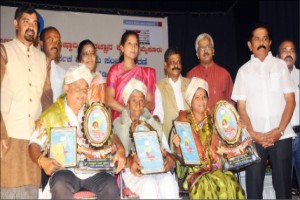
Rangayana Director Janardhan (Janni) presented ‘Karnataka Kanmani’ State-level award to Music Director Hamsalekha, progressive farmer from Bangalore Rural District L. Narayana Reddy and Community Development Institute, Belgaum’s Shobha Gasti at a function held at Jaganmohan Palace.

Speaking after receiving the award, Music Director Hamsalekha said he comes from a rural background and as such he is very much aware of rural problems. Pointing out that he could understand the rural life much better because of his drama background, Hamsalekha complimented the CREDIT-I for its rural development initiatives.

Observing that urban areas too have a rural background, he called upon voluntary organisations to sensitize the rural people of the various facilities extended to them by government and other agencies and to encourage them to make best use of the schemes meant for them.

Coming up with his plans for providing education and job opportunities to poor children, Hamsalekha said 100 PU failed students sensing in CREDIT-I, can join his Hamsalekha Desi College, by paying only the fees of first year, while the fees for the remaining 4 years would be borne by him. This apart, he would provide them ample job opportunities, he added.

Earlier, ZP President Dr. Pushpa Amarnath, who spoke after inaugurating the programme said unemployment and underemployment have been haunting the youth, who constitute 60 percent of the country’s population. Youth from rural areas have been migrating to urban areas in search of jobs which are less rewarding. The youth should stop this tendency and instead look at taking up progressive farming for happiness and betterment of their lives, she said.

Swami Vivekananda Youth Movement founder Dr.R. Balasubramanyam and MLA M.K. Somasekhar presided.

CREDIT-I Managing Trustee Dr. M.P. Varsha, Treasurer M.R. Manjunath, Vasantha and others were present on the occasion

source: http://www.starofmysore.com / Star of Mysore / Home> General News  / Friday,  October 31st, 2014

City’s Danseuse Pankaja elated over Rajyotsava Award

DanseusePankajaBF05nov2014

Mysore :

Danseuse Pankaja Ramakrishna is popular figure among the fine arts community in city. A resident of Vijayanagar, Pankaja started Sarveshwara Nritya Kalamandira in the year 1984 and since then she has been training students in different dance forms in both classical and folk.

Recognising her services over the past 21 years, the Karnataka State Government has accorded her with this year’s prestigious Rajyotsava Award.

Speaking to Star of Mysore, Pankaja expressed her happiness over her being recognised by State Government. “I am thankful for the State Government for recognising my services which I have done from the past 21 years. The award has increased my responsibility and I will continue to serve the society by popularising dance forms in both classical and folk”, she added.

Pankaja is currently training around 85 students in different art forms such as classical and folk dance and classical vocal. Students trained under Pankaja have settled in USA, Canada and other countries and have been conducting classes.

source: http://www.starofmysore.com / Star of Mysore / Home> General News  / Friday,  October 31st, 2014