Category Archives: Records, All

Star this week : Chess Champ : M.S. Thejkumar

ThejkumarBF09nov2013

Chess is a traditional sport and has a very good following in the Indian scene. Our city’s and state’s highest ranked chess player IM M.S. Thejkumar, has been consistently doing well in the International and National-level. He recently took part in the 51st Challengers Chess Tournament (National ‘B’) held at Bhopal and won the coveted title with 10.5 points from 13 rounds. He is the first Karnataka player to win the National ‘B’ Championships. He is our ‘Star This Week.’

Triple Grand Master norm holder Thejkumar presently has a ELO rating of 2452 and he needs 48 more points to get his Grand Master title. Ranked 35th in the country and 1573 in the World this South Western railway employee, has been a consistent performer.

In the 26th Inter Railway Chess Championships held at Hubli, representing South Western Railways was instrumental in his team finishing runner-up in the team event. He also fared well in the individual event and secured the fifth place.

He is sponsored by M/s.Saanvi Technologies, USA and www.mysoresport.com. Being 20th seed in the National ‘B’ tournament, Thejkumar drew his last round with GM Deepan Chakravarthy and that was enough to give him his maiden National ‘B’ title. He gained 30.5 points from this tournament and also qualified for the National ‘A’ Championships scheduled to be held at Jalgaon, Maharashtra, in December 2013.

His superior tie-break score earned this hard working International Master from Mysore to win the title after Ashwin Jayaram matched his winning tally. Significantly, the top four seeds, Deep Sengupta, B. Adhiban, M.R. Lalith Babu and S.P. Sethuraman failed to make the top 9 bracket. It was the strongest field ever in a National ‘B’ Chess Championship with 8 GM’s and 38 IM’s taking part.

Thejkumar intends to do well in the days to come and support forthcoming from of the Government of Karnataka and his sponsors he aims to work hard and reach his goal of becoming a Grand Master in the days to come.

source: http://www.starofmysore.com / Star of Mysore / Home> Sports / November 03rd, 2013

Mysore style paintings adorn Bangalore International Airport

In conversation with artist Anand who makes the city proudMysoreBF09nov2013R.G. Singh (RGS): First, congratulations. The fact that Mysore Style paintings will adorn the Bangalore International Airport is itself a signal honour for the School of Mysore style and for the city… but how did all this come about?

M.S. Anand (MSA): The two paintings which measure 13 feet by 8 feet may be two of the largest of Mysore style of paintings. But how it came about is quite ordinary. The team that had been tasked for executing art installations at several airports in the country wanted to encourage local artists first and I was part of some 20 odd artists from Karnataka and other States to show our portfolio of works. Quite unprepared, I had taken only one sample and that was of a traditional Mysore style painting. This seems to have made an impression and I was given the commission to execute the work.

At this point I was asked to come to Delhi where the Design firm, which had landed the contract, was located and I spent a month there and showed more than 50 sketches and rough cuts before two were chosen.

RGS: It is generally understood that the classical Mysore or Tanjore style centre around religious motifs. That’s the classical form. But you seem to have taken artistic licence a step further… Is there a symbolism here?

MSA: No! There is no intention of showing religious sentiments in this artwork as the art installation at the airport is secular in nature. The central form of the male figure in my artwork is not meant to be religious in character. It should not be seen as a deity but as a celestial being. Similar is the form of winged beings; the viewer is not expected to read religious insights into it. I have used this iconography only as an aid to creativity. For instance the influence of Ajanta and Ellora murals can be seen in my paintings… Besides even techniques used are different… Both paintings are oil and acrylic paint based since they should last for at least a few decades with proper maintenance.

RGS: The classical Mysore or Tanjore style uses figures of deities like Rama, Krishna and others. What made you choose the ones who look like, for me, Vishnu and the Garuda, to serve as the creative launch pad as it were?

MSA: The original association of the deities is with wind and flying just as aeroplanes and we wanted the paintings at the airport to be associated with that theme. Again, I must emphasise that religious leanings were avoided since an airport per se is a secular place…

RGS: Creating and executing paintings of this size… was it a one-man-effort? Did you paint both of them by yourself ?

MSA: No. I had a team of 10 assistants to help me. Not all of them were experienced in executing Mysore style of paintings and they had to be taught. Look, the figures in both the Mysore and the Tanjore style are done in different styles. My assistants had to unlearn their academic style technique and learn the technique of Mysore style.

RGS: And are your assistants local artists?

MSA: Yes, I had hand-picked them from last year’s Dasara Chitra Santhe. I looked for signs of originality and technique in them. I was lucky and the ten of them worked very well.

RGS: How long did it take for you and your team to execute these paintings?

MSA: Six months and at regular intervals the team of Delhi supervised what we were doing, made suggestions and more importantly listened to our suggestions. In the end it gave us a lot of satisfaction…

RGS: Anand, you do not hail from a traditional artist’s (Chitragar) family and hence many conservatives may consider you not to be cut in the classical mould of an artist. But then times have changed, or better still, they are instrumental in changing the time! How did this fascination for traditional Mysore Style of Paintings come about in you?

MSA: Well, yes! I do not come from a traditional artist’s family. My first encounter with traditional classical paintings, as a young boy, was with Tanjore paintings at Salem in Tamil Nadu. I was drawn towards it like iron to magnet and made up my mind to learn to paint that way. My father was in the Railway Postal service or RMS as it was called and we moved from place to place; he was often transferred to various stations of Tamil Nadu before we came to Mysore. Here, I discovered Mysore School of Painting and was equally fascinated. I joined Chamarajendra Academy of Visual Arts (CAVA) at Mysore and at that time Prof. V.M. Sholapurkar was the head of the institution. He and my teachers encouraged me a lot.

RGS: Was it after your studies at CAVA that you established your own studio?

MSA: After my studies at CAVA, I made several Mysore style paintings which I sold for Rs. 1,000 each to buyers in Chennai. At this point I joined Chettinad Vidhyashram in Chennai where I learnt the traditional skills involved in painting Tanjore and Mysore style. I made it a point to attend various artist-camps where I learnt further and displayed my works. The going was often difficult. The earnings were meagre and periodic. Of course, I must not forget to mention late artist C. Kuppachar of the Archaeology Department here in Mysore who constantly encouraged me!

RGS: Anand, what is it being an artist in Mysore?

MSA (smiles wryly): Very difficult… I have to admit… local artists live in their own world and there is no fraternal bonding, discussions or… or… it is a strange life. An artist in Mysore does not relate to other artists… Each to himself… Maybe I am being too cynical (his voice trails off…)

RGS: What do you mean by that?

MSA: Look at Cholamandalam established by Panicker in Chennai. That is an artists’ collective, a meeting place for artists… Mysore in spite of having a rich tradition of art that was patronised by the Mysore Maharajas, today does not have a meeting place for artists to gather, debate and discus each other’s work…

RGS: Let us have another cup of this exquisite tea, an Indianised version of Zen and the tea ceremony. May be there will soon be a silver lining on the horizon… Anand, one last question and it is the tea that is responsible… What next?

MSA: Well, I will be creating another pair of paintings for the Mumbai International Airport and hope to start work soon. This will be double the size of the paintings that I have done for the Bangalore International Airport. Yes, they too will be in the Mysore style… Then let’s see…

source: http://www.starofmysore.com / Star of Mysore / Feature Articles / November 03rd, 2013

Mystery bidder buys Tipu’s Sword for Rs 9.7 crore

TipusSword03nov2013

London:

Sotheby’s inaugural auction of Art of Imperial India here has attracted bidding from around the globe to hit a whopping sales figure of Rs 182,598,304.

The star lot of the sale, an extremely rare 18th century enamelled and bejewelled gold tray and casket (paan-daan), sold for Rs 65,819,539 (662,500 pounds more than double its pre-sale estimate of 200,000-300,000 pounds).

Over 90 exquisite lots reflecting the broad artistic traditions of Imperial India came up for this first-ever sale by the world-famous auction house, encompassing almost 500 years of every kind of decorative art produced in the region.

“The auction captured the attention of collectors from around the world, with the pieces attracting bids from institutions and private collectors alike,” said Benedict Carter, director and head of auction sales for Middle East at Sotheby’s.

“Interest in Indian works of art has been growing in recent years and the prices achieved at Wednesday’s auction bear testament to the increasing demand for desirable works relating to India,” he added.

A group of 11 works relating to Mysore ruler Tipu Sultan were among the prized collection, selling for a combined amount of Rs 38,689,470. Tipu’s sword, fitted with an English blade, was bought for Rs 97,85,999 by a mystery bidder on the phone.

An 11-bore silver-mounted flintlock duck gun from the armoury of the king fetched 88,900 pounds and a sword taken as booty at the Siege of Srirangapatna, of Eastern-European manufacture, sold for the same amount as well.

Among some of the other highlights included a gem-set gold pocket watch with a painted cover depicting Maharaja Mahendra Singh of Patiala, which sold for 62,500 pounds and a Mughal jade-hilted dagger (khanjar) and scabbard, which fetched double the estimate amount of 20,000 pounds.

source: http://www.deccanchronicle.com / Deccan Chronicle / Home> News> Current Affairs / by PTI / October 11th, 2013

Dewan Poornaiah’s Yelandur bungalow to be converted into a museum

Bungalow was gifted to Poornaiah by Wadiyars

DewanPoorniahBF30oct2013

Mysore :

Come 2014 and the more than 200 year-old bungalow of Dewan Poornaiah, Dewan of erstwhile Mysore State in Yelandur, Chamarajanagar district, will be turned into a museum to give a glimpse of his persona and achievements.

Heritage Commissioner Dr. C.G. Betsurmath has said that as per the deadline of December set by the Department of Archaeology, Museums and Heritage, which is overseeing the renovation works, the works are almost complete and added that they were now focussing on developing a museum at the bungalow.

The fact that the revenue administration adopted by Poornaiah two centuries ago is still the guiding force for administration in the State speaks volumes about his acumen as he not only streamlined revenue but also conducted land surveys in a methodical manner and we want the museum to depict this and speak about his acumen, Betsurmat said.

After inspecting the site, the Heritage Commissioner said that only about 5% civil works were pending and added that they were collecting the belongings of Poornaiah to put the same on display at the two-storied structure. He also said that officials of the department had contacted Poornaiah’s family members in this regard.

Dewan Poornaiah was a leading administrator who served under three kings namely Hyder Ali, Tipu Sultan and Mummadi Krishnaraja Wadiyar as Dewan before retiring, which was followed by his death in 1812.

He was also well known for his skills in accounts and proficiency in several languages, Besturmath said and added that the department was spending Rs. One crore to renovate and open a museum at the bungalow where Dewan Poornaiah lived.

source: http://www.starofmysore.com / Star of Mysore / Home> General News / October 24th, 2013

Manipal team’s winged robot wins laurels

Mangalore : 

Manipal Institute of Technology (MIT) graduates have bagged NASSCOM Budding Engineering Innovation (NBEI) Award 2012 for designing a Flapping Wing Robot (FWR), an electro-mechanical bird that flies by flapping its wings.

FWR designed by aeronautical engineering graduates Nishant Jain and Isha Atreja is capable of flapping its wings like bats and birds. It also performs various flight exercises.

Nishant and Isha, who passed out from MIT in July, 2012, had spent nearly Rs 60,000 from their own purse to develop FWR. They told told TOI that the NBEI award ceremony held in Pune in September was a significant milestone in their life. “The FWR belongs to the class of UAVs (Unmanned Aerial Vehicles).

A unique feature of FWR is that, its wings produce both lift and thrust so as to keep it airborne and propel forward. This eliminates the need of using any separate thrust production mechanism thereby making it very lightweight in comparison to fixed-wing UAVs,” Nishant explained adding that they have named it as Flyingspur.

“The flapping mechanism that we designed is a simplified variant of the complex biological wing. We have developed a 129gm and 927mm wingspan monoplane configuration. It is quite portable and can be controlled by using a remote controller. The portal FWR can be separated into three parts and can be taken anywhere. It consists of four subsystems including flapping wing, tail, battery and flight control system. The skeleton of Flyingspur is made up of carbon fibre rods and plates which make it quite sturdy and reliable,” he said adding that the prototype is capable of flying at a low altitude.

They recalled that they had dedicated about two to three hours a day for the project. “We are in the process of improving the prototype. We will apply for a patent for the model once it is modified,” he said. MIT aeronautical and automobile engineering department associate professor B Satish Shenoy was their guide.

source: http://www.articles.timesofindia.indiatimes.com / The Times of India / Home> City> Mangalore / by Vinobha KT, TNN / November 10th, 2012

Rolf Frei, Aruna Sunderlal gets a dose of Swiss Orchestra

It was an evening of soul-stirring music as the Swiss Orchestra performed for the first time in India at the Movenpick Hotel & Spa Bangalore over the weekend. 

The event saw music lovers — including Rolf Frei, Aruna Sunderlal, Michelle and Aslam Gafoor and Manjusha Maheshwari — turn up in droves to get a chance to listen to the orchestra. The guests first spent some time catching up over drinks before they sat down to listen to the orchestra, which was headed by Christopher Morris-Whiting. Later, everyone headed home after an evening they would not forget in a hurry.

source: http://www.timesofindia.indiatimes.com / The Times of India / Home> Entertainment> Bangalore / TNN / October 16th, 2013

SBM: An eventful 100 years

SBMbf270ct2013

The Bank, which was established on May 19, 1913 with a capital of Rs. 20 lakh, started its commercial operations from October 2, 1913. This was a boon to the people of the State and the business community, in particular to the traders in the old Mysore State. Thus the opening of the Bank of Mysore was a milestone in the economic history of the Old Mysore State and its steady prosperity over the following years. It was considered a privilege to have an account with Mysore Bank !

by V. Krishna Moorthy

The erstwhile Mysore State’s first and earliest State-sponsored bank, The Bank of Mysore Ltd., was established in the second decade of the last century in 1913 by the then Maharaja Sri Krishnaraja Wadiyar IV. It was the then Dewan of Mysore, Sir MV as the Chairman of the State’s Banking Committee, who was instrumental in the establishment of the bank to cater to the financial needs of the erstwhile Mysore State.

The Bank, which was established on May 19, 1913 with a capital of Rs. 20 lakh, started its commercial operations from October 2, 1913. This was a boon to the people of the State and the business community, in particular to the traders in the old Mysore State which used to have surplus production of agricultural and plantation products like Copra, Coffee, Silk, Chillies etc., which were in great demand elsewhere and manufacturing was virtually absent in those times. Thus the opening of the Bank of Mysore Ltd. was a milestone in the economic history of the Old Mysore State and its steady prosperity over the following years. It was considered a privilege to have an account with Mysore Bank !

While in the initial stages, the Bank’s service area was confined to the major towns in the old Mysore State like Arsikere, Bhadravathi, Channapatna, Chikmagalur, Chintamani Chitradurga, Davangere, Fort (Bangalore), Hassan, Kolar, K.R. Nagar, Mysore, Oorgaum, Sagar, Sakleshpur, Shimoga, Tumkur, Tiptur etc. (all agri-produce centres or trade centres). Later, the Bank opened a few branches in prominent business centres like Bombay and Madras and surprisingly there were two more branches in the border State of Andhra at Kuppam and Madanapalle because of the Bank’s old business connections with customers in those areas. Kuppam in particular was an important centre for export of sandal oil in those olden days !

The Bank celebrated its Silver Jubilee in a grand manner in 1938 under the Chairmanship of B.K. Garudachar, since the first Chairman of the Bank K.P. Puttanna Chetty, who served the Bank as Chairman since its inception, died just a few months before the celebrations were scheduled for Dec. 2, 1938.

It was a grand affair and the branches that were in operation at that time, including the Mysore Main Branch at Ashoka Circle, proudly possesses the silver memento that was given to them. The Bank had just 19 branches covering eight southern districts of the State when it celebrated its first 25 years of existence. A Silver Jubilee Souvenir was also brought out on the occasion. The Bank had just about Rs. 2.51 crore of deposits and Rs. 1.91 crore of advances. It had a staff strength of 123 at Head Office (including Bangalore Main Branch) while all the branches put together had a staff of 158. In all, the Bank had 403 staff of all categories. With a share capital of Rs. 20 lakh, over a period of 25 years, the Bank had paid a total dividend of over Rs.52.20 lakh to its shareholders.

Following independence and the formation of the Indian Republic, the Imperial Bank of India was converted into State Bank of India (SBI) under the State Bank of India Act. Since there were very few branches of SBI and its spread was limited to major cities and big towns, with virtually no presence in the erstwhile Princely States which had established thriving banking activity, the Central government came out with the State Bank of India (Subsidiary Banks) Act 1959 and Subsidiary Banks’ Regulations,1959. Under the above law, eight government banks of the erstwhile Princely States were brought under the above legislation to be made subsidiaries of State Bank of India. Thus the Bank of Mysore Ltd., became the State Bank of Mysore, since 1960.

The Bank in its new avatar, State Bank of Mysore (SBM) has just completed the first 100 years of its eventful service to the public, transforming itself as one of the strong and popular banks in the whole of Karnataka and elsewhere also with branches spread across the country, in the process absorbing some of the smaller banks into its fold. The Bank continues to be a subsidiary of SBI though it is given a respectable nomenclature — Associate Bank — since the parent gets a better reckoning and image as a Group among the banking fraternity, both in terms of resources and performance.

The Silver Jubilee that the Bank celebrated in a grand manner in 1938 was the first and the only celebration the institution could do in the last 100 years. When the Bank completed its 50 years in 1963, it could not celebrate its Golden Jubilee in any appreciable manner as Canara Bank did since the Bank was in a transition stage and had recruited its first Probationary Officer (PO) under the common recruitment of POs for State Bank of India and its subsidiaries. The local management also did not assert itself since the Chief Executive of the Bank, then called General Manager, was from State Bank of India.

When the Bank completed its 60 years of service in 1973, not much in the nature of a Diamond Jubilee celebration happened, while a sister institution Canara Bank held its Diamond Jubilee in a grand manner in 1969 taking a march over other banks in the State both in its spread and image among the general public. When it completed 75 years in 1988, the opportunity of a Platinum Jubilee was also thrown away by the Bank without any celebrations. The Mysore Main Branch, however, had a celebration with two events in conjunction with Nehru Centenary: a public lecture by M.R. Srinivasan, eminent nuclear scientist and Chairman of the Atomic Energy Commission, at the CFTRI auditorium and a Book exhibition on Nehru at its premises as part of the Platinum Jubilee celebrations when the present writer headed the branch. The event was covered by the local station of AIR and this paper also.

Mysore Bank, as it is popularly known, entered the centenary year in October 2012 and completed 100 years of its service on 2nd October 2013. It is a pity that in the last 12 months of its centenary year, the public did not see any indication outwardly that the institution except on the date calendars of the Bank. It is not an everyday affair that always such occasions come either for individuals or for institutions. It is for the authorities concerned at the helm of affairs to use the occasion to motivate its thousands of employees both present and past who have contributed to its growth, spread over nearly 800 branches across the State and several other States for renewed better performance, particularly when the competition in the sector is getting severe with more private banks entering a banking space. It should also serve as a sense of satisfaction to millions of its existing customers for banking with such a long-standing financial institution and is also an invitation to new customers, both individua

l and corporate, to bank with its branch network across the country.

It is to be remembered that three such lifetime events for the institution in the past — like the Golden Jubilee in 1963, Diamond Jubilee in 1973 and Platinum Jubilee in 1988 —were not taken advantage of to propagate the Bank’s achievements and services and missed excellent opportunities on some pretext or other and as a measure of economy. The centenary year of 2013 has also taken the same route. Even though the performance of the Bank for the centenary year 2013 was not so bad compared to its other associates, and peers, except for the rising NPAs, in a centenary year, its published Annual Report and Accounts for the year ending 31st March 2013 was a drab and dull affair in black and white, while in the past fifty years, the Annual Reports used to be colourful reflecting the dynamism of the Bank in its services.

But alas, there was some good news at least for the city’s public who bank with various branches of State Bank of Mysore, and its lakhs of customers and thousands of employees both present and retired. The local management had organised a Centenary Walk from the North Gate of the Mysore Palace to the Deputy Commissioner’s office on 2nd October, 2013 — at least something to remember that Mysore Bank completed 100 years of its service to the public !

[The writer can be reached via: moorthy_vk@rediffmail.com]

source: http://www.starofmysore.com / Star of Mysore / Home> Feature Articles / October 21st, 2013

DRDO keen on rocket museum in Tipu court

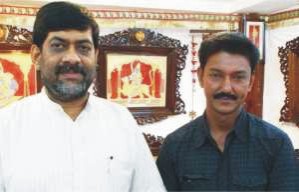
The Rocket Court in Srirangapatna, which is in a dilapidated state.

Mysore: 

The proposal to establish  India’s first rocket museum in Tipu Sultan’s rocket court in Srirangapatna, which fired the world’s first war rocket during the Anglo-Mysore war, could make  headway now with the new Director General (Life Sciences) of the  Defence Research Development Organisation (DRDO),  Dr. Manas K Mandal seeming more inclined to make it a reality soon.

Dr. Mandal  is expected to visit Mysore later this month  with a battery of DRDO officials to inspect the historic monument in Srirangapatna.

Former DRDO Chief Controller (LS), Dr. W. Selvamurthy, had suggested the establishment of the rocket museum during his visit to Srirangapatna almost a year ago.

But after his retirement the project hit a road block as it had no takers both in the Archaeological Survey of India (ASI) and the Department of Archaeology and Museums, Karnataka.

The DRDO plans to have a life-size prototype of BrahMos, a supersonic cruise missile, and models of a wide range of missiles  like Prithvi, Agni and ballistic missiles, besides  an original piece of Tipu’s rocket at the proposed rocket museum.

Additional Director, DRDO (LS) , Ravindra Kumar, says Dr. Mandal wants to treat the project with  priority.    “We will now pursue the matter aggressively and see that the project is realized,” he said.
Currently, the monument has many encroachments and a portion of  its front wall has collapsed.

Former DRDO Chief Controller, Dr. Sivathanu Pillai, had in 2006 submitted a report on the pathetic condition of the rocket court and recommended that it be  converted into a rocket museum.

Former President Dr. A.P.J. Abdul Kalam, popularly known as ‘rocket man’ for his exploits in missile technology, has devoted a  chapter to the rockets of Mysore in his book ‘Wings of Fire,’ underlining their historical signficance.

source: http://www.deccanchronicle.com / Deccan Chronicle / Home> News> Current Affairs / DC / by S. V. Krishna Chaitanya / October 19th, 2013

Music concert by Dr.Padma Murthy on Oct. 20

Mysore : 

Sri Krishna Gana Sabha, Gokulam, has organised a music concert By Vidu. Dr. Padma Murthy on Oct. 20, at Alwar Kala Bhavan, Sri Krishna Temple premises, here at 6 pm.

The artiste will be accompanied by Vid. T.S. Murthy on violin, Vid. Kumara Swamy on mridanga and Vid. S. Manjunath on ghata.

Dr.Padma Murthy
Dr.Padma Murthy

Artiste’s Profile :

A senior disciple of the great composer, Padma Bhushana, Sangeetha Kalanidhi Mysore K. Vasudevachar, Dr. Padma Murthy hails from a music family of Mysore, born in 1932 to Jayalakshmi and T.S. Rajagopala Iyengar, a freedom fighter, Supreme Court advocate and an art patron.

Dr. Padma Murthy gave her first concert at the age of eight in 1940, accompanied by great maestro T. Chowdaiah on violin. She was instantly hailed as child prodigy. She received training from Vidwans T. Puttaswamaiah and Thitte Krishna Iyengar and further received advanced training from Vid. R.K. Srikanthan and Vid. D.K. Jayaraman.

She has given thousands of concerts an all leading music sabhas of the nation and was called Mysore M. Subbalakshmi. As an artiste of Akashvani and Doordarshan, she has taken part in various national programmes and seminars and workshops.

Dr. Padma Murthy was the first musician to get a doctorate in music, first to become a professor of music at Bangalore University. She has a doctoral degree in Musicology from US and Doctor of Education from Belgium and also a MA in Psychology. She has written several articles & books on music and guided Ph.D students.

An avid traveller, she has represented India in Seven International Music Therapy Conferences held in USA accompanied on violin by her husband Wg. Commander T.S. Murthy. She has also given concerts at Australia, Switzerland and London. She has been awarded Karnataka Kalashri by GoK, Sangeetha Vidyanidhi by Suttur Mutt, Nadanidhi by Datta Peetha, Mysore and other innumerable awards, gold medals and citations.

Her Guru, guide and philosopher Sri Ganapathi Sachchidananda Swamiji is presently guiding her in music therapy research.

source: http://www.starofmysore.com / Star of Mysore / Home> General News / October 17th, 2013

IIM-B ranked top B-school in Central Asia

Topping the charts: IIM-B has been ranked above its sister schools in Ahmedabad and Kolkata, which have been ranked second and third respectively.

The Indian Institute of Management-Bangalore was ranked first among B-schools in Central Asia by Eduniversal, French consulting firm that is known for its ratings in the field of higher education.

IIM-B has been ranked above its sister schools in Ahmedabad and Kolkata, which have been ranked second and third respectively. No other Indian B-school has made it to the list. The zone-wise ranking identifies top three B-schools in nine geographic locations around the world.

This ranking was announced on the first day of the four-day 6th Eduniversal World Convention that commenced here on Wednesday. The convention, which brings together deans, business educators and professionals from the field of education, is being hosted by the IIM-B.

Reacting to the late evening announcement, Devanath Tirupati, Director In-charge and Dean (Academic) at IIM-B, said that the award would help the institute reach a global audience. He said that IIM-B was increasing its focus on internationalisation and research. “The Eduniversal awards are more broad-based, in the sense the awards are based on interviews with deans and directors from universities and B-schools from around the world. The awards recognise different perspectives,” he said.

Meanwhile, the four-day convention was inaugurated on Wednesday morning with delegates from nearly 50 countries around the world.

It was inaugurated by Natarajan Krishna Kumar, CEO of MindTree India, who spoke on ‘Economic influence on education in India and social challenges’. A release from the IIM-B quoted him saying, “Indians have a fundamental philosophy that education is very important and we have a propensity to invest in education, so we present a market of great opportunity. However, when foreign universities come to us, they must realise that they cannot juxtapose the European or American model here. They need to build a local product and a local curriculum at an effective cost for India. And they must partner with institutes of global repute here in India.”

Martial Guiette, Founder-CEO of Eduniversal, said the convention aims at fostering sustainability, entrepreneurship and innovation among the higher education institutions of the world.

Upcoming sessions at the conference will include plenary sessions and workshops on Asian higher education, rethinking internationalisation strategies and maintain balance between independence and inter-dependence, and entrepreneurship and education.

source: http://www.thehindu.com / The Hindu / Home> News> Cities> Bangalore /  by Staff Reporter / Bangalore – October 10th, 2013