Category Archives: Records, All

Second to one: Bangalore is 2nd most affluent city in India

BangaloreBF05aug2013

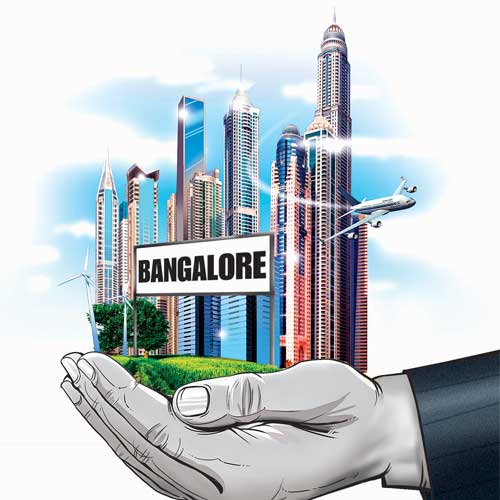
Galloping at a frenetic pace for a while now, Bangalore — which has come a long way since its pensioner’s paradise days — will continue to do so in the next decade as well, says a new survey by Nielsen. The survey says that Bangalore will be one of the fastest growing cities in the world in the next decade.

And here is another striking development: In a survey of urban, rich and middle-class Indians, Bangalore has been ranked the second most affluent city in the country after New Delhi.

“The IT industry has transformed the city. The industry has given high purchasing power to individuals and today Bangalore is the third largest hub for high net-worth individuals,” says Harish Bijoor, CEO of Harish Bijoor Consults.

The city is also home to about 60,000 super-rich people, who have an investable surplus of Rs4.5 crore. Not surprisingly, various sectors and industries are scampering to cater to the needs of the affluent class.

For instance, builders in the city are increasingly coming up with projects that cater to the super-rich.

According to A Harikesh, senior vice-president, marketing & sales, Tata Housing, Bangaloreans are exposed to international lifestyle and hence they expect nothing short of the best. “They are ready to pay for such a lifestyle. This is the basic reason why builders in the city are coming up with projects that target the affluent class,” he says. Tata Housing is coming up with Promont, a luxury gated community, at Banashankari.

Also, the high concentration of IT crowd translates into high purchasing power for people.

“The per-capita income of IT people in India is much higher when compared to other sectors. Hence, in Bangalore, the odds are in favour of one landing in jobs which give social security and recognition,” says Bino Paul, professor, chairperson at Tata Institute of Social Sciences.

But Bangalore’s crumbling infrastructure needs to be fixed, says Bijoor.
“Builders, who are coming up with high-end, luxury gated community, should take it upon themselves to improve areas within a two kilometre radius of their projects. This will solve half of Bangalore’s problems,” says Bijoor.

source: http://www.dnaindia.com / DNA / Home> Bangalore> Report / Place:Bangalore, Agency:DNA /  by DNA Correspondent / Wednesday – July 24th, 2013

Expecting immortality from medical treatment is untenable : Dr. Javeed Nayeem

Dr. K. Javeed Nayeem being felicitated by SRIAN Envisions’ founders Dr. Anil Sangli (extreme left) and Sripad Sangli.

Mysore :

High cost of medical education, exorbitant investments on state-of-the-art medical equipment and peer pressure have resulted in the medical profession turning into business style, observed senior Physician Dr. K. Javeed Nayeem.

Doctor-patient relationships were sacrosanct until a few decades ago but it is no longer so now-a-days nor is it easy to restore that kind of connect between the two, he bemoaned.

Speaking as the chief guest in the educative and musical evening at Jaganmohan Palace auditorium here yesterday on the theme ‘Changing Scenario in The Doctor-Patient Relationships’, Dr. Javeed Nayeem presented an insight into the decline in the relationships between the healers and their patients. Expecting immortality from the medical treatment on the part of the patients as well as their family members was at the root of disenchantment resulting in straining the relationships, he added.

Doctors not empathising with their patients, provisions under medical insurance and rulings by Consumer Disputes Redressal Courts without members having medical background also contributed to poor doctor-patient relationships, he explained, while pleading for restoring the same. The event was organised by SRIAN (Scientific Research Innovations in Advanced Neurosciences) Envisions’ founders Dr. Anil Sangli and Sripad Sangli in their series of similar educative programmes. P. Rajendra Prasad, Superintendent of Police, Chamarajanagar, as the guest of honour and Vidushi Dr. Sukanya Prabhakar as a special invitee took part in the event and made presentations of their points on the theme.

The organisers explained the aims and objectives of the programme focussed on health and wellness of our society based on scientific research, medical advances, music and financial planning by organisations, administrations and individuals in all walks of life.

Dr. Anil Sangli pointed out that communication played a pivotal role in mutually rewarding doctor-patient relationships. Positive interaction marked by trust, hope and compassion between the two sides leads to positive outcomes, he said.

Sripad explained the birth of new area of scientific pursuit namely Neuro-economics or Neuro-Finance, while providing an insight into the benefits of financial planning in life’s situations of uncertainty.

Rajendra Prasad spoke on the ‘Law and Order situations in doctor-patient relationships’, tracing the episodes to different perceptions of doctors and patients. Dr. Sukanya Prabhakar presented a lec-dem on ‘Music as a catalyst in improving societal relationships.’

Vidu. Veena S. Pandit rendered invocation. Vidu. G. Rajalakshmi Sridhar and S. Subramanya compered. Songs sung by renowned playback singer late Mohammed Rafi were rendered by Sripad Sangli and H.P. Vijayeendra Rao, Junior category winner of Edethumbi Haaduvenu programme of 2006.

source: http://www.starofmysore.com / Star of Mysore / Home> General News / July 29th, 2013

Banding the Anglo-Indians

David S. White
David S. White

Your recent reference to the Naval Hospital and the Gun Carriage Factory (Miscellany, July 8) did not mention that these were located in what was called New Town and which was once a major area of Anglo-Indian settlement, messages William Rodrigues. Indeed it was, what with not only the Naval Hospital and Gun Carriage Factory but also Central and Egmore Stations, the General Hospital and the Corporation, all favoured places of employment of the Anglo-Indians of the time, working as railwaymen, mechanics, overseers, nurses and secretaries.

More significantly, this area hosted the David S. White Memorial Hall and the offices of the Anglo-Indian Association of Southern India, the headquarters of the Anglo-Indians of South India. The Hall, the offices and the grounds of the Association were where the Hotel Ramada Chennai and a portion of its neighbour, the CMDA’s second block, have come up. In a small site here, the Association’s offices still remain, I’m told.

Responsible for banding the Anglo-Indians of South India together was David S. White who was an officer in the Directorate of Public Instruction. Curiously, he is better remembered in Bangalore where he established what was once a major Anglo-Indian settlement, Whitefield.

White was a founder member of the first Anglo-Indian association, the Eurasian and Anglo-Indian Association founded in Calcutta in 1876. Then, for some unstated reason, he broke away and founded in 1879 the Anglo-Indian and Domiciled European Association of Southern India. Today, there are eight other associations in South India and, together with what White founded, they teamed together in 1892 as a federation of Anglo-Indian associations mainly in Southern India. Some of its members also belong to the now Delhi-headquartered All India Anglo-Indian Association, but the majority are with the southern federation. The All-India association grew out of the 1876 association thanks to Henry Gidney’s leadership in the 1920s.

What the reason for the schism responsible for the break-up in Calcutta was I’m not very clear, but it certainly continued because of the attitude of Frank Anthony who succeeded Gidney who had been trying to effect a patch-up. Anthony had no time for those who were called Feringhis, were mainly dark of complexion, and spoke Malayalam, Tamil or Konkani. These descendants of the Portuguese found no favour with Anthony who refused to accept them as Anglo-Indians and turned down the applications of their associations to join the All-India Anglo-Indian Association. This only strengthened the Federation in the South that had its roots in White’s association and spread in South India.

White himself helped to establish the associations in Mysore and Coorg and persuaded the Maharajah of Mysore to grant nearly 4,000 acres east of Bangalore to establish an Anglo-Indian settlement. Whitefield in time grew with several from the Kolar Gold Fields adding to its numbers.

Today, the number of Anglo-Indians in Whitefield has diminished, but it is still more than in White’s home beat, New Town, now a forgotten name in south Vepery.

source: http://www.thehindu.com / The Hindu / Home> Features> MetroPlus / July 22nd, 2013

Police Commissioner fetes brave trio

City Police Commissioner Dr. M. A. Saleem is seen distributing certificates of appreciation to the three alert citizens (from left) Raghu Kumar, Manjunath and Mohammed Nayaz at his office yesterday as CAR DCP R. Prabhashankar looks on.

Mysore :

City Police Commissioner Dr. M.A. Saleem yesterday distributed certificates of appreciation to three alert citizens Raghu Kumar, an engineering student, Mohammed Nayaz, a businessman of Gayatripuram and Manjunath, a cook at the City Dog Squad, who displayed exemplary courage in nabbing a fleeing chain-snatcher in the city on Wednesday.

It may be recalled that the trio had chased and apprehended Mahesh, who was fleeing after snatching gold chain from Indravathi, a housewife near Chamundi Vihar Stadium in Nazarbad Police limits on Wednesday in broad daylight.

Dr. Saleem further explained that 65 cases of chain snatching had been reported in the city over the past six months alone and added that the accused had been arrested in two cases.

He further said that measures had been initiated to check crimes as done in Bangalore South division by deploying 65 Police personnel on night patrolling.

He also added that it has been decided to enroll Traffic Wardens who will be deputed to man traffic at important junctions for at least four hours in a week.

CID to probe Green Buds case

The City top cop further said that Criminal Investigation Department (CID) will probe the cases relating to the alleged cheating of thousands of investors by Green Buds Agro Farms. He said that cases of cheating against MD of the firm B.L.Ravindranath had been registered at various districts in the State besides Mysore city which necessitated a CID probe.

source: http://www.starofmysore.com / Star of Mysore / Home> General News / July 26th, 2013

Muay Thai is this city lad’s passion


A snapshot of a video of Mohammed Zulkharnain Beig who represented India arriving to participate in the Muay Thai World Championship in Thailand recently.

Mysore :

Mohammed Zulkha- rnain Beig is a 20-year-old Muay Thai fighter from city with a Pro-Amateur Muay Thai World Championship bronze medal to his credit. He fights at the Academy of Martial Science in Krishnamurthypuram and is being trained by Kru. M.N. Vikram.

He has been at the Academy of Martial Science since around three years and has been involved with kickboxing since around 14 years of age.

A resident of Bannimantap in city, Zulkharnain studied upto 7th standard at St. Matthias School in Bannimantap and later pursued his studies at Qatar and completed his education (equivalent to PU) there. He wants to do a course in Hotel Management.

Eldest son of Ayub Beig, a Mechanical Engineer working at Doha, and Bibi Sara, residents of Bannimantap, Zulkarnain has a younger brother Zafeen Beig who is studying seventh standard at St. Matthias School in city.

Star of Mysore caught up with young Zulkharnain who has huge ambitions in the sport of Muay Thai. Excerpts:


SOM: How did you initially get into Muay Thai martial art?

Zulkharnain: I started learning Muay Thai for fitness, self-defence and moreover I wanted to be a boxer and felt happy when I learnt that Mysore had a Thai kick-boxing training centre in which I soon got enrolled.

SOM: What do your family and friends think of the sport which you have chosen to pursue?

Zulkharnain: My friends think it is cool, quite a few of my friends want to join as well. My family are very supportive and encourage me.

SOM: You train at Academy of Martial Science. What’s it like training there?

Zulkharnain: Training at Academy of Martial Science is good. My coach Vikram trains me for three days a week and I follow it up for three hours in the morning and three hours in the evening on the remaining days. I am happy to be part of the Academy and I’ve learnt so much there.

SOM: You had a very successful year in Muay Thai. What can we expect from you in 2014?

Zulkharnain: In 2013, I won the fight against France in the world championships and achieved a bronze medal. I was one among 650 fighters from 79 countries to achieve this feat. I will be competing in the Amateur and Pro-Amateur World Championships to be held in the year 2014 to bag the title.

SOM: Why do you fight and what motivates you?

Zulkharnain: I fight because I love it. I train so hard that if I could fight every weekend I would, and it makes me happy. I love winning and I learn when I lose. My trainer Vikram and my family motivate me to fight.

SOM: What was the reaction of your friends and family members when you told them that you were selected to participate in the World Championship?

Zulkharnain: Everyone among my friends, family and relatives were shocked when I told them about the selection and they were in for a shock again when I told them that I won the bronze medal at the championship. I am proud to represent my Mysore, my club and my country India.

SOM: What is Muay Thai to you and what has it taught you?

Zulkharnain: To me Muay Thai is a weapon for self-defence and a sport. It has taught me confidence, patience, hard work and very importantly, discipline in life.

SOM: Your message to youngsters who want to take up this as a sport or for self-defence.

Zulkharnain: My message to youngsters, especially girls is, get trained in Muay Thai as it helps in many ways especially for self-defence, good health and to lead a disciplined life.

Speaking on trainers, Zulkharnain’s coach Vikram said that a trainer first needs to be trained properly and correctly to inculcate both physical and mental discipline among their students.

source: http://www.starofmysore.com / Star of Mysore / Home> Feature Articles / by  S. Kenneth Shishir / July 25th, 2013

Reviving the record

Vikram Sampath
Vikram Sampath

The rich Indian traditional Carnatic and Hindustani music in the form of vocal and instrumental found its way to reach the common man in the early 1900s through the Gramophone and LP records or Long Playing records. But with the advent of magnetic tapes, CDs, mobile phones, and other technological innovations, the Gramophone and LPs became more of a collector’s item.

Many treasures of great music by eminent musicians like Ustad Bade Ghulam Ali Khan, Ustad Salamat Ali Khan, Gangu Bai Hanagal, M.S.Subbulakshmi and a host of others recorded in the form of the LPs were lost and it called for some initiative by passionate people to preserve whatever could be.

That is when Vikram Sampath, a tech savvy young Bangalorean and a music aficionado took up up the mammoth task of archiving the music of yore. By digitising original recordings and making it available to music lovers at the click of a mouse on a digital platform, Vikram’s mission, Archive of Indian Music (AIM) is a comprehensive and honest approach to wards preservation of some of the gems of Indian music.

The challenges

“The first challenge of the project was the collection of LPs of different genres of music from different sources across India. Then we had to evaluate the quality of the records. The process of conversion to the digital format and finally uploading to the public domain through a website involved using top class technology,” says Vikram.

Collecting rare LPs from different parts of the country, spreading across genres, was indeed a tough task for Vikram and his team. He says, “The first ever Indian gramophone record was made in the year 1902 by Gauhar Jaan. I had a collection of a few hundreds of LPs to begin with. It was an absolute team effort to collect LPs from different parts of India, in different languages cutting across the genres of music.

Today, we are in possession of a huge inventory of LPs which include speeches of famous personalities.”

Bringing Gauhar back

Vikram, who is also a published author of three major books- ‘Splendours of Royal Mysore’, ‘My name is Gauhar Jaan! – the life and times of a musician’ and ‘Voice of the Veena: S Balachander, a biography’, stumbled upon an LP of Gauhar Jaan, when doing research on his book on the Mysore royals. “Gauhar was an extremely gifted Hindustani vocalist and it was her music that inspired me to initiate AIM,” says Vikram.

Giving shape

During his visits to Berlin, Vienna and other European countries, he was exposed to the technology of archiving of music content and that was the triggering point for him to give concrete shape to the project.

“Initially I proposed the concept to the Government of India, but the response was lukewarm but I was lucky to get help from Mohandas Pai of Manipal group. It has been a great journey in the world of music which has connected me to a team of dedicated music lovers,” he says. To listen to the preserved music, visit www.archiveofindianmusic.com.

source: http://www.newindianexpress.com / The New Indian Express / Home> Cities> Bangalore / by R. Manjunath Chavan    rmchavan@newindianexpress.com / ENS – Bangalore / July 13th, 2013

City boy too selected as Google Student Ambassador

BharatBF30jul2013Mysore : 

City boy B. Bharat Raj, a 5th semester student of NIE Institute of Technology, Koorgalli, is one of the three engineering students from Mysore, who have been selected by internet giant Google for the Google Student Ambassador (GSA)-2013 programme. Bharat is pursuing his engineering in Electrical and Electronics.

The students were selected on the basis of technical and communication skills. The selection process consisted of filling an online application followed by a telephonic interview for shortlisted students.

A total of 270 students have been selected from 98 cities across India. This programme provides an opportunity for students to learn about different products of Google directly.

The students will undergo a training programme at Goa from Aug. 1 and 4, where they will receive training from top executives of the company.

Other Google Student Ambassadors from city are Tejaswini, a 4th sem. student of Computer Science, Vidya Vikas Institute of Engineering and Technology (refer SOM dated July 19) and Harsha Prakash of SJCE.

source: http://www.starofmysore.com / Star of Mysore / Home> General News / July 24th, 2013

DR. K.V. Ramesh : Born for Epigraphy

Director (Epigraphy), Archaeological Survey of India, Mysore.

Dr. K.V. Ramesh, doyen among the epigraphists, who strode like a colossus in the field of epigraphy, breathed his last on 10.7.2013. His passing away has created a great void in the field of epigraphical research and a terrible loss to the epigraphical fraternity and his admirers.

His long association with the Epigraphy Branch, ASI Mysore, was so close and continuous, even now it is difficult for us to come to terms that he is no more with us. He relentlessly pursued during his tenure as Director (Epigraphy) and also after, for the betterment of the Epigraphy branch. It was during his tenure two zonal offices was created and he was making efforts for further expansion of the branch.

On many forums he strongly proposed to create National Mission for Epigraphy, like National Mission for Manuscripts, so that inscriptions that are located in the farthest and interior places could be located and documented. Apart from this, he had also proposed to have the National Institute for Epigraphy at Mysore to carry on intensive research work in the field of Palaeography and Epigraphy and also as one of the capacity building measures.

His contribution to the field of Epigraphy is immense, particularly with regards to Epigraphical Studies in Karnataka, he added a new depth and dimension.

The book on Western Gangas and Chalukyas of Vatapi, to name only a few are his masterly works. He has contributed innumerable articles for national and international journals and a multi-volume dictionary of the Social, Economic and Administrative Terms in South Indian Inscriptions, a project of the Indian Council of Historical Research. Also, he was fondly remembered by scholars for his profound contribution in the Ayodhya verdict.

To accelerate epigraphical studies and studies in Onomastics, he established two Societies and was the founder-member and Chairman of the Epigraphical Society of India and Place-name Society of India. He took to great heights both the Societies and they have carved a special niche among the scholarly world.

He was a down-to-earth person and friendly towards his colleagues, and always encouraged young scholars. Now we are orphaned because of his sudden demise. He was a fatherly figure to all the members, and continuously guided the destiny of both the Societies till the end.

The rich tribute we can pay to this scholar-extraordinary is by only creating a band of dedicated and committed epigraphists who by unraveling new inscriptions, enrich epigraphical studies, for which he strongly stood for.

source: http://www.starofmysore.com / Star of Mysore / Home> Feature Articles / by  T. S. Ravishankar / July 21st, 2013

FIT partners BD India to unveil first India-specific clinical recommendations on Insulin Injection Technique

Forum for Injection Techniques India (FIT India), in association with Becton, Dickinson & Co. (BD India), a global medical technology company has now unveiled the first-ever India-specific clinical recommendations for best practices in insulin injection technique in Bengaluru.

The recommendations have been put together by a scientific advisory board comprising endocrinologists and diabetologists. These include the optimum size of the needle, need for site rotation, educating the patients about avoiding reuse of needles, and training them for lipohypertrophy which is a lump under the skin caused by the accumulation of extra fat at the site of many subcutaneous injections including insulin. It also covered the safety aspects and identification of proper injection sites.

Correct insulin injection technique is critical for optimal control of diabetes. Improper use or reuse of injection devices may lead to undesirable consequences including pain with bleeding and bruising, the needles breaking off and lodging under the skin, contamination.

According to Dr KM Prasanna Kumar, former head of Department of Endocrinology & Metabolism, MS Ramiah Medical College, Bengaluru, and the CEO of the Bengaluru Diabetes Centre, “The recommendations by FIT India will help optimize insulin injection technique in diabetes and be of immense help for healthcare workers and patients alike. They will improve the acceptance of insulin delivery and injections, thereby ensuring improved glycemic controls and better health outcomes for diabetes patients.”

“In India, there is a psychological resistance to the initiation of insulin therapy even though it is considered one of the best and most dependable treatment options in diabetes management. It is important to get the injection technique right to regulate patient’s glycemic control. This is where these India-specific recommendations would be helpful for diabetic patients,” he added.

India is facing a diabetes epidemic. WHO predicts that by 2025, the country will account for half of the world’s diabetic patients. The disease has become a significant issue for Karnataka too. According to figures by the National Programme for Prevention and Control of Cancer, Diabetes, Cardio-vascular Diseases and Stroke (NPCDCS), about 10.2 per cent of people in the state suffer from diabetes compared to the national average of seven per cent. In the slums of Bengaluru, the incidence of diabetes is as high as 14.7 per cent.

“Insulin administration is the most effective method for blood glucose control, but inappropriate injection techniques can compromise the effectiveness of the therapy. The FIT insulin injection recommendations are a timely initiative in India which will bring great benefit to patients and will help us to continue improving patients’ experience with insulin injection,” said Vishal Taneja, director- BD Medical-Diabetes Care.

FIT is an autonomous organisation established following the Third International Injection Technique Meet in Athens in 2009.

source: http://www.pharmabiz.com / PharmaBiz.com / Home> News> Technology / By Pharmabiz.com Bureau, Bangalore / Friday – July 12th, 2013