Category Archives: Records, All

Bangalore, first Indian city to get free Wi-Fi hotspots

Bangalore :

Free wireless internet  services are expected to commence in the commercial heart of India’s technology capital starting next month. Mahatma Gandhi  Road and Brigade Road, two of the best-known shopping destinations, will have free  Wi-Fi  access  as part of a plan to make Bangalore the first city to have such a service available at public spots.

The idea is the brainchild of a government-appointed panel headed by Mohandas Pai, a former director at Infosys . The pilot service will be available for at least six months, after which the Information and Communication Technology (ICT) panel will evaluate the network and announce possible expansion plans.

“A smartphone revolution is happening in India, but connectivity is still an issue here. We wanted to provide seamless internet access to people,” said Pai, who is also the chairman of the Manipal Global Education.

The decision to offer free wireless broadband access was taken last year and the recommendations of the ICT group were sent to Karnataka’s chief minister in January. Bangalore-based internet service provider D-VoiS has been assigned to implement the pilot free of charge. “Once the pilot finishes, we will talk to other private ISPs and figure out a revenue-sharing model,” Pai said.

Access to broadband internet free of charge at public spots will benefit hundreds of thousands of people who browse the web through mobile phones, laptops and tablets. The Internet and Mobile Association of India expects the country to have about 165 million mobile internet users by 2015.

source: http://www.timesofindia.indiatimes.com  / Home> Tech> Personal Tech> Computing / by Indu  Nandakumar, ET Bureau / March 19th, 2013

Legendary taxidermist E.J. Van Ingen no more

Mysore, Mar. 12 :

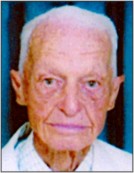
VanIngenBF18mar2013The legendary Taxidermist of Mysore, Edwin Joubert Van Ingen, passed away here early this morning at his residence located in Jalpuri close to Karnataka Police Academy. He was 101 and a bachelor.

He leaves behind a host of relatives in India and abroad, friends, well-wishers and staff.

Funeral will be held tomorrow at 10.30 am at St. Bartholomew’s Church Cemetery, next to St. Philomena’s High School on Bangalore-Mysore road after the mass at St. Bartholomew’s Church, next to suburban bus stand at 10 am.

The body has been kept at his residence near Karnataka Police Academy for the public to pay their last respects.

E.J.Van Ingen, along with his brothers Botha and De Wet, were trained by their father Eugene Van Ingen whose ancestors, as Dutch traders, had migrated to Mysore during 1600s and had lived here ever since.

Earlier, many old Mysoreans, who were interested in both game conservation and hunting, would make a ‘pilgrimage’ now and then to the firm named Van Ingen and Van Ingen to see the work of giving ‘second life’ to a variety of animals which had been shot elsewhere and dispatched to be cleaned and preserved and made as life-like as possible.

In its heyday, the factory had stuffed thousands of hunted wild animals including the tiger, leopard, deer, bison, elephant, lion, dogs and pigs etc., which are now in possession of the government, aristocrats, museums, clubs and the Mysore Palace.

One was able to see huge Cape Buffalo mounted on heavy wooden bases, Grizzly bears, African Elephants and their Asiatic cousins, lions, tigers, leopards and a variety of ungulates where anybody could walk in and be escorted by two Dachshunds to the main hall where the brothers would be bustling around throwing a friendly greeting to those who came.

With hunting being banned and strictly regulated in other parts of the world, Van Ingen and Van Ingen finally shut its doors in 1999. By then many of the trophies found their way to the great auction houses of Christies and Sotheby’s and into private collections in UK and USA.

Van Ingens were tiger specialists as one of the brothers had said in an interview.

After the death of his brothers and decline in business with the introduction of laws banning the shooting of animals in this country and the regulations and introduction of ‘hunting season’ in other countries, Edwin Joubert Van Ingen moved to a small portion of the old Van Ingen house.

Now, there are no tell-tale trophies on the walls or even anywhere in the house.

Edwin Joubert Van Ingen had revealed in an interview to Dr. Pat Morristhe, a British writer for his book on ‘Big Game and Conservation’, that he had been one of the prisoners who had helped build the bridge on the River Kwai (Thailand).

With his death, Mysore has lost a legendary Taxidermist and a lover of animals.

source: http://www.StarofMysore.com /Home> General News /March 12th, 2013

These Bengalureans do the city proud

AwardsBF17mar2013
Bengaluru: 
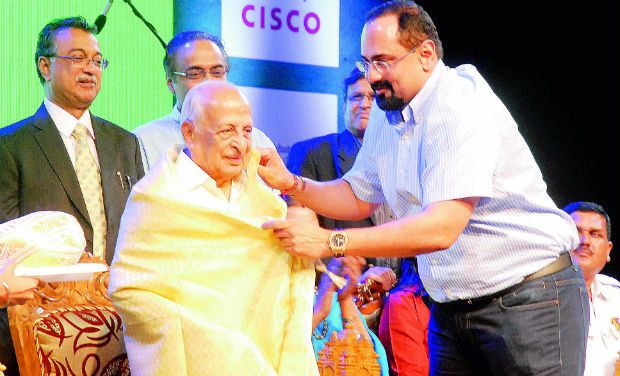
When Bescom MD P. Mannivanan walked up on stage to receive the ‘Namma Bengalurean of the Year’ award on Saturday evening, a standing ovation greeted him. The Namma Bengaluru awards function was held at Malleswaram Grounds on Saturday to honour the people who work tirelessly behind the scenes, doing what they can to make the world a better place.
“This award is belief in our ideal”, said Manivannan. “We have proved that unless you are transparent and involve the public, there’s not much you can do”.
Head Constable Mahadev Sambargi was also greeted with a volley of cheers as he received the ‘Government Employee of the Year’ award. Directing traffic for nearly 15 hours a day at the Domlur Inner Ring Road junction, Constable Sambargi has earned himself a Facebook fan page, the only cop in the city to have this. Additional Commissioner of Police (Traffic) M.A. Saleem received the award for Best Government Organisation on behalf of Bangalore Traffic Police.
“This award goes to my team, they are the real heroes,” said B. Chengappa, Director, Karnataka State Fire and Emergency Services, as he was awarded Best Government Employee. Chengappa was instrumental in the amendment that opened the department’s doors to young blood and for completely modernising the fire services.
Kuldeep Dantewadia (24) was the winner in the Citizen’s Youth category for his work on solid waste management and his foundation, Reap Benefit. “This means our parents will give us more room to find our feet”, he said, laughing, on the sidelines.
Father George Kannanthanam, who has spent the last decade living and working with society’s outcasts – lepers – at his organisation Sumanahalli was declared ‘Citizen of the Year’. “I have been giving a voice to the voiceless”, he said. “I am glad that people hear them now and that they are being accepted in society”.
What started out as a means to make their neighbourhood lake better, soon became the Puttenhalli Neighbourhood Lake Improvement Trust, which received the award in the ‘Citizens’ Group’ category. The trust has been working closely with BBMP to  restore the Puttenhalli lake to its former glory. Ms Y.S. Pavitra was felicitated for her work with underprivileged children in the ‘Social Entrepeneur’ category.
Corporate Social Responsibility and the media were the two new categories this year with  Britannia getting the award in the former category. MLA Vijay Kumar representing Jayanagar constituency, was back with a second nomination and win since 2010. “When I came here three years ago, I wanted to make a small difference. Now, I want to make a big one and there is much to be done”, he said, as he received his award.
The guests were felicitated by well-known writer Prof G. Venkatasubbaiah. “Politicians often don’t do their jobs, but there are so many people out there who do”, said Parliament Member Rajeev Chandrashekhar, the founder of the Namma Bengaluru Foundation which gave away the awards. “It is our duty to honour them”, he added.
source: http://www.DeccanChronicle.com / Home> News> Current Affairs /DC / March 17th, 2013

9 D Action to Bangalore

Action3dBF16mar2013

There are many firsts to the credit of Garden City, Silicon City, and Concrete City – Bangalore. Now adds the 9 D action theatre at Mantri Mall in Malleswaram.

According to technical expert Karthik Ramesh, director of Blue Chip this is just not 9 D effect but one could get 15 dimension effects.

9 D actions come alive for the first time in India with 6 projects, all environmental effects, Arc cinema scope screen with 7.1 DTS is launching on 14th of March 2013 at LG 27, Opposite Auchan, Mantri Square, Malleswaram. It is entertainment beyond your imagination.

It is a 28 seat capacity and Rs.1 crores investor is Ravi Rajagopal. The ticket price is Rs.200. it operates from 10.30 am to 10.30 pm. For every two hours there will be tow shows. It is 25 minutes duration. As of now 10 films of Hollywood made in 9 D have been acquired for screening. The English and Kannada dubbing will also be made available stated Karthik Ramesh technical head. In the career of 12 years this is first one from Karthik Ramesh. For the weak hearts and pregnant woman this is at their own risk says Karthik Ramesh.

It took three months as the requisites were not normal. Because Bangalore is world class city says Ravi Rajagopal. In the coming days Ravi Rajagopal would like to bring in 360 degree effect. He has a project with Indonesia.

Mr Dilip also connected to this feast for 9 D effects was also present.

source: http://www.indiaglitz.com / Home> Watch Movies / Friday, March 15th, 2013

Achievers felicitated on women’s day

AchieversBF16mar2013

From left:  Gowramma (coconut vendor), K. Ningamma (KSRTC employee), Lakshmidevamma (progressive farmer), Kalpana Surendra (entrepreneur) and Jayalakshmi (post-woman) are seen with Dr. D.S. Leelavathi, Chairperson, DoS in Economics and Cooperation and others.

Mysore, Mar. 11 :

Five women achievers were felicitated by the Planning Forum of the Department of Studies in Economics and Co-operation, University of Mysore, at Manasagangotri here on Friday to mark International Women’s Day.

Septuagenarian tender coconut vendor Gowramma, KSRTC employee K. Ningamma, progressive farmer Lakshmidevamma, entrepreneur Kalpana Surendra and post-woman Jayalakshmi were honoured for their contribution to society.

Responding to the felicitation, Lakshmidevamma said more youth should take up farming and highlighted the benefits of hard work.

Citing the example of a farmer in K.R. Pet taluk who got 20 quintals of ragi per acre, she suggested that lessons on agriculture should be introduced in schools and children should be encouraged to plant saplings in their school campus.

KSRTC driver-cum-conductor Ningamma, who is reckoned to be the first female public bus driver here, narrated how she came up in life and in her profession.

She has been a role model for breaking into a male-dominated profession. “Success in any profession is possible only with hard work,” she said.

Gowramma, who sells tender coconuts on the roadside in Saraswathipuram, Kalpana Surendra and Jayalakshmi also spoke. Dr. D.S. Leelavathi, Chairperson, DoS in Economics and Cooperation, University of Mysore, presided.

source: http://www.StarofMysore.com / Home> General  / March 11th, 2013

Puttur: SDM College, Ujire crowned champions at ‘Media Rang’

Puttur, Mar 14:

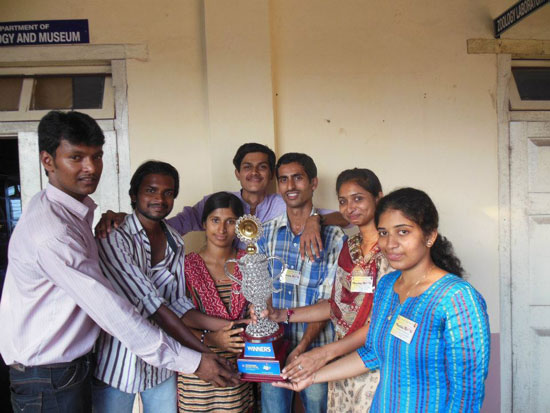
In the recently concluded media fest ‘Media Rang’, held on March 13, organized by the Department of Journalism of Vivekananda College, Puttur, post graduate students from SDM College emerged as the overall winners of the fest.

Vinod KS, chief reporter of Vijayavani (Mangalore), was the chief guest and Dr Madhav Bhat, principal; Vivekananda College presided over the program. Dr Arun Prakash, lecturer from economics department, Vivekananda College was also present on the occasion.

putturBF15mar2013

The fest witnessed tough participation from the students of various colleges in the several competitions organized as a part of ‘Media Rang’.

Finally, MCJ (PG) students of SDM College, Ujire emerged overall champions by winning most of the competitions. Alva’s college from Moodbidri  won the runners up honor.

source: http://www.daijiworld.com / Home> Karnataka /  by Sumanth Kashyap, Daijiworld Media Network – Puttur / Thursday, March 14th, 2013

Two friends: A tribute

ColinBF14mar2013

Colin de Souza and Kulamarva Balakrishna

Caption:  Colin de Souza (left), with the author, at Aswan, Egypt, in 2010. Picture right: Kulamarva Balakrishna (wearing Gandhi cap) and his wife Eva, with the author, at a bus station in Vienna, in 2010.

By M.P. Prabhakaran, Editor & Publisher, The East-West Inquirer, New York, USA

I lost my two lifelong friends in a span of two months. Colin de Souza left me two months ago and Kulamarva Balakrishna last week. Their deaths have created a big void in me. As those of us who are over-the-hill know, lifelong friendships are hard to come by in this world. I have been blessed with a few. My friendships with Colin and Bala, as the latter is called by his close friends, were among them. [See Abracadabra ‘Remembering my friends of Bombay days’ on page 8]

Colin and I met as journalism students, in the late 1960s, at Bharatiya Vidya Bhavan, Bombay (now Mumbai). We were also roommates in the college dorm. After we finished college and started working as journalists, we shared a chummery with another journalist who became another lifelong friend of mine. He is K.B. Ganapathy, the owner and Editor of Star of Mysore, a leading English daily published from the southern Indian city of Mysore.

We three spent most of our free time together — going to movies and plays; chatting at Irani restaurants over pani cum cha (the equivalent of what is small-size tea in the US) and kara (salty) biscuits; and doing silly things, which I am not all that comfortable recalling. We also had lots of fun together. The fun included occasional visits to “aunties’ bars.” The speakeasies of Bombay were called aunties’ bars, because most of them were run by elderly women who originally came from Goa. Time was when the Government of Maharashtra had not yet realised that prohibition was a total failure.

Colin started his career as a Copy Editor on The Economic and Political Weekly of India. Unlike Ganapathy and me, he was blessed with a boss, who, he never tired of saying, was “a pleasure to work with.” The boss was the late Krishna Raj, Editor of EPW at the time and the man who built it from scratch into the prestigious journal that it is today. Krishna Raj was one of the finest human beings I met in my life.

Blame it on our age, we were part of that West-aping crowd in Bombay. And you may blame that on Hollywood movies, which we used to be among the first to see when released in Bombay, and newspaper stories on Pentagon Papers and Watergate scandal, which journalists around the world found awe-inspiring. When things got hard, we would try to perk up one another with that hackneyed American expression, “Go West, young man,” though in a slightly different sense. To us, the West was America as a whole, not just the American West. “America is the Mecca for journalists” used to be another expression we frequently bandied about. In the India of the 1970s, things were really hard and we, I shamefully admit, were looking for ways to leave the country in search of greener journalistic pastures in the West.

I was the first to leave. After wandering around the Middle East and Europe, I ended up in New York, in 1975. Colin tried to join me, as a student, but with no success. He was collecting rejection letter after rejection letter from various American Universities when he got a chance to make his first Westward move, though not to the US. He got a job as a Senior Copy Editor on Khaleej Times, Dubai. The daily newspaper brought out its first edition on April 26, 1978, and Colin was part of the team that did it.

Other than that the money was good, he had nothing positive to say about the job. Though he had not expected the kind of journalistic freedom he enjoyed during his decade-long work in India, he found some of the editorial policies of the paper disgusting. According to one such policy, which all journalists on the paper were asked to follow, the word Israel was not to be used anywhere in the paper. Any time the word appears in a news story, it was supposed to be deleted and replaced with “the Zionist Entity.” Colin was unhappy following policies of that nature.

He was left with two options: quit the job and go back to Bombay or grin and bear the unhappiness as long as he could. He chose the latter. The attractive salary the job fetched and the free and fully furnished apartment the employer provided did play a role in making that choice. After all, he said to himself, weren’t those the factors that enticed him to accept the job in the first place? He decided to stay and take stock of his life. “We are not getting younger,” he wrote me after deciding to stay on the job. “At some point we have to get married and settle down in life. Both of us are the marrying type.”

His superiors at Khaleej Times found him very valuable. His editing was flawless. His English vocabulary was rich. He also had a photographic memory, and could rattle off facts and figures from history effortlessly. The last quality made him an asset to his fellow Copy Editors. We are talking about the pre-Google-search era when fact-checking used to be a time-consuming process.

He spent a few aZnnual vacations in India looking for the right woman to share his life with. On that front, he was not lucky. “If I can’t find the right one, so be it,” he told me over phone every time he came back from vacation, frustrated.

After the year 2000, he did another stocktaking of his life and decided that he had made enough money to be able to retire comfortably in India. Two years later, he bought a flat in Bangalore and retired there.

Nihal Singh, the veteran Indian journalist who was editor of Khaleej Times at the time, gave him a parting gift. He made him a part-time Correspondent for the paper, based in Bangalore. When a new Editor replaced Nihal Singh two years later, he took that gift back. Though he was not keeping good health — he had chronic diabetic problem — he didn’t lose the job. He died on December 24, 2012, at the age of 68.

Colin was a religious Catholic and came from a very religious family. His sister Wilma is a nun. She is now Provincial Superior of the Salesian Sisters of Mumbai Province, covering 31 convents. In our Bombay days, on Sundays when I had nothing else to do, I used to accompany him to church. On the way to church I would often say things like, “Colin, are you not risking your secure position in Heaven by taking an agnostic-Hindu to church?” He would laugh it off.

That was the secret behind our friendship being lifelong: his willingness to recognise and respect the fact that a good person is a good person, whether he is religious or agnostic. Or even atheistic. That fact, I am sure, he didn’t learn from any of the priests whose sermons he listened to on all those Sundays.

By the time I met Bala, also in the late 1960s, he was already an established journalist in Bombay. I was still a journalism student. His exposés of Bombay’s underworld, while working as a reporter on the daily newspaper Free Press Journal, had won him praise from fellow journalists and admiration from journalism students like me. He took a liking to me at the very first meeting. Later, he was instrumental in my landing in my first job in journalism — as a cub Reporter on Current, a weekly newspaper (now defunct) known for its influence among the movers and shakers of Bombay at the time.

His first book in English, A Portrait of Bombay’s Underworld, which was an expanded version of the exposés that appeared in Free Press Journal, was well received by the public. It was a remarkable achievement for a man who taught himself English. The languages he was more facile with were Sanskrit, in which he was a scholar, and his mother tongue Kannada. Until he arrived in Bombay, his journalistic work was limited to what he did in a couple of Kannada journals in his native Karnataka State. It was in Bombay, and in English journalism, that he made a mark as a fearless reporter. The fearless reporting also earned him the enmity of many in govern- ment circles.

Another exposé by Bala, published in 1970 in The Times Weekly (a Sunday supplement of The Times of India at the time), stirred the conscience of many in India and made him the bête noire of the government and media of Nepal. The article discussed how innocent Nepali girls were sold into the “cages” of Bombay. It provoked some Nepali journalists to call Bala “the Katherine Mayo of India” — an allusion to the late American writer Katherine Mayo, whose 1927 book, Mother India, was condemned by Mahatma Gandhi as “the report of a drain inspector.”

Fearless reporting and bold positions he took on controversial issues put Bala on the watch list of India’s central government, too. As long as the country remained committed to democracy and freedom of the Press, he could afford to ignore how the government reacted to his writings. But there was a brief but infamous period in independent India’s history during which its reputation as a vibrant democracy suffered a setback. I am referring to the 18 months in 1975-77, known in India as the Emergency period. The late Prime Minister Indira Gandhi declared a state of Emergency in the country, suspended all civil liberties and arrogated dictatorial powers. Most journalists in India meekly submitted to censorship regulations imposed on them in the wake of the Emergency declaration. (Remember BJP leader L.K. Advani’s famous jab at journalists soon after the Emergency was lifted? “You were asked only to bend,” he told them. “But you decided to crawl.) The few who refused to do it ended up in jail. Bala was left with the option of either ending up in jail or leaving the country. He chose the latter. The choice became easy when he got evidence that he was being followed by secret Police.

I was already in New York when this was happening in India. In a small way, I was also on the watch list of the Indira Gandhi government. The Voice of India, a monthly I published from New York, had become a forum for free expression for anti-Emergency activists in the US and in India. Open communication with like-minded people in India became difficult for me. I lost touch with Bala.

Two years later, we were able to reconnect. After wandering around Europe for a while, he reached the Austrian capital of Vienna. With help from an Italian journalist friend, he was able to settle down there.

After several months of struggle, which is the case with any new arrival in a foreign country, he landed a job as a gardener for the city administration of Vienna. His childhood experience on his family farm back in India came in handy, he told me. Though he was able to make a decent living as a city employee, the journalist in him was thirsting for an outlet. Getting a job in any of the local newspapers was out of the question, because he did not know German. He contributed to The Voice of India frequently. His last dispatch for The Voice was a three-part series, under the title “How Fascism Came to India.” The series made a critical analysis of the events in India that ultimately led to Mrs. Gandhi’s declaring Emergency. He also worked as a stringer for the Press Trust of India, the Khaleej Times of Dubai and a few other English publications around the world. Though monetary compensation was far from expectation, the work he did for all those media outlets enabled him to keep his press credentials and be a part of the press corps in Vienna.

The Emergency was lifted after 18 months and Mrs. Gandhi was thrown out of power in the election that followed. But the crafty politician that she was, she maneuvered her way back into power in the next election. Bala told me once about a funny exchange he had with Mrs. Gandhi when she was on a State visit to Austria after being reelected. At a State dinner hosted by the Chancellor of Austria in her honour, Bala was seated among the local press people. He was the only Indian among them. That prompted Mrs. Gandhi to ask: “What are you doing here?”

Bala put his journalist’s hat aside, wore his city gardener’s hat and told her (I am paraphrasing it): I sweep public gardens and parks in Vienna, I water and manure plants and trees in them, I trim their leaves and I do a lot of menial work. I am a manual laborer in Vienna.

Mrs. Gandhi’s response: How is that we Indians have no problem doing such things once we come out of the country? Back home, we have a tendency to look down upon them.

That gave Bala the opportunity for a sweet revenge. He told her: Do you think I will be invited to a party hosted by the Head of State in India, if I am a manual laborer?

The press aide to the Chancellor, who was introducing Mrs. Gandhi around, took her to the next guest.

Vienna had been on my travel wish list for a long time. Ever since Bala settled down there, and especially after he married his Austrian wife Eva, he had been persistently inviting me to visit him. The invitation that came in 1999 was in the form of an ultimatum and quite an unnerving one. “Come now,” it said. “This may be your last chance to see me alive.” He was preparing to undergo a major surgery to remove his defective pancreas.

For reasons beyond my control, I was unable to make the trip, even after that ultimatum. I sent him a letter expressing my confidence that he would surely survive the surgery and my wish that both he and I would be around many more years, paying visits to each other many times.

As I had expected, the surgery was a success. And thanks to Austria’s excellent health care system which is freely available to the rich and poor alike and to his strict post-surgery regimen and discipline, he had been able to live a life more productive than most people who have their pancreas intact. Every day, he posted two or three articles on his blog, Humans Austria. The articles were social and political commentaries, often provocative. The blog was dedicated to “promoting human oneness and unity.”

Nearly a decade after his surgery, I was able to visit him. I did it twice, first in 2008, then in 2010. On both occasions he took me around all important and interesting places in Vienna — museums, galleries, theaters, gardens and parks. He was more concerned about making my sojourn in the city comfortable than his physical condition. I had to frequently remind him that he was on medication and had been advised by his doctors not to exert much.

At the end of my 2010 visit, he and Eva came to the bus station to see me off. Eva, an artist by profession, had not been able to come around with us during my 2010 visit, because she was busy preparing for an exhibition of her paintings. She was feeling guilty about it. Handing me a bag containing breakfast she had prepared for me, she said, “I have not been a good hostess this time. Please have this breakfast on the way.” I was touched.

About two months ago, I called Bala from New York to check on his health. Towards the end of our conversation he said, “As long as I have the energy to sit in front of my computer, I will post something on my blog. But coming to the phone and talking has become more difficult than sitting and working on the keyboard.”

Since then, we had been communicating through e-mails. The last e-mail from him came on February 13. He was cheerful as ever and there was no inkling in it that his end was near. The end came on the morning of February 27. He collapsed in the bathroom and died of cardiac arrest. He was 78.

“Please come to Vienna as often as you can,” Eva told me, after I conveyed my condolences over the phone.

“I will,” I said.

And I know that I will. But Vienna won’t be the same for me in the absence of Bala. As Bangalore won’t be the same for me in the absence of Colin.

On a positive note, the deaths of these two dear friends have made me come to grip with my own mortality. I am ready.

Note: This article was first published on Mar. 6, 2013 in the author’s The East-West Inquirer. The author may be contacted on email: letters@eastwestinquirer.com.

source:  http://www.StarofMysore.com / Home> Feature Articles /By M.P. Prabhakaran, Editor & Publisher, The East-West Inquirer, New York, USA /   March 08th, 2013
Made for all communities

MalleshwaramBF12mar2013

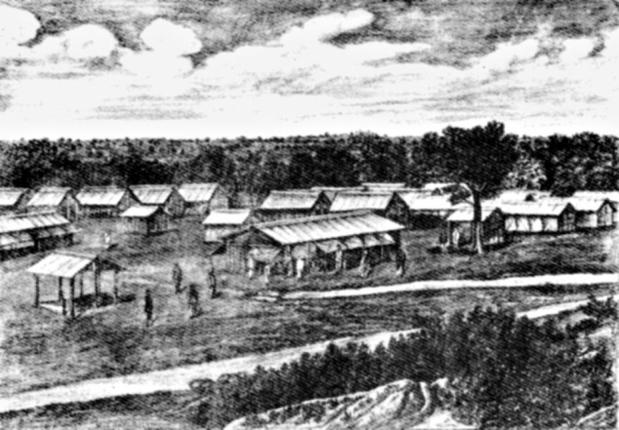
Modern aspirations: A sketch of the temporary shelters set up in Malleswaram during the outbreak of plague. / Photo: Bangalore Plague Report of 1895  / The Hindu

MalleshwaramTwoBf12mar2013

Modern aspirations: An 1889 map of the layout of Malleswaram. / Photo: Bangalore Plague Report of 1895 / The Hindu

From rehabilitation area to posh neighbourhood, Malleswaram’s come a long way

One of Bangalore’s oldest layouts, Malleswaram celebrates the 125th year of its founding next year. Founded in 1889, Malleswaram was created by the Wadiyars of the Mysore kingdom to provide a modern lifestyle to all communities, in which they could live in hygienic conditions.

Most of the city was under the authorities of the British Cantonment in the 19th century, and had various well-planned layouts such as Richmond Town, Cox Town and Benson Town. The Wadiyar government planned and executed similar planned layouts in 1880s, leading to the formation of Basavanagudi and Malleswaram.

Interestingly, both these new layouts were created on foothills: Basavanagudi lies on the foothills of the Bull Temple, Bugle Rock and Lal Bagh, while Malleswaram is on the foothills of the Kempegowda watchtower and Palace Guttahalli. Malleswaram’s advantage lay in its access to a water source — a big stream (now the Rajakaluve) ran through it — and along with Basavanagudi, it was meant to provide temporary shelter during large epidemics (such as the plague) and during famine.

Named after a temple

No vernacular or English historical records before the 1880s support the existence of a village named ‘Mallapur’ or ‘Malleswaram’. However, the area originally came under the village of Ranganatha Palya, as an 1878 Survey of India map indicates. Just as Basavanagudi layout was named after the Basavanna temple, Malleswaram was named after the Kadu Mallikarjuna (Malleswara) temple.

Both Basavanagudi and Malleswaram were originally planned to accommodate all communities. While previous layouts such as Chamarajpet or Benson Town accommodated particular sections of society according to their original plans, Malleswaram was created to provide accommodation to a range of communities. That an inclusive society was no new concept can be seen in the old inscription found on the outcrop of the Kadu Malleswara temple, which refers to the grant given to Medaralingana village by Maratha Sardar Venkoji or Ekoji in 1669 for the upkeep of the temple.

Multicultural medievals

The inscription cautions that no one should alter the grant given by Venkoji, including Hindus and Muslims. The inscription clearly refers to various communities of the medieval period, including Muslims and Hindus. This historical evidence indicates that there was a significant population of Muslims in Bangalore in the mid-17th century, and this multicultural society continued into the modern period. In the new layout of Malleswaram, there were separate wards for Muslims, native Christians, and various Hindu castes including Brahmins, Lingayats, Vaishyas and Shudras.

According to historical records, Malleswaram was developed on 291 acres. It stretched from the old Raja Mills or Mysore Spinning and Weaving Mills (Mantri Mall stands in its place) to 15th Cross including Sankey Tank in the north, and from the Bangalore-Arasikere railway track in the west to the Kadu Malleswara temple in the east.

Steady ascent

Although the government created the new layout and invited people to purchase sites and settle there, it met with little response. It then formed a committee with members such as V.P. Madhav Rao, Mir Shaukat Ali and Rao Bahadur Arcot Srinivasachar and K. Srinivasa Rao to develop the new area in 1892. By 1895, the committee handed over the layout to the city municipal authorities, and from then onwards, Malleswaram became an integral part of the city urban administration.

It remained an ordinary neighbourhood until after Independence, when those who worked in the government and the upper classes chose to live there. From a site for rehabilitation to a posh neighbourhood, history bears witness to Malleswaram’s growth.

(Dr. Aruni is Deputy Director of the Indian Council for Historical Research, Bangalore)

source: http://www.TheHindu.com / Home> News> Cities> Bangalore / by  S. K.  Aruni /  March 06th,  2013

Honest laundry owner

Returns jewellery worth Rs. 1 lakh found in customer’s trousers

ShivaKumarBF12mar2013

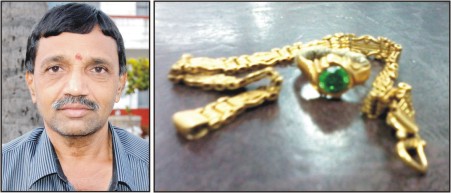
Caption: Laundry owner Shivakumar. The gold jewels found in the customer’s trouser.

Mysore, Mar. 6 :

In a rare display of honesty, Shivakumar, owner of SEL Dry Cleaners at K.R.Circle in city, promptly handed over a gold bracelet and a ring valued at about Rs. 1 lakh to a customer, who had reportedly left them in the pocket of his trouser which he had given for dry wash.

It is reported that one Ramesh, a resident of Nayakara Beedi in Chamundi Hill, had given a trouser and a shirt for dry wash at SEL Dry Cleaners on Feb. 26. On taking delivery of his clothes on Mar. 1, Ramesh discovered that a bracelet and a ring were missing. He recollected that he had left the jewellery in the pocket of his trouser (which he claimed was his practice).

On approaching Shivakumar at the laundry, Shivakumar reportedly told Ramesh that he had found the jewellery in one of the pockets of the trouser given for wash and promptly returned the same to Ramesh advising him to be careful in future. Meanwhile, Ramesh, speaking to SOM, lauded Shivakumar for his gesture.

Shivakumar, on his part, said, “I would have handed over the jewellery to an orphanage if Ramesh had not claimed it.” Stating that his family had been in the laundry business for over 55 years, Shivakumar said he believes in service rather than aspiring for wealth belonging to others as taught by his father.

Recalling the incident of Feb. 26, Shivakumar said that he found the bracelet and the ring falling from the trouser given for dry wash but could not identify whose jewellery it was as there were many customers. He thought that when the real loser would approach him, he would hand over the same.

“After taking delivery of the trouser and shirt, Ramesh came and complained of having lost his jewellery to which I responded and handed them over to him,” Shivakumar recalled.

source: http://www.StarofMysore.com / Home> General News / March 06th, 2013

Steven Spi­elberg compliments Bengaluru student on animation film

StephenBF08mar2013

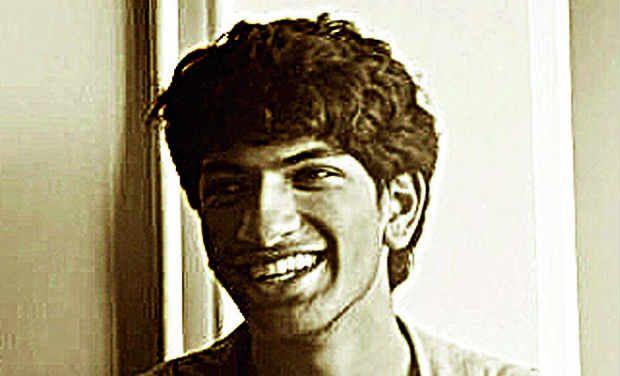
Steven Spielberg has been my favourite filmmaker for the last decade. He has a way of inspiring emotions in the audience in ways that not many filmmakers can. I love the way he he combines images and sound to have the maximum impact— Krishna Bala Shenoi

Bengaluru:

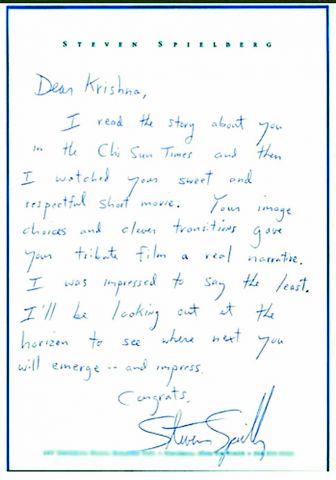
 A 19-year-old Bengaluru student was paid the ultimate compliment on Wednesday when his hero Steven Spi­elberg wrote him a letter of appreciation after his own animated tribute caught the legendary film maker’s eye.

The handwritten letter of appreciation from Spiel­berg sees him use the word ‘im­press’ not once, but twice.

“Getting this letter from my childhood hero was such a shock,” said an ecs­tatic Krishna Bala Shenoi, second year student at Sri­shti School of Art, Design and Technology, who couldn’t contain his excitement.

“Getting this letter from my hero was such a shock, I was shivering. My knees were wobbly. I am so thankful to Steven Spielberg for being gracious enough to have taken the time to write me such a kind letter. I am convinced that his goodness isn’t restricted to just his films,” says Krishna Bala Shenoi, Second Year of Foundation Studies Programme at Srishti School of Art, Design and Technology.

LetterBG08mar2013

Steven Spielberg’s hand-written letter addressed to Krishna Bala Shenoi

He has admired filmmaker Steven Spielberg since he was a child and now he has received a handwritten letter of appreciation from the man himself.

The 19-year-old, who compelled Spielberg to use the word “impress” twice in his letter in appreciation of his animation film, does not want to stop at animation. He wants to be a filmmaker like his hero.

“I haven’t been able to capture my awe for him. And therefore, I decided to create this animated tribute to him. It took me four months to make the video. I worked on it whenever I was free from college work. I have used a technique called rotoscoping, which involved drawing over the original video, which was, in this case, my favourite images from Spielberg’s movies. But this was only for my hero. In the long run, I want to make films,” says Krishna.

“I’ve been interested in filmmaking ever since I began watching films, when I was around eight years old. My mother introduced me to great movies like Superman, ET, Close Encounters of the Third Kind, etc.

“I started making short movies with an old Sony camcorder, building blocks, clay models, and whatever I could find, employing very rough stop-motion animation techniques,” Krishna adds.
He is also the youngest Far-Flung Correspondent on film critic Roger Ebert’s blog. “In 2010, the world’s most read film critic, Roger Ebert, contacted me via e-mail after seeing my films and writing on the internet, and Invited me to the Foreign Correspondents’ blog on his website.

The Foreign Correspondents blog is a feature of Roger Ebert’s Journal in which film commentators from all over the world contribute their video reviews, observations, musings, philosophies and pronouncements. Another foreign correspondent for Ebert’s blog, Anath White, sent my video to Lois Burwell, a make-up artist who has worked with Spielberg on films like Lincoln, and Saving Private Ryan, who passed it on to Spielberg.

source: http://www.DeccanChronicle.com / Home> Entertainment> Hollywood  /DC / March 08th, 2013