Category Archives: Records, All

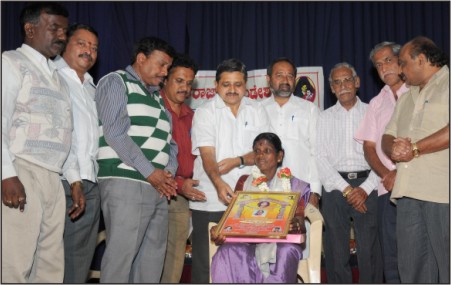
Dr. HA.MA.NA award presented to Dr.W. Kempegowda

Mysore, Feb. 7 :

“The contribution of late Dr. Ha.Ma.Nayak to literature was immense and thus he became an icon in society,” opined Dr. M.M. Kalburgi, former Vice-Chancellor of Dharwad University.

He was speaking after inaugurating a programme organised jointly by Mandya Karnataka Sangha and M.L. Srikantegowda Reserarch Centre at Cauvery auditorium of KSOU here on Tuesday to mark the presentation of Dr. Ha.Ma.Na. award and release of the book ‘Moola Kannada Bhashe’ written by Dr. K. Kempegowda.

Referring to the stature of late Dr. Ha.Ma.Na, Kalburgi said that sandalwood whether in woods or village would emit the same fragrance. He added that HaMaNa spread Kannada across the country and earmarked his own life for its development.

Karnataka Folklore University Vice-Chancellor Dr. Ambalike Hiriyanna released the book ‘Moola Kannada Bhashe’.

Mysore University VC Prof. K.S. Rangappa presided. KSOU VC M.G. Krishnan, Registrar Dr. B.S. Vishwanath, Sangha President Jayaprakashgowda and others were present.

Dr. HaMaNa award

Later in the afternoon, Sanskrit University Vice-Chancellor Dr. Mallepuram G. Venkatesh presented Dr. HaMaNa award to litterateur Dr. K. Kempegowda.

Minister for Food and Civil Supplies D.N. Jeevaraj released the book ‘Kannada Karnika: HaMaNa’ written by Dr. Somashekargowda and Dr. Padma Shekar.

Speaking on the occasion Jeevaraj said “Having studied well in Kolkata and USA, HaMaNa had identified himself as an Ambassador of Kannada. He silently relinquished the post of Karnataka University VC unlike the present day Ministers who hype on their exiting from cabinet. It is an honour for me to participate in this programme being a nephew of HaMaNa”. Karnataka University VC Dr. H.B. Valikar presided. Folk University Registrar Dr. S.C. Ramesh and former Mayor Vasu were present.

source: http://www.StarofMysore.com / Home> General News / February 07th, 2013

Kush Maini becomes first Indian to win a World Series Karting race

New Delhi :

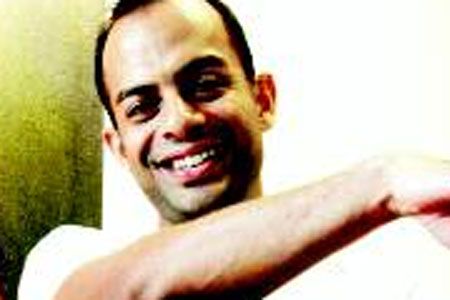
Kush Maini  created history when he became the first Indian driver ever to win a WSK (World Series Karting ) race at the La Conca international Circuit in Muro Lecce in the southern Part of Italy on Sunday the 3rd Feb 2013.

Kush who drives for Team Baby Race was third overall in qualifying out of over 41 entries in the 60 Mini category. All the participants were divided into 4 groups for the elimination heats as once 34 would Race in the Finals.

Kush was in Group C and won two of the heats while coming second in one of them. This entitled him to the Pole Position for the Start of the prefinal Race which was once again the first time for an Indian to start on Pole Position.

The Prefinal which was run over 8 laps of the 1.25 km circuit was extremely well fought with the top 4 drivers. Kush struggled a bit on the pace and finished third in the Prefinal. The Finals started with Kush in the third Place and on the very first Corner Kush moved into second Place behind Martinez.

Martinez pulled off an early lead and Kush was maintaining a distance of about 6 kart lengths as both were lapping at the same Lap times. Meanwhile Pagano who was in third showed extremely fast pace and was catching up to Kush. Soon Pagano overtook Kush and was on his way to catch up with Martinez. Kush played the waiting game and followed Pagano as both of them started to close on Martinez.

On the Eight lap Pagano overtook Martinez and on the 9th lap, Martinex took the lead again except that all the three drivers were driving like a train with no gap in between.

The three of them had broken away from the Pack and it was a very close and exciting race. On the very last Corner Pagano tried to make a move on Martinez and they both touched slowing down Martinez momentarily and also forcing Pagano off the track. Kush who was right behind Seized the opportunity and made a brilliant Pass on martinez which went all the way to the chequered flag where Kush finished just a mere.019 seconds ahead of Martinez in the mostexciting nail biting finish of the weekend.

Kush was extremely happy with the win and was continuously punching the Air to celebrate his victory.

On the Podium Kush was looking up again and again to make sure that he saw the Indian Flag that was rising behind him at the Podium Ceremony.

Kush with the three other European Champions for the other 3 events were then invited for a Press Conference to share their experience for the day.

Kush was very happy and said “I have been driving Karts from the age of 5 and started racing at the age of 7. I spent last year racing in Italy which was a great learning experience for me as I also got several podium finishes in many of the races. However WSK is the biggest race for me and to win here is fulfilling the start of a Dream to become one of the best Drivers. I am now looking forward to the balance three races of the Master Series as well as the two races of the Euro Series.”

Kush was very happy to share the same platform as Max Verstappen, Bocallachi and Alesio Lorandi.

Kush’s Elder brother Arjun Maini  did not have a good start to the event as some Kart issues prevented him from Qualifying in the front. He had a bad crash on the first Heat and followed it with a top 10 position in the second. However he has to be content starting the prefinal A in 23rd Position.

Earlier in the day Arjun was 3rd fastest and this gave him some hope to fight his way from the back of the grid. He drove brilliantly to make 10 positions and finally finish 13th in the KFJ category. This meant that he would be starting in 25th position in the finals that was run over 16 laps. Once again he had an excellent drive and finished 14th.

Still in pain from the crash on Saturday Arjun said, “It was a very tough weekend as I had a very bad start on Friday and Saturday but was very happy with the way I drove on Sunday to finish 14th from over 60 of the world’s best drivers. I will work hard to come in the top 5 for the races to follow.”

source: http://www.timesofindia.indiatimes.com / Home> Sports> Racing / by Arani Basu, TNN / February 09th, 2013

AMMA Award for Jallejade Madamma

Caption: Naati Vaidye of BR Hills Jallejade Madamma honoured by Geetharaja Foundation in city recently.

Mysore, Feb.3 :

Popular native medicine practitioner (Naati Vaidye) of Biligirirangana Hills Jallejade Madamma was honoured with Amma award by Geetharaja Foundation at an event organised to mark its 10th anniversary at Nadabrahma Sangeetha Sabha on JLB Road here on Wednesday.

Speaking on the occasion, KEA Chairman E. Maruthi Rao Pawar pointed out that Amma or mother occupied the greatest position on the earth who could be equated to God. He added that nation and earth were symbolically referred to as mother but regretted that the youth today were aping the west ignoring the nation’s culture.

Prizes were distributed to students who had won various contests. Corporator R. Lingappa, Dist. Kannada Sahitya Parishat President M. Chandrashekar, photographer Pragathi Gopalakrishna and others were present.

source: http://www.StarofMysore.com /Home> General News / February 03rd, 2013

From Dublin to Bangalore – Science Gallery model goes global

Having made science ‘cool’ at home, Dublin’s Science Gallery has global plans that are taking it as far afield as Bangalore, writes Ann O’Dea.

The highly acclaimed Science Gallery on Dublin’s Pearse Street has been bringing cutting-edge developments in science, technology and the arts to the general public since 2008, through interactive and award-winning exhibits, but the team behind the gallery now plans to replicate that successful model in a further eight countries.

From Dublin to Bangalore – Science Gallery model goes global . Michael John Gorman, founding director of Science Gallery

A donation of €1m from Google in December 2011 was used to set up the Global Science Gallery Network, which plans to open similar galleries in key cities worldwide. India was chosen alongside the UK, Singapore, the United States, Australia and Russia for the first wave of science hubs to be launched.

And it is not difficult to see why the idea is meeting with some success. Here in Dublin, the gallery has become part of the arty tech and science ecosystem, thanks to its quite unique model, says founding director Michael John Gorman.

“When we opened in February 2008, one of the reasons was we felt there was a real need to inspire and engage more 15- to 25-year-old young adults around science, technology and engineering, and to get more people considering courses and careers in these areas,” he says. “Since then, I think there is a mind shift that has happened where now people actively seek out science-related events and entertainment.”

The Brian Cox phenomenon

He does concede this may be partly attributable to the Brian Cox phenomenon – the ultracool British particle physicist and TV celebrity – not to mention figures like Ireland’s own Dara O’Briain, comedian and broadcaster whose background is in mathematics and theoretical physics. Indeed, O’Briain sits on the gallery’s Leonardo Group, 50 ‘creative’ individuals, scientists, technologists, designers and artists who feed ideas into the exhibitions.

“It was a deliberate decision when we were starting out,” says Gorman. “Many science attractions around the world are focused on very young children and families, and on school groups. We made a decision that we would have a more adult engagement with science technology and the arts. There’s this widespread idea that science is for kids and art is for adults. I don’t know why that exists as a perception but it needs to be challenged.

“When we were setting up the gallery at the boundary of the university (Trinity College Dublin) it seemed like there was an opportunity for the gallery to be a porous membrane for the university and its researchers, and for all the exciting stuff going on behind the closed doors of labs, to bring that out to the public, and draw the public into interactions with the university. We were determined that we wouldn’t vandalise the science, we wouldn’t dumb it down. There was nothing out there like that.”

In 2012, 300,000 visitors went through the Science Gallery’s doors. “To put that into perspective, when we’re starting up the gallery back in 2007-2008, our target was 50,000 visitors a year,” says Gorman.

Not only that, but 2012 saw its exhibitions tour to Singapore, Manila, New York and London.

“At the beginning of June, we had three exhibitions opening in three continents in three weeks,” says Gorman. “We also ran Ireland’s largest ever TEdx event in September in the Bord Gáis Energy Theatre, which sold out and had 2,000 people listening to people talking about the future of science and technology. In a strange way science has become cool.”

It was because that concept was quite unique that the gallery felt it could replicate the model as a ‘plug in’ to universities in other key urban centres around the world.

Science Gallery and India

Today, excitement is building in India, where in November the Karnataka State Government signed a memorandum of understanding with Science Gallery, and is launching the feasibility analysis this month. A strong steering committee is already in place, with stakeholders like the Indian Institute of Science, the National Centre for Biological Sciences, and the Srishti School of Art, Design and Technology already involved in the process.

And the Bangalore Science Gallery has other heavyweight backing, with none less than India’s leading businesswoman, self-made entrepreneur Kiran Mazumdar-Shaw a strong supporter of the initiative.

Often cited as India’s richest woman, Mazumdar-Shaw’s $800m business Biocon is one of India’s leading drug companies, with a workforce of some 6,000. She was included in Forbes’ The World’s 100 Most Powerful Women in 2012 and Time magazine’s The World’s Most Influential People in 2010. When I mentioned the Bangalore project on Twitter, to my surprise, she shot off a rapid and enthusiastic response.

Mazumdar-Shaw herself has strong Irish connections. She worked as a trainee manager in a biochemicals company in Cork back in the 1970s, before starting Biocon in the garage of a rented home in Bangalore in 1978, with seed capital of an equivalent $200 in today’s money. In 2001, Ireland’s Minister for Health at the time, Mary Harney, appointed Mazumdar-Shaw to the board of Science Foundation Ireland. Today she is Irish consul general in Bangalore.

She, too, tells me Bangalore was the obvious choice, as a “leading hub of information technology, biotechnology and nanotechnology, not only in India, but in Asia.

“The Science Gallery project is a welcome and timely addition to Bangalore’s growing stature as India’s science and technology capital,” she says. “It provides an ideal platform for interactive and multidisciplinary learning and knowledge creation.”

“Conceptually, the Science Gallery is the perfect format for advancing scientific education that has a mindset of explorative research,” she continues. “As the Irish consul general in Bangalore, I am delighted to see this meaningful and path breaking bond between the two countries being catalysed by Trinity College.”

Science Gallery is funded by a combination of Trinity College Dublin support, Government support, corporate partnerships, foundations, philanthropy and earned income.

“These supporters allow us to keep entrance to Science Gallery free of charge, which was a key principle from the outset,” says Gorman.

The earned or operational revenue has grown to about a quarter of its funding, says Gorman, thanks to the growing success of the café, the retail space, corporate hire and of course the successful touring exhibitions. During the financial year 2010/2011, Science Gallery increased its annual turnover by 20pc from 2010 to €2.2m.

Back in Bangalore, Gorman says the feasibility analysis should be completed in April, and shortly thereafter the gallery should move to the development stage, but the UK is likely to pip them to the post. Closer to home, Science Gallery is in advanced discussions with King’s College, London, regarding the setting up of a Science Gallery on its Guy’s Hospital campus there, scheduled to open in 2015, close to the Tate modern and the Shard building – a suitably edgy location for a very cool concept.

A version of this interview first appeared in The Sunday Times on 27 January

source: http://www.SiliconRepublic.com / Home> Innovation / by Ann O’Dea / January 30th, 2013

Padma Bhushan for Rajesh Khanna, Rahul Dravid

Noted physicist Yash Pal and space scientist Roddam Narasimha were named for the Padma Vibhushan awards Friday, with 106 other Padma awardees, including actors Sharmila Tagore, Sridevi, the late Rajesh Khanna, late satirist Jaspal Bhatti and Olympic medallists Mary Kom, Yogeshwar Dutt and Vijay Kumar.

Sculptor Raghunath Mohapatra and painter S Haider Raza were among the four chosen for the second highest civilian award, the Padma Vibhushan. Nobody was named for the Bharat Ratna for this year too.

Cricketer Rahul Dravid made the 24-strong list for the Padma Bhushan . List of Padma Awardees

Joining him was Godrej group chairman Adi Godrej and missile scientist A Sivathanu Pillai. The awards will be presented in March and April.

Kom, silver medallist at the London Games, is the only Olympian in the Padma Bhushan list. India’s other two Olympic heroes, wrestler Yogeshwar Dutt and shooter Vijay Kumar, were named for the Padma Shri, along with actors Sridevi and Nana Patekar, filmmaker Ramesh Sippy and fashion designer Ritu Kumar.

Rajendra Achyut Badwe, director of Mumbai’s Tata Memorial Centre, oncologist Pramod Kumar Jhulka of AIIMS, homeopath Vishnu Kumar Gupta and sculptor Rajendra Tikku were named for the Padma Shri.

Four more sportspersons were named for the Padma Shri — mountaineer Premlata Agrawal, para athlete Hosanagara Nagarajegowda Girisha, boxer Ngangom Dingko Singh and rower Bajrang Lal Takhar.

source: http://www.HindustanTimes.com / Home> North India> New Delhi / by HT Correspondent, Hindustan Times / New Delhi, January 26th, 2013

Musicians of Rudrapatna

Rudrapatna is not a forest, a mountain, a trekker’s delight or a water body, although there is one nearby. Rudrapatna is for music lovers and if you love carnatic music, then this place is worth a visit. It is said the village is an abode of Veda, Nada, and Taranga and its music is famous and goes back hundreds of years in time.

Some of the greatest carnatic musicians such as RS Keshavamurthy, RK Srikantan, RK Srinivasamurthy, RK Suryanarayana, RN Thyagarajan and RN Tharanathan (also known as the Rudrapatnam brothers), RK Raghavan, RK Prakash, RK Prasanna Kumar, RK Padmanabha, RS Ramakanth, RN Sreelatha and Rathnamala Prakash  and others had hailed from this village.
The story goes that two groups of people from Tirunelveli district in Tamil Nadu settled in the area. While one group performed rites like yagna and yaga, the other spent their time on music. Many musicians in the state today relate to Rudrapatna. The influence of music is obvious in the village. For example, a temple has been built in the shape of a veena and the garden is filled with artistic works of musical instruments.
A temple at the village built in the shape of a veena

While on a trip to Rudrapatna, one can also visit Ramanathapura, a village on the banks of the Cauvery. Sitting on the banks here while the sun sets is a soothing experience. The fish in the river are an attraction, so much so that vendors sell puffed rice with which visitors feed the fish. Local villagers have converted the area into a ‘fish sanctuary and have banned fishing at this spot. Besides, the fish sanctuary, there are a couple of temples dedicated to Lord Ram. It is believed that Ram had visited this place. The architecture of the temples, located on the banks of the river, is also worth noting.

Food: There are no big hotels near Rudrapatna or Ramanathapura, but one can get food either from Holenarasipur or Arkalgud.
How to get there
Hit the Nelamangala Road and head to Channarayapatna and from there to Holenarasipur. From Holenarasipur head to Ramanathapura. Those who plan to visit Shravanabelagola can also visit Rudrapatna. The road is in fairly good condition.
source: http://www.BangaloreMirror.com / Home> Columns> Quick Getaways> Story / by Sridhar Vivan / Wednesday, January 16th, 2013

Dr. Raja Ramanna & Kalpana Chwawla awards for Mysoreans

Caption: 1) Prof. Bhyrappa 2) Dr. Shubha

Mysore, Jan. 18

The Karnataka State Council for Science and Research, Indian Institute of Science, Bangalore, has announced the names of the recipients of various prestigious science awards for 2011:

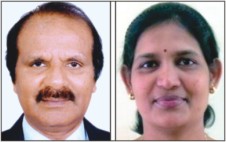
Among the awardees are two Professors of Mysore University — Prof. K.Byrappa and Dr. Shubha Gopal.

Prof. K. Byrappa, international authority in the field of Hydrothermal Technology, senior Professor of M.Tech in Material Science, University of Mysore and Founder Director of the Internal Quality Assurance Cell of Mysore Varsity, will be awarded Dr. Raja Ramanna Award for Science and Technology.

One of his books “Springer Handbook of Crystal Growth” published by Springer-Verlag, Germany, is the second biggest book ever published by Springer-Verlag which runs to about 1,857 pages. He has published over 200 research papers including 30 invited reviews and book chapters on various aspects of ‘Novel Routes of Solution Processing’ and some of his publications are highly cited.

He had earlier served as the Director of UGC Academic Staff College of Mysore Varsity, besides serving as the Chairman of the Department of Earth Science.

At present, he is the co-ordinator of the Rs. 55 crore project in Mysore University, on Material Science and Nano-technology, under the schemes University with Potential for Excellence and Centre with Potential for Excellence in a particular area.

Dr. Shubha Gopal, Chairperson, Dept. of Microbiology, University of Mysore, has been bestowed with the prestigious Dr. Kalpana Chawla Young Woman Scientist Award for 2011-12 by the Karnataka State Council for Science and Technology for her outstanding contribution in scientific research.

Dr. Shubha’s research focuses on the molecular pathogenesis of Listeria monocytogenes, especially the role of thiol-redox and carbohydrate metabolism, its biofilm formation and gene regulation. Besides, she has also worked on bioprospecting of medicinal plants and reported a novel flavanoid from Leucas aspera (Thumbe plant) which has a potential industrial application.

She has published several research articles in peer-reviewed journals, and presented various research papers in national and international conferences.

Other awardees are: Sir M. Visvesvaraya Senior Scientist Awardees: Prof. Raghavendra Gadagkar of IISc., Prof. K.Muniyappa of IISc. and Dr. K. Siddappa, Hon. Director of JSS Foundation for Science & Society and former VC of Bangalore University.

Dr. Raja Ramanna State Scientist Awardees: Dr. G.K. Narayana Reddy, former VC of Karnatak University, Dharwad; Dr. S.M. Shivaprasad of Intl. Centre for Materials Science, Jawaharlal Nehru Centre for Advanced Scientific Research, Bangalore.

Sir C.V. Raman Young Scientist Awardees: Dr. Mohammad Hussain K. Rabinal of Karnatak University; Dr. Michael Rajamathi of St. Joseph’s College, Bangalore; Dr. J. Seetharamappa of Karnatak University; Dr. Y.C. Janardhan Reddy of NIMHANS, Bangalore; Dr. Riaz Mahmood of Kuvempu University, Shimoga.

Prof. Satish Dhawan Young Engineers Awardees: Dr. Subhash C. Yaragal of National Institute of Technology Karnataka, Surathkal; Dr. K. Balakrishna of Manipal Institute of Technology.

Dr. Kalpana Chawla Young Women Scientist Awardees: Dr. Sharada Srinivasan of National Institute of Advanced Studies, IISc.

The award ceremony will take place on Jan.24 at Satish Dhawan Auditorium, Indian Institute of Science, Bangalore.

Minister for Science & Technology Anand Vasant Asnotikar will preside over the function and present the awards. Prof. G. Padmanaban, Emeritus Professor and former Director, IISc., will be the chief guest. Prof. P. Balaram, Director, IISc., will be the guest of honour.

source: http://www.StarofMysore.com / Home> General News / January 18th, 2013

Cultural archives

Indian music finds new home online
ARCHIVEOFINDIANMUSIC.ORG

The largest online repository of Indian music—from Carnatic greats to Manna Dey

The Archive of Indian Music (AIM) wears its ambition on its record-sleeve. The newest baby of Vikram Sampath, best known for his 2010 biography of Gauhar Jaan, the subcontinent’s first commercial recording artiste, the portal looks to be the largest digitized repository of out-of-copyright recordings by Indian gramophone artistes. With 2,000 recordings (dating currently between 1902 and 1952) already available on the site and up to 20 additions daily, the spread justifies the acronym.
“While researching the life of Gauhar Jaan, I had to look for her music—available in shellac records—in the by-lanes of Kolkata and Mumbai. I got many of her records, but I also picked up many other unknown artistes, paying up to Rs.900 for 3 minutes of music,” says Sampath, 32. “Soon after the publication of My Name Is Gauhar Jaan!, I went on a fellowship to the Institute for Advanced Study, Berlin, where I researched early gramophone recordings of Indian music. In London, Vienna, Berlin, all of which boast of excellent audio-history libraries, I repeatedly faced the question: Doesn’t India have a sound archive?”
On his return to India, Sampath received an invitation to 10, Janpath. “(Congress chief) Sonia Gandhi had read Gauhar Jaanand wanted to meet me. I wondered what we could talk about, and so broached on the subject of a music archive, since the state was a natural stakeholder,” Sampath smiles disarmingly. However, after one year of paper-pushing between Akademis and ministries, the project was still to take off. A chance encounter with then Infosys director T.V. Mohandas Pai in 2011 persuaded Sampath to go private, form his own not-for-profit trust, use Pai’s generous seed fund for sophisticated cleaning and conversion equipment, employ a single audio engineer and, finally, in December, go live at Archiveofindianmusic.org.
Still a work-in-progress, the archives feature a good mix of Carnatic luminaries (M.S. Subbulakshmi, K.B. Sundarambal, Mysore Vasudevachar), alongside some Hindustani artistes (Rasoolan Bai, ustad Imdad Khan), film star-singers (M.K. Thyagaraja Bhagavathar), political leaders (Gandhi), litterateurs (Rabindranath Tagore), the occasional Manna Dey and K.L. Saigal and the Visva-Bharati university chorus (in a 1912 recording of the complete Jana-Gana-Mana).
Many of the pieces have been uploaded from Sampath’s own collection, but the nine AIM trustees—musicians, record-collectors, aficionados—now help him track down old and rare records. Once procured, the records are put through a vacuum-driven master-cleaner, amplified on a high-fidelity player, converted into a digitized format and uploaded to the site.
While the artistes are listed alphabetically, there is little cross-indexing and dating of the material. So, at the moment, navigating the site is a matter of choosing an artiste and selecting a piece to listen to. The uploading of artistes is dictated by popularity—some tracks have received up to 400 plays in the two months the site has been live—but Sampath hopes that apart from the casual listener or history buff, the portal will work as a lively interactive site for researchers and students of music, with user-generated content and talk-through guides.
While the archives are accessible to all at the moment at  Archiveofindianmusic.org , a registration-and-payment process will be introduced soon.
source: http://www.livemint.com / & Wall Street Journal / Home> Lounge / by Sumana Mukherjee / Friday, January 11th, 2013

SJCE students bags highest paying job

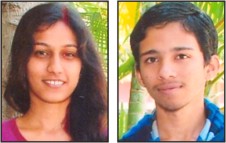
Caption: Nandini, Darshan

Mysore, Jan. 2:

Two final year students of Sri Jayachamarajendra College of Engineering (SJCE) — N.A. Nandini Bhavasar and T.A. Darshan — have bagged the highest paying job offer from Microsoft Corporation, an American Multinational Software Corporation. It has recruited these students SJCE from BE Computer Science and Information Science branch for its Research and Development job profile by paying the highest salary of Rs. 16 lakhs.

College Principal Dr. B.G. Sangameshwara said that Microsoft interviewed over 100 students from various branches and selected Darshan and Nandini after several rounds of interviews and added that the pay package is the highest in the College’s 50-year history.

Placement officer N. Pradeep said that the interview had six rounds spread over three months in which three rounds were held at the campus and the other three rounds were held in the Company’s Bangalore office.

Principal Dr. B.G. Sangameshwara has congratulated the students and lauded the efforts and support from the Management & staff of the College and placement team led by Prof. B. Mahananda, supported by Dr. Srinidhi and Pradeep.

source: http://www.StarofMysore.com / General News / January 02nd, 2013

Bangalore boy gets Grammy nod

Grammy nominee Arun Shenoy has come a long way from his school days in Bangalore. Arun, who is now involved in audio production in  Singapore , released his debut album ‘Rumbadoodle’, which has been nominated for the 55th Annual Grammy Awards in the Best Pop Instrumental Album category. Excerpts from a chat with Arun…

( Arun Shenoy )

How does it feel to have your debut album recognized on a world scale?

I am yet to come to terms with the magnitude of the fact that I am nominated for an award at this pinnacle of excellence in the music business. I am extremely proud of this labour of love, and happy that others believe in it too.

There are two other Indians — the late Pandit Ravi Shankar and  Anoushka Shankar  â€” who have been nominated for the 55th Annual Grammy Awards. What does this say about the impact Indian musicians are making internationally?

Both of them are already legends and globally established stars. I believe there is another Indian gentleman, though, whose name I chanced upon recently, who is nominated as well — Krishna Das, for Best New Age Album. It is interesting to see the growing impact musicians of Indian origin are making on the international music stage.

Why did you decide to bring out a gypsy rumba flamenco album for your debut?

I have always enjoyed fusion music. And as a world music form, gypsy rumba flamenco appeals to me for its raw intensity, with its rapid flourishes and passionate harmonies. I am not a traditional world artist. Rather, I decided to use this as a theme and incorporate other popular music sensibilities from pop, rock, funk and jazz. All of these forms have influenced me deeply and have been a part of my musical journey  and growth. So it was only fitting that I put together a project to pay tribute to them and create my own signature sound that is instantly recognizable.

We heard that you are acquainted with Kannada film star Puneeth Rajkumar.

Puneeth is a great artist and a down-to-earth individual. He is very keen on encouraging local talent and active in promoting Bangalore and India-based artists. He came to know of my work and he was quite enthusiastic about the fact that it’s by a former Bangalore person.

Puneeth speaks:

Arun Shenoy is my friend’s brother-in-law. I’ve heard his music. You feel extremely proud that he’s, first of all, from our city, a Kannadiga, and, above all, an Indian who has achieved so much.

source: http://www.articles.timesofindia.indiatimes.com / Home> Entertainment> Regional> Kannada> Fusion Music / by Anjali Muthanna, TNN / Deember 14th, 2012