Category Archives: Records, All

Infosys HR team wins Zenith 2012 award

A seminar on ‘ Building an engaged workforce’ was held by the National HRD Network (NHRDN) Bhubaneswar Chapter at the Infosys campus here on Friday.

A panel discussion held during the seminar that included a 360 degree view on workforce engagement, in which NHRDN office-bearers including its president Dr Saroj Mohapatra and vice-president Dr Suvendu Das focussed on important issues relating to present-day HRD (human resource development.

The NHRDN members informed about their reward and recognition programme, Zenith, which was organised as part of the seminar to celebrate excellence and reward high performers in the HR fraternity in the State. This year, the HR team of Infosys won the Zenith 2012 while the HR team of JSPL became the runners-up and the PPL HR team got a consolation prize.

Among others, Kalinga Soft CEO Srijat Mishra, National Board member of NHRDN Sourav Daspatnaik, general secretary of NHRDN Dr Isa Mishra and principal consultant of Think Talent India Bhabani Mohanty were present.

source:  http://www. dailypioneer.com / Home> State Editions> Bhubanewsar / Monday, December 17th, 2012

Proud bunch of budding scientists earns global laurels

Bengaluru:

They could all be budding scientists. A student from Hoskote in Bengaluru rural district   and  five other  high school students of Karnataka have done the state proud by being selected to represent India  at the Intel International Science and Engineering Fair (Intel ISEF) to be held in May 2013 in Arizona, USA, along with a few other students from around the country.

An SSLC student of the Citizens High School in Hoskote, M. Yeshwanth, was selected based on his discovery that you can  kill pythogenic bacterial growth using  Bauhinia leaves. The Bauhinia,  known as camel foot (and locally as Basavana Paada) has high anti-bacterial quality.

“I am very happy to be going to the fair in USA as  I have never stepped outside Bengaluru . I cannot express how wonderful it feels to be representing my country in a science fair. Besides my parents I’d like to thank my teachers and project guide, G. Eshwaraiah from Vijaywada,” said an elated Yeshwanth.

The national selection fair in New Delhi saw 111 research based projects,  of which 40 were from Karnataka. All projects were supported by extensive research done by students from Classes V to XII.
Yeshwanth said said he spent four months working on his project.

“The testing was done in our school lab. The pathogenic bacteria such as bacillius suvtilis cause diseases like endo cardatis and meningitis,”  he explained, adding that he  intended to study the subject in greater depth now that his project had been selected for presentation at an international event.

Nayana K R and Aishwarya C A from Amrtita Vidyalayam in Davangere have won a berth in the international fest for a mathematical science  project in which they presented Vaina’s Square Lemma: Extension of Pythagoras Theorem on division of square into [N2 + 1] equal square.

Himanbindu T V and Bhargavi N Sarod of the Amrita School have won a place on the basis of their chemistry project.

Mahesh K of the St Philomena High School in Puttur too will participate in the fair.

source: http://www.DeccanChronicle.com / Home> News> Current Affairs / by Amit S. Upadhye, DC / December 06th, 2012

Tipu’s rocket court may be made a museum

The unearthing of two cannons belonging to the Tiger of Mysore, Tipu Sultan, in Bengaluru by Namma Metro workers recently, has given rise to hope that the dilapidated rocket court in Srirangapatna, where Tipu designed and fired the world’s first war rocket nearly 250 years ago, will receive the attention it deserves and be converted into a museum.

The cannons’ discovery has drawn the attention of the Defence Research and Development Organisation (DRDO), which is now looking into the matter of conserving the rocket court.

Chief Controller of DRDO , Dr. W. Selvamurthy, plans to visiting Srirangapatna on December 20 to study the condition of the monument and submit a detailed report to the Union government for its protection.

“Tipu Sultan revolutionised the use of advanced weaponry in the battle zone and was the first to introduce rocket technology.

So every piece of this history should be preserved. I feel the rocket court in Srirangapatna should be converted into a museum and the cannons found in Old Bengaluru put on display there”, said Mr. Selvamurthy.

Former DRDO chief controller Dr. Sivathanu Pillai had in 2006 submitted a report on the pathetic condition of the rocket court and recommended that the site be converted into a rocket museum.

Former President , Dr. A.P.J. Abdul Kalam, too has shown keen interest in protecting the monument.

source: http://www.DeccanChronicle.com / Home> Channels> Cities> Others / by S. V. Krishna Chaitanya, DC, Mysore / November 29th, 2012

Rare bronze seal of Wadiyars era found

Mysore, Nov. 23:

A rare bronze seal belonging to the Mysore Wadiyars period has been discovered near a dilapidated Shiva temple in Besarak Modalli region, near Kongarahalli of Kamagere in Kollegal taluk by Dr. B. Basavaraju Tagarapura, Director, Regional Centre, Karnataka State Open University.

The seal contains three lines of letters which read: ‘Surya, Chandra, Nakshatragala Saakshiyagi Sri Chamaraja Wadiyar Tanuja Krishnaraja Wadiyar.’

Dr. Basavaraju says that the discovery of the bronze seal is quite significant as it establishes the history of the region, fortified by the discovery of inscriptions.

source: http://www.StarofMysore.com / General News / November 23rd, 2012

Indian team ready for T20 Blind World Cup

The first ever T20 Blind World Cup slated to begin from December 2 to 13 in Bengaluru will have nine teams, including host India. Having defeated Pakistan in March, India is among the favourites to win this Cup.

In India, cricket is passion. Be it Test cricket, one-day internationals or Twenty20, we never miss an opportunity to enjoy a cricket match. However, there is another version of cricket that deserves the same kind of attention.

Blind cricket, which is played through the length and breadth of India, requires more attention than what normal cricket gets. Not because they are played by visually impaired people, but because of their fighting spirit and a challenge to pursue a game which many able people only dream about. With above 200 teams, each state has 15-20 teams, and more than 10,000 players, cricket for the blind is no more an isolated game. It’s another thing that it has not got the deserved attention.

In a novel effort to make these visually impaired cricketers realise that they too are unique and not any way behind normal cricketers, Bengaluru-based NGO Samarthanam and Cricket Association for the Blind in India (Cabi) joined hands to organise the inaugural T20 Blind Cricket World Cup in Bengaluru from December 2 to December 13, with the SBI being the principal sponsor. Established in 1997, Samarthanam has always supported blind people in fulfilling their needs.

Mahantesh, a founder manager of Samarthanam and general secretary of Cabi, says: “Cricket in India is a mania, and visually challenged people are no exceptions. They follow the sport with the same passion and have the same urge as a normal cricketer has to play cricket.”

Deciding to hold this World Cup in May 2011 at the annual general meeting of the World Blind Cricket Council held in Dubai, there was a mammoth task before the organisers to keep everything in place. “It was a mammoth task to organise and coordinate with several individuals and institutions to get every approval ready for the event. Getting good grounds and adequate financial support were the two major challenges that we had to face,” says Kishore Joseph, media associate of Team India.

The rules set for the tournament are unlike the usual T20 cricket tournament. The ball to be played with in the tournament will have jingling bells in it so that the visually impaired can play on their hearing ability. The bowler has to deliver the ball underarm, and the ball must pitch twice before reaching the batsman, with the first pitch before halfway of the pitch. The stumps are made of steel to help the players differentiate between the ball hitting the bat and the batsman getting bowled.

The cricketers in the team are divided into three categories B1 (totally blind), B2 (partially blind) and B3 (partially fainted). The wicketkeeper — a partially sighted player — plays the role of a marshal, whose responsibility is to guide the bowlers and the fielders with his clapping and loud talk. He helps the bowlers locate where the stumps are, fielders to stop the ball and also to throw it back to him.

The players who will represent India have been selected from across the country on the basis of their performance in the selection trials tournaments held at Dharwad, Karnataka and Kochi. The Indian contingent of 17 players will be led by 24-year-old hard hitting opening batsman Shekar Naik from Karnataka. The Indian team, which had defeated Pakistan in March, is among the favourites going into the T20 World Cup.

The Indian blind cricket team has taken part in three World Cups, reaching the finals in the 2006 edition. To keep their prospects high in this inaugural cup and to keep at bay teams like Australia and Pakistan — whom they consider as tough opponents — the players are undergoing vigorous training under the guidance of their coach Patrick Rajkumar at the IIM grounds in Bengaluru. Skipper Naik says, “The condition camp is under progress and we practice from 6 am to 4 pm.” Not quite keen to disclose his strategy, Naik says he will be shuffling the teams according to the strength and weakness of the opponents.

Naik too had his difficulties in the past as he belonged to a very poor and backward family. However, Samarthanam Trust for the Disabled helped him make his dreams come true. “As both of my parents were blind, I did not know what my future would be. But when I got in touch with Samarthanam, it supported me in every form, be it education or sports. Today I have been to many countries representing the Indian blind cricket team. And I am a confident captain aspiring to win the T20 World Cup,” says Naik.

The inaugural ceremony will be held in Shree Kanteerva Stadium, Bengaluru, and a total of 39 matches will be played, with four matches every day. The organisers have booked three grounds viz Central College Grounds, Bengaluru; KSCA, Aloor Ground; Nellamangala & Aditya Global Sports Ground, Nellamanga, Bengaluru Rural, to conduct the matches.

source: http://www.asianage.com / Home> Sports> Cricket / by Abhishek Chakraborty, Age Correspondent / November 24th, 2012

Vaidya Sahitya Award to Mysore Doctor

Gulbarga, Nov. 16

The book ‘Madhumeha: Dashavyadhigala Mula’ written by well-known Diabetician of Mysore Dr. V. Lakshminarayana and published by Kuvempu Bhasha Bharathi Authority has been selected for the Dr. P.S. Shankara Shreshta Vaidya Sahitya award for the year 2012.

The award carries a cash prize of Rs. 5,000, certificate and a plaque. The award will be presented to Dr. Lakshminarayana at the Dr. P.S. Shankara Pratisthan’s 13th anniversary function to be held at Gulbarga on Jan. 1, 2013.

Dr. Lakshminarayana has the credit of having served Rashtrakavi Kuvempu as his personal doctor for a decade. In his book, Dr. Lakshminarayana has explained in simple language his research experience and about the practical treatment.

source: http://www.StarofMysore.com / General News / November 16th, 2012

Country’s first intelligent transport system launched in city

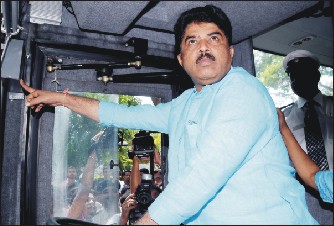
Caption: The Transport Minister R. Ashok is seen switching on the Intelligent Transport System (ITS) in a KSRTC bus in front of Senate Bhavan, Manasagangotri in city this morning.

Mysore, Nov. 17

The Intelligent Transport System (ITS), a first of its kind in the country, was launched by Deputy Chief Minister and Transport Minister R. Ashok here this noon.

Speaking after launching the ITS system at a function held at Sri Nalwadi Krishnaraja Wadiyar auditorium, Senate Bhavan in Manasagangotri, Ashok said that the system is provided at a cost of Rs. 30 crore.

“It will facilitate passengers to get information such as arrival of buses to the stops and details of bus movement from select bus stops by sending SMSes,” he said and added that the ITS system would be extended to other cities in future.

“The State Government is working towards extending transport facilities to every village,” Ashok said and added that plans are on the anvil to introduce intra-city buses in Tumkur, Gulbarga and Mangalore also, in order to prevent people from spending more on private or personal transport.

“The ITS is a game-changer,” said the Minister and added that it will make public transport more efficient and transparent.

Automatic Vehicle Location (AVL) information has been provided to track all city buses in real-time, Passenger Information System (PIS) have been installed at 193 locations, in-bus Display and Automated Voice Announcement System have been provided in all city buses, Central Control Station with Video Wall, Servers, Workstations and Software and MIS reports on fleet management providing performance of the bus system and drivers.

Informaiton can be obtained from the 167 LED display boards and 26 LFD boards at terminals, stops and others strategic locations.

For Interactive Voice Response System (IVRS) — dial 1800 4255220.

SMS 98700-11012 to get bus arrivals and departures in real-time at all bus stops in the city.

Log in to http://mitra.ksrtc.in for real-time bus location map.

Chamaraja MLA H.S. Shankaralingegowda presided over the function.

MLC Siddaraju, Karnataka Zoo Authority Chairman M. Nanjundaswamy, MUDA Chairman L. Nagendra, Karnataka Exhibition Authority Chairman B.P. Manjunath, KSRTC MD Manjunath and others were present on the occasion.

source: http://www.StarofMysore.com / Home> General News / November 17th, 2012

Noor Inayat Khan: The Indian princess who spied for Britai

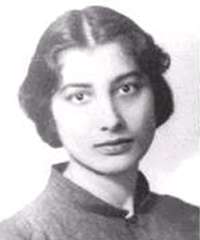
The Princess Royal is set to unveil a sculpture of Noor Inayat Khan, dubbed the “Spy Princess” by her biographer Shrabani Basu in London’s Gordon Square Gardens.

Raised in Britain and France and a descendant of Indian royalty, bilingual Noor Inayat Khan was recruited by the elite Special Operations Executive (SOE) in 1942 to work in Paris as a radio operator.

Records from the national archives show she was the first female wireless operator sent to Nazi-occupied France during World War II.

After evading capture for three months, the spy was imprisoned, tortured and eventually shot by the German Gestapo at Dachau concentration camp in 1944.

Her final word – uttered as the German firing squad raised their weapons – was simple. “Liberté”.

Liberty was a notion the pacificist-turned-war-heroine held deeply, according to Ms Basu.

For her bravery, she was posthumously awarded the George Cross. In France she was honoured with the Croix de Guerre, and later with two memorials and an annual ceremony marking her death.

Indian royalty

Brave, glamorous and both sensitive and formidable, it is said she acted not out of a love for Britain, but out of an aversion to fascism and dictatorial rule.

Her father was a musician and Sufi teacher, and Noor Inayat Khan was raised with strong principles and believed in religious tolerance and non-violence.

Ms Basu claims she “couldn’t bear to see an occupied country”, a notion that seems to run in her family.

Noor Inayat Khan’s great-great-great-grandfather was Tipu Sultan, an 18th century Muslim ruler of Mysore. He refused to submit to British rule and was killed in battle in 1799.

Born on 1 January 1914 in Russia to an Indian father and American mother, the agent’s infancy was spent in London.

The family moved to France when she was a child and lived in Paris, where she was educated and learnt fluent French.

A bronze sculpture of Khan has been erected in Gordon Square Gardens on land owned by the University of London

The national archives describe how the sensitive young woman studied both medicine and music.

In 1939 the Twenty Jataka Tales, a collection of traditional Indian children’s stories she had retold, were published in Le Figaro.

When war broke out in 1939, Noor Inayat Khan trained as a nurse with the French Red Cross.

She fled the country just before the government surrendered to Germany in November 1940, escaping by boat to England with her mother and sister.

‘Tigress’

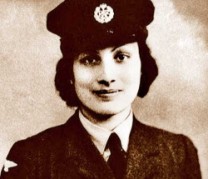
Shortly after arriving in the UK, she joined the Women’s Auxiliary Air Force (WAAF) as a wireless operator and soon caught the attention of recruiters from the SOE.

Also known at the time as Nora Baker, Khan joined the elite spy squad in 1942.

She was deployed to France a short time later despite an SOE training report describing her as “not over-burdened with brains” and “unsuited to work in her field”.

Codenamed “Madeleine”, she joined others in the resistance network Prosper, famously tasked by then Prime Minister Winston Churchill to “set Europe ablaze”.

Despite suspicions that the network had been infiltrated by a Nazi spy, Khan refused to return to Britain, risking arrest by the Gestapo.

Ms Basu – who spent eight years researching her life – told the BBC: “She was this gentle writer of children’s stories, a musician, but she was transformed. She was a tigress in the field.”
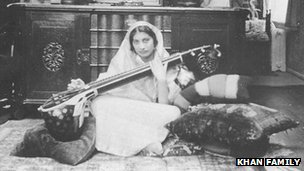
Noor Inayat Khan was raised by her Sufi father to be tolerant of other religions and a pacifist

With her team gradually captured by the Gestapo, Noor Inayat Khan continued for as long as possible to send intercepted radio messages back to England.

Despite her commanders urging her to return to England, she single-handedly ran a cell of spies across Paris for three more months, frequently changing her appearance and alias.

Eventually, she was betrayed, arrested and imprisoned. She was sent to Pforzheim prison in Germany where she was kept shackled and in solitary confinement.

She refused to reveal any information, despite 10 months of repeated beatings, starvation and torture by her Nazi captors.

Her fortitude – and two escape attempts – led her captors to brand her “highly dangerous”, despite her pacifist upbringing.

‘Inner strength’

In September 1944, she and three other female SOE agents were transferred to Dachau concentration camp where on 13 September they were shot and killed.

Ms Basu has described her life as “inspirational”, and said the modern world can draw lessons from the story of Noor Inayat Khan.

She said: “For her to come into this world on the front line taking on the Gestapo, showed her inner strength and her courage, her immense courage and resilience.

“It’s very inspiring, especially given the the troubled times that we live in. It is important to remember these qualities and values.

“Two and a half million Indians volunteered for the war effort and it was the largest single volunteer army.

“I think we must not forget their contribution. Noor was part of this.”

source: http://www.bbc.co.uk / Home> UK / by Samantha Dalton, BBC News / November 08th, 2012
Indian-origin ‘spy princess’ Noor Inayat Khan to be honoured by England

A bronze bust of Indian-origin British ‘spy princess’ Noor Inayat Khan, who worked in France during World War II before being tortured and shot by the Germans, is being unveiled today in Gordon Square Gardens here, near the house where she lived as a child.

Noor Inayat Khan / DNA

It is said to be the first such memorial in Britain dedicated to a Muslim and the first in honour of an Asian woman.

Khan, posthumously awarded the George Cross for her work in France and for revealing nothing of use to her interrogators despite being tortured by the Gestapo for 10 months, is a direct descendant of Tipu Sultan, the renowned Tiger of erstwhile princely state of Mysore who refused to submit to British rule and who was killed in battle in 1799.

The event marks the end of several years of campaign by the Noor Inayat Khan Memorial Trust headed by her biographer Shrabani Basu, to revive the memory of the forgotten war heroine.

The campaign has received the support of British Prime Minister David Cameron and several MPs and Peers as well as from eminent women like film maker Gurinder Chadha, stage artist Nina Wadia and sitarist Anoushka Shankar.

Basu, founder of the Noor Memorial Trust and author of her biography – Spy Princess – said she became interested in Khan’s story from “pure curiosity” about how an Indian woman could have been involved in the theatre of war in Europe.

“As I started researching her life, I realised she was a Sufi who believed in non-violence and religious harmony and had yet volunteered to be in the frontline,” Basu, a journalist, said.

“Khan – code named Madeline and shot dead at Dachau concentration camp, was the proud descendant of a ruler who had died fighting the British, her own father was a strong nationalist, and Noor was a great admirer of Pandit Jawaharlal Nehru and Mahatma Gandhi.

“Though she believed firmly in Indian independence, she was focused and knew that it was important to fight the war against fascism”.

Khan was the last essential link with London after mass arrests by the Gestapo destroyed the Special Operations Executive (SOE)’s spy network in Paris.

As her spy circuit collapsed, her commanders urged her to return, but she refused to abandon her French comrades without communications.

For three months, she single-handedly ran a cell of spies across Paris, frequently changing her appearance and name until she was eventually captured.

The bust is being installed on land owned by the University of London, close to the Bloomsbury house where the spy princess lived as a child in 1914 and where she returned while training for the SOE during the World War II.

source: http://www.dnaindia.com / Daily News & Analysis / Home> India> Report / Place: London, Agency: PTI / Thursday, November 08th, 2012

Tippu Sultan’s Descendent Noor Inayat’s Bronze Bust at London

London, Nov. 5

A bronze bust of Noor Inayat Khan also known as ‘Spy Princess’ for her role in a dangerous secret mission against the Nazis, will be unveiled by Princess Anne in London on Nov. 8.

The bust is sculpted by Karen Newman, a London-based artist and will be installed in the north-east corner of Gordon Square, near the house where Noor lived and spent her off-days reading on a bench in the Square.

Basu, author of Spy Princess, The Life of Noor Inayat Khan and the founder of Noor Inayat Khan Memorial Trust, which raised 60,000 Pounds from the public for the memorial said that the memorial for Noor in Gordon Square would ensure that her story of bravery and sacrifice will not be forgotten by the future generations.

Noor Inayat Khan was born to an Indian father Hazrath Inayat Khan and an American mother Ora Ray Baker in the Soviet Union on 1st January 1914. Noor was a descendant of Tipu Sultan, the 18th century ruler of Mysore. Noor’s family lived in London and moved to Paris when Noor was just six years old. On the outbreak of the Second World War she trained as a nurse with the Red Cross.

In May 1940 France was invaded by the German Army. Just before the French government surrendered she escaped to London with her mother and sister.

Noor volunteered for the war effort and joined the Women’s Auxiliary Air Force (WAAF) and was eventually recruited by the Special Operations Executive (SOE).

Noor was the first woman operator to be infiltrated into occupied France and did crucial work for the allies. She was betrayed, captured and finally killed in the Dachau Concentration Camp.

Noor IUnayat Khan was posthumously awarded the George Cross by Britain and Croix de Guere award by France.

source:  http://www.StarofMysore.com / General News / November 06th, 2012