Category Archives: Records, All

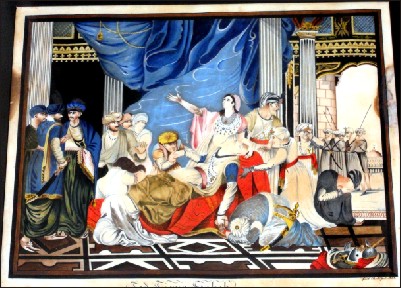
Paintings of Tipu’s death & Hindu temple for auction at UK

Mysore, Sept. 12

Mullock’s Auctions, United Kingdom, will be auctioning a selection of Indian artifacts, some after the annexation of Mysore by the British, including an important 18th century watercolour of a Hindu Temple and a painting of Tipu Sultan on Sept. 27 at Ludlow Racecourse, Shropshire, UK. A British School painting depicting death of Tipu Sultan dating to 1828 is expected to fetch 2000 – 3000 pounds.

Another 18th century water-colour painting of Gavi Gangadhareshwara Temple in Mysore by British artist Lt. James Hunter will also be auctioned. James Hunter was a Lieutenant in the Royal Artillery under Cornwallis during the Third Anglo-Mysore War where British and Company troops defeated Tipu Sultan.

The watercolor was published in the book Picturesque Views in the Kingdom of Mysore in 1804 and is expected to fetch between £600 to £800. Other notable pieces include several early books on Mahatma Gandhi and historical documents relating to India.

source: http://www.StarofMysore.com / General News / September 12th, 2012

Mandya artist claims kirigami is an Indian traditional art form

Mysore:

Kirigami is well known as a Japanese art form involving paper. But, going by the claims of a Mandya-born artiste, the art of hand cutting designs on paper is a typical art of Mathura, which makes it an Indian traditional art.

Artist Syed Fakrudin Huseni said the traditional art was started in Mathura in the 14th century as per records. Many people are not familiar about its Indian name ‘Sanjhi’.” Motifs from Krishna’s stories are created on paper and used to decorate spaces during festive seasons. “It was also used for filling colours on the floor of temples or in front of houses,” he explains.

Huseni said he chanced upon the “Indian art” a decade ago while attending a camp. Someone introduced him to ‘Sanjhi’, after which he did a research by touring the state. Just like the images of Krishna, Huseni does images of Ganesha, birds and rangoli designs.

The traditional art also has a folk touch in Karnataka. According to him, the art is called by different names in the state. In Shimoga, it is called ‘Parapare’, while it is ‘Gejje Haara’ in Udupi. In Chamarajanagar and rural areas, people know the art as ‘chitra’ (design).

The 36-year-old artist has been travelling across the state for the past nine years to spread the good word about this “folk art”. “I want this art to be called Sanjhi, and not kirigami. Many people in Bangalore are interested to learn this, but they call it a Japanese art,” he said.

However, artist Thyagarajan Wesley begged to differ, saying Indians may have adopted the Japanese art form centuries ago. “As per the records that I have come across, the art forms involving paper cutting and paper folding were started by Japanese. It is their traditional art. Indians may have adopted that centuries ago.”

Till date, Huseni has visited 18 districts, which include Gulbarga, Dharwad, Chikmagalur, Hassan, Mandya, Chamarajanagar, Ramanagaram and Mysore, to spread awareness on Sanjhi. He has conducted workshops for people, including children and senior citizens. He has exhibited his works in many places. But they differ from traditional Sanjhi style. He implements folk and contemporary designs in his works. That not only makes him unique, but also gives a different touch to the traditional art. Huseni hails from Shivanasamudra in Mandya district. He has been awarded with Mysore Dasara Award-1999.

source: http://www.timesofindia.indiatimes.com / Home> City> Mysore / by Yashaswini  S N, TNN / September 11th, 2012

Messiah of Orphan Corpses Ghulam Hussain passes away

Ghulam Hussain

Mysore, Sept. 10

Ghulam Hussain (65), a messiah who had performed last rites of more than 5,000 unclaimed dead bodies, irrespective of their religious affiliations at his own cost over the last 40 years, passed away at his Sathyanagar residence near Udayagiri in city this morning following a massive heart attack.

The Good Samaritan that he was, he also used to bear the medical expenses of destitutes and performed the last rites of the bodies as per the traditions of respective religions.

He leaves behind his wife, son and a daughter.

Namaz-e-Janaza will be held today at 1.30 pm at Masjid-e-Elahi in Elahi Nagar, and the burial will take place at the Old Muslim Burial Ground behind Central Jail.

Besides being a saviour for unclaimed bodies, Ghulam Hussain served in various organisations in different capacities as Secretary of Elahi Welfare Association, member of Wakf Board and School Development Committee of Sathyanagar Government Higher Primary Urdu School, etc.

MLA Tanveer Sait, former Mayors Ayub Khan and Arif Hussain, former Corporator Anwar, President of Muslim Co-operative Bank Mir Humayun, City President of All India Milli Council Chand Saab, State Youth Congress President Rizwan Arshad, journalist Mohammed Nayeem and well-wishers have condoled the death of Ghulam Hussain.

source: http://www.StarofMysore.com / General News / September 10th, 2012

Pages from History: Lansdowne’s Mysore connection

By Prof. A.V. Narasimha Murthy, former Head Department of Ancient History & Archeological, University of Mysore

The name of Lansdowne is on the lips of every Mysore- an for the past one week for a wrong reason, that being the collapse of a building due to heavy rains which lashed the city of Mysore recently. Unfortunately, the collapse of this heritage building took a toll of precious young lives, injuring others. The entire city mourned the death of the innocent lives.

Some of my friends asked me a question, “Are you for the tottering heritage buildings or for the present and future?” It made me pensive as I could not give an immediate reply. It is hard to choose between the two. Finally, I said to myself that this is due to human failure and not the fault of the heritage building. Had the conservation wing of the concerned department taken proper steps at the proper time, things would have been different. Even the people who were using this building for their business are to be blamed for their wrong decision of going to the court against vacating the building which would have taken away their livelihood temporarily till the completion of the repair work.

Some years ago when Chiranjeevi Singh was in-charge of the Mysore Palace, the Palace was found to be structurally weak as not to take the load of Dasara music programmes. He took the decision of not conducting the Dasara music programme at Amba Vilas. Many eyebrows were raised and politicians showed their anger towards this IAS officer by going to the Vidhana Soudha at Bangalore to bring pressure on him. Good sense prevailed on the power that was and saved a possible calamity. Consequently, the Dasara music programmes take place in front of the Palace without endangering either the Palace or the music lovers. But that was not to be the case of Lans-downe building.

Lansdowne (1845-1927) was a famous Viceroy of British India and that is how he came to have a link with Mysore. He was born in an Irish family on Jan. 24, 1845. His full name was tongue twisting, Henry Charles Keith Petty-Fitzmaurice, 5th Marquess of Lansdowne. His father was Henry IV and mother was Emily. They were rich and naturally he was educated at Oxford and at the age of just 21, he succeeded to his father’s position. He married Maud Evelyn Hamilton. He was elected to the House of Lords from the Liberal party and became the Chief of Treasury under Prime Minister Gladstone. He resigned and became Governor General of Canada. Because of his vision and efficiency, he was appointed as the Viceroy of British India in 1888 and he continued in that post till 1894.

His period was very eventful in British Indian administration. His main contribution was the extension of British Empire by annexing certain areas, particularly North-East India. He also took various steps to enhance the opportunities for Indians to learn English. He dabbled in the politics of Afghanistan as also Manipura and Kashmir. Practically he cheated the people of Manipura and well-meaning Britishers also condemned him on this account.

There were hundreds of Maharajas in British India most of whom were stooges of the British Empire. To curb their power, Lansdowne brought an Act which compelled the Maharajas to maintain a separate army to help the British in times of need. Thus the Indian Maharajas had to waste huge amounts of money to maintain this white elephant. Even the Maharaja of Mysore did the same to curry the favour of Lansdowne. The contemporary Mysore Maharaja was Chamaraja Wadiyar IX and he took special care to keep the Viceroy Lansdowne in good humour.

After retirement from India as Viceroy, he served as the Minister in-charge of wars. In the meantime, he lost his son in First World War (1916) and this had serious impact on his health. Consequently, he passed away on June 3, 1917. On the whole he was considered a good, benevolent and cultured administrator.

The British Governors and Residents were always creating problems to the rich Maharajas to get maximum benefits for themselves. The then Governor requested Chamaraja Wadiyar IX to invite Viceroy Lansdowne and his wife to Mysore to show them the good work that was being done in the State. It was decided to build an elegant and architecturally beautiful building to commemorate his visit. The Viceroy arrived in Mysore on Nov. 10, 1892 and inaugurated the building which was then known as Lansdowne Bazaar (market). Lansdowne praised the Maharaja in glorious terms.

It was built at a cost of 89,000 rupees. It extended upto the Devaraja Market. In course of time that portion was removed to make way for future development. It even had a fountain. The building has cusped arches with a small walk-path. The first floor also had rooms which were leased out on rent.

In recent years (half a century ago), it housed a variety of small businesses such as DTP, photoframe, ayurveda shop, dentist, khadi shop, newspaper house and a juice & ice cream shop called Phalamrutha.

This Phalamrutha was managed by Y.S. Gundappa, a grand old man who was also a freedom fighter and a philanthropist. It is said that when Gandhiji came to address a public meeting at nearby Town Hall, he came to Phalamrutha and tasted the sogade root juice which was Gundappa’s speciality. I had taken Dr. Mathoor Krishnamurthy to this place. Not only we tasted sogade juice but also got a good donation from Achuta, the grandson of Gundappa.

The khadi emporium was also sanctified by Mahatma Gandhi’s visit. Lansdowne building was also a centre of journalists of the city. It housed the offices of Thayinadu and Mysore Patrike.

The fate of this celebrated building is now uncertain. Culture-minded people are watching with fingers crossed whether Lansdowne building will raise or go down into the pages of history. For the present, it is a million dollar question.

source: http://www.StarofMysore.com / Feature Articles / September 02nd, 2012

Freedom Fighter Thathayya remembered

Mysore:

Mayor Rajeshwari Puttaswamy is seen after garlanding the statue of freedom fighter and journalist Thathayya (Dayasagar late M. Venkatakrishnaiah), on the occasion of his birth anniversary, at the Thathayya Park in front of City Bus Stand on New Sayyaji Rao Road in city this morning.

MCC Commissioner Dr. M.R. Ravi, Deputy Mayor Mahadevappa, Assistant Commissioner E. Thimmappa, Industrialist R. Guru, President and office-bearers of Anathalaya & Dayasagar late M. Venkatakrishnaiah Vichara Vedike and others are seen.

source: http://www.StarofMysore.com / General News / Sunday, September 02nd, 2012

August 28, 1995 – Anil Kumble’s little-known miracle for Northamptonshire

Seventeen years ago, Nottinghamshire won the toss, piled up 527 and still managed to lose by an innings. Arunabha Sengupta looks back at one of the lesser-known miracles worked by  Anil Kumble.


If a team ends the first day of a four-day match at 353 for one, it is generally assumed that they can’t lose from there. Let alone by an innings.

So, when the Nottinghamshire skipper, Tim Robinson, accepted the offer for light just after 6.10 pm on Thursday, he had every reason for smug satisfaction. He was unbeaten on 204, his second-wicket partnership with Graeme Archer already worth 285. Even Anil Kumble, the imported weapon for  Northamptonshire known for his endless volley of poison-tipped spears, had looked rather less than threatening.

Northants, still well placed in the race for the County crown, did fight back the following day. Robinson was trapped plumb by the Zimbabwean all-rounder Kevin Curran. Captain  Allan Lamb executed an extraordinary pirouette and double pike, pulling off an one-handed blinder at gully to send back the dangerous Chris  Cairns. But, Archer carried on until David Capel got him leg before for 158. Kumble did pick up a few wickets towards the end to finish with four for 118, but the innings stretched on till tea, amounting to a massive 527.

Richard Montgomerie and Alan Fordham opened for the hosts and reached 149 without loss when stumps were drawn on the second day. A run-feast looked inevitable before a yawn inducing draw.

560 in a day

What Saturday brought forth was more of an orgy than a feast, the spread several times more lavish than expected, wild and unchecked. Northants amassed 560 in a day, with Fordham, Lamb and wicketkeeper Russell Warren blasting hundreds.

From time to time, Cairns worked up frantic pace, but he had little support at the other end.  With a green coating bang in the middle of the pitch, both seamers and spinners seemed intent on adding that spot of colour to their offerings, and the batsmen had ample opportunity and time to rock back and pull or cut with disdain. Robinson winced and frowned, but could not help it.

As many as 219 runs were scored during the final session, with Curran and Capel rollicking along the time-tested path of blocking a few and smashing the rest. The score at the end of the day stood 709 for seven.

After a break to play the 50-over AXA Sunday League game, the teams regrouped for the final day on August 28.

August 28, 1995

Capel raced to his century from just 87 balls, the fourth hundred of the innings, and Northamptonshire declared 254 runs ahead – having added 72 from 35 minutes in the morning. Extras contributed a whopping 64.

When Nottinghamshire started their second innings, opener Paul Pollard was bowled by a superb in-ducker from Curran. But, Robinson and Archer once again started to frustrate Kumble, lunging out to defend, not allowing the ball to hit the pads.

They were cruising on 72 for one, the stalemate looming large, when Kumble got one to skid on to Robinson’s stumps. In the same over Paul Johnson was caught and bowled off a leading edge. In the next, Archer missed a straight one from Capel to be caught plumb. Suddenly, it was 72 for four.

Thirteen runs later, Kumble snared Cairns at the short-leg, and at the same score Curran induced a flash from Matthew Dowman, brilliantly held by Jeremy Snape. The score now was 85 for six.

It soon became 90 for seven when Curran castled Jimmy Hindson.

Lamb brought his fielders in and crowded the batsmen, but on this deadest of pitches, it did not take much to settle down. Wayne Noon and Andy Pick hung on and looked like playing out time. A couple of chances went abegging. Pick was put down by Lamb, and Kumble acquired a large bump on the head colliding with Tony Penberthy while trying to latch on to a looping edge from Noon.

However, after all these years, it is now well known that head injuries often added an extra dollop of menace to the tenacious Indian leg-spinner. Forty minutes after his collision, Kumble, tireless and persevering, had the stubborn Pick caught in the leg trap. After some gutsy resistance, Bobby Chapman fell to a controversial decision, caught at leg slip and it was nine down for 150. The last pair put their heads down and batted, as time ticked by. And with just three overs to go, Kumble spit out one of his missile-like deliveries, those that hastened across and hurried the best of batsmen. Poor Andy Afford was struck helplessly on the pads and it was all over.

Bowling virtually unchanged from midday, Kumble picked up five for 43 off 39.1 overs. Nottinghamshire lost by an innings and 97 runs.

Northants managed to remain in the race for the title – although at the end of the season they finished third behind Warwickshire and Middlesex.

However, the dubious record, still unbroken and likely to remain so for long, was created by Nottinghamshire– notchingup the highest ever total in First-class cricket while suffering the ignominy of an innings defeat.

Brief Scores:

Nottinghamshire 527 (RT Robinson 209, GF Archer 158, A Kumble 4-118) and 157 (Anil Kumble 5-43, Kevin Curran 3-39) lost to Northamptonshire 781 for 7 declared (A Fordham 130, RR Montgomerie 69, AJ Lamb 115, RJ Warren 154, KM Curran 70, DJ Capel 114*, JA Afford 3-223)

( Arunabha Sengupta is a cricket historian and Chief Cricket Writer at CricketCountry. He writes about the history and the romance of the game, punctuated often by opinions about modern day cricket, while his post-graduate degree in statistics peeps through in occasional analytical pieces. The author of three novels, he can be followed on twitter at http://twitter.com/senantix)

source: http://www.cricketcountry.com / Home> Cricket-Articles / by Arunabha Sengupta / April 28th, 2012
State Govt. to honour eight veteran journalists

TSR Memorial & Mohare Hanumantharaya awards to be presented

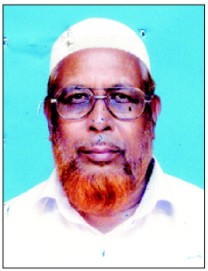
Caption: Shivasharanappa Vali, Ranganatha Rao, M.B. Desai, Nagaraja, Narayana Karantha, K.V. Paramesh, Ramesh Kuttappa, Ravindra Bhat

Bangalore, Aug. 25

The State Government will be honouring journalists by presenting the TSR Memorial and Mohare Hanumantharaya, Development and Environmental Journalism awards for the years 2010 and 2011 at Ravindra Kalakshetra here on Aug. 27 at 11 am.

G.N. Ranganath Rao and Garudanagiri Nagaraj will be honoured with TSR Memorial Award for 2010 and 2011 respectively. Shivasharanappa Vali (2010) and M.B. Desai (2011) will be given the Mohare Hanumantharaya Journalism Award while K.V. Paramesh (2010) and Ravindra Bhat Ainakai (2011) will receive Development Journalism Awards. Narayana Karanth Peraje (2010) and Ajjamada Ramesh Kuttappa (2011) will be given Environmental awards by the government.

Chief Minister Jagadish Shettar will present TSR and Mohare Hanumantharaya awards while Dy.CMs K.S. Eshwarappa and R .Ashok will present Development Journalism and Environmental Journalism awards respectively.

MP Ananthkumar and Justice G.P. Shivaprakash, retired High Court Judge & President of Journalism Award Selection Committee will be the chief guests.

Chikpet MLA Dr.D. Hemachandra Sagar will preside.

Late T.S. Ramachandra Rao (TSR), as the Editor of Prajavani, was famous for his column Choobaana. The government is presenting an award in his name since 1993 which includes Rs. 1 lakh cash prize. Till now, 18 journalists have received this award.

TSR award recipients: G.N. Ranganatha Rao entered journalism field by joining Tayinadu as a Sub-Editor. He also served in Samyukta Karnataka. He worked in Prajavani for 34 years and has authored 30 books.

Garudanagiri Nagaraja joined the movement for a responsible government against Mysore State when he was a student and was imprisoned. He received progressive farmer award also. He first served in Janavani, Praja-matha and later in Kannada Prabha. He has also served as the President of Karnataka Newspaper Academy.

Late Mohare Hanumantharaya was a freedom fighter from Bijapur district. After working as the Sub-Editor and Editor of Karnataka Vaibhava weekly in Bijapur, he joined Samyukta Karnataka as Editor and later became its Managing Editor. He started Kannada’s first digest Kasturi in 1956.

Mohare Hanumantharaya award recipients: Shivasharanappa Vali of Bidar district was involved in freedom movement, journalism, social work, educational, religious and political activities. He worked in Delhi’s Hindustan Samachar for 10 years and later in ‘Uttara Karnataka’ daily.

Mohan Basavaraja Desai: He started a Kannada weekly Darshana and later converted it into a daily Loka Darshana in border district of Belgaum. He has served as an Editor for 50 years in Kannada journalism.

Development journalism: K.V. Paramesh – Entering journalism field through Kodagu’s Shakti daily newspaper, he also served as Mysore Centre Head of E-TV Kannada, Bangalore Senior Reporter & Head of Political Division of Suvarna 24×7 and also in Samyukta Karnataka. His contributions include reports on Nagarahole forest fire, H.D. Kote taluk forest conditions, smuggling and sale of minor girls of Girijana tribes in Mysore district etc.

Ravindra Bhat Ainakai joined Samyukta Karnataka in 1990 and later served in Kannadamma of Belgaum, Aragini, Abhimani and Ee Sanje papers, for three years in Udayavani and later as Mysore Branch Chief of Prajavani. His columns have been published in book form titled Baduku Marada Mele, apart from other books Hejjenu, ‘Moorane Kivi’ etc.

Environmental journalism: Narayana Karantha Peraje – He has been serving in Dakshina Kannada’s monthly Adike since 22 years. He is well-known for his columns in Sudha, Taranga, Udayavani, Hosadigantha, Kannada Prabha etc. He is the author of more than 10 books including ‘Tala Tapasvi.’

Ajjamada Ramesh Kuttappa – Entering journalism through Kodagu’s Veeranadu paper, he later worked in DK’s Kannada Janantaranga and as Senior Reporter in Vijaya Karnataka for 11 years. At present, he is the Kodagu Reporter of Vijayavani. He has penned many articles on Kodagu’s environment, developmental works in forest, Nagarahole forest’s condition etc.

source: http://www.StarofMysore.com  / General News / August 25th, 2012

Give back our land: Pramoda Devi Wadiyar urges Govt.

Captions: 1) Pramoda Devi Wadiyar addressing a media conference at the Palace this morning. 2) Pramoda Devi Wadiyar with her husband Srikanta Datta Narasimharaja Wadiyar’s sisters Indrakshi Devi and Vishalakshi Devi (extreme right). [Pic. by Pragathi Gopalakrishna]

Mysore, Aug. 21

Pramoda Devi Wadiyar, wife of Srikanta Datta Narasimharaja Wadiyar, the scion of the royal family of Mysore and former MP, said this morning that the 1563 acres and 31 guntas of ‘B’-Kharab lands at the foot of Chamundi Hill are the private properties of the Palace.

Addressing a media conference at the Palace, She demanded that the area be surveyed and whatever unoccupied land remains, be handed over to the Wadiyars after issuing Khata in the name of the royal family.

“Till the framing of the Constitution of India and the nation becoming a republic, the then Maharaja was the supreme authority of the landed property coming under the State of Mysore and hence, his descendants are the rightful owners of the property,” said Pramoda Devi and added that the recent contention made by MLC G. Madhusudan, stating that the said land belonged to the State government, has been made without having proper knowledge about the matter.

She also deplored the statement made by former DC Harsha Gupta that the said land was ‘B’ Kharab and said that he too did not have adequate knowledge about the lands as it was directly inherited by Srikanta Datta Narasimharaja Wadiyar from his father Jayachamarajendra Wadi-yar, with the consent of his sisters who did not seek a share in this particular property. Jayacha-marajendra Wadiyar had declared his assets in 1950 and had distributed them among his family members then.

“Some portions of the lands were acquired by the civic authorities for creation of roads and other infrastructure, some areas were made into residential layouts and some pieces were gifted to various people by the Maharaja himself,” said Pramoda Devi.

Pramoda Devi urged that the remaining land that lies vacant — excluding the portions for which genuine Khatas have been issued earlier — be surveyed, Khata issued in the name of the descendants of the royal family and taxes affixed accordingly.

“We have been urging the authorities concerned to do this (issue Khata for the Palace property) since the past 18 years. However, none of the governments have cooperated,” she said and suspected political ill-will behind the inaction.

Wadiyar’s sisters Indrakshi Devi and Vishalakshi Devi, who were elsewhere in the Palace, were called in later to the media conference to prove their consent over the sisters not seeking shares in their brother’s property.

source: http://www.StarofMysore.com / General News /  August 21st, 2012

Ex-IAS man to oversee digitization of records

Bangalore:

The high court on Friday appointed retired IAS officer V Balasubramaniam as the court commissioner to oversee indexing , scanning and digitization of revenue records.
This includes the task of crosschecking the correctness of the data furnished. Justice Huluvadi G Ramesh passed the order while asking the authorities — DCs/Acs and revenue department — to extend all help, like police protection to the senior bureaucrat, at the time of field work/survey.
Balasubramaniam, who appeared in the court, gave his consent for the job. The judge said the government could lay hands on private lands based on public purposes and suitability so that misuse or abuse of discretion could be eliminated. Listing out the benefits of digitization of revenue records, he said having statistics of government land available in each village/taluk/district will help government take timely action if there is encroachment of land. It will also help in making use of land for industrialization /urbanization.
The court has fixed October 16 as the next date of hearing while granting time till October 8 to the authorities to complete the process of indexing/scanning and digitization of revenue records.

Order on hospital stayed

Adivision bench headed by Chief Justice Vikramajit Sen has stayed the June 30 government order handing over the 100-bed General Hospital at Bailhongal in Belgaum to Jawaharlal Nehru Medical College run by Karnataka Lingayat Education Society.  The petitioners, Rafeeq Mugud Sab Badiger and two others, said the people are happy with the services and handing over of the hospital was done upon a representation submitted to the CM on November 17, 2011, by an MLA representing Bailhongal constituency.

source: http://www.timesofindia.indiatimes.com / Home> City> Bangalore / TNN / August 18th, 2012

Wooden replica of palace being made for the visually impaired

They can touch the model to get an idea of the palace’s structure

Tourists with visual impairment can soon feel the majestic architecture of the iconic Amba Vilas Palace or the Mysore palace, which is in its centenary year.

A satin-lined wooden replica of the architectural wonder is being made, and it will be placed at the entrance of the palace (near Gombe Totti) so visually impaired visitors can touch the model to get an idea of the structure.

Braille guides

As the popular tourist destination also attracts a limited number of visually impaired visitors, the Mysore Palace Board, the caretaker of the structure, recently published the Palace Guide in Braille.

The Braille guides are available at the office of the board, and are given for reference on request.

The Braille guides were released at the celebration of the 150th birth anniversary of Swami Vivekananda on the palace premises.

Ready soon

Deputy Director of the board T.S. Subramanya told The Hindu that the replica of the palace may be ready in a fortnight.

“Though the number of visually impaired visitors is very low, we do not want to deprive them of knowing more about the palace by going through the Braille guide and feeling the wooden replica,” he said.

Mr. Subramanya said: “The model is roughly three ft long and two ft wide. It is being designed by a person who has experience in making intricate handicrafts.”

He said an association of persons with visual impairments based in Mysore took nine palace guides in Braille for their library. At present, the board has five Braille guides that were printed at the Government Printing Press for Braille here. “Each book cost us Rs. 300. If necessary, we will order more such guides.”

Guiding devices

Sources in the board said it had plans to introduce wrist-mounted electronic devices for visitors with visual impairments, for navigation inside and outside the palace court.

“The information about the attractions and how to access them will be fed into the device, which will guide the visitors. Two such devices would be procured soon,” they added.

source: http://www.TheHindu.com / Home> National> Karnataka / by Shankar Bennur / Mysore, August 02nd, 2012