Category Archives: Records, All

Behind the scenes of selecting the Karaga pujaris

The festivities have been marred by controversy for over five years now

Everyone was expecting N. Manu (centre) to carry the Karaga, a floral pyramid, this year. | Photo Credit: K_MURALI_KUMAR

It was announced that this year the Karaga will be carried by 24-year-old N. Manu, which was to be a first for him. But as a massive number of devotees waited patiently, the Karaga pujari (priest) emerged only in the wee hours of Sunday. And, to everyone’s surprise, it was not Manu. A. Jnanendra was carrying the Karaga even though Manu had led all the rituals for the previous nine days. It later emerged that Manu was unwell because of which Jnanendra had to take over.

“We are happy that the Karaga was not stopped. But we have instituted an inquiry into what actually happened that night,” said Rajgopal, chairman of the Karaga Committee.

Incidentally, Jnanendra had earlier challenged Manu’s appointment as the Karaga pujari and the case, which is before a Muzrai tribunal, is expected to come up for hearing on April 27.

Not new to controversies

The Karaga, the oldest festival of Bengaluru, is not new to controversies. It has been marred by controversy for over five years now over who should be the pujari and carry the Karaga.

In 2013, Jnanendra had taken over mid-procession from C.M. Lokesh, amidst allegations by Lokesh that the Karaga was forcefully taken away from him.

In 2016, Lakshmeesha got a High Court order to carry the Karaga, putting a brake to 15 years of Jnanendra and Lokesha being the pujaris. However, he was forced to resign after being allegedly caught practising carrying the Karaga in a private area before the actual festival.

The job is a coveted one owing to the prestige associated with it in the Vahnikula Kshatriya community. The Karaga pujari is also the head priest of the historical Dharmarayaswamy temple. He gets ‘dakshine’ during and immediately after the Karaga procession, which often runs into several lakhs.

Karaga Committee

The annual Karaga festival was being organised by a large ad-hoc committee of community members. “This year, the State government, for the first time, gave a grant of ₹1 crore for the festivities. Hence, the Muzarai Department has formed a Karaga Committee with seven members, who will have a tenure of three years. This committee will streamline the festivities and root out such confusion and chaos,” said Subbanna, a senior community member.

The Karaga Committee, led by Rajgopal, was formed 15 days before the festival this year. “In the short time we got, we tried our best to manage the festival properly. From next year, we will ensure that there is no confusion or controversy over the Karaga festival,” Rajgopal said.

source: http://www.thehindu.com / The Hindu / Home> News> Cities> Bengaluru / by K.V. Aditya Bharadwaj / April 02nd, 2018

Google Doodle celebrates activist and pioneer of the arts Kamaladevi Chattopadhyay

Google Doodle: Kamaladevi Chattopadhyay | Photo Credit: Google Doodle

Kamaladevi participated in the freedom movement

On Tuesday, Google celebrated the 115th birth anniversary of the multi-faceted freedom fighter, activist and promoter of the arts, Kamaladevi Chattopadhyay, with a doodle.

Kamaladevi, who bagged the Padma Vibhushan in 1987 (a year before her death), was a woman of many firsts. She was an active participant in the freedom movement, championed women’s rights, founded the All-India Womens Conference (AIWC), led the renaissance of Indian handicrafts and handlooms, and worked for the development of the performing arts in India.

Born in Mangalore in 1903, Kamaladevi was widowed at 16. She married Harindranath Chattopadhyay when she was 20 and then headed to London where she graduated with a diploma in Sociology. She joined the freedom movement when she returned to India and she eventually became the first woman to run for a legislative seat in India, when she ran for the Madras Provincial Legislative Assembly.

She then founded the AIWC, which did a lot of work for social reform. She was credited for persuading Mahatma Gandhi to encourage more women to march with him during the freedom struggle. In 1930, Kamaladevi was part of Gandhi’s salt satyagraha team and she was later arrested for entering the Bombay Stock Exchange to sell packets of contraband salt.

Post independence, she worked for the rehabilitation of refugees. She then dedicated her life to the promotion of Indian indigenous arts and crafts and theatre. Thanks to her work behind the scenes, several renowned institutions, including the National School of Drama, Central Cottage Industries Emporium, and the Crafts Council of India, came into existence. She later headed the Sangeet Natak Akademi and in 1974 was awarded the Sangeet Natak Akademi Fellowship.

The doodle, created by Finland-based artist Parvati Pillai, salutes Kamaladevi’s contribution to the creative fields. It depicts the various fields she promoted, including the sitar, sarangi, Karthak dance, embroidery and basket weaving.

source: http://www.thehindu.com / The Hindu / Home> News> National / by The Hindu Net Desk / April 03rd, 2018

The village of boiled beans: How Bengaluru came to be

An aerial view Greenline Metro from Sampige Road to Yelachenahalli on the first day of its operation for public in Bengaluru on Sunday  2017.  Anantha Subramanyam K.  Credits: Mirror, BCCL, Bengaluru
An aerial view Greenline Metro from Sampige Road to Yelachenahalli on the first day of its operation for public in Bengaluru on Sunday 2017.
Anantha Subramanyam K.
Credits: Mirror, BCCL, Bengaluru

It is strange that the city of Bengaluru which we all accept today as a single city was not a single city at all until recently. Before Bengaluru was welded into a single city under a common corporation in 1949, it existed as a twin city. There were two portions to the city. The civil and the military portions were separate entities with a separate municipality and a separate collector. The job of the collector was to look after the revenue and the law and order problems of the city. He was functioning under the Resident. The Collector was also the Municipal President. The Bangalore city agglomeration had a population of 29,21,751 and the corporation area had a population of 24,76,355 in 1981. The city’s population recorded a growth of over 70% between 1971 and 1981.

The site of the present city had many prehistoric settlements. Neolithic tools have been located at the race course and Jalahalli. Byrasandra was also a prehistoric site. Dr Shikaripura Ranganatha Rao, an eminent archaeologist feels that the attractive site of the bugle rock at Basavangudi could have been a prehistoric habitat. Roman coins have been unearthed at Yeshwantpur and Jalahalli.

The name Bangalore is as old as the ninth century and the name is found in a Kannada inscription found near the Begur temple. A long record of circa 890 AD and the name appears to have a floral origin, derived from the tree Benga (Venga or Pterocarpus marsupium or the Indian Kino).

The explanation that the name was derived from Benda kala ooru, or the village of boiled beans as described by the Hoysala King Ballala when he was hungry during his visit to the place (when he was hunting) becomes irrelevant as the above name was much older that King Ballala of the Hoysala dynasty. Benda kala ooru or the place full of granite rocks is another explanation to a place name but granite is neither Bangalore’s exclusive speciality nor the old form, thousand years, found in the record indicates the place name being anyway connected to Benachu kallu. The place mentioned as Bengaluru in the Ganga record is originally a hamlet, even now called as Hale Bengaluru near Kodigehalli, not far away from Hebbal. It is said that Kempe Gowda I when he built the new capital town in 1537 called it Bangalore as his mother and wife belonged to the hamlet Bangalore, now Hale Bengaluru. In literary works, Bangalore is also called Kalyana Nagare or the ‘City Auspicious’. Though the fort built by Kempe Gowda then has totally vanished, the spots like the Yelahanka Bagalu (Mysore Bank Square) and Halsur Bagalu still exist. Halsur Bagalu or gate, now a police station is named after it. The gate proper even now remains hidden. The old remains of the ramparts and the moats were completely demolished during the nineteenth century. The town was conquered by the Bijapur sultans in 1638 and Shaji Bhonsle secured the town and its surroundings as a Jagir in 1638. The testimony to 50 years of Maratha rule is in the form of an inscription of Ekoji, Shaji’s son near the Kadu Malleshwara temple. Bangalore was conquered by the Mughals in 1686. The mosque at Taramandalpet is a notable vestige of Mughal rule. The city was leased to the Mysore ruler, Chikkadeva Wodeyar by the Mughals in 1689 and Chikkadeva Wodeyar expanded the fort to the south and built the Venkatramana temple in this fort area. This new fort in granite was strengthened by Haider Ali who secured Bangalore as a Jagir in1759. The British conquered the city in 1799 after defeating Tipu Sultan.

The original Bangalore city was clustered around the fort and city market and covered the area until the present Mysore bank square. Today, there is a bus stop at the place where the Dharmabudi tank existed earlier. The old city had areas like Cottonpet, Sunkalpet, Kumbharpet and the Balepet areas. The medieval character of the city’s old settlements typical of any old village is indicated by the names of these areas.

Every community or professional caste had its own street or streets in every village or town of ancient times. Sigebeli is the settlements of Brahmins, reminiscent of old Agrahara or Brahmapuri. Kempapura Agrahara was another settlement of the Brahmins created by Kempe Gowda II towards the Magadi road area beyond the Brahmabudi tank. Parts of Gandhi Nagar area appear to have been reclaimed from the Dharmabudi tank during the early part of the nineteenth century.

The Cantonment area grew as a separate township after the British shifted their troops to the place in 1806 and the first camp was located at the present Air Force Hospital in 1808. The present cantonment also consists of many old villages like Halasur, Blackpally, Doddakunte and Akkithimmanahalli. It was no part of the old Bangalore pettahs. At Domlur on the periphery of the old cantonment, the Chokkanatha temple built by the Cholas still remains. At Blackpally or Shivaji Nagar, there existed a Catholic church which later took some shape of the 18th century and now its is the St Marys Basilica. The cantonment area also saw the construction of some of the beautiful buildings of the European Renaissance style. Both churches and secular buildings which were mostly government offices during the 19th century.

New extensions were added to the town in Chamrajpet and Seshadripuram. Chamrajpet was named after Chamraja Wodeyar in 1892, the latter named after Dewan Seshadri Iyer. The visit of a plague in 1898 caused the creation of two bigger extensions in 1898. These were Basavangudi named after Basaveshwara temple or the Bull Temple in Sukenahalli village and Malleshwaram named after the Kadu Malleshwara temple in old Mallapura village. The area in both the places was full of fields.

The next time you think of Bengaluru as the city of Bengaluru, you would do well to remember its origins. There are several people alive today who remember the two distinct facets to the city; the pettahs and the cantonment. These portions were welded and expanded to make the beautiful city we live in.

source: http://www.bangaloremirror.indiatimes.com / Bangalore Mirror / by Siddharth Moorchung & Nikhil Moorchung / Bangalore Mirror Bureau / April 02nd, 2018

Genetic diversity can prevent rapid spread of infectious diseases

Choice of pandemic: The models are best suited to study airborne diseases such as H1N1, say Nagasuma Chandra (left) and Narmada Sambataru.

The team studied how susceptibility sub-populations affect the spread of the disease

An infectious disease can spread at different rates in different countries. This phenomenon has been observed in many cases, for instance in the 2009 H1N1 influenza pandemic. An International group of researchers including those at Indian Institute of Science (IISc), Bengaluru, and The Institute of Mathematical Sciences (IMSc), Chennai, looks at genetics as a way to explain this phenomenon. They find that the greater the genetic diversity in immune response, the stronger is the barrier to the spread of the disease. The results have recently been published in PLOS Computational Biology.

Nagasuma Chandra’s team at IISc chose to study H1N1 as modelling it had some advantages.

“There is a lot of work on H1N1 and a lot of data including clinical and epidemiological. These models are also best suited to study airborne diseases. As H1N1 spreads through air, choosing it made a lot of sense,” says Dr. Chandra.

Pandemic H1N1 virus

The pandemic H1N1 2009 influenza A virus was different from other influenza viruses encountered until then. According to the WHO, this is because it originated from animal influenza viruses and is unrelated to the human seasonal H1N1 viruses that have been in circulation among people formany years In fact, this virus is thought to have arisen from a mixture of two viruses: a North American virus that jumped from birds to swine and humans and a Eurasian swine virus that had circulated in pigs for about a decade before entering humans. Clinically also the virus’s effect was very different from that of other flu viruses in that younger people were more severely affected than older ones.

Narmada Sambataru and Sumanta Mukherjee who were at Dr Chandra’s lab, and Martin Lopez-Garcia from the University of Leeds, UK, spent nearly a year building up the model. Their research led them to establish how an individual’s genetic makeup can influence his or her susceptibility to the infection.

The immune system has both innate and adaptive response types to infections, in general. In the case of H1N1 infection, the adaptive immune system can recognise the presence of a virus within the cell and respond to it only if a molecule called the human leukocyte antigen (HLA) binds to some fragment of the viral protein (epitope) and ‘presents’ it to the environment outside the cell. Dr Chandra’s group has described the details of this aspect of H1N1 in an earlier paper published in the journal Clinical and Translational Immunology.

Immune response

“The main take-away from our work is that understanding how the immune response of different individuals leads to a spread of susceptibilities in a population is vital to figuring out how diseases spread,” says Gautam Menon of The Institute of Mathematical Sciences, a co-author of the paper. “This problem, of how to go from what we know about how individuals can vary in their susceptibility to understanding how epidemics spread across entire populations, has been identified recently as one of the major challenges in the study of epidemics.”

Having worked out how the genetic makeup of an individual can affect their susceptibility to the disease, the individuals can be grouped according to their susceptibility. Using a mathematical model called the SIR (Susceptible-Infected-Recovered) model, the researchers study how the presence of susceptibility sub-populations affect the spread of the disease. “In this model, individuals are initially susceptible but not infected.

“When an infection is introduced, individuals become infected at a rate determined by their estimated susceptibility to the pathogen, estimated using genetic information about the host as well as the pathogen. Infected individuals then proceed to recover,” says Dr Chandra.

Trends

The work captures the qualitative features of well-known trends of influenza spread in various parts of the world. “This work uses publicly available information about HLA class-I genes and their prevalence in populations around the world. Unfortunately, there is a significant shortage of this information for Indian populations,” she says.

The group is planning to propose a detailed study of this for Indian populations. “Once this information becomes available, we can do far more to predict disease spread in India. These predictions can be used to inform public policy and make better decisions. This is the real utility of such modeling methods, that we can explore different situations and ask what responses might be most effective in the context of specific diseases,” says Dr Menon.

source: http://www.thehindu.com / The Hindu / Home> Science / by Subashree Desikan / March 31st, 2018

E-waste industry comes together to streamline recycling process

Bengaluru generates around 1 lakh metric tonnes of e-waste annually. | Photo Credit: Handout_E_Mail

Very little of the estimated 18 lakh metric tonnes of e-waste that India generates per annum is recycled

Of an estimated 18 lakh metric tonnes of electronic waste (e-waste) that India generates per annum, less than 2 lakh tonnes reach licenced recyclers. The rest is either reaching the unorganised sector (such as scrap dealers), or ending up in landfills. Not only does this mean that potentially recyclable e-waste is being wasted, but also that unscientifically managed e-waste is a hazard that stands exposed.

Now, around 180 recyclers from across the country have joined hands to change the narrative and come together to form the All India e-Waste Recyclers’ Association. To be headquartered in Bengaluru, the association will look at streamlining the dismantling and recycling cycle of e-waste in the country.

Gururaj N., general secretary of the new association, told The Hindu that the dismantling and recycling industry is a nascent one, though e-waste itself is not.

“The e-waste quantum is calculated based on the sales that happened in the previous year, according to which the estimated e-waste generated is 18 lakh metric tonne per annum. Bengaluru generates around 1 lakh metric tonnes. The other big contributors are the National Capital Region, Mumbai, Chennai and now Hyderabad and Pune. Electronics is a component in many things — from laptops and air-conditioners to cars, which has 26% electronic component. The rate of progress in technology is a big key in e-waste,” he said.

In addition to what are called ‘white goods’, such as television, household e-waste that includes fans, lights and other essentials translates into 100 to 150 kg of electronic items in each house at any given point of time, which could eventually end up becoming e-waste. Despite all this, recyclers are running at 40 or 50% capacity as little waste is actually reaching them, said Mr. Gururaj.

Tackling the basics

The association is aiming at tackling the basics first: work with local municipal bodies to set up e-waste collection centres similar to the dry waste collection centres that are now being established in many cities. They also want to ensure that people find it convenient to make their e-waste reach recyclers. For this, they are planning to set up technology-driven drop boxes to enable people to put their waste and be paid back through e-wallets.

“It is not a business where people want to give away items for free. In addition, we want to ensure that the recycling process pushes urban mining, wherein dismantling and recycling brings out raw material such as gold, silver and copper (present in small units in many electronic items). There is already a scarcity of ore, and these metals have higher consumption, but the same production levels, which is why their prices have gone up,” he said.

source: http://www.thehindu.com / The Hindu / Home> News> Cities> Bengaluru / by K.C. Deepika / March 30th, 2018

BHEL gets ISRO tech to make Li-ion cells

Indian Space Research Organisation (ISRO) has signed a technology transfer agreement with Bharat Heavy Electricals Ltd. for the manufacture of space grade lithium ion (Li-ion) cells for the space programme and other national requirements.

BHEL said it would set up a facility at its Bengaluru unit to make the cells. It would use the technology developed by ISRO’s rocketry node, Vikram Sarabhai Space Centre, based in Thiruvananthapuram.

Li-ion batteries power various applications on satellites and launch vehicles. An ISRO spokesman said the requirement would go up as the number of space missions is increasing.

Currently, BHEL assembles Li-ion batteries using imported cells. “The technology can also be extended for use in the emerging areas of energy storage and e-mobility,” the public sector major said.

The agreement was signed by S. Somanath, VSSC Director, and S. Biswas, BHEL’s Director (Engg., R&D), at the headquarters of ISRO in Bengaluru last Thursday in the presence of ISRO Chairman K. Sivan and BHEL CMD Atul Sobti.

source: http://www.thehindu.com / The Hindu / Home> News> Cities> Bengaluru / by Special Correspondent / March 27th, 2018

Made-in-India dialysis unit undergoes trials in Mysuru

Bengaluru:

A team of city-based researchers have come up with a made-in-India dialysis machine, which is expected to reduce cost of the medical procedure.
Designed by Renalyx Health Systems, the machine, RxT17, started undergoing clinical trials at JSS Medical College Hospital, Mysuru, from March 2. A 40-year-old renal disorder patient was the first to undergo dialysis on the new machine.

Dialysis machines are now imported from Germany, Sweden and China at a cost of 10-11 lakh a piece. A dialysis session costs between 2,500 and 4,000. The new machine is likely to be priced at Rs 4 lakh and it could reduce the cost of dialysis to 1,000.

The machine is cloud-enabled and can be connected to a mobile app, so that nephrologists can monitor its functioning and the patient’s response from anywhere.

” There are only 1,400 nephrologists in India and only 200 in Karnataka. There is a need to bridge the gap between patients and doctors through technological intervention. We can take the new dialysis machine to rural areas too, given its ability to connect seamlessly and its capacity to run on solar power.

Such features are not available in dialysis machines imported from Japan, the US and Germany,” says Shyam Vasudev Rao, an Indian Institute of Science (IISc) alumnus and founder-chairman of Renalyx.

Work on the machine began in 2013, driven by the vision to “create innovative and inclusive solutions for comprehensive renal care.”

Dr Lloyd Vincent, a nephrologist and co-founder of Renalyx, said the objective was to reduce the cost. “We have a project monitoring committee with alumni from Bombay and Delhi IITs as well as AIIMS, Delhi. The clinical trials are going on successfully. The product has been funded by the department of science and technology, New Delhi,” he said

 The company has patents and active collaborations with premier institutions, including IIT Kharagpur, Jawaharlal Nehru Centre for Advanced Scientific Research (JNCASR) and PESIT in Bengaluru.

Given the rising cost of healthcare, any innovation which brings down expenses is a huge relief for patients and their families. The clinical trials of a new dialysis machine are currently under way and once available for wider use, they promise to bring down the cost of treatment by a big margin. Such innovative research should be encouraged by the government through subsidies and tax breaks so that these machines become available in smaller towns and cities too. Innovative low-cost medical equipment is the need of the hour.

source: http://www.timesofindia.indiatimes.com / The Times of India / News> City News> Bangalore News> Civic Issues / by Sunitha Rao R / TNN / March 11th, 2018

City-based innovator develops device to harness wave energy

InnovatorBF27mar2018

Acity-based ex-merchant navy captain and innovator has designed a device to harness energy from waves in the sea. The design of the device known as Wave Energy Converter (WEC) according to its innovator D Chandrasekar is a fresh approach to harness renewable energy from sea waves. “Ocean waves contain a lot of energy though not much work has been done to harness this energy,” said Chandrasekar.

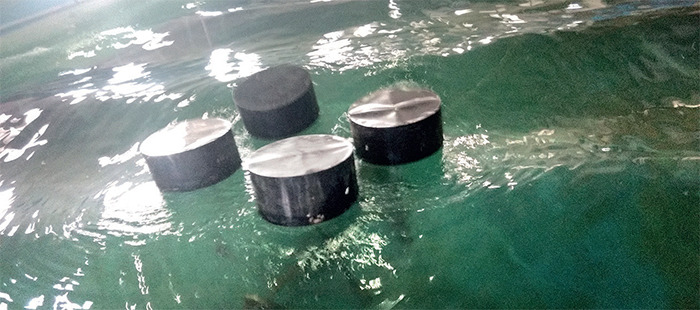
According to Chandrasekar, the WEC has a seabed unit and a surface unit of floats. The floats move as per the waves and transmit the power to the seabed unit that converts it into usable forms of energy.

Chandrasekar who started working on the WEC in 2016 had first developed a test tank in Bengaluru to test the initial design. Subsequently, a model was developed to be tested under controlled conditions at the IIT Chennai wave basin last month. The device was also tested on land before wave basin testing. Chandrasekar said that the test results were satisfactory.

The base unit of the WEC is about six meters long and three meters wide with a height of 1.5 meters.

The WEC project has also been supported by the Department of Scientific and Industrial Research with an R&D grant of Rs 8.7 lakh for realising prototype under Promoting Innovations in Individuals, Start-ups and MSME (PRISM) scheme.

Chandrasekhar said that the WEC model which was tested can generate 5 kw electricity and that a patent application for this design is under process.
“We will soon be approaching port authorities that can use this technology to light break waters at the ports,” he said.

That apart, the WEC can also be used to power buoys at sea, light unmanned oil platforms and small islands.

Explaining WEC’s features, Chandrasekar said that the system has the flexibility to be placed at various depths and that the floats can be quickly disconnected in case of an impending cyclone.

source: http://www.bangaloremirror.indiatimes.com / Bangalore Mirror / Home> Bangalore> Others / by Bangalore Mirror Bureau / March 27th, 2018

Spastics Society director is ‘Bengalurean of the Year’

Namma Bengaluru Foundation presents awards for 2018

Rukmini Krishnaswamy, director of Spastics Society of Karnataka, has won the ‘Namma Bengalurean of the Year’ award given by the Namma Bengaluru Foundation, which is founded by Rajeev Chandrasekhar.

Sanjeev V. Dyamannanavar, an urban transport activist and one of the founders of Prajaa Raag, has been recognised as citizen of the year’, Rasheed Kappan, a senior journalist with Deccan Herald, as the mediaperson of the year, Dipika Bajpai, DCF, Bengaluru Urban, as government official of the year, Prashanth S.B., chairman of Nayonika Eye Care Charitable Trust, as social entrepreneur of the year, and Vidya Y., co-founder and trustee, Vision Empower, for her work to make education accessible to the visually impaired, as rising star of the year. These awards carry a purse of ₹2 lakh.

Citizen groups

The NBF also felicitated four citizen groups as ‘Champions of Namma Bengaluru – 2018’ for their work towards “reclaiming Bengaluru”, the theme of the awards this year. Friends of Lakes, a coalition of lake activists across the city, Save Pattandur Agrahara Lake and Save Kaggadasapura Lake, both local residents’ groups fighting to save and rejuvenate the lakes in their locality, and Project Vruksha Foundation, for its work on tree census, were the four citizen groups awarded on Sunday.

source: http://www.thehindu.com / The Hindu / Home> News> Cities> Bengaluru / by Staff Reporter / Bengaluru – March 26th, 2018

For slums, by its dwellers: A paper’s rebirth

A six-member team, led by editor Isaac Arul Selva, brings out ‘Slum Jagatthu’. | Photo Credit: Bhagya Prakash K.

20-page black-and-white magazine that was relaunched in April 2017 is slowly making waves

In a city where class divisions remain ingrained in the landscape, it perhaps did not come as much of a surprise when a Bengaluru magazine — produced for and by slum dwellers — died quietly. In 2013, Slum Jagatthu (Slum World), a monthly magazine in Kannada, ended its seemingly miraculous 13-year-run of over 135 issues.

For its editor, Isaac Arul Selva, 47, a Class IV dropout who has fought against an indifferent bureaucracy for over three decades, resilience is a virtue that is never far away. Egged on by friends in academic circles, he re-launched the 20-page black-and-white magazine in April 2017 out of a small room on the fringes of posh Koramangala. Here, glitzy pubs and towering malls are within a walking distance on the one side, while on the other is the site that once hosted the city’s largest slum, which has since been levelled to make way for a mall.

By February 2018, the reborn Slum Jagatthu with a cover price of ₹10 had a paid circulation of 300 readers — a far cry from the 2,500 it had reached earlier in this decade. “But we add more than 50 subscribers every month,” says Mr. Selva. A free online edition is put up on their blog and circulated through social media to slum leaders across the State.

A six-member team churns out the edition with a few laptops and some mainstream newspaper articles on slum dwellers stuck on the walls. Mr. Selva and Balamma K., who manages the office, are the only team members who have stuck through since the first Slum Jagatthu was published in 2000. What is constant, though, is that those working in the paper are slum dwellers.

For Hariprasad Anandpur, who works full-time with little guarantee of assured monthly pay, the magazine has allowed him to live a lifelong dream amid words and thoughts. The 34-year-old, who comes from a nomadic tribal community, was working as a helper for a wedding caterer until he attended a four-day workshop on media conducted by Mr. Selva. For over 10 years, after he had cleaned up lavish dinners in wedding halls, he jotted down his thoughts as poetry.

“When I was younger, my books were burnt to make me focus on work. Now, writing is my work and these new thought processes are my motivation,” he says, adding rather glumly, “I wasted more than 12 years of my life working mindlessly in the catering firm.”

Archiving slum history

Mr. Selva realised during the four-year break in publishing Slum Jagatthu that the larger society lacked a consistent archive cataloguing the thoughts of the urban poor. The renewed avatar of the magazine deviates from its previous form, which primarily disseminated information on slum schemes, infrastructure issues in slums, and new slum policies. It now focuses on the living history of slums, building a record of the lives and aspirations of slum dwellers, and critiques of policies such as the Smart City scheme that excludes slum dwellers.

“It isn’t enough to write that a slum doesn’t have basic amenities while neighbouring areas have developed. It is important to ask ‘why?’. Slums in cities are the products of the discriminatory thinking that sees Dalit colonies in villages remain a few centuries behind their neighbours. It is important for slum dwellers to start questioning these discriminatory practices,” says Mr. Selva.

Vision

Mr. Selva is never short of dreams. He wants the magazine to reach at least 4,500 registered slums and around 11,000 public libraries.

At an annual subscription of ₹100 — any more and it would be out of reach of slum dwellers — there is no viable business model yet for the small newspaper. Instead, it runs on ingenuity and idealism, raising funds through fellowships and consultancies.

The team dismisses the idea of approaching private enterprises for advertisements as the language of marketing would run contrary to the voice of the paper.

As a registered newspaper, Slum Jagatthu even refuses to carry ₹1,500-worth government ads it is entitled to every month. “Why waste a page on the government’s voice and sacrifice a slum dweller’s voice?” asks Mr. Selva.

source: http://www.thehindu.com / The Hindu / Home> News> Cities> Bengaluru / by Mohit M. Rao / Bengaluru – March 26th, 2018