Cruise control: Pankaj Advani was at his fluent best as he outclassed Amir Sarkhosh.
Sarkhosh fails to mount challenge
Pankaj Advani dished out another superb performance to outclass Iran’s Amir Sarkhosh in the final and claim the IBSF World snooker championship here on Monday.
Advani’s deadly attacking game coupled with a phenomenally tight safety play helped him secure his 18th World championship title with a 8-2 win over Sarkhosh at the Al-Arabi Sports Club.
The best-of-15 frame final witnessed Sarkhosh pocketing the first frame easily. The Iranian looked strong and focused in the second frame too but a missed green pot gave a lifeline to Pankaj as he seized the opportunity with both hands and drew parity.
Pankaj never looked back from there as he raced to a 5-2 lead, though Sarkhosh came with a century break to win the sixth frame, and after the break, wrapped it up with three straight frames.
Divya Sharavana delivered her second baby, Ritiksha, 20 days early. After 10 days in the neonatal wing of St Philomena’s Hospital, the child was discharged with a bracelet around her wrist.
“One night, the orange light on the bracelet started flashing with an alarm and we rushed the baby to the doctor. She was suffering from hypothermia —a condition when body loses heat faster than it produces — and gastrointestinal infection. She could be saved because of the device,” says Divya, who lost her first baby to complications.
Ritiksha is two years old now, and healthy. She owes it to Bempu, the bracelet that saved her by beeping when her temperature plummeted. The brain behind the innovation is Ratul Narain, 33, a Stanford University alumnus with a master’s degree in biomechanics. The device is manufactured by Bempu Health in Bengaluru.
Team Bempu’s device was recognized as one of the 25 best innovations in 2017 by Time magazine
10,000 Bempus have been used across the world
In India, one in three newborns suffers from low birth weight or is under 2.5kg. This is one in 12 in developed countries,” Ratul Narain says.
A made-in-India hypothermia alert device for newborns, Bempu has been recognized as one of the 25 best innovations in the world in 2017 by the Time magazine. Invented and manufactured by Bempu Health in the bylanes of Langford Road in Bengaluru, Bempu weighs 8gm. Worn by a newborn with low birth weight, it flashes blue light if the temperature is normal. If the temperature goes below 36.5-degree Celsius or 97.7
Fahrenheit, it flashes orange and rings an alarm alerting it’s time for immediate attention, either warming the child up or giving Kangaroo mother care.
Some 10,000 Bempus have been used across the world and 1,000 of them donated to government hospitals ever since it entered the market in early 2016.
Before developing the device, Ratul spent a year at hospitals in Karnataka, Uttar Pradesh, Rajasthan and Gujarat to understand neonatal complications. “Among babies with low birth weight, infections can occur at home. Up to 15% of low-weight newborns discharged from government NICU would die at home due to complications like infections and hypothermia. The significant cost of facility care for the baby was, therefore, lost at home. That’s what made me work on a lowcost solution,” says Ratul.
The device priced Rs 2,500 can be used for four weeks without replacing its battery. To avoid cross-infections, it is suggested not to pass it on to a second user. Ratul’s research was facilitated by grants from various countries and institutions, including USAID, UKAID, Bill and Melinda Gates Foundation. Bempu is now being used in Pakistan, Papua New Guinea, Togo and Ghana through Unicef initiatives.
source: http://www.timesofindia.indiatimes.com / The Times of India / News> City News> Bangalore News / by Sunitha Rao R / November 27th, 2017
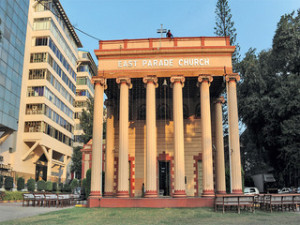
One of the oldest churches in Bangalore, the East Parade Church, was built by Wesleyan Methodist missionaries for British soldiers stationed in Bangalore Cantonment. In England, the Wesleyan Methodist Church was formed as a breakaway sect from the Church of England.
The present church building was raised in 1865, with an inscription dated October 6, 1863, marking the laying of the foundation stone. The church was the earliest church built by the Wesleyans in Mysore district.
The Wesleyan Tamil Mission in the Bangalore Cantonment was established in 1821.Elijah Hoole of the Wesleyan Mission started a small school measuring 30 feet in length and 13 feet in breadth. Tamil services were started in the small school. However, in 1822, the Wesleyan Mission was suspended and the missionaries were transferred. In 1826, the mission resumed again but this time a stable in the Mission compound had to be used as a church.
The founder of the church in its present form was a gentleman called Thomas Hodson. A Wesleyan Missionary who served in India, Hodson was an extraordinary person. He arrived in India in 1829 when he was 25. He had spent three years in Calcutta learning Bengali and he was posted suddenly to Bangalore. The church was apparently dissatisfied by his performance in Calcutta because they decided that ‘results had not come up to their expectations’ (read numbers of conversions were inadequate). Before moving to Bangalore, Hodson wrote a long letter to the church committee mentioning that he had spent three years in learning Bengali and now he had to start again and learn Kannada. Hodson also suggested that preaching was not the only job of the Missionaries; teaching and education were just as important.
He came to Bangalore in 1833 and was stationed in Bangalore for almost three years. He was apparently a linguist of repute, being fluent in Bengali, Tamil and Kannada. A renowned Kannada scholar, he wrote a book on ‘An Elementary Grammar of the Kannada, or Canarese Language’ in 1864.
Hodson appears to have been a bit unhappy in Bangalore because he found that his time and efforts were taken away in preaching to the British and European officers, and he could not concentrate on the local population. He returned to England in 1843 due to ill health and came back to India in 1853 as Chairman and Superintendent of the Wesleyan Canarese Mission in the Mysore District. He left India in March 1878 and died in England in 1882.
In his description of Bangalore, Hodson describes two portions of the city. The Cantonment was where the soldiers lived and Tamil was the primary language. In the native town or petah, Kannada was the predominant language. Not surprisingly, Hodson appears to have concentrated his efforts on the Tamil speaking population rather that the people in the petahs. In 1834, Hodson purchased about 20 acres of land, just outside the Bangalore Petah which was where the United Mission School and Unity Buildings stand today. The first building to be constructed was the Wesleyan Mission Chapel, the predecessor of the present East Parade Church. The Wesleyan Mission Chapel was built in front of the Wesleyan Mission House, and could accommodate nearly 300 people. Located at the heart of the Cantonment, it was raised for the Tamil and the English congregations. The cost of raising the chapel was met by subscription by local Europeans. It was also reported that a ‘native who have received many honours from Lord William Bentinck’ contributed £100 towards raising the chapel.
Walker, one of the missionaries who served at East Parade Church; the cover of Thomas Hodson’s book
The location of the church was striking. In front of the chapel was a wide esplanade, with trees lined up as an avenue, about a mile long. The esplanade was the erstwhile South Parade Road, now Mahatma Gandhi Road. The road to the right of the chapel was the present Dickenson Road which led to the Madras Army barracks. There was a large parade ground which covered the entire area from Cubbon Park to the present day Dickenson Road. The East Parade Church was constructed to the east of the parade ground and so perhaps there was no controversy in naming the church.
The annual report of the Wesleyan Mission of 1903 describes the East Parade Church as “…this lofty, roomy building is capable of accommodating 700 people. It is looked upon as the Cathedral of Methodism in the Province. The Church building has a number of unique features. The massive Corinthian columns, all eight in number, stand as sentinels at the entrance of the Church. These columns lend the whole structure its character. Another welcome feature of the building is that unlike other large churches in Bangalore it has no columns or pillars inside the church obstructing the view of the altar.”
Today, the East parade Church continues to serve two pastorates. These are the East parade Tamil and the East Parade Malayalam pastorates of the Karnataka Central Diocese. Thomas Hodson would probably be proud of the fact that the Church which was built primarily for the Tamil speaking population of the cantonment continues to serve the same function today.
source: http://www.bangaloremirror.indiatimes.com / Bangalore Mirror / Home> Bangalore> Others / Bangalore Mirror Bureau / by Siddharth Moorchung & Nikhil Moorchung / November 26th, 2017
An Indian scientist has claimed a breakthrough in reducing the side-effects of chemotherapy by creating a drug delivery system that will target only cancer cells and leave healthy cells unharmed.
The patented system – contained in a whole-body device called Cellular Focused Resonance Nano-Permeabilisation or Cellforn – says Dr Rajah Vijay Kumar, can deliver chemotherapeutic molecules directly to the cancer cells. Dr Kumar, who has more than 30 inventions to his name, is the director and chief scientific officer at Bengaluru’s Centre for Advanced Research and Development.
Chemotherapy is one of the best options available for treating cancer but its severe side-effects are a separate battle. “Actually the cargo is good but the delivery is bad. That is where my team decided to intervene,” he said.
‘Cellforn could make drugs 10 to 70 times more effective’
We decided to do something about the transportation and delivery system of molecular cancer treatment. Our work began in 2008 and now we have Cellforn,” Kumar said.
Cellforn creates temporary nano pores that can receive drugs, allowing delivery to the cell membrane of the cancer tissue, identified with pretreatment proton density evaluations. “All drugs contain hydrogen atoms that bond with other molecules. The nucleus of the hydrogen atoms (containing only protons) in the drug are like bar magnets, they have specific alignments. Tissues too have protons that have the same alignment as the drug. Cellforn reverses the alignment of the hydrogen protons in the tumour tissue, spins it opposite to that of the drug molecule, attracting it to the sensitized tumour tissue,” Kumar explained.
Simultaneously, Cellforn creates temporary receptors or holes induced by fast radio bursts(FRB) that is timed and delivered to target lesions. Concentrations of target drugs like carboplatin and paclitaxel, for example, are delivered based on their molecular weight. The whole body device that delivers the precisely planned FRB houses specialized antennae and delivery mechanisms.
“Almost the entire drug payload is delivered to the tumour, and minimal to the healthy tissue. Hence, there will be very little or no adverse side-effects,” he said.
Having got a US patent in April this year, Kumar claims his precision-targeted drug delivery system is market-ready. “A few regulatory formalities are still pending. I think we will go into production in nine months,” he said.
Kumar claimed that Cellforn could make drugs 10 to 70 times more effective as they can be highly localized and used in vivo (on tissues and organs inside the body) and noninvasively.
Cellforn also prevents the cancer tissue from developing immunity to the drug. “Cellforn also controls chromatin, a group of macromolecules that holds the genetic information within cells. Chromatin can make cancer cells resistant to treatment. But chemotherapy administered with Cellforn will not make the cancer tissue develop resistance to the cancer cytotoxic drug,” he said.
source: http://www.timesofindia.indiatimes.com / The Times of India / News> City News> Bangalore News / by Chethan Kumar / TNN / November 26th, 2017
A file photo of the pillar inscription in Gudnapur.
‘The earliest inscription in which all the 9 numerals have been engraved is the one at Gudnapur’
While the Halmidi inscription is the earliest known inscription documenting the Kannada script and is well celebrated, a history scholar has sought to throw light on the Gudnapur inscription – another inscription of equal historical importance though one that is not as well known.
This is being done in the light of the Kannada sahitya sammelana that began in Mysuru on Friday.
N.S. Rangaraju, retired professor, Ancient History and Archaeology, University of Mysore, has sought to highlight the origin and evolution of the Kannada numeral as found in inscriptions. He said that in some of the early Karnataka inscriptions, there are instances of a couple of Kannada numericals. “But the earliest inscription in which all the 9 numerals have been engraved is the Gudnapur inscription engraved during the time of Kadamba Ravivarma,” he said.
The proper dating of the engraving of the inscription is not available and as per available records, the date of the Kadamba Ravivarma is 485 A.D. to 519 A.D.
Hence, it might have been engraved in the early 6th century A.D., Dr. Rangaraju said. While the Halmidi inscription if the first and earliest Kannada inscription, the Gudnapur inscription is the first with the nine Kannada numerals and hence is historically significant, he said.
Describing the discovery, he said that B.R. Gopal, an epigraphist and a great scholar, was engaged in field work in 1971 in Banavasi region. About five km from Banavasi is Gudnapur where Dr. Gopal discovered a 16 feet high stone pillar.
“Like the Banavasi inscription of Kadamba Mrigesvarma, this Gudnapur inscription is also engraved from bottom to top and there are 27 lines of writing,” Dr. Rangaraju said.
Pointing out the numerals present in the inscription, Dr. Rangaraju said number 1 figures in line 18; 2, 3, 4 and 5 in the line 19; 6 in line 20, 7 and 8 in line 21 and 9 in the line 22.
source: http://www.thehindu.com / The Hindu / Home> National> Karnataka / by Special Correspondent / Mysuru – November 25th, 2017
Keen to learn about printing and publishing history of the state? Want to know more about first paper Mangaluru Samachara published in the state? Striving to answer this and other related questions is the Kannada Book Authority with its much vaunted project Kannada Pusthaka Samskruthi: Pustakodhyama Charithre, a book in three volumes that will run in to estimated 1,800 pages or 600 pages per volume, according to its chairperson Vasundhara Bhupathi.
Kannada Book Authority to document Karnataka’s publishing history in a book | Mangaluru News – Times of India
With the authority completing 25-years next year, Vasundhara told reporters here that this book will be a perfect gift to all the bibliophiles to cherish the history of the printed work in an era of e-books. The authority has set up a five-member committee comprising M H Krishnaiah, Apparao Akkodi, A V Navada, Ramakanth Joshi and Sujnana Murthy that will document facts about the book with help of regional committees and PhD scholars in state universities.
While one volume will look at books published in 19th Century, the other two volumes will trace history of publishing and printing in Karnataka in subsequent two centuries. Approximating that the work could take the better part of one-year, Vasundhara said the authority is working out the project cost and will approach the state government for funds. “We have set aside a portion of our annual grants to chalk out the working details for this ambitious project,” she said.
Navada, committee member said documentation of any subject is need of the hour. A folklorist of repute, Navada said lot of rich folklore of the state and even the country has been lost to posterity for lack of documentation. “The state has a rich history in the world of publishing starting with Mangaluru Samachara and it is time that this history is captured in the form of a compendium for the future,” he said. The authority will also make available the book in e-format, he added.
source: http://www.timesofindia.indiatimes.com / The Times of India / News> City News> Mangalore News / by Jaideep Shenoy / TNN / November 21st, 2017
City students have emerged toppers in various categories in the Outstanding Cambridge Learner Awards in the 2016-17 examination series.
Three students from Inventure Academy received six awards. Pranav Manoj Kumar bagged the maximum number, including A Level Math – Top in Country (Nov 2016); A Level Computer Science – High Achievement Award (June 2017); Further Math – High Achievement Award (June 2017) and Best Across 3 subjects in Country (March/June 2017). Pranav has commenced his studies at Carnegie Mellon University in computer science.
Other students from Inventure who bagged awards include Raveena Ray for AS Level Psychology – Top in Country (June 2017) and Anand Karthikeyan Madathil for A Level Mathematics – Top in Country (June 2017).
Three students from The International School Bangalore also bagged awards. Kushagra Jain topped in chemistry, Anusha Sarathy excelled in drama and Aniket Pratapneni in English language.
Outstanding Cambridge Learner Awards are issued by Cambridge Assessment International Education. They recognize exceptional learner achievement in Cambridge examinations around the world. The awards will be distributed in January 2018.
source: http://www.timesofindia.indiatimes.cosm / The Times of India / News> City News> Bangalore News> Schools & Colleges / TNN / November 25th, 2017
Sankalp wins the award third time in a row as the Highest Exporter in ITES – Hubbali Region
Bengaluru :
Sankalp Semiconductor, a design service company offering comprehensive digital & mixed signal SoC services and solutions, today received an award from Software Technology Parks of India (STPI) for being the Highest Exporter – ITES in the Hubballi Region award. Sankalp Semiconductor has consecutively third time won the award. According to STPI, the state of Karnataka has touched Rs 1,41,846 Cr worth of exports from STPI member units during 2016-17. Karnataka contributes 40% of the total software export from the country.
“The award is validation of our contribution to the worldwide customers in the technology semiconductor domain. We thank STPI for recognizing our contribution and achievements for more than 12 years. We very excited since Sankalp Hubbali is a great success story for creating and scaling excellent semiconductor talent from tier-II cities. Our model has been successful due to our ability to build teams grounds up by leveraging well-planned technical and soft skill in-house training.” said Nagaraj Azhakesan, COO, Sankalp Semiconductor.
Sankalp Semiconductor was founded from Hubbali in 2005, with a focus to serve the semiconductor companies primarily offering analog & mixed signal design services. Today, Sankalp with a team of 650+ engineering professionals has design centers in Hubli, Bengaluru, Kolkata and Ottawa, Canada. The company provides unique advantage to its semiconductor customers by enabling them at any point of semiconductor services life cycle with the ability to provide end-to-end solutions.
source: http://www.design-reuse.com / Design & Reuse / Home / Bengaluru – November 16th, 2017
A file photo of Karnatak College which was set up in 1917 in Dharwad
Celebrations will begin from tomorrow
Karnatak College, Dharwad (KCD), is is all set to celebrate its centenary, this year.
Karnatak University Dharwad (KUD)s Vice-Chancellor Pramod Gai told presspersons here on Thursday that the celebrations will begin at a function on Saturday.
The college was started following a popular demand in 1917. Since its inception, it has played a key role in helping the region’s youth have access to collegiate education. It has been planned to have year-long programmes to mark the occasion, he said.
Supreme Court Judge Mohan Shantangoudar will be the chief guest for the inaugural function of the centenary celebration. ISRO Chairman A.S. Kiran Kumar, Higher Education Minister Basavaraj Rayaraddi, Industries Minister R.V. Deshpande, RDPR Minister H.K. Patil, Labour Minister Santosh Lad and district in-charge Minister Vinay Kulkarni will take part in the programme. Plans to invite Chief Minister Siddaramaiah did not materialise due to his busy schedule.
The college, which had a handful of departments in the initial days, has witnessed tremendous growth and today it offers various courses. The student strength as on the date is over 5,000 at the undergraduate level. The college also offers postgraduate courses including Master of Arts in English, Economics, Master of Commerce, Master of Science in physics, chemistry and mathematics and Master of Tourism Administration, he added.
Prof. Gai stated that to make the centenary year memorable the university had planned a series of development works in the college.
Accordingly, it has submitted a proposal seeking Rs. 50 crore for the college. However, the State government has sanctioned Rs. 10 crore to the college of which Rs. 1.25 crore has been released, he said.
Construction of a ‘Centenary Hall’, renovation of Shriranga Open Air Theatre, launching of tree planting campaign, publication of 100 books to mark the centenary, release of souvenir ‘Ninada Smruti’, organising a lecture series, a week-long Karnatak University Inter-Collegiate and Inter-University cultural festival, special sports meet, film festival are some of the programmes planned. Mr. Rayaraddi, who is an alumnus of the college, has evinced keen interest in making the event meaningful.
Meanwhile, the Karnatak College Old Students’ Association has also chalked out plans for the year and has actively involved in the preparations, Mr. Gai added.
source: http://www.thehindu.com / The Hindu / Home> National> Karnataka / by Staff Reporter / Dharwad – November 24th, 2017
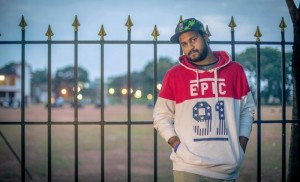
Aaron Pinto aka Prince, 25, a resident of Jeppinamogaru, a Kudla-based youth has now come up with a rap on the city.
Mangaluru :
Drawing inspiration from the local lads of Mumbai and Delhi, among other places, who immortalized their cities by glorifying them through music, a Kudla-based youth has composed a rap on the city.
What’s notable is that the rap ‘Mera Shehar -feat Prince’ is composed in Hindi – perhaps for the first time from Mangaluru – hoping to reach out to the masses across the length and breadth of the country. Songs on the coastal city, brought out in Kannada and Tulu by various artistes, have already garnered good views on the web.
Pinto said he always liked the idea of giving a desi touch to the west-originated rap genre. This is when he started listening to Indian rappers and soon got influenced by Hindi and Punjabi rap songs. “One day, I stumbled upon ‘Mera Bombay’ by rapper Divine. I got so hooked to it that I wanted my own version of a rap on my city. It took me a few years to realize this, as I had to take care of my career prospects as well. Today, I am happy that my rap on Mangaluru is on the web,” Pinto, who is soon expected to come up with a rap in Tulu, too, said.
Aaron Pinto aka Prince, 25, a resident of Jeppinamogaru, says he jotted down lyrics for the rap a few years ago, when he was employed in the UAE. “I wanted to glorify my city. Hence, I jotted down some lines about Mangaluru. Recently, after I migrated back, I weaved them into a rap,” said Pinto, who brought out the video a couple of months ago on You Tube .
The video, that lasts for 2.46 minutes ,speaks about the city as a whole, its reputation to deliver class-apart actors to various film industries, its scenic beauty, and the kind-heartedness of Mangalureans.
Successful running of Tulu movies overseas, and the frequent visits of stars from the city there, have helped popularize the name of the city across the globe. Little is known about the city in its own country’s north, where Hindi is spoken at large. Pinto also hopes to bring native Hindi speakers a notch closer to Kudla with his rap.
source: http://www.timesofindia.indiatimes.com / The Times of India / News> City News> Mangalore News / TNN / November 21st, 2017