Category Archives: Records, All

Conference on the depth and breadth of Ramayana

With every Yakshagana performance, multiple versions of Ramayana are created on the stage. | Photo Credit: File Photo.

Scholars discuss versions of the epic and their influence on India and Southeast Asian countries

In a Kathakali performance staged in 1780 by Kallaikulangara Raghava Pisharoty, Ravana from the epic Ramayana takes centre stage. Set 10,000 years before Rama’s birth, the dance-drama depicts the story of Ravana’s ancestors, the downfall of the kingdom of the rakshasas, the birth of Ravana, his love for his mother and his great tapasya (austerity) to regain the lost glory of his clan.

The performance portrays Ravana, the villain of Valmiki’s Ramayana, in the most sympathetic light, bringing out the qualities of courage, resolution and strength of character. Rama is nowhere in the picture.

The Malaysian shadow play Wayang Kulit Kelantan draws influence from the oral folk versions of the Ramayana, which travelled beyond the shores of India. The role of Gods and saints is reduced drastically. Wayang Kulit portrays different versions of Ravana’s origin, including the one in which he is born in the heavens and banished to Earth. There he meets Adam and they divide the world among themselves.

These and many other versions of Ramayana and their influence on art, culture and social landscape of India and Southeast Asian countries were revisited by scholars at the two-day international conference on Connecting Cultures: Ramayana Retelling in South India and South East Asia, which was held at REVA University on September 14-15.

Stating that the manifestations of core themes of the Ramayana are complex and in need of detailed research, Dr. Ghulam-Sarwar Yousof from the University of Malaya, Kuala Lumpur, said, “A lot of Malaysian, Thai and Indonesian versions of the Ramayana can be traced back to Krittivasi Ramayan, composed in 15th century Bengal.”

Malini Saran, independent scholar, presented a paper about the discourse on governance and ethics initiated in the first known Ramayana in Java called the Old Javanese Ramayana. “An emphasis on the spiritual and ethical rather than devotional values of Rama’s story in this version allowed imaginative interpretations, with its content and characters used as an allegory for contemporary situations.”

Cheryl Thiruchelvam, a PhD scholar from Universiti Tunku Abdul Rahman, Malaysia, spoke about the emerging art forms, artistic practices, architecture in Malaysia that have origins from versions of the Ramayana. Citing examples of painters Nik Zainal Abidin, Syed Thajudeen and Loo Foh Sang, she discussed how they drew inspiration from Wayang Kulit (traditional puppet-shadow play in Indonesian culture) for their paintings.

Sessions were also held on retelling of Ramayana within the canon of Kannada literature and its multiple interpretations in the Yakshagana of coastal Karnataka.

Dr. Purushottama Bilimale spoke about the 60 episodes of Ramayana created by around 40 authors for Yakshagana performances. “All of these episodes are flexible depending on the time of performance, community and the artistes’ talent. Also versions differ in terms of music, poems and dance. With every Yakshagana performance, multiple versions of Ramayana are created on the stage,” he said.

The conference also deliberated on Ramayana narratives from the Hoysala to Vijayanagar empires, the influence of the epic on sculpture in medieval India such as Pallava and Pandya archaeology and artistic representations throughout India and Southeast Asia.

Before the conference began, participants observed silence for one minute in memory of journalist and activist Gauri Lankesh.

source: http://www.thehindu.com / The Hindu / Home> News> Cities> Bengaluru / by Staff Reporter Bengaluru / September 17th, 2017

Music director, singer L.N. Shastry no more

Music director and singer L.N. Shastry. | Photo Credit: Special Arrangement

L.N. Shastry (46), noted playback singer and music director of Kannada cinema, breathed his last on Wednesday noon. He is survived by his wife Suma Shastry, a noted singer. Shastry was suffering from cancer.

Shastry has sung for over 25 films and his “Kolumande Jangama Deva” for the film Janumada Jodi directed by T.S. Nagabharana brought him name and fame. This song also got him Karnataka State Film Award as Best Male Playback Singer. “Karunaade KaiChachide Node” for the film Malla starring Ravichandran was another of his hit songs.

He was disciple of music directors Hamsalekha and V. Manohar, before he became an independent composer for the film Kanasalu Neene Manasalu Neene. Melody was the last film he composed music for. He has last sung for a song for the film Love in Mandya.

Political leaders and members of the film fraternity condoled the death of the musician, who enriched Kannada cinema through his music.

source: http://www.thehindu.com / The  Hindu / Home> News> Cities> Bengaluru / by Special Correspondent / Bengaluru – August 30th, 2017

Archiving the versatile sari

The aim is to create a cultural documentation of the sari.

The Nivi drape, or the one where the pallu of a sari is worn on the left shoulder, is the most common type of sari drape in the country and the world over. But India has hundreds of such drapes, specific to region and culture, that have been forgotten over the years. To document these drapes and create a digital archive, Border&Fall, a city-based digital platform promoting the garment, textile and craft community of India, is making 80 short films as part of its project ‘The Sari Series: An Anthology of Drape’.

Each film will be two minutes long and will show how to drape a sari in a particular style. The archive, expected to be released this fall, can be accessed online for free .

“This project has been an idea for years, but we began proactively working towards it in early 2016. The aim is to create a cultural documentation of the sari through short films, which will give people access to various drapes, and to showcase the diversity and versatility of sari as a garment,” said Malika Verma Kashyap, founder of Border&Fall.

However, Ms. Kashyap said this was not an attempt to “revive” the garment. “The sari is not a forgotten tradition, it is worn my millions of women every day. But many are unaware of the different ways it can be worn. The Boggli-Possi drape from Andhra Pradesh for example is great to behold,” she said.

Some of the other styles to be documented are the Coorg drape, the Kalna Sari drape from West Bengal, Kuchipudi men’s sari drape from Andhra Pradesh, Yakshagana Kase from Karnataka, Purnia drape from Bihar, Warli drape from Maharashtra, and Ranchi Saiko drape from Jharkhand.

Apart from the 80 films, three independent films directed by Qaushiq Mukherjee, Bon Duke and Pooja Kaul will explore the sari’s past, present and future.

Some of the images of the drapes are part of the #WeWearCulture project by Google Arts & Culture.

source: http://www.thehindu.com / The Hindu / Home> News> Cities> Bengaluru / by Sarumathi K / Bengaluru – July 28th, 2017

Peering into the architecture hidden in a thriving market

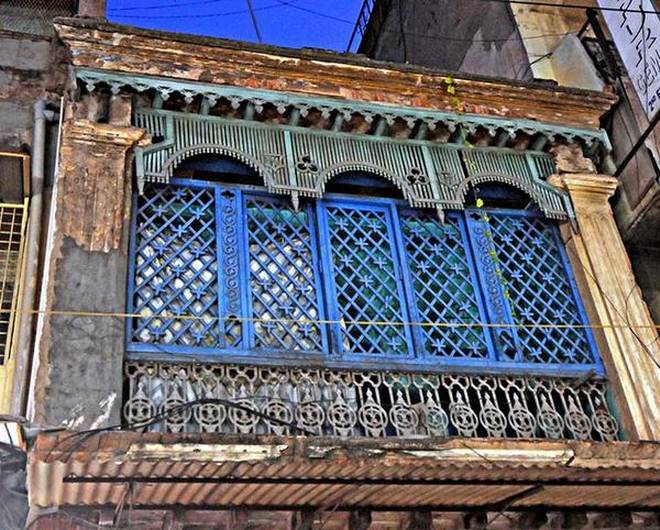
Bengaluru Karnataka 25/07/2017 Old Windows on Avenue Road Bengaluru . Photo: Sampath Kumar G P | Photo Credit: G_P_Sampath Kumar
Bengaluru Karnataka 25/07/2017 Old Windows on Avenue Road Bengaluru .
Photo: Sampath Kumar G P | Photo Credit: G_P_Sampath Kumar

INTACH’s heritage walk on Avenue Road today marks 10 years of ‘Parichay’ project

The cacophony that dominates Avenue Road is something that every Bengalurean knows only too well. The busy road is home to hundreds of shops and buildings. However, it also boasts small islands of period architecture, which are a rich source of knowledge about the city’s heritage.

This year, the historic road will host the 115th ‘Parichay’ Heritage Walk conducted by the Indian National Trust for Art and Cultural Heritage (INTACH – Bangalore Chapter) on Sunday. The walk will also mark 10 years of the Parichay project.

INTACH plans to conduct an ‘architecture walk’ that will give a historical perspective to the dime-a-dozen brick and mortar structures that pack the road. “To have people understand this through the eyes of an architect, we will have Vijay Narnapatti take people to heritage buildings,” said Meera Iyer, co-convener, INTACH.

“The walk will begin at Mysore Bank Circle and end at the Anjaneya temple. On the itinerary are the Rice Memorial Church (named after Benjamin Holt Rice, a missionary of the London Missionary Society), and Manik Mastan Saheb Dargah. The syncretic culture that has thrived for hundreds of years, much before the time of Hyder Ali, continues to flourish on this historic road,” said Mr. Narnapatti.

The thriving marketplace will remain a constant companion during the walk. The area was called Dodda Pete before being renamed Avenue Road.

“Possibly, owing the avenue of trees. We still have British colonial-style buildings here. If the government declares it a heritage road, it would be befitting its history,” said Mr. Narnapatti.

Avenue Road houses some of the best carved facades. Stone was used in most of the buildings, including Raja Market, and in the temple, church, and the dargah. “While stone was used as both a building material and for cladding and flooring, the colonial influences are seen in the windows with small columns on either side, arched windows, and pointed wooden shutters,” he said.

The markers on each of the side streets in stone can be seen even today. “There are remnants of the stone seats installed beneath a cluster of trees that are tucked away in the side lanes that had cobbled stones for a walk path, not visible from the main road,” said Mr. Narnapatti. But in the midst of all this beauty grew a monstrous market that erased most of its architectural heritage, he added.

source: http://www.thehindu.com / The Hindu / Home> News> Cities> Bengaluru / Ranjani Govind / July 30th, 2017

KIA, first airport to launch custom-made patrolling bikes

KIAbf28jul2017

The Kempegowda International Airport (KIA) now has its own patrolling bikes.

Introduced for the first time in any airport in the country, the custom-made motorcycles were launched on Monday.

Two bikes have been introduced now for ground traffic control duties within the airport premises. An airport spokesperson said these bikes will help in quicker and seamless movement of personnel through the network of roads and pathways inside the campus.

More such two-wheelers are expected to be introduced soon.

source: http://www.deccanherald.com / Deccan Herald / Home> City / DH News Service, Bengaluru / July 28th, 2017

Eternally yours: a rare women’s museum in Bengaluru

Shashwati01BF27jul2017

We have a rare women’s museum in the city. Read on to find out the interesting story behind its birth and its even more intriguing collection

The city nurtures in its womb, little known spaces and unknown treasures an inhabitant can only discover if suitably armed with time and curiosity. Shashwati Women’s Museum is one such gem which needs to be discovered. Its location — nestled inside NMKRV Degree College for women in Jayanagar — makes it even more rare. Shashwati is a word derived from the Sanskrit word Shashwat which means eternal and Chi.Na. Mangala, educationist, journalist, author, visionary wanted to create something for posterity. The founder-principal of NMKRV Degree College for Women in 1973, with her colleagues undertook a padayatra in Bengaluru and Mysuru collecting women-related artefacts. That is how Shashwati Women’s Museum was born.

Shashwati02BF27jul2017

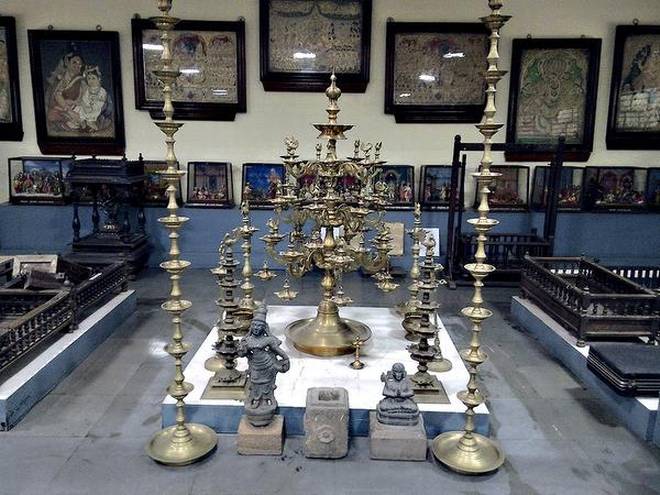
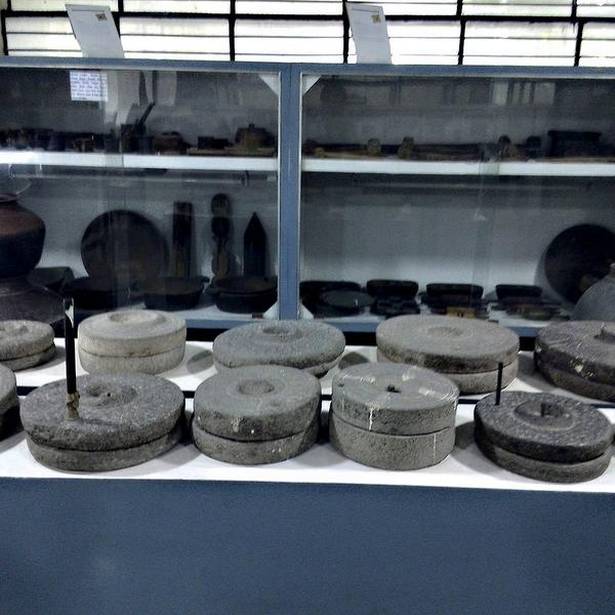
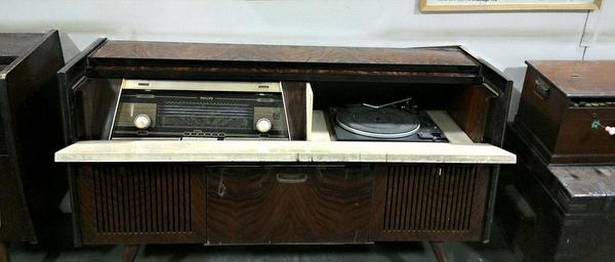
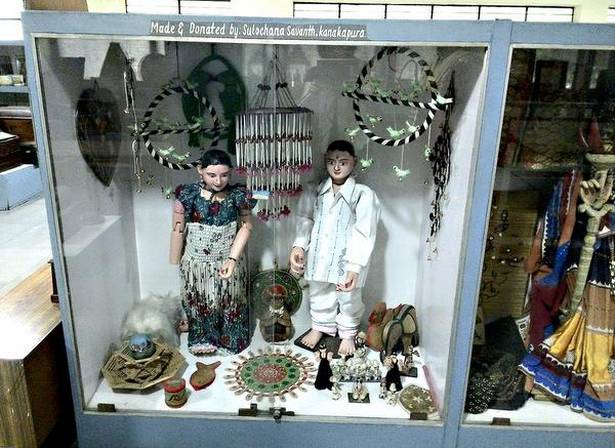
Dioramas, grinding stones, wooden troughs, vessels, radios, typewriters, old gramophones, wooden cradles, objects handcrafted from plastic, paddy, fabric, crochet, jute, photographs, paintings, sculptures in copper, brass and stone make up this museum. “All the items that you see were made and used by women and that is what makes it so rare,” says Vani M.N, one of the oldest serving teachers in the college.

The museum can introduce one to Nanjanagudu Thirumalamba, Karnataka’s first woman writer, journalist and publisher. As soon as visitors enter, they can find a display section dedicated to the iconic personality with her handwritten articles, letters and a few of her personal belongings. “Mangala once wrote an article for a magazine claiming that Thirumalamba was dead. But she later found out that Thirumalamba was alive. Mangala took it upon herself to find her. She eventually found her living in a small house in a village in Chennai. Chi.Na.Mangala felt she had committed a sin and to atone for it, she needed to build something for eternity. She went door to door collecting these items,” reveals the senior teacher.

Shashwati03BF27jul2017

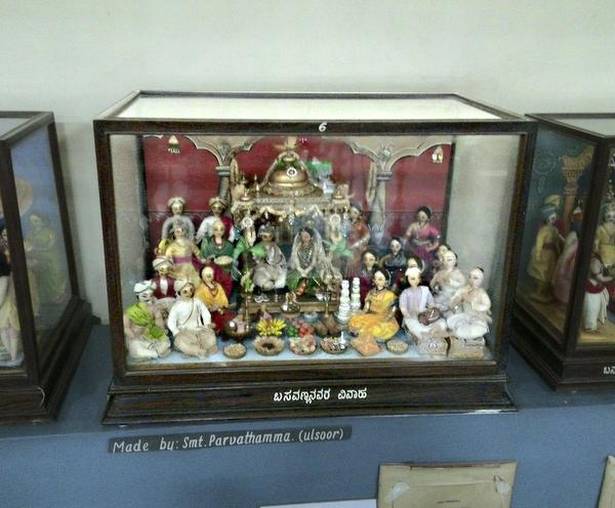
Vani picks a wooden sieve, nut crackers,and dioramas depicting saint-poet Basavanna’s life as well as a 100 year-old paddy tray and a 120 year-old saree with gold threads worn by Mangala’s mother on her wedding, as highlights of the museum.

The nut crackers are truly a delight, especially the ones styled as a Yaksha-Yakshi, or a fish. The dioramas lined at the fag-end of the museum, depicting important episodes from Basavanna’s life, are also significant. With each object clearly stating the name of the donor and creator, the collection becomes credible.

Shashwati04BF27jul2017

If the display and curation were better, the museum could have transformed into an extraordinary space. But the fact is that it is dealing with practical challenges of space.

“The collection hasn’t stopped growing so we have to figure out how to accomodate it. There is a museum committee which has been formed and we have to take certain important decisions regarding these issues, soon it will be a better place. When it comes to a curator, we need someone who will be there with us for a long time. We need a committed person; what we do now is train and pass on the information to a present staff member,” explains Vani, who heads the Department of Journalism and Mass Communication.

Shashwati05BF27jul2017

The museum is not like other museums where visitors can just walk in. One needs permission from the college to visit the space. “It is inside the college and that’s why one needs to be a little cautious but whoever wants to come can call us and see it.

The museum is particularly relevant to the students of the Department of Women’s studies and outsiders undertaking research on gender or anthropology,” adds Vani. The museum is currently closed to visitors due to some construction work.

Shashwati Women’s Museum,NMKRV Degree College of Women,3rd block, Jaya Nagar East, Near Uphara Darshini, Banashankari

Call: 080 2663 7042

source: http://www.thehindu.com / The Hindu / Home> Entertainment> Arts / by Shailaja Tripathi / July 26th, 2017

U.R. Rao, genial genius of ISRO

URRaoBF26jul2017

He gave the country its first spacecraft

Udupi Ramachandra Rao, former chairman of the Indian Space Research Organisation, acclaimed space scientist acknowledged as the father of Indian satellite technology, is no more.

The celebrated cosmic ray scientist with an MIT scholarship and experience with early NASA projects in the 1960s is best remembered as the man who gave the country its first spacecraft Aryabhata from out of modest un-space-like industrial sheds of Peenya in Bengaluru.

His demise at age 85 somewhat brings the curtain on the starry era of pioneering space troika of Vikram Sarabhai, Satish Dhawan and U.R. Rao.

Regulars at Antariksh Bhavan, the headquarters of ISRO and the Department of Space, will miss the gentle genius. A workaholic, Dr. Rao was active until about two weeks back in his office at Antariksh Bhavan, recalled ISRO Publications and Public Relations Director Deviprasad Karnik.

Guided by Sarabhai

When Dr. Rao returned in 1966 to India from stints in the US, the Americans and the Russians were flying their spacecraft of their rockets and had reached Moon. Over here, they were the days of low budgets, small human resource but high spirits and goals.

Dr. Rao’s space journey blossomed under the tutelage of Vikram Sarabhai, his doctoral guide and later boss at ISRO: in 1972, Sarabhai tasked the young Rao — fresh from MIT and the only Indian then who had worked on NASA’s Pioneer and Explorer satellite projects — with building an Indian satellite.

Then Prime Minister Indira Gandhi had come down to see the assembled satellite — Aryabhata — which was launched on a Russian rocket in 1975. Indian satellites had started sprouting.

As the first director of what is now called ISRO Satellite Centre, Dr. Rao was responsible for 18 early satellites including the landmark Bhaskara, APPLE, the Indian Remote sensing Satellites or IRSs. His mantra was – ‘If others can do, we can do better’.

In 1984, Dr. Rao succeeded Satish Dhawan as ISRO Chairman and Secretary, Department of Space, going on to have the second longest tenure in the high post – ten years. (Dr. Dhawan headed it for 12 years.) Dr. Rao was the chairman of the governing council of Physical Research Laboratory until the end, apart from many science ad technology bodies.

Shaped many a project

At ISRO, there has not been a planetary mission that has not been touched or tweaked by Dr. Rao. As the chairman of overseeing body ADCOS or the Advisory Committee on Space Sciences, he finalised, shaped, refined or designed the Chandrayaan-1 lunar mission of 2008; the Mars Orbiter Mission of 2013; and the upcoming Chandrayaan-2 set for 2018.

“I look for excitement in any field,” he had said. One of the current unfinished projects of the cosmic ray scientist is Aditya L1 mission – India’s upcoming solar observatory, so to say. Aditya was earlier planned as a near-Earth mission looking at Sun. However, Dr. Rao – close associates say – convinced ISRO to greatly enlarge its feature and scope. For him, the spacecraft must gaze at Sun from an apparently stable point called L1 or Legrangian point. He prevailed and now Aditya-L1, as it is now renamed, will travel million km to do its job from a point undistubed by either Earth or Sun.

Associates recall that he was always updated of developments in his field and related sciences. He was forthright, had a “sharp, analytical mind, enormous intellectual ability and [could] quickly make back of the envelop computations for complex solutions,” recalled V.Jayaraman, his doctoral student and erstwhile Director of ISRO’s Earth Observation Systems and later National Remote Sensing Agency, in an article in Current Science titled Living legends in Indian Science.(Vol. 106, No.. 1588 11, 10 June 2014.)

The same article recounts how Dr. Rao ensured that a remote sensing satellite was launched from a Soviet spaceport amidst extraordinary conditions: “Even as [then Soviet] President [Mikhail] Gorbachev resigned as general secretary of the Communist Party of Soviet Union on 24 August 1991, and the mighty Soviet Union collapsed in the next few days, IRS-1B was launched without any hitch on 29 August 1991 from Baikonur. The presence of Rao [in spite of advices to stay back] served as a balm, not only for the ISRO team at the launch pad and helping them to stay focussed and keep a high morale, but also as a great relief for their families back home. For us associated with that historic event, it will remain as [a] lesson as to how a leader should behave in times of crisis and to be with his team, … whatever be the hurdles.”

Two years back, he was down with cough and fever, yet drove 15 km to his ISRO office to keep his engagements – one of them an appointment with this reporter. When he was told that he could have postponed the meeting, Dr. Rao typically said, “Some people prefer to rest, I prefer to work.

All through my life I have worked when I am sick – to forget the sickness. Or else I will be a nuisance to others.”

As chairman, Dr. Rao accelerated the rocket development programmes but with mixed luck. He presided over the fruition of the ASLV early rocket, much of the development of the now-famous PSLV. He laid the foundation for the GSLV by signing a pact with the Russians in 1991 for the cryogenic engine technology for its third stage. Dr. Rao’s joy was blunted as the PSLV clicked after his tenure while the Russians reneged on the cryogenic pact.

The credit for kickstarting the now working GSLV, however, is undeniably Dr. Rao’s, say ISRO oldtimers.

U.R.Rao was born on March 10, 1932, to Lakshminarayana Acharya and Krishnaveni Amma in Adamaru near Udupi – a small town that hosts one of the eight famous `Madhwa math’s sacred to Kannada Brahmins. He studied in Udupi’s Christian High School and later did his intermediate course in Bellary’s Veerashaiva College. A B.Sc at the Government Arts and Science College, Ananthapur, then under Madras University. He completed his M.Sc in Physics from Banaras

Hindu University 1953 and briefly taught in Ahmednagar and Mysore. But space sicence was beckoning and he enrolled for a PhD under none other than Vikram Sarabhai at the Physical Research Laboratory, Ahmedabad, and got the doctoral degree in 1960 from Gujarat University.

The article by Dr. Jayaraman says the story of a small-town boy’s rise “to a lofty position as Chairman of ISRO, a prestigious organisation and of international fame, should be a motivational force to many young aspirants in our country.”

source: http://www.thehindu.com / The Hindu / Home> Sci-Tech> Science / by Madhumathi D.S / Bengaluru – July 24th, 2017

Bengaluru girl bags three medal at Dance World Cup

VinayaBF11jul2017

Bengaluru :

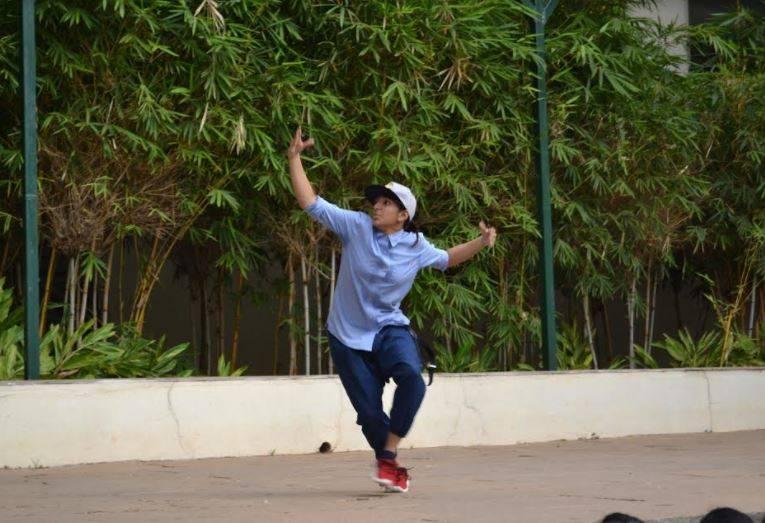
Vinaya Seshan, a grade 10 student of  Inventure Academy , won three medals at the 2017 Dance World Cup held recently in Germany .

The event is considered to be one of the world’s top all-genre dance competition for children and youth. More than 12,000 participants from 47 countries competed in the qualifiers, and over 10,000 from 43 countries made it to the final.

Vinaya bagged gold in the duet category and a bronze each in the hip-hop group and hip-hop solo categories, adding to her haul of three medals at last year’s World Championships. Vinaya danced in Inventure’s formal blue uniform as she considers it to be her lucky charm.

Vinaya’s passion for dance began in Grade 1 and she has been a regular in Inventure’s dance teams and musical productions.

She got her big break when she was selected for Berserk, a week-long dance workshop conducted by the Lourd Vijay Dance School. She was part of their squad that won a bronze in the 2015 World Cup.

Vinaya also plays the tabla, guitar and piano. “Being versatile is important; at the same time finding the right balance is difficult, but achievable,” she said.

source: http://www.timesofindia.indiatimes.com / The Times of India / News> City News> Bangalore News / TNN / July 10th, 2017

Melody shaped in wax

Perfect blend: Wax statues of musicians at the Melody World Wax Museum in Mysuru. DH Photo

What makes the Melody World Wax Museum in Mysuru stand out from other wax museums is its display of various musical instruments and wax statues of musicians playing instruments. There are around 100 life-size wax statues and over 470 musical instruments displayed here.

This is a one-of-its kind wax museum that was established by Shreeji Bhaskaran, a Bengaluru-based IT professional, in October 2010 as a tribute to all musicians from across the world. This museum focuses on the preservation of art and culture of India, especially in the field of music.

Making of the statues

All the musical instruments that are displayed here are purchased from across the country and world. “While India is moving towards a virtual digital platform, most of the art and culture heritage of India is disappearing. The collection of this museum is unique and represents most states of India,” says Shreeji. Nearly all the musical instruments of Karnataka are displayed in this museum.

The wax statues and instruments in the museum are a source of attraction for many. However, the making of these wax models takes a long time. The process of making wax statues involves several steps including computerised digital imaging techniques, conventional and traditional methodologies of moulding and sculpting, etc. In fact, around 50 kg of wax is used to make each statue and it takes 13 months to complete.

After the statues are developed, they are given an authentic look with the use of various accessories.

Clothes are specially stitched to fit the statues and their styles. Colours are mixed in with wax when it is in the molten state. However, cosmetic colouring is used only in the final stages of the statue’s creation. The eyes and teeth used in the statues are artificial while the hair may be synthetic or natural, depending upon the statue’s requirement to get a real-life look. All the statues exhibited are of life size and are dressed in traditional clothing.

Probably, this museum houses the largest collection of musical instruments in Karnataka. These have been displayed in 19 galleries. There are also wax models of various bands from across the country and abroad in genres such as Indian Classical, Hip Hop, Jazz and Bhangra. While many of the wax statues showcased at this museum have musical relevance, there are a few which also have social importance.

Major attractions

Highlights of this museum include a colossal statue of Nalwadi Krishnaraja Wadiyar and a life-size statue of Maharaja Srikantadatta Wadiyar. Another attraction at the museum is that you can play some of the musical instruments displayed in a special section.

The museum has become a popular haunt for people who want to get to know the rich musical diversity that India offers. In fact, the museum gets as many as 400 visitors on weekdays, while it gets around 600 visitors on weekends.

Melody World Wax Museum is open on all days between 9.30 am and 7.00 pm. To know more about the museum, visit www.melodyworld.in.

source: http://www.deccanherald.com / Deccan Herald / Home> Supplements> Spectrum / by Monica S A / July 11th, 2017

Mysore Lancers’ tryst with Haifa

The Mysore Lancers march at Haifa, a port city in Israel, on Sept 23, 1918. | Photo Credit: from the collection of Mr. Raja

They fought hard to liberate it in 1918

A long forgotten slice of martial history related to Mysuru will be revisited when Prime Minister Narendra Modi pays tribute to fallen Indian soldiers at the Haifa cemetery in Israel.

The Mysore Imperial Service played a big role in the liberation of Haifa on September 23, 1918, from Ottoman Turks and Germans, by allied forces. This is seen as one of the fiercest battles in the west Asian theatre of World War I in which India, as a British colony, fought German and the Ottoman troops.

The Mysore Lancers were in the 15th Imperial Service as the forces sent by the princely states of Mysore, Jodhpur and Hyderabad. Historian M. Shama Rao in “Modern Mysore” published in 1936 says troops of native States, who were seen as fit only for ceremonial parades, proved their mettle.

General Sir Edmund Allenby’s despatches of October 31, 1918, on the occupation of Damascus and Aleppo, found in the book, make a special reference to the Mysore Lancers during the capture of Haifa.

A special recruitment drive was conducted in the princely State and 5,000 men drafted for the war. The then Mysuru Maharaja Nalwudi Krishnaraja Wadiyar sent his troops to defend the empire and even gave nearly ₹50 lakh to the India War Fund.

Raja Chandra R., son-in-law of the last Maharaja, Jayachamarajendra Wadiyar told The Hindu that the ruler Krishnaraja Wadiyar IV sent a spirited message to the men on the front.

The book “Mysore’s Part in the War: 1914-1918” cites Sir Allenby and says over 1,350 prisoners and 17 guns were taken in the operation between the spur of Mount Carmel and the marshy banks of river Kishon, about two miles from Haifa road. Mr. Raja Chandra said a memorial at Bengaluru to the participants lies forgotten.

source: http://www.thehindu.com / The Hindu / Home> News> States> Karnataka / by Sharath S Srivatsa / Mysuru-Bengaluru, July 04th, 2017