Category Archives: Records, All

Pink Hoysalas are not just a token presence

PinkHoysalaBF29may2017

The Bengaluru patrols don’t merely instil confidence among women, they empower policewomen as well

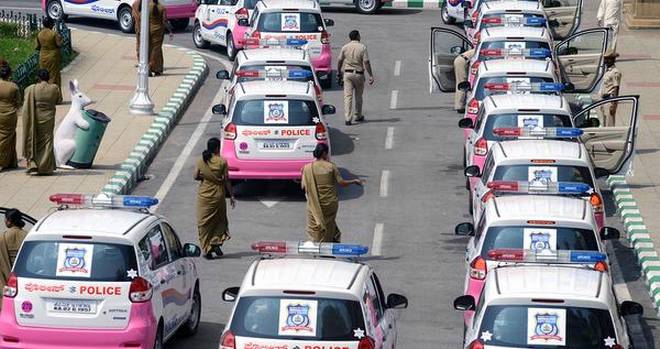
There is at least one woman member in each of Bengaluru’s high-visibility police patrol teams and they stand out in their Pink Hoysala vehicles.

A patrol unit has two or three police personnel, and the vehicles are a familiar sight in areas with a high concentration of women, such as colleges and schools, paying guest complexes and even temples.

The Pink Hoysalas are seen as not merely helping women in the city, but empowering female police personnel too. These staffers now conduct inquiries, question suspects and carry out investigations – tasks normally performed only by male personnel.

So far, the 51 Pink Hoysalas that were added to the 221 regular Hoysala patrols last month to exclusively cater to problems faced by women and children have received 39 distress calls.

These are received through the ‘Suraksha app’ (users can press the power button five times to seek help, sending a signal to the command centre that then directs the nearest Pink Hoysalas as well as the control room number (100).

“The calls include complaints of sexual harassment in public places. This is why we keep these patrols near all-girls colleges and schools, especially at closing time,” said a senior police officer.

Arrest on the move

‘Pink Hoysala 272’ has won attention for arresting a man who was misbehaving with a 29-year-old software engineer, from the bus on which the incident occurred in Whitefield late at night.

In another case, a Pink Hoysala rescue a woman in Basavanagudi who was initially thought to have been attacked with acid.

It was found that the substance was adhesive gum. Based on feedback, the system may be expanded.

source: http://www.thehindu.com / The Hindu / Home> News> Cities> Bengaluru / by K.C.Deepika / Bengaluru – May 26th, 2017

Students go innovative, price of their drone dips

KNS Institute of Technology students display the drones designed by them at Eduverse, the ninth edition of Jnana Degula education expo organised by Deccan Herald and Prajavani, at Jayamahal Palace Hotel grounds on Sunday. DH photo

An unmanned aerial vehicle (UAV) at Rs 1,500? Students of KNS Institute of Technology have done it, without much fanfare. They plan to enhance the design to customise the drones for surveillance and transporting goods.

The makers of the plane – Inayatullah, Debabrata Mondal, Premkumar Singh and Syed Junaid – represented their college along with vice principal Nayeem Ahmad at Jnana Degula-Eduverse event organised by DH and Prajavani.

Inayatullah said the plane was made of simple polymer materials (expanded polyolefin and polystyrene) and can carry 350 gm payload. “It can fly for an hour at a speed of 45 km per hour. We have used a propeller made of composite material with aluminium coating so that it can fly at a height of 500 feet and withstand force of up to 85 newtons,” he said.

The team is also working on a plane specifically designed for surveillance.“While the 45 kmph plane can be improvised to make it a delivery drone, we are working on a plane that flies slower, at 36 kmph, providing opportunities for deeper surveillance of a particular area,” Mondal said.

Inayatullah said the cost of the UAVs will come down further if produced on a large scale. “The UAVs produced by government agencies cost a lot. Our planes are disposable. The army can use the surveillance drone and does not have to worry if one of them is lost or destroyed,” he said.

The planes can be controlled by a 2.4GHz radio frequency device, which has a range of 2.5 km. “The remote controller cost us Rs 3,500. Considering that it is the plane and not the device that is susceptible to damage, we think ours is the most affordable UAV,” he said.

“The turbo is imported from China for Rs 90 and sold in India for Rs 250. The same turbo can be made in India at a cost of Rs 40. Nearly 95% of the materials were imported from China. After a detailed study, we found the cost will come down to Rs 600, if we make these materials in India,” Inayatullah said.

source: http://www.deccanherald.com / Deccan Herald / Home> City / DH News Service / Bengaluru – May 29th, 2017

9 Bengalureans in ComedK top 10

Bengaluru :

The results of ComedK 2017 test which will decide admission to private engineering colleges in Karnataka were announced on Saturday.

The top 10 scorers are from Karnataka, nine from Bengaluru and one from Uttara Kannada. Candidates can access their ranks on ww.comedk.org.

Of the 2,000 top rank holders, 1,423 secured more than 70% and remaining 577 secured 67% and above but below 70%. Also, 7,427 candidates secured less than 60% but more than 50%.

Of the first 100 rank holders, 70 candidates are from Karnataka while the remaining 30 are from across the country.

Also, 398 of the 1,000 rank holders are from Karnataka and 602 are from other states.

source: http://www.timesofindia.indiatimes.com / The Times of India / News> City News> Bangalore News / TNN / May 28th, 2017

Exhibits at ashram enter Guinness Book of Records

2,649 bonsai trees from various cities are displayed at the ashram in Mysuru

Three exhibits at Sri Ganapathi Sachchidananda Ashram in the city, including the largest collection and display of bonsai trees, entered the Guinness Book of World Records. The certificates of records were conferred and received by Sri Ganapathy Sachchidananda Swami at a function on Friday held to mark his 75th birthday celebrations.

The Guinness record for bonsai reads as ‘Largest Display of Bonsai Trees.’ It was created at the International Bonsai Conference and Exhibition held in December 2016 when international delegates took part, the release said. During the conference, 2,649 bonsai trees brought from Bonsai Clubs of Mumbai, Pune, Bhopal, Jabalpur, Bengaluru, Mysuru and other cities were exhibited which resulted in the creation of the record, the release added

The second record was the Bhagavad Gita, at a height of seven ft and a width of five ft, besides a thickness of one ft. All the verses in the book are written in 18 languages, including nine Indian languages (Sanskrit, Telugu, Kannada, Bengali, Odiya, Gujarati, Gurumukhi, Malayalam and Tamil) and nine foreign languages (English, Greek, Russian-Cyrillic, Armenian, Georgian, Japanese-Katakana, Korean-Hangul, Arabic and Hebrew).A release stated that the Guinness Record reads as ‘Largest Hindu Smriti’ and the printing of the book took 636 hours in all. It was described as the largest book and has been printed using eco-friendly material. Fourteen people worked on it.

The third record pertains to the single largest collection of birds in an aviary at Shuka Vana located in the ashram. There are over 2,000 birds drawn from 475 species. The objective of establishing this aviary was to take care of injured and abandoned birds for which a dedicated hospital has been established, complete with non-invasive investigating apparatus. Bird care is provided by trained volunteers and the practice has been ratified by the Animal Welfare Board as confirming to international standards, the release added.

Visit from Phadnavis

Maharashtra Chief Minister Devendra Phadnavis visited Sri Ganapathi Sacchidananda Ashram on Friday and participated in the 75th birthday celebrations of the seer.

Mr. Phadnavis lauded the spiritual and social work of the seer and his contribution to eradicate discrimination in society. “The swami’s message of compassion is more relevant in the present time than ever,” he said and added that the seer’s knowledge and contribution to the field of music was immense. While other therapies work on the body, music soothes the soul, he said.

Later, speaking to mediaspersons he lauded the works and initiatives of Prime Minister Narendra Modi, who completes three years in office this year, and said that the world has realized the true power of India under him.

source: http://www.thehindu.com / The Hindu / Home> News> States> Karnataka / by Special Correspondent / Mysuru – May 27th, 2017

Making brain surgeries more cost-effective

BrainsurgeryBF25may2017

Bengaluru doctor designs low-cost stereotactic head frame

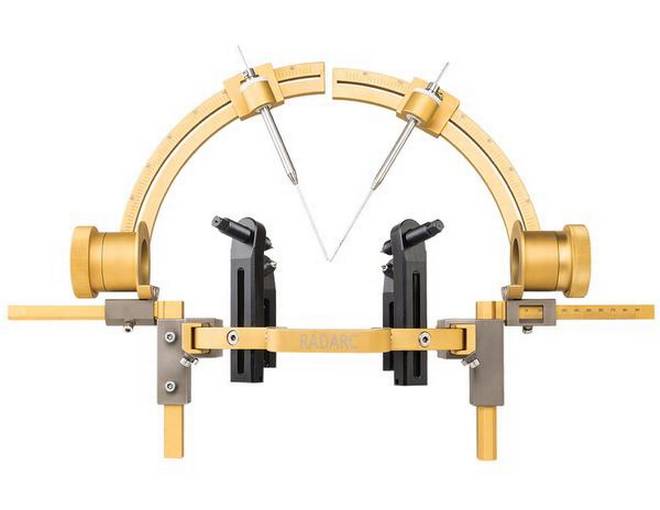
In brain surgeries, precision is everything — a shift of a few millimetres can make the difference between a successful surgery and putting a patient in coma. One device that improves the accuracy of neurosurgery is the stereotactic head frame, which provides a 3-dimensional coordinate system to help surgeons get the precise location of a nerve or tumour in the brain.

However, the device currently used is prohibitively expensive, costing between ₹75 lakh to ₹1 crore. A city-based doctor has designed a low-cost stereotactic frame which can be used to operate on both sides of the brain at a time, unlike conventional frames currently used in hospitals.

The frame designed by Murali Mohan, senior neurosurgeon with BRAINS Sparsh Hospitals, is made of medical grade titanium and costs one-third the current price. Engineers Sharath Bhat and Sadashiv Bhat of the Mahalasa Medical Technology, Bengaluru, developed the device.

Dr. Mohan’s inspiration was the late Balasubramaniam Ramamurthi, known as the father of Indian neurosurgery.

The frame which is CE marked (it conforms to European standards) and is pending patent, is currently being used by a doctors in around six to seven hospitals in Bengaluru and Hyderabad for biopsies and deep brain simulations.

source: http://www.thehindu.com / The Hindu / Home> Sci-Tech> Health / by Cynthia Anand / Bengaluru – May23rd, 2017

Bengaluru girl bags Diana Legacy Award

Nikhiya Shamsher, who won the Diana Legacy Award, with Prince William, Duke of Cambridge (R) and Prince Harry

Her crusade for better education , especially for under-privileged children, has won 14-year-old Nikhiya Shamsher from Bengaluru the Diana Legacy Award. The award was given away last week by Prince William, Duke of Cambridge and Prince Harry at the St Jame’s Palace, UK.

In December 2015, Nikhiya realized there are many children who do not have access to basic school supplies.Often entire classrooms of children share a single textbook, and many walk barefoot to school. While more children were attending school, she heard stories of bright young students dropping out because of poor educational foundation.

Yearn to Learn, the project spearheaded by Nikhiya, has, so far, set up 15 science laboratories which are benefiting 3,500 students from various schools. Nikhiya started her e-commerce website – http:www.knicnacs.com -to raise funds for her laboratory projects. Recently , she also funded the education of 25 blind children.

Inspired by Diana’s words -“Carry out a random act of kindness, with no expectation of reward, safe in the knowledge that one day someone might do the same for you” – the award, which marks 20 years since her death, recognizes young students who have socially impacted people through their actions. The award identified 20 winners as legacies of the princess.

Nikhiya was the only Indian among 20 winners rep resenting countries like the United Arab Emirates, UK, US, Canada, Belize, among others. This year, 12,000 social changemakers were nominated for the award. “The award has strengthened my believe in my project, giving me the confidence that I am doing the right thing,” said Nikhiya.”The benefit of this recognition is that a lot more people would now be interested and serious about the cause I’m working towards.”

Asked why she was so keen on bringing about a change in the education space, the teen said: “Because it is the single most important solution to all our issues.” Meeting the royal family was a unique experience for Nikhiya, who wasn’t quite expecting the award.

“The royal family was extremely encouraging and gave us the confidence that we were doing the right thing and keeping alive Princess Diana’s tradition,” she said, adding, “None of this would have been possible without the support of my parents and my school (Greenwood High).”

Her father Dr Shahid Shamsher, a trichologist, said: “We want her to follow the path she desires. She has this innate sense of responsibility and always keeps herself occupied and we know that she’ll go a long way.”

Added Niru Agarwal, trustee, Greenwood High: “At a tender age like hers, to think about the welfare and education of the downtrodden and selflessly work for it is noteworthy . She is a role model to her peers. Her qualities of kindness, compassion and service are truly admirable.”

In addition to the Diana Legacy Award, Nikhiya’s photo with information on her projects and services have been hosted at an exhibition at Althorp House, the final resting place of Princess Diana. Bengaluru

The Global Inclusion Award

Nikhiya was the sole winner from India at the Global Inclusion Awards, held in Berlin on May 3. She was chosen from among other contenders for the Global Winner of the Outstanding Youth Economic Citizenship Award 2017. The event was hosted by Germany’s G20 Presidency and Child and Youth Finance International, Germany.

source: http://www.timesofindia.indiatimes.com / The Times of India / News> City News> Bangalore News / by Deepika Burli / May 25th, 2017

Molecule discovery offers Ithope for Parkinson’s cure

Bengaluru :

City scientists have found a new molecule that can enhance the efficiency of the autophagy process in brain cells, that can significantly reduce their degeneration, which is the cause of diseases like Parkinson’s.

The scientists have initiated procedures to patent the process of discovery and the molecule itself -a potential drug -both of which have already been peer reviewed by international scientists.

Autophagy is our body’s housekeeping mechanism: a process where healthy cells clean up toxic proteins, preventing them from aggregating and killing the cells. While research on autophagy first emerged in the 1960s, a lot of serious work has happened in the past decade or so. In fact, the 2016 Nobel Prize for physiology or medicine went to Japan’s Yoshinori Ohsumi for his work in autophagy.

A major reason for diseases like Parkinson’s -which don’t have a cure yet -is aggregation of toxic proteins and inefficient autophagy or the complete lack of it, thereby resulting in the death of brain cells (neurodegeneration).

The new molecule, 6-Bio, discovered by scientists from the molecular biology and genetics unit (MBGU) at Jawaharlal Nehru Centre for Advanced Scientific Research (JNCASR), acts an autophagy modulator.”It (6-Bio) is capable of restoring autophagy and aid clearance of toxic protein aggregates, which otherwise form clumps and kill neu rons (brain cells),” said Ravi Manjithaya from MBGU.

Lead author of the paper S N Suresh

Unlike most other cells in the body, neurons aren’t easily replaceable, which means that once they are lost, they cannot be recovered. The research was led by Manjithaya and the lead author of the scientific paper was S N Suresh, a PhD student at MBGU under Manjithaya. Aravinda Chavalmane and Shashank Rai also contributed to the research.

What does 6-BIO do ?

The molecule enables neuroprotection by autophagy. It augments the efficiency of the autophagy process by enhancing the basal level (the speed at which autophagy happens). “Simply put, it quickens the process of cells taking bad proteins, which have formed clumps, to the cleanroom,” Manjithaya said. The research found a popular protein called GSK-3 Beta (a glycogen synthase protein) doesn’t allow autophagy to take place at a fast pace in brains cells affected by Parkinson’s and other similar diseases. “Our molecule removes this and quickens the process of autophagy,” he said.

Tests and publishing

The findings were published in Autophagy, a scientific journal edited by autophagy scientist Daniel J Klionsky.”Before sending them for peer review and publishing, we conducted tests in our lab, which were positive,” Manjithaya said.
Bad proteins which were found to cause neurodegenerative diseases were produced in yeast, which reacted in the same way as our brain cells. “The proteins began to form clumps and kill the yeast. We then introduced 6-Bio into the yeast and saw if it could prevent the death of the cells. It worked,” Manjithaya explained. A large part of Nobel laureate Ohsumi’s work on autophagy involved experiments on yeast.

Following this, the team tested 6-Bio on a mouse whose brain cells behaved like those of patients with Parkinson’s, and the results were positive again.

They teamed up with James Chelliah and Abhik Paul from JNCASR’s Chelliah Lab and Phalguni Alladi, Vidyadhara DJ and Yarreiphang Haorei from Nimhans. Researchers said the discovery is not a magical cure for Parkinson’s but a breakthrough that can help find a therapeutic solution.

source: http://www.timesofindia.indiatimes.com / The Times of India / News> City News> Bangalore News / Chethan Kumar / TNN / May 23rd, 2017

PIO doctor to open application of stem cell research in Nitte

Mangaluru :

UK-based orthopaedic surgeon, Dr Anand A  Shetty will start a clinical application of stem cell research in the city along with Nitte University. This will help in curing cancer and other related ailments.

Dr Shetty, who hails from Asode near Koteshwara in Udupi district, was honoured with the ‘Outstanding Clinical Excellence’ award by the UK’s House of Lords this year. Dr Shetty is winner of a host of awards including the prestigious Hunterian Surgical Medal and Hunterian Professorship for 2017 awarded by the Royal College of Surgeons of England for his research on stem cells in particular cartilage repair. Only four Indians have received this award so far.

A knee surgeon and director of stem cell research at Canterbury Christ Church University, Dr Shetty’s main interest lies in stem cell research, cartilage transplant, accelerated bone healing, and robotics in minimally invasive surgery.

In an exclusive tete-a-tete with TOI, Shetty spoke about his future plans for India especially the coastal city. “I began my research on stem cells around three decades ago when it was still in its very nascent stage. I got into cartilage and bone repair area. The biggest breakthrough was in 2000, where we did the first bone transplant surgery in the UK. To get such facility to India, with help of Nitte University, we set-up a multi crore facility in Deralakatte campus three years ago and a similar lab set-up in Hubballi for Dharmasthala hospital,” explained Dr Shetty.

He adds in the second phase his team wants go for cloning. “We want to clone high-milk yielding cow and pig for meat production. To start the process, we want to have clinical application in five years or by 2020 in Mangaluru,” he asserted.

Indian physicians, Dr Shetty says are most respected and trusted in the UK. If a British citizen has a health issue, he first tries to see an Indian doctor. “Racism did exist when I first entered the profession the 1980s. It changed in 1996 when the Labour government came to power,” he adds.

Apart from his surgical innovations, Dr Shetty is also the first surgeon to use robotics in arthroscopic knee surgery and gel-based cartilage repair surgery in the UK.

source: http://www.timesofindia.indiatimes.com / The Times of India / Home> News> City News> Mangalore News / by Kevin Mendonsa / TNN / May 20th, 2017

TSR award for Nagesh Hegde

HegdeBF16may2017

Gangadhara Hiregutti to get Mohare Hanumantha Rao award

Noted journalist Nagesh Hegde, who writes extensively on environment and science issues, has been chosen for the prestigious TSR Memorial Award by the government for 2016.

Gangadhara Hiregutti, editor, Munjavu daily, has been selected for the Mohare Hanumantha Rao Memorial Award.

An expert committee, headed by former judge Indrakala, announced the award on Monday. The awards carries a purse of Rs.1 lakh each and a citation. The awards will be conferred on these two journalists at a function to be organised shortly, according to a release.

Mr. Hegde served as Assistant Editor, Prajavani, and was also with Sudha, a weekly magazine. With a master’s degree in environmental sciences from the Jawaharlal University (JNU), he taught Environmental Geo-Science at Kumaon University, Nainital.

Environmental issues

He wrote extensively on environmental issues during his tenure as feature editor at Sudha.

He has delivered lectures on environmental issues in various parts of the world. He has also worked towards popularising science among rural communities.

Mr. Hegde is the recipient of many awards, including the Karnataka Rajyotsava and that of the Karnataka Sahitya Academy. He has written over a dozen books in Kannada on science, environment and development.

Award for U.R. Rao

U.R. Rao, space scientist, has been chosen for the Bhaskaracharya Award, instituted by Sri Channaveera Swamiji Foundation of Saranga Math in Vijayapura district. This was disclosed by Arun Shahpur, MLC, to presspersons here on Monday.

source: http://www.thehindu.com  / The Hindu / Home> News> States> Karnataka / by Special Correspondent / Bengaluru – May 16th, 2017

Bengaluru doctor wins international award for role in fight against tobacco

Cancer specialist US Vishal Rao of Bengaluru has been honoured with the 2017 Judy Wilkenfeld Award for International Tobacco Control Excellence, for his role in combating tobacco use in the country. Dr. Rao was presented the award on Wednesday at an event organized by the Campaign for Tobacco-Free Kids in Washington D.C.

Dr. Rao’s efforts led to a ban on gutka, chewing tobacco and e-cigarettes in Karnataka. However, the State government recently overturned the ban on chewing tobacco. Dr. Rao is a member of the High-powered Committee on Tobacco Control instituted by he Government of Karnataka. He is also the inventor of a Rs. 50 voice box prosthetic for throat cancer patients whose larynx has been removed.

“With strong government commitment and advocates willing to champion the cause, we can greatly reduce the burden of tobacco use in India,” he added.

“The committee gave the award in recognition of the steps taken towards implementing the Cigarette and Other Tobacco Products (Prohibition) Act, and how Karnataka led the way in this,” said Dr. Rao, speaking over telephone from Washigton. “Another was the implementation of the ban on gutka and chewing tobacco by the Government of Karnataka,” he added.

Dr. Rao said that the battle continued with the recent order from the Food Safety Commissionerate reversing the ban on chewing tobacco. “We have written to the State government that the order contravenes its commitment made to the Supreme Court to ban chewing tobacco and gutka,” said Dr. Rao.

The Wilkenfeld Award was established in honour of Judy Wilkenfeld, the founder of Tobacco-Free Kids’ international program. Dr. Rao is the second Indian to receive the award, the first being Pankaj Chaturvedi of Tata Memorial Hospital in 2013.

source: http://www.thehindu.com / The Hindu / Home> News> Cities> Bengaluru / by Staff Reporter , Cinthya Anand / Bengaluru – May 12th, 2017