Category Archives: Records, All

Story of execution of state’s martyrs to be made a book

Little-known episode in state’s history to figure in archive’s digitisation plan

Termed the Jallianwala Bagh massacre of Karnataka, the execution of 9 of the 19 freedom fighters by the British government, which was never part of the state’s history, will now be available in book format.

The book titled ‘The Unsung Freedom’ will be published shorty by the Karnataka State Archives Department as part of digitisation of historical documents, K A Dayananda, director, Archives Department, told reporters on Tuesday.

The department has taken up digitisation of old documents pertaining to the state on a massive scale. The Archives Department has launched a web portal (http://archives.kannadasiri.co.in) for easy access to historical records of the state at the click of a mouse. Karnataka is the only state in the country to digitise historical documents to help research scholars, students and the public.

Nonagenarian Konana Channabasappa recently shared the 50-page judgement copy of the Madras Court during the colonial period about the capital punishment given to 19 freedom fighters. The Britishers executed 9 of the 19 freedom fighters. They were working abroad drawing handsome salaries then. They returned to India responding to Subhas Chandra Bose’s call to fight for freedom and joined the East India Company on meagre wages. They worked secretely collecting information about the British government’s activities and fought against them. However, they were arrested once their secret mission was exposed and were awarded capital punishment.

“The sacrifice of these freedom fighters was never a part of history. We know about Sangolli Rayanna’s execution as history refers to his heroic deeds. The sacrifice of nine freedom fighters is no less than that of the Jallianwala Bagh massacre victims. Hence, the department has decided to bring out the judgement copy which deals with activities of the 19 freedom fighters in a book form,” Dayananda said.

The department has digitised around five lakh pages and hopes to complete the digitisation of over 1.5 crore pages in two years. The department is in touch with government agencies in Mumbai, Pune, Chennai, Hyderabad and Thiruvananthapuram to procure documents pertaining to Karnataka. The process of getting content running into 20,000 pages pertaining to Karnataka from England is also on, he said.

Around 129 people used the Archives department’s documents in 2016, around 86 in 2015 and 85 in 2014.

The department awarded Rs 10,000 scholarships to research students to make use of documents. The amount has been increased to Rs 20,000. Only 1% of the population knows about the department’s documents. Hence, the department conducted an exhibition in various parts of the state last year to create awareness about the importance of historical documents available for reference, he added.

Content comprising around 55,000 pages is in running Kannada handwriting which only experts can read. The department has hired 15 scholars to read and translate them to modern Kannada, he said.

source: http://www.deccanherald.com / Deccan Herald / Home> State / DH News Service / Bengaluru – April 26th, 2017

Now, order veggies from Hopcoms online

However, pilot project covers only five localities

Starting today, you can order veggies and fruits from the Horticultural Products Co-operative Marketing and Processing Society (Hopcoms) online (www.hortibazaar.in) and get them delivered home within three hours.

However, this facility is not available across the city. “We have started a pilot project in five high sales areas. Depending on the response, it will be extended across the city,” said G.R. Srinivasan, president, Hopcoms. Sources said that the initiative will cover Jayanagar, J.P. Nagar, Koramangala, Indiranagar and BTM Layout.

The logistics will be managed by a private firm Hunnarvi Technology Solutions. While there is no difference in the prices of the products, the minimum order is ₹250. Hunnarvi will levy a service charge of ₹25 for orders between ₹250 and ₹500, ₹50 for orders between ₹500 and ₹1,000 and ₹75 for orders above ₹1,000.

On top of this, the firm will get a commission of 6% from HOPCOMS, said Mr. Srinivasan. Consumers can reject the products if they are not satisfied with the quality, sources added.

source: http://www.thehindu.com / The Hindu / Home> News> Cities> Bengaluru / by Staff Reporter / April 10th, 2017

Puttaraj Gawai, GaanayogiPanchakshari awards in Ballari on Thursday

Hindustani vocalist Venkatesh Kumar will be conferred the Sri Puttaraj Gawai Award and and Hindustani vocalist from Shivamogga R.B. Sangameshwar Gawai the Gaanayogi Panchakshari Award in recognition of their contribution to the field of music.

The awards for 2017, instituted by Ballari-based Sri Puttaraj Kavi Gawaigala Seva Sangha, will be presented at the Dr. Joladarashi Doddanagouda Rangamandir here on Thursday at 6 p.m. to commemorate the 150th birth anniversary of Hangal Kumarswamyji, the 125th birth anniversary of Panchakshari Gawai and the 103 birth anniversary of Puttaraj Gawai. Briefing presspersons here on Monday, Mrutyunjaya Bandral, president of the sangha, said that the awards comprises a purse of ₹ 25,000 and ₹ 11,000, citations, shawls, respectively. The cash awards are sponsored by N. Suryanarayan Reddy, granite exporter and Congress leader, and Allum Vinayak.

A host of swamijis of various religious mutts, including Chandrashekar Shivacharya Bhagwatpada of Kashi Peetha, Varanasi, one of the pancha peetas, will grace the occasion.

Allum Doddappa, former president of Veerashaiva Vidyavardhak Sangha, will preside over the function. Venkatesh Kumar will perform after the function.

source: http://www.thehindu.com / The Hindu / Home> News> States> Karnataka / by Special Correspondent / Ballari – March 21st, 2017

They walked in as greenhorns, and walked out as doctors

Bengaluru:

Six years spent toiling in laboratories and classrooms can make the best of friends out of anyone, and this was evident as 250 proud doctors received their degrees on the graduation day of batch 2011 of Bangalore Medical College and Research Institute, which was held at Koramangala Indoor Stadium here on Thursday.

The students had written one liners to describe each of their batchmates, which were read out as they walked up to the dais to receive their degrees. “None of us knew what the others had written for us until we heard it announced,” said Dr. Prerna, a graduating student.

Minister for Medical Education Sharanprakash Patil, who was the chief guest, declared the graduation day open. Guests of honour Vijaya Laxmi Deshmane, president of Karnataka Cancer Society and C.N. Manjunath, director of Sri Jayadeva Institute of Cardiovascular Sciences and Research; advised the students on how to carry forward the lessons learnt in the classroom. Dr. Manjunath urged students to treat their patients with compassion irrespective of the circumstances. “One should have tremendous patience when dealing with patients and should allow them to express their problems and symptoms freely,” he told the graduating students.

Dr. Vijaya Lakshmi said that just having a degree did not make someone a doctor, “you have to earn respect through your work.” Balaji Pai, special officer, Trauma and Emergency Care Centre, BMCRI, urged students to work with passion and to keep a work-life balance. “In medicine, you never cease to learn. Always be a student,” he said.

Topper Divya C. Ragate, who also came second in her university, comes from a family of doctors – her father, brother and sister-in-law are all doctors and her younger brother is also studying MBBS at BMRCI. The Bidar lass said she was keen to pursue her MD in Neurology at NIMHANS. “I find neurology fascinating. People say it is a difficult subject, I want to see what’s difficult in it,” she said with a grin. Dr. Ragate topped in several courses and her family members who had come down from Bidar beamed as she received one accolade after the other.

Javagal Amith Thejas, Chirag Jain, Devamsh G N, Priyanka KP, Prashanth V, Megha P., and Kavyashree K won awards for topping individual courses.

source: http://www.thehindu.com / The Hindu / Home> News> Cities> Bengaluru / by Staff Reporter – Cynthia Anand  / March 16th, 2017

How the old boys from Bishop Cotton’s school built Bangalore as we know it

bishopcottonBF06mar2017

The documentation of local culture in India is a vanishing art, especially in the English language. There are few go-to resources to get the real feel of the sights, sounds and smells of our cities, towns and villages.

Result: click-bait stuff dredged up by search-engine algorithms—“10 best biryanis in Bangalore”—is all there is to find on the world wide web.

Senior advocate Aditya Sondhi, currently an additional advocate-general for Karnataka, went to Bishop Cotton Boys’ School in Bangalore, and has written two books on his old school: Unfinished Symphony (2003) and The Order of the Crest (2015).

In this excerpt from The Order of the Crest, he writes about the role Old Cottonians, past and present, have played in crafting the “edgy, new vibe” that has made Bangalore the new melting pot.

***

‘Then, with the encouragement and help of Canon Elphick and Dewan Bahadur K. Matthan, the well-known café and store on St. Mark’s Road was started in 1952-53.’

from Maya Jayapal’s Bangalore: The Story of a City on how Koshy’s was born

****

AdityaSodhiBF06mar2017

by ADITYA SONDHI

In referring to M/s Elphick, Matthan and Koshy, Maya Jayapal actually refers to many stories within a story. The cantonment of Bangalore emerged only in the early part of the nineteenth century and that is when the city began to develop its colonial flavour.

By 1952, the city was well and truly bifurcated into the largely British/Anglo-Indian ‘cant’ and the native City or ‘pete’ areas.

There was no love lost between the two as well.

In some ways Koshy’s became the ‘common area’ for the old city and the cantonment to meet sans any protocol.

The intriguing part is how Cottons related to the blossoming of the city.

Dewan Bahadur K. Matthan felt compelled to admit nine out of ten of his children to the Bishop Cotton (boys and girls) Schools in the 1920s and later join the board of governors mainly on account of his rapport with warden Canon Elphick.

This broke a certain glass ceiling in that a prominent Indian Syrian Christian family was closely associating with the school. Another prominent member of the Syrian Christian community, Rajasabhabhushana K. Chandy had done so too.

That M/s Elphick and Matthan could prevail upon the late P. Oomen Koshy is not surprising in that he was an old boy, a Syrian Christian and at a loose end at that point of time.

Koshy’s has gone on to become a hoary part of Bangalore’s history, just like the school.

The next generation, Santosh and Prem have continued the legacy, being Cottonians and keeping the restaurant running in top form. (Prem is also a gifted actor and singer, and a compelling story-teller.)

And here is where the tapestry of the school and city meet.

Its people, institutions and culture have in a small but tangible way rubbed off each other. The Bangalore Club was founded two years before the school in 1863 and shares a wall with the school on Residency Road.

These have in some ways become twins, considering their trajectory and the fact that OCs have heavily populated the membership and control of the club. (And the fact that parts of it are still ‘for gentlemen only’!)

More significant is the fact that the club was started as the Bangalore United Services Club for serving officers of the Raj, many of whom sent their sons to neighbouring Bishop Cotton, which on its part was founded to cater to the needs of the Civil and Military Station.

General K.S. Thimayya as a young boarder is known to have gazed wistfully at the wild Saturday night dances at the club from his dormitory window in the 1920s. (PCs in the 1960s were mind-boggled to find that Timmy could still spot the loose grill in the window from whence many a furtive escape would have been made!)

With the passage of time, both, the club and school, transitioned from being ‘all-White’ and began to (selectively) let in Indian members. These were not necessarily ‘military admissions’, and several trading (and royal) families began partake in these places. Today, both of them are well and truly enmeshed with the city, but still struggle to ward off the ‘elitist’ tag.

Cottons has had a subtle touch on other institutions too.

Bangalore Little Theatre debuted in the school hall. The Bangalore School of Music had old boy Dr. Raja Ramanna as one of its earrliest patrons. St. Mark’s Cathedral is the literal sister institution with the wardens previously serving as ex officio chaplains and the boarders (still) worshipping there every Sunday.

The British Council was housed above Koshy’s as a tenant. The Green and Gold Ball was held at Bowring Insitute for many years. The Queen’s statue (and that of and King) in Cubbon Park were put there by an OC.

The old rivals have not been spared too.

Baldwins was founded by an Old Cottonian and the famous Webbs ground that doubled up as the sports field of St. Joseph’s belonged to old boy, John Webb. The first commandant of King George’s (Military) School, Bangalore was an old boy. The first student to be admitted to Stracey Memorial was a boy who moved across from Cottons.

South Parade in the 1880s had an unmistakable Cottonian connection. Old boy Walter Abraham, an honorary magistrate, founded the auctioneering firm Abraham and Co. The local businesses, the bank and the Bowring Institute closed shop for the day as a mark of respect when he passed away.

Colonel Percy Alfred Barton (OC) for many years ran Barton & Sons. This now houses Barton Centre. Barton was one of the founder members of the Rotary Club of Bangalore and also served on the board of governors of the school. A stickler for transparency, he would write letters as chairman of the OCA to himself as MD of Bartons when the association needed some silverware!

Webbs, of course, was next door. (Colin and Olive) Dozey’s Garage became a veritable hangout for Cottonian chinwag. Later, EGK (Venkatesh and Jaideep Ellore) and Jamaals (Ameen) joined the ‘M.G. Road Battalion’.

On South Parade was the unforgettable Plaza theatre belonging to OC Ananth Narrain and his family – descendants of the Arcot Narainswamy Mudaliars who run the RBANMS Educational Charities.

Many old and now non-existent theatres were in Cottonian hands.

Galaxy (Rehman), Symphony (Kapurs) Urvashi (Amit Gowda) and Nartaki & Lavanya (Shindes) for instance. (Bangaloreans also flocked to the Liberty cinema on South Parade circa 1958 because local boy Don Anderson, OC starred in Hugo Fregonese’s Harry Black and the Tiger!)

The one theatre that stands tall is Rex. Also owned by the Kapurs, it is one the few single-screen halls (thankfully) still in existence in Bangalore.

For this, OC Anil Kapur needs to take a bow. He is a passionate businessman and a passionate Cottonian. Which is not surprising, considering the number of boys and generations from his family that went to Cottons.

Along with the Kapoors (Union Street), Matthans and the Peerans, the Kapurs must hold the record for the maximum number of Cottonians produced. I am pretty sure several other families will be happy to stake their claim too.

OCs have marked their territory on adjoining Brigade Road too. Radio Shack is run by Suhail Yousuf who is also the president of the Brigade Road Traders’ Association.

Some of the Nilgiris’ family were also from the school.

S.J.P. road is speckled with establishments run by old boys.

Union Street and neighbouring Russel Market have the offices of Ameen Shacoor and Jansons (Akmal Jan). Shacoor’s has now yielded to a high-rise commercial outfit.

The India Garage has lodged itself as a monument on St. Mark’s Road. Owned by the ‘Vellore family’ whose V.K. Surendra, V.P. Mahendra, V.T. Thiruvendaswamy, V.V. Vijayendra, V.P. Thirumurthy and A.T. Nahender are all old boys. As was the patriarch  V.T. Krishnamoorthy, the second son of V.S. Thiruvengadaswamy Mudaliar after whom the family–run VST Group is named.

The group is a massive conglomerate of petroleum, automobile and construction businesses, and is equally well-regarded for its CSR efforts in the city. The VST folks have also steered the fortunes Bangalore’s social, golf and motor racing clubs with poise. The eclectic Raintree stands on their property.

Commercial Street has been infiltrated as well. The Green Shop which made the school blazers and crests (Junaid Mahmood), Clifton’s (Azhar Sulaiman and family), Mysore Saree Udyog (brothers Kamlesh and Dinesh Talera) and Men’s Favourite Shop (Chatlanis) have been (and in some cases, remain) prominent landmarks of the bustling street.

The imperial jewellery store, C. Krishniah Chetty & Sons was founded a little after the school in 1869, and has had at least two generations pass through its portals. C.V. Hayagriv and C.V. Narayan looked after it with acclaim and now their respective sons, Vinod and Ganesh are following suit.

Woody’s which stands bang centre on Commercial Street used to be Rubin Moses’ eponymous shoe-shop. (Winston Churchill was one of his many loyal clients.) Moses’ son Sydney is an old boy and distinguished himself as a horse trainer. They are one of the few remaining Jewish families in Bangalore.

Together with the Jews, Bangalore has been home to many other ethnic groups, who have shared a relationship with Cottons.

The Kodavas have for long sent their sons to Bangalore (or to Lovedale, Ooty) and several prominent Kodava families are proud Cottonians.

The Chittiappa brothers (of whom Puttu was instrumental in organizing the acclaimed inter-family hockey tournament in Coorg) come to mind, along with a running list of many others who went on to serve the armed forces with great merit.

The others reverted to native Madikeri to look after their plantations and bring the house down at the North Coorg Club. Ram Bopiah has done both with acclaim! The Hurricane Stud Farm, founded by OC Kumar Siddanna is the only stud farm in Coorg.

A veritable melting-pot, Cottons has seen several of the prominent, immigrant Muslim groups admit their wards in the school.

The Persians (Khaleelis, Shirazis), the Deccanis (Mekhris) and the Cutchis (Saits), for instance.

The grandsons of Haji Sir Ismail Sait were in Cottons in the 1920s and as Eric Stracey recalls in his memoirs ‘lived in an imposing house … and sported a Jaguar’.

Zackria Hashim Sait serves as the president of the Cutchi Memon Jamath. Fellow Cutchi, Feroz Sait (Safina Plaza) is a prominent face in the turf club circuit. His namesake Feroze Abdullah Sait (Feroze’s Estates) holds an annual ‘harmony lunch’ on Eid that has become a symbol of the secular spirit of Bangalore.

The Parsis are equally well entrenched with Cottons.

Dara Shroff founded Shroff’s Realtors in the 1950s and is considered to be the patriarch of real estate in Bangalore. Some of the prominent landmarks in Whitefield were acquired by his clients at a time when those parts were a trunk-call away!

Dinshaw Cawasji is the president of the Bangalore Parsee Zoroastrian Anjuman. A graduate in English from the St. Olaf College, Minnesota, he returned to manage the Bai Dhunmai Cawasji High School and sanatorium founded by his grandfather Late Seth D. Cawajsi.

His predecessor as president of the Anjuman was Bishop Cotton comrade Phiroze B. Bharda. The sons of the high priest Dastur Nadirshah Pestonji Unvalla – Adil and Yezdi – are also old boys, the latter having served as honorary treasurer for a few terms.

Eminent planter-families from Chikmagalur (Jayarams), Goans (de Mellos), Sri Lankans (Jaysuryas) and royalty from the Deccan (House of Banganapalle, Sachin, Sandur) and West India (Bhonsles, Thorats, Ghatges) have all engaged with the school with purpose.

Sivaji Ganesan sent his sons and nephews across from Chennai being impressed with the turn-out of some PCs he met on a flight.

The Devanesens of Chennai had already beaten them to it.

Many of the affluent Dindigul families insisted on their sons being groomed at Cottons. S. Devnraj was one such loyal old boy from the 1950s. Many boys came down from Sikkim, Assam, Nagaland, (more recently) Jharkhand and even Africa, Burma and Tibet.

Expectedly, the critical mass of students to have entered Bishop Cotton were the British, Anglo-Indians and other Protestant families associated with the Church of South India.

Most books on the Anglo-Indian community are replete with references to Cottonian families such as the Robinsons, the Wollens, the Claudius’ and the Harts.

A solid vestige of those Anglo-Indian days is Len Sheperd (ex GM, Binny Mills) who could rarely be missed at the India Coffee House. He served on the board of the school as a representative of the OCA and is still sharp as a tack. (Catch him for anecdotes from the ‘40s at Koshy’s, where else!)

Plenty of families from old Bangalore parts, ie. Jayanagar, Gandhinagar, Sadashivnagar and Malleswaram were happy to send their wards to Cottons despite it being founded on Christian principles.

Nandan Nilekani, who grew up around Magadi Road, recalls his father having admitted him to Cottons for its being ‘the best place for quality education’.

Many of the trading families from the Sindhis, Marwaris and Punjabis can claim to be Cottonian. These are largely post-partition migrant families that came down to Bangalore from Karachi (since Mangalore was the nearest port), Lahore and Quetta. They joined the ranks of other old boys who made Bangalore the hospitality destination it now is.

Haroon Sulaiman’s The Only Place, Balu Nichani’s Peacock and Ashok Batla’s Tycoon are part of Bangalore’s restaurant-ing folklore. Haroon supplied frozen beef and lamb to the embassies in New Delhi and Mumbai.

The crew of David Lean‘s A Passage to India is rumoured to have frequented his restaurant for all meals regardless of which hotel they stayed at.

Anand Chetoor (Rogue Elephant), Gautam Krishnakutty† (Thulp) and Mako Ravindran† (Harima) and Ajit Muthanna & Vikram Dasappa (Nando’s) have kept the tradition going.

Vikram ‘Vik’ Lulla of the timeless Kabab Korner on St. Mark’s Road found greener pastures in New York and runs one of its best ‘Indian-Chinese’ outlets, Chinese Mirch.

Mathew Chandy† did so with Moolis in London, serving wraps and eclectic Indian street food. Michael Watsa (La Casa) is a restaurateur and raconteur of the top order. He has served the OCA like no other.

Bikash Parik’s Green Theory is nestled in an old bungalow on Convent Road serving only organic vegetarian fare. Some members of the Airlines Hotel family also marked their time at Cottons.

The Sadhwanis (Ashok and Ramesh) were among the earliest to help Bangalore earn its tag as a pub city, with their authentic debut on Church Street. Ashish Kothare (Juke Box, Legends of Rock) and Sunil ‘Chue’ Deshpande (Take 5) were on hand to keep Bangalore’s watering holes moist.

Vinod Reddy (10 Downing) did so with Hyderabad. Chue now runs a spanking property in Chikmagalur called Flameback. He remains one of the few renaissance guys to have retained their grain.

Not far from his lodge is Sunil Gowda’s must-see Villa Urvinkhan. Suneel Mahtani’s Underground made its mark in the 1990s. Gaurav Sikka has struck gold with his Arbor Brewing Company.

Old boys have flavoured the city in their own little way.

Cothas Coffee and Batla Ladders are both quintessential Bangalore brands. Contemporaries Chandan Cothas and ‘Rinku’ Batla have grown the old businesses to new strengths. The Lekhraj brothers – Sanjeev and Praveen, have done so with Cotton World. They may well have named the business after the school?

M.A. Khader’s Fun World has been spinning Bangaloreans on the Ferris Wheel for decades.  The age-old Shivananda Stores belongs to an OC family, as does the popular Olympic Sports.

Sohail Rekhy’s Sadaya Guild makes garden furniture from reclaimed oak and teakwood. He is the elegant Waheeda Rehman’s son. Amar Murthy’s Town Essentials is an online grocery that supplies specially cleaned fruits and vegetables to restaurants and hospital canteens across the city.

Architect (the late) Nikhil Arni started Design Friday with Sujata Kesavan in 2002 as a platform for the art and design cognoscenti of Bangalore. Shivdev Deshmudre as trustee of the Shakuntala Devi Educational Foundation Public Trust strives to keep her mathematics techniques relevant in the city.

Harish Padmanabha served the chairperson of the very popular art fest Chitrasanthe during its early years. His art collection is unrivalled in Bangalore. Bharath Candade is an art consultant with the Chitra Kala Parishat and a treasure-trove of old Bangalore stories, especially from Malleswaram where he grew up.

E.S. Marcar joined Cottons as its first student in 1865, when the school was called Westward Ho! Mr. Marcar would not have had the pleasure of studying at the 14-acre campus on Residency Road where the school now stands.

The school till 1870 was housed in a bungalow in High Grounds, which is now the stately Balabrooie Guest House.

A few such remaining bungalows of Bangalore remind one of Cottons.

Old boy lieutenant colonel D.C. Basapa’s majestic bungalow Leela Vilas now houses the play school First Steps, which is run by his daughters under the auspices of a trust in his memory. He is from the Dodamanne family whose matriarch Mrs. D. Sakamma was one of the few women to be appointed to the erstwhile Mysore Representative Assembly. Many members of this family went to the school.

Close by Leela Nivas is Rishad Minocher’s quaint cottage on Cunningham Road that once belonged to commissioner of police, Cubbon Gutten. Part of it is now Hatworks Boulevard, which replaced the famed Imperial Hatworks.

Dr. Nandakumar Jairam’s 140-year-old bungalow off Ali Asker Road remains a rare reminder of the heritage of old Bangalore.

Expectedly, old Whitefield homes bear the same connection.

OC Charles Barden owned the lovely Caroline Villa in the outer circle of Whitefield in the 1950s. He moved to Australia and joined the secretariat of the New South Wales legislature. The home of the late Lionel Moss is another remnant of the Raj. What is now the exclusive Palm Meadows gated community was an old boy Cariapa’s farm.

Purna Prasad of the late Raghavendra Rao Purnaiya bears testimony to the legacy of his ancestor, the Dewan of Mysore. The Anjaneya temple in the home is a sight to behold. Two of his sons too went to Cottons. The Raos’ bungalow ‘Lumbini’, on Museum Road was a Montessori and doubled up as an ‘adda’ for theatre rehearsals.

The bungalow of the Basha brothers – Ghazanfar and Khusru on Hayes Road is another spark of the city’s heritage. It was bought in the 1978 by their father to enable the boys to walk across to school.

Planter Vinod Shivappa’s lovely home and the classic cottage of brothers M.C. Chandy and M.C. George are not far from the school. Jeffrey Madan’s old plot on Lavelle Road provides direct access to the back gate of the school.

Jamshed Lentin’s classic cottage borders the (old) Grant Road gare. The Achoths’ bungalow nearby remains an isolated memoir of what the environs of Cottons might have resembled in the good old days.

Old boy C.N. Kumar has founded an online group called ‘Photos From a Bygone Bangalore’ that is an astonishing repository of old pictures of a city that has now morphed beyond recognition.

Somewhere in that glorious city, my old school has played its part.

(Excerpted from The Order of the Crest, published by Penguin, 320 pages, hardback, with the permission of the author)

Author photograph: courtesy Law Octopus

source: http://www.churmuri.blog / by Churmuri / Feb 18th,2017

Lost and found: A grave in Singapore

Final destination: The tombstone of Srikantaraj Urs of the Mysore Infantry at the Kranji War Cemetery in Singapore. | Photo Credit: Special Arrangement

A chance discovery ends 72-year search to locate the final resting place of a soldier who died in a Japanese PoW camp

Last Sunday, when 22-year-old Nagashree Devyani spoke before her close family members about her great-grand uncle, the late Naik Srikantaraj Urs, it marked the end of an incredibly long wait. She recollected the family’s sustained efforts to trace Naik Urs’ grave for 72 years and how they had finally found it, quite by chance, at the Kranji War Cemetery in Singapore.

The family received official confirmation that it was indeed Naik Urs’ grave only last week. Ms. Devyani narrated the story at the ‘Punya Shanthi’ ceremony the family conducted in the memory of her great-grand uncle.

In 1940, young Srikantaraj Urs was recruited to the 1st Battalion Mysore Infantry and stationed at Munireddy Palya in the Bangalore Cantonment. Two years later, the Battalion was deployed in Singapore on the Eastern front to fight the Japanese. A bachelor, Naik Urs left Bengaluru in August 1942. But soon after, he was taken prisoner by the Japanese, who overran Singapore.

R.S. Veeraraj Urs, nephew of Naik Urs, takes a look at the postcards sent by his uncle (portrait) from the PoW camp, at his home in Bengaluru. | Photo Credit: Sudhakara Jain

Monthly postcards

“We came to know of it only after he wrote a postcard from the Singapore Prisoner of War [PoW] camp. We would receive one postcard every month,” Ms. Devyani’s grandfather R.S. Veeraraj Urs told The Hindu.

For nearly two years, Naik Urs’ monthly postcards reached his family, who were then living on the Lalith Mahal Palace Road in Mysore. And then, in 1944, they stopped.

“His last postcard came to us during the Dasara festivities in 1944, after which we did not hear from him at all,” said Mr. Veeraraj Urs, who, as a nine-year-old, had seen off his paternal uncle when he left for the war. “Some postcards were addressed to me. Written in Kannada, my uncle would ask me to study well. He never wrote about the hardship in the camp since the letters were being censored.”

It was not until the end of World War II in September 1945 that the family heard any news of him. Another relative, Subedar Major Subramanya Raje Urs, broke the news of his death on his return from Singapore where he was also held as a PoW.

Srikantaraja Urs had died on February 27, 1945, at the age of 27.

Royal compensation

In November 1946, the family received an official communication from Buckingham Palace, in which King George VI and his wife offered condolences to the family. Naik Urs’ mother Devaja Ammani also received four acres of land in Nanjangud and cash compensation, which she spent on providing water and electricity connection to the Ramalingeshwara Temple in the Vidyaranyapura area of Mysore.

“In all, 11 officers and soldiers from the Ursu community took part in the war on the Eastern front. Unfortunately, only my uncle did not return alive,” said Mr. Veeraraja Urs.

With no one to guide them, the family, despite being related to the Mysore Royals, had little hope of finding the soldier’s grave. Meanwhile, Devaja Ammani died in 1952.

In the late 1970s, the family renewed its efforts to trace Naik Urs’ final resting place. In 1980, Mr. Veeraraja Urs, a former chief security Officer at BEL Bangalore, wrote to the Union Government. Over the next two decades, he wrote to various agencies and governments to locate the cemetery, if at all it existed. “War memorials are there in Burma, Singapore and Phillipines. We did not know where to find his grave,” he said.

In the early 1990s, he approached the Commonwealth War Graves Commission. The Commission, which holds exhaustive information on the martyrs of the two World Wars, however, was not of much help.

After an extensive search, the Commission informed him that it did not find any records with the Indian section of the British Library and the Indian Army Association in England. The Adjutant General’s office in New Delhi also informed the Commission that they had no knowledge, while the Army Records Branch said neither their records nor the battalion’s history had any reference to Naik Urs.

Independently, Mr. Veeraraja Urs’ younger brother, the late Naik Subedar Subbakrishne Urs also tried to trace the grave using his network in the Army, and visited the Second World War memorial in Myanmar, but to no avail.

After over two decades of following leads and correspondence with various agencies, a disappointed Mr. Veeraraja Urs gave up.

“I had lost hopes of finding the grave. If the British Army, which is known for its meticulous documentation, could not help me, I had no other avenues,” he said, recalling his disappointment.

A serendipitous sighting

When Naik Urs’ grave was finally found, it was quite by chance. Sometime last year, Mr. Veeraraja Urs got a call from Raja Chandra, the son-in-law of the last ruler of Mysore, Jayachamarajendra Wadiyar. One of Mr. Raja Chandra’s friends, who was visiting the Kranji War Memorial, was surprised to see an ‘Urs’ on a tombstone.

He took photographs and showed it to Mr Raja Chandra who, in turn, called the family, ending a 72-year quest. “I had tears in my eyes and could not speak. It was a great achievement because I had not expected to see it in my lifetime,” said Mr. Veeraraja Urs, who is now 84.

In February this year, Mr. Veeraraja Urs’ son, Dr. Vinod Urs, and his wife, Dr. Naga Jyothi Urs, travelled to Singapore to reconfirm that the grave was indeed that of his grand uncle. “Even with specific information, it was difficult to find his grave among the 24,000 graves of soldiers and airmen in the Kranji War Memorial as the graves are numbered,” Dr. Vinod Urs recalled.

“After a search of nearly three hours, some Tamil-speaking workers helped us locate the grave,” he said.

“We believe that he must have died due to malaria or beri beri [a disease caused by Vitamin B1 deficiency affecting heart and circulatory system] as most PoWs died due to similar causes,” Dr. Urs said.

source: http://www.thehindu.com / The Hindu / Home> News> National / by Sharath S. Srivatsa / Bengaluru – March 04th, 2017

When it gets bloody, shellfish to the rescue

AxiostatBF02mar2017

Bengaluru :

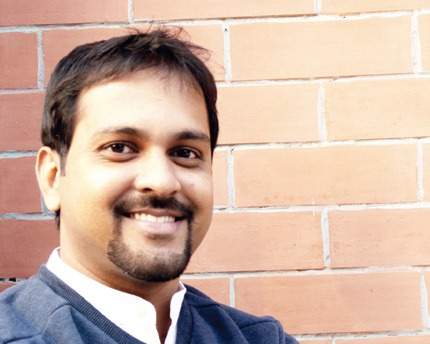
When Leo Mavely was in college, he saw a man bleeding profusely after a bike accident. People rushed in to help but there was no way to stem the loss of blood immediately.

LeoBF02mar2017
This left a lasting impression on his mind and led him to invent a product, Axiostat – the smart band, which is a hemostatic. Today, the band is being used by the general public and the Indian Armed Forces and the paramilitary. In 2014, the Axiostat band was used in the Russia-Ukraine conflict.

Its website features varied testimonials on its use — from dentists for tooth extraction and senior cardiologists for stopping arterial bleeding to a medical officers with Border Security Force for treating victims of IED blasts and gunshot wounds.
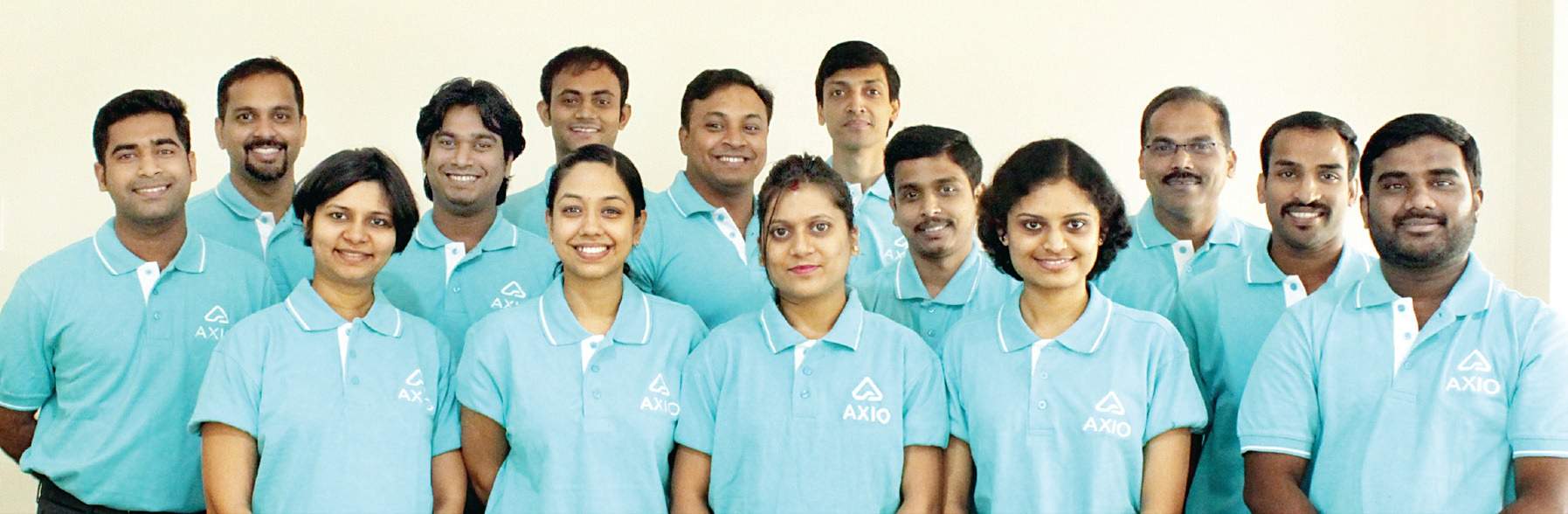
Axiostat is a sponge-like biomaterial dressing that stops moderate to severe bleeding within minutes. This product is manufactured by the Bengaluru-based startup Axio Biosolutions, which is Leo’s brainchild and was established in 2008.
The band is made using chitosan, a natural biomaterial. Biomaterials are engineered substances that interact with human systems to achieve a medical end. Chitosan, which is extracted from shellfish, is highly purified and processed to make this device.
The band carries positively charged components, which when comes in contact with the negatively charged blood cells, form a binding seal.
“The moment Axiostat is applied to an open wound, it reacts with the blood and becomes a very sticky substance that clots blood and stops the bleeding,” says Leo. “The band can be left on the wound for 48 hours. Once the patient has been taken to the Hospital and given medical attention, Axiotat can be removed by applying water on it. It absorbs the water to become a gel-like substance that can be peeled off.”
Hospitals that use the band include Fortis, AIIMS, Manipal, Breach Candy and Columbia Asia.
The smart band received European Union – CE approval in 2013 and Axiostat Biosolutions was named the best emerging startup by BioAsia in 2016. Axiostat, which opened in India, is now also in Middle East, Africa and Europe.

source: http://www.newindianexpress.com / The New Indian Express / Home> Cities> Bengaluru / by Brinda Das / Express News Service / March 02nd, 2017

A slice of Bengaluru at the Oscars

Mowgli’s jungle, where his friends and enemies walked and prowled, was largely created on a few computer screens in Bengaluru.

It was on a few computer screens in Bengaluru that a blue screen at Hollywood was transformed into a rich canvas of dense forests that hosted the tense drama of Disney’s The Jungle Book.

A significant part of the film, which took home the award for Best Visual Effects during the 89th Academy Awards on Sunday night, was done in Bengaluru, where nearly 300 engineers — out of nearly 800 spread across LA and London — built and provided the finishing touches to a jungle world where Mowgli, his friends and enemies walked and prowled.

“The film was extremely challenging and would be a huge benchmark for visual effects. We had childhood attachments too, for ‘Jungle Book’ is an Indian story. We always hope for the best, but an Oscar is the icing on the cake,” says Amit Sharma, head of compositing at MPC Studio Bengaluru, which was the lead VFX studio for the film.

The mandate given to them was to render a photo-real world, where 224 unique animals would be “captured in their surroundings” as if they were roped in for the film.

Two teams scoured through six forests of south and central India, through three seasons, covering nearly 18,000 km. The result was 20 TB of information and four lakh photographs rendering a landscape, from the rocks to the waterfalls, ferns to pebbles.

“The ‘man-village’ inspiration came from rural Rajasthan, the wolf caves from Badami caves, Banyan trees from Goa, and elephants from those seen at Periyar… these were the references, but everything was created from scratch,” said Mr. Sharma.

From LA to Bengaluru

From Los Angeles, the Oscar statue is expected to come straight to Bengaluru, where the engineers will be given a chance to party with it, said Biren Ghose, executive director of MPC Bengaluru. Engineers in the city had previously played a role in the Oscar-winning Life of Pi in 2012, apart from rendering the graphics for at least six other films nominated for the Academy Awards over the years.

“The complexity, technology and technique used was far beyond Life of Pi because of the scale we were looking at — an entire world that was a crossover of animation and visual effects. All of which was created to an extent that the line between reality and computer-generated characters became blurred… at one point, even Mowgli was computer-generated, and the audience did not know it,” said Mr. Ghose.

source: http://www.thehindu.com / The Hindu / Home> News> Cities> Bengaluru / by Staff Reporter / Bengaluru – February 28th, 2017

Man on a mission to provide clean, cheap drinking water in Belagavi

Belagavi :

Safe drinking water is a mirage for most people in the country. While some urban areas may still have access to potable water, it’s not so in the hinterlands. Despite scientists trying to develop new technologies to provide clean water, they are yet to reach rural areas.

But an engineering student has designed and developed a cost-effective, eco-friendly solution to make safe drinking water available to everyone.

Niranjan Karagi, a final-year student of Angadi Institute of Technology and Management in Belagavi, has come up with a portable water purifier called ‘Nirnal’ that costs just Rs 20.

Ask him how he came up with the idea and the 22-year-old explains, “There is a playground near my house where schoolchildren play daily. I often see them filling up their empty plastic bottles with dirty water from a tank nearby. The sight of children drinking unclean water motivated me to design the purifier.”

He added, “After a few days of working on the product, I filtered some water and sent the sample to the Chief Food Divisional Office in Bengaluru and the results were good.”

And then, there was no looking back for the young engineer. He decided to take the project to the next level and approached Leaders Accelerating Development (LEAD) programme of Deshpande Foundation in Hubballi and Sandbox Startup. Both the organisations partially funded the project and guided Niranjan on developing the filter unit. In July 2016, the product was launched.

“As of now I have sold more than 8,000 units to schoolchildren, farmers and daily wage labourers,” says Niranjan. He also supplied the units to Army commandos who came for training at the base camp in Belagavi in January.

He has also received bulk orders from countries in Africa, and Qatar. At present, he is working on a prototype of the purifier that can be fit into a bottle of any dimension, not just pet bottles. The newly-designed product will be launched in March.

“It is in the final stages of completion. I am also planning to tie up with the Karnataka government so that I can reach more children across the state and distribute the purifier free of cost,” he says.

source: http://www.newindianexpress.com / The New Indian Express / Home> States> Karnataka / by Payal Gangishetty / Express News Service / February 19th, 2017

Udupi: This oven by inventor Vijay Hegde saves up to 60 percent fuel

Udupi :

This is no run-of-the-mill ordinary oven. It is an eco-friendly oven that saves up to 60 percent of gas, and what’s more, it can help restaurants and hotels save lacs of rupees.

Vijay Kumar Hegde, director of Susi Global Research is the inventor of this energy saving oven. Normally, when the flame touches the utensil, 35 to 40% of energy is used and the rest goes out in the air as waste. This oven, however, converts the wasted flame into steam out of which food items like rice, sambar, idli etc and non-veg can be prepared at no extra cost.

Speaking about the oven, Hegde says, “There are 25 to 30 lac hotels operating in the country. If only 7.5 lac hotels use this oven, they can easily save at least Rs 600 per day. And if the whole nation uses this, we would save of Rs 16,000 crore per day.”

Rajya Sabha member Oscar Fernandes launched this unique oven and observed its functioning.

Oscar wished Vijay Hegde on the occasion and said that people would support his project because the country will gain by this invention.

“It is very difficult getting patent for an innovative product. If he succeeds in proving his invention, he will definitely get patent right. Not may are doing research on energy saving methods and subjects.

“If Vijay demonstrates his project successfully, the parliament will recognize his work and government will provide support. There is surplus energy, but it is not permanent. Wave energy is an unlimited source so we should make use of it.

“I am working on fuel saving methods myself. When time comes for joining hands, I will work with Hegde,” Oscar said.

The advantages of the oven are many. The use of this oven will maximize the utility of fuel by 60%. It reduces carbon emission by 60% and power consumed by chimney can be cut down. It is kitchen-friendly and hygienic as well.

The oven costs about Rs 75,000. Hegde has already installed this oven in hotels at Kota wedding hall and Manipal. He has been receiving good response from his clients.

Vijay Kumar Hegde is the patent holder of tidal power generator unit in Udupi.

Hegde says, “I have spent crores of rupees on my research. But I did not get any support from the government for this project. Without the support of government, it would be difficult to complete my dream projects.”

His next projects are battery-powered automobile with self-charging feature, battery-powered self-charging system for railway, tidal drive in cooler for fish transport in vehicles, sky jet bus, folding car and many others using renewable energy sources.

Narayan Shanbhag, retired principal, Canara College helped Hegde in this project.

Gurme Suresh Shetty, Baikady Suprasad Shetty, Mattar Ratnakar Shetty, Sudhakar Shetty, Nagesh Hegde and others were present.

source: http://www.daijiworld.com / DaijiWorld.com / Home> Top Stories / Sunday – February 19th, 2017