Category Archives: Historical Links, Pre-Independence

Come listen to the golden oldies

Bangalore :

Want to listen to Hindustani classic music of Gauhar Jaan, the first Indian musician to record on the gramophone in 1902 or the first recording of the national anthem by Vishwa Bharati Chorus or the speeches by Mahatma Gandhiji, Subhash Chandra  Bose and HH Aga Khan III.

Head straight to Voices of India, the first audio exhibition of vintage recordings, organized by the Archive of Indian Music (AIM) in association with the Alliance Francaise on the latter’s premises in Vasanthnagar from May 10 to 17.

According to Vikram Sampath, whose brainchild AIM is, the exhibition will be held under seven categories – Hindustani classical music, Carnatic classical music, theatre music, folk music, early cinema, devotional and patriotic music and voices.

The visitors will have the pleasure of listening to Gangubai Hangal, Kesarbai Kerkar, Inayat Khan (sitar), Bundu Khan (sarangi), Kannada theatre of old Mysore (Bidaram Krishnappa and Rachappa), Bangalore Nagarathnamma, one of the earliest south Indian musicians to record on the gramophone in 1904, Bengali folk music, Tamil folk (Kavadi Chindu), K L Saigal from the movie Tansen (1943), Indu Bala from the movie Ankh ka Taara (1932), violin-flute duet by T Chowdaiah and T R Mahalingam, G N Balasubramaniam, Narayan Stuti by Juthika Roy and Kamal Dasgupta, Kaloo Qawwal (qaawaali), Wahidan Bai of Agra singing a naat in praise of Prophet Mohammad, speeches by Gandhiji, Tagore, Kazi Nazrul Islam and Sohrabjee Dhondee of Parsi theatre. It provides a kaleidoscope of the rich musical legacy of our country.

Vikram said there will be an exhibition of all these personalities with their rare photographs and biodata. The visitors can see the exhibits and listen to music and voices of their choice through a cell phone or a computer at the exhibition. The exhibition is open from 10am to 7pm from May 11. The entry is free. It will be inaugurated on May 10 at 6.30 pm.

HIGH TRACK RECORD

Archive of Indian Music (AIM) is a non-profit trust that seeks to digitize and preserve old and rare gramophone records of our country. The primary objective of AIM is to preserve the voices of ancestors and make them easily and electronically available through an online portal for researchers, musicians, students of music and the public at large.

AIM currently has collected close to 10,000 records and a range of gramophone records. TV Mohandas Pai is patron of AIM. The tracks can be listened to free of cost on.

source: http://www.articles.timesofindia.indiatimes.com / The Times of India / Home> City> Bangalore> Indian Music / by S Kumar, TNN / May 04th, 2013

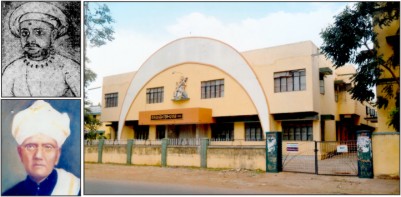
Mysore varsity renovating Oriental Research Institute

The U.S. Consulate in Chennai is funding the restoration of the Oriental Research Institute in Mysore.— Photo: M.A. Sriram / The Hindu

Conservation principles are being adhered to strictly

The restoration of the Oriental Research Institute (ORI), one of the heritage buildings in the city that adds to its antiquity and is a repository of ancient manuscripts, is under way with funding from the U.S. Consulate in Chennai.

M.R. Veerabhadraswamy, Director of ORI, who also heads the Department of Sanskrit, University of Mysore, told The Hindu that this was one of the biggest funding for restoration that the ORI has ever received and they are making the best use of it.

“The renovation is constantly supervised by the members of the U.S. Consulate, who come down once in a month to see the progress made. There has been a remarkable progress in the work, with one half of the building already fixed and painted to perfection, and work on restoration of the second half of the lime and mortar classical structure, has just about started”, he added.

It was in January 2012 that ORI — which has over 80,000 manuscripts in its collections — was recognised by the U.S. Consulate, Chennai, as one of the cultural heritage sites that needs restoration and preservation and granted $50,000 to the institution following which ORI signed an MoU with the Indian National Trust for Art & Cultural Heritage (INTACH), Bangalore, to undertake the renovation project, which started in September last year.

A significant feature of the restoration work is the adherence to the conservation principles that forbids use of cement and other modern materials that alters the structural profile of the heritage building.

Not the first

N.S. Rangaraju of the Department of Ancient History and Archaeology, University of Mysore, expressed happiness over the work in progress and said he had visited the site a couple of times and there was no violation of the conservation norms.

“The restoration of ORI is the third such exercise undertaken by the varisty– the others being Jayalakshmi Vilas Mansion which was restored with funding from Infosys, Prof. Radhakrishnan’s Bungalow which was funded from M.R. Doreswamy, MLC and founder of the PES Educational Institutions, and the ORI funded by US Consulate. The varsity has become a role model for others to emulate in conservation exercise”, said Prof. Rangaraju.

The intricate designs on the frontal section of the building are being delicately restored and embellished, and once the structure if fully restored, the manuscripts and palm leaves that constitute the country’s ancient cultural heritage, can be preserved better as it would be supported by a better environment, according to scholars at ORI.

A bit of history

Conceived by the then Maharaja Chamaraja Wadiyar, it was constructed in 1887 to commemorate the Golden Jubilee of Queen Victoria’s accession to the British throne, and was known as the Jubilee Hall. The Oriental Library was established here in 1891 and was handed over to the University of Mysore in 1916, and renamed as the ORI in 1943.

It shot into international fame when the only extant copy of Kautilya’s Arthashastra was found here by R. Shamashastry in 1902, and was published in 1909. And, it helped throw light on political and economic statecraft of ancient India.

source: http://www.thehindu.com / The Hindu / Home> National> Karnataka / by Nandita Bhakta / Mysore – May 01st, 2013

Teresian college golden jubilee celebrations to conclude tomorrow

Mysore :

The golden jubilee celebrations of Teresian College in Siddarthanagar here will end with a grand finale tomorrow (April 20).

A Thanksgiving Eucharistic Celebration will be held at 11 am to mark the beginning of the programme. Most Rev. Dr. Bernard Moras, Arch Bishop of Bangalore, will be the Chief Celebrant.

The main function will start at 5.30 pm, presided over by Most. Rev. Dr. Thomas A. Vazhapilly, Bishop of Mysore. Sudha Murty, Chairperson, Infosys Foundation, will be present as the chief guest.

Most Rev. Dr. Bernard Moras, Rev. Fr. Arul Raj, Parish Priest, St.Antony’s Church, Gayatripuram; Maria D’Costa, former Principal; Dr. Alexander, former Minister of Tourism; Dr. N. GopuKumar, Deputy Secretary, UGC, Southern Region and Dr. Sebastian Dasan, Chairman, Department of English, University of Mysore, will be the guests of honour.

Sr. Chris, Superior General, Congregation of the Carmelite Sisters of St.Teresa (CSST); Sr. Fridoline, Provincial Superior, Karnataka Province, CSST; Sr. Annette and Sr. Joyce, former Principals of Teresian College; Sr. Helena, Manager, Teresian institutions; Sr. Prafulla, Principal, Teresian PU College; Prof. V.K. Jose, Officiating Principal and Sr. Sajitha, Principal, Teresian Degree College, will be present.

The college started for girls with a modest strength of 60 students in the eastern outskirt of Mysore city at a time when women’s education was not encouraged. Today, it has expanded into a strong institution with more than 1,600 students.

The campus houses Pre-KG to PG programmes. Bearing testimony to the doyens who have walked through its portals, students from Teresian College have left their mark in the fields of Governance, Politics, Sports, Corporate sector and education.

Students: The college has produced outstanding personalities in every field. Dr. R. Indira (renowned academician and scholar), Prema Cariappa (former Bangalore Mayor), M.S. Archana (KAS), Sapna Dutta (Corporate trainer), Pavitra Chandra and Reshma Chengappa (international basket ball players), Supriya (international volleyball player), G. Nisha (Indian team captain in Junior Asian Volleyball Tournament), Poojashri Venkatesh (international tennis player), Chitra Mahimairaj (international billiards player) are a few among them. Reena George, Thippava Sannakki, Bibi Summayya, Shradha Rani, Afsana, Shahajahani are athletes of national repute.

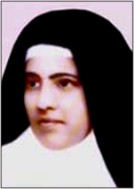
TeresianBF25apr2013History: The history of Teresian College can be traced back to 1858 when Mary Grace D’ Lima was born in Chennai. She gave herself to the service of God and became Sister Teresa of St. Rose of Lima. With a desire for the service of humanity, she started a religious congregation known as Carmelite Sisters of St. Theresa (CSST), to spread lofty ideals and spirituality of St. Teresa of Avila, in a little house in 1887 at Ernakulam, Kerala. Her efforts have grown today into a large Teresian Family with 120 communities and around 100 educational institutions.

Mount Carmel College in Bangalore, Teresian College, Avila School, Christ The King, Nirmala Convent and Teresian School in Mysore, Carmel College and St. Joseph’s School in Mandya are a few institutions doing yeoman service in Karnataka.

The College: Teresian College is named after St. Teresa of Avila, a 16th century Mystic Saint who symbolises selfless dedication and devotion to the cause of the downtrodden and oppressed.

Manoranjan Mahal: Teresian College was born in the minds of a group of CSST Sisters headed by Sister Euprasia. The decisive journey of Teresian starts in ‘Manoranjan Mahal,’ an architectural and historical monument, presently the convent, where I PUC classes were started in Arts with a strength of 60 on 22nd July 1963. In 1964, the science section and the degree first year were added. In 1966 hostel facilities started in the campus.Courses in commerce started in 1976. Other new courses were added later.

PG Centre: The Post-Graduate Centre started functioning from 2008 and is offering M.Sc. in Bio-technology, M.Com and MA (English). Professional courses like MBA and MCA are offered through Twinning programme with Pondicherry University.

source: http://www.starofmysore.com / Star of Mysore /Home> General News / April 19th, 2013

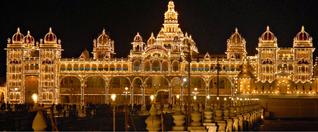
Mysore palace to glow on weekdays as well

Magnificent:The Mysore palace will be lit from 7.40 p.m. to 7.45 p.m. on weekdays after the sound and light show.— Photo: M.A. Sriram / The Hindu

The famous Amba Vilas Palace or Mysore palace, which is lit up with more than one lakh incandescent bulbs on weekends, will now shine on weekdays too.

This is for the benefit of tourists, especially those coming from abroad just to see the palace.

The one-hour illumination of the century-old palace on Sunday has been cut to 45 minutes to ensure lighting from Monday to Friday.

The palace is illuminated from 7.40 p.m. to 7.45 p.m. on weekdays after the sound and light show.

T.S. Subramanya, Deputy Director of the Mysore Palace Board, says: “I have seen many tourists enquiring about the illumination on weekdays. The palace was earlier lit only on Saturday and Sunday, and on public holidays. It is now illuminated every day for about five minutes after the sound and light show.”

Mr. Subramanya told The Hindu that tourists, particularly those coming from abroad, are happy to get a glimpse of the lit palace.

For 10 minutes

The palace is illuminated for 10 minutes on Saturday after the sound and light show. At least 1,200 tourists watch the show on Saturday. Earlier, the palace used to be lit for over 30 minutes on Saturday. However, the duration was reduced after the launch of the sound and light show.

Mr. Subramanya said the English and Hindi versions of the show were likely to begin in two months.

source: http://www.thehindu.com / The Hindu / Home> National> Karnataka / by Shankar Bennur / Mysore, April 11th, 2013

An astronomical wonder

The phenomenon is a testimony to the fact that our ancient sculptors were extremely knowledgeable in the areas of astronomy and architecture | EPS

Most people in Karnataka are aware of the ancient astronomical observatories at Stonehenge in England, Newgrange in Ireland, Temple at Karnac in Egypt, Machu Picchu – Intihuatana Stone in Peru and the Jantar Mantar in Delhi but are oblivious to the astronomical wonder in the ancient cave temple of Gavi Gangadhareshwara atop a small hillock in Basavanagudi, Bangalore.

A celestial happening marks the Makara Sankranthi every year and the sun rays illuminating the South-facing idol inside the cave, indicates the shift of the Sun’s movement northwards (Dakshinayana to Uttarayana). In the evening, as the sun sets in the west, sun’s rays falling from the south-western part of the temple passes through an arch and a couple of windows placed perpendicular to each other and later through the horns of the Nandi(the bull mount of Lord Shiva) to fall on the idol of the temple for about 15 minutes(4.55 pm to 5.15 pm). It is as though the sun himself pays homage to Lord Shiva while welcoming Makara Sankranthi.

The phenomenon is a testimony to the fact that our ancient sculptors were extremely knowledgeable in the areas of astronomy and architecture. In the courtyard of the temple, there are mysterious monolithic stone structures – two large vertical discs on pillars, a large trident of Shiva, a small two-headed drum and two fans.

It is believed that such discs are not found in any other temple in Karnataka or south India. Their significance has been explained recently by scientists Dr.Jayanth Vyasanakere and Dr. B S Shyalaja of the Jawaharlal Nehru Planetarium, Bangalore, who have come to the conclusion that this temple has astronomical significance.

The study published in Current Science Journal opines that Suryapana and Chandrapana have been positioned for astronomical observations in the medieval period. The shadow of the bronze pillar (Dvajastamba) falls on the eastern disc for 40 minutes. The two discs have been installed in alignment to the summer solstice sunset and that explains the significance of the phenomenon on Makar Sankranti.

The discs stand parallel to each other a few metres apart. They have ornate sculptures of bulls appearing to support the weight of the discs and two perpendicular lines that intersect at the centre of the disc. “This kind of arrangement cannot be seen anywhere in the world. The arrangement is made specifically for astronomical purposes.” Dr. Shylaja explained.

Researchers believe that this apparatus was used to precisely mark the solstices and hence, measure time and their deductions which are based on marking the shadow of the western disc till the ‘last possible minute’ (which was around 40 minutes before the actual sunset) and then predicting the situation at the time of sunset.

The alignment of the arch, windows and Nandi to ensure that the sun’s rays fall on the idol on Jan 14th and the alignment of the two discs to summer solstice sunset is a fact that was unknown till now. The walls and windows have also been built in such a way that the light should reach the cave on Jan 14th.

Dr. S.K.Aruni of the Indian Council of Historical Research (ICHR) speculates that the cave was initially occupied by Jain monks by comparing the secluded location of the cave with similar ones in Sravanabelagola and Melkote. As per historical sources, this belief is supported by the dominance of Jainism in the region in the early part of the second millennium AD.

Later, it is believed that Kempegowda built the structures that are seen today in the early part of the 17th century, introducing the illumination event and making it a Shaivite temple.

The monolithic structures, the stone umbrella (Chatri) adjacent to the temple and a watch tower (Kavalu-Gopura) point to that fact. Legends shroud the presence of a dark tunnel going into the bowels of the hill.

Ardent devotees believe that there are actually two of these tunnels; one goes all the way to the north of India, to the City of Shiva, Varanasi, and the other to a temple town, Shivaganga, 50 km north-west of Bangalore. However this has not been proved but a tunnel exists on the banks of Kempegowda’s Kempambudhi tank, a few hundred metres away.

A high-walled prakara surrounds the cave temple considered a fine piece of Indian rock-cut architecture of the 9th century. In addition to a monolithic idol of Lord Shiva made of granite, the temple houses a rare idol of Agni, the fire god.

source: http://www.newindianexpress.com / The New Indian Express / Home> Cities> Bangalore / by Dr.Mamatha B R – Bangalore / April 11th, 2013

A son’s tribute to Bhakti Gananiratha Sangeetha Vidwan T.R. Srinivasan

T.R. Srinivasan (circled) and other disciples seen with Mysore Vasudevacharya (left) and Piteel Chowdaiah. / Star of Mysore

 By Dr. T.S. Ravishankar, Director of Epigraphy Branch, Mysore

Sri Thyagaraja Sangeetha Sabha Trust has arranged a jugalbandi concert in memory of Bhakti Gananiratha Vid. T.R. Srinivasan on Apr. 6 at 5.30 pm at Veene Seshanna Bhavana in Kuvempunagar. The participants are Vid. H.N. Bhaskar (violin), Pt. Pravin Godkhindi (flute), Anoor Ananthakrishna Sharma (mridanga) and Pt. Udayaraj Karpur (tabla).

I am indebted to Sri Thyagaraja Sangeetha Sabha Trust, Mysore, which has arranged this Memorial Music Concert on April 6. Especially, I am beholden to Prof. Poornaprajna of Kansas University, USA, for having taken the initiative to arrange the concert.

Here I would like to give a brief profile about my father and his contribution to the music world. This concert dedicated to the memory of Bhakti Gananirata Vid. T.R. Srinivasan aptly proves that he had created a niche in the hearts of contemporary musicians, artistes and music-lovers.

He was greatly acclaimed for his booming, resonating, melodious voice and impeccable pronunciation, coupled with great devotion, which formed his strong forte.

His great grandfather, Ganapati Dikshitar, belonged to the lineage of Sadguru Sri Tyagaraja Swamy. His father Tirupattur R. Ramanatha Iyer was the disciple of Ramanathapuram Srinivasa Iyengar and his co-disciple was Sangeeta Kalanidhi Ariyakkudi Ramanuja Iyengar.

Born in 1927, he came under the tutelage of Sangeeta Vidwan T. Puttuswamaiah, brother of Sangeeta Ratna T. Chowdaiah at the age of 12. He subsequently learnt music under Vid. Veena Gopalaraya, Sangeeta Vidwan Ramaratnam, Principal of Music College. He also learnt mridangam from Vid. S.R. Varadachar.

He gave his maiden concert when he was 17 at Bandikeri Prasanna Venkataramanaswamy temple, Mysore. In 1957, he gave a concert before His Highness Jayachamarajendra Wadiyar. Again, in 1959 and 1961 he sang at the Music Academy, Madras, during the Presidentship of Sangeetha Kalanidhi Rajaratnam Pillai and Sangeetha Kalanidhi G.N. Balasubrahmanyam.

Other important concerts were at Bangalore Gayana Samaja, Nada Brahma Sabha, Karnataka Sangha at Bombay and Guntur, Andhra Pradesh and also in the presence of Sringeri Jagadguru and before Sosale Prasanna Theertha Sripadangalavaru and Parakala Swamiji.

He gave concerts right from the year 1947 from All India Radio, to begin with Dharwad and Madras, and subsequently at Mysore. As a very popular music teacher, he was teaching music at Mahila Samaja for many years and other institutions including Ramakrishna School and RIE, Mysore.

Though he got trained under different musicians, he never came under the spell of a particular style of singing and he evolved his own distinct style. Always he used to stress among his students to become creative musicians and follow manodharma sangeeta and emphasise the tonal quality of the voice so that music emerges from the depth of heart and used to cite a phrase from Sri Tyagaraja kirtana — Shobillu sapta swara, which defines the art of articulating the voice.

He has given innumerable concerts in his music career spanning more than five decades and I had the great fortune of accompanying him in many concerts in the ‘70s and ‘80s.

Apart from music, because of his endearing qualities he had earned a large number of admirers and friends. His humbleness, down-to-earth nature won him a lot of friends and he was always generous in his disposition in helping the needy.

Among the virtues to be reckoned with is his nature of nurturing and encouraging young talents. He used to attend many concerts given by young musicians and encourage them. In one of the Bharatanatyam performances given by his daughter-in-law, Bhagyalakshmi, he rendered songs as part of Nattuvangam, and chose songs from DVG’s Antahpura Gitegalu, which was appreciated by the audience.

Thus he left an indelible impression on the connoisseurs of music and led an active life by teaching his disciples and giving concerts till the end. He breathed his last on 25th May 1996.

source: http://www.StarofMysore.com / Home> Feature Articles / April 05th, 2013

‘Peter Colaco was a strong and simple man’

Bangalore :

The absence of Bangalore’s chronicler might leave some of the finest memories of the city rudderless. For, the narrative, in this case, is as much about its creator as it is about the city. The chronicler portrayed what he saw — simple and often funny things taken from the daily affairs of the city, unlike ones found in history books – bringing smiles to his readers’ faces.

Peter Colaco, author of bestseller ‘Bangalore, A Century of Tales From City & Cantonment’, passed away at the age of 67 on Friday, following a cardiac arrest. His work is considered one of the finest accounts of the city’s post-Independence era ground realities.

Peter was a versatile personality. A former professor of advertising at IIM-B, he also donned the caps of documentary filmmaker and musician, besides being successful in his advertising career.

“Above all, Peter was a very nice human being. I remember him dragging me to old age homes where he would just take out his guitar and sing. The aged there loved him,” said Sadiqa Peerbhoy, author, advertising professional and a good friend of Peter.

Many were inspired by the man who was known for his unrelenting quest for precision and perfection. But those who grew up with him, particularly his siblings, perhaps knew him better than most. “Peter spent hours trying to work out  rose grafting, and that’s why, perhaps, can still be either prickly as a thorn or soft as a rose petal,” writes Jacqueline Colaco, one of Peter’s siblings, in her work, ‘Growing Up With Brothers’.

The man himself may be gone, like most of the subjects of his best-selling book. Yet, his readers will find him alive in the reminiscences of the old city.

A few weeks before his death, Peter had pledged his body for research to St John’s Hospital. His end, incidentally, came on Good Friday , a day before he was to turn 68.

He wanted small joys

Peter Colaco was perhaps the most multi-faceted people I’ve known. Peter, as a person, was so powerful and yet so fragile, often torn between the strong mind of sheer genius and the simple mind of the good. There was very little he wanted because there was very little he needed. All he really wanted was the joy of enlightened conversation with good friends  and family.

Paul Fernandes | cartoonist and friend of 35 years

An excerpt from Peter’s book

Grandfather bought Oorgaum House in 1920. It was something of a landmark with a pillared portico and battlemented terrace, an imposing bungalow set far back in a very large compound. It had virtually no neighbour on one side, just a playground of St. Jospeh’s ‘Indian’ High School, and then the expanses of Cubbon Park – excerpted from Peter Colaco’s Bangalore – A Century of Tales From City & Cantonment.

source: http://www.articles.timesofindia.indiatimes.com / Home> City> Bangalore / by Rhik Kundu , TNN / April 02nd, 2013

Bangalore’s gift to the Nightingale of India, Lata Mangeshkar

Artist Yashwanth Hibare has painted a 30 x 40 size portrait of Dinanath Mangeshkar, father of Latha Mangeshkar which he plans to present it to the melody queen in Mumbai on  April 24. | EPS
Artist Yashwanth Hibare has painted a 30 x 40 size portrait of Dinanath Mangeshkar, father of Latha Mangeshkar which he plans to present it to the melody queen in Mumbai on April 24. | EPS

Artist Yashwanth Hibare holds no degree in Fine Arts but today among many awards and accolades, he has also won the title of  Chitrakala Ratna. In 2010, he was honoured with the Rajyotsava award. But now, he has a pursuit.

Now at 70, the artist has painted a 30 x 40 size portrait of Dinanath Mangeshkar, father of Latha Mangeshkar which he plans to present it to the melody queen in Mumbai on  April 24.

“I just came to know that the Mangeshkar family would be holding the death anniversary of their father. So, I decided that it was an appropriate day to gift my painting. I have been in touch with the family and have apprised them about the painting and I will be presenting it on this day,” said Yashwanth.

His interest to do this particular portrait was basically because he was mesmerised by the history of this famous person. “I got to hear  about this great personality through my friends. I heard that Dinanath had struggled a lot in life and had to go through lot of difficulties in taking care of the family along with his elder daughter Lata Mangeshkar. They were singing on railway  platforms for their living. I had tears in my eyes when I heard about it. That’s when I made up my mind to do the painting,”  he revealed.

Although Yashwanth has done around 4000 paintings in the past few decades, he has never presented his art form to anybody. “This will be my first painting that I am gifting to somebody. I wanted to do this portrait 11 years ago but was unable to get a photo till now. The actual picture was only up to shoulder length. I created the rest and added instruments since he was a good musician,” said Yashwanth, who feels it is a small gift to the lady who has done so much for India. “After all the initial struggle, Lataji has achieved in her own way for which she has received national and international acclaim. This is just a small gift from my side,” he stated.

Going back to time

Yashwanth started painting when he was just seven. Today, at 70, he is still exploring the art form. “I consider my father Thippaji Rao, a tailor by profession as my guru.  I am completely illiterate because I never attended any school. I remember as a child, my father asked me to draw pictures of Lord Hanuman on a slate and later he drew it for me which I kept on copying. From then on, I have been holding on to the brush,” he said.

Yashwanth, a native of Bidar has been in Bangalore for decades now and earns a living through his paintings. He is popular for his holistic approach to his paintings as he concentrates mostly on mythological themes and famous people. “I am more into realistic art which I picked up from my Guru SM Pandit. I follow his art form in my paintings. My paintings are often displayed at Chitrakala  Parishath and recently, I showcased my art at Chitra Parse,” he said.

source: http://www.newindianexpress.com / The New Indian Express / Home> Cities> Bangalore / by A. Sharadhaa / ENS – Bangalore / April 04th, 2013

Kundapur: Maundy Thursday observed in Our Lady of Rosary Church

Kundapur :

The Maundy Thursday liturgical service commenced in the Church of Our Lady of Rosary, Kundapur at 6 pm on Thursday, March 27, 2013. During the solemn Mass, the parish priest-Fr. Anil D’Souza in his homily said that from the manger in Bethlehem till the Cross at Kalvery Jesus  loved the humanity and he broke himself and  offered his life  for humanity. This is not only a remembrance but everyone should live the life as shown by Jesus Christ.

Fr. Anil D’Souza further said that Jesus constituted the priesthood to continue his work and it is necessary that people pray for their priests. He continued saying that families should make attempts to send at least one of their children to priesthood. Even though Jesus was the master, he washed the feet of his disciples and thus laid an example of service to others which all followers of Jesus should emulate.

After the homily, Fr. Anil D’Souza washed the feet of 12 persons representing the Apostles and Fr. Pravin  Martis distributed bread to the ‘apostles’.

After the end of the Mass each family was given a bread. The Eucharist was taken to the altar of repose where the adoration was conducted by the Sisters of St. Joseph’s Convent.

source: http://www.bellevision.com / Home> News / by Bernard J. Costa / Bellevison Media Network / Kundapur, March 29th, 2013

150th anniversary celebrations of ‘ Sarada Vilas ‘

Former President of India Dr. A.P.J. Abdul Kalam will inaugurate the 150th anniversary celebrations of Sarada Vilas Educational Institutions at a function organised at the college Centenary Hall in city on Mar. 23 at 11 am.

SaradaBF26mar2013

Caption:    Founders Bhakshi Narasappa and Venkatakrishnaiah (Tataiah)

About the institution: A little more than 150 years ago, in 1861, a new star took birth in the educational realm of the then State of Mysore. It was founded by Rao Bahadur Bhakshi Narasappa, who enjoyed the confidence of the then king Mummadi Krishnaraja Wadiyar and was named Sarada Vilas Anglo-Sanskrit Pathashala which was housed inside the Palace temple premises. The Pathasala had the credit of being the first private school in the then Mysore State.

Both Mummadi Krishnaraja Wadiyar and Rao Bahadur Bhakshi Narasappa were fully aware of the value of education and hence nurtured the school in every possible way which had just 20 students in the first year but grew from strength to strength quickly.

As the strength increased, the space inside the temple was not sufficient to accommodate the students. Narasappa volunteered to shift the school to his own building at Makkaji Chowk, popularly known as Bhakshi Narasappa Choultry and was financially assisted by K. Seshadri Iyer, the then Dewan of Mysore. The school found itself in a tight spot owing to the demise of Narasappa and resignation of the Head Master Mandikal Ramasastri. To overcome all administrative and financial problems faced by the school, the Government of Mysore set up a Committee in 1899 with M. Venkatakrishnaiah, affectionately called ‘Tataiah,’ as the Hon. Secretary. Tataiah was committed to the cause of education and took the responsibility of strengthening the school which ultimately turned it into a model school.

As more and more students joined the school, once again the constraint of space became an acute problem and the king of Mysore permitted the school to use the first floor of Lansdowne Building.

Tataiah, who recognised the need for a high school, strived hard and founded the Boys High School in 1919. He desired to house the school in its own building and succeeded in getting a sprawling campus in Krishnamurthypuram. The High School was shifted to a new building in Krishnamurthypuram and he rendered yeomen service to the school as Hon. Secretary of the Committee till his demise in 1933.

The legacy of Tataiah was carried forward by M.S. Ramaswamy, who took over the mantle from Tataiah and transformed his vision into reality while S. Ramarao took charge as the Hon. Secretary following Tataiah’s demise and strived to take the institution to greater heights.

Ramaswamy, who had big dreams, got the govt. approval and founded the Intermediate College in 1945. He continued his hard work with great vigour and was responsible for starting Degree College in 1952 and served as its Principal for 20 years. In the year 1954, Sarada Vilas Law College was started, which was the second Law College in the State at that time. Sarada Vilas Teachers College was started in 1963 and in 1992, Sarada Vilas College of Pharmacy came into being.

The management, which felt the need to impart education to girls, started an exclusive High School for girls in 1961 which was a milestone of Sarada Vilas Educational Institutions and started Pre-Primary and Higher Primary School in 1992. Now under the umbrella of Sarada Vilas Educational Institutions, there are various schools and colleges which cater to the educational needs of students of all ages. The objective of Sarada Vilas is to give quality education at affordable cost to all sections of society as it believes in creating good citizens who in turn will strive hard to create a good society. Sarada Vilas offers PG course in pure Sciences like Physics and Chemistry, and Applied Sciences like Microbiology and Biotechnology and is sure to go a long way in helping students acquire higher degrees and pursue research.

source: http://www.StarofMysore.com / Home> General News /March 20th, 2013