Category Archives: Amazing Feats

Look up with pride: 100-ft tall flag for Bengaluru railway stations

Before the year rolls to a close, you will see the tricolour atop two railway stations in Bengaluru. And you won’t have to crane your neck to see it because, at a mandated 100 ft, it’s not easy to miss.

According to a circular issued by the Railway Board last month, 75 railway stations in India, whose annual earnings exceed Rs 50 crore (called A-1 category stations) have been asked to ensure that our national flag flies atop their premises at a height of 100 ft.

The National Military memorial in Bengaluru has the tallest flag mast in India at 65 metres ( or around 213 ft). The flag mast also has the country’s largest national flag measuring 48 x 78 ft.

The deadline to install the national flag at these chosen railway stations is December 31, 2018. On the lines of the national anthem being played at cinema halls, the government has directed 75 of the busiest railway stations in the country to install the national flag on their premises.

In Bengaluru, the Krantiveera Sangolli Rayanna Bengaluru City railway station (Majestic) and Yeshwanthpur railway station will have a tricolour each. In KSR, the flag location has been finalised at the circulating area outside the main entrance, giving visitors a full frontal view of the national flag. Sources said that the flag installation has been classified under “soft upgrade improvements at stations.”

The Railway Board circular has directed that the flags should have focus lights and the Railway Protection Force has been tasked to safeguard it. The cost of installing the flag will be around nine lakh rupees, including focus lights and other decorative elements.

A senior railway official said that the flag installations were a part of the government’s drive to project “symbols of nationalism. Whether it is portraits of freedom fighters or the national flag, the aim is to showcase the symbols of our country at public places.” The Railway Board directive says tricolours should be installed at spots close to the entry/exit points.

E Vijaya, Chief Public Relations Officer, South Western Railways said, “We hope to complete the installation by December-end.” A railway source said that there are plans to paint the tricolour on the coaches of local trains. “Already, the tricolour has been painted on several first-class compartments of local trains. More trains will be covered in the coming months,” the railway source said.
Flags at railway stations is yet another example of the nationalist fervour sweeping through not just India but some other countries too. On Sunday, when more than 60 world leaders gathered in Paris to mark the 100th anniversary of the end of World War I, French President Emmanuel Macron’s words strongly resonated with many Indians when he delivered a forceful rebuke against rising nationalism, calling it a “betrayal of patriotism” and warning against “old demons coming back to wreak chaos and death.”

Macron’s speech, at the Armistice Day ceremony, was a pointed rebuke to US President Donald Trump and his Russian counterpart Vladimir Putin but was also aimed at a global audience. India, meanwhile, has made it amply clear where it stands in the nationalism vs patriotism debate.

Reacting to this circular, Prakash Mandoth said, “It a wonderful move. Anybody would love to see the national flag flying so high. And to have it installed in the city railway station where about two lakh people come every day is a great decision. It creates a sense of nationalism. Usually people bring out national flags only during Independence day or Republic day, but now we will be able to see it flying tall and respect it every day.

However, another railway activist had this to say: “The Indian Railways is suffering from a dearth of funds and this is the reason why no new trains have been announced in the recent past as they need to improve existing infrastructure. So, a fitting tribute would be to invest more in railway infrastructure.”

source: http://www.bangaloremirror.indiatimes.com / Bangalore Mirror / Home> Bangalore> Cover Story / by  Bangalore Mirror Bureau / November 14th, 2018

Yediyur to become city’s first BESCOM power-free ward, solar plant to be inaugurated today

Bengaluru :

As part of the mission to make Yediyur Bengaluru’s first Bengaluru Electricity Supply Company (BESCOM) power-free ward, Bruhat Bengaluru Mahanagara Palike (BBMP) has set up a roof-top solar power plant. In a press statement, Poornima Ramesh, corporator of Yediyur ward in Jayanagar, South Bengaluru, said the solar plant, and quarters for gardeners and pourakarmkas who maintain 13 parks in the area, will be inaugurated on Monday.

“An amount of `15 lakh has been spent on the rootftop solar power plant, which will be the first-of-its-kind by BBMP. It will generate 10 kilo watt of electricity per day. We will save ` 38,000 per month by not having to pay for BESCOM power. The power generated through solar energy will power the streetlights within Sanjeevini Vana and Dhanavantari parks,” Poornima said.

The solar power plant will bring light to 150 streetlights within the two parks, and the quarters for workers, which are within a radius of less than one kilometre from the plant, BBMP said. The corporation has spent `50 lakh on the quarters. “The solar power plant will be expanded in the next three months to generate 25 kilo watt of power. The biogas plant, which is already in place, will expand to generate 250 kilo watt of power by the end of this month. With all these measures, we will save `3.10 lakh per month, and don’t have to purchase power,” she said.

CE had previously reported on the bio-gas unit generating electricity in the same ward, which powers several government buildings, including an anganwadi, the primary health center, a tailor training center, the ward office, a school, a computer training centre, a dialysis centre, the Samudaya Bhavan, the Yediyur shopping complex and seven parks, all of which are within a radius of three kilometres from the unit. This initiative has saved BBMP `1.75 lakh per month.

source: http://www.newindianexpress.com / The New Indian Express / Home> Cities> Bengaluru / by Express News Service / November 18th, 2018

Bengaluru boy beats the world to win science prize, Rs 2.9 cr

Samay Godika.
Samay Godika.

Bengaluru boy Samay Godika (in picture) has emerged as the winner of the Breakthrough Junior Challenge with $400,000 (over Rs 2.9 crore) as the prize money.

While Samay, 16, a student of National Public School-Koramangala, will receive a $250,000 (over Rs 1.8 crore) college scholarship, his ninth and tenth grade science teacher, Pramila Menon, who encouraged his interest in life sciences and tutored him after school to encourage his curiosity about scientific ideas, will win a $50,000 (over Rs 36 lakh) prize.

In addition, his school will receive a state-of-the-art science lab valued at $100,000 (over Rs 72 lakh).

The Breakthrough Junior Challenge is a global science video competition designed to inspire creative thinking about fundamental concepts in the life sciences, physics, and mathematics. Students between 13 and 18 years are invited to create original videos (up to three minutes) that illustrate a concept or theory in the physical or life sciences. The submissions are evaluated on the students’ ability to communicate complex scientific ideas in the most engaging, illuminating, and imaginative ways. Samay’s video, submitted in the life sciences category, focused on circadian rhythms, the 24-hour biological processes that can affect simple daily experiences such as waking up for school or jet lag.

As he has family members who suffer from Parkinson’s and other neurological diseases, Samay is particularly interested in the correlation between circadian rhythms and the effectiveness of medical treatments.

Samay was, on Sunday, recognised alongside some of the world’s top scientists and mathematicians Speaking to Bangalore Mirror, Samay said, “It feels amazing and unbelievable. I’m very happy to be among these great scientists. Our school is very science-centric and laid the foundation right from the beginning, shaping and guiding me to be the person I am today.”

“Participating in and now winning the Breakthrough Junior Challenge is life-changing, thrilling and such an honour. I’m so grateful for this opportunity to be recognised. I thank my teachers and family, and my little sister Sia, for shaping me,” he added.

Nikhiya Shamsher, 16, a student of Greenwood High school won this year’s Popular Vote. Her video on space-time and gravity garnered more than 25,000 likes, shares and positive reactions on the Breakthrough Facebook page. She received automatic entry into the final round of judging. Last year, Samay had won the Popular Vote contest. “I didn’t win last year, but I came back this year, and I am fortunate to be here,” he said, crediting sheer perseverance for his success.

source: http://www.bangaloremirror.indiatimes.com / Bangalore Mirror / Home> Bangalore> Others / by Bangalore Mirror Bureau / November 05th, 2018

Krishi Mela 2018: Small farmer makes it big, is now tapping online market

G. N. Suma from Kalpura village of Chamarajanagar district received the district-level best farm woman award. | Photo Credit: B. S. Satish Kumar

Yogesh from Mysuru district earns about ₹50,000 a month by growing exotic vegetables

At a time when highly educated farmers with large tracts of land are finding it difficult to earn a profit, a farmer who has not passed SSLC and has about three acres is earning a steady income of nearly ₹50,000 a month. The innovative farmer has now started exploring the online market.

Yogesh T.M., 31, from Taluru in Mysuru district, used take up small jobs in Bengaluru and Mysuru, and had not given a serious thought to farming as his family had only 3.15 acres of land.

But, fed up with his work in the city, he returned to his village seven years ago to take up farming. He began growing exotic vegetables like red cabbage, yellow cherry tomato, table radish, broccoli and turnip that have high value. He sells his produce to malls in Mysuru, Bengaluru, Goa and Hyderabad besides big vegetable shops. Now, he grows nearly 25 such varieties and has started exploring the online marketplace. “We have created two clusters of farmers for growing foreign vegetable varieties organically. The intention is to ensure their availability at the doorsteps of consumers in Bengaluru and Mysuru through online markets,” he says.

The University of Agricultural Sciences-Bengaluru (UAS-B) on Friday honoured him with district-level best farmer award at Krishi Mela.

Another farmer to be honoured by the UAS-B on Friday was Siddappa. The 31-year-old hails from Taggaluru of Gundlupet taluk. He grows cotton, jowar, sugarcane and banana. But his innovation lies in maximising profit by taking up related works, including a plant nursery which fetches him about ₹15,000 a month. He has also set up a flour mill that works on his diesel-run tiller so that villagers need not depend on power supply for grinding grains.

Maximising farm income

G. N. Suma from Kalpura village of Chamarajanagar district was cynosure of all eyes at the UAS-B’s Krishi Mela on Friday not just because she received the district-level best farm woman award, but due to her innovative ways of increasing income.

She not only looks after an 8-acre farm with her husband, but also runs a plant nursery, which yields about ₹50,000 per month. While sericulture fetches another ₹10,000 a month, her dairy farming brings in ₹10,000. This innovative farmer wants her children, especially her daughter, who is pursuing BSc., to become a farmer.

source: http://www.thehindu.com / The Hindu / Home> News> Cities> Bengaluru / by B.S. Satish Kumar / November 17th, 2018

Muscular Dystrophy: Rare diseases find a cure at the nerve centre

India sees about 3,000 to 5,000 cases of Muscular Dystrophy.

PrasannaBF23oct2018

Bengaluru  :

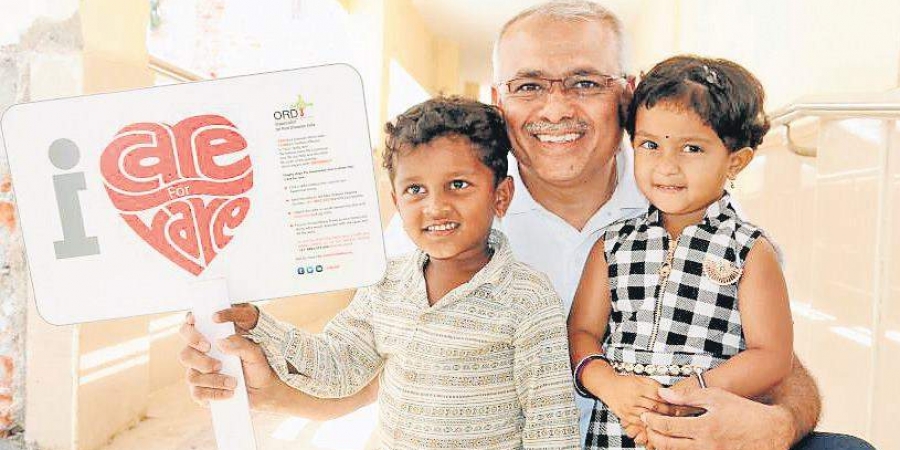
India sees about 3,000 to 5,000 cases of Muscular Dystrophy. While England has about five specialised centres to handle such cases, India has none. This has given rise to India’s first paediatric neuromuscular service, called, ‘The Muscle and Nerve Clinic’. The initiative is for patients who suffer from rare diseases that affect their muscles and nerves, and was launched by Bangalore Baptist Hospital, in association with Organisation For Rare Diseases India (ORDI).

Prasanna Shirol, founder, ORDI, is the father of a girl who suffers from a rare disease, and knows first-hand of the plight one can face in such situations. “People suffering from rare diseases run from pillar to post to find appropriate help and treatment.

We started a rare disease care coordination centre in Indiranagar two years ago. This clinic provides care specialised in neuromuscular diseases and we hope to alleviate the struggle of families and young people dealing with it.”

The Muscle and Nerve Clinic was set up with an aim to provide treatment to families suffering from rare diseases. Some of the conditions treated here include Duchenne Muscular Dystrophy, Spinal Muscular Atrophy, Congenital   Myopathies, Congenital Neuropathies, Congenital and Acquired Myasthenias and Limb Girdle Muscular Dystrophy. These cause weakness in muscles and the affected may not be able to jump, run or even sit without any support.

The clinic is open every Thursday at the Baptist Hospital. Prasanna says, “There are 7,000 rare diseases and the majority of cases that we have observed  are related to muscle and nerves.

The challenge with a rare disease is its proper diagnosis. The symptoms can be visible at any age. Once these symptoms are identified and diagnosed, a treatment or support plan can be prepared. Prognosis can be identified and parents can also be mentally prepared to deal with it.” As many symptoms could be similar to other diseases, doctors might often miss out on these signs or wrongly diagnose them, he says. “This needs care from experts in multiple specialities such as paediatrics, nutrition and diet,” he adds.

Dr Ann Agnes Mathew, paediatric neurologist and neuromuscular specialist, said, “Many of these diseases may have a cure one day soon. But until then, we need to care for them so that children suffering from rare diseases can have a better quality of life. With a proper treatment plan, children who currently need support to sit may be able to do so without any help.”

Prasanna and others are also fighting for the implementation of the National Policy for Treatment of Rare Diseases. “We are filing a PIL. There is no clarity in the policy. It says `100 crore will be provided but the proper demarcation is not available. The treatments have also not begun. They say the treatment would be provided only to below poverty line patients but above poverty line patients may also not be able to afford treatment as costs could run into crores,” he says, adding that even insurances don’t cover rare diseases.

For emergencies contact: 080 22024700 For appointments contact: +91 8892555000 (ORDI helpline), Baptist OPD:080 22024322

source: http://www.newindianexpress.com / The New Indian Express / Home> Cities> Bengaluru / by Akhila Damodaran, Express News Service / October 23rd, 2018

Student’s device to detect eye issues shortlisted for Accenture Innovation Challenge

Students of two engineering colleges in Bengaluru have had their projects shortlisted for the Accenture Innovation Challenge.

Bengaluru :

Students of two engineering colleges in Bengaluru have had their projects shortlisted for the Accenture Innovation Challenge. Under the theme ‘Innovate for Societies’, Nihal Konan and Pujari Kiran Sai of Visvesvaraya Institute of Technology, as well as Sabari Prabaaker R, Pranith H, Priyanka S and Deivanai A of Nitte Meenakshi Institute of Technology, have been chosen from the city, among 16 other teams across India.

Participants were expected to demonstrate their tech skills by applying disruptive and emerging tech in areas such as advanced analytics, automation, artificial intelligence, big data, blockchain, crowdsourcing, digital ethics, cybersecurity, immersive reality, and Internet of Things (IoT).

The team from VIT developed a ‘cost-effective, ingestible, battery-less electronic health pill’ to predict and prevent sudden heart attacks. The data from the pill alerts family members or caretakers of an impending heart attack nine to 11 minutes before it happens.

EyeBF21oct2018

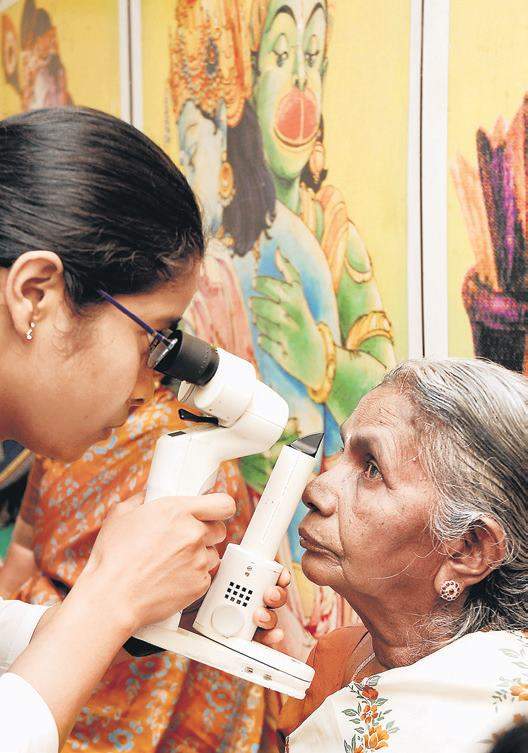
The team from NMIT developed a device that will detect eye problems such as blindness or glaucoma using a virtual reality app.

Mohan Sekhar, senior managing director and lead for Accenture Advanced Technology Centers, said, “Such challenges can help students transition to the industry seamlessly, as it gives them the opportunity to demonstrate their knowledge of new technologies and spark their innovation potential.”

The two themes for this year’s event were innovate for business and innovate for society. “Prizes will be given to all the winning entries on October 24, which will be the grand finale. This will include prizes worth Rs 1,50,000 and Rs 75,000 to each member of the winning team and winners of the two themes respectively. Accenture will also setup a fast-track recruitment process for all eligible finalists,” Mohan added. There are six categories of prizes, including ‘grand prize winners’, ‘theme winners’, ‘best all-women’s team’, ‘jury’s choice and accenture employee’s choice’.

source: http://www.newindianexpress.com / The New Indian Express / Home> Cities> Bengaluru / by Express News Service / October 20th, 2018

This Bengaluru chef can cook for hours blindfolded

In the future, Sandesh hopes to open his own restaurant, one where he can practise exactly what he likes.

SandeshBF08oct2018

Bengaluru :

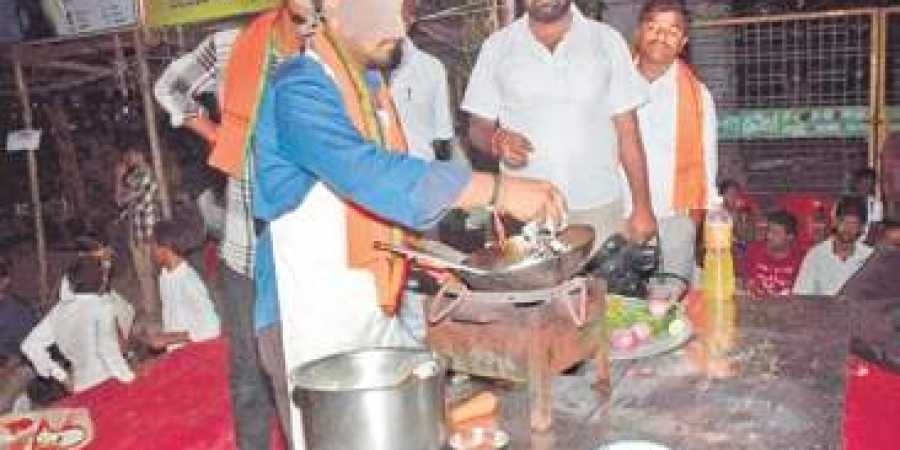
“Cooking is my girlfriend,” says Sandesh Adugemane, who has spent most of his life in the kitchen of his father’s restaurant in Gangavati, a town in the state. Now, the chef, who works in Hyderabad and is here in the city for an event, says that his ability to cook blindfolded for hours, has brought him fame.

“I first cooked blindfolded at 18. Since I’ve been in the kitchen since I was about three – I was able to identify ingredients such as turmeric, chilli, tamarind by then – cooking is something that comes to me naturally, and I was confident enough to cook without being able to see,” says Sandesh.

He had to drop out of college in his second year due to personal problems. He started working in the hotel and that’s when the idea to do something different came to him. “Even though word spread that I was cooking blindfolded, my father didn’t support me. People would come from different states to watch me, but my dad didn’t think what I was doing was worthwhile,” he says, adding that the longest he has cooked blindfolded was six hours. He has appeared in over 100 local cooking shows, he says.

It took him over a year to perfect his technique.

“The first dish I made blindfolded was gobi manchurian. A well-wisher happened to take a video and circulated it,” says Sandesh,  who can make Indian and Chinese dishes blindfolded, but is trying to perfect continental cuisine.

About the mishaps when he just started cooking blindfolded, Sandesh says, “I can’t count the number of time I spilt hot oil onto myself. One time, because of being blindfolded and working in the kitchen for hours, my eyes had swollen up so big that I couldn’t open them for two days. My mother was worried and tried to get me to stop, but I was determined.”

In the future, Sandesh hopes to open his own restaurant, one where he can practise exactly what he likes.

source: http://www.newindianexpress.com / The New Indian Express / Home> Lifestyle> Food / by Express News Service / October 08th, 2018

88 million-year-old isle and crater to be geoparks

St. Mary's Island in Udupi, with hexagonal basaltic rocks, is to get Global Geopark status. | Photo Credit: K. Murali Kumar
St. Mary’s Island in Udupi, with hexagonal basaltic rocks, is to get Global Geopark status. | Photo Credit: K. Murali Kumar

Geological Survey chooses heritage locations in Maharashtra and Karnataka for UNESCO site status

In a first, an ancient circular lake created by a meteorite strike in Maharashtra and a hexagonal mosaic of basaltic rocks in an island off Udupi are poised to become global geoparks, under a Geological Survey of India (GSI) plan.

Lonar Lake in Maharashtra and St. Mary’s Island and Malpe beach in coastal Karnataka are the GSI’s candidates for UNESCO Global Geopark Network status.

The road to recognition, however, is long. An aspiring Global Geopark must have a dedicated website, a corporate identity, comprehensive management plan, protection plans, finance, and partnerships for it to be accepted. In mid-August, GSI moved ahead with the plan, setting a follow-up time frame of 100 days.

The Geopark tag is akin to that of a ‘World Heritage Site’ for historical monuments that can bring India’s famed geological features to the global stage.

“These are spectacular to look at even for the general public who may not understand that they are also geologically important. Lonar lake is the only known meteorite crater in basaltic rock and is world famous, while St. Mary’s island is a unique phenomenon that has been preserved well,” says Asit Saha, Director, Geodata, at the GSI Headquarters in Kolkata.

St. Mary’s Island, declared a national geo-heritage site in 1975, is estimated to be an 88-million-year-old formation that goes back to a time when Greater India broke away from Madagascar.

Relatively young

Lonar crater became a geo-heritage site in 1979. It is relatively young geologically, at just 50,000 years old. A meteorite estimated to weigh two-million-tonnes slammed into the Earth, creating a 1.83-km diameter crater where the lake formed. It is distinguished by a near-perfect, circular ejecta blanket, which refers to earth thrown up during the collision, around it.

source: http://www.thehindu.com / The Hindu / Home> News> National / by Mohit M. Rao / Bengaluru – October 02nd, 2018

Bengaluru doctors perform rare heart surgery

US citizen diagnosed with aortic valve disease, saved by intervention

Jim (58), from California, was on a business trip to India. On reaching Bengaluru, the fever that had subsided before his travel flared up again and he was brought to a private hospital in Sarjapura road. He was diagnosed with aortic valve disease.

Jim had been aware of his condition but never affected by it. In fact, he had participated in a marathon just a month ago.

Dr Joseph Xavier, the chief cardiac surgeon, Columbia Asia Hospital, Sarjapura Road performed the complicated surgery. “Due to significant aortic valve incompetence, blood that was being pumped out of the heart was flowing back into it, putting it under severe strain. Blood culture reports indicated that bacteria had already started developing in the blood. There was a fluid collection in his lungs and the other organs weren’t receiving getting enough blood, resulting in gradual failure of the kidneys and liver,” explained Dr Xavier.

The doctors found that the infection was destroying the valve and the heart muscles and the antibiotics would not clear the infection unless the source within the heart was removed.

Dr Xavier said, “This meant an open heart surgery to replace the infected and destroyed valve and its surrounding tissue. This was a tough call for the cardiac surgical team. If they waited to see whether the antibiotics worked, the kidney and liver failure would worsen making the post-surgery recovery difficult. But there was a good chance that after the operation, the replaced valve could get infected.”

However, the chief cardiac surgeon felt it’s better to ward of the post-operative organ failure and take a chance with a recurrence of infection. The decision paid off, Jim had a successful operation.

Dr Xavier added, “It was a difficult decision to operate on active infection of the heart valve as the tissue inside was in a state like butter, and it is very difficult to fix the valve in such cases. Also, the possibility of the implanted valve getting infected is very high in such a situation. The failing organs like kidney and liver because of the bloodstream infection were an added risk. Fortunately, after the operation, the patient recovered quickly and went home on the 12th day.”

source:http://www.bangaloremirror.indiatimes.com / Bangalore Mirror / Home> Bangalore> Others / by Kumaran P., Bangalore Mirror Bureau / September 29th, 2018

Winners of Shanti Swarup Bhatnagar Prize for Science and Technology 2018 announced

Dr Aditi Sen De is the only female winner this year

On the occasion of its foundation day, the Council of Scientific and Industrial Research (CSIR) has put out the list of recipients of the Shanti Swarup Bhatnagar Prize for Science and Technology for 2018.

Every year, several scientists below the age of 45 are selected from various institutions across the country and awarded for their outstanding scientific work in the last five years.

Here is the full list of winners this year in various categories

Category Winner Affiliation
Biological Sciences Dr Ganesh Nagaraju IISc Bengaluru
Dr Thomas Pucadyil IISER Pune
Chemical Sciences Dr Rahul Banerjee IISER Kolkata
Dr Swadhin Kumar Mandal IISER Kolkata
Earth, Atmosphere, Ocean and Planetary Sciences Dr Madineni Venkat Ratnam National Atmospheric Research Laboratory, Tirupati
Dr Parthasarathi Chakraborty CSIR-NIO, Goa
Engineering Sciences Dr Amit Agrawal IIT Bombay
Dr Ashwin Anil Gumaste IIT Bombay
Mathematical Sciences Dr Amit Kumar IIT Delhi
Dr Nitin Saxena IIT Kanpur
Medical Sciences Dr Ganesan Venkatasubramanian NIMHANS, Bengaluru
Physical Sciences Dr Aditi Sen De Harish-Chandra Research Institute, Allahabad
Dr Ambarish Ghosh IISc Bengaluru

source: http://www.thehindu.com / The Hindu / Home> Sci-Tech / by The Hindu Net Desk / September 26th, 2018