Category Archives: Amazing Feats

Once waste pickers, now successful managers

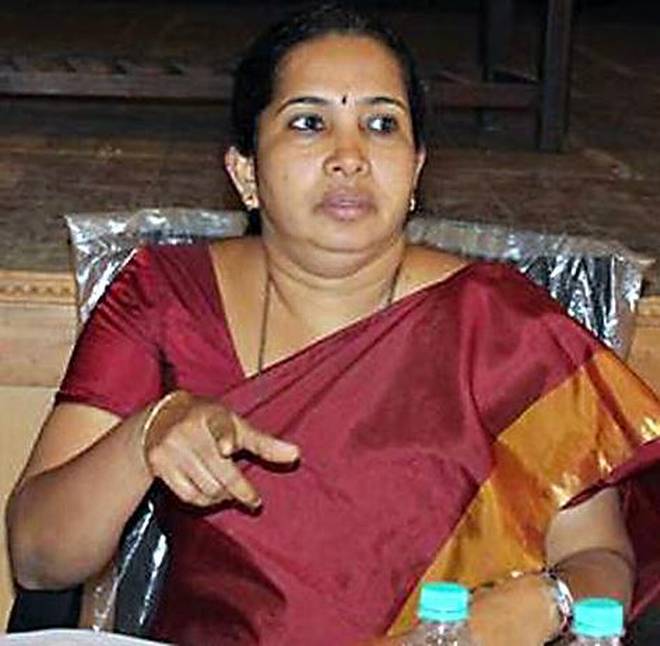
Kamakshipalya DWCC manger Annamma.

Most of the city’s waste managers, including pourakarmikas, are women. Of the 181 dry waste collection centres (DWCC), many are managed by women, who were formerly waste pickers. These women have not only transformed their lives, they are also helping other women move up. The batch of women managers have also earned the respect of the communities they work with.

Waste management experts say women have the drive and desire to do something good for the city and also improve their lives in the same process. “For this, they are ready to face all odds and circumstances,” they point out. These are some of the women waste managers who turned around their lives.

Annamma

Annamma has been managing the DWCC at Kamakshipalya for the past five years. From being a waste picker for nearly 30 years, Ms. Annamma now is no less than an entrepreneur, employing eight women who were also formerly waste pickers themselves. “Initially, I hesitated to take responsibility of managing a centre. Later, I changed my mind … I knew the basics of segregation. I’m happy that my decision has brought me thus far,” she said. Life as a waste picker was difficult and she is now leading a comfortable life. “What gives me immense satisfaction is that I have helped other waste pickers out of their situation,” she said.

Ms. Annamma’s centre collects nearly two tonnes of dry waste every day.

Subbamma

“I used to face verbal abuse on a daily basis, and also harassment from the police. People used to look at me with suspicion. I lived in a hutment and had no idea where my next meal would come from,” said Subbamma, a former waste picker. She now manages the Kamalanagar DWCC, sometimes guiding local residents about waste segregation.

“It has been a long five years. My journey has seen ups and downs. I now live with my three school-going sons, and my daughter and her husband in a rented house,” she said proudly.

Though she was earlier collecting dry waste going door to door in the ward, the garbage contractors now drop off the dry waste at the DWCC every day. “We get around 400 kg of dry waste on an average every day. Though I am not making much, I’m satisfied,” she said.

Geetha

Four years ago when Geetha was entrusted with the Rajagopalanagar DWCC, she faced a lot of difficulties for the initial three months. She used to work at another DWCC before she was asked to manage the Rajagopalanagar one. “I used to regret my decision … I didn’t have money for the vehicles, the contractors were creating problems. I was incurring a loss,” she said, and added that she persevered to overcome her problems.

Today, Ms. Geetha leads of team of eight men, who work with her at the DWCC. “With four vehicles, I am able to collect more than one tonne of dry waste going door to door every day. We have divided the area into blocks and have a rota for collection of dry waste from each of these blocks.”

Kumuda

As early as 6 a.m. every day, Kumuda and her team of 12 women, who were formerly waste pickers like her, come to the Katriguppe DWCC to start work. Ms. Kumuda, who manages the DWCC, instructs the three drivers on the areas they need to go to collect dry waste. “I have to start early. The DWCC is on the main road and the shops next to the centre raise objections. We are also grappling with limited space,” she said.

Despite the cramped centre, Ms. Kumuda manages to collect more than two tonnes of dry waste a day, earning her a revenue of around ₹1 lakh a month. “But that is hardly enough. After payment of wages and expenditure towards diesel and maintenance of the three vehicles, there is hardly anything left. Some months, I am forced to borrow to meet the expenses,” she said.

Sampangi

Over the past seven months, Sampangi’s confidence has grown by leaps and bounds. As a waste picker, she was wary of interacting with people. Today, she has no problems. She has been effectively managing a team of 10 former waste pickers at the Kumaraswamy Layout DWCC.

“I knew nothing when I started. Over the past few months, with a lot of cooperation from the BBMP’s health inspector and supervisor, I am able to collect around two tonnes of dry waste a day,” she said, and added that the local residents have also been cooperative.

The centre lacks water connection and does not have a functional toilet. That has not deterred Ms. Sampangi and her team. “The only problem I face is that most recyclables get picked by the pourakarmikas and contractors themselves and I’m left with low- value waste that just eats into the space at the centre,” she said.

source: http://www.thehindu.com / The Hindu / Home> News> Cities> Bengaluru / by Chitra V. Raman / Bengaluru – December 28th, 2017

Meet real-life Mowgli, darling of monkeys, from village near Dharwad

Langurs, boy can’t live without each other; 2-yr-old brokers peace between 2 troops.

Samarth Bangari of Allapur village in Kundol taluk of Dharwad district plays with wild Langurs. DH photo by Irappa Naikar.

The grey langurs or the Hanuman langurs, as they are called, are often not preferred as pets. While some ‘madaris’ tame monkeys and make them dance to their tunes, the langurs are usually not so friendly.

But langurs are soulmates for two-year-old Samarth Bangari of Allapur village in Kundagol taluk, Dharwad district. He literally eats, sleep and plays with the wild langurs.

The langurs, which are tree canopy dwellers, of this village too cannot live without him. If Samarth doesn’t come to play with them at the break of dawn, the langurs go to his bed, remove his bedsheets, wake him up and ‘drag’ him to play.

It all started six-eight months ago, when the tiny Samarth, along with his mother, went to his maternal grandfather’s village. To stop Samarth from crying, his grandmother gave him a piece of jowar roti to eat. He walked straight out of the house and offered the piece of roti to a langur that was resting on a tree along with its little one.

As Samarth babbled, the mother langur climbed down the tree and took the roti from him. Relatives were wonder-struck when the 18-month-old Samarth did not even flinch when eight to 10 langurs came to him, expecting him to offer something for them too. He stood there with a giggle on his face.

The friendship has only grown ever since. The toddler lifts the young ones in the troop or sometimes hits them. The monkeys have no issues with it.

“Earlier we used to fear for the safety of Samarth. The elders used to rush to his ‘rescue,’ but the langurs would attack us,” said Mallikarjun, Samarth’s father. Many times, the elders have sustained injuries or have been bitten by them in their ‘rescue’ mission. There have been instances where these animals have chased the elders for kilometers. But Samarth has not sustained even a scratch due to the langurs.

Family members tried several tricks to make sure Samarth was out of the reach of the langurs, but failed. They had taken Samarth to another village for a few days, but were forced to bring him back, as the langurs trooped there and ransacked everything in their wasy. They virtually searched every house in the village for Samarth. “The langurs stopped the ruckus only after he returned with them,” said a villager.

The village residents said there used to be two groups of langurs in the nearby woods of Allapur and they had constant fights. This had resulted in losses to farmers and housewives, in terms of crops, utensils or eatables. But now, truce prevails as Samarth has played the perfect peacemaker.

The boy now has a fan following of sorts as people from far and wide are coming to Allapur, to see for themselves this strange but strong bond.

source: http://www.deccanherald.com / Deccan Herald / Home> State / DH News Service / Hubballi – December 03rd, 2017

Visually impaired Kannada professor gets BU doctorate for Kuvempu thesis

NagashettyBF22dec2017

Bengaluru :

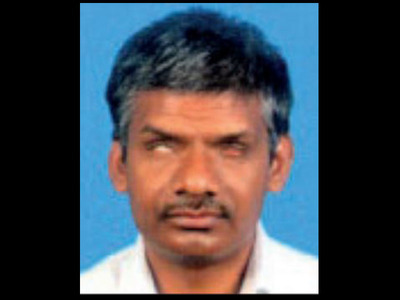
Disability is not a reason to give up on life, but a weapon one can use to prove that nothing is impossible. Nagashetty, 37, swears by this motto. Born blind in one eye and losing sight in the other when he was 15 years old, the gritty professor is probably the first visually impaired candidate to receive a doctorate from Bangalore University.
A notification on Nagashetty’s doctorate was released by the varsity on Thursday. Completing his thesis on the topic ‘Intuition in Kuvempu’s literary works’ (‘Kuvempu Kavyagalalli Anthardrishti’ in Kannada), from BU’s Kannada department, Nagashetty was awarded the doctor of philosophy degree and will be felicitated at the university’s convocation in 2018.

Nagashetty’s happiness knew no bounds while TOI spoke to him about his achievement. Saying his hard work and patience have finally paid off after nine years, he stated: “It took me six years to get this doctorate. I registered in 2008 and submitted the thesis in 2015. But because the panel was undergoing some changes, I received the doctorate this year.”

“I learned about Kuvempu’s work in school and realized that the prose and poetry have a deep impact on the reader’s mindset. I wanted to delve deeper and and took this up as my thesis topic,” said Nagashetty, a Kannada professor at Government PU College, JC Nagar. He added: “I got some of my PU students to read the works to a group of people and asked them to write down what they understood. Then I got them converted into braille format for my knowledge,” Nagashetty added.

Nagashetty, who lost sight in his second eye in class 9, decided to resume education at Kalaburagi’s blind school where he learnt braille. He secured 75% in SSLC exams. “That pushed me to study further,” he said.

After completing pre-university education in Gadag, Nagashetty came to Bengaluru to study at Sree Veerendra Patil degree college where he studied history, economics and Kannada. Then he joined Bangalore University to pursue postgraduation in Kannada.

Even though the laborious process of converting braille into conventional text and vice versa took up much of the time while completing the thesis, Nagashetty is determined about compiling SL Bhyrappa’s works. “This too may take a long time but I believe it can be achieved,” he signed off.

source: http://www.timesofindia.indiatimes.com / The Times of India / News> City News> Bangalore News / by Deepika Burli / TNN / December 22nd, 2017

Around the world in 80 days

Flying high: Captain Audrey Deepika Maben and her daughter Amy Mehta with their aircraft at the Jakkur Aerodrome in Bengaluru on Wednesday.

Woman, daughter to fly 50,000 km to garner support for women’s empowerment

In Jules Verne’s Around the World in Eighty Days, Phileas Fogg and his valet take steamers and trains and even an elephant while in India to win a bet with £20,000 at stake. Flying instructor Captain Audrey Deepika Maben and her 19-year-old daughter Amy Mehta are driven by a different goal as they get ready to fly around the world in 80 days in a motor glider: to spread awareness on women empowerment.

They will cover 21 countries and 50,000 km to garner support for the We! Udaan scholarship for underprivileged girls who want to fly.

K. Moses Chalai, Joint Secretary, Ministry of Women and Child Development, congratulated the mother-daughter duo and also read a message on behalf of Menaka Gandhi. He said the expedition would be a great example of the Beti Bachao, Beti Padhao campaign.

The expedition

Talking about the expedition, Captain Audrey said the it was very dear to her as it would help young girls around the country realise their dreams of flying. “This expedition is only one part of our mission. The larger goal is to encourage women across the country to take up flying,” she said.

She explained that this expedition would be a challenge as they would have to land for washroom breaks and prepare their bodies to accustom to tough conditions during their monthly cycles.

The expedition, in its planning stages now, will be finalised in the next two months. They plan to travel across 21 countries with 70 to 90 landings in between, which may vary depending on prevalent weather conditions and re-fuelling. They will fly eastward towards Japan, Russia, Alaska, North America, Greenland, Europe, Pakistan and back to India. As the motor glider requires fair weather and as Captain Audrey only has a daylight flying licence, they will be flying around 5-6 hours per day.

Training routine

As part of her training routine, Captain Audrey, a mother of three, works out everyday and has regular physical training. She is also following a strict nutrition plan along with yoga and meditation. The initiative is undertaken by an entertainment channel in collaboration with the Ministry of Women and Child Development and Social Access Communications.

source: http://www.thehindu.com / The Hindu / Home> News> Cities> Bengaluru / by Ashwini Raj / Bengaluru – November 30th, 2017

Turning around impoverished schools, one step at a time

The OSAAT Rotary Government Primary School at Neelakanta Agrahara in Malur.

NRIs, expatriates in San Francisco conduct events to raise funds

In the heart of Kolar district, a winding tar road embraced by clusters of brick kiln on either side gives way to a muddy path that leads to a little-known village, Neelakanta Agrahara. The kilns relinquish their hold on the rugged road as rocks and the deceptively appealing but invasive lantana flowers dominate the landscape. One building stands out, its walls adorned with drawings of popular toons, birds and even vegetables. With a see-saw, swing and other playground fixtures, it has the trappings of a well-funded private school, beyond the budget of most village households. But locals know better. The village’s government primary school occupies pride of place here.

A year-and-a-half ago, however, it fit the standard stereotype of government-run schools with just three rooms, and overworked teachers taking combined classes to make up for the shortfall of staff. “Sometimes, we had classes in the open as there was a shortage of rooms. During the rainy season, water would drip into the classroom,” says Rakshitha R, now a class five student.

What the children and even teachers don’t know is that a fundraising event with music and dance performances by children in San Francisco helped turn their school around. The credit goes to a group of Indian origin and NRI software professionals living in San Francisco’s Bay Area as well as volunteers in India. Their organisation, One School At a Time (OSAAT), identifies schools in the country that are in desperate need of a facelift and provides funds for infrastructure work. Since its inception, nearly 15 years ago, the organisation has turned around 21 schools in India, of which17 are from Karnataka, two in Uttar Pradesh, one each in Tamil Nadu and Maharashtra. A majority of these are government schools in rural areas.

Explaining how it all began, Vadiraja Bhatt, Managing Trustee, OSAAT India said that a group of eight enthusiastic IT professionals of Indian origin living in the Bay Area in the U.S. wanted to do something for a “good cause.” “Our first fund raised $3000 in 2003, which went into the development of a government school in Bajegoli, Karkala taluk, Udupi,” he said.

OSAAT USA chairperson B.V. Jagadish, who studied till class seven at the Bagalur Primary and middle school in Devanahalli taluk in Bengaluru Rural district, said that the organisation raises funds by holding music and dance events in the San Francisco Bay Area. At these events, they raise anywhere between ₹60 lakh to ₹1 crore per annum. “We use our programmes as an anchor to get attention from people who later sponsor for OSAAT,” said Mr. Jagadish. Their signature annual event is NaatyaRaaga, conducted in February, which sees the participation of 1,200 to 1,500 children from 150 dance and music schools in the US. “Now there are several people who are willing to fund schools in their local States,” he added.

The original version expanded OSAAT as One Step At a Time. It was corrected to One School At a Time.

source: http://www.thehindu.com / The Hindu / Home> News> States> Karnataka > Sunday Special / by Tanu Kulkarni / November 25th, 2017

Colonel Giridhari Singh square inaugurated in Bengaluru

Bengaluru :

A square dedicated to the former erstwhile commandant of ASC Centre North, Colonel Girdhari Singh, was inaugurated in the city on Saturday. The Colonel was responsible for shifting of the centre from its initial location in Meerut to Gaya city in Bihar.

A memorial for Colonel Girdhari Singh, AVSM, was inaugurated at the ASC Centre and College in the city on Saturday. (Express Photo Service)

A bust of the Colonel was inaugurated by Lieutenant General Vipan Gupta, Commandant ASC Centre and College in a grand ceremony at the ASC Centre on Saturday. “Colonel Girdhari was a thorough professional, under whose dynamic leadership, the centre had successfully moved and re-established itself in Gaya in an incredibly short time. He had been awarded the Ati Vishisht Seva Medal by the President of India in 1978,” a statement from the Ministry of Defence said.

A memorial to the Colonel was already existing in Gaya and when the ASC centre moved to Bengaluru in 2011, it was felt that the new campus must also have a memorial in order to keep up the heritage of the centre.

source: http://www.newindianexpress.com / The New Indian Express / Home> Cities> Bengaluru / by Express News Service / November 11th, 2017

The man who ‘discovered’ 780 Indian languages

Ganesh Devy undertook 300 journeys in 18 months to explore India's languages / ANUSHREE FADNAVIS/INDUS IMAGES
Ganesh Devy undertook 300 journeys in 18 months to explore India’s languages / ANUSHREE FADNAVIS/INDUS IMAGES

When Ganesh Devy, a former professor of English, embarked on a search for India’s languages, he expected to walk into a graveyard, littered with dead and dying mother tongues.

Instead, he says, he walked into a “dense forest of voices”, a noisy Tower of Babel in one of the world’s most populous nations.

He discovered that some 16 languages spoken in the Himalayan state of Himachal Pradesh have 200 words for snow alone – some of them ornately descriptive like “flakes falling on water”, or “falling when the moon is up”.

He found that the nomadic communities in the desert state of Rajasthan used a large number of words to describe the barren landscape, including ones for how man and animal separately experience the sandy nothingness. And that nomads – who were once branded “criminal tribes” by British rulers and now hawk maps for a living at Delhi’s traffic crossings – spoke a “secret” language because of the stigma attached to their community.

In a dozen villages on the western coast of Maharashtra, not far from the state capital Mumbai, he discovered people speaking an “outdated” form of Portuguese. A group of residents in the far-flung eastern archipelago of Andaman and Nicobar spoke in Karen, an ethnic language of Myanmar. And some Indians living in Gujarat even spoke in Japanese. Indians, he found, spoke some 125 foreign languages as their mother tongue.

Dr Devy, an untrained linguist, is a soft-spoken and fiercely determined man. He taught English at a university in Gujarat for 16 years before moving to a remote village to start working with local tribespeople. He helped them access credit, run seed banks and healthcare projects. More importantly, he also published a journal in 11 tribal languagesGrey line

Languages of India

  • The 1961 census counted 1,652 Indian languages
  • The People’s Linguistic Survey of India (PLSI) counted 780 Indian languages in 2010
  • 197 of these are endangered, 42 of them critically so, according to UNESCO
  • Arunachal Pradesh and Assam in the northeast, Maharashtra and Gujarat in the west, Orissa and Bengal in the east, and Rajasthan in the north have the most languages
  • India has 68 living scripts
  • The country publishes newspapers in 35 languages
  • Hindi is India’s most used language, spoken by 40% of Indians. This is followed by Bengali (8.0%), Telugu (7.1%), Marathi (6.9%), and Tamil (5.9%)
  • The state-run All India Radio (AIR) broadcasts programmes in 120 languages
  • Only 4% of languages are represented in India’s parliament

Sources: Census of India, 2001, 1962, UNESCO, People’s Linguistic Survey of India 2010.Grey line

It was around this time Dr Devy had an epiphany about the power of language.

In 1998, he carried 700 copies of his journal written in the local language to a dirt-poor tribal village. He left a basket for any villager who wanted to or could afford to pay 10 rupees (£0.11; $0.15) for a copy. At the end of the day, all the copies were gone.

When he checked the basket, he found a large of number of currency notes – “grimy, crumpled, soggy” – left behind by the tribal villagers who had paid whatever they could afford from their paltry daily wages.

Dr Devy and his team have recorded India's many sign languages / ANUSHREE FADNAVIS/INDUS IMAGES
Dr Devy and his team have recorded India’s many sign languages /
ANUSHREE FADNAVIS/INDUS IMAGES
A story written in Spiti language, spoken in the northern state of Himachal Pradesh / ANUSHREE FADNAVIS/INDUS IMAGES
A story written in Spiti language, spoken in the northern state of Himachal Pradesh /
ANUSHREE FADNAVIS/INDUS IMAGES

“This must have been the first printed material they saw in their life in their own language. These were unlettered daily wage workers who had paid for something they could not even read. I realised this primordial pride and power of the language,” Dr Devy told me.

Seven years ago, he launched his ambitious People’s Linguistic Survey of India (PLSI), which he called a “right-based movement for carrying out a nation-wide survey of Indian languages as people perceive them”.

As the indefatigable language hunter turned 60, he undertook 300 journeys in 18 months across the length and breadth of India to search for more languages. He paid for his trips using money he earned by delivering lectures in universities and colleges. He travelled night and day, revisiting some states nearly 10 times, and religiously kept a diary.

Dr Devy also forged a voluntary network of some 3,500 scholars, teachers, activists, bus drivers and nomads, who travelled to the remotest parts of the country. Among them was a driver of a bureaucrat’s car in the eastern state of Orissa who kept a diary of the new words he heard during his extensive travels. The volunteers interviewed people and chronicled the history and geography of languages. They also asked locals to “draw their own maps” on the reach of their language.

The script of a language called Sakal spoken in Maharashtra / ANUSHREE FADNAVIS/INDUS IMAGES
The script of a language called Sakal spoken in Maharashtra /
ANUSHREE FADNAVIS/INDUS IMAGES
The PLSI has already published 39 books on Indian languages / ANUSHREE FADNAVIS/INDUS IMAGES
The PLSI has already published 39 books on Indian languages /
ANUSHREE FADNAVIS/INDUS IMAGES

“People drew maps shaped like flowers, triangles, circles. These were maps of their imagination on the reach of their language,” says Dr Devy.

By 2011, the PLSI had recorded 780 languages, down from the 1,652 languages counted by the government in 1961. Thirty-nine of a planned 100 books carrying the findings of the organisation’s survey have already been published; and some 35,000 pages of typed manuscripts are being vetted for publication.

India has lost a few hundred languages because of lack of government patronage, dwindling number of speakers, poor primary education in local languages, and migration of tribespeople from their native villages. The death of a language is always a cultural tragedy, and marks the withering away of wisdom, fables, stories, games and music.

‘Linguistic democracy’

Dr Devy says there are more pressing anxieties. He worries about the ruling Hindu nationalist BJP’s efforts to impose Hindi all over India, which he calls a “direct attack on our linguistic plurality”. He wonders how India’s melting-pot megacities will deal with linguistic diversity in the face of chauvinistic politics.

Dr Devy is now planning to check the health of the world's 6,500 languages  / ANUSHREE FADNAVIS/INDUS IMAGES/
Dr Devy is now planning to check the health of the world’s 6,500 languages / ANUSHREE FADNAVIS/INDUS IMAGES/

“I feel sad every time a language dies. But we have suffered heavier losses in other diversities – like varieties of fish and rice,” he says, sitting in his home in Dharwad, a sleepy, historic town in Karnataka state.

“Our languages have survived tenaciously. We are truly a linguistic democracy. To keep our democracy alive, we have to keep our languages alive.”

source: http://www.bbc.com / BBC News / Home> News> Asia> India / by Soutik Biswas, India Correspondent / October 27th, 2017

UK parliament to honour Kannada actor Darshan

In a letter to the actor, Veerendra Sharma, British MP, said, 'It's a great honour and privilege to host you at the House of Commons, on October 19. We've decided to felicitate you, for the hard efforts you've put in through your movies to promote Karnataka's art and culture.'
In a letter to the actor, Veerendra Sharma, British MP, said, ‘It’s a great honour and privilege to host you at the House of Commons, on October 19. We’ve decided to felicitate you, for the hard efforts you’ve put in through your movies to promote Karnataka’s art and culture.’

Popular Kannada actor Darshan Tugudeepa has been invited by the United Kingdom Parliament to receive an honour on October 19, for his contributions to Karnataka’s art and culture through his movies. Darshan is the first South Indian and fourth Indian actor to receive the honour.

The actor, who is busy shooting for his upcoming film ‘Kurukshetra’ in Hyderabad, will fly to London on Wednesday and will return on October 26. The event has been organised by the Karnataka Business Chamber, London.

In a letter to the actor, Veerendra Sharma, British MP, said, “It’s a great honour and privilege to host you at the House of Commons, on October 19. We’ve decided to felicitate you, for the hard efforts you’ve put in through your movies to promote Karnataka’s art and culture.”

Sharma was on a visit to Karnataka recently. He was greatly influenced by the state’s art and culture. During his visit, he came in contact with Manjunath Vishwakarma, who briefed him about Darshan and his contributions.

On September 16, 2016, Bollywood star Salman Khan received the Global Diversity Award at Britain’s House of Commons.

Darshan initially worked in trivial roles in a few films and television shows. He later made his debut in a lead role in in the film Majestic in 2001. He has since then starred in many commercial and art films.

It may be recalled that Darshan was accused of assaulting and threatening his wife, Vijayalaxmi, with a revolver in 2011. The actor had spent 14 days in judicial custody after his wife compalined about domestic violence. It was later settled out of court.

The actor has failed to give a hit in the last two years. Darshan’s much-awaited movies Ambaressha (2014), Jaggu Dada (2016) and Chakravarthy (2017) flopped at the box office. He bounced back with his latest flick ‘Tarak,’ which has received good response from the audience.

source: http://www.deccanherald.com / Deccan Herald / Home> Entertainment / by Jagadish Angadi, Bengaluru / DH News Service / October 18th, 2017

Rajalakshmi is India’s entry for Miss Wheelchair World 2017 pageant

Dentist Rajalakshmi had to take the wheelchair after she met with an accident

In a world where people with disability have to often compromise their goals, 31-year-old Rajalakshmi S.J. from Bengaluru fought all odds and kept her priorities straight.

She is all set to represent India at Miss Wheelchair World 2017 pageant to be held in Poland.

A dentist by profession, Ms. Rajalakshmi had to take the wheelchair after she met with an accident 10 years ago, and let her life to mould in a different direction.

“It was a whole new body, it was a whole new world around me,” she recollects. Instead of losing herself, she pursued her interests in psychology and fashion and eventually she won 2014 Miss Wheelchair India.

She is also the chairperson of her organisation S.J. Foundation, which works for the causes of the disabled.

Now Ms. Rajalakshmi is all set for the pageant and has been preparing herself with proper diet, and workout and most importantly fuelling her confidence with the support of her loved ones.

source: http://www.thehindu.com / The Hindu / Home> News> Cities> Bengaluru / by Bengaluru (Karnataka) / September 27th, 2017

Here, women call the shots

WomenBF17oct2017

Kolar has distinction of women holding all top executive posts

International Day of the Girl Child has gotten a special meaning in Kolar district, which is witnessing a women’s empowerment, albeit in a different way.

With G. Sathyavathy’s appointment as the Deputy Commissioner of Kolar, the district has the rare distinction of women holding all the top executive posts. Ms. Sathyavathy, DC of Chikkamagaluru, succeeds K.V. Thrilokchandra, who was the Deputy Commissioner for last 35 months.

Many prominent elected bodies also have women as presidents and vice-presidents in the district.

K. Vidyakumari (Additional Deputy Commissioner), Rohini Katoch (SP), B.B. Kaveri (Zilla Panchayat CEO) are the other prominent women holding higher posts in the administrative structure.

For Ms. Vidyakumari, it’s not a question of gender but the work that has to be done. “An officer is an officer. There is no difference in executing the administrative duties and responsibilities by men or women”, she said.

However, she admitted that a prejudiced view of gender roles where women are seen as weak still exists.

Ms. Vidyakumari, who has been ADC in Kolar for one year, highlighted the smooth smooth running of zilla panchayat by its CEO Ms. Kaveri and police department headed by Ms. Katoch in the district.

“Girls need to be encouraged to take up higher education, which will result in women make foray in to administrative system,” Ms. Vidyakumari added.

Pallavi Honnapura, senior assistant director of Public Relations and Publicity Department, says it is a very good sign. “People expect more work from the bureaucracy and particularly they pose trust in women authorities as they can do work efficiently,” she said.

source: http://www.thehindu.com / The Hindu / Home> News> States> Karnataka / by Vishwa Kundapura / Kolar – October 16th, 2017