Category Archives: Amazing Feats

Students go innovative, price of their drone dips

KNS Institute of Technology students display the drones designed by them at Eduverse, the ninth edition of Jnana Degula education expo organised by Deccan Herald and Prajavani, at Jayamahal Palace Hotel grounds on Sunday. DH photo

An unmanned aerial vehicle (UAV) at Rs 1,500? Students of KNS Institute of Technology have done it, without much fanfare. They plan to enhance the design to customise the drones for surveillance and transporting goods.

The makers of the plane – Inayatullah, Debabrata Mondal, Premkumar Singh and Syed Junaid – represented their college along with vice principal Nayeem Ahmad at Jnana Degula-Eduverse event organised by DH and Prajavani.

Inayatullah said the plane was made of simple polymer materials (expanded polyolefin and polystyrene) and can carry 350 gm payload. “It can fly for an hour at a speed of 45 km per hour. We have used a propeller made of composite material with aluminium coating so that it can fly at a height of 500 feet and withstand force of up to 85 newtons,” he said.

The team is also working on a plane specifically designed for surveillance.“While the 45 kmph plane can be improvised to make it a delivery drone, we are working on a plane that flies slower, at 36 kmph, providing opportunities for deeper surveillance of a particular area,” Mondal said.

Inayatullah said the cost of the UAVs will come down further if produced on a large scale. “The UAVs produced by government agencies cost a lot. Our planes are disposable. The army can use the surveillance drone and does not have to worry if one of them is lost or destroyed,” he said.

The planes can be controlled by a 2.4GHz radio frequency device, which has a range of 2.5 km. “The remote controller cost us Rs 3,500. Considering that it is the plane and not the device that is susceptible to damage, we think ours is the most affordable UAV,” he said.

“The turbo is imported from China for Rs 90 and sold in India for Rs 250. The same turbo can be made in India at a cost of Rs 40. Nearly 95% of the materials were imported from China. After a detailed study, we found the cost will come down to Rs 600, if we make these materials in India,” Inayatullah said.

source: http://www.deccanherald.com / Deccan Herald / Home> City / DH News Service / Bengaluru – May 29th, 2017

Mangaluru : Manipal Alumnus gets Global Fame

Kartik Mandaville has wide experience working with start-ups

Kartik, 26, spoke at RecTech 2017 in Barcelona, one-of-a-kind forum

At 26, Kartik Mandaville, chief executive officer (CEO) and founder of SpringRole — a machine learning-based recruiting software in Bengaluru and Los Angeles — is the youngest to address the RecTech 2017, the only conference focused on innovation in recruitment advertising and technology outside of the US.

The event offers a one-of-a-kind forum for senior executives in publishing and technology companies that offer talent acquisition solutions.

The conference focussed on mobile transformations, “total candidate focus”, programmatic advertising, artificial intelligence and machine learning.

Held from May 17-19, it played host to an impressive group of recruitment experts and influential speakers from around the world.

Sharing his experience with Bangalore Mirror, Kartik Mandaville said it was a wonderful experience to share the stage with leaders from top companies in the USA and Europe. “Moreover, I was probably the youngest there. There was immense learning from the conference, being part of the panel and conducting the workshop. I must admit, I was nervous, but the workshop was well received and I was surprised to find a queue of people waiting to talk to me, which was humbling. Mostly we discussed about the future of recruitment – how artificial intelligence is going to help in the process and make it convenient for HR (human resources) managers,” he said.

More than 100 high-level executives from recruitment advertising and tech companies attended the conference, mainly from Europe, the US, Latin America and Africa.

Mandaville is a serial entrepreneur who also serves as senior technical advisor at Science in Santa Monica, California, and other companies.

He graduated from Carnegie Mellon University (CMU) with Masters from the Language Technologies Institute focussing on big data, machine learning, natural language processing and BioTech.

Mandaville has wide experience working with start-ups. At Science, he worked with early-stage start-ups to architecting out their technology, building the team and scaling.

He built the Science India team having 40-plus software engineers and product working across the portfolio companies.

Before joining CMU, he was a full-stack developer working at Shareaholic on the product distribution channel and different web properties. As a student at Manipal University, he launched ‘Autobudder’ in 2010 for Facebook, an application that automatically wishes friends on their birthdays.

The following year, he was part of the team that launched ‘Let Me Know’, a unique portal that helps students across India find opportunities of various kinds such as internships, workshops, seminars, conferences, tech-fests, literary events and much more.

source: http://www.bangaloremirror.indiatimes.com / Bangalore Mirror / Home> News> State / by Deepthi Sanjiv, Bangalore Mirror Bureau / May 23rd, 2017

Making brain surgeries more cost-effective

BrainsurgeryBF25may2017

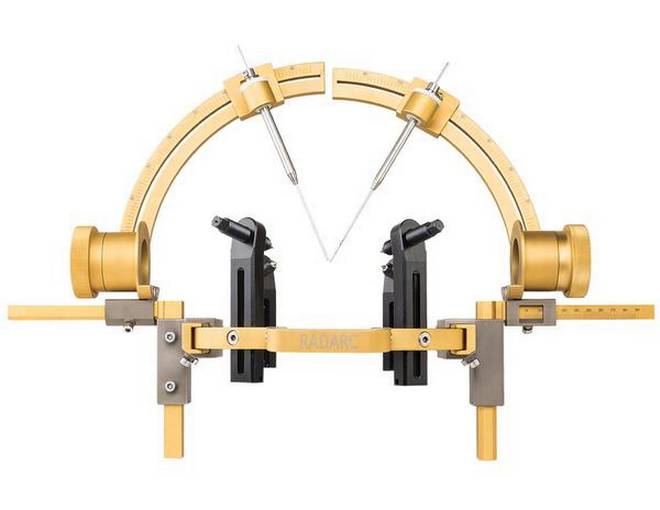
Bengaluru doctor designs low-cost stereotactic head frame

In brain surgeries, precision is everything — a shift of a few millimetres can make the difference between a successful surgery and putting a patient in coma. One device that improves the accuracy of neurosurgery is the stereotactic head frame, which provides a 3-dimensional coordinate system to help surgeons get the precise location of a nerve or tumour in the brain.

However, the device currently used is prohibitively expensive, costing between ₹75 lakh to ₹1 crore. A city-based doctor has designed a low-cost stereotactic frame which can be used to operate on both sides of the brain at a time, unlike conventional frames currently used in hospitals.

The frame designed by Murali Mohan, senior neurosurgeon with BRAINS Sparsh Hospitals, is made of medical grade titanium and costs one-third the current price. Engineers Sharath Bhat and Sadashiv Bhat of the Mahalasa Medical Technology, Bengaluru, developed the device.

Dr. Mohan’s inspiration was the late Balasubramaniam Ramamurthi, known as the father of Indian neurosurgery.

The frame which is CE marked (it conforms to European standards) and is pending patent, is currently being used by a doctors in around six to seven hospitals in Bengaluru and Hyderabad for biopsies and deep brain simulations.

source: http://www.thehindu.com / The Hindu / Home> Sci-Tech> Health / by Cynthia Anand / Bengaluru – May23rd, 2017

Bengaluru girl bags Diana Legacy Award

Nikhiya Shamsher, who won the Diana Legacy Award, with Prince William, Duke of Cambridge (R) and Prince Harry

Her crusade for better education , especially for under-privileged children, has won 14-year-old Nikhiya Shamsher from Bengaluru the Diana Legacy Award. The award was given away last week by Prince William, Duke of Cambridge and Prince Harry at the St Jame’s Palace, UK.

In December 2015, Nikhiya realized there are many children who do not have access to basic school supplies.Often entire classrooms of children share a single textbook, and many walk barefoot to school. While more children were attending school, she heard stories of bright young students dropping out because of poor educational foundation.

Yearn to Learn, the project spearheaded by Nikhiya, has, so far, set up 15 science laboratories which are benefiting 3,500 students from various schools. Nikhiya started her e-commerce website – http:www.knicnacs.com -to raise funds for her laboratory projects. Recently , she also funded the education of 25 blind children.

Inspired by Diana’s words -“Carry out a random act of kindness, with no expectation of reward, safe in the knowledge that one day someone might do the same for you” – the award, which marks 20 years since her death, recognizes young students who have socially impacted people through their actions. The award identified 20 winners as legacies of the princess.

Nikhiya was the only Indian among 20 winners rep resenting countries like the United Arab Emirates, UK, US, Canada, Belize, among others. This year, 12,000 social changemakers were nominated for the award. “The award has strengthened my believe in my project, giving me the confidence that I am doing the right thing,” said Nikhiya.”The benefit of this recognition is that a lot more people would now be interested and serious about the cause I’m working towards.”

Asked why she was so keen on bringing about a change in the education space, the teen said: “Because it is the single most important solution to all our issues.” Meeting the royal family was a unique experience for Nikhiya, who wasn’t quite expecting the award.

“The royal family was extremely encouraging and gave us the confidence that we were doing the right thing and keeping alive Princess Diana’s tradition,” she said, adding, “None of this would have been possible without the support of my parents and my school (Greenwood High).”

Her father Dr Shahid Shamsher, a trichologist, said: “We want her to follow the path she desires. She has this innate sense of responsibility and always keeps herself occupied and we know that she’ll go a long way.”

Added Niru Agarwal, trustee, Greenwood High: “At a tender age like hers, to think about the welfare and education of the downtrodden and selflessly work for it is noteworthy . She is a role model to her peers. Her qualities of kindness, compassion and service are truly admirable.”

In addition to the Diana Legacy Award, Nikhiya’s photo with information on her projects and services have been hosted at an exhibition at Althorp House, the final resting place of Princess Diana. Bengaluru

The Global Inclusion Award

Nikhiya was the sole winner from India at the Global Inclusion Awards, held in Berlin on May 3. She was chosen from among other contenders for the Global Winner of the Outstanding Youth Economic Citizenship Award 2017. The event was hosted by Germany’s G20 Presidency and Child and Youth Finance International, Germany.

source: http://www.timesofindia.indiatimes.com / The Times of India / News> City News> Bangalore News / by Deepika Burli / May 25th, 2017

Bengaluru doctor wins international award for role in fight against tobacco

Cancer specialist US Vishal Rao of Bengaluru has been honoured with the 2017 Judy Wilkenfeld Award for International Tobacco Control Excellence, for his role in combating tobacco use in the country. Dr. Rao was presented the award on Wednesday at an event organized by the Campaign for Tobacco-Free Kids in Washington D.C.

Dr. Rao’s efforts led to a ban on gutka, chewing tobacco and e-cigarettes in Karnataka. However, the State government recently overturned the ban on chewing tobacco. Dr. Rao is a member of the High-powered Committee on Tobacco Control instituted by he Government of Karnataka. He is also the inventor of a Rs. 50 voice box prosthetic for throat cancer patients whose larynx has been removed.

“With strong government commitment and advocates willing to champion the cause, we can greatly reduce the burden of tobacco use in India,” he added.

“The committee gave the award in recognition of the steps taken towards implementing the Cigarette and Other Tobacco Products (Prohibition) Act, and how Karnataka led the way in this,” said Dr. Rao, speaking over telephone from Washigton. “Another was the implementation of the ban on gutka and chewing tobacco by the Government of Karnataka,” he added.

Dr. Rao said that the battle continued with the recent order from the Food Safety Commissionerate reversing the ban on chewing tobacco. “We have written to the State government that the order contravenes its commitment made to the Supreme Court to ban chewing tobacco and gutka,” said Dr. Rao.

The Wilkenfeld Award was established in honour of Judy Wilkenfeld, the founder of Tobacco-Free Kids’ international program. Dr. Rao is the second Indian to receive the award, the first being Pankaj Chaturvedi of Tata Memorial Hospital in 2013.

source: http://www.thehindu.com / The Hindu / Home> News> Cities> Bengaluru / by Staff Reporter , Cinthya Anand / Bengaluru – May 12th, 2017

75-year-old one man army in Mangaluru


Narayana Nayak briefing students about scholarships and other facilities that they are entitled to, at Balmatta First Grade College for Women in Mangaluru |Rajesh Shetty Ballalbagh

Mangaluru :

The clock strikes 8 at Karpe house in Bantwal taluk and sprightly 75-year-old K Narayana Naik is already at the gate, ready to begin his day. Clad in a pant and shirt and a cotton bag on his shoulder, his appearance is unassuming but Naik is the reason countless students have achieved higher education.

Naik’s routine has remained the same since his retirement as school inspector in 2001. He starts his day by travelling to government-run schools and colleges in Udupi and Dakshina Kannada districts, paying all the travel expenses from his pockets.

At these schools and colleges, he helps deserving students avail scholarships.Naik says that there are several scholarships available for students. “But there is lack of awareness among students.”

Nisham, a BCom student at Balmatta First Grade College, told Express, “Our ‘scholarship master’ (as Naik is known to students) not only creates awareness about new scholarships launched by government and private entities, but also helps students in completing the application and submitting it.” He even takes the trouble of hand delivering cheques to students who have passed out from college, she says.
Nisham is just one of the hundreds of students who Naik has helped. In 2016, Naik had visited 130 government schools and colleges to help students, especially children of daily wage labourers, avail scholarships. “Many workers are aware of the schemes available for their children. I encourage workers to register with the labour welfare department to make them eligible for the benefits,” says Naik.

Naik himself battled all odds to complete his Master’s degree in Kannada and Hindi and therefore believes he should help poor students have a fair chance at a better future.
His efforts to help students does not stop at finding the best scholarships for those who deserve it. He has even encouraged others to support students’ education.

When a student from Neerumarga in Mangaluru’s outskirts told Naik that she and her sisters would be forced to discontinue their studies owing to financial problems, he immediately approached a couple. The husband and wife were teachers and did not have children of their own. Naik encouraged them to support the three childen.
Naik lives on a pension of `25,000 but he has generously spent at least 90 per cent of it paying fees. “Some students return the money, some don’t,” he says. He adds with a smile, “Being in the midst of students and teachers, I have never experienced post-retirement blues.”

Corpus fund at school
Apart from helping students, his efforts have permeated to helping educational institutions as well. He has helped set up a corpus fund of `26,000 in Koila school in Bantwal. His efforts have earned government colleges in Balmatta and Car Street receive scholarship aid worth `50 lakh to 60 lakh annually.

Naik, an inspiration
Naik’s motto to help others in any manner possible seems to have inspired others too. Five to six construction workers who received help from Naik are now building a house for  a widow  at a cost of  K7 lakh.

source: http://www.newindianexpress.com / The New Indian Express / Home> States> Karnataka / by Express News Service / May 07th, 2017

Book chronicles journey of unsung heroes of freedom struggle

Bengaluru:

Looking at the accused, the judge thundered: These five men are guilty of being ‘enemy agents’ and have to be hanged by the neck till they are dead. The five subsequently vanished off the face of the earth; there were no records to show where they were killed and buried. This was in 1943.

Cut to 2017: The five men have been resurrected as unsung heroes of the Indian Independence movement in the book titled Unsung Freedom Struggle, brought out by the Karnataka State Archives in Bengaluru on Tuesday. The book is based on the judgment delivered by special judge E E Mack (the then district judge in Ballari) on April 1, 1943 under the Enemy Agents Ordinance (Madras) against the five: V Mohammed Abdul Khadir, S A Anand alias Thanu Pillay, S C Bardhan, Boniface B Pereira and Fouja Singh.

These five men, along with 14 others, had been charged on two counts — for conspiring against the British empire by colluding with the Japanese government and for entering India as enemy agents of the Japanese government.

Historian Ko Chennabasappa, who has written the foreword, stated: “This case has been a well-guarded secret; it is not known to historians or the outside world. It is for the first time that this sacrifice for the country’s freedom is coming to light.”
The 19 accused were working in Malaya and Singapore when they were picked up by the Japanese army (following the fall of Singapore on February 15, 1942) to go to India and spy on the British. They were enrolled into the Malaya’s Swaraj Institute, a front for espionage training, where the Japanese tried to generate patriotic feelings in these men.

However, the British Empire was of the view that the Japanese adopted an insidious policy of preferential treatment towards Indians in order to capitalize and exploit the latter’s nationalist feelings for expansion of their military domination under the cover of a new order in East Asia. The Japanese employed Indians working in Malaya as Fifth Columnists.

The 19 men landed in India in three groups: While one group got off a Japanese submarine and arrived in two rubber boats at Tanur on the Malabar coast on the night of September 27,1942, another group comprising three men arrived in two rubber boats at Okhamadi village on the Kathiawar coast two days later. The rest entered India by land. However, some of the members were picked up the British military following suspicion and, subsequently, the cover was blown away.

While the five were convicted as they maintained they had arrived in India to gain independence, the rest were acquitted as they claimed they came to escape from the Japanese. The five martyrs included a muslim, a christian, two hindus and a sikh.

source: http://www.timesofindia.indiatimes.com / The Times of India / News> City News> Bangalore News / TNN / May 03rd, 2017

Get ready for a musical experience

IME’s Instrument Gallery, with collections from renowned musicians and music connoisseurs, will soon open its doors to the public

There are over 300 instruments native to India and more than 120 regional forms of music. Such nuggets of information will soon be available on touchscreen and computer-based interactive installations in the three-storey Centre for Indian Music Experience (IME). Spread over 50,000 sq. ft, the IME is expected to be ready later this year. It is located on a 2-acre property within the Brigade Millennium Enclave in J.P. Nagar.

“The Instrument Gallery will house items donated by renowned musicians and their families, and connoisseurs. Their generosity is touching,” said Manasi Prasad, project director, IME. The gallery will house 250 instruments, of which 108 will be part of the permanent collection.

Music as a shared experience

In September 2014, the family of Ustad Bismillah Khan donated one of his shehnais to the IME. Although giving away the family’s treasure was a heart-breaking moment, the maestro’s son Zamin Hussain is happy that it would become a “national treasure” once it becomes a part of the ‘Bharath Ratna Memorabilia’.

Later, the IME received Pandit Bhimsen Joshi’s silver paan box.

“Vocalist Sudha Raghunathan donated one of her antique tamburas, as she felt IME will help people re-discover Indian genres of music, both traditional and contemporary,” said Suma Sudhindra, director, Outreach, IME.

Chitraveena Ravikiran donated one of his gottuvadhyas so that people can see, feel and understand the instrument. “I have seen my father making this instrument at home. The Instrument Gallery will also be a tribute to the makers. Gottuvadhya’s history goes back a few centuries. It is mentioned in Bharata’s Natya Shastra by the name Maha Nataka Veena with 21 strings,” said Mr. Ravikiran.

Other valuable contributions include Bickram Ghosh’s tabla, B. Rajashekar’s three morsings, B.R. Ravikumar’s ghata and Palanivel’s nagaswara.

Memorabilia from Carnatic vocalist late M.S. Subbulakshmi, sitar maestro Ravi Shankar and singer Lata Mangeshkar are expected to reach IME soon.

“String instruments from Rajasthan, percussion pieces from Kerala and veena varieties such as the Bobbili, Tanjore and Mysore are part of our collection,” said Ms. Sudhindra, who has donated her Mysore veena. Non-Indian instruments, such as the clarinet, saxophone and mandolin, which are now integral to Indian music, will also be showcased.

The rare collection

“We have 28 instruments in the classical section and nearly 80 in the folk section of our permanent exhibits,” said Ms. Sudhindra.

Rare instruments include the Nagphani (wind instrument) from Bengal used in Garhwali folk; Gopi that preceded the Ektara used in Baul music; the deep resonators from Rajasthan Tarpi and Bankia; the stringed tribal folk Jogiya Sarangi; the stringed Surinda from Rajasthan; Timila from Kerala; Hudak from Bengal; Taus and the Mayur veena from Uttar Pradesh.

Bengaluru’s percussionist Anoor Anantha Krishna Sharma has donated four instruments, including a Thavil, Manipur Pung and a mridanga.

Vikram Sampath, who has written books on music, said, “IME will definitely enter the tourism map of Bengaluru. Foreigners will be surprised to see the different existing forms of music outside of Bollywood.”

First interactive music museum

The IME is touted as South Asia’s first interactive music museum. It is a ₹50-crore initiative designed by Gallagher & Associates who also worked on the Grammy Museum in Los Angeles and the Museum of Pop Culture in Seattle, and are familiar with the Indian aural culture.

IME will have 11 thematic spaces, including a sound garden, learning spaces, tribute to classical schools (some of them demonstrated by musicians Ranjani, Gayathri, and Ravikiran), folk traditions and several computer-based installations that allow visitors to experience the process of making music, including recording.

The contemporary section will have an autorickshaw in which people can sit and listen to individual bands. Melting Pot will showcase an amalgam of Indian and foreign melodies on touchscreen, including military bands patronised by the maharajas, which had a great influence on the army; shaadi (marriage) and jazz bands.

“The entire effort transcends the idea of IME being a mere artefact-driven museum,” said Ms. Prasad.

Listening to lore

Visitors are likely to enjoy the fascinating stories that accompany rare instruments. Take the case of the Surbahar whose predecessor is the Rudra Veena. Maestro Omrao Khan Beenkar is believed to have designed the Surbahar after being denied music lessons on the Rudra Veena. Over time, the Rudra Veena started to see a decline, as Dhrupad is said to have been easier on the Surbahar.

source: http://www.thehindu.com / The Hindu / Home> News> Cities> Bengaluru / by Ranjani Govind / Bengaluru – April 29th, 2017

Story of execution of state’s martyrs to be made a book

Little-known episode in state’s history to figure in archive’s digitisation plan

Termed the Jallianwala Bagh massacre of Karnataka, the execution of 9 of the 19 freedom fighters by the British government, which was never part of the state’s history, will now be available in book format.

The book titled ‘The Unsung Freedom’ will be published shorty by the Karnataka State Archives Department as part of digitisation of historical documents, K A Dayananda, director, Archives Department, told reporters on Tuesday.

The department has taken up digitisation of old documents pertaining to the state on a massive scale. The Archives Department has launched a web portal (http://archives.kannadasiri.co.in) for easy access to historical records of the state at the click of a mouse. Karnataka is the only state in the country to digitise historical documents to help research scholars, students and the public.

Nonagenarian Konana Channabasappa recently shared the 50-page judgement copy of the Madras Court during the colonial period about the capital punishment given to 19 freedom fighters. The Britishers executed 9 of the 19 freedom fighters. They were working abroad drawing handsome salaries then. They returned to India responding to Subhas Chandra Bose’s call to fight for freedom and joined the East India Company on meagre wages. They worked secretely collecting information about the British government’s activities and fought against them. However, they were arrested once their secret mission was exposed and were awarded capital punishment.

“The sacrifice of these freedom fighters was never a part of history. We know about Sangolli Rayanna’s execution as history refers to his heroic deeds. The sacrifice of nine freedom fighters is no less than that of the Jallianwala Bagh massacre victims. Hence, the department has decided to bring out the judgement copy which deals with activities of the 19 freedom fighters in a book form,” Dayananda said.

The department has digitised around five lakh pages and hopes to complete the digitisation of over 1.5 crore pages in two years. The department is in touch with government agencies in Mumbai, Pune, Chennai, Hyderabad and Thiruvananthapuram to procure documents pertaining to Karnataka. The process of getting content running into 20,000 pages pertaining to Karnataka from England is also on, he said.

Around 129 people used the Archives department’s documents in 2016, around 86 in 2015 and 85 in 2014.

The department awarded Rs 10,000 scholarships to research students to make use of documents. The amount has been increased to Rs 20,000. Only 1% of the population knows about the department’s documents. Hence, the department conducted an exhibition in various parts of the state last year to create awareness about the importance of historical documents available for reference, he added.

Content comprising around 55,000 pages is in running Kannada handwriting which only experts can read. The department has hired 15 scholars to read and translate them to modern Kannada, he said.

source: http://www.deccanherald.com / Deccan Herald / Home> State / DH News Service / Bengaluru – April 26th, 2017

These two women light up lives through education in Udupi

Shamitha and Renita thought outside the box during 1995 and established Mother Teresa Memorial Education Trust

Mangaluru :

A school started with just 12 students on an open stage by these two young women two decades back, has grown from strength to strength and now imparts knowledge to around 1,167 students – that too exclusively from rural areas.

This wouldn’t have been possible if Shamitha Rao and Renita Lobo, educated in Mangaluru city, had not set their priorities right – to educate the rural children.

Being women, they thought outside the box during 1995 and in spite of struggles and humiliation, the duo were successful in establishing Mother Teresa Memorial Education Trust in Shankarnarayana, Udupi district. The education institution , which is 110 kms away from Mangaluru, empowers rural children with education.

“It all began during 1995, after our graduation we were sent to a village named Siddapur in Kundapur Taluk to serve in a private school which had just started. That was for the first time we were exposed to rural environment – Rural school, rural people, and hardly any access to quality education. Being born and brought up in Mangaluru city, it was very hard for us to accept that life where little ones were so much deprived of basic quality education. We served in that school for two years after which our parents wanted us to come back to Mangaluru. One evening when we were packing up all our belongings, some parents came to us with gratitude and said they did not want us to go. Meanwhile, our house owner suggested us to open our own school. We both looked at each other’s face. That night we knelt and prayed to God and decided firmly to open a school which could be afforded by any section of the society. We wanted to educate the children of the uneducated parents unlike other schools who wanted to teach only the educated parents’ children,” recall Shamita and Renita.

Shamitha and Renita, 40, graduated from St Agnes College, Mangaluru and pursued MA through distance education from University of Mysuru.

Shankarnarayana amidst forest area is economically backward and nearby village areas are affected by Naxalites. “We were looking for a place which is small and backward. There was a call from within to start the school here as this was a very small village with small population of not more than 10,000 people. We started everything from scratch. We were very young to make a great plan with a big budget. We knew only thing that we wanted to teach the small children in the best way possible. This small beginning has a great ending.

In 1998, we hired an open stage from village Panchayat on a nominal rent. In the hall we accommodated two classes (LKG & UKG) for 12 students. For the other expenses we used our little savings of two years. Today institution has grown till PUC II with good results,” said the duo sharing their tale.

The institution is known to be one of the best in Udupi district. Every year more than 75% of the students come out with distinction. This year in district, the school is in the top most positions by QPI (quality Progressive Innings) in SSLC result. Even in PUC out of 5 years’ results, thrice they have secured cent percent.

People, family mocked us:

It was not a cake-walk for Shamita and Renita during their initial days. “People mocked us saying that we will close the institution after three or four years. Meanwhile, our families too did not support our ideas. Even government officials during school documentation works kept on pestering and harassing us because we were two young women with no prior experience. But the constant support from donors, especially Bishop of Mangalore Most Rev Aloysius Paul D’Souza kept us going to reach our goal,” they said.

source: http://www.timesofindia.indiatimes.com / The Times of India / News> City> Bangalore / by Kevin Mendonsa / TNN / March 07th, 2017