Category Archives: Amazing Feats

3 techies develop non-contact baby monitor to track sleep, breathing

The creators of the monitor, Raybaby, hope to help new parents

Bengaluru :

Prachi (name changed), 32, a corporate professional and single mother, is sleep-deprived. So is her five-month-old son, who wakes up in the middle of the night with sudden bouts of respiratory trouble. Despite repeated visits to the paediatrician, the infant’s condition has barely improved.
“My son often wakes up as he can’t breathe. Though I always try to comfort him and put him back to sleep, I don’t know when the next episode will occur. This has been giving us sleepless nights and is affecting my son’s health,” said the exasperated mother.

To help new moms like Prachi, three city-based techies have devised a solution, Raybaby, a non-contact baby monitor which tracks activities like sleeping and breathing. Ranjana Nair, Sanchi Poovaya and Aardra Kannan Amili used their brainchild, Kickstarter — a platform helping artists, musicians, filmmakers and designers find resources and support to make their ideas a reality — to come up with the device which was launched on January 31.

Ranjana, chief executive officer (CEO), Kickstarter, said: “This baby monitor was created to bring back sanity in their lives of new moms and dads. All products in the market and hospitals require the baby to wear the battery-operated device, which is dangerous as there have been many instances of the battery exploding. Raybaby is a first-of-its-kind non-contact baby tracker which monitors the baby’s respiratory rate with 98% accuracy.”

Supported by Johnson & Johnson and HAX as part of the joint consumer health device programme, the monitor helps new parents with sleep training and tells them when the baby is awake, asleep or sleeping, via a Smart Journal app. Its artificial intelligence system tells parents how the baby is doing and whether the child is running a fever or has any respiratory ailment like asthma or bronchitis.
Explaining how the idea was born, Ranjana said: “We were visiting a friend’s baby in a Neonatal Intensive Care Unit (NICU) and saw that in this day and age, the respiratory rate was still being tracked by placing a hand on the baby’s chest or through uncomfortable chest bands. That was when we decided to create a device to help parents. Research and discussions with doctors showed us how the respiratory rate could be used to monitor a baby’s health in a home environment. We worked with top hardware engineers to develop a safe device.”

Speaking about the safety aspect, Sanchi Poovaya, COO, Kickstarter, said: “It is a non-contact device, which rules out the possibility of explosions or other accidents. We are using the radar technology, which works on the principle of ultrasound, and FDA-approved components.”

source: http://www.timesofindia.indiatimes.com / The Times of India / News> City News> Bengaluru News / by Sreemoye Chatterjee / TNN / February 15th, 2017

BMCRI doctors reattach severed arm

The forearm of Subbanna, a resident of Chamrajnagar, got severed when it came under one of the wheels of a train. | Photo Credit: The Hindu

First time reconstruction surgery of such complexity has been undertaken by a government hospital in the State

Bengaluru:

Doctors of Bangalore Medical College & Research Institute (BMCRI) Super Speciality Hospital successfully reattached the forearm of a 60-year-old man in a 12-hour operation. This is the first time a reconstruction surgery of such complexity has been undertaken by a government hospital in the State.

At 7.30 a.m. on January 22, Subbanna had got off a train at K.R. Puram station to visit his grandson Naveen who works in the city. But he slipped and fell. His forearm got severed when it came under one of the wheels.

“Other passengers pulled him up to the platform and called me. I took him to Bowring & Lady Curzon Hospital,” said Naveen. Doctors put the severed arm in a plastic bag, which was packed with ice.

Subbanna was then taken to BMCRI Super Speciality Hospital. The operation required expertise of the departments of plastic surgery, orthopaedics and anaesthesiology. “We had to identify arteries, veins and muscles and dissect them to identify where to attach them to the corresponding part on the severed arm,” said Smitha Segu, head of the department of plastic surgery.

“We are hoping that he will get sensation in four to six months. He will have to undergo orthopaedic procedures for another 1.5 years,” said Gautham M., associate professor, plastic surgery department, BMCRI.

Ramlingaiah, professor, orthopaedics department, BMCRI, said, “A surgery of this scale would cost between ₹6 lakh and ₹10 lakh in any private hospital in India. But our team did it for around Rs. 50,000.”

However, since it was the first such operation at the hospital, BMCRI has waived off the fee.

source: http://www.thehindu.com / The Hindu / Home> News> Cities> Bengaluru / by Staff Reporter / February 13th, 2017

Bengaluru’s first delivery girl flies with wings of fire

VendaBF11feb2017

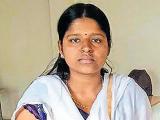
Crimes against women may be rising in the city, but Bengaluru’s first food delivery girl who juggles two jobs to make ends meet says she has nothing to fear.

At 23, Venda works as a home nurse in the morning and night and delivers food on her bike for five hours during the day. Not one to give up her passion, she is pursuing studies to become a history teacher.

“Things at home turned bad five years ago as the Rs 10,000 my father and mother earned was not sufficient. After marrying off my elder sister, they needed my support. I finished pre-university and decided to join my mother by becoming a home nurse,” she said.

Venda, who grew up with a love for biking, worked three years to buy her Honda Activa. She attached her vehicle to Rapido, an app-based bike taxi aggregator. She looked for more opportunities to work as her bike taxi did not get many hires.

A city-based food aggregator rejected her application. “They were worried about safety and said they ‘did not want to take risk’,” Venda said.

By the time she got a call from rival Jugnoo, a Chandigarh-based aggregator providing services ranging from last mile transportation to food delivery, Venda had travelled across the bylanes of Bengaluru searching for a job.

“Searching for jobs helped discover shortcuts in the city. I avoid traffic to save time for studies. I am pursuing BA to study history, Tamil and English. I want to become a history teacher,” Venda said.

Sabarish Nambiar, the Bengaluru operations manager of Jugnoo, said he came to know about Venda through her work in Rapido. “It’s been a month since we hired her and we have received a positive response from both the hotels and the customers,” he said.

“Women have entered all kinds of fields today. Why can’t I do more? (Former President) Abdul Kalam said dreams are those that keep you awake. It doesn’t matter how much work I do. I will reach my goal,” she said.

When asked about safety, Venda she has not faced risks as she works outdoors during the day. “I hope there will come a time when women can work anytime,” she added.

source: http://www.deccanherald.com / Deccan Herald / Home> City / by Chiranjeevi Kulkarni / DHNS – Bengaluru, February 11th, 2017

Here is a water crusader

WaterGardenBF07feb2017

Ayyappa Masagi has turned almost 26,000 hectares of dryland into wetland, rejuvenated thousands of ponds, lakes and borewells, and successfully executed rainwater harvesting projects for nearly 170 industries in and around Bengaluru. A look by M.A. Siraj

“India gets enough rains to fulfill its needs — domestic, agricultural, industrial, commercial — provided water conservation efforts are taken on a war footing. Even with the utmost efficiency, we can conserve only 40% of water the rains brings to us annually. Another 50% will inevitably run off into the water bodies to enable navigation, fishing, boating, religious rituals and all other activities conceivable with water.”

The statement inspires hope, given the reports of water scarcity from diverse areas. This comes from Ayyappa Masagi, who has come to be known as ‘Water Gandhi’ in villages skirting the Karnataka-Andhra Pradesh border. Masagi, an engineer by training, has turned almost 26,000 hectares of dryland into wetland, rejuvenated thousands of ponds, lakes and borewells and successfully executed rainwater harvesting projects for nearly 170 industries in and around Bengaluru.

For nearly 15 years, Masagi has been leading a crusade aimed at making India a ‘water-efficient nation’. According to him, if all the rainwater that pours over Bengaluru (i.e., 827 sq. km. BBMP area with 100 cm annual rainfall) could be collected for a year, it could be sufficient for meeting the needs of the city and its people for three years. “Suppose we raise a boundary wall over the entire municipal area and allow no water to run off or percolate, the water level would go up to one metre in the obtaining large well,” he visualises.

An unassuming man, Masagi says India is currently categorised under ‘water stressed’ countries with several areas being perpetually drought-prone. But the country has enough potential to emerge as a water-rich nation. “Currently 2 to 3% of rainwater percolates into the ground nationally. If we can harvest around 35% of the annual precipitation and reuse or recycle grey water from homes, we need not look for grandiose river-linking projects or billion-dollar irrigation schemes,” he claims.

Water sufficiency

Charity begins at home. And Masagi who worked for Larsen & Toubro for 26 years (he took VRS to realise his dream of making people ‘water-literate’), applied his ideas on his own 23 x 33 ft. house in Sahakarnagar in Amrutahalli suburbs of the city. The three-storeyed building that currently accommodates five families, survives on just a 68-feet borewell since 1986 when the house was constructed. Besides the borewell and harvested rainwater, he recycles grey water.

Recharging

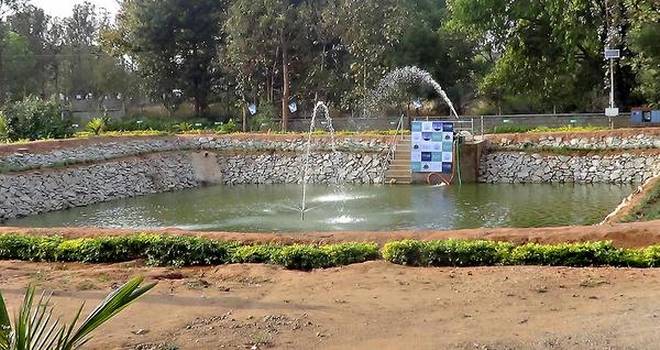
Masagi’s techniques involve collecting, pre-filtering and filtering rainwater underground to recharge the subsoil natural springs. He first supervises the land and constructs ponds and filtration wells in keeping with the gradient. The ponds are laid with stones, gravel and sand and if necessary polypropylene sheet underneath to stop percolation. In order to minimise waste, he advises drip irrigation through a maze of tubes that take the water to the roots of the plants. He dug 32 soak pits (10ft. x 10ft. x 10ft.) and constructed 11 infiltration wells in his four-acre farm in Holavanahalli (in Koratagere taluk) in Tumakuru district, 82 km north of Bengaluru. This arrangement allows him to conserve enough water to draw 80,000 litres of the precious liquid everyday throughout the year whereby nearly 7,000 trees are irrigated through drip network and sprinklers.

Masagi has honed his skills through practice and has perfected numbers. According to him 4,000 litres of water if collected over an acre (i.e., around 44,000 sq. ft. area) will fill it ankle-deep (i.e., 4 inches deep). So all that water he draws in a day can fill up a nearly two-acre farm with ankle-deep water.

Island of greenery

Move over 80 km east to another farm in Subbrayapet village in Hindupur taluk across the border from Karnataka. Masagi’s water conservation techniques have turned an 85-acre farm in the perennially drought-prone area into an island of greenery amid vast stretches of dry farms. The annual precipitation in the area which is part of Rayalaseema, is just around 35 cm. But four ponds and 10,000 pits dug by Masagi harvest nearly 18 to 20 crore litres of water annually. Masagi and his group of friends bought this land in 2014 which is located 40 km from Hindupur town. They are now raising 25,000 saplings into trees, of which 60% fall into the category of forestry (i.e., mahogany, Arjuna terminalia, rosewood, jamun etc) while the remaining are orchard trees. Looking at the massive effort at greening the drought-prone land, the Andhra Pradesh Government has offered him two solar-operated pumps of 5 horsepower. Besides the trees, the farm is being used for animal husbandry with dozens of cattle heads and sheep being reared on it. The ten labourers who work on the farm use a gobar gas plant for their cooking needs.

Own expertise

Ayyappa Masagi’s family hails from Nagaral village in Gadag district. He recalls his childhood days when his mother would rise at 3 a.m. to fetch a few pails of water from a well three km away. Raised in dire poverty, Masagi would see the roots of problem in lack of access to sustainable supplies of water and slowly grew aware of the ways to ensure stable supplies. His first appointment was at BEML in Bengaluru after he earned a diploma in mechanical engineering. Still later while working at Larsen & Toubro, he studied the problem closely and developed his own expertise to conserve, store and recycle water.

Water literacy

It was in 2003 that he plunged into water conservation headlong despite his family’s opposition. He formed the NGO Water Literacy Foundation in 2005 and took up programmes for educating farmers, industries and urban households. He has conducted 7,000 programmes in 13 States in 14 years. He was helped by the Deshpande Foundation in Hubballi to develop water resources in 18 villages. In 2009, he was conferred Jamnalal Bajaj National Award for Application of Science and Technology for Rural Development. He helped several developers (Sobha, Mangalya Suryodaya, Mahaveer Zephyr etc), IT companies (Wipro, Tata Elexi, Tyco Electronics etc), apartments and educational institutions in implementing rainwater harvesting techniques. He has been honoured with titles like ‘Indian Water Doctor’, ‘Water Gandhi’ and ‘Doctor of Barren Borewells’ by various organisations.

Masagi says the City today requires 130 crore litres of water a day but the BWSSB supplies just about 90 crore litres. The City could harvest 34 crore litres of rainwater falling on 42 km track of the Namma Metro itself.

(Masagi can be reached at waterliteracyfoundation@yahoo.com)

source: http://www.thehindu.com / The Hindu / Home> Life & Style> Homes and Gardens / February 03rd, 2017

‘An award places a greater responsibility on a winner’

Deputy Commissioner N. Jayaram presenting the Karnataka State Jeeva Rakshak Prashasti to Rajesh Gopalrao Khatavkar on the occasion of Republic Day celebrations in Belagavi.

“An award in recognition of social service or contribution to society is not an end in itself. Instead, it implies a greater responsibility on the part of the recipient,” said Karnataka State Jeeva Rakshak Prashati awardee Rajesh Gopalrao Khatavkar. Deputy Commissioner N. Jayaram had presented him with the award during the Republic Day celebrations in Belagavi.

A few months ago, two senior citizens were seriously injured in an accident on Fort Road in the city. They were hit by a reckless motorcycle rider. Mr. Khatavkar, who was passing by then, rushed them to the district government hospital and ensured that they received immediate medical help. He did not wait for the ambulance to arrive. The injured victims survived the accident, which could have been fatal.

What followed, however, were days of unexpected ordeal from the police, who kept calling him in connection with the accident. Finally, his name was recommended to the district administration for the award.

Mr. Khatavkar, an engineer and a social activist, is also the winner of the Godfrey Philips National Bravery Award. He was recently conferred with the CID Gallantary Award that carried a cash prize of ₹1 lakh, a gold medal and a memento. He has received several awards for his acts of bravery, including stopping a bank robbery a few years ago. These were conferred upon him by the President, the Prime Minister and Chief Ministers of Karnataka and Andhra Pradesh.

Speaking to a section of the media here on Tuesday, he appealed to citizens to play a proactive role instead of being mute spectators to various unexpected happenings, or looking at someone else to do or lead.

source: http://www.thehindu.com / The Hindu / Home> News> States> Karnataka / by Special Correspondent / Belagavi – February 01st, 2017

‘Guerillas’, ‘bombers’ march into Bengaluru

Corporate executives making seedballs using native seeds and cow dung

Bengaluru :

Students, corporates and NGOs have turned ‘bombers’ to save the city from becoming a concrete jungle. There is no cause for worry though, the ‘bombs’ aren’t explosives but mud balls that hold seeds.

If they come to pass any degraded land, they make a seedball and hurl it over the fencing or wall.
Some NGOs say that they have thrown over lakhs of seedballs in and around the city. Students and corporates say they have shot about thousands. The idea is to green the city once more.

One-foot Tall Forests
Uttishta Bharata, a Bengaluru-based NGO, took to seed-balling in 2015. In their first outing, the seedballs were scattered in the foothills of the Madhugiri mountains in Tumkuru. “The plants are now about one foot tall,” says Neeraj Kamath, co-ordinator with the NGO.

Citizens turn ‘bombers’ to save the city from becoming a concrete jungle
Citizens turn ‘bombers’ to save the city from
becoming a concrete jungle

The same NGO, last year, tossed 3.5 lakh seedballs with the help of school students. “Some primary school students and those in Classes 8 to 10 participated in the seedball fest last June and they thoroughly enjoyed it,” says Asha, school teacher of Agara School.

Children Are Best Recruits

Hundreds of seedballs were distributed that were tossed along a 5 km stretch of Kanakapura Road, says Asha. “Children are the best people to do this,” says Neeraj. “They are enthusiastic and love throwing these balls.”  The appeal lies in the simplicity of throwing the seedballs instead of the elaborate digging.
The seedballs are thrown in common land areas on the side of the streets or the land surrounding the lakes.

Terra Taala, a social enterprise and a subsidiary of Art Plantz, a plant incubating platform, also started seed-balling (or seed bombing, as it is also known) in 2015. They conduct workshops for students and corporates and usually prefer scattering the seeds in the outskirts of the city such as Tumakuru, Kolar and villages beyond Bengaluru.

‘Green Terrorists are a Must’

source: http://www.newindianexpress.com / The New Indian Express / Home> Cities> Bengaluru / by Regina Gurung / Express News Service / January 31st, 2017

A Good Samaritan

An award in recognition of some good social service or contribution to the society is not an end itself but puts up greater responsibility on individuals, says the Karnataka State ‘Jeeva Rakshak Prashasti’ winner Rajesh Gopalrao Khatavkar of Belagavi city.

A few months ago, two senior citizens were seriously injured in an accident on Fort Road in the city. They were hit by a motorbike rider from the rear. They fell down in a pool of blood oozing out from head injuries and injuries in other parts of their body. Mr. Khatavkar, who was passing by, immediately shifted them to the district government hospital and ensured quick medical help instead of calling and waiting for an ambulance to arrive. The injured victims survived the accident.

But, what followed was days of unexpected ordeal with the police often calling him in connection with the accident. Finally, his name was recommended to the district administration for the award, which was presented to him on the occasion of Republic Day by Deputy Commissioner N. Jayaram.

Speaking to a section of the media here on Tuesday, he appealed to citizens to play a proactive role instead of being mute spectators to various unexpected happenings, in order to save life and property.

source: http://www.thehindu.com / The Hindu / Home> News> States> Karnataka / by Special Correspondent / Belagavi – January 31st, 2017

Mysuru-Born Vikas Gowda chosen for Padma Shri Award

VikasGowdaBF28jan2017

New Delhi:

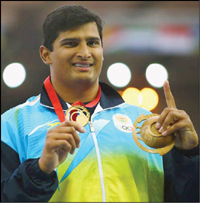
Olympian and Mysuru-born Vikas Gowda has been chosen for the prestigious Padma Shri award by the Government of India. The Government of India announced Padma Awards 2017 on Jan. 25.

Discus thrower Vikas represented India at four Olympics-2004 Athens, 2008 Beijing, 2012 London & 2016 Rio.

The athlete from Mysuru, based in the US, Vikas also made India proud by winning two consecutive gold medals at the Asian championships in Pune, Indian in 2013 and Wuhan, China in 2015.

He also won the gold medal at Glasgow Commonwealth games in 2014.

Vikas Gowda is the son of Shive Gowda, a former Mysore University athlete, who initially was based in Saraswathipuram, Mysuru and later on shifted to the US for better prospects.

PERSONAL BEST – OUTDOOR: Shot Put- 19.62 Atlanta, GA 13 May 2006; Shot Put (6kg)- 19.30 Kingston, JAM 16 July 2002; Discus Throw- 66.28 Norman, OK 12 April 2012; Discus Throw (1.750kg)- 56.93 Kingston, JAM 17 July 2002; PERSONAL BEST – INDOOR Shot Put- 19.60 Chapel Hill, NC 18 February 2005.

source: http://www.starofmysore.com / Star of Mysore / Home> Sports News / January 27th, 2017

Bengaluru woman braves Russia’s ‘highway of bones’

Daunting task: Nidhi Tiwari completed 5,080 km from Yakutsk to Magadan and back. | Photo Credit: Handout E Mail

Adventure lover flew to Yakutsk and drove East solo for 14 days along icy roads, to Magadan and back

Even for experienced drivers at home in extreme terrain, the route to the icy Russian village Oymyakon, dubbed the Pole of Cold, and Magadan beyond can be daunting. So when Nidhi Tiwari, an outdoor educator and a passionate driver from Bengaluru steered her Toyota Prado through –50° C temperatures, many Russian villagers were surprised.

The 36-year-old adventure lover and mother of two completed her 5,080 km solo expedition from Yakutsk to Magadan and back, through the coldest regions of Sakha Republic to become the first Indian to get there.

Ms. Tiwari, born in Dharwad and raised in Bengaluru, wears her badge for inter-continental expeditions proudly. “My drive from New Delhi to London in 2015 put me on the road for 97 days, covering 23,800 km across 17 countries,” she says. She zeroed in on Oymyakon in December 2016, as she wanted to see the coldest place on earth, and take the treacherous ‘Highway of Bones’ route from Yakutsk to Magadan, viewed by some as one of the world’s most dangerous roads.

The trip started with a flight to Yakutsk, followed by the drive for 14 days with a low temperature record of –59° at Ustnera near Sakha Republic. “I would drive for 14 hours a day on rough snow and ice. Even a minute’s exposure would freeze me with pain,” the explorer says.

During the trip, she had Skype conversations with 5,000 school children in India on what she saw.

With many geographical surprises popping up en route, adaptability was crucial. “The weather pierces the skin, and one has to deal with fatigue,” she says. What helped her was perfect four months of road-mapping and planning. Her SUV achieved an average of 12 km per litre.

Villagers surprised

As she covered the miles to Magadan, people could only stare in disbelief that someone from faraway India had made it to Oymyakon. “Shocked people offered free food and told me that I was crazy to be driving there,” says Ms. Tiwari who had to get used to just reindeer and horse meat with hot soup.

As the goal was reached, historian Vasielia Tamara Yagerovna of the Russian Geographic Society said on Facebook that the list of visitors from 47 countries to Oymyakon now had an Indian name, the first.

source: http://www.thehindu.com / The Hindu / Home> News> Cities> Bengaluru / by Ranjani Govind / Bengaluru – January 27th, 2017

C.V. Vishveshwara, the ‘black hole man of India’, is no more

VishveshvaraBF17jan2016

He was among the first to study “black holes” even before they had been so named so.

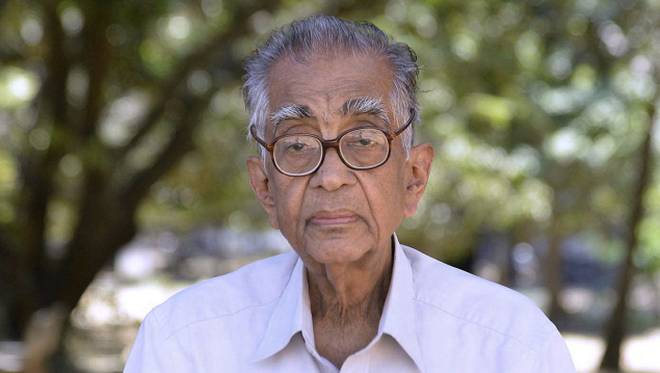
Professor C.V. Vishveshwara who did pioneering work on black holes, passed away in the night of January 16, in Bengaluru, after a period of illness. He was nearing 78 years. In the 1970s, while at University of Maryland, he was among the first to study “black holes” even before they had been so named. His calculations succeeded in giving a graphical form to the signal that would be emitted by two merging black holes – this was the waveform detected in 2015 by the LIGO collaboration, and contain the so-called “quasi normal modes” – a ringdown stage that sounds like a bell’s ringing sound that is fading out.

Known to all as ‘Vishu’, he was given to irrepressible, infectious humour and could hold the audience in fits of laughter when he spoke. In 2015, during a short talk he gave at a conference to commemorate the first detection of gravitational waves, at International Centre for Theoretical Sciences Bengaluru (ICTS), he jokingly said that he should now probably be known as Quasimodo (after having first discovered the quasi-normal modes).

Inspired by his father C. K. Venkata Ramayya who was a writer and Padmashri awardee, Prof. Vishveshwara took to composing cartoons, many of which have been published in physics conference proceedings. Spektrum der Wissenschaft, a German popular science magazine, had published many of his cartoons depicting Einstein.

“Though I have many wonderful memories of the 1979 Einstein symposium [held at Physical Research Laboratory, Ahmedabad] the most memorable one was Vishu’s lecture entitled ‘Black Holes for Bedtime’. To me it was a magical experience; an exotic cocktail of science, art, humour and caricature. Equations were not necessarily abstract and unspeakable but could as well be translated in the best literary tradition. Over the years Vishu’s cartoons in the ICGC proceedings were always awaited,” says Prof Bala Iyer a long-time collaborator of Vishveshwara, who is now at ICTS.

Prof. Vishveshwara was the founding director of the Jawaharlal Nehru Planetarium in Bengaluru. Important in his work there is the setting up of the REAP (Research Education Advancement Programme in Physical Sciences). This is a three-year programme that undergraduate students can enrol in, which would complement their college curriculum.

He has written several books to popularise his area of work that are widely read, one of which is ‘Einstein’s Enigma, or, Black Holes in My Bubble Bath’.

He is survived by his wife, Prof. Saraswathi, and two daughters Smitha and Namitha who are both scientists.

source: http://www.thehindu.com / The Hindu / Home> Sci-Tech> Science / by Shubashree Desikan / January 17th, 2017