Category Archives: Amazing Feats

City teen builds audio-based debating website

Bengaluru :

A 12th grader from the city has developed what is possibly the world’s only online audio-based debating platform. The website ‘Debate for Change’, developed by Siddharth Pandiya (16), a student of Greenwood High International School, allows members world-wide to engage in debates on either any of the given topic or a topic of their choice.

The website is functioning since mid-October, currently has 150 members and took Siddharth, a month-and-a-half to build. Members can choose a topic and their stand on it, upon which the website pairs that member with another member who has an opposite stand, and then the debate is conducted by a moderator.

A ranking system has been incorporated in the website, wherein the winner of a debate, decided by the moderator, gets 100 points and the loser 25 points for participation. Until now, Siddharth himself would moderate the debates but now has a team to assist him.

Speaking about what led him to the idea, Siddharth, himself an avid debater since middle school, said, “When I went for debates I only learnt by watching other debaters, I didn’t have any platform to learn. I also feel the overall quality of debating, on TV for example, has deteriorated a lot.

People don’t even care so much anymore, they go to debates because it’s cool, not because they actually like talking about issues. Hence I created this.”
The teen has plans to incorporate many other features into the website, including an option to have video debates .

“I wanted this to be accessible to people with a 2G connection and hence began with only audio input,” he says, and adds, “You can also watch debates that are currently going on with the ‘spectate’ option and you can join tournaments.” He also plans to combine the service with Facebook by next week. He himself has represented India at 14 UN conferences until now and has won awards at every single one, including being awarded the best delegate at Harvard.

source: http://www.newindianexpress.com / The New Indian Express / Home> Cities> Bengaluru / by Express News Servic e / December 06th, 2016

GIT student designs watch for Swiss firm

Belagavi  :

Parth Sabnis, an electrical and electronics engineering student of KLS Gogte Institute of Technology (GIT) who designed the smart PDG wat ch for Switzerland-based Luxius M’iWatch, will represent the brand at the annual GPHG Awards event at Geneva on November 10.

pdgwatchbf30oct2016
Parth Sabnis, 22, is thrilled by the appreciation he’s been getting.

“The company specialises in simple yet sophisticated designs. It was a challenging task as watch design was a new domain for me. I considered it an opportunity when I got the assignment,” Parth told TOI.

Parth, who is from Mumbai, said initially it was a challenge to identify the appropriate tool for the design. After some research, he decided to use Autodesk Maya software due to its sheer versatility. After dis cussions with several clients, he decided to go for a traditional design that incorporates modern technology. The objective was to offer something more than usual ensemble of high-end watches.

Smart PDG Watch features a digital face that would run on Android Wear OS along with a fully hand-crafted analog dial. Parth said the watch symbolises two things which never stop — time and news of the world. “I did not realise the magnitude of the project until I received the invitation to attend the awards function. It couldn’t have happened without the support of the college faculty. They allowed me to got Bengaluru to work on the project and resume classes later. The college authorities appreciated my effort,” he said.

The Smart PDG Watch is a hybrid watch with two interchangeable watch cases and two time zone dials. The first watch case contains a Swiss manual winding, mechanical tourbillon movement. The second case integrates a connected smart watch movement, with a digital dial face, with a notification screen streaming real-time world news at the bottom.

source: http://www.timesofindia.indiatimes.com / The Times of India / News Home> City News> Hubli / TNN / October 29th, 2016

150 patients undergo free angioplasty procedure at Jayadeva hospital

angioplastybf20oct2016

 Around 150 patients underwent free angioplasty and stenting procedures at the ongoing angioplasty workshop conducted by Jayadeva Institute of Cardiovascular Sciences and Research.

The institute, in collaboration with Dr Govindaraju Subramani Heart Foundation and Medtronic Vascular Division, Santarosa, USA, gave away stents worth Rs 1.25 crore free of cost to all patients including farmers, labourers, vendors, autorickshaw drivers, senior citizens from Karnataka, West Bengal, Andhra Pradesh and other states, since October 17, when the workshop began.

Professor and HoD of cardiology and director, Jayadeva Institute, Dr C N Manjunath said the youngest patient at the workshop was a 38-year-old agricultural labourer and the oldest was 83.

He said: “Heart ailments are no more a disease of the elite and elderly population, it also affects the younger age group, women and poor people.”

Pre-discharge counselling sessions were also arranged during the workshop for the patients where doctors gave them suggestions on diet and lifestyle practices to be adopted to reduce health risks.

Interviews rescheduled

The Jayadeva Institute of Cardiovascular Sciences and Research has said that the interviews to fill jobs reserved for the Hyderabad-Karnataka region that were postponed, will now be held on October 24 and 25.

source: http://www.deccanherald.com / Deccan Herald / Home> City / DHNS – Bengaluru, October 21st, 2016

Re 1 initiative helps the poor build dreams, brick by brick

The house of gardener Sampangi, which was built using the funds collected under the Rupee

Bengaluru:

For over 30 years, 44-year-old Sampangi and his wife and three daughters lived under a leaky roof which they called their home. “The roof would leak every time it rained and we’d have to shift clothes and electronic items to one corner of the house. The house would shake whenever there’s heavy wind,” the gardener recalled.

Today, Sampangi lives in a two-bedroom home with a garden and three dogs that he found abandoned on streets. His eldest daughter is now married, while his two younger daughters are school students. A photograph of Japanese volunteers from NGO Habitat for Humanity, who constructed the house, is displayed on top of the TV shelf, and his eyes light up whenever he sees the people who made this possible.

“As my children got older, my wife and I would talk about building a better home. We had even begun saving some money from the meagre amount we earned. But four years later, we were left with only about Rs 1 lakh,” he said.

Things changed for the better when he met a person from the Habitat for Humanity, through whom he learned about interest-free loan. The rest, is history.
Rupee for change

What can you do with Re 1 is a question that everyone asks. Apparently, you can build houses.

Habitat for Humanity has tied up with 20 schools in Bengaluru. Students, parents and teachers contribute Re 1 per day towards funds to construct houses for people from low-income group. In the past two years, the NGO has raised Rs 10 lakh which has gone into constructing 14 houses in Nagenhalli, Byrathi, Bagalur, Yerapanahalli and other parts of the city. Students, through the volunteer build programme, are also assisting in renovation activities.

India faces a shortage of about 6 crore housing units, said Rajan Samuel, managing director, Habitat for Humanity India.
12 lakh in need of houses

“In Karnataka alone, over 12 lakh people don’t have a decent home while 49% of the population does not have access to a toilet. The Centre has introduced policies like ‘Housing for All’ to provide adequate shelter to each and every family by 2022. The state government too has undertaken measures to provide affordable homes to the poor and to redevelop slums. About 70% per cent of the urban housing need is in the affordable segment and this is where Habitat for Humanity is working,” he said.

In Karnataka, the NGO is building 74 homes and 123 toilets for the low income, marginalized people, he added.

According to him, in most cases, women bear the brunt of lack of housing or toilets.
Learning experience for students

While lives of people like Sampangi or Kaliyamma, who recently moved into her newly constructed two-bedroom home are being transformed, student volunteers are learning as well.

“Recently, our students painted a government school as part of the volunteer build programme and they were surprised to see a blackboard. Most of them have seen white boards in classrooms, but never a blackboard on which chalk is used,” said Asha Samuel, faculty incharge of CAS at Canadian International School.

“These activities help them grow. They come back realizing that there are so many things that they take for granted and so many things they should be grateful for,” she said.

Poor women bear the brunt

Women and girls from the lower income families live in highly unsafe and substandard conditions without access to basic sanitation. Majority of them suffer from poor health since they do not have the liberty to relieve themselves when required and have to wait till dusk to go out and defecate. Owning a house with proper sanitation facilities is a deep desire of all poor women across the country. By providing access to decent housing and sanitation facilities, Habitat for Humanity India intends to improve health and provide security for the whole family

– Rajan Samuel, managing director, Habitat for Humanity India

source: http://www.timesofindia.indiatimes.com / The Times of India / News Home> City> Bangalore / Merlin Francis / TNN / July 31st, 2016

Book Talk : A. Kiran Subbaiah

City’s Multifaceted Sculptor
SculptorBF26jul2016

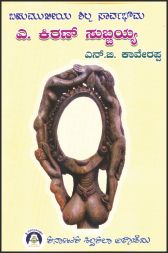
Title : Bahumukhiya Shilpi Sarvabhouma A. Kiran Subbaiah

Author : N.B. Kaverappa

Pages : 100 (including 20 pages of pictures)

Price : Rs. 100

Publisher : Ila Mudrana, Bengaluru

by Dr. Prakash Padakannaya

Recently I attended a book release function at Kalamandira where a Kannada book entitled ‘Bahumukheeya Shilpa Sarvabhowma A. Kiran Subbaiah’ was introduced and officially released in the presence of several artists, Academy officials, and art lovers of Mysuru. The book was authored and designed by N.B. Kaverappa, a well-known artist and founder of Bharani Art Gallery in the city. Karnataka Shilpakala Academy, Bengaluru, celebrating its 20th anniversary, is the publisher of this unique book.

I am not an expert on sculpture art but I was curious about the book and also the sculptor as I had heard many remarkable things about Kiran Subbaiah’s work from the author. After the function, I bought a copy of the book availing 50% discount offered on the book releasing day.

The book, though runs into only 71 pages, is very well designed with attractive cover page and several illustrative quality pictures without which the descriptions would have been incomplete. The editorial comments by L. Shivalingappa and preface by the author provide the necessary background for the book. The author, who knew A. Kiran Subbaiah personally for the past three decades, has been very successful in presenting the life and work of this extraordinarily talented sculptor and his magnificent sculpture in a lucid yet scholarly way.

The book has been divided into two parts. The first part, ‘inside the sculptor’s life’ deals with the life sketch of Mr. Kiran Subbaiah while the second part, ‘inner turmoil beneath the external looks of sculptures’ describes major works of the sculptor with illustrations. The first part narrates the innate aptitude that Mr. Subbaiha had from childhood for sculpturing; and his extraordinary and eventful yet dedicated saga of what he has accomplished in the field so far.

His passion for sculpturing was ignited when he visited Beluru-Halebidu temples during his college days. His prodigious skill was exemplified by the fact that he could master the entire syllabus of five year diploma course in sculpture at Chamarajendra Technical Institute, Mysuru, in just one year. It is irony that such a prodigy was forced to leave the Institute after three years of basic training (he was not allowed to go for advanced course by his supervisor though the same teacher in later years pleaded him to apply for the lecturer’s vacancy, which Mr. Subbaiah turned down). Such incidents also testify how creativity and dedication triumph over all odds.

Mr. Subbaiah’s perseverance and diligent experimentation in sculpturing with all kinds of stones made him probably one of the greatest contemporary sculptors of our land. Hailing from Kodagu, today he owns a museum of sculpture ‘Shilpanikethan’ in Mysuru, which houses hundreds of wonderful stone sculptures carved by him.

The author makes a sincere attempt at highlighting the sculptures sculpted by Mr. Subbaiah, in terms of both breadth and depth of sculptor’s creativity, in the second part of the book.

The illustrations of his work presented in the book demonstrate that Mr. Subbaiah is as proficient with traditional style as with contemporary and modern style. Normally a sculpture has only a front view. But Mr. Subbaiha has mastered the art of carving multifaceted or many-sided sculptures using a single stone (the same piece may depict one image when seen from front and a different image when seen from sides or back). It is like four different sculptors carving four different sculptures on four sides of a stone! This is an astounding feat by any standard!

Mr. Kaverappa describes the way Mr. Subbaiah goes about creating these multisided sculptures. It seems when Mr. Subbaiah has a piece of stone in front of him ideas keep running and he visualises them in his mind first. Then he makes a rough sketch directly on the stone and begins carving. When he has multiple ideas and icons in his mind’s eye, he first whittles all of them coarsely on the stone. Then, he starts the fine work simultaneously on all of them till they attain their proper shapes. Again, at the end he would start fine finishing work concentrating on one of them at a time.

The book also gives an account of a master piece in making, the most wonderful work of art by Mr. Subbaiah, the stone sculpture of ‘Lord Adishesha’ displaying 135 hoods with a special pedestal. When completed, this pedestal will also depict 45 snake Gods with different poses carved on it. Presently, Adishesha deity at Pashupathinatha temple in Nepal holds the world record with 108 hoods. Adishesha that Mr. Subbaiah is making with 135 hoods a height of 4 feet and 3 inches without the base (5 feet and 1.5 inches with the base) shall get that name and fame. Shree Yanthra, Om Yanthra, and Gayathri Manthra have been engraved on the back side of this unique statue. This statue carving took three years till now. It seems another 6-8 months’ hard work is required to finish the intricate carving of the main statue and the pedestal. According to Mr. Subbaiah, once he starts this arduous task, he has to devout at least 8-10 hours per day for this work for several months!

The author of the book has sprinkled some of his own observations on the work of Mr. Subbaiah throughout the book. One of them is related to the artists who have influenced Mr. Subbaiah. Kaverappa has mentioned the influence of Henry Moore, one of the greatest modern sculptors of 20th century, in Mr. Subbaiah’s creations. He has also rightly observed that five-sided sculptures (five in one) are not viable as a visual treat as it actually disturbs the composition of the sculpture as a whole. One cannot miss ubiquitous presence of ‘shringar rasa’ (flavour of erotic/ romantic love) in most of the contemporary sculptures of Mr. Subbaiah.

Editor of the book, L. Shivalingappa, in his foreword comments that depiction of shringar rasa theme in Mr. Subbaiah’s sculptures is a lot more powerful than words can explain. Mr. Subbaiah himself acknowledges that ‘…the female nude form…from time immemorial… has caught the fancy, imagination, liking and admiration of a vast majority of mankind, artists, sculptors and writers’ (page 19). Mr. Subbaiah is no exception!

The book gives us a list of multisided sculptures done by the sculptor since the year 2008, list of recognitions conferred, and a list of glossary along with the direct contact address of the sculptor at the end for the benefit of readers and art lovers. Some of the colour reproductions of original work are also excellent.

When I finished reading the book, I felt that there is a genius sculptor, probably one of the best in the country, living amongst us in ‘namma Mysuru’ without getting due recognition (may be it does not matter to Mr. Subbaiah). I do hope that this book will help people of Karnataka to know and feel proud of the genius sculptor in Appaneravanda Kiran Subbaiah. Both Karnataka Shilpakala Academy and N.B. Kaverappa should be commended for their great service to the art and culture of Karnataka by introducing this master sculptor and his works to the public. It is a must read book to all those interested in sculpture art.

About the author of the book

Author of this book, Nellamakkada B. Kaverappa (in pic.) is an eminent senior artist of Kodagu living in Mysuru. He is well-known as the founder of Bharani Art Gallery, the first private art gallery in the city that he established in 1994 with a noble purpose of promoting visual art. Artists who like to exhibit their work are given the gallery for free of rent and also an independent guest room to stay (also free) for the duration of the expo. Artists from neighbouring States as well as other countries such as Australia and Finland have exhibited their paintings in Bharani Art Gallery.

Mr. Kaverappa has immense interest and actively involved in creative visual art (multihued) and literature. As an artist, he has been part of many Karnataka Kala Melas. He exhibited his ‘Creation’ series of oil paintings at Ahmedabad, Gujarat and ‘Dance of Kodavas’ at India International Centre, New Delhi. He has been honoured by Karnataka Kodava Sahitya Academy (in art field), Kodava Samaja Bangalore and Kodava Samaja, Mysuru. His oil portrait of legendary ‘Haradas Appacha Kavi’ is the most authentic one and is displayed at Kodava Samaja Bangalore as a gift. He is also a frequent writer in Kannada and Kodava periodicals. He has translated two books for Karnataka Lalithakala Academy.

source: http://www.starofmysore.com / Star of Mysore / Home> Feature Articles / July 20th, 2016

Hack built to help visually impaired catch a bus

About 20 volunteers turned up at the hackathon on Sunday

Bengaluru :

An app that would help the visually impaired catch buses on their own was the highlight of a hackathon held in the city this weekend.

This was one of three hacks that 20 members of Random Hacks of Kindness (RoHK), a Bengaluru-based community, started working on Saturday. The team designing it hopes to help the visually impaired find bus stops, and identify buses that take them to their destination.

“Google Maps is only accurate up to 100 metres,” says 22-year-old engineer Yashaswi Bharadwaj, who is part of the team. “We are working on a code to help them find the exact location using a Bluetooth beacon. It should also have a text-to-voice and voice-to-text interface.”

The hack that he and his teammates come up with can be integrated with an existing source code. “We will also need data about the number of buses to a particular destination, the route numbers, and their expected time of arrival,” he said.

The second phase of the project would involve working on an image recognition system to inform users of the arrival of buses at their destination.

The theme of this edition of the hackathon — perhaps the 14th in the city and 20th in the country, according to RoHK managing trustee Chinmayi S K — was disability.

While the community gets together twice a year for two-day hackathons to work on tech-based solutions to various civic problems — including disaster management and gender-related issues — accessibility and disability have been recurring themes.

“Muthuraj, who works with the NGO Enable India, is here for most of our events,” says Chinmayi. “And we often partner with the organisation that works towards empowering the disabled.”

Yashaswi’s team is counting on the NGO’s cooperation to take the bus stop project forward. “We can’t integrate our hack with the BMTC app because we don’t have their source code,” he says. “But if Enable pitches it as one of their projects, the data will be made available.”

source: http://www.newindianexpress.com / The New Indian Express / Home> Cities> Bengaluru / by Express News Service / June 20th, 2016

Bengaluru among top 5 global locations for innovation centres

India has been named among the top five global locations for innovation centres, with Bengaluru emerging as the most favourite destination within the country having four such facilities.

BengaluruBF02jun2016
According to a Capgemini report titled Digital Dynasties: The Rise of Innovation Empires Worldwide, India is becoming a new innovation destination of choice, doubling the number of innovation centres since July 2015 and seeing brands such as Apple, Airbus and Visa locate there.

Silicon Valley, London and Paris, were named as the top three locations for innovation centres, followed by Singapore and Bengaluru in the fourth and fifth place, respectively.

“India has been rising in the ranks of favorite destinations to open innovation centres. Our previous research identified eight innovation centres in India in July 2015. India has since seen eight more innovation centers open their doors,” the report said.

Bengaluru has been the most favoured city with four new innovation centres. Bengaluru is home to several billion- dollar Indian startups such as: Flipkart, InMobi and Mu Sigma, and attracts world-class technology talent and investments.

Among the new innovation centres opened in Bengaluru are: Airbus’ BizLab, which intends to bring together startups and Airbus’ internal entrepreneurs; and Visa, whose new technology center will house 1,000 developers accelerating development of next generation payment solutions.

“Global firms are showing interest in other Indian cities as well,” the report said adding that TriMas Corporation – a diversified global manufacturer of engineered and applied products – opened an innovation centre in Delhi to focus on driving innovation across its range of packaging solutions, while Puratos, a leading global food ingredient company, launched an innovation centre in Mumbai.

The report noted that though Silicon Valley still remains the hub of the world’s most dominant innovation “empire”, the innovation centre phenomenon has continued to spread globally, a number of new ’empires’ have emerged.

“Over the last year, we witnessed the rapid rise of Asia as a destination for innovation centres. Compared to our previous research, Asia has seen a 29 per cent rise in the number of innovation centres being launched,” the report said.

source: http://www.deccanherald.com / Deccan Herald / Home> You may also like / PTI / New Delhi – June 02nd, 2016

Chandrayaan-2, Aditya are the projects on focus : ISRO Chief

KiranKumarBF24may2016

Born in Hassan, Aluru Seelin Kiran Kumar, well-known as A.S. Kiran Kumar, is a renowned Indian space scientist and Chairman of Indian Space Research Organisation (ISRO). He has held several techno-managerial positions at ISRO since 1975. In his capacity as Associate Director and subsequently as Director of Space Applications Centre, Ahmedabad, he steered the design and development of microwave, communication, navigation payloads and their application activities.

In recognition of his contributions, he was conferred with Padma Shri award by the President of India in 2014. ISRO’s Individual Service Award in 2006 and Performance Excellence Award in 2008 Bhaskara Award of Indian Society of Remote Sensing in 2007 to name a few. Star of Mysore (SOM) caught up with A.S. Kiran Kumar for a brief interview during his recent visit to Vidyavardhaka College of Engineering in city. Excerpts:

SOM: Can you tell us about recent achievements of ISRO?

Kiran Kumar: I am really pleased to say that country’s prestigious organisation ISRO has been very active in contributing memorable and laudable achievements for the societal needs. The two great achievements are successive launching of Chandrayaan-1 and Mars Orbiter Mission (MOM). In addition to these accomplishments, I wish to strongly mention that ISRO has been responsible for the development of three-tier imaging system for many satellites, ocean colour instruments by using push broom technology, high resolution stereo imaging system for Cartosat-1, sub-meter resolution optical imaging sensors and meteorological payload channels. India is expected to move ahead of other nations to become a premier nation in the world in all spheres. For this to happen, people should acquire knowledge and harness skills for the societal benefit.

SOM: How do you think satellites and space technology will benefit the common man?

Kiran Kumar: There are nearly 35 satellites providing communication, navigation and information to the planet Earth. Today, we are in a position to generate digital television model for India, where information is very resourceful for various application. This is helping in planning infrastructure and providing information on tunnels and railway tracks for effective construction. The State and Central Governments are also making use of space technology for planning and monitoring activities. In future, technology will help the farming community for agricultural purpose.

Space technology has been benefiting the fisherman and saving Rs. 15,000 crore approximately for the government annually. Additionally, technology is saving precious lives by predicting cyclones and other natural calamities. We must emphasise on adopting technology based on innovations and discover solutions for the specific problems with ease.

SOM: There has been a misconception that studying engineering is better or preferable compared to basic sciences. What is your opinion or suggestion on this?

Kiran Kumar: It is shocking to hear such things. I believe that the misconception is mainly in parents or adults which has to be completely erased and to do that there is a need for creating awareness on the significance of pure or basic science authoritatively.

Without the comprehension of elementary sciences — Mathematics, Physics, Chemistry and others — the learning process for a student will be incomplete and he/she will never understand the technological aspects or its advancements.

SOM: Sir, can you tell about the future projects or plans of ISRO?

Kiran Kumar: ISRO has been extremely active and ambitious from four decades. With the able guidance of Dr. Vikram A. Sarabhai, Dr. Homi J. Bhabha, Dr. A.P.J. Abdul Kalam and Dr. Satish Dhawan, this organisation has accomplished many achievements.

I believe that, the next year or by 2018, Chandrayaan-2 may be launched. Chandrayaan-1 and MOM have been successful and been sending very good information to the earth station. Astrosat has been functioning effectively. We have been keenly working for the design and development of Aditya, an ambitious venture for Sun during 2018 or 2019.

[This interview was done by Prof. S.A. Mohan Krishna, amateur Astronomer and Associate Professor, Vidyavardhaka College of Engineering, Mysuru, on behalf of Star of Mysore]

source: http://www.starofmysore.com / Star of Mysore / Home> General News / May 18th, 2016

Bengaluru’s other Murthy is a master at handling big data

ArunMurthyBF06may2016

Bengaluru :

Meet the other Murthy from Jayanagar in Bengaluru -Arun Murthy. No relation of N R Narayana Murthy, also a Jayanagar resident. But the 35-year-old’s life, in some ways, is moving along the same extraordinary lines of the Infosys doyen.
Arun Murthy is one of the founders of one of today’s hottest Silicon Valley startups – Hortonworks. Yes, named after the elephant in Dr Seuss’ ‘Horton hears a who!’ The company, founded in 2011, has become the fastest ever software venture to touch $100 million in revenue – in just 4 years. Salesforce did it in 5, Palo Alto Networks and Workday in 6, Informatica in 7 and Splunk in 8, according to Barclays Research.

In 2014, when it went for an IPO, it touched a billion dollars in valuation. The valuation has dropped since then, but recent revenue numbers are again pushing the share price sharply up.

Murthy’s one of the tech brains behind Hortonworks. He started coding when he was just 10. From an early age he was fascinated by Go – the 2,500-year-old game that’s exponentially more complex than chess; in March, a computer system, built by Google, for the first time beat a Go grandmaster. Murthy would play this abstract strategy board game for hours on end.

He also had an entrepreneurial streak in him. When he was still in school, he read an article on Michael Dell in Readers’ Digest. He was inspired by that to assemble and sell computers. “I would go to Avenue Road (the hub for electronic items) and buy computer parts, assemble them and sell them to friends. By the time I was 16-17, I was making more money than my parents combined. I would also develop websites for doctors and lawyers,” Murthy told TOI on a visit last week to Bengaluru, where his mother still resides. Murthy went on to do engineering at RV College of Engineering, one of Bengaluru’s best private engineering colleges, and, on graduation, joined Yahoo’s R&D centre in the city. He was part of the small team at Yahoo that was then beginning to develop Hadoop, the open source software framework used to store and process vast quantities of data and which has become all the rage in enterprises today given the avalanche of data they have to deal with.

While working on Hadoop, Murthy and his colleague Owen O’Malley took on the Sort Benchmark challenge of sorting 100 terabytes (TB) of data in a particular order. The first attempt set a new record and when someone else beat that record, they did it again in 2009 and that record stood for several years. The Sort Benchmark home page records Murthy and Owen’s accomplishment at 0.578 TB per minute. “It’s the most amount of fun I have had in my career,” said Murthy.

In 2011, Murthy and seven others, most of them from Yahoo’s Hadoop team – five of them Indians – came together to found Hortonworks, a venture to further develop Hadoop and support it for clients who adopt it. They thought of `Horton’ because Ha doop bore the logo of an elephant. They convinced Yahoo co-founder Jerry Yang that it may be the best way forward for them, and Yang was excited enough to get Yahoo to participate in the initial investment in Hortonworks.

Among the other Indian founders, Suresh Srinivas was also in Bengaluru and had studied at NIT Karnataka. Devaraj Das studied at BITS Pilani and IISc Bengaluru, Mahadev Konar graduated from IIT Bombay. Sanjay Radia, who grew up in Uganda and Canada, is the oldest among them, having held senior positions at Sun Microsystems before moving to Yahoo to be an architect of a Hadoop project.

In 2014, the year Hortonworks went for its IPO, Fortune Magazine ranked Murthy among its 20 Big Data All Stars – “20 extraordinary people who we think are the best at connecting the dots, digging deep, and discovering the information that will transform the way businesses operate.”

Fortune noted Murthy at Yahoo had helped develop a sort of OS for Hadoop, called YARN, that lets users plug many applications into the system to store all sorts of data. “I have two kids at home.YARN is sort of my third,” Murthy told the magazine.

He is also a Murthy and has a lot in common with legend NR Narayana Murthy: Tech entrepre neurial streak, a house in Jayana gar, and looking into the future.

Arun Murthy, 35, is a product of RV Engineering College and a big-data star, write Shilpa Phadnis and Sujit John. He is a cofounder of Hortonworks, one of Silicon Valley’s hottest startups which was the first to clock $100 million in revenue in just four years. In 2014 when the company went for an IPO, it touched a billion dollars in valuation.

source: http://www.timesofindia.indiatimes.com / The Times of India / News Home> City> Bangalore / Sujit John & Shilpa Phadnis / TNN / May 06th, 2016

KMC alumnus has a street named after him in Mississippi

Manipal :

Dr Sampat Shivangi, a 1962 batch alumnus of Kasturba Medical College (KMC), Manipal is in the news once again as a street in the US state of Mississippi has been named after him for the services rendered to local community there. The Dr Sampat Shivangi Lane was formally named on Saturday in recognition of Shivangi, eminent Republican from the state. Dr Shivangi conveyed news of street being named after him Dr M Ramdas Pai, Chancellor, Manipal University.

Dr Ramdas Pai as per a communique shared by Manipal University on Monday, in reply wrote: “I am glad to have your e-mail of 24th instant and to know that a street in Mississippi has been named after you. It is indeed a great recognition of your services to the community. My congratulations to you.” Dr Pai said, “It is indeed a joyous moment for Manipal University. All of Manipal (University) is proud of the great work Dr Shivangi is doing in the US”

Phil Bryant, state governor reappointed him for second sever-year term to board of Mississippi’s department of Mental Health. In June 2014, he became first Asian-American to become chairman of the Board which has close to a billion dollar budget with staff strength of over 8500. From 2005-2008, Dr Shivangi served as adviser to US secretary of health and human services. He is the founding president of American Association of Physicians of Indian origin in Mississippi.

He is also the past president and chair of the India Association of Mississippi.

source: http://www.timesofindia.indiatimes.com / The Times of India / News Home> City> Mangalore / by Jaideep Shenoy / TNN / April 25th, 2016