Category Archives: Amazing Feats

Israeli tech whets once-barren farm

Dry farming techniques gave a new twist to organic farming on this land
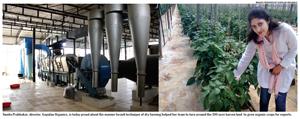
Sunita Prabhakar, director, Gopalan Organics, is today proud about the manner Israeli technique of dry farming helped her team to turn around the 100-acre barren land to grow organic crops for exports

Away from the hustle and bustle of Bangalore city areas, in Uttari and surrounding villages, falling under Kagalipura post, a silent socio-agronomics revolution, inspired and propelled by Israeli farming techniques, is slowly gaining momentum. Spearheading the campaign from a 100-acre organic farm is one young entrepreneur, a graduate in environmental science and in her 30s, determined to make organic a mass movement.

Every morning before the crack of dawn a vehicle leaves the organic farm and reaches out to the adjacent villages to pick up enterprising men and women for training in production of organically grown vegetables and high-value export quality herbs like basil, chives, sage, tarragon, rosemary, parsley, thyme, mint etc. at the sprawling organic farm located in the foothills of the nearby Uttari Hills.

“After training in organic farming, many of them have begun growing organic vegetables. We purchase their produce after ascertaining their quality. Some of these organic vegetables are sold at our Gopalan Organics outlet at Old Madras Road in Bangalore. A portion of the produce makes it to the export markets in Dubai and European markets after stringent quality checks”, says Sunita Prabhakar, the brain behind the grassroots organic farming movement. “My mission is to remove the elitist tag off organic vegetables and make them available to common households at affordable rates. After all everyone is entitled to organically grown, healthy, chemical fertilizer and pesticides free farm produce,” explains Director of Gopalan Organics, Sunita Prabhakar, who started her organic unit in 2003, in what was then a barren land, bought by her real estate developer husband’s family in Bangalore heading the ‘Gopalan Enterprises’.

However, although today the organic vegetables and culinary herbs company exports dry, natural herbs and fresh vegetables to a large number of markets in Western Europe and Dubai respectively and employs over 200 workforce including farmers, agronomists and agricultural scientists, 10 years ago when Sunita threw the idea of starting her organic venture on the rocky, godforsaken land, many did not take her seriously.

She had seen for herself how Israelis mastered the art of dry agriculture with minimal use of water. She was determined to bring the technology to India.

The conviction and determination paid off.

In the summer of 2000 a group of Israeli dry farming experts from Netafim Irrigation System landed at the barren, undulated rocky piece of land.

They examined the prospect of turning it into fertile land for growing organically produced vegetables, herbs and fruits. A mammoth and uphill task awaited them as for the next six months they devoted their time in preparing, planning and executing the organic farm project.

It took another year for the first crop to grow at the newly developed farm.

Alongside Israeli advanced farm management expertise in water conserving irrigation, desalination, and compost enriching the farm, Sunita also adopted biodynamic farming methods pioneered by Australian thinker Rudolf Steiner to grow crops both inside temperature-control green houses and in the open fields, applying scientific soil testing methods for optimum yield per acre.

A network of drip irrigation pipes and sprinklers were laid both inside the green houses and in the open farm land.

The farm land was bifurcated for growing crops under controlled climatic conditions inside the green-houses, and tunnels in the open. “Those days very few people were doing organic farming. There was hardly any infrastructural or technical support available in the country to do dry organic farming. The greatest challenge was to export the basic infrastructure from Israel and then transport them to this remote village from Bangalore Airport. But we managed it all,” says Sunita.

The organic farm today produces 800 to 900 Metric Tonnes of vegetables and fresh and dry culinary herbs under the brand name of ‘Naturale’.

“Of the total volume, we exports 300 to 400 MT of mainly fresh and dry herbs to Germany, Amsterdam, Vienna, Munich, Frankfurt, Belgium, etc. places. To ensure strict adherence to European quality control norms, the vegetables and fresh herbs undergo tests at all levels- from farmland to packaging table-at the analytical lab.

Scientific soil analysis and preparation, soil-enriching using organic manure, plant analysis, bio-degradable poly packaging, processing and storing to retain temperature levels are undertaken,” says K Babu, the agricultural scientist at the farm. Babu further said for the protection of crop bio agents and other Integrated Pest Management (IPM) practices were being followed as against indiscriminate use of harmful chemical pesticides. Each consignment can also be tracked back right down to the date and green house in which it was grown.

Sunita explains: “To ensure freshness of the produce till they are handed over to customers in Germany and other European countries an uninterrupted cold chain from farm to the customer is maintained. The produce is subjected to pre-cooling treatment that increases the shelf life and reduces break down of the nutrients. The air-conditioned pack houses are equipped with all necessary equipment and facilities in consonance with international standards.”

Sunita, who has visited organic farms in Europe, feels the government must support adoption of automation and IT to streamline and modernise organic farming.

​DRY FARMING

It is a type of farming practised in arid areas without irrigation or with drip irrigation and maintaining a fine surface tilth or mulch that protects the natural moisture of the soil from evaporation. Dryland farming involves quite a struggle to set the crop cycle going.

HOW AND WHERE IT ORIGINATED

Dry farming originated in the 19th century in the Great Plains of USA to accelerate production of certain crops, most notably wheat. It should be practised in areas where rainfall averages less than twenty inches a year. Hardy Webster Campbell, a South Dakota homesteader, invented a subsoil packer circa 1890 and thereafter operated demonstration farms for railroads. By the end of the century dry farming was championed as the solution to the agricultural problems of the Great Plains.
(Source: Encyclopaedia of Oklahama History and Culture)

source: http://www.bangaloremirror.com / Bangalore Mirror / Home> Others> Sci-Tech / Agencies / by Dipankar Chakraborty / October 29th, 2014
Many facets of a child prodigy

We have all heard and known that if kids are encouraged towards doing a certain thing, they will go on to learn and implement the same to the best of their abilities. And a few kids are lucky enough to even get encouraged extensively towards achieving great goals in life.

NihalBF30oct2014

One such fortunate child is 9-year-old P.N. Nihal, whose parents are ready to go to any extent towards encouraging their multifaceted son for the little one turns to be an achiever in everything that he tried his hands on. At nine, the kid is already a karate champion, a melodious singer, dancer and a good artist as well.

The kid has already won quite a few State-level awards for different categories given away by various organisations in recognition of his talent. A few of them include awards like the Balashree award given away by the Mysore Sahitya Mattu Samskrutika Pratisthana; Kalachitra award by Bharatiya Lalithakala Academy, Bangalore; Kannadashree award given by Sirigannada Vedike, Mysore; Mysoru Ratna by Sneha Sinchana, Mysore and Ganashree given away by Gana Mandara Trust, Bangalore. He has also taken part in several drawing, colouring and handwriting competitions for which he has been awarded with the first place constantly.

What’s more, while the prodigy was selected to present a 14-minute talk on Akashavani even when he was just a LKG student. Academically too, Nihal is a bright student. He has also won gold ranking in the International Mathematics Olympiad and National Science Olympiad for the year 2014.

A student of Rainbow Public School in city, he receives good encouragement at his school as well, says his mother Rashmi. “While we encourage him towards doing things of his interest, his school staff is equally encouraging too. They encourage him to partake in various contests and events, which is of great help for us,” she says.

And having seen him show so much interest in all these extracurricular activities winning numerous prizes and awards, parents Naveen Kumar and Rashmi have made the child’s goal their own goals too.

Says the proud mother: “It feels wonderful to see him having turned out be such an achiever at such a young age. In a month or so, he will soon be getting awarded with the black belt in Karate which he is learning from trainer K.P. Johnson at the Okinawa Shorin Ryu Shori-Kan Karate-Do and Kobudo Association. He was awarded 6 belts in just 1.4 years of time which is an achievement in itself. Hence, seeing his enthusiasm, I have made his aims my goal for life. I never go anywhere and not even to family functions several times, just to stay by his side and support him in achieving whatever he wants to. As he is an achiever in many areas, he still not too sure what exactly he aims to be but whatever he wishes to do, we will be by his side. Be it academics, cultural or sports, we will let him make it big in the field he chooses.” —AN

source: http://www.starofmysore.com / Star of Mysore / Home> Feature Articles  / Saturday ,  October 25th, 2014

Compensation to Martyrs to be hiked from Rs.5 lakh to Rs.30 lakh: CM

CM Siddharamaiah taking salute at the Martyrs’ Day parade at CAR Grounds in Bangalore as Home Minister K.J. George and others look on.

Bangalore :

Chief Minister Siddharamaiah announced that compensation to Police personnel, who attain martyrdom while fighting terrorists and naxals would be raised from Rs. 5 lakh to Rs. 30 lakh besides announcing that compensation to those being rendered physically unfit during operation from Rs. 1 lakh to Rs. 10 lakh.

Speaking after paying homage to Martyrs at CAR Grounds in city on the occasion of Martyr’s Day, the Chief Minister said that compensation to those injured during anti-terrorist and anti-naxal operation will be hiked from Rs. 20,000 to Rs. 2 lakh.

Continuing, Siddharamaiah said that Group Insurance Scheme, which hitherto had been limited for constables and Head Constables, will be extended to ASIs and SIs with the Insurance amount raised from Rs. 10 lakh to Rs. 20 lakh and added that the new proposal will benefit 83,939 Police personnel as it is found that many personnel are facing health problems like Blood Pressure and kidney related ailments.

Police Public Schools: Stating that Police Public Schools have been set up at places like Bangalore, Mysore and Hubli, the CM added that Police Public Schools would be set up at Davanagere, Bellary, Gulbarga and Udupi at an estimated cost of Rs. 15 lakh each.

He also said that Police quarters were being built for 11,000 Police personnel and 740 officers at a cost of Rs. 1818 crore and assured personnel taking part in anti-naxal and anti-terrorist operations, ultra modern arms, vehicles and necessary back up staff will be provided to them.

Siddharamaiah also disclosed that out of 659 personnel who laid down their lives protecting the country, 10 were from the State of Karnataka.

source: http://www.starofmysore.com / Star of Mysore / Home> General News  / Wednesday ,  October 22nd, 2014

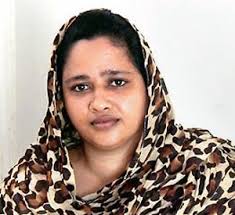
A Muslim, she looks after 14 Hindu HIV positive kids

TabassumMPOs15oct2014

by:Deepthi Sanjiv

​Tabassum faced tough opposition from family and society when she decided to work with the children

Breaking the HIV taboo is a challenging task. The moment a case is diagnosed, some families choose to distance themselves from the victims. About ten years ago, when a close friend of Tabassum died just two days after the doctors told her that she was suffering from HIV, Tabassum saw that none of her friend’s family even wanted to touch her. At this point, Tabassum was left alone to perform her last rites. That was when she decided to dedicate her life for the sake of HIV positive children. Until then, her job with an NGO was nothing more than a source of income.
Speaking to Bangalore Mirror, Tabassum said, “For the past 14 years, I have been working for HIV positive children and pregnant women. My outlook changed after this incident.” Recollecting her past, she said, “I hail from a very poor family. I secured a distinction in SSLC and wanted to study further, but my family could not afford to support my studies. I somehow managed to go up to PUC, but by then, my family got me married. After marriage, I did not want to stay at home and went on to do my degree, after which I took up a job with an NGO for the sake of a living. It is never easy for a Muslim woman to come forward and work, specially with an NGO where you deal all kinds of people. I somehow fought opposition from family and went ahead. I continue to work at the NGO even today, and at the same time since I enjoy working with kids, I took it up as a challenge and went ahead to set up my own protection care centre called ‘Snehadeep’ about two years ago,” she said.
“Strangely, I received lot of opposition; some even said it was not right for a Muslim lady to take up this responsibility. I can proudly say that at Snehadeep, I look after 14 girls in the 7-12 years age group and all of them are Hindus. There is no religion once these children fall sick. Often, their families prefers to distance themselves from the children. More than their physical health, these children suffer from psychological pain or want of company. The bigger children scan through newspapers everyday looking for any new medicine that can cure them. They know that they will die soon. At times, convincing them to study is also difficult. When these kids are at their last stage and are shifted to the hospital, nobody from their family wants to associate with the child. Often, they are left to die alone. I try my best to be there with them during their last stage though it is very painful and perform their last rites in the best way I can. With every death, I only pray and hope that this is last child dying before me. The initial days were a struggle. I used to go door-to-door on a Sunday asking people for help. Even a packet of biscuits for kids would make a difference. Getting funds for food is always a big task,” she said.
For Tabassum, spending time with the kids provides peace of mind. “Recently, I was very happy when a child received 92 percent in PUC. ”

source: http://www.bangaloremirror.com / Bangalore Mirror / Home> Bangalore> Others / by Deepthi Sanjiv / Bangalore Mirror Bureau / October 15th, 2014

Mangalore’s KMC hospital enters Asia Book of records

Mangalore :

KMC Hospital Mangalore, part of Manipal Health Enterprises, created history on Sunday by entering the ‘Asia Book of Records’ after completing the Asia’s largest Human Heart Beat Simulation. The sound of being alive resonated like an echo when over 2,000 emulated the sound of heart beat to signify ‘World Heart Day’.

“The team tapped their thighs 72 times per minute, creating the sound of a healthy heartbeat-‘Lub dub’ for five minutes in the simulation process and have created a mark by entering the Asia Book of Records. I would like to congratulate each and every one who was involved in creating this world record” said adjudicator Sunita Dhote, who judged KMC on behalf of Asia Book of Records.

After creating the record, as per the tradition, KMC Hospital conducted the Heart Day Run for the 10th consecutive year in partnership with Event Partner MRPL. Athlete Clifford Joshua was the torch bearer for the event and led the awareness campaign in the form of a rally which started from TMA Pai Convention Centre and reached all the important city junctions, namely-MG Road – PVS Circle – Bunts Hostel Circle before reaching KMC Hospital, Ambedkar Circle for the valedictory function.

Sharmila Mandre, Kannada actor said: It is a great feeling to be part of history and better still when it contributes to the greater cause of the society. I think there can never be a more overwhelming response to put forward an awareness message than this.”

Speaking at the occasion, Dr. Anand Venugopal, Medical Superintendent, KMC Hospital said: “There is not a better sound than that of a beating heart. This year, to celebrate a healthy heart we took up this initiative to set a record of the largest Human Heart Beat Simulation. We are proud to take the brand name in the record books that would be etched forever. It is truly a landmark event for us.”

source: http://www.timesofindia.indiatimes.com / The Times of India / Home> City> Mangalore / by Stanley Pinto, TNN / September 28th, 2014

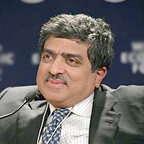
Nandan Nilekani Receives ‘Legend In Leadership’ Award

Infosys co-founder Nandan Nilekani is the first Indian to receive this prestigious award from Yale University.

Yale University felicitated the chairman of India’s Unique Identification Database Authority and Infosys’ co-founder Nandan Nilekani with the ‘Legend in Leadership Award’. Nilekani is the first Indian to receive this award.

NandanBF22sept2014

The ‘Legend in Leadership Award’ was created 20 years ago to honour current and former CEOs who serve as living legends to inspire chief executives across industries, sectors and nations.

The award was presented to Nilekani by Richard C. Levin, president, Yale University, at the Yale CEO Leadership Summit of The Chief Executive Leadership Institute. The summit convened 100 business leaders in New Delhi, to discuss the theme of ‘Navigating the Global Oceans of Opportunity for Indian Business’.

Nilekani, who co-founded Infosys in 1981 and served as CEO from 2002 to 2007, holds the rank of cabinet minister as the first chairman of the Indian government’s newly created ‘Unique Identification Database Authority’. The universal ID card is expected to help ensure that most of the billions of dollars India and other organisations spend on aid reach the people for whom it was intended.

In 2006, he was awarded the Padma Bhushan, one of the highest civilian honours awarded by the Government of India.

source: http://www.efytimes.com / EFY Times.com / Home> InfoTech> Awards and Recognition / Monday – November 09th, 2009

President Dr. S. Radhakrishnan made school prayer of DMS secular

by Dr. C.G. Nagaraja ,  Retd. Head Master,  DMS,  RIE,  Mysore

It was a very pleasant morning on 7th December 1965. The staff and the students of Demonstration Multipurpose School (DMS), attached to the Regional College of Education, Mysore (RIE), had a very important function to attend in their school premises, which is also the campus of RIE. It was the visit of the great Teacher of our country, the then President of India, Dr. S. Radhakrishnan.

The writer of this article was a Teacher in RIE at that time and was assigned to teach in DMS, a school attached to the RIE as a laboratory school for innovative practices.

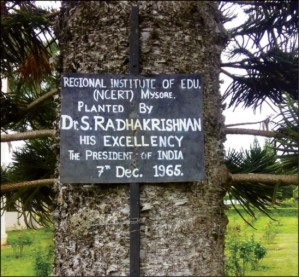
On this occasion, the President planted a sapling to commemorate his visit and then we were asked to render the school prayer in front of the President of India which we deemed as a great moment for all of us. The school prayer is and was a Sanskrit shloka, that is yam shaivaha…

We the staff and the selected students chanted the shloka in front of all the dignitaries including the President of India, Dr. S. Radhakrishnan. The moment we finished the prayer, the President asked us to sing again. He listened to the rendering carefully and asked us to include one more line and to our surprise he said, ‘sing along with me.’ It was such an excitement to all the people in the open-air function of planting a sapling, we readily joined him. He told us to write down and added one line in Sanskrit to match the shloka. He added on the spot a line which included the names of Jesus and Mohammed. The shloka now reads as shown in the box below.

It is almost 50 years now since this event took place. What an intellectual he must be to add the most secular phrase to our epic shloka !

Today, Regional Institute of Education maintains the spot where our President stood and sung the shloka at the park and a gardener maintains it since the past 49 years. Every year Teachers Day is celebrated at this spot in memory of Dr. Radhakrishnan and the students of DMS sing the amended shloka as school prayer daily.

As an educator and a Principal of Schools, wherever I worked I introduced this shloka as school prayer.

Some of the old photographs show the tree that was a sapling of a few inches. It has now grown to a huge tree and stands majestically, singing the same Prayer in silence, heralding the spirit of secularism of this country.

PlantBF21sept2014

I am very grateful to my colleagues of RIE who assisted in getting some of the photographs from the library. I am grateful to Rekha and Sharada who were students of RIE in 1965 and a team member of the singing group, Shivakumar, a crafts teacher who carved the bust of our late President to install at the spot where the sapling has now grown into a mighty tree.

*The Shloka before the 2 lines were added:

Yam Shaivaha Samupasathe

Shiva ethi brahmethi vedanthinaha

Bhoudhatha Buddha ethi pramanapatavaha

Karthethi Niyayikaha

Arhan Ethyatha Jaina Shasanarataha

Karmethi meemamsakaha

Soyam vo vidadhathu vaanchitha phalam

Trilokyanatho vibuhu.

The Shloka after the 2 lines were added:

Yam Shaivaha Samupasathe

Shiva ethi brahmethi vedanthinaha

Bhoudhatha Buddha ethi pramanapatavaha

Karthethi Niyayikaha

Arhan Ethyatha Jaina Shasanarataha

Karmethi meemamsakaha

Kristhaha – kristha ethi Kriyapararathaha

Allethi Mohamadaha

Soyamvo vidadhathu vanchitha phalam

Trilokya naatho vibhuhu

source: http://www.starofmysore.com / Star of Mysore / Home> Feature Articles / September 15th,  2014

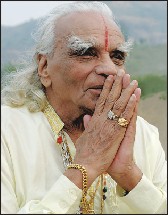
Legendary yoga guru B.K.S. Iyengar passes away

BKSIyengar25aug2014

Pune :

The world renowned legendary Yoga Guru Bellur Krishnamachar Sundararaja Iyengar (96), popularly known as B.K.S. Iyengar, passed away at a private hospital here at about 3.15 am today following poor heart functioning and difficulty in breathing.

A recipient of Padma Shri, Padma Bhushan and Padma Vibhushan awards, the Yoga Guru was ill for three weeks prior to hospitalisation but refused to get himself admitted and was treated at home by his family physician. He was even put on intravenous fluid at home.

His family members finally persuaded him to get admitted after his condition worsened. Though he was admitted to the hospital on Aug. 12, his condition had deteriorated a lot by that time. He was put on non-invasive ventilator for a day but he refused to undergo intensive treatment and hence, he was taken off the ventilator.

Iyengar’s heart muscles had become very weak following which there was less amount of blood being pumped by the heart, according to doctors. Last rites will be held later today.

Profile

Bellur Krishnamachar Sundararaja Iyengar (96) was born into a poor Iyengar family at Bellur, Kolar District in Karnataka and was the 11th of 13 children of Krishnamachar, a school teacher and Sheshamma.

His father died when he was only nine-years-old. As a result, he went to live with his brother in Bangalore. His childhood was further marked by serious illnesses including malaria, tuberculosis and typhoid along with malnutrition.

At the age of 15, Iyengar moved to Mysore to live with his eldest sister and her husband T. Krishnamacharya, an accomplished yogi and Sanskrit scholar, who ran a yoga school in the Mysore Palace and introduced Iyengar to some of the basic yoga postures (asanas) as a method to improve his health.

At the beginning, Iyengar struggled from day-to-day which gradually paid off, as he mastered some of the postures and as a result, his health improved.

In 1937, after two years of study, Krishnamacharya asked Iyengar to go to Pune to teach yoga where he arrived nearly penniless, knowing no one and speaking little English. Iyengar’s only way to make a living was by teaching yoga. With limited experience and almost no theoretical knowledge, he decided to practice with determination.

In the beginning, he would train himself as many as 12 hours each day, usually surviving on only stale bread and tea. Sometimes, he would suffer great pain through incorrect technique, often having to place heavy weights on his body to relieve the aches. However, refusing to give up, he gradually developed a deep personal understanding of the techniques of each posture and their effects. More yoga students began to seek him to learn yoga.

In 1943, he married Ramamani, to whom he had been introduced by his brothers and together they raised five daughters and a son. Both his eldest daughter Geeta and his son Prashant have become internationally-known teachers in their own right. The other children of B.K.S. Iyengar are Vanita, Sunita, Suchita and Savita.

Slowly they worked their way out of poverty and gradually Iyengar’s fame as a yoga teacher spread. In 1952, world renowned violinist Yehudi Menuhin became a student of yoga during a visit to India. Menuhin then arranged for Iyengar to teach in many cities in Europe and he made his first visit to the United States in 1956.

In 1975, Iyengar established the Ramamani Iyengar Memorial Yoga Institute in Pune, in memory of his departed wife, where he resided and taught yoga till his end. By that time, his eldest children, Geeta and Prashant, had also started teaching yoga under his guidance. The Institute quickly became an international centre, attracting thousands of people from all over the world.

Iyengar attracted his students by offering them just what they sought — which tended to be physical stamina and flexibility. He conducted demonstrations and later, when a scooter accident dislocated his spine, he began exploring the use of props to help disabled people practice Yoga. He was awarded Padma Shri in 1991, the Padma Bhushan in 2002 and the Padma Vibhushan in 2014. In 2004, Iyengar was named as one of the 100 most influential people in the world by Time magazine.

B.K.S. Iyengar condoled

Mysore Zoo Executive Director B.P. Ravi, who spoke to SOM, condoled the death of the Yoga Guru and said that B.K.S. Iyengar was an animal lover and he was an inspiration to many across the globe. He said that whenever Iyengar visited Mysore, he never failed to visit the Zoo. He never used to talk unnecessarily but used to speak with his eyes, he said and added that very recently his family members had come to the Zoo and had adopted two tiger cubs. With his demise, the Zoo lost a great animal lover and the world lost a legendary Yoga exponent.

Sharath Jois, grandson of K. Pattabhi Jois, who is running Shri K. Pattabhi Jois Ashtanga Yoga Institute at Gokulam in city, in his condolence message, said that an era has come to an end. Iyengar’s contribution for yoga was immense and the yoga community across the globe has lost a legend.

source: http://www.starofmysore.com / Star of Mysore / Home> General  News / August 20th, 2014

30-year-old home in Jayanagar testifies to the strength of mud

MudhouseBF21aug2014

Open your eyes to alternative, energy-efficient technologies

It could be anyone who could be part of this training. From farmers of Anekal wishing to build their own home, to a mason from Uttarakhand or an IT professional trying to understand the effectiveness of using mud.

Starting on Thursday, Gramavidya will conduct a three-day training programme on ‘Alternative and energy-efficient building technologies’ at the Rajiv Gandhi Rural Housing Corporation Koushalya Shaale, Kengeri.

“A cross-section of those interested gather from across the country for the sessions — consisting of lectures, audiovisual presentations, hands-on training and interactive open-house discussions,” says M.R. Yogananda, who has a doctorate in Civil Engineering from IISc., who spearheads the training. Gramavidya, a non-profit society, promoted by a group of professionals and academicians, disseminates building technologies for sustainable livelihoods. The experts are pioneers in construction methods, who have popularised cost-effective technology throughout the country in renowned constructions like the Auroville.

“We need to disseminate as much information as possible. After all, even professionals who pass out of engineering colleges seem to be uninformed about constructions that are quake-resistant. Energy-intensive beam and column structures are not everything. Interactive sessions can re-invent forgotten vernacular approaches,” says Mr. Yogananda, who is also the consulting engineer of Mrinmayee, offering research and lab-testing facilities for stabilised mud-blocks.

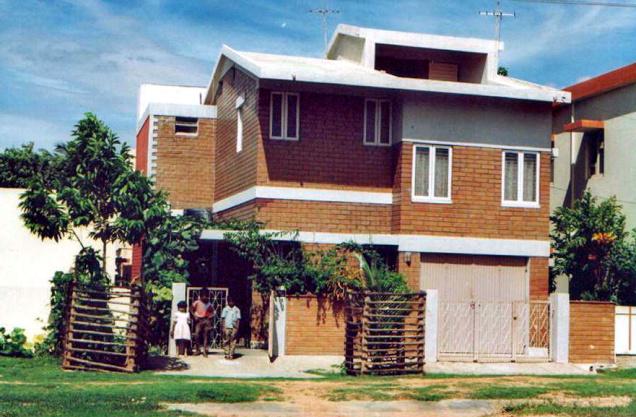
In the mid-1980’s Mr. Yogananda’s house in Jayanagar, built with stabilised mud blocks, became a curious model for people to “wait and test it out in all seasons” as the fear of going in for mud construction was mocked at. No sooner, the house was projected as India’s example of mud revival at the Festival of France in HUDCO’s national seminar. “My house is nearly 30-years-old now, and can go on for generations with its earthy sheen,” says Mr. Yogananda.

For details, 26582970 / 94489 26442 / gramavidya@gmail.com

source: http://www.thehindu.com / The Hindu / Home> News> Cities> Bangalore / by Ranjani Govind / Bangalore – August 21st, 2014

In memory of freedom martyrs no one remembers

Bangalore :

It’s one thing to recall sacrifices of freedom fighters on the Independence Day, but another thing to remember martyrs on other days and maintain their memorials.

Standing testimony to such neglect is a martyrs’ memorial in the heart of the city. Worse, not much is known about the four martyrs named on the plaque.

The 10-foot-tall stone plaque has been relegated to the backyard of the Shani temple at Mysore Bank Circle – the area which witnessed several flashpoints between freedom fighters and police at the height of the Quit India Movement in August 1942.

Scores of people are suspected to have died in confrontations in the area where the Mysore Bank Circle stands now. The martyrs included Shamanna Bete Rangappa, G V Thirumalaiah, Prahlad Shetty and Gundappa, all said to be students of Central College.

Their memory remained buried till 1972, the silver jubilee of Independence, when the central government decided to build a memorial at the Mysore Bank Circle where the quartet breathed their last. A plaque with their names inscribed on it was installed.

As years went by, the memorial was neglected. Road and other infrastructure development in the area shrunk the space for the memorial. Slowly, it got lost in the backyard of the temple.

On the recent Martyrs’ Day, August 9, members of Rashtra Gaurava Samrakshana Parishat, a social service NGO which stumbled upon the memorial recently, cleared the weed and other waste materials from there.

On Friday, a few local youngsters washed the memorial, decorated the place with tricolour and celebrated the Independence Day there.

“It is said these four youths were students of nearby Central college and fell to police bullets within meters of where the memorial is now located,” said T N Ramakrishna, president of the Parishat.

“There is no effort whatsoever, either from the Central government or BBMP, to protect what they call is a national monument. We want the authorities to restore the memorial to its original status. The authorities should make the memorial visible from all sides and also make suitable lighting arrangements,” he added.

Another Parishat member alleged that the space around the memorial has shrunk by about 15 feet due to encroachment. “It was in good shape till 2006-07 with a compound wall around. Later, due to encroachment and weeds, the plaque virtually invisible,” he added.

The Parishat said it would wait till October 2 (Gandhi Jayanti) to see if any effort is made to restore the memorial. “If nothing comes out, we will approach the mayor and the Kannada and culture department. If nothing positive happens, we will have to approach the court,” said Ramakrishna.

Forgotten heroes

Not much is known about the four martyrs: who they were and when exactly they fell to British bullets.

SK Aruni, deputy director, Indian Council of Historical Research, said there were many points of conflagration in the Mysore Bank Circle area during the freedom struggle. Police action against freedom fighters was severe on August 16, 17 and 18 of 1942, he added.

On August 16, a youth named Thimmanna Dasa was killed. The next day, the situation worsened. A huge crowd of 2,000 people set on fire a post office at Aralipete, near Kengeri Gate. Nine people were killed in police firing, but only six were identified: Thippaiah, Appaiah, AR Srinivasan, Narasimhachar, Subash Singh Ram Singh and Ponnaswamy.

On August 18, two of the youths mentioned in the plaque – Shamanna Bete Rangappa and G V Thirumalaiah – were killed in police action, Aruni said.

“British rulers always gave lower numbers than the actual toll to downplay the scale of the struggle,” he pointed out.

Freedom fighter HS Doreswamy said the memorial, which is inside the compound of a temple, should be made an independent structure. “Of the four people mentioned in the plaque, Gundappa was gunned down by an IG called Hamilton during a demonstration. Prahlad Shetty had been incarcerated and died in Central Jail,” he added.

source: http://www.timesofindia.indiatimes.com / The Times of India / Home> City> Bangalore / TNN / August 16th, 2014