Category Archives: Amazing Feats

Sneha Kiran … Celebrating 10 years of service

SnehaKiranBF31jan2014

by S.N.Venkatnag Sobers

Mysore :

Not many organisations come forward to work for the noble cause of bringing up special children and make them lean an independent life. Mysore has a few organisations working for special kids. Their endeavours may yield success or fail. But, the efforts put in by them cannot be ruled out. One such organisation is Sneha Kiran.

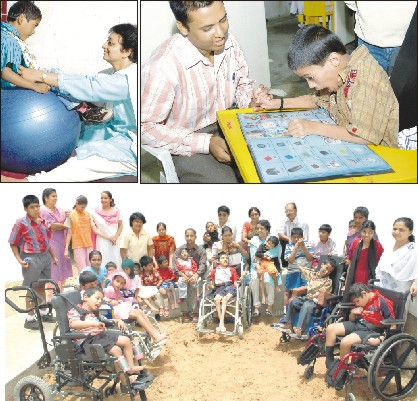
Sneha Kiran is a part of Mysore Spastic Society which was started in the year 2002 and has been working for children with Cerebral Palsy (CP). The organisation was started by a group of philanthropists, professionals, volunteers, and parents of children with CP with the objective to cater to the needs of such children.

Earlier, Sneha Kiran was working in a space which was donated by Raghunath, President of Sneha Kiran. But now, the organisation has its own building in Bogadi, where around 70 special children with CP are being looked after by the volunteers. Sneha Kiran is the only centre committed to provide help and solace to the families of such children in and around Mysore.

Every good work has an inspiration. For Sneha Kiran the inspiration was Joel, who was affected with Cerebral Palsy and happens to be the son of A.P. James, the Director of Sneha Kiran.

Speaking to Star of Mysore, James said that it was Joel who inspired him to start the organisation. “I used to visit various places for Joel’s treatment. One day a thought struck my mind and I decided to start an organisation to cater to the needs of the children with Cerebral Palsy and that is how Sneha Kiran came into being,” he added.

Sneha Kiran admits children from three years onwards. Children are subjected to various rehabilitation programmes to make them self-dependent. Although there is no cure for Cerebral Palsy, these rehabilitation programmes could avoid their condition from getting worse.

“Children with Cerebral Palsy should be treated as children with problems not problem children. For them, therapy is a way of life and there is a need to try and develop their skills similar to that of normal kids. People should accept them like they accept any other kids. For children affected with cerebral palsy, therapy has to be regular and upgraded accordingly,” said Shashikala Ramnath, an Occupational Therapist.

It is also important that the normal kids interact with these children once in a while so that these children are allowed to gel well with them and such ventures would also help the special children to be accepted by the society.

Sneha Kiran will be celebrating its 10th anniversary tomorrow and a special event has been organised at Silent Shores in this regard.

What is Cerebral Palsy?

It is a term used to describe a group of chronic conditions affecting body movement and muscle co-ordination. It is caused by damage to one or more specific areas of brain, usually occurring during foetal development, before, during or shortly after the birth or during infancy. These children may have the following problems depending on their severity of the brain damage: Delayed milestones, difficulty in posture and movement, muscle tightness or spasm, involuntary movement, impaired hand functions, impaired sight, hearing and speech, seizures and mental retardation. Although the brain damage is non progressive, if left without intervention, the degree of disability faced by the child will increase as the child grows. All the CP children need some rehabilitation to help them to lead a normal within the limits of their condition.

Every student at Sneha Kiran is provided with Physio-Occupational and Speech Therapy, Special Education and Pre-vocational Training. Other inputs include Sensory Stimulation, Functional Academics, Assistive Technology (Use of Specialised adapted devices for computer use), Respite care, Parent counseling and Guidance.

At Sneha Kiran, various rehabilitation programmes are being organised:

• Special education: This begins with sensory-stimulation, classroom programmes, environmental awareness, pre-academics skills to syllabus oriented study. Pre-vocational training for young adults who aspire to working in a community or be a part of sheltered workshop.

• Physio-therapy: To develop control of limbs, improve balance and work for better voluntary skills and muscle strength.

• Occupational therapy: Improve Hand function, self-help skills, aids and adaptations to enable seating, functional skills, mobility and independence to survive.

• Speech and communication: Most children with CP need speech therapy using speech production gestures and pointing skills, to point at pictures, symbols and written words to communicate. This is part of Alternative and Augmentative Communication (AAC). The computer is also a useful tool to aid this communication.

• Assistive Technology: Enabling the use of computers by special access switches for those who are unable to use the keyboard. These include Ball Mouse, flat switch pads that can be pressed easily by various parts of the body. Children can enjoy simple games, cause and effect interaction and then move on to academic programme. The software is specialised to be slower in speed with word prediction features. This technology opens up the world to children who have CP.

Sneha Kiran has specialised equipments like CP chairs, wheel-chairs, specialised Physio equipments, special keyboards and software in order to carry out these activities. Sneha Kiran also provides transportation facilities to the children free of cost. At present, around 70 children are being trained at Sneha Kiran.

Sneha Kiran, is supported wholly by donations from well-wishers. Children go on outings and picnics regularly. Even the parents and staff have picnics to rejuvenate themselves.

Students of Sneha Kiran have also participated in Special Olympics and other events organised by Govt. departments, Rotary and other NGO’S.

Art, music and dance is an integral part of the curriculum which adds colour and joy to the lives of these children.

Those interested in supporting this cause may contact:

Sneha Kiran, CA-01/ B, Railway Layout, Sharada Nagar, Bogadi Mysore-570 026 or call Ph: 0821-2581113 or Mob: 98440-43965. [e-mail:spasticmysore@yahoo.co.in or snehakiranmysore@gmail.com or visit www.mysorespasticsociety.com]

source: http://www.starofmysore.com / Star of Mysore / Home> Feature Articles / January 25th, 2014

State-level milking contest : Cow from Bangalore yields 46 litres milk

MLA Tanveer Sait is seen presenting prize to the first prize winner of State-level milking contest held at J.K. Grounds in city yesterday. Others seen are actor Darshan, MLA Vasu, Mayor N.M. Rajeshwari, MP A.H. Vishwanath, District Minister V. Sreenivasa Prasad, Ex-Mayor Dhruvakumar, MNGS President D. Nagabhushan and others.

Mysore :

Bangalore may be the Silicon city but it does not lag behind in dairy skills which came to fore yesterday when a cow from the State capital yielded 46 litres of milk to win the prize of Rs. 1 lakh at the three-day State-level milking contest held at J.K. Grounds in city in memory of Late actor Thoogudeepa Srinivas by Mysore Nagara Gopalakara Sangha (MNGS).

Dairy farmers from Bangalore also outclassed their counterparts from Mysore by winning top three positions in the contest which had been a tradition of Mysore.

Cows belonging to Pradeep Devegowda, a resident of Adugodi, Venkatesh Sommanna, residing near Nettakallapa Circle and Lakshman Hogebandi of Bangalore yielded 46.75 litres, 40.75 litres and 40.40 litres winning the first three places respectively as a cow belonging to Aishwarya, a relative of former Mysore Mayor Dhruvakumar, which yilded 39.95 litres finished fourth.

Pradeep Devegowda won Rs. 1 lakh and a pair of silver lamp weighing 2 kg. Venkatesh Somanna won Rs. 75,000 and a silver crown weighing 1 kg. Lakshman Hogebandi won Rs. 50,000 and a silver crown weighing 1 kg. as First, Second and Third prizes respectively while Aishwarya of Mysore got Rs. 25,000 as the Fourth prize.

A total of 17 cattle from different parts of State particularly from in and around Bangalore participated in the competition and the prizes were presented to the winners by actor Darshan Toogudeepa at a function organised at Srikanta Datta Narasimharaja Wadiyar stage at J.K. Grounds yesterday.

District in-Charge Minister V. Sreenivasa Prasad, MP A.H. Vishwanath, Mayor N.M. Rajeshwari, MLA Vasu, Mysore Nagara Gopalakara Sangha President D. Nagabhushan and others were present.

source: http://www.starofmysore.com / Star of Mysore / Home> General News / January 20th, 2014

Karnataka’s busiest maternity ward sees 40 deliveries a day

Mysore :

Lakshmi, a homemaker from Periyapatna, who delivered her first child at government-run Chaluvamba Hospital here years ago, chose the same hospital for her second delivery, the lack of privacy notwithstanding.

The 27-year-old Lakshmi was one of 200 new mothers crammed into the wards of the century-old hospital, which sees, on an average, 40 new babies coming into the world daily. The rate at which deliveries happen at the hospital makes it Karnataka’s busiest maternity ward.

Like her, many mothers have to struggle for beds as large number of women from across the state comes here. With wards always being full, new mothers have to make do with the floor, awaiting their turn for cots. However, beds and necessary treatment will be provided to them while they wait for cots.

Hospital’s medical chief Dr B Krishnamurthy said that women from Bangalore, Ramnagara, Bidadi and Chikkamagalur have delivered here apart from women from old Mysore region of five districts. He claims may be the busiest maternity hospital in state because even in Bangalore’s Vani Vilas hospital not many deliveries are conducted than us. “I have attended state level health meetings but have never come across so many deliveries taking place in single day in any other hospital in Karnataka.”

Even Sumaya Banu from Hunsur preferred this hospital for her second delivery. Her husband, Jaffer, a driver, says the facility is no less than private hospital. Even 20-year-old Ciema Kauser, who delivered her first child, too was fine with the hospital’s situation.

Biggest challenge is to accommodate all mother to-be arriving here. We can’t say no to anyone but if they agree to the situation, we are okay with it but we ensure to provide quality treatment without for free, the medical superintendent says.

Of the total 420 beds available in hospital, over 50 pc beds are reserved for new moms, who will be treated for three days in case of normal deliveries and five days for C-section deliveries Nearly 80 pc deliveries are normal. Claiming people throng here because of quality treatment, Krishnamurthy, head of department of pediatrics, says we have improved services and security to prevent deaths and baby-swapping over the years.

source: http://www.articles.timesofindia.indiatimes.com / The Times of India / Home> City> Mysore> Private Hospital / by Lawrence Milton, TNN / January 11th, 2014

Kids brush up memory at workshops

Bangalore :

Ashraff, 15, can rattle off the atomic weight of the first 15 elements in the periodic table in one breath. Vaibhav, a Class 11 student, says he reads 25,000 words per minute.

Geniuses in the making? But both these kids introduce themselves as average students. The magic mantra, they say, are memory enhancing workshops.

It’s the season to charge those grey cells, and what better way than a workshop. From pills and tonics to tips and techniques, memory enhancers are the in thing. And these workshops have much on offer to help students fare well.

One common technique is the pegging model, where subjects difficult to memorize are pegged to something else. “We train them in the law of imagination. Students are taught to visualize. Next, they connect the visuals to themselves. The link could be ridiculous but helps easy recall,” says Biswaroop Roy Chowdhury, a memory trainer, Dynamic Memory, Faridabad. Biswaroop visits Karnataka often to conduct workshops.

D Krishnamurthy, a memory technologist in Hanumanthnagar, works on similar lines. “Rote memory is constant repetition. If you forget one key word, you tend to forget everything. Here, you aren’t losing anything because it’s systematic. There are visual and imaginary elements to it,” he says. Predictably, January is a busy time for him. “There are more students during January and February, when the knowledge gathered through the year is cluttered and needs organization,” he says.

There are others who promise more. Life strategist Md A A Ahmed conducts exam maximizer programmes which comes in beginners and advanced capsules. Level 1 gives tips on learning long answers in a single reading, memorizing key words in 120 seconds, and helps concentrate on boring subjects. Ahmed wants to patent a technique called flash reading, which he has developed. Here, a student can read 30,000 words in a minute. According to him, the student actually comprehends what he reads, and it’s not merely rote learning.

Midbrain Masters, a training centre headquartered in Malaysia, says it can help children activate their ‘midbrain’. “An activated midbrain helps improve concentration, enhance memory and speed up the learning process,” says Rajeev Ahuja, trainer.

Experts, however, feel sheer rote learning is promoted in such cases. “Many of these techniques look at rote or associative memory. Since our academic system is based on rote learning, and not much on analytical skills, it helps score marks. The methods assist them retain more facts but doesn’t do much to improve cognitive ability,” points out Sulatha Shenoy, director, Turning Point Psychological Centre.

“There are some simple facts where there’s nothing to understand; like Gandhiji’s date of birth, or the boiling point of a liquid. One has to have an imaginary understanding of it,” says Biswaroop.

Memory apart, these workshops also focus on concerns like confidence levels, stress, emotional baggage, etc. “Students complain about issues like the mood to study and short attention span. We train them to overcome such obstacles,” says Ahmed.

POINTS TO BE NOTED

Workshops should look at emotional, social abilities, leadership skills and teamwork. Most students I get are looking to improve memory. What they really need is an interest in the subject, some motivation, and better teachers.

Sulatha Shenoy | director, turning point psychological centre

Several factors lead to poor memory. Most kids multi-task while studying; some fiddle with their phones, some listen to music. Many suffer from low self-esteem and become anxious. All workshops address these problems. However, the techniques they learn don’t help in the long run. Boards like CBSE have started insisting on analytical learning. When Narayana Murthy says our engineering graduates are not employable, it is not surprising. Marks are important, but there’s more to life.

Vikram Prabhu | psychiatrist, sagar hospital

There’s no quick-fix to enhance memory. The techniques cannot be universally applicable. Factors like emotional stress, motivation level and interest affect memory. Feedback and follow-up is important to see if the techniques are working.

Meera Ravi | psychologist, prerana academy

Such workshops stem from the idea of rote learning. If a teacher deals with a subject engagingly, kids will learn. If not, they will have to look at mechanical ways of doing it. It boils down to good teaching approaches and pedagogy.

Maya Menon | teacher foundation

I feel like I have textbooks in my head. I know what’s on which page. When we have to look at tabular columns during exams, things are much easier for me because I know them by heart.

Vaibhav | class 11 student who attended Ahmed’s workshop

source: http://www.articles.timesofindia.com / The Times of India / Home> City> Bangalore> Rote / by Sruthy Susan Ullas, TNN / January 10th, 2014

“ The bravest are the most tender; The loving are the daring ”

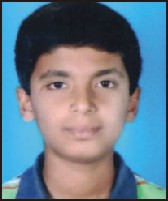
Natl. Bravery Award 2013 for 13-yr-old S.S. Manoj

ManojBF15jan2014

Mysore :

The above stated quote is so very true in the case of the story below:

It was a casual pilgrimage to Srirangapatna on Sept. 2, 2012, taken out by a family of three — the father, the mother and their 13-year-old son. Anybody visiting the Sri Ranganatha Swamy temple in Srirangapatna make it a point to visit the Cauvery river either before or after going to the temple. So was the case with this family too.

After paying their obeisance to the Lord at the temple, the family went towards the river to rest for a while. Seen there were children enjoying a dip in the water, women washing their clothes, utensils, etc., etc. The son of the family was also taking a dip in waters. At around 10.30 am, suddenly, one of the woman who was washing her clothes, while trying to pick up the clothes, slipped and fell into the river. The woman was physically handicapped and didn’t know how to swim.

The 40-year-old woman named Manchamma, unable to get out of the water, started crying out for help. The woman’s daughter and niece were there at the river bank, not knowing what to do as none of them knew how to swim either. Seeing this, the son, 13-year-old Manoj, swam towards the woman, pulled her by her hair and dragged her till the river bank. Manoj had learnt swimming when he was just 8 years old, swimming in the canal at his village. This proved to be of great help in saving the woman. The woman couldn’t believe what had just happened. She thanked the boy profusely and told him that he was God who gave her life.

This courageous act of Manoj deserves true appreciation and rewards. Accordingly, the State Department of Women & Child Development honoured Manoj with ‘Hoysala Shourya’ award, which was presented to him by the Governor H.R. Bhardwaj on Nov. 16, 2012. Now, this brave act has been identified by the Indian Council for Child Welfare, New Delhi and Manoj will be presented the ‘National Bravery Award 2013’ by Prime Minister Dr. Manmohan Singh in the presence of President Pranab Mukherjee, Vice-President Hamid Ansari, Delhi Governor Lt. Najeeb Jung and other dignitaries on January 26 and he will also be given a chance to take part in the Republic Day Parade at New Delhi.

The award carries a certificate, a gold medal and a cash prize of Rs. One lakh awarded by the Government of India. Apart from these, the Govt. will also provide the gallant children with Indira Gandhi scholarships to pursue either technical or medical courses.

About the boy: S.S. Manoj, a VII std. student of Navodaya School, DMG Village, Gaddige, is the son of S.T. Rajshekar, a tailor at Saligrama and S.K. Aarthi, a teacher at Govt. Primary School in Bangalore. Manoj is presently staying with his uncle Ramesh, residing at KHB Colony, Hootagalli.

Star of Mysore caught up with Manoj recently and congratulated him on his feat. When asked as to how he is feeling on being conferred the Bravery award, Manoj, in a humble way, said that he is really happy and that he would use the scholarship amount to pursue a degree in Engineering. He said that he would donate a part of the amount for the welfare of the disabled persons.

Speaking about his parents, Manoj said that his father, an ordinary tailor, would probably not be able to fund his education, so the scholarship amount has brought in great joy to his parents and his uncle.

source: http://www.starofmysore.com / Star of Mysore / Home> General News / January 09th, 2014

Star Kids:“If you can dream it, you can do it ”

Nagashri with her parents Geetha and Guruprasad.

We know kids of the Gen-Next are super-fast and thoughtful. They’ll know their aims and plans for future way ahead of time and even start working towards achieving their goals well in advance. Shall we get introduced to one such thoughtful and brilliant kid from your city today?

Meet G. Nagashri, a child from Mysore who is all of ten, but knows what she wants to do once she grows up. “I want to be an IAS officer,” she adorably says when asked what her aim is for life, “I will study real hard to achieve this goal.”

But dreaming apart, what is the little girl doing to achieve her dreams? Nagashri, a V std. student of Avila Convent is an Abacus expert. Learning the same since 3 years now, she has been constantly winning first prizes and also Super first prizes in every Abacus competition that she competes in and is admired and looked up to by her Abacus tutors.

Talking of her expertise in the same, Vijayalakshmi Muralidhar, Chairperson of the Up Kidz Abacus Academy where Nagashri is training says, “Nagashri is a brilliant kid who is very good at Abacus. She joined us three years ago. We have about 20 centres of our own across Mysore for all of which we together conduct competitions frequently. And ever since Nagashri joined us, she has been constantly winning the first prize and super first prize in all the contests held. We are glad to have a student like her.”

The girl has won over 7 prizes and can easily solve 50 mathematics sums in three-five minutes, with or without the Abacus instrument which makes her a brilliant child, according to Vijayalakshmi.

What’s more is, the girl also excels in academics at her class and is a staunch lover of Mathematics according to her mother Geetha.“She joined abacus to sharpen her brain and to be able to learn and study better,” Geetha says, adding, “We enrolled her into abacus coaching as we wanted her to find the subject of Maths interesting. And once we did, she has been simply enjoying the subject all the more. And we are glad she is liking it as Maths is one subject which will help her sharpen her brain in all ways.”

Having started learning abacus at the age of 7, it has helped her lot in solving her school mathematics as well, the kid says and feels excited that she can answer complicated maths sums within minutes with ease. And her mother adds on to say that the course is also helping a lot in boosting her potential and aiding a positive augmentation of self confidence within. Let us wish Nagashri all the luck !

Nagashri is the daughter of Geetha and Guruprasad.

Abacus and it’s uses

• Abacus, also called a counting frame, is a calculating tool that was used centuries ago before the adoption of the written modern numeral system.

• Abacus method of calculations is believed to be one of the fastest methods of calculations and the Abacus device was invented in-order to aid counting of larger numbers.

• Abacus motivates kids, boasts their self-confidence, brilliance and attentiveness.

• Helps them love the subject of Maths and solve Mathematics sums with ease. — AN

source: http://www.starofmysore.com / Star of Mysore / Home> Feature Articles / December 27th, 2013

City couple on a national mission to prevent suicide

(Top) M.V. Santhosh and Akshatha S. Rao enroute their mission. (Below) Santhosh addressing a group of students during one of their expeditions.
(Top) M.V. Santhosh and Akshatha S. Rao enroute their mission.
(Below) Santhosh addressing a group of students during one of their expeditions.

Mysore :

With an aim to educate and create awareness among the young minds on how precious life is, a couple from Mysore is on a cycle expedition throughout the country on a modified tandem cycle. The couple who started their journey from Mysore on August 11 has toured Karnataka, Goa, Maharashtra and Gujarat till now with a message to prevent suicide and educating youngsters that suicide is not the only solution to solve problems.

M.V. Santhosh and Akshatha S. Rao, both Ballroom dance instructors & residents of Gokulam in city, have been visiting schools and colleges across the country with the message of suicide prevention among youngsters. They also hold interactive sessions with these youngsters and tell them about ways of combating suicidal tendencies if any.

Till the now the couple have visited 53 institutions and interacted with more than 9,000 students. Currently, they are in Bharuch, Gujarat and will be travelling towards Rajasthan after completing their mission in Gujarat. Speaking to Star of Mysore, Akshatha said that the so far the tour has been successful with lot of youngsters coming forward and sharing their experiences with them.

She said, in most of the cases the students were forced to take the extreme step due to the examination pressure and also pressure from their parents. “Some reasons also included molestation and rape not only among girls but also boys, addiction, betrayal from friends by not keeping their secrets, relationship issues.” We interact with the students and also stay at a place for a sometime to interact one-on-one with students if need be,” said Akshatha.

When asked about her inspiration to go on a cycle expedition with a social cause, Akshatha said that it was during a dance workshop in one of the colleges in Kollegal in Chamarajanagar district, they found out that four girls of the college had committed suicide in a single academic year unable to bear examination pressure. This inspired us to go on a expedition with a message to youngsters not to end their lives.

Akshatha also mentioned that during their interaction, on an average, around 4-5 students have the courage to tell them that they have had suicidal tendencies citing various reasons. “We interact with them and educate them regarding their precious lives. There have been many examples of students changing their minds not to take extreme steps and assuring us to not to end their lives through suicide,” added Akshatha.

The couple also conduct dance classes at the places they visit and collect funds to continue with their journey. During their recent visit to Maharashtra, Santhosh and Akshatha met Maharashtra CM Prithviraj Chauhan and actor, model Milind Soman and shared their message.

They have been visiting NGOs who have been working on distress helpline, share their experiences and also learn from them. COOJ (You Matter) in Goa, Connecting NGO, Pune, Samaritans, Mumbai are a few of the NGOs that the couple have visited so far.

The couple have not planned their date of return back to city. As of now, they are happy touring the entire nation.

source: http://www.starofmysore.com / Star of Mysore / Home> Feature Articles / December 25th, 2013

“What is a Pinhole ? Such is the ignorance of today’s Photographers ”

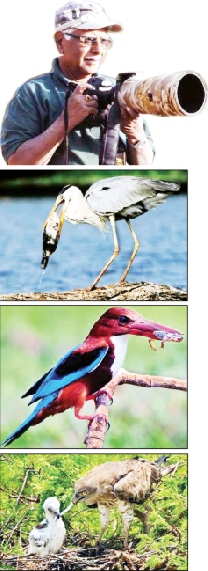
ThippeswamyBF24dec2013City’s eminent cinematographer & photographer, S. Thippeswamy, in a candid conversation…

One photograph published in one daily newspaper, the photographer immediately poses and puffs smoke rings and claims that he is a professional photojournalist, wildlife photographer and more,” commented city’s eminent cinematographer and wildlife photographer S. Thippeswamy, with a wry smile on his face.

This and other candid comments are made at an impromptu addaa sessions deep in the basement of ‘Ramsons House’ in city.

The prickly subject of professional photographers and their art came up when someone present commented on the great annual Pinhole Camera Photography contest conducted by a top professional photography magazine in USA and top photographers from across the globe test their skills using a handmade cardboard pinhole camera!

“To use an ordinary box camera or pinhole camera to photograph people or places, that is the mark of a true professional,” says Thippeswamy. “A thorough knowledge of light, composition and most important of all, the ability to see the photograph in the mind’s eye, the third eye. If I were to ask today’s professionals, then they will ask, ‘What is a pinhole? Who is pinhole …?’ such is their ignorance…” says Thippeswamy.

R.G. Singh of Ramsons Kala Pratishtana in a brief tete-a-tete with Thippeswamy. Excerpts…

R.G. Singh (RGS): “One swallow does not a summer or (is it spring?) make…” Similarly one or even several photographs published here and there does not make one a true professional…” Like Jiddu Krishnamurthy would often say in his talks, can we go a little deeper into this issue?

S. Thippeswamy: It took me more than 30 years of continuous learning process and I am still learning even to this day. Photography is much more than just a sophisticated camera that does all the work for you. The true photographer is one who has been drawn to this field because he has a passion and the commitment to make it a lifelong mistress!

RGS: As you have done so… made photography your lifelong mistress !

Thippeswamy: (Laughs) Yes, a very jealous mistress! passion and commitment, Sir, passion and commitment! There is romance in photography. You learn the art of composition, the play of light and shade… a vision forms in your mind and that is where the first photograph is created in your mind …even before you click the shutter.

RGS: You have to be a technician too, right ?

Thippeswamy: The old box cameras required human expertise. I still have my old Voigtländer camera and several others too like the Brownie wherein you had to check the focal length, aperture speed and so on and then the actual taking of the picture. It needs a keen eye, the ability to see the picture in the mind’s eye. Photography is a lifelong love affair. If it isn’t there, then what you will get is just a picture. (Laughs)

RGS: Then the films had to be sent for processing …?

Thippeswamy: After all that work, the films would be sent to be processed and then till the finished prints arrived you would never know how the photographs would turn out… Of course, later I began making the prints myself in my dark room.

RGS: From being a professional photographer for magazines and brochures to wildlife, how did this transition occur?

Thippeswamy: I have previously done corporate photography and industrial photography too. They needed a different perspective, the advertising angle. The photographs had to sell the product. The image had to be eye-catching, only then would the customer read the text. The photographs of people and places to illustrate magazine and newspaper articles also needed a different perspective. Wildlife and nature photographs need solid discipline — to blend with nature and the animal’s habitat. It takes years to mature as a nature and wildlife photographer. I have done more than 200 documentaries and have got four national awards.

RGS: One documentary which impressed you most?

Thippeswamy: In 1972, I made a documentary on tribes like Kaadu Kurubas, Jenu Kurubas and Soligas for the Information Department which was well received. This was a documentation of the lives of these tribes for their rehabilitation from core forest areas. Interviews with them, documenting their lifestyle and their closeness to nature and wildlife… it was a lot of effort, but worth it. I have also made documentaries for the Central Institute of Indian Languages and the Abdul Nazir Sab Institute for Rural Development (ANSIRD). I also made nine short films for ANSIRD. All of them were greatly appreciated.

RGS: When did you take to jungle trails?

Thippeswamy: You see, I did not become a wildlife photographer overnight. I was a member of the camera unit of several film studios including Kanteerava Studios for years before I moved on to a career as a photographer for the Mysore Medical College. Around this time, it was in 1979 that I began photographing the monuments and heritage buildings of the city and some of them were published in a few dailies. They were spotted by journalist M.B. Singh who was then the Editor of Sudha and Prajavani. M. B. Singh, who I consider my Godfather, gave me several assignments.

A fellow professional who had seen my work one day challenged me to photograph wildlife which he said was more difficult. Thus in 1981, I took up wildlife photography as a challenge as this particular field requires several attributes, like patience, using whatever light is available and not frightening the subject. Animals are wary of humans and to click them without arousing any nervousness in them is an art that has to be learnt and no textbook can teach you that… I have covered all wildlife reserves and national parks in the State and most across the country.

RGS: One last question… your advice to the budding photographers?

Thippeswamy: First, it is an expensive profession. Do you have the financial ability to live off your work? The equipments like cameras, lenses, etc., are expensive, can you afford them? Can you afford to spend days in difficult conditions without basic necessities? Can you spend time away from your job, family for days? If the answer is positive to all these questions, only then should you should become a photographer. Let your photographs do the talking. Do not become mere posers !

— R.G. Singh

Awards & Fellowships

‘Lifetime Achievement in Photojournalism’ by Karnataka Media Academy; Bharatiya Vidya Bhavan’s ‘E. Hanumantha Rao Lifetime Award’ for achievements in wildlife photography; ‘Raghavendra Chitravani’ Award for film and TV work , Public Relations Council of India (PRCI), Bangalore Chapter’s ‘Samvahana Award,’ for contribution to wildlife photography. Fellowship of the Photographic Society of America (2005); Proficiency Distinction for the Nature category (2005); Award for Best Thematic Nature photography by UNESCO supported Federation of International De L’Art Photography (1995) and Fellowship of The British Royal Photographic Society (1992).

source: http://www.starofmysore.com / Star of Mysore / Home> Feature Articles / by R. G. Singh / December 18th, 2013

Art runs in her blood …You think of it , she creates it

Truly amazing...Sea shell replicas of Taj Mahal and a Shiva Temple at Radha‘s Kalashree Bhandar.
Truly amazing…Sea shell replicas of Taj Mahal and a Shiva Temple at Radha‘s Kalashree Bhandar.

Mysore :

Being an artist is one thing and being a versatile one is something else altogether. And showing versatility to such an extent that you end up seeing art in almost every single thing that you come across is something all the more exceptional. Now, who wouldn’t want to meet an artist so nifty? Come, we’ll introduce you to one.

Meet Radha Mallappa, a city based artist who sees art and artistry in almost any medium that she comes across. Having gotten into the world of creating thing artistic almost 30 years ago, she is one person who we can quite valiantly say has downrightly dedicated her life to fine arts. Give her anything from coconut shell to sand; stones and thread to sea shells; cotton, clay or glass; she can create an art piece out of it! Surprising isn’t it?

But for 51-year-old Radha, art is a thing as easy as a pie. She has created so many artworks that she has a museum of her own at her home at Bannimantap in city which is a storehouse of all her beautiful artworks. Called ‘Kalashree Bhandar,’ the museum is a place worth a visit for all the art lovers, as it houses art works created out of over 150 different mediums by Radha.

But how does she manage to create artworks of such diverse forms? “I spend about 8-10 hrs a day on this hobby of mine,” she replies. Ask her if she doesn’t find it difficult to juggle between housework and hobby and pat comes the reply, “I somehow manage. I cannot give upon my hobby at any cost. And I am glad I am equally encouraged by my husband and mother at home, who thoroughly cooperate.”

Some of the latest additions to her museum include a 10 ft tall model of the famous Taj Mahal and a 12 ft tall model of a Shiva Temple, both made out of sea shells. They are created out of over 20 different varieties of sea shells brought in from various places across the country as well as a few imported from places abroad.

What’s more, apart from being so artistic, the artist has also tried her hands in singing, Kannada poetry writing and is also an Ayurveda practitioner who has been successful in healing several people suffering from various ailments since many years now. And for all her efforts, Radha Mallappa has received several awards continuously ever since the year 2001. Some of them include the ‘Bharat Jyoti Award’ from the National Integration and Economic Council, ‘Kittur Rani Chennamma award,’ ‘Hoysala award,’ ‘Kala Sarawathi award,’ ‘Aryabhata,’ ‘Amoghavarsha,’ and ‘Sir M.Visvevaraya’ awards.

Radha is married to businessman Mallappa and resides at No 25, KSRTC Colony in Hanumantha Nagar, Mysore. — AN

source: http://www.starofmysore.com / Star of Mysore / Home> Feature Articles / December 18th, 2013

B’lore lab helping develop first TB vaccine in 100 years

Scientists at Max Planck Institute of Infection Biology, Germany, are trying to develop a tuberculosis vaccine for adu-lts which will be the first in nearly hundred years since the Bacille Calmette-Guérin (BCG) vaccine for children was developed. Lending a helping hand in this is a clinical lab at St John’s Research Institute (SJRI) in Bangalore.

The SJRI has been commissioned to come up with biomarkers to test the efficacy of the new vaccine, which is set to go into phase three trials.

The vaccine being developed by Max director Stefan H E Kaufmann is considered the most promising among a clutch of other candidates that have appeared following a renewed interest on account of the emergence of drug-resistant varieties of the disease.

Kaufmann, who was in Bangalore last week, has tied up with John Kenneth, head of the infectious disease unit and molecular diagnostics at SJRI, to locate biomarkers that will establish the efficacy of any tuberculosis vaccine administered to patients.

“All current vaccine candidates are relatively low on ambition. They all attempt to contain mycobacterium tuberculosis. We do not have a candidate that claims to prevent infection or eradicates the pathogens,” Kaufmann said.

Max has created a vaccine against adult TB of the lungs by working with a recombinant version of the BCG vaccine that prevents TB in children.

The vaccine had been sub-licensed to Serum Research Institute of India that wants to test it, Kaufmann said.

“When you put the vaccine candidate into the trial cycle you need an end point measure of the efficacy of the vaccine to indicate that antibodies have been produced to provide immunity. We don’t have that marker at present,” Kenneth of SJRI said. The presence of a biological databank and a TB patients to carry out tests for biomarkers is key to the tie-up between Max and SJRI.

“Biomarkers are critical factors for the future research on TB. They are critical factors for better vaccines, better drug design and better diagnosis,” Kaufmann said. One of the questions that the researchers are trying to answer in the quest for biomarkers for TB is, what distinguishes patients with active TB and those who remain healthy.

source: http://www.indianexpress.com / The Indian Express / Home / Bangalore, Saturday – December 14th, 2013