T. Sekar, Inspector-General of Police of CRPF’s Cobra School of Jungle Warfare Training in Khanapur in Belagavi, has been awarded the President’s police medal for distinguished service on the occasion of Independence Day.
Hailing from Thirumazhisai in Tamil Nadu, he joined CRPF in 1986 as Deputy Superintendent of Police.
He has served in crisis situations in Punjab, Jammu and Kashmir, Assam, Tripura, Manipur and Maharashtra. He has commanded Operational Range Gadchiroli (MH) and led and planned many Anti-Naxal operations. He has led various anti-terrorist operations in disturbed areas to curb terrorism and militancy. He has also served as an SPG officer from 1989 to 1998 on the security wing of VVIPs, including Prime Ministers and former Prime Ministers.
source: http://www.thehindu.com / The Hindu / Home> News> States> Karnataka / by Special Correspondent / Belagavi – August 15th, 2019
Pranjal, a student of National Public School- Koramangala, recently won the gold medal at the recently concluded International Mathematics Olympiad’s (IMO 2019) in United Kingdom.
IMO is revered as the biggest and toughest of the science competitions across the world.
Speaking to Metrolife, Ashish Srivastava, Pranjal’s father, says “What makes Pranjal’s medal noteworthy is that he is youngest ever to win a gold medal from India and his win has ends the seven-year drought of gold for India. The competition that had 210 countries and more than 600 participants, proved to be a memorable experience for Pranjal.”
After his return, Pranjal, was felicitated by legendary mathematician Prof Mahan Maharaj of TIFR.
source: http://www.deccanherald.com / Deccan Herald / Home> Metrolife> Metro Lifestyle / DH News Service, Bengaluru / August 13th, 2019
Arati (22), a specially-abled player, was born with one hand. From a tender age, she had a passion for sports.
Arati Patil playing badminton. (Photo | EPS)
Belagavi :
Arati Janoba Patil, a native of Nandgad village in Khanapur taluk presently staying at Uchgaon village in Kolhapur district, has been selected for the BWF World Para-Badminton Championship, to be held in Switzerland from August 20-25.
Arati (22), a specially-abled player, was born with one hand. From a tender age, she had a passion for sports. It didn’t take long for determination and hard work she has abundance of, converting into success.
She grabbed the attention of selectors when she proved her mettle in several state, national and international-level badminton competitions.
She bagged the silver medal in Asian Youth Para Games held in Dubai in 2017, and a bronze medal in Victor-Denmark Para-Badminton Championship held in Denmark in 2018. She won bronze again in Uganda Para-Badminton, an international event held in Uganda in April 2019. Her consistent good performances in international events made selectors choose Arati for the world badminton championship.
Arati was born and raised in a poor family at Nandgad village, which happens to be the birthplace of great patriot Sangolli Rayanna. Needless to say, people of Khanapur sing praises of her success.
Speaking to Express, Arati said, “Support and encouragement of my father Janoba, uncle Nagendra Sambrekar and coach Sunil Dewang helped me reach this level in badminton. Although our financial condition was not good, my father arranged money by taking loans for my training and travel expenses to participate in international competitions. I could not have achieved this without my family’s support.”
Arati is one among 21 players who will represent India in World Para Badminton Championship. A team of 30 including coach, manager, physiotherapist will leave for Switzerland on August 15. Physically challenged sportsmen from about 50 countries will take part in the event.
Financial support needed
Only 22 participants including coaches have got travel and other expenditure from the government, while the Paralympic Committee of India has conveyed that the remaining eight players have to bear their own travel and other expenditure.
Although Arati has been selected in the Indian squad, she will not be paid. Arati needed about Rs 2.5 lakh for her expenses of travel and stay, and her family is facing great hardship to arrange this sum. Her father who is a construction worker is struggling to arrange the same.“My father has already arranged Rs 1 lakh by taking a loan. I am in need of Rs 1.5 lakh,” said Arati. Philanthropists could help this budding sportswoman participate on a global platform and give her a chance to make the country proud.
source: http://www.newindianexpress.com / The New Indian Express / Home> States> Karnataka / by Sunil Patil / Express News Service / August 03rd, 2019
The AeroKLE team with their working models. | Photo Credit: Special Arrangement
They come first in regular class and third in micro class in national tournament
AeroKLE, a team of 17 students of KLE Technological University (KLETU), has secured the top place, in the regular class, at the national-level SAE India Aero Design 2019 competition held in Tamil Nadu.
In the recent competition, organised by SRM Institute of Science and Technology, they also secured the third rank in the micro class. As many as 146 teams from across the country took part in the competition.
The team comprised Vineet Anand Bedarman (captain), Amit Allimatti, Sayyed Ahmed Zuhair, Rohit Anvekar, Rahul Pattar, Shridhar Hadimani, Om Prakash Patel, Yajnesh Poojari, Koustubh Annigeri, Sujay C, Nilesh Bandekar, Mallikarjun Pattanshetty, Yeshwanth Kumar, Ajey Joshi, Alex Steven Dharmdas, Calvin Lobo, and G.V. Srikar.
The team was guided by Head of School of Mechanical Engineering, KLETU, B.B. Kotturshettar; Head of Centre of Material Sciences Nagaraj Banapurmath, and faculty coordinator G.M. Hiremath.
They were involved in designing and testing different prototypes in Hubballi.
They also optimised the final aircraft designs and submitted the technical design report at the event.
The report too was praised by judges and was has adjudged the ‘best technical design report’ at the event.
The students have bagged a purse of ₹1.35 lakh.
At the contest, the regular class demanded the highest payload to be lifted, whereas the micro class demanded the highest payload fraction.
The teams had to conform to the mechanical and electrical limitations as prescribed by Society of Automotive Engineers (SAE), India.
Experts from the Indian Space and Research Organisation, the Defence Research and Development Organisation, Hindustan Aeronautics Limited, and National Aerospace Laboratories were the judges for the event.
source: http://www.thehindu.com / The Hindu / Home> News> States> Karnataka / by Special Correspondent / Hubballi – August 02nd, 2019
NASA estimates that over 20,000 pieces of debris larger than a softball orbit the Earth. Illustration: NASA
To protect Indian satellites from collision with thousands of space debris, the Indian Space Research Organisation just got dead serious. On Friday, Isro made the first step to build a Space Situational Awareness Control Centre at Peenya.
Over 10,000 debris of 10-cm diameter or more float dangerously in the orbits, increasingly populated by satellites big and small launched by countries worldwide. Space situational awareness and management has become increasingly critical to tackle the heightened threat of these debris with operational spacecraft.
The control centre will be part of the Directorate of Space Situational Awareness and Management set up by Isro recently. The directorate’s mandate is to protect high-value space assets from space debris close approaches and collisions.
On the Centre’s radar will be inactive satellites, pieces of orbiting objects, near-earth asteroids and adverse space weather conditions. Data from inactive satellites will be tracked from indigenous observation facilities and analysed to generate information critical for active satellites, informs Isro.
Eventually, the control centre will be part of an ecosystem that boosts research into active space debris modelling and removal. Isro chairman K Sivan laid the foundation stone for the centre on Friday.
As a top space scientist explained to DH, the chances of a debris colliding with an active satellite is still remote. “There is still only a one-in-a-million chance. But both the low orbit of 500 to 2,000 km and the geostationary orbit of 36,000 km are getting populated fast with such debris, and will eventually become a dangerous junkyard,” he noted.
To avoid future collisions, the United Nations Committee on Peaceful Use of Outer Space (COPUOS) had come out with a set of guidelines. One of these is to actively track satellites nearing their life span and lower them to an orbit so that they are burnt on entry into the earth’s atmosphere.
The UN panel had urged the states and intergovernmental organisations to develop technologies to measure, monitor and characterise orbital and physical properties of space debris, determine the risk of collision and make trajectory adjustments to avoid it. The Isro centre will also follow these guidelines.
The National Aeronautics and Space Administration (Nasa) estimates that over 20,000 pieces of debris, larger than a softball, orbit the Earth. They travel at speeds up to 17,500 mph (over 28,000 kmph), fast enough for a relatively small piece of orbital debris to damage a satellite or a spacecraft.
source: http://www.deccanherald.com / Deccan Herald / Home> Cities> Top Bengaluru Stories / by Rasheed Kappan, DH News Service / Bengaluru – August 04th, 2019
Setty was likely unique in having the audacity to ignore financial worries and get involved in what was still a new and experimental field as an engineering student in Britain.
An Avro 504. Credit: TSRL/Wikimedia Commons, CC BY-SA 3.0
This wide-ranging column will take as its basis a discussion of a book every month on the history of science and technology, and relate it to a theme of current relevance. Read the other articles here.
On a recent visit to Manchester’s Museum of Science and Industry, a friend pointed out a small printed display next to a wooden model of an early Avro plane. It showed a man in suit and tie, sporting a drooping moustache and a white turban. The caption identified him as S.V. Setty (1879-1918), an “apprentice and unpaid draughtsman” at A.V. Roe and Company in 1912. It went on to declare: “India regards him as its first aircraft engineer”. This was intriguing; to the best of my knowledge Setty is not a household name in India. I set out to find out more.
Newspapers, websites and online forums have occasionally featured discussions on Setty, but the most detailed account we have of his life is contained in Kashi Viswanatha Setty’s slim volume, The First Indian Aviator: S.V. Setty, published by the Karnataka Arya Vysya Maha Sabha in 1984. Translated from the Kannada, the book gives a timeline of Setty’s life and includes some of his letters in an appendix.
Srirama Venkatasubba Setty (also known as Setti or Chetty) was born in Mysore in 1879 and earned a B.A. from the Maharaja’s College before enrolling in the Engineering College at Guindy, Madras. From Guindy, he transferred to the Thomason College, Roorkee, where he completed his engineering degree with high honours, but missed out on a prized appointment in the Indian Public Works Department (PWD) because he was above the age limit. He did get a job with the Mysore PWD, however. He served until 1909 before going on leave, having won from the Mysore government a scholarship to Faraday House, London, where he studied for a diploma in electrical engineering. This was a sandwich course , and Setty was soon gaining experience at firms in Rugby, Wolverhampton and London. During this time he also became an associate member of the Institution of Electrical Engineers.
Setty clearly had an appetite for learning. In England, he was attracted to flying and aeroplane design, which were newly in vogue (in the United States, the Wright brothers had made their first successful powered flight in 1903). Extending his leave and procuring loans from some wealthy patrons at home, he joined Avro in 1911 as a trainee pilot and draughtsman at the company’s Brooklands airfield in Surrey. The company, which was among the first aeroplane-makers in Britain, had only been a year old at this point.
At Brooklands, Setty regularly flew in various Avro planes, earning several mentions in Flight , the journal of the Aero Club in Britain. This was an experience few Indians would have had until the end of World War I. Flying took off in India in the 1910s but was mainly the preserve of wealthy princes. Setty was by no means alone in being an Indian engineering student in Britain – but he was probably unique in having the audacity to ignore financial worries and get involved in what was still a new and experimental field, offering little by way of career options in India. It couldn’t have been easy. For one thing, flying in the early days involved mortal danger. For another, he would have stuck out like a sore thumb at Brooklands. On one occasion, when he veered off course, Flight reported, “After two or three straight lines he turned off and ran into the sewage farm. He is a vegetarian, and it is thought that he may possibly have had some irresistible attraction for the cabbages which grow that way.” This may well have been good-natured ribbing but it would not be surprising if it felt like a barb at some level.
In addition to flying, Setty was involved in preparing drawings for various planes being designed at Avro in 1911-12. It is difficult to establish with certainty the exact nature of Setty’s contribution. Documentary evidence from his time at Brooklands is scarce, and Avro’s early records perished in a fire in the 1950s. (Setty’s great-grandson has collected some documents and a medallion awarded to his ancestor, though I have not had the opportunity to look at these in the original.) The most reasonable assessment I have found so far is in a note on Setty prepared by the Museum of Science and Industry, Manchester, and kindly made available to me by them. Considering various sources carefully, the note concludes that Setty “definitely worked on general arrangement drawings for the Avro Type F” (the first plane with an enclosed cockpit), and possibly “worked on drawings for the original [Avro] Type E”, a biplane – having wings in a double-decker arrangement – that formed the basis for the Avro 500 series. The Avro 504 would play a major part in World War I.
Having received a handsome certificate from Avro, Setty went back to his job in Mysore, leaving England in June 1912. There he was deputed as superintendent of the Mechanical Engineering School in Bangalore. He continued to have an interest in aviation, and with his year-long experience with Avro he was confident that he could build an aeroplane in India. He sought permission from the Mysore government and requested Rs 15,000 in funding. From the estimate of expenses that he enclosed with his request, it appears that he aimed to construct a biplane along the lines of the ones he had worked on in England. The dream was short-lived, however, as World War I broke out and the Government of India disallowed the flying of aircraft in its territory.
Why is Setty not better known? In his lifetime he was not shy of publicity. He was eulogised by the Calcutta-based Modern Review, sent photographs of himself with an Avro biplane to a professional journal and, upon his return to India in 1912, was honoured at gatherings in Erode, Bangalore, Madras, Coimbatore and Kollegal. But what fame he enjoyed was tied to his career in aviation, which had lasted all of one year, and which he had no way of continuing. Still, had Setty lived a long life, his reputation might have grown. But he was denied that privilege: the influenza pandemic of 1918 claimed him before he was forty.
Perhaps it is a mistake to focus exclusively on Setty’s exploits in the air, for he became a prominent citizen of Bangalore and continued to make an impact in other fields. He set up scholarships in his parents’ names; experimented with building a Kannada typewriter; was almost certainly a member of the Freemason Lodge in Bangalore; and was acting professor in the city’s engineering college (he was confirmed in the post shortly before his death).
Trying to identify firsts in the history of technology is often an unrewarding exercise – nor is it particularly useful to invoke individual genius in explaining technological developments. Personal courage, determination and imagination are by no means unimportant – and S.V. Setty had them in good measure – but we would do him a disservice if we saw him in isolation from the world in which he worked. A number of interesting questions beckon.
How did this Roorkee graduate develop an interest in electrical engineering, still a novel subject in the 1900s? In what circles did he move as a student in London, and how did aviation catch his fancy? To what extent did the munificence of the Mysore government and his acquaintances influence the direction of his career? Did Setty’s efforts have a long-term impact on aviation in India? It may have been a coincidence, but when aircraft manufacture eventually took root in India in the 1940s, it did so in Bangalore and with the support of the Mysore government. But that is a story for another day.
Aparajith Ramnath is a historian of modern science, technology and business.
source: http://www.thewire.in / The Wire / Home> History / by Aparajith Ramnath / May 15th, 2017
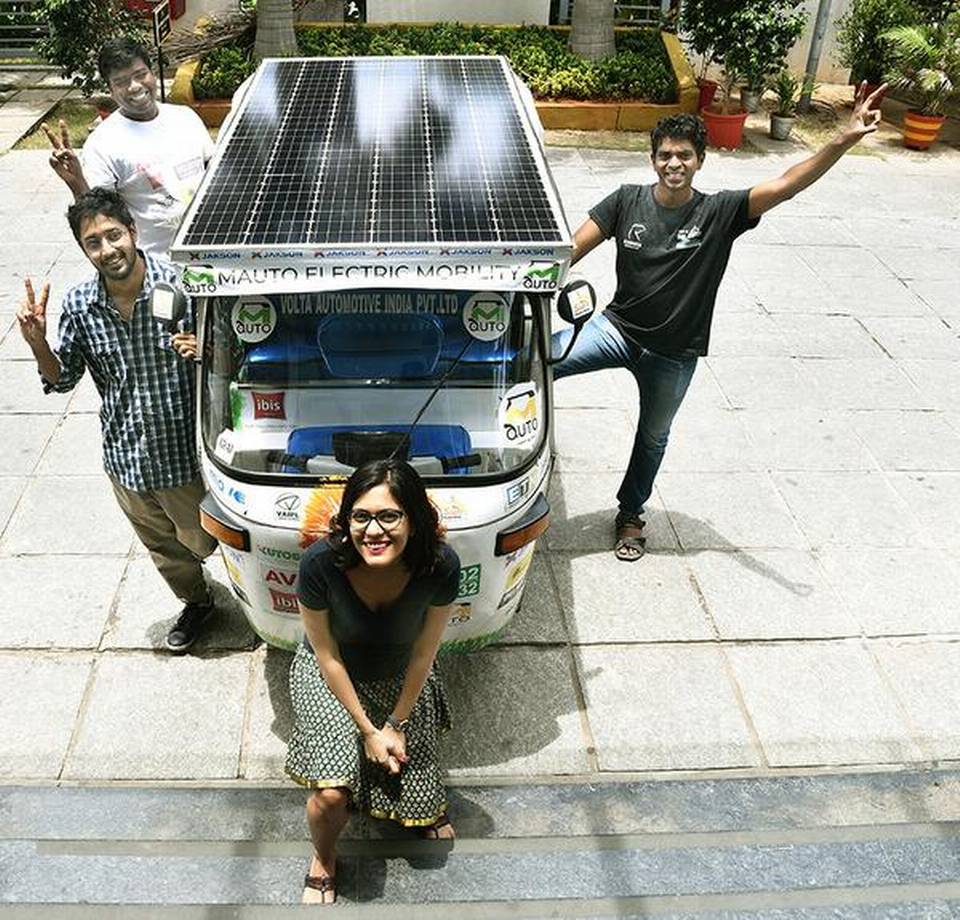
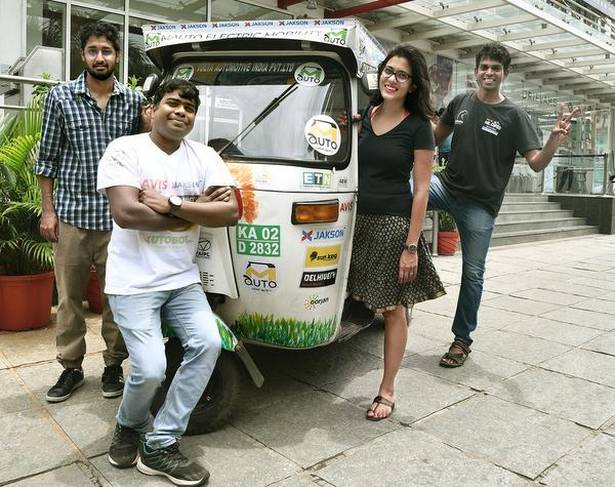
Meet this group that has travelled across 60 cities in 60 days on a solar-powered auto rickshaw
Many a hitch-hiker across the country has hopped on to this white auto rickshaw that is currently travelling across the country. “We picked up somebody along the way from Satara and dropped him in Pune. We also helped a couple whose car had broken down midway,” says Sushil Reddy, 30, who came up with the idea of a road trip in a tuk tuk. He is joined by Pallavi Siddhanta (27), Sudheer Lekkala (29) and Rutvick Arya (27) and together they have completed around 6,000 kilometres.
After making a pit stop in Chennai, they are now headed back to Bengaluru, where they started their journey from, on May 25. The 60-day trip covering as many cities is scheduled to end today. The team has covered Pune, Mumbai, Surat, Ahmedabad, Udaipur, Jaipur, Gurgaon, Delhi, Agra, Mathura, Lucknow, Kanpur, Benaras, Kolkata, Srikakulam, Visakhapatnam, Kakinada, Eluru, Vijaywada, Ongole, Nellore and Chennai among others.
Ray of hope
“Our project is called the Sun Pedal Ride. The idea is to spread awareness about solar energy,” says Sushil. Their auto rickshaw — provided by Volta Automotive, a Bengaluru-based company that manufactures and deals with green energy projects — is a solar-powered electric vehicle, with a solar panel fitted over head. The team believes there is relatively less noise pollution and it is more fuel efficient. “It is 50 paise per kilometre, while in other autos it’s four rupees per kilometre,” he adds. The battery in this auto is charged after every 120 kilometres. It takes four to five hours for it to be fully charged. Sushil and Sudheer both work in the solar sector, while Pallavi is a freelance communication and marketing professional and Rutvick is a software engineer.
For Sudheer, who is doing bulk of the driving, hitting the highways at a limited speed of 45 kilometre per hour gets frustrating sometimes. Given that an auto rickshaw is not the most comfortable vehicle, driving 150 kilometres a day takes a toll on his shoulders and back. “But I just listen to music and all of us make sure we keep ourselves hydrated with electrolyte water,” he smiles.
While the trip sounds like fun, they have also had their share of challenges. The heat, being one. “We chose the summer months so we could utilise solar energy to the maximum,” says Sushil. The team has also fallen ill on many occassions. “Mostly stomach issues, considering we have been eating streetside food. Sometimes it’s the spicy local food that is the cause,” says Pallavi. “Then we quickly learnt that egg bhurji and roti are the safest to eat at most places,” says Rutvick.
Some of the accommodation they managed to get in few of the smaller towns and cities were far from luxurious. “We have seen flora and fauna of all kinds on our beds,” laughs Pallavi, adding, “So when we check into the Ibis hotels (the hospitality group is supporting this cause as part of their sustainability programme) in the bigger cities we know we are going to have a good night’s sleep.”
source: http://www.thehindu.com / The Hindu / Home> Life & Style> Travel / by Priyadarshini Paitandy / July 25th, 2019
total of 523 children were rescued from Yesvanthpur, Krantiveera Sangolli Rayanna, and other railway stations in 2018
The initiative will operate with dedicated child helpdesks at all nominated A and A1 stations
Operation Nanhe Farishte, a dedicated child-rescue initiative by the Railway Protection Force (RPF) of the South Western Railways (SWR), will be replicated across the country.
The initiative will operate under the same name with dedicated child helpdesks operating from all nominated A and A1 stations. The decision was taken at a Railway Board meeting recently.
‘Nanhe Farishte’ — meaning Little Angles — was an initiative taken by D.B. Kasar, Chief Security Commissioner, RPF of SWR, in July 2017, with a dedicated team of rescuers to identify and prevent the inflow of children who are illegally brought to the city, mainly to work as child labourers. Apart from Bengaluru, it was also implemented in Mysuru and Hubballi.
2,235 rescued
SWR, with the help of a few non-governmental organisations, has rescued over 2,235 children from July 2017 to March 2019. The rescued were victims of child labour, bonded labour, prostitution, organ-trade rings, and a few runaways. A total of 416 children were rescued in Bengaluru, in 2017, while 523 were rescued in 2018 from Krantiveera Sangolli Rayanna Railway station, Yesvanthpur Railway station, and other stations.
Debasmita Chattopadhyaya Banerjee, Senior Divisional Security Commissioner, Railway Protection Force of SWR, who has been supervising the operation since its inception, said it was a welcome move and one that needed immediate attention across the country. “Though the Indian Railways has systems to check human trafficking , it does not have a dedicated team for this. This prompted us to take up the initiative,” she said.
Legal angles
However, the RPF does not have the powers under The Immoral Traffic (Prevention) Act, 1956, to arrest the perpetrators. Its only job is to prima facie hand them over to respective agencies.
Arguing for more powers for RPF in such cases, she said, “As we are the immediate responders, our role is crucial. If the agency which is identifying has the power to arrest and prosecute, then the the system will be more effective and efficient.”
As per The Railway Property (Unlawful Possession) Act, 1966, people can be punished by the RPF for suspected possession of railway properties, whether obtained unlawfully or stolen. “If a law can exist for things and goods, then special laws for people should also be given to RPF,” an official said.
NGOs such as International Justice Mission (IJM) and CHILDLINE India Foundation assist the RPF in identifying and enquiring about children who are possibly trafficked. They also help in training and sensitising of officials, ground staff and the general public.
Patrolling on trains
M. Prathima, associate director, IJM, said that human trafficking was an organised crime with complex links. She said patrolling on trains was as important as patrolling at railway stations and government should look into this issue immediately. “Coordination and cooperation between different government agencies, private organisations, and stakeholders, including the general public is important to effectively combat this issue,” she said.
Mahesh Jakati, program manager at CHILDLINE India Foundation — which has volunteers stationed at the railway stations for Nanhe Farishte — said that if the children were not rescued at the right time, they became vulnerable to all kinds of abuse and are forced to lead a poor life devoid of education, care, or protection, while often ending up on the streets.
Toll-free helpline
The rescued are taken to the helpdesk, given necessary care such as food, rest, medical check-up, along with counselling and are produced before the Child Welfare Committee (CWC), who later restore the victims to their families.
To alert the agencies concerned about the suspicious movement of children on railway station premises, the public can call the toll-free security helpline number 182, or child line 1098, or the police helpline 100.
source: http://www.thehindu.com / The Hindu / Home> News> Cities> Bengaluru / by Jayashima K.R / Bengaluru – July 09th, 2019
Shalini’s struggles began after she travelled to Cambodia with her husband on her fourth wedding anniversary in 2012. She came down with a mild fever, which was wrongly diagnosed as dengue at the time.
Shalini Saraswathi
Bengaluru :
Shalini Saraswathi cherishes her life too much now. “When you have come too close to losing your life, you realise not to take things for granted,” says the 40-year-old para-athlete.
The blade runner, a quadruple amputee, won the bronze medal at the national-level parathletics held last year, and is now aiming for the 100-metre and 200-metre sprints in 2020. She will also be inaugurating Mercy Drops, a community resource centre that will promote the culture of sharing, on June 7.
“I never considered myself to be an athlete at all,” says Saraswathi, who was diagnosed with acute Rickettsial – a rare bacterial infection – in 2012.
“After two years of bed rest and trying to figure out how to go about my life, I met coach B P Aiyappa, who then trained me. During the first year of getting my life back on track in 2014, I would walk around Kanteerava Stadium to get a grip on my prosthetics. By the second year, I had got my blades and started running for 90 minutes daily,” recalls Shalini, who also participated in TCS 10K marathon.
She now practises every morning, before heading off to work at a BPO.
Shalini’s struggles began after she travelled to Cambodia with her husband on her fourth wedding anniversary in 2012. She came down with a mild fever, which was wrongly diagnosed as dengue at the time.
The Bengaluru resident, who originally belongs to Kollam district in Kerala, finally got the right diagnosis and her treatment began, but she was forced to undergo amputation.
During the course of treatment, Shalini also lost her baby, which affected her physically and mentally. As gangrene attacked her, she suffered multiple organ failures.
“Initially I hated myself for the person I had become. It was a journey to be okay with who I am,” recounts Shalini.
Her husband, family and friends have been her support throughout her journey.
Explaining that the challenge for her earlier was to accept the person she had become, she adds that she still struggles with wearing her prosthetics every day, or coming to terms with the fact she cannot drive a car anymore.
“To overcome it, I sometimes write dark poetry and verbalise what I am going through,” she says. “I often cry. Mourning is the best way to overcome your losses.”
source: http://www.newindianexpress.com / The New Indian Express / Home> Cities> Bengaluru / by Preeja Prasad / Express News Service / June 01st, 2019
The Old Boys, as they are known, relish a history of sending their own to the armed forces to defend the country.
Martyrs’ family members | shriram BN
Bengaluru :
Wreaths were laid, The Last Post played, followed by traditional memorial band tunes, as they called to rest upon four of their own martyrs. The Old Boys Association of St Joseph’s Boys’ High School, which is one of the oldest alumni associations in the city, marked their 100 years of existence by honouring the post-independence martyrs who were part of their association.
The Old Boys, as they are known, relish a history of sending their own to the armed forces to defend the country. It started with the First World War, until recent battles in independent India. The numbers tally to 360 old boys, who served in various battlefields across the world, some being just teenagers. They recalled the association with pride about their alumna.
On Saturday, on one of their last events for their centenary year, the association inaugurated two plaques in the St Joseph’s Boys’ High School. One at the war memorial, and another in the school, with names of four Indian Alumni – Capt John A Dalby, from 5 field regiment, who was martyred on November 18, 1962 at Jaswanth Garh, during the Sino-Indian War; Major Uday Shankar Ghosh, 13 Sikh Light Infantry, martyred on June 26, 1989 in The Indian Peace Keeping Force in Sri Lanka; Major Palecanda Atul Deviah, 6 Field Regiment, in operation Meghdoot at Siachen Glacier; and Major Sylvester Rajesh Rathnam, 21 JAT, martyred on August 2, 2002, in operation Parakrama in Kupwara, Jammu and Kashmir.
Families of the martyrs gathered with the Old Boys and friends at the Memorial Service that was celebrated by the archbishop of Bengaluru, Peter Machado, before paying their respects to the martyrs at the school campus. While the pipe band from the Madras Engineering Group and Centre played Slow March. Families and friends mourned their beloved as the Sappers played the Last Post and the Rouse at the memorial.
Families of martyrs find closure in Old Boys’ ceremony
“It has been a long and heartbreaking journey for me. As John’s oldest daughter I will be eternally grateful to all of you for assisting me to find closure after 58 years,” said Cheryl Dalby, daughter of late Captain John Albert Dalby, SM, 5 Field Regiment.
He was martyred on November 18, 1962, at The Jaswant Garh – Sela Sector in NEFA during the Sino-Indian war. She was addressing the Old Boys Association, St Joseph’s Boys’ High School, honouring four Old Boy martyrs on Saturday, at the school campus. To Cheryl, like the families of other martyrs of the institute, the traditional memorial service was a means of getting closure.
source: http://www.newindianexpress.com / The New Indian Express / Home> Cities> Bengaluru / by Pearl Marial D’Souza / Express News Service / May 26th, 2019