Category Archives: World Opinion

Let’s not repeat what was done to Fredericks

Manuel Fredericks. Picture credit: facebook.com/ Manuel Fredericks

It has taken India a very long time to recognise Manuel Fredericks and confer him with the Dhyan Chand Award for lifetime achievement. Clearly, we could have done better for the former goalkeeper who was in the bronze medal-winning hockey team in the 1972 Munich Olympics.

The least the Ministry of Youth Affairs and Sports and successive governments could have done was given him the Arjuna Award at least. Agreed that hockey is a team sport and everyone cannot get an award. But did he have to apply nine times before being finally considered for any award?

It was a well-known fact that Fredericks was not in the best of situations financially. Forget about awards, it is bewildering that he hardly received any help. He was managing to make ends meet by coaching school children and a small pension. His case is the perfect example of how we neglect our national sporting heroes.

The selection of Arjuna Awardees was ridden with bad decisions and undeserving winners. Not very long ago, it was a three-member selection committee and there was a big furore over the winners. Fortunately, it is a 12-member committee picking the winners.

It is also baffling as to why three-time Asia-Pacific Rally Championship winner Gaurav Gill had to wait this long before finally being given the Arjuna in motorsport. He was the champion in 2013, ’16 and ’17 and should have been conferred the award much earlier.

Another case is that of hockey wizard Dhyan Chand, whose birthday on August 29 is celebrated as National Sports Day. The Khel Ratna, Arjuna, Dronacharya and Dhyan Chand Awards are presented.

It is surprising that he has not been given the Bharat Ratna, considering that his feats remain unparalleled and was largely responsible for India’s first three hockey gold medals in the Olympics in Amsterdam (1928), Los Angeles (1932) and Berlin (1936). He got the Padma Bhushan, India’s third-highest civilian honour, in 1956. But he clearly deserved the Bharat Ratna, no matter how late.

When master batsman and cricket legend Sachin Tendulkar got the Ratna in 2014, several the hockey fraternity was up in arms and felt Dhyan Chand deserved it. That was probably the wrong way of looking at it. Tendulkar definitely deserved it, no question about that. However, what stopped the government from conferring it to Dhyan Chand earlier or later than 2014 is quizzing.

It is not always the fault or slip-up of the committee or Ministry that deserving candidates get left out. National federations and state associations sometimes fail to send in the nominations on time in order to be considered for the Award.

Take the case of sprinter Dutee Chand. The Odisha Government sent her nomination late and was thus rejected by the Ministry. Her nomination was also rejected because it was not in order. This is exactly the kind of lackadaisical approach that deprives a sportsperson of recognition.

Even when it comes to recognising sportspersons’ achievements and simply awarding them promotions, governments sometimes fail. For instance, sportspersons who are with law enforcement agencies like the police quite often go unrecognised. High-achieving sportspersons and employed with the Haryana or Punjab police are given generous promotions. It is difficult to think of other states that reward sportspersons as well as Punjab or Haryana.

There is one truth that we have to wake up to. If there is no timely incentive for good performances, it could very well have the negative impact of keeping youth away from sport. At a time when Indians are making their mark in international sport,  we could do well to reward them suitably.

source: http://www.deccanherald.com / Deccan Herald / Home> Opinion / by Vivek Phadnis, DH WebDesk, Bengaluru / August 18th, 2019
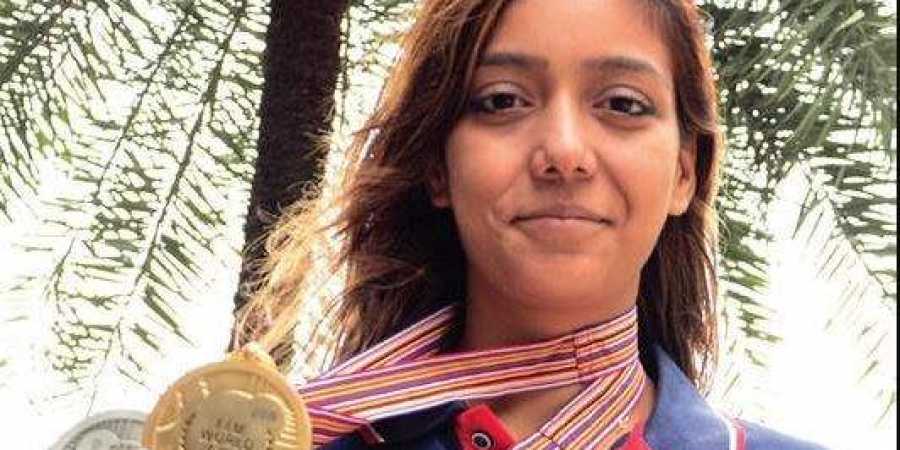
Woman biker wins laurels at global championship

While Pissay is one of the youngest motorsport persons in India to bag the international title, she says it is a delayed achievement when compared to riders from other countries.

AishwaryaPissayBF16aug2019

Bengaluru :

Aishwarya Pissay from Banashankari has won the international off-road championship, FIM Baja World Cup 2019 Women’s Category in Hungary, becoming the first Indian to achieve this feat.

Pissay secured first position in the four-round championship with overall 65 points, whereas Rita Viera from Portugal came second with 61 points. The 23-year-old Pissay has been practising bike racing for five years. It was during her college days that she picked up this motorsport which made some raise their eyebrows over. “People also told me that it is not a thing that I should choose. But my motivation increased when I started participating in more rallies and races. With the support of sponsors, within a span of five years, I could win six national championships and two international championships,” tells Pissay.
This rider from TVS Racing, the factory racing team of TVS Motor Company, calls motorsport a serious sport, where riders are required to possess dedication, endurance and patience. She ensures that she is trained three days in a week at Big Rock Dirtpark in Kolar to improve her riding skills. Pissay also attends a performance lab on Cunningham Road for mental conditioning and nutrition care to make her fit for each race. “Meditation is my routine. It helps maintain my focus.”

While Pissay is one of the youngest motorsport persons in India to bag the international title, she says it is a delayed achievement when compared to riders from other countries. “I’m not really young in this field. But when we compare the situation in India, yes, I’m young. I think it’s absolutely a pride moment that I made a difference here and put India on the global motorsport. Just hope to see this change lead forward. I believe what I have done or what dignitaries like C S Santhosh has been doing is a hope to people. It definitely gives people hope that they can achieve outside the country and fly the tri-colour flag,” concludes Pissay, whose ultimate aim is to finish the Dakar Rally.

source: http://www.newindianexpress.com / The New Indian Express / Home> Cities> Bengaluru / by Lesly Joseph / Express News Service / August 15th, 2019

City dance team wins big in global contest

OneGroupDanceBF15aug2019

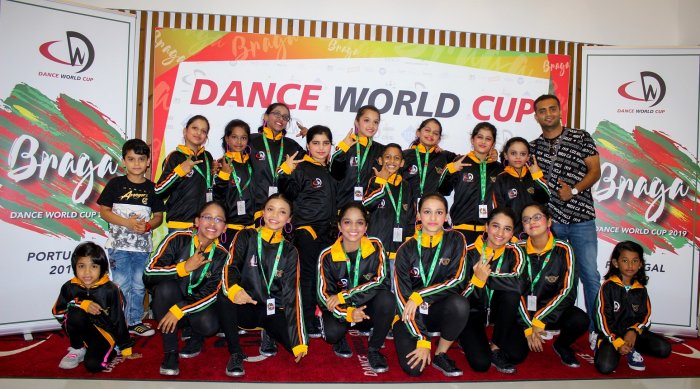
Bengaluru dance group ‘One Move’s’ kids team represented India in ‘Dance World Cup 2019’ held in Braga, Portugal. The event saw 56 participating countries with more than 6,000 participants.

India won the second position this year as compared to last year’s fifth position for the same category — ‘Under 14 ‘Hip-Hop duet/trio’. The dancers were Neha and Sampada. Meghan Singhal was placed sixth in the ‘Under 17 Hip Hop Solo (junior category).

The team comprising of 16 girls and one boy won the fourth position for the ‘Show Dance Category’ where they performed Bollywood and freestyle. In the ‘ Hip Hop group dance, they were placed fifth. Sushil Jay, director and founder, ‘One Move’, says, “After last year, I understood the competition level and prepared my kids accordingly. It is a year of hard work that has paid off. I am extremely proud of them all. We now look forward to next year’s competition. If we clear the qualifying round in India in December, we fly to Italy in June.”

source: http://www.deccanherald.com / Deccan Herald / Home> Metrolife> Metrolife – Your Bond With Bengaluru / by DH News Service – Bengaluru / August 13th, 2019

Bengaluru boy wins gold at Mathematics Olympiad

Pranjal
Pranjal

Pranjal, a student of National Public School- Koramangala, recently won the gold medal at the recently concluded International Mathematics Olympiad’s (IMO 2019) in United Kingdom.

IMO is revered as the biggest and toughest of the science competitions across the world.

Speaking to Metrolife, Ashish Srivastava, Pranjal’s father, says “What makes Pranjal’s medal noteworthy is that he is youngest ever to win a gold medal from India and his win has ends the seven-year drought of gold for India. The competition that had 210 countries and more than 600 participants, proved to be a memorable experience for Pranjal.”

After his return, Pranjal, was felicitated by legendary mathematician Prof Mahan Maharaj of TIFR.

source: http://www.deccanherald.com / Deccan Herald / Home> Metrolife> Metro Lifestyle / DH News Service, Bengaluru / August 13th, 2019

A Bengaluru nine-year-old clears class 10 IGCSE exam held by Cambridge International

Aarav Nallur. | Photo Credit: Special Arrangement

Aarav’s parents said he was a prodigy in mathematics and had a higher Intelligence Quotient (IQ) than other children his age.

A nine-year-old boy from a city school has cleared the Class 10 International General Certificate of Secondary Education (IGCSE) mathematics examination conducted by Cambridge International. Aarav Nallur wrote the exam this May while he was studying in Class 3 and managed to get an ‘A’ grade. The results for the IGCSE (Class 10 equivalent), AS (Class 11), and A Level (Class 12) exams were announced on Tuesday.

Aarav’s parents said he was a prodigy in mathematics and had a higher Intelligence Quotient (IQ) than other children his age. After they discussed it with teachers at his school TRIO World Academy, a high school mathematics teacher decided to prepare him for the IGCSE exam. He sat in the mathematics classes meant for students from Classes 9 and 10 even as he attended all the other classes with his Class 3 mates.

“He used to spend one hour every evening completely focused on mathematics. Every Saturday, his maths teacher would come to the house and teach him for two hours,” said Aarav’s mother, Divya Nallur.

According to his teachers and parents, the results of his IQ test, conducted by a clinical psychologist in the U.K., fall in the top 2 percentile of high IQ members across the world. Aarav wants to become a mathematician.

“We are very proud of Aarav Nallur’s achievements. Being a nine-year-old kid and scoring such good results at Grade 10 examinations is very unusual. He is an inspiration to other students as well,” said Naveen K.M., Md, Trio World Academy, in a press release.

source: http://www.thehindu.com / The Hindu / Home> News> Cities> Bengaluru / by Staff Reporter / Bengaluru – August 14th, 2019

Khanapur girl part of World Para-Badminton Championship

Arati (22), a specially-abled player, was born with one hand. From a tender age, she had a passion for sports.

Arati Patil playing badminton. (Photo | EPS)

Belagavi :

Arati Janoba Patil, a native of Nandgad village in Khanapur taluk presently staying at Uchgaon village in Kolhapur district, has been selected for the BWF World Para-Badminton Championship, to be held in Switzerland from August 20-25.

Arati (22), a specially-abled player, was born with one hand. From a tender age, she had a passion for sports. It didn’t take long for determination and hard work she has abundance of, converting into success.
She grabbed the attention of selectors when she proved her mettle in several state, national and international-level badminton competitions.

She bagged the silver medal in Asian Youth Para Games held in Dubai in 2017, and a bronze medal in Victor-Denmark Para-Badminton Championship held in Denmark in 2018. She won bronze again in Uganda Para-Badminton, an international event held in Uganda in April 2019. Her consistent good performances in international events made selectors choose Arati for the world badminton championship.

Arati was born and raised in a poor family at Nandgad village, which happens to be the birthplace of great patriot Sangolli Rayanna. Needless to say, people of Khanapur sing praises of her success.
Speaking to Express, Arati said, “Support and encouragement of my father Janoba, uncle Nagendra Sambrekar and coach Sunil Dewang helped me reach this level in badminton. Although our financial condition was not good, my father arranged money by taking loans for my training and travel expenses to participate in international competitions. I could not have achieved this without my family’s support.”
Arati is one among 21 players who will represent India in World Para Badminton Championship. A team of 30 including coach, manager, physiotherapist will leave for Switzerland on August 15. Physically challenged sportsmen from about 50 countries will take part in the event.

Financial support needed

Only 22 participants including coaches have got travel and other expenditure from the government, while the Paralympic Committee of India has conveyed that the remaining eight players have to bear their own travel and other expenditure.

Although Arati has been selected in the Indian squad, she will not be paid. Arati needed about Rs 2.5 lakh for her expenses of travel and stay, and her family is facing great hardship to arrange this sum. Her father who is a construction worker is struggling to arrange the same.“My father has already arranged Rs 1 lakh by taking a loan. I am in need of Rs 1.5 lakh,” said Arati. Philanthropists could help this budding sportswoman participate on a global platform and give her a chance to make the country proud.

source: http://www.newindianexpress.com / The New Indian Express / Home> States> Karnataka / by Sunil Patil / Express News Service / August 03rd, 2019

KLETU students shine in Aero Design event

The AeroKLE team with their working models. | Photo Credit: Special Arrangement

They come first in regular class and third in micro class in national tournament

AeroKLE, a team of 17 students of KLE Technological University (KLETU), has secured the top place, in the regular class, at the national-level SAE India Aero Design 2019 competition held in Tamil Nadu.

In the recent competition, organised by SRM Institute of Science and Technology, they also secured the third rank in the micro class. As many as 146 teams from across the country took part in the competition.

The team comprised Vineet Anand Bedarman (captain), Amit Allimatti, Sayyed Ahmed Zuhair, Rohit Anvekar, Rahul Pattar, Shridhar Hadimani, Om Prakash Patel, Yajnesh Poojari, Koustubh Annigeri, Sujay C, Nilesh Bandekar, Mallikarjun Pattanshetty, Yeshwanth Kumar, Ajey Joshi, Alex Steven Dharmdas, Calvin Lobo, and G.V. Srikar.

The team was guided by Head of School of Mechanical Engineering, KLETU, B.B. Kotturshettar; Head of Centre of Material Sciences Nagaraj Banapurmath, and faculty coordinator G.M. Hiremath.

They were involved in designing and testing different prototypes in Hubballi.

They also optimised the final aircraft designs and submitted the technical design report at the event.

The report too was praised by judges and was has adjudged the ‘best technical design report’ at the event.

The students have bagged a purse of ₹1.35 lakh.

At the contest, the regular class demanded the highest payload to be lifted, whereas the micro class demanded the highest payload fraction.

The teams had to conform to the mechanical and electrical limitations as prescribed by Society of Automotive Engineers (SAE), India.

Experts from the Indian Space and Research Organisation, the Defence Research and Development Organisation, Hindustan Aeronautics Limited, and National Aerospace Laboratories were the judges for the event.

source: http://www.thehindu.com / The Hindu / Home> News> States> Karnataka / by Special Correspondent / Hubballi – August 02nd, 2019

Mysuru’s Wodeyar royal family-preserved Bhagavat Purana manuscript turned into book

The Bhagavata Purana concerns itself with various aspects and incarnations of the god Vishnu, and book 10 of this long text has to do with the life of Krishna.

The Great Mysore Bhagavata

New Delhi :

A surviving manuscript of the Bhagavat Purana from South India, detailing the exploits of Lord Krishna in his later years, has been transformed into an illustrated book by eminent art historian B N Goswamy.

The manuscript was once in the library of the royal house of the Wodeyars of Mysore before it landed at an exhibition in London. Soon afterwards, Edwin Binney III acquired it, added it to his rich collection of Indian paintings and later donated it to the San Diego Museum of Art.

The subject of the manuscript is the ancient religious text, the ‘Bhagavata Purana’, and we know that it was written and illustrated for the Mysore ruler, Mummadi Krishnaraja Wodeyar (born 1794, died 1868; period of effective rule 1799-1831), said Goswamy.

His book ‘The Great Mysore Bhagavata’ with essays by Robert J Del Bonta and Caleb Simmons seeks to do a complete study of the manuscript.

The intention is to enable the reader to access all that is there in the manuscript, save the complete text in Kannada which in any case is based on the original Sanskrit text of the Bhagavata Purana, he added.

According to the author, the Bhagavata Purana, as a subject, has been painted over and over again, but the section of it which this book deals with – the latter half of the tenth ‘skandha’, which leaves the winsome childhood and the seductive growing years of Krishna far behind – does not have too many precedents.

In ‘The Great Mysore Bhagavata’, published by Niyogi Books, there are leaps of imagination that can mesmerise the readers, and the episodes picked up by its great but unnamed illustrators are explored in dense, brilliant detail.

At each step, the painters seem to have been aware of the importance of the text itself.

The author also describes in detail 60 significant paintings, most of which are related to Krishna.

Although the San Diego manuscript of the Bhagavata Purana is unfinished, it is remarkable for the quantity and intricacy of its illustrations.

The Bhagavata Purana concerns itself with various aspects and incarnations of the god Vishnu, and book 10 of this long text has to do with the life of Krishna and is separated into two parts; this would have been intended to be that second part dealing with Krishna’s adulthood, said Robert J Del Bonta.

source: http://www.newindianexpress.com / The New Indian Express / Home> Lifestyle> Books / by PTI / July 31st, 2019

Engineering students create GPS-enabled clock

This processes the GMT time and converts it to Indian time. 18 Light Emitting Diodes (LED) bulbs give off red, green and blue light to indicate hours, minutes and second hand on a single strip.

Bengaluru :

Six students of Sapthagiri College of Engineering, with help from their faculty designed a clock of 3 feet diameter, which takes the time from the satellite through GPS (Global Positioning System). Much like how location information is enabled through satellites, time information can also be received.

Dr Dinesh K Anvekar, head of Research and Development as well as faculty in the Department of Electronics and Communication Engineering (ECE) said, “The chip or micro-controller called Arduino was fed with a programme prepared by the students in C language. This processes the GMT time and converts it to Indian time. 18 Light Emitting Diodes (LED) bulbs give off red, green and blue light to indicate hours, minutes and second hand on a single strip. There are no moving hands like a regular clock.”

The clock was designed in over three weeks and was done during their holidays. Only an uninterrupted power supply is required to keep the clock running. However, solar power-based supply has also been included in the design.

“It is very useful for providing accurate time for the public in railway and bus stations. Maintenance required is very minimal,” he added.With the procurement of materials, the clock costed Rs 10,000. However, if the size is reduced to 1 feet in diameter, it would cost Rs 4,000.

source: http://www.newindianexpress.com / The New Indian Express / Home> Cities> Bengaluru / by Express News Service / August 04th, 2019

Isro’s Peenya facility to track space debris

NASA estimates that over 20,000 pieces of debris larger than a softball orbit the Earth. Illustration: NASA

To protect Indian satellites from collision with thousands of space debris, the Indian Space Research Organisation just got dead serious. On Friday, Isro made the first step to build a Space Situational Awareness Control Centre at Peenya.

Over 10,000 debris of 10-cm diameter or more float dangerously in the orbits, increasingly populated by satellites big and small launched by countries worldwide. Space situational awareness and management has become increasingly critical to tackle the heightened threat of these debris with operational spacecraft.

The control centre will be part of the Directorate of Space Situational Awareness and Management set up by Isro recently. The directorate’s mandate is to protect high-value space assets from space debris close approaches and collisions.

On the Centre’s radar will be inactive satellites, pieces of orbiting objects, near-earth asteroids and adverse space weather conditions. Data from inactive satellites will be tracked from indigenous observation facilities and analysed to generate information critical for active satellites, informs Isro.

Eventually, the control centre will be part of an ecosystem that boosts research into active space debris modelling and removal. Isro chairman K Sivan laid the foundation stone for the centre on Friday.

As a top space scientist explained to DH, the chances of a debris colliding with an active satellite is still remote. “There is still only a one-in-a-million chance. But both the low orbit of 500 to 2,000 km and the geostationary orbit of 36,000 km are getting populated fast with such debris, and will eventually become a dangerous junkyard,” he noted.

To avoid future collisions, the United Nations Committee on Peaceful Use of Outer Space (COPUOS) had come out with a set of guidelines. One of these is to actively track satellites nearing their life span and lower them to an orbit so that they are burnt on entry into the earth’s atmosphere.

The UN panel had urged the states and intergovernmental organisations to develop technologies to measure, monitor and characterise orbital and physical properties of space debris, determine the risk of collision and make trajectory adjustments to avoid it. The Isro centre will also follow these guidelines.

The National Aeronautics and Space Administration (Nasa) estimates that over 20,000 pieces of debris, larger than a softball, orbit the Earth. They travel at speeds up to 17,500 mph (over 28,000 kmph), fast enough for a relatively small piece of orbital debris to damage a satellite or a spacecraft.

source: http://www.deccanherald.com / Deccan Herald / Home> Cities> Top Bengaluru Stories / by Rasheed Kappan, DH News Service / Bengaluru – August 04th, 2019