L. Narayan Reddy, 84, a pioneer of organic farming in Karnataka , passed away in his sleep on Monday at his Marenahalli farm near Doddaballapur. He was known as Karnataka’s Masanobu Fukuoka, after the pioneer organic farmer of Japan. Mr. Fukuoka had even visited his farm in 1988.
Known for his simplicity and practical approach to farming, Mr. Reddy never minced words when he criticised what he called the “lopsided agricultural policy” that rendered agriculture unsustainable. He hailed from a village near Varthur on the city’s outskirts and started with chemical farming in 1970s, only to soon realise that it was unsustainable and he was incurring losses.
Influenced by Fukuoka’s book on farming, he took to organic farming. “Organic farming is not just about mere cultivation practices but is a lifestyle in itself,” he argued, adding that agriculture was a philosophy of living in harmony with nature.
Following the rapid urbanisation of Varthur, he bought land at Marenahalli near Doddaballapur and built his farm there in his old age. Though he was not formally educated in farming, he was known for experiments and a scientific approach to farming. Several foreign universities sent their students on study visits to his farm. He was awarded the Nadoja award and an honorary doctorate from Kannada University, Hampi.
Jagadish Reddy, his grandson, told The Hindu that Mr. Reddy, who stayed healthy till the end, rarely went to the hospital. “He had been suffering from an incessant cough for a week. He agreed to get a full body check-up done on Sunday evening. We were supposed to take him on Monday morning. But he passed away in his sleep,” he said.
source: http://www.thehindu.com / The Hindu / Home> News> States> Karnataka / by Staff Reporter / Bengaluru – January 14th, 2019
The synthetic metabolite was more stable and more effective in treating and preventing colitis in mice model than the natural metabolite, say Sandeep Chandrashekharappa (right) and Praveen Vemula.
Inflammatory bowel diseases like colitis occurs when the integrity of the gut lining is compromised
Researchers have successfully isolated a microbial metabolite (Urolithin A or UroA) responsible for protecting the integrity of the gut lining. Leakage of toxins and bacteria leading to inflammatory bowel diseases such as colitis occurs when the integrity of the gut lining is compromised.
However, not everyone has the gut microbes essential for converting the polyphenols present in berries and pomegranates into UroA metabolite. Besides isolating the metabolite, a multi-institutional team co-led by Dr. Praveen Kumar Vemula from the Institute for Stem Cell Biology and Regenerative Medicine (inStem), Bengaluru, synthesised an analogue by chemically modifying the naturally occurring metabolite.
The integrity of the gut barrier is maintained by tight junction proteins. Colitis and other inflammatory bowel diseases cause a significant reduction in the levels of the junction proteins, leading to leakage of microbes and toxins from the gut causing acute or chronic inflammation. Restoring the integrity of the gut barrier is therefore essential for treating colitis.
The natural and synthetic metabolites have anti-inflammatory property and also increase the production of tight junction proteins. “But the synthetic metabolite was more stable and more effective in treating and preventing colitis in mice model than the natural metabolite. It was able to prevent and repair the damaged gut barrier and reduce inflammation. Synthetic metabolite even in nanomolar range was sufficient to treat or prevent colitis,” says Dr. Sandeep Chandrashekharappa from inStem and a co-author of a paper published in Nature Communications.
The metabolite (both natural and synthetic) repairs the gut barrier by activating a particular pathway (AhR-nrf2) leading to excess production of the tight junction proteins.
In vitro studies
Two different cell lines of the colon and another of immune cells (macrophages) were used for the study. A monolayer of colon cells mimicking the gut lining was treated with lipopolysaccharide to induce inflammation and breakage of the monolayer. While lipopolysaccharide destroyed the integrity of the monolayer, there was only minimal inflammation. Both metabolites were able to repair monolayer leakage with the synthetic one being more efficient than the natural metabolite.
In the case of immune cells, lipopolysaccharide treatment caused inflammation and excess production of inflammatory cytokines. Treatment with the metabolites stopped cytokine production and reduced the inflammation. Again, the synthetic metabolite outperformed the natural one.
Animal studies
The researchers induced acute colitis in mice by using a chemical (dextran sodium sulphate). There was increased inflammation and gut barrier leakage. Metabolites given orally led to complete reduction in inflammation and gut leakage repair. To mimic chronic colitis, the chemical was given to the mice for a prolonged period of ten weeks with two weeks of break after each week of chemical exposure. “The animals treated with the metabolites showed no inflammation and gut leakage even during the course of the treatment. We saw the leakage being repaired after two cycles of chemical treatment,” says Dr. Vemula.
Acute colitis in mice was produced by using a single dose of a different chemical followed by metabolite treatment. There was much lower inflammation and leakage after treatment. “The colon which had shrunk in length due to colitis regained its original length after treatment,” says Dr. Vemula.
Prophylactic property
To test the prophylactic property of the metabolite, mice were given one dose of the metabolite each day for seven days and a chemical was used to cause colitis on the seventh day. The ability of the metabolite to render protection was tested on day 11. “The animals did not develop colitis while the mice in the control group showed full-blown colitis,” says Anikita A. Hiwale from inStem and one of the authors of the paper.
“We are now making a library of analogues to come up with a synthetic metabolite that is even better than the one currently tested. We are planning for a start-up company for clinical development,” says Dr. Vemula.
source: http://www.thehindu.com / The Hindu / Home> Science / by R. Prasad / January 12th, 2019
An aerial view of Vijaya Vittala temple complex on banks of the Tungabhadra River in Hampi; the famous stone chariot | Express
Ballari :
Hampi has emerged at the second spot in the list of ‘52 places to go in 2019’ published by The New York Times. The UNESCO World Heritage Site figures behind Puerto Rico, which has grabbed the top place for its amazing recovery from Hurricane Maria to rebound as a tourist destination.
The report recommends Hampi as a favoured place, and talks about its archeological monuments, scenic vistas against the Tungabhadra river, and geological rock formations. “At the heights of the Vijayanagara Empire in the 16th century, Hampi thrived as one of the largest and richest cities in the world. Its architectural legacy lives on in the Southwestern State of Karnataka with over 1,000 well-preserved monuments, including Hindu temples, forts and palaces,” the report says. The description also mentions the difficulty in reaching there, while pointing out the recent air connectivity provided to Ballari from Hyderabad and Bengaluru. Tourists can take up rock climbing and river jaunts in basket boats (coracle), the feature says, while suggesting a few places to stay.
Hampi is the only destination not just from India, but entire South Asia, in the list.While the report brought happiness to experts, they also said that more needs to be done. “Let monuments be protected and showcased in a better manner. It is important for tourism,” Professor C S Vasudevan from Department of Ancient History and Archeology, Kannada University, Hampi, said.
Mallika Ghanti, Vice Chancellor, Kannada University, said that history of the Vijayanagara Empire is popular, and still has many hidden things. “If a proper excavation is done, it will bring out many more surprises pertaining to the lost history, best architectures and sculptures,” she said, adding that development of only Hampi is not enough, since villages around it should also see progress. “There should not be any eviction in the name of development of the world heritage site; it should be a package development,” she said.
source: http://www.newindianexpress.com / The New Indian Express / Home> States> Karnataka / by Subhash Chandra N S / Express News Service / January 11th, 2019
Caring for women: Participants at the 62nd All India Congress of Obstretics and Gynaecology formed a line stretching 1,078 metres using 10,105 sanitary pads.
Participants formed a line stretching 1,078 metres using 10,105 sanitary pads
To promote menstrual hygiene, especially among adolescents, gynaecologists attempted a Guinness world record by creating the ‘longest line of sanitary pads’ at the 62nd All India Congress of Obstetrics and Gynaecology (AICOG) that began in the city on Wednesday.
Over 1,500 gynaecologists, led by the organising chairperson Hema Divakar, created a line of 1,078 metres using 10,105 sanitary pads. Depicting women’s health, the sanitary pads were designed in the shape of a uterus and carried the tagline ‘Nothing’s more cuterus than your uterus’.
The Federation of Obstetric and Gynaecological Societies of India (FOGSI), which is organising AICOG 2019, collaborated with a pharma company for the attempt.
The Guinness record certificate will be presented to the organising chairperson of AICOG 2019 on Thursday. According to the organisers, the pads will be donated to four city-based schools — – Indirapriyadarshini Girls High School; RSPAVK High School, Jayanagar; Gokul Vidya Kendra and Muambika School for New Age — for distribution among their students.
According to the National Family Health Survey (NFHS) report published in December 2017, only 58% of women in the country in the age group of 15 to 24 use a hygienic method of menstrual protection.
source: http://www.thehindu.com / The Hindu / Home> News> Cities> Bengaluru / by Special Correspondent / January 09th, 2019
Deepika posted a photo of the menu at an eatery in Texas which sells dosas named after her and captioned it ‘hungry anyone?’
Bollywood actor Deepika Padukone (File | PTI)
Newly-weds Deepika Padukone and Ranveer Singh briefly interrupted their honeymoon to enjoy a laugh about a Texan restaurant that sells dosas named after the actress.
A fan shared a picture of the menu of Dosa Labs, an eatery from Texas. Deepika later posted a photo of the menu, which says the dosa is “topped with fiery hot ghost chilli and stuffed with our potato mix.” She captioned the post “hungry anyone?”
Ranveer posted it too, saying “I’d eat that!”
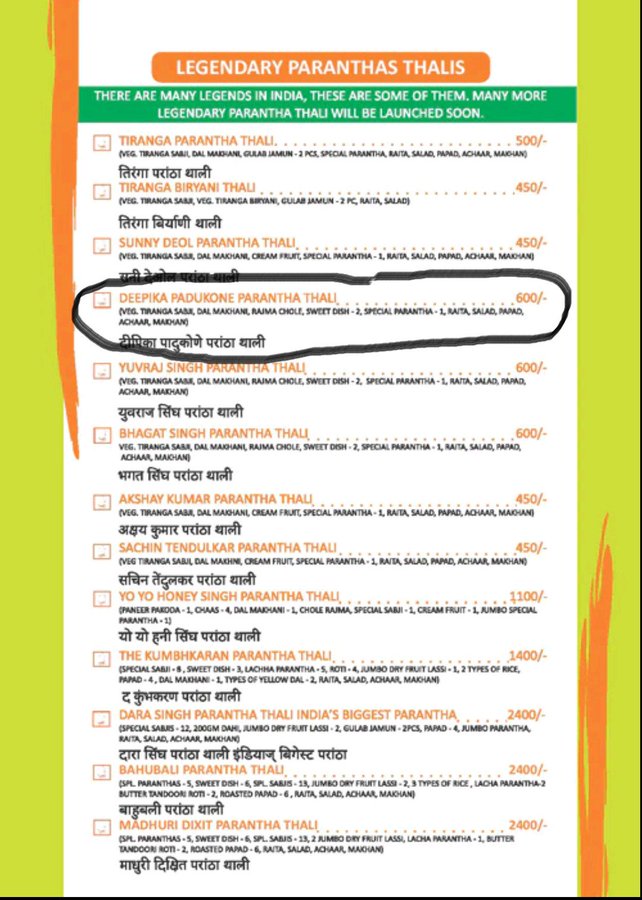
Another fan tweeted out to the actress, saying that there is a parantha thali named after her in a restaurant in Pune.
Deepika Padukone
✔@deepikapadukone
Rohit Bhasy@RohitBhasy
Replying to @deepikapadukone
@deepikapadukone you are also a Parantha Thali in Pune
It is not known when the lovebirds will return from their honeymoon, but Deepika would soon start work with Meghna Gulzar’s ‘Chapak’, where she will play the role of acid attack survivor Laxmi Agarwal.
source: http://www.newindianexpress.com / The New Indian Express / Home> Entertainment> Hindi / by Online Desk / January 02nd, 2019
Peter J Claus interacting with Siri Paddana artiste Kargi Pujarthi. Photo credit: S A Krishnaiah, senior folklorist, Udupi.
American researcher Dr Peter J Claus, who extensively studied Tulu culture and folklore, passed away on Sunday. He was 87.
Dr Claus headed the Department of Anthropology at the California State University.
He had carried out research on Tulunadu from 1967. He had followed the participation method and was well-versed in the use of Tulu and Sanskrit.
Before coming to Dakshina Kannada for research, Dr Claus learnt Kannada through interaction with Prof M B Krishnamurthy and Dr A K Ramanujan. He was also honoured with the Gaurava Prashasti by the Tulu Sahitya Academy in 2004.
He studied the kinship system in the Bunt community and was also attracted to folk art like Paddana and Siri cult.
According to researcher Prof A V Navada, after Dr Claus’ study on kinship among Bunts, he visited the coastal district four to five times and expanded his knowledge of Tulu culture.
Prof Navada and Subhashchandra have translated eight research articles of Dr Claus and published as ‘Tuluva Darshana’. Up to 15 articles of Dr Claus, related to Tulu will be published by Prasaranga of Mangaluru University next month.
source: http://www.deccanherald.com / Deccan Herald / Home> State> Mangaluru / by Naina J A / DH News Service / Mangaluru – December 30th, 2018
Sculptures and inscriptions dating back to 11th century have been unearthed at a heritage site in Lakkundi of Gadag district.
Idols and sculptures unearthed at Lakkundi in Gadag district on Sunday
Lakkundi, Gada :
Sculptures and inscriptions dating back to 11th century have been unearthed at a heritage site in Lakkundi of Gadag district. Jain sculptures belonging to Kalyani Chalukya-era were found when workers were digging earth to lay the foundation for a toilet on Sunday evening.
Lakkundi, the historic village located 12 km from Gadag, is known for heritage structures and step wells, also known as kalyanis. The area where the sculptures and inscriptions are found is located near Naganath temple. The findings include sculptures of Yaksha and Saraswati, Tirthankaras idols, three unclear inscriptions and many broken sculptures. Somanayak Bilekudari, who has been constructing a house near Naganath temple for the last three months, said his labourers told him about finding a stone, which looked like a part of temple. ‘Then we slowly cleared the mud and found sculptures one after another.
We informed the officials and more number of idols were discovered after that,” he said. “We found sculptures at a depth of six-feet and immediately informed the Archaeological Department. We are from Lakkundi. Hence, we know the value of each and every sculpture. Many sculptures and inscriptions are hidden beneath Lakkundi,” he added. After hearing the news about finding old sculptures, several people from surrounding villages and Gadag city started thronging the spot.
Assistant Archaeologist Prasannakumar from Dharwad Archaeology Survey of India and B Pramod of Gadag Archaeological Department visited Lakkundi and examined sculptures and took them into their custody. Speaking to TNIE, Pramod Bingi, senior conservation assistant director of Archaeology Department, said, “We got more than 50 broken sculptures and three inscriptions. Most of them belong to Jainism and they may be belonged to Kalyani Chalukya reign.
We are examining all in detail and it will take about a week to examine them by history experts.” The history lovers from Gadag are demanding a systematic excavation in Lakkundi. “Earlier the place had layers of fort, which are now missing. A road has come up in between the heritage structures, causing threat to the monuments, which are thousands of year old,” said a social worker from Gadag.
source: http://www.newindianexpress.com / The New Indian Express / Home> States> Karnataka / by Raghotta M. Koppar / Express News Service / December 26th, 2018
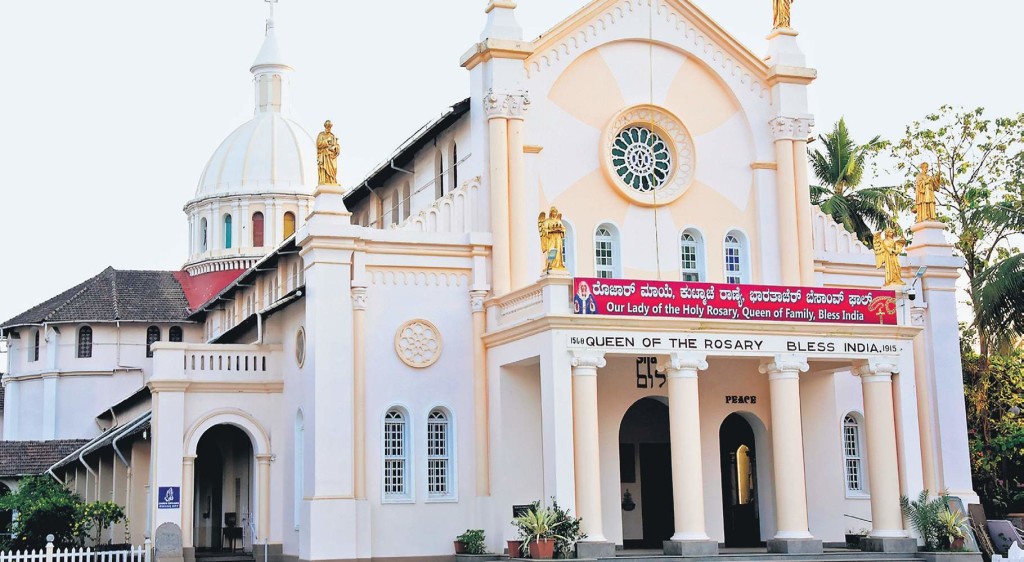
Hailed as the Rome of the East, Mangaluru is known for its beautiful churches with the oldest one, Rosario Cathedral, dating back to 450 years.
As Christianity started spreading roots, places of worships also started being established with Rosario Church (Our Lady of Rosary) in AD 1568. (Photo | EPS)
Mangaluru :
Hailed as the Rome of the East, Mangaluru is known for its beautiful churches with the oldest one, Rosario Cathedral, dating back to 450 years. A testament to the cultural, religious and architectural history of the city, these magnificent churches with their pinnacles and structures and jaw-dropping design and interiors hold you spellbound.
Christianity came to the Canara region by the 15th century and probably the Franciscans and Our Lady of Mercy missionaries working at Kerala coast would have visited Mangaluru during this time. With Portuguese taking Goa in AD 1510 and reinforcing it as their stronghold, the Christian community from Goa started migrating to Canara region. In AD 1526, a group of Franciscan Missionaries opened their mission in Mangalore and the first batch of Jesuits arrived by AD 1570 when evangelization started full scale. And by 1609, the region was under the jurisdiction of Goa Archdiocese.
ST Paul’s Church
As Christianity started spreading roots, places of worships also started being established with Rosario Church (Our Lady of Rosary) in AD 1568 – 69 followed by Milagres (Our Lady of Miracles) in AD 1680. And, as Christian population grew, the sub-stations became parishes and churches were constructed in these parishes with each church dedicated to either Mother Mary or prominent Saints of Catholic Church.
Since the early missionaries were from Europe, predominantly from Portugal and Rome, they brought in their architecture to the churches constructed here. “Churches are nothing but larger halls (nave) with an altar and most of them were replicas of the European churches. But not of that grandeur, as missionaries and local community constructed them with whatever material they could get here. The style was definitely Roman and Gothic,” says Mangalore Diocese Bishop Peter Paul Saldanha.
A major blow came when Mysore ruler Tipu Sultan captured Mangaluru from the British in 1784 and Tipu believing that the local Christian community aided the English, decided to punish them, taking them as captives to Srirangapatna. Thus began the long exile of the Christian community from Mangaluru between 1784 and 1799 till Tipu fell to the British East India Company. Tipu’s army ravaged several churches in the region, including the Milagres church. “However, the local Hindu community was benevolent towards the Christian places of worship protecting them till the community came back to erect the churches again,” says Lawrence Cutinha of Design Palace specialising in designing churches in Dakshina Kannada, Udupi and Chikkamagaluru districts.
“Catholic churches fall mostly into two categories, Roman and Gothic, where the former is dominant. Even today, most of the churches are designed in the same old design like a cross -with a nave and wings- though other shapes like circle and hexagon are also presently being considered. The facets in front of these churches give their traditional look,” he states.
With a good number of churches crossing 100 years, several of them have undergone renovation. “Old churches have a lot of interiors like carvings which we don’t replicate. It needs masonry skill and a lot of money. The old lime plaster is replaced with cement. The altar and tabernacle designs correlate with the type of the church, either Gothic or Roman style,” Cutinha says.
Author and journalist John Monteiro says that old churches have been conceived keeping in mind that there was no electricity or microphones in those days. “During the days without microphones, the voice of the priest had to reach the last man in the church. So they have been designed to echo the voice. There were special provisions like pulpits and lofts for choirs to sing. All have disappeared after the advent of microphones,” he says.
Further, the church architecture took a notable change when the Second Vatican Council in 1962 – 65 changed the way liturgy was conducted. From facing away from the laity, the priest turned towards them and altar was brought as a separate structure from tabernacle or sanctum. The council also brought in the vernacular language into worship in place of Latin, Monteiro says.
Compared to Roman Catholic church, Protestant church came to Mangaluru later – during the Basel Mission when missionaries from Germany and Switzerland evangelized in the area starting from AD 1834. The oldest of Protestant churches is Shanti Cathedral at Balmatta constructed 154 years back and other older churches of the denomination are Kanthi Church at Jeppu and Vishranti Church at Bokkapattna as well as St Paul’s Church near State Bank — all established between AD 1843 and 1888. “The early missionaries from Basel Mission conceived these churches on the models back in their hometown Basel,” says Winfred Amanna, pastor of Vishranti Church.
Eastern Catholics or Syro – Malabar or Malankara rites from Kerala came to Dakshina Kannada around the 1950s catering to the spiritual needs of people from Kerala migrating to the region. The style of churches resembles mostly Syrian churches in Kerala with a special distinction of the cross known as St Thomas Cross.
source: http://www.newindianexpress.com / The New Indian Express / Home> States> Karnataka / by Arockiaraj Johnson / Express News Service / December 23rd, 2018
The light utility helicopter (LUH) of Hindustan Aeronautics Limited (HAL) took another step towards being inducted in the Armed Forces after its third prototype completed its maiden flight recently.
The Light Utility Helicopter (LUH). (File Photo)
Bengaluru :
The light utility helicopter (LUH) of Hindustan Aeronautics Limited (HAL) took another step towards being inducted in the Armed Forces after its third prototype completed its maiden flight recently.
According to HAL, the flight was completed on December 14. “With this achievement, LUH is now close to production clearance and HAL is confident of meeting requirements of the Armed Forces,” said R Madhavan, Chairman and Managing Director of HAL.
According to Arup Chatterjee, Director (Engineering, R&D), the successful flight was a step towards replacing the fleet of Cheetah/Chetak helicopters.
source: http://www.newindianexpress.com / The New Indian Express / Home> States> Karnataka / by Express News Service / December 18th, 2018
Miller’s Tank, which once served the water needs of the area, now houses institutes, houses and sports clubs. | Photo Credit: TH
German-based freelance artist and photographer Laura Fiorio is reaching out to citizens
The city once had a well-connected network of 835 lakes. Today, less than 200 survive. What happened to the rest? Where were they located? What stands in their place today? These are some of the question that anyone interested in Bengaluru’s history may want answers to.
As part of her art-cum-research project ‘Bangalore’s Disappeared Lakes’, German-based freelance artist and photographer Laura Fiorio is reaching out to citizens and asking them to share everything, from memories and stories to photographs related to the lost / forgotten lakes of the city.
She is in the city under the Bangalore Residency programme of the Goethe-Institut. She has been working on subjects that focus on inhabited landscape and its transformation. Her area of interest is housing, human geography and personal archives.
“I came to the city in November this year. When I heard about the lakes and how many of them have disappeared over the years, I was curious to know more. As part of my residency project, I decided to analyse the transformation of these lakes,” she said.
The artist wanted to make it a community-driven and participatory project. “Over the days, we will be collecting from the community memories, images related to the places which used to be lakes, and photographs of families living there,” she said.
Ms. Fiorio is in touch with historians and researchers in the city to build the repository. “I have started with focusing on water-bodies in the central part of the city, including Majestic,” she said.
At the end of the two-month project, she will publish a book with photographs and stories about the lost lakes, which will be made available to the public. “I will organise a series of workshops on urban development and plan to create an online portal. I hope the project will lead to a larger discussion about the city and the way it has developed, and the way it should develop in the future.”
source: http://www.thehindu.com / The Hindu / Home> News> Cities> Bengaluru / by Staff Reporter / December 04th, 2018