Category Archives: World Opinion

Army officer from Bengaluru through to Wimbledon Main Draw

ArmyOfficerBF28jun2018

A Junior Commissioned Officer from the Madras Engineering Group (MEG) Bengaluru has qualified for the Wimbledon Main Draw.

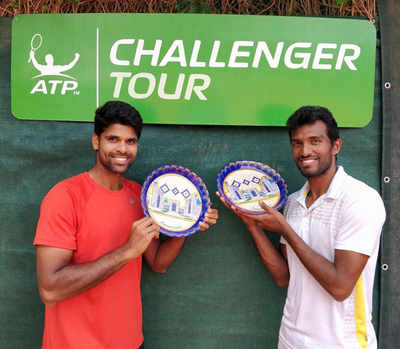
By qualifying for the Wimbledon Main Draw, Naib Subedar Sriram Balaji has become the first player from the services to do so.

Balaji’s partnership with Vishnu Vardhan qualified for the main draw after a win over Denys Molchanov and Igor Zelenay in the second round of the Wimbledon qualifiers.

“Naib Subedar Sriram Balaji has qualified for the Wimbledon Main Draw. First in the history of Services, player to qualify and reach this level,” tweeted the Additional Directorate General of Public Information (ADG PI)-Indian Army

Balaji started his career in tennis in the year 2000 when he was 10 years old and ranked 1st in India in under 12 categories in the year 2002.

He joined Madras Sappers in February 2017 and till date he has won five ATP Challengers Cup.

In May, the Balaji Vishnu Vardhan pair won the Doubles title in Challenger ATP men’s tournament held tournament held at Samarkand, Uzbekistan, defeating Mikhail Elgin of Russia and Denis Istomin of Kazakistan. With that, the duo has qualified for Wimbledon Men’s Doubles. They are the only Indian pair to take part in this Wimbledon.

His present world ranking is 117.

Last year in April, he won the Davis Cup match in doubles category, defeating Uzbekistan.

The MEG personnel also known as Madras Sappers have a rich sporting tradition. Over the years, MEG has had many Olympians and sportsmen.

source: http://www.bangaloremirror.indiatimes.com / Bangalore Mirror / Home> Bangalore> Others / by Bangalore Mirror Bureau / June 20th, 2018

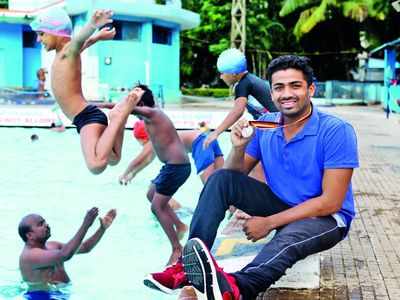
Bengaluru has top-notch facilities for swimmers in the country, says para swimmer Niranjan Mukundan

Back from setting a new Asian record at the Para Swimming World Series 2018 in Berlin, Bengaluru lad and para swimmer  Niranjan Mukundan feels extremely blessed to be born in the city that has ample facilities for swimmers. In an exclusive chat with Bangalore Times, he talks about his love for the city, on changing people’s mindset and preparing for the Asian Games…
NiranjanBF28jun2018
On breaking a 15-year Asian record
Niranjan, who has been recovering from a spate of injuries, is all smiles when he talks about setting a new record. The swimmer recently broke a 15-year Asian record in the 200-metre backstroke category. “It’s a really nice feeling and a bit of a surprise actually, because I was down with a lot of injuries last year and was recovering. This record has been a memorable experience for me as I beat a lot of European swimmers and some of the top swimmers from across the globe. It has given me a lot of confidence,” says the 23-year-old, adding, “It’s special because I also won a bronze in my favourite event — the 50-metre butterfly category.”
On breaking stereotypes about para athletes

Niranjan says that being a para swimmer has never been an easy task. “People initially thought that being a para swimmer wouldn’t do me any good. They always thought that we are not on par with other able-bodied athletes. But, I believe and hope that I’ve broken that stereotype. Individuals who are into para sports have broken that thought process by winning several medals regularly,” he says.On asking what changes he would like to bring into the system in order to support other para athletes, he says, “People usually think that being a differently abled person, you won’t be able to achieve anything but look at other para athletes. They have achieved so much with very less support from others.” The swimmer says that though people are more inclined to sports like cricket, the mindset is slowly changing now. “Over the years, we have seen many sports come up and many athletes win medals for the country. However, a little bit more support will do wonders for people like us,” he adds.

Bengaluru has one of the best facilities for athletes in the country

Bengaluru, according to Niranjan, has top-notch facilities for swimmers and some of the best coaches in the country. “The city is known as a swimmers’ hub and people from all across the country come to Bengaluru to train as we have the best facilities, in addition to the good weather and infrastructure, that favours them,” he says. However, his love for Bengaluru doesn’t stop there, says the self-confessed movie buff. “I am a complete foodie and a movie buff. Though I follow a strict diet, whenever I find time and I’m in Bengaluru, I like to hang out with my friends. MG Road, Indiranagar, Koramangala are some of my favourite places to hang out in the city,” he adds.

Preparing for Asian Games

Next on his mind is the Asian Games, scheduled to be held in August-September. “Though I’m training and preparing for the Asian Games now, my ultimate goal is to qualify for the Paralympics in 2020 and win a medal there,” he sums up.

source: http://www.timesofindia.indiatimes.com / The Times of India / Home> News> City News> Bangalore News / by Sandra Marina Fernandes  / TNN / June 28th, 2018

City-based swimmers traverse English channel

The Master Swimming Relay team comprised six male and two female nation-level swimmers

Age and the choppy, cold waters are no deterrents for 72-year-old Gopal Rao, who lead a team of eight swimmers across the English Channel between France and Britain earlier this month.

He was part of the Master Swimming Relay team, comprising six male and two female nation-level swimmers from Bengaluru, which crossed the 36 km long channel in under 15 hours.

While the youngest in the team is aged 35 years, Mr. Rao was the oldest participant. “We were selected by our coach Satish Kumar, who is secretary of the Karnataka Swimming Academy,” he said.

Mr. Rao is the secretary of Sadashivnagar Swimming Club.

Preparation for the feat took nearly six months, spanning sessions in Goa and Mangaluru. However, the warmer tropical waters did little to prepare them for the frigid conditions of the English channel.

“It was very tough in France. Heavy tides made swimming difficult. And, the water was freezing cold,” said Mr. Rao.

Relay swimming sees one person swimming for an hour before another person from the team takes over. The rest of the team and support staff travelled by boat next to the swimmer. The team started at 6 a.m.

They achieved the feat in 14 hours and 52 minutes, and had enough energy to participate in the world Yoga Day celebrations in London the next day.

source: http://www.thehindu.com / The Hindu / Home> News> Cities> Bengaluru / by Staff Reporter / June 26th, 2018

Samsung R&D Institute-Bangalore Becomes ‘Champion for Local Markets’, Wins Zinnov Award 2018

Samsung R&D Institute – Bangalore (SRI-B) has been recognized as the ‘Champion for Local Markets’ at the prestigious Zinnov Awards 2018.

The awards recognize achievements of Indian R&D centres and honour stalwarts in the technology space. SRI-B is Samsung’s largest R&D centre outside South Korea.

The jury deemed SRI-B as the winner based on parameters such as its vision, initiatives, implementation and impact in the local market.

Under Samsung’s ‘Make for India’ initiative, SRI-B has been developing several India-specific innovations by understanding Indian consumers’ lifestyle and pain points. As part of this program, SRI-B has developed innovations for various B2C, B2B and Business to Government products.

“It is imperative to understand the challenges and pain points that Indian consumers face in their day to day lives and provide suitable technology solutions. Samsung has recognized this early on and has been continually innovating along this path to empower Indians and their businesses under its ‘Make for India’ program,” said Dr. Aloknath De, Chief Technology Officer, SRI-B.

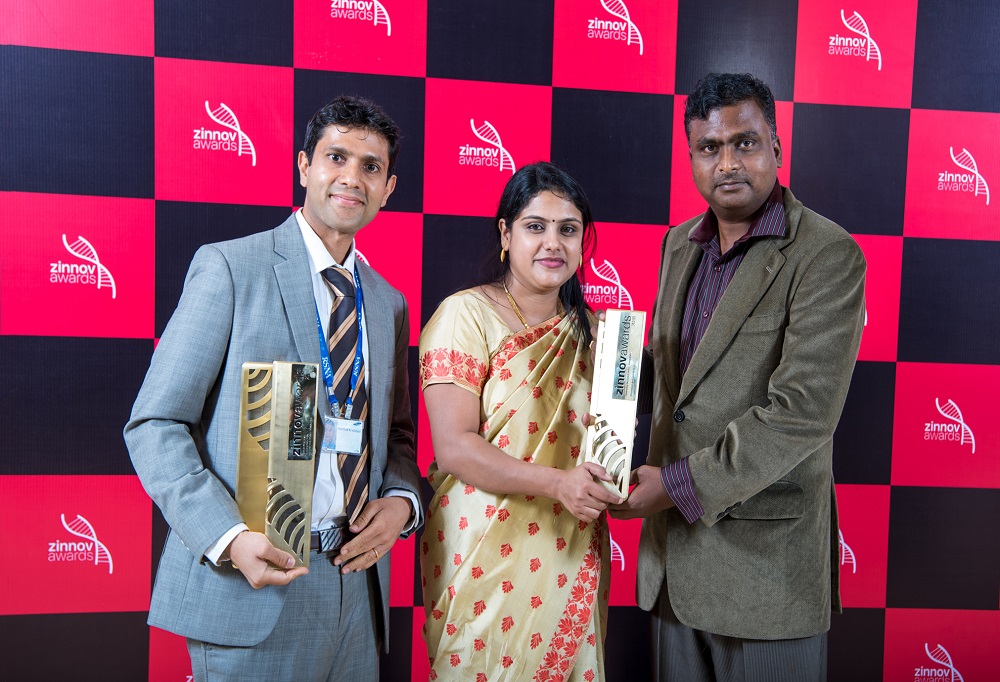
Samsung R&D Institute – Bangalore (SRI-B) has been recognized as the ‘Champion for Local Markets’ at the prestigious Zinnov Awards 2018. Karthik Krishnan (Left) with the ‘Technical Role Model (Middle Level)’ Award and Madhupa Chowdhury and Sundar Srinivasan with the ‘Champions for Local Markets’ Award won by SRI-B.

SRI-B has more reasons to celebrate this year at Zinnov Awards 2018 as Karthik Krishnan, who is a member of the Health and Medical Equipment (HME) Team at the R&D centre working on Medical Imaging and Visualization Technology, won the award for ‘Technical Role Model (Mid-level)’. He was awarded for his capability to influence others within SRI-B as well as beyond, to follow a technical career path.

“I am elated to have won this award from Zinnov as it is a testimony to the vibrant ecosystem that we are able to work within and create new technology. I would like to thank my team for all their support through the years, as well as SRI-B which has given me the opportunity to collaborate with others in our ecosystem and build my technical skills,” said Karthik after winning the award for ‘Technical Role Model’.

Over the last three years, SRI-B has introduced several products and services for its Indian customers. When Bixby Voice came to India with the Galaxy Note8, it was optimized for India by the SRI-B team to understand English in Indian accents. The device was also embedded with a feature that recognized text messages written in Hindi with the S-Pen and converted the message into Devanagari script. Engineers at the R&D centre had recently developed the Social Camera mode that was launched in the Samsung Galaxy J7 Max Smartphone. The Social Camera mode allows users to instantly edit and share photos and videos directly to social media sites from their camera app. SRI-B has also developed the Samsung Tab IRIS, which is the first commercial IRIS integrated tablet to be approved by UIDAI for Aadhaar and KYC verification.

This is the 9th year of the Zinnov Awards and the fourth consecutive year that SRI-B has won a Zinnov Award. SRI-B has won the Zinnov Award for ‘Great Place to Innovate’ in 2017, ‘Center of Excellence’ in 2016 and ‘Design Thinking’ in 2015.

source: http://www.news.samsung.com / Samsung Newsroom / Home> Brand> People & Culture / June 25th, 2018

This century-old bandstand in Bengaluru hosted the best of regimental bands

BandstandBF28jun2018

Bandstand

England witnessed the brass band movement in the 1800s at the peak of the industrial revolution. Musical ensembles using a standardised range of brass and percussion instruments were in demand among the working classes. The latter appreciated cheap and good entertainment. By the late 1800s, as industries expanded and working-class numbers rose, brass bands became very sought-after in that country.

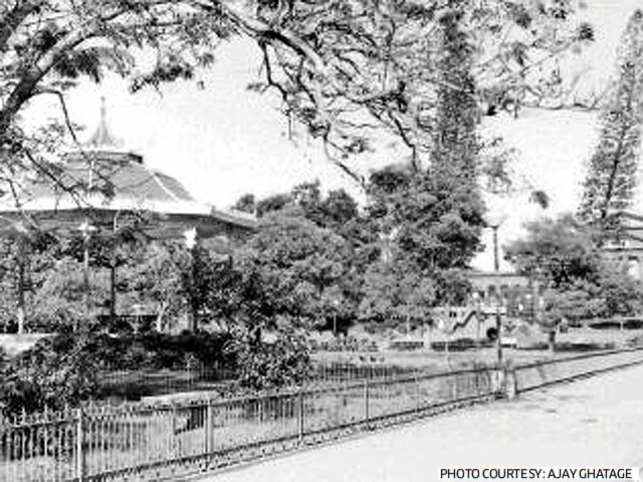
It did not take long to reach the colonies. Bengaluru’s bandstand came up in the 1870s. According to the Mysore Gazetteer (1897), there was a double-pillared, ground-level bandstand near the Bowring Institute. Then, around 1914, a proposal was mooted to demolish it and construct a bandstand inside the Cubbon Park. An ornamental, eight-pillared iron structure was imported from Walter Macfarlane & Co in Glasgow.

“Shipping such ornate structures from England was a way to show British strength and dominance in the colonies,” said Poornima Dasharathi of Unhurried.in, who conducts heritage walks in the Cubbon Park. “The bandstand hosted the best regimental bands and catered mostly to the soldiers and residents in the civil and military station here.”

Initially, the bandstand was located in a rose garden. Officially inaugurated in 1918, the Mysore Infantry Band performed there every Wednesday and Saturday, while the Madras Pioneer Group performed on the fourth Thursday of every month. The latter also put up a grand show there in 1927 to commemorate the silver jubilee of Nalwadi Krishnaraja Wadiyar’s rule. Even the Royal Air Force band played here.

Soon, the popularity of the bandstand increased and it became difficult to accommodate the crowds that turned up for the performances. At the suggestion of prince Jayachamarajendra Wadiyar, a music aficionado himself, it was shifted to its current location in front of the State Central Library. “According to old Anglo-Indian residents of the Cantonment, patriotic songs and Kannada music played at the bandstand post-Independence,” said Dasharathi.  Performances were organised by the Bangalore Municipal Corporation every weekend. “This died down in the 60s because many other venues of entertainment started mushrooming.”

 The bandstand soon dilapidated because of neglect. Two years ago, the horticulture department decided to restore the physical structure to its former glory. It also collaborated with the Bal Bhavan and the Department of Kannada and Culture to organise 6 am to 6 pm cultural events on Sundays. Mahantesh Murgod, deputy director of horticulture (Cubbon Park), said: “We have made arrangements to accommodate 100 people. So far, our slots are running full.  Music and dance engage beautifully with visitors in the park.”

source: http://www.economictimes.indiatimes.com / The Economic Times / Home> Magazines> Panache> City Life / by Divya Shekhar, ET Bureau / June 28th, 2018

Book on oldest known love story in Mangaluru released

‘L affaire,’ a literary work based on a love story which is known to have taken place in Mangaluru during 12th century AD, was released at St Aloysius College Auditorium in the city on Tuesday.

The book, written by Yenepoya Deemed-to-be-University Dean Dr G Shreekumar Menon, depicts the life of Jewish trader Abraham Ben Yiju, who had his origin in Tunisia and a Nair woman Aashu from Kannur in Malabar region.

Speaking about the work, Dr Menon said that Yiju landed in Mangaluru in 1132 AD for spice trade. He came across Aashu, who was a slave at a household in Mangaluru during the rule of Alupa ruler Alupendra.

Yiju released Aashu by paying money to her owner and freed her from slavery by marrying her. Yiju also set up a brass factory in the region. They were blessed with three children. Among them, two passed away.

Following clashes in Tunisia, Yiju was forced to leave Mangaluru, to his hometown. Whereabouts of Aashu after this incident are not known properly. Yiju passed away on August 11, 1156, he explained.

Letters by Yiju were preserved by his daughter. The letters were found in Cairo Genizah, the Egyptian Synagogue attic. They were kept intact as Yiju had written the letters with a mention of God.

According to Jewish tradition, any work that has God’s name inscribed in it, should not be torn away. The marriage certificate of Yiju and Aashu is among these letters.

The documents are now preserved in Russia.

Authors like Rabbi Mark Glickman and Amitav Ghosh have authored books based on the available documents, Dr Menon said.

Menon stated that the marriage of Yiju and Aashu completes 888 years in 2020 and requested the mayor to build a memorial for the couple.

Mayor Bhaskar K presided over the programme. Dean Dr B H Shripathi Rao, St Aloysius College Principal Fr Pravin Martis, Author Bharathi Shevgoor and actor Sahil Rai were present.

source: http://www.deccanherald.com / Deccan Herald / Home> States> Mangaluru / DHNS News Service, Mangaluru / June 26th, 2018

He walks the talk

Suchendra01BF28jun2018

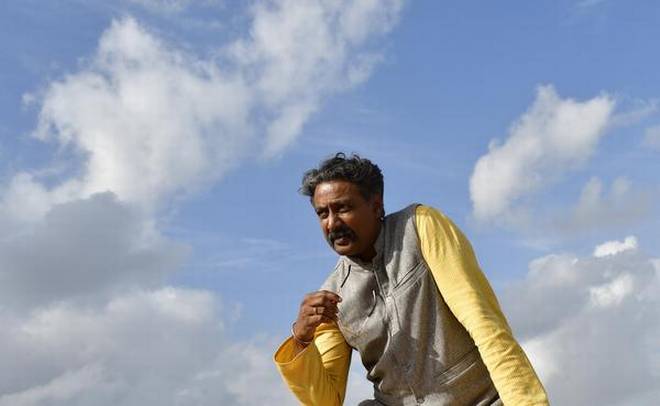
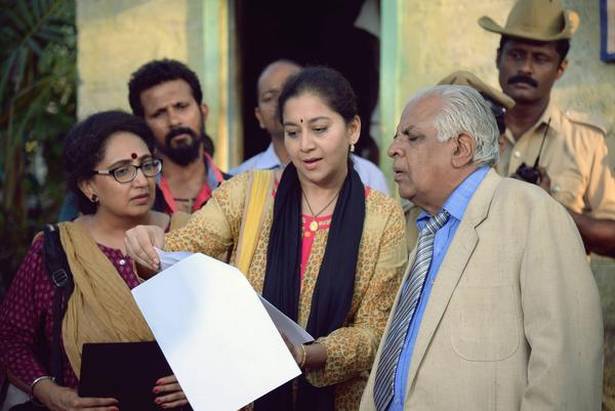
Actor-director Suchendra Prasad will now be making documentaries for the United Nation’s Development Programme

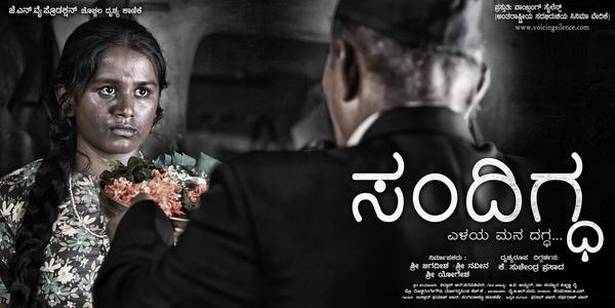
If you meet Suchendra Prasad, you will know that he has a great sense of humour. Behind that serious façade lives a clown. Everything he does, be it picking up a coffee mug and sipping from it, can keep you in splits. So you would think here is a funny man who can make one of the funniest films ever, but no. He prefers to make serious, educative films such as Prapaatha and Sangdhigdha. While the former talks about the first aeroplane made by an Indian, the latter is about child rights.

Suchendra02BF28jun2018

He justifies his choice saying, “I always felt there were enough people to make others laugh and that there were few who were touching upon certain subjects. So I decided to make use of the powerful medium of cinema to communicate those ideas meaningfully. For me, cinema means to present ideas that are not being touched upon and those that needed in-depth research. What others ignored became my forte. This was our means to voice issues that had been silenced. So we started documenting tradition, heritage, people, language,” says the actor, who is now in the news for being a part of the United Nation Development Programme (UNDP). He will work with various NGOs with UNDP, chronicle their efforts in areas of their work and make documentary films of various lengths.

“This happened by chance. UNDP has a centre in Bengaluru and are into development activities. We approached them to see if they would be interested in associating themselves with Sangdhigdha. As the discussion progressed, they asked me to document their works here,” explains Suchendra, who adds that he and his team have started their leg work and the project is a part of UNDP’s probono scheme. “It will be my contribution and I will not get any monetary benefit.” He looks forward to this as it will be his “way of contributing to UNDP. We have begun with farmer’s and women entrepreneurship. The documents, which will become their property, will be used by UNDP during their presentations or as study material.”

Where does that leave his films? “It should not affect my career as I will need a month’s time for each document,” states the actor-director, who is not new to world of documentation. He has been involved making documentaries for the past two decades with his own guild – Voicing Silence, formed in 2000. “It is an international guild for documentary makers. We have 46 filmmakers from across the globe as members,” beams Suchendra who has till date organised three International documentary film festivals.

Suchendra03BF28jun2018

Voicing Silence has covered ancient history, culture, farming, women entrepreneurship, Sanskrit, health issues, AIDS, ICAP (Indo-Canadian AIDS Project), budget and its policies, biographies especially of those who have turned centenarians. These are uploaded on YouTube.

He tries and does everything differently. His latest film Sangdhigdha has not yet got a theatrical release, but Suchendra has been going to various schools, educational institutions and child rights organisations to screen it. “We will eventually release the film. As of now, the focus is on making the film reach out to as many people – parents, Child Rights Commission, those in authority and so on. The film talks about child rights and how we have distorted them in our country. We have many safe guarding tools these days, yet, the rights have been violated. Instead of releasing the film in theatres, I dream of taking the film to every home.”

The film is being screened at various international film festivals across the world and Suchendra is thrilled that “Maneka Gandhi watched the film and has commended our efforts.”

What next? He reveals, he is currently working on a full-fledged Sanskrit film titled Tatraapi which means “even there. Vishnu Sharma has written the Panchtantra with moral stories, which will be juxtaposed with reality and contemporary ideas in my film. I want to tell people that Sanskrit is not dead but can be used effectively to communicate. In fact, there are five states in India that have Sanskrit as their official language. Most scriptures have been written in Sanskrit too.”

He is not worried about finding actors as “there are umpteen actors who are fluent in Sanskrit. He adds that the film will have subtitles so that everyone can understand the film. “We are looking for the right producer. Once that happens, the project will take off.”

Commercially and professionally too he has quite a few films to look forward to. There is Kannadakkagi Ondannu ottiMMCHBeega and Chemistry of Cariappa to name a few. In some, you will see him in his comical avatar.

source: http://www.thehindu.com / The Hindu / Home> Entertainment> Movies / by Shilpa Sebastian R / June 21st, 2018

Family plots

Mysuru :

About a quarter of a kilometer from the Bengaluru-Mysuru Highway, on the banks of the Cauvery, lies a cemetery. At the gates, there are the words “Garrison Cemetery, Seringpatam(sic), AD 1800, Latest Burial. 1860” Inside, neat rows of memorials – brick and mortar, washed with lime and shell, stand on the grass.

VidhyalakshmiBF24jun2018

Though it’s not as well known as other popular tourist destinations at the scene of Tipu Sultan’s last stand, the cemetery sees a few visitors everyday. There, as they walk along the memorials, they would meet Vidhyalakshmi, the caretaker, who makes sure that the gravestones are kept clean and well maintained. She also takes care of the guest book, an analog custom that seems quaintly appropriate to the place.

Some of the graves are those of the members the Meuron regiment, who fought in the fourth Anglo Mysore War (1799) – where Wellington faced off against Tipu Sultan for the final time.

The Meuron Story

Charles-Daniel de Meuron was the eldest son of a tanner and merchant. In 1755, at the age of seventeen, he joined the Swiss Régiment de Hallwyl. He saw several engagements in the seven years war and rose from ensign to the rank of colonel in 1778, fighting, among others, the English.

In 1781, at the behest of the French, Meuron created his own, eponymous unit. After an eventful period in the Cape of Good Hope, Meuron returned to Europe to retrieve his arrears from his employers, the house of Zeeland. However, with the situation in Europe getting even more tangled as a result of the French Revolution, Meuron decided to get closer to the British, who he saw as the rising power in Europe and around the world. In 1798, the Meuron joined the British, and his regiment – two battalions of five companies of infantry – became part of the British army.

The Meuron regiment distinguished in the Anglo-Mysore War, and Wellington, in an 1805 letter, wrote, “I had under my command for some years the Swiss Regiment de Meuron, which, for good conduct, discipline, and other military qualities, was not surpassed by the English Regiments”.

Meuron himself died in 1806, a lieutenant general in the British army, but his regiment lived on, moving from India to America, where it took part in the war of 1812, and was finally disbanded in 1816.

The soldiers from the Meuron regiment who fought in the fourth Anglo-Mysore War were buried in the Garrison Cemetery and later, their family members who stayed on in India.

Restoration

Almost two centuries later, in 2002, a descendent of de Meuron returned to Mysuru. Louis Dominique de Meuron, along with his wife Monique, was looking for traces of his famous ancestor. At this time, the Garrison Cemetery was in poor shape. According to a report “dense growth of vegetation (was) hiding many of the tombs and making it almost impossible to even tread on some parts of the site. Some tombs were found to be either totally or partially demolished”.

Louis Dominique de Meuron became determined to do something about the restoration of the cemetery. The couple met conservation architect Ravindra Gundu Rao from Mysuru and commissioned him to undertake the restoration of the cemetery. The project proceeded with the approval of Karnataka’s Department of Heritage, with the then director, Venkatesh Machaknur, taking a personal interest in the restoration. The late MS Nagaraja Rao, who was the former Director General of the Archaeological Survey of India, together with Dr Gayathri, the retired Deputy Director of the Department of Archaeology and Museums, were also members of the advisory committee.

For Gundu Rao, this was “one of the most cherished endeavours” he has undertaken. The project involved a total umber of 12-18 masons, craftsmen and other skilled workers. The restoration was carried out using mostly materials available in the late eighteenth century – lime from a local quarry, brick, jaggery syrup and tree gum. The restoration was completed in 2007.

The Next Generation

Over the past decade, the de Meuron family have remained involved in the upkeep and maintenance of the Garrison Cemetery. Louis Dominique and Monique have passed on, but their son Jean-Léonard and daughters Sophie and Héloïse, have maintained their connection.They have funded the employment, as caretakers of the cemetery, of the late Nagaraj, for about four years, and over the last six years, to date, Vidhyalakshmi, local residents of the Island Town.

And with the passage of time, the weeds have grown, and invading monkeys and falling tree branches have started to damage the restored graves. The de Meurons have decided that it is time for another, smaller, restoration project. Ravindra Gundu Rao, because of his knowledge of the project – and his own personal connection – is contributing time and expertise on a voluntary basis. “Because the affection and consideration I’ve received from the family, this project is a labour of love for me. Within a month of us taking up the restoration project in 2007, Louis Dominique passed away. I had just sent him the first progress report. It was as if this was his last mission in life”, says Gundu Rao.

Revival

The graves need constant maintenance. “ Due to the climatic conditions – the summer and monsoon, especially – the structures tend to deteriorate,” says Gundu Rao. “The tombs are in various styles including obelisk, a Rotunda, Casks, in addition to the conventional Christian forms, while some are even of the Hindu ‘Brindavan’ type. We have to use traditional methods of restoration along with the original materials which were used back in the day for their construction to ensure we consistency”.

Gundu Rao is full of praise for the support given by the de Meuron family. “There are 309 tombs and only nine of them contain de Meuron regiment and family members but they have taken it upon themselves to maintain all the tombs,” he says. He is also critical of the lack of support by the government. “Unfortunately we had to wait for the family to trace the cemetery and protect it while it should have been the duty of our State and the public to preserve it. If it were listed as a protected State monument by the concerned organization, it would do wonders for the cemetery,” he says.

“It is a challenging project. Since the brick and mortar structure is over two centuries old, we must use materials such as lime mortar, natural additives, traditional techniques and tools for the restoration work. Due to weathering, the plastering has been damaged, cracks and fissures which pose an immediate threat to the structure are being looked into,” says Malavika M Murthy, an architect who is supervising and assisting Ravindra Gundu Rao on the project.

Family Matters

The close involvement of the de Meurons is a powerful motivator for the people involved in the project, says Murthy. “They contribute their inputs at every stage and that motivates our team and pushes us to give the project our best. Seeing their emotional connection, the project has become emotional for us too,” she says.

“I am fortunate to be part of such a project which has so much history and emotions associated with it. If we don’t save our heritage, the future generations will be unable to understand the significance and importance of heritage,” notes Nanjundaswamy N, a supervisor at the project site.

“We, as lovers of Indian heritage, find particular interest in (the cemetery’s) conservation because of our family history. Over the last few years, we have supported the ongoing general upkeep of the cemetery through the caretaker, first late Nagaraj, now through Vidhyalakshmi. We strive to keep up the condition that our father, Louis Dominique de Meuron, in collaboration with the Department of Archaeology, Museums and Heritage of the State of Karnataka, achieved in 2007 with their major restoration project,” says Jean-Léonard de Meuron.

So, if you ever find yourself on the road to Mysuru, it may be well worth your while to take a short detour and walk among the graves of the Swiss soldiers who fought and died valiantly in a faraway land. Take a look at the memorials, sign the guestbook and, most of all, remember to tip the caretaker.

source: http://www.timesofindia.indiatimes.com / The Times of India / News> City News> Bangalore News / TNN /  by Shivendra Urs / June 24th, 2018
Bengaluru-based deeptech startups Sensara & Lightmetrics win Cycle 2 of Qualcomm Design in India Challenge 2017

Bengaluru-based deeptech startups Sensara Technologies and Lightmetrics Technologies  have won Cycle 2 of the Qualcomm Design in India Challenge 2017 to take home prize money of $75,000 each

SensaraBF22jun2018

While Sensara is redefining how people interact with television and improving the experience through its AI and ML-powered products, Lightmetrics aims to make driving safer and more efficient by using Computer Vision (CV) and ML.

The second cycle of the Qualcomm Design in India Challenge, launched in August 2017, saw widespread participation from Indian product design and development startups.  Speaking about the winners, Jim Cathey, Senior Vice President and President, Asia Pacific & India, Qualcomm International, said, “In this cycle of the Qualcomm Design in India Challenge 2017, we witnessed creative ideas for innovative products and services across sectors in Smart Cities, Med-Tech, Machine Learning, Fintech and Automotive. The two winners have created cutting-edge technologies and solutions addressing the needs of the present world.”

The two winning startups were among six which were shortlisted and incubated at the Qualcomm Innovation Lab in Bengaluru, and received mentorship and technical support from Qualcomm India, in addition to seed money of $10,000 each.

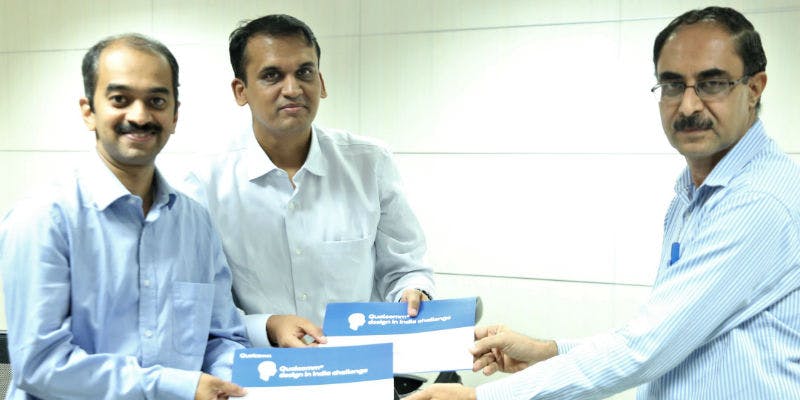
Winners of QDIC 2017 Cycle 2 and finalists for QDIC 2018 after receiving their certificates from Mr Ajay Prakash Sawhney, Secretary, MeitY, in New Delhi on June 20, 2018.

Launched in 2016, so far the accelerated design programme has incubated 24 startups with an overall investment of over USD 8.5 million. The Qualcomm Design in India Challenge supports fast design cycles and time to market, and leverages Qualcomm technologies to help Indian companies design and create products in the IoT space for global markets. Tagbox Solutions Pvt. Ltd. and Steradian Semiconductors Pvt. Ltd won Cycle I of Qualcomm Design in India Challenge 2017.

15 startups selected for 2018

Qualcomm has also announced the top 15 finalists for Qualcomm Design in India Challenge 2018. Three winning startups will be selected from these 15 shortlisted entries in early 2019.

Talking about what to expect in the 2018 programme, Rajen Vagadia, Country Manager, Business Development, Qualcomm India, said, “We are thrilled with the overwhelming response we received for the 2018 chapter, which marks an increased focus on putting startups on an accelerated path towards growth and development. Our shortlisted finalists come from all over India, representing a diverse range of products and applications across different spheres. Augmenting this diversity, we have three of our shortlisted startups run by women entrepreneurs.”

The 2018 programme has some new elements:

Prize money for the winners: At the end of the incubation period, the winner of two runners-up will be awarded with $100,000, $75,000 and $50,000 respectively.

Patent filing incentive: Qualcomm will provide each startup an amount up to $ 5,000 for patent applications, filed with either the US Patent and Trademark Office (PTO) or the Indian Patent Office during the incubation phase of the programme.

Access to accelerator programme services: Qualcomm, through its association with Anthill Ventures, will offer accelerator services to the 15 shortlisted startups at no additional cost, on various parameters such as series A and pre-series A pitch preparation, operations planning, industry connects, competitive landscape analysis, financials and cash flow and product management.

Meet the 15 companies that have been shortlisted for the Qualcomm Design in India Challenge 2018 edition:

  1.  Artificial Learning Systems, Bengaluru: An AI-enabled product that can detect diabetic retinopathy on handheld devices.
  2.  Avantari Technologies, Hyderabad: A wearable platform for keeping track of cardiac parameters combined with remote monitoring capabilities to predict cardiac abnormalities at an early stage.
  3.  Bioscan Research, Ahmedabad: A hand-held brain haemorrhage detector that is non-invasive and fully computerised.
  4.  Chigroo Labs, Bengaluru: A smart cradle, Cradlewise, for baby sleep management and health monitoring.
  5.  Dimension NXG, Thane: A platform that aims to decrease cost, time and errors involved in operations and training, using an Alternate Reality/Virtual Reality headset called ‘AjnaLens’.
  6.  Janitri Innovations, Bengaluru: An affordable, easy-to-use, wearable and portable fetal heart rate and uterine contraction monitoring device.
  7.  Lazy Design, Pune: A behavioural AI-powered smart ring that predicts and displays the right shortcuts for users and enables control with the swipe of a finger.
  8.  mBreath Technologies, Kharagpur: ‘SleepDoc’, the world’s first multi-person AI-driven wireless sleep assistant to non-intrusively monitor vital parameters.
  9.  MobiusWorks, Bengaluru: A smart wearable, ‘Wagr’ and a mobile app that helps keep your pets safe and fit.
  10.  Nearex Technologies, Bengaluru: An affordable 3G/4G payment terminal.
  11.  PiOctave Solutions, Bengaluru: A smart network video recorder (NVR) and gateway for the connected home.
  12.  Sensworx Systems India, Hyderabad: A cellular IOT-based smart water meter, which provides real-time water analytics and alerts on water leakage, health monitoring and performance.
  13.  Shellios Technolabs, New Delhi: A smart helmet that not only protects the head, but reduces the impact of pollution, heat and impaired communications on the rider.
  14.  TestRight Nanosystems, New Delhi: A portable and affordable visible light spectrophotometer to determine the optimum wavelength for study, and concentration and kinetics experiments.
  15.  Turtle Shell Technologies, Bengaluru: A non-contact, non-intrusive device that converts bed time into regular health check-up time for patients with chronic sleep disorders.

source: http://www.yourstory.com / Home> Qualcomm Brand Spotlight / by Team YS / June 22nd, 2018

The teens who are all set to shine in Russia

Amreen Taj, Vishnu R., Sandeep Akash P., Anitha Raju (trainer) and Manasa Yadav K. will be taking part in the Football for Hope Festival 2018 in Russia.

Four children from underprivileged communities have been selected to participate in the FIFA Football Fest

When 16-year-old Sandeep Akash, a resident of Byatarayanapura, told his mother that he had been selected to travel to Russia to play football and watch the FIFA World Cup, his mother dismissed it as a tall tale. She asked him not waste her time with silly jokes. It was only after his trainer called and assured his parents that their son had been selected to play football in Russia were they convinced.

Sandeep will be travelling to Russia along with three other teenagers — Amreen Taj, Manasa Yadav K. and Vishnu R. — to take part in the ‘Football For Hope Festival 2018’, an official event of the 2018 FIFA World Cup.

He is the first person in his family to be travelling abroad. His father, a painter by profession, encouraged him to pursue his interest in sports, but never thought that his son’s hobby would turn out to be this eventful.

The festival brings together children from various communities across the world, with a focus on social development. Around 48 teams will be participating in the programme from June 25 to July 5. Children will get to play football with their peers from various countries and will also attend leadership programmes. They will also get to watch one of the ongoing World Cup matches.

Sandeep and his friends, who were part of the NGO Dream A Dream’s after-school life skills programme, were chosen as delegates. They are the first in their families to get the opportunity to travel abroad. While Amreen and Vishnu’s fathers work as mechanics, Manasa’s father works as a driver.

The NGO is one of the two organisations selected from India by FIFA to take part in the event.

“We selected children with great potential who lacked avenues to exhibit their capabilities. We have been helping them work on their nutrition and fitness after the selection was done. For the last four months, the children have been practising for at least three hours every day, making time for football in their school schedule,” said Anitha Raju, trainer for the children and employee of Dream A Dream. These four children were shortlisted from 2,200 candidates across 28 schools in the city.

To play football was a big step for Amreen. “Usually, girls are not encouraged to take up a sport like football. Initially, everyone was sceptical. But after watching me, my brother and sister are very proud of me. I want to help more girls in my community take up this sport,” she said.

According to Sucheta Bhat, CEO of Dream A Dream, the football match that the children will be playing will have a set of unconventional rules (which the children themselves will come up with), with the primary aim of building leadership and cooperation. “This is the second consecutive time that our organisation has been selected,” she said.

All the four children said they want to pursue football training as a career and help more children from local communities realise their potential.

“It’s not only about the game. I have benefited by improving my communication skills and overall discipline,” said Vishnu.

Manasa said that she has gained focus in life. “Earlier, I used to be lazy. I see a huge transformation in myself. I want to pass on the benefit to more youngsters,” she said.

source: http://www.thehindu.com / The Hindu / Home> News> Cities> Bengaluru / June 20th, 2018