Category Archives: World Opinion

Bengaluru gets its first ‘Bicycle Mayor’

Consulate General, embassy of the Kingdom of the Netherlands, Jaap Werner presenting the trophy of Bicycle Mayor to Satya Shankaran in Bengaluru on Monday. | Photo Credit: G_P_Sampath Kumar

Satya Shankaran was announced the winner from among 19 applicants

Bengaluru got its first ‘Bicycle Mayor’ on Monday as 42-year-old civic activist Satya Shankaran was announced the winner from among 19 applicants, six of who were shortlisted for the post.

The selection panel included civic activists Ashwin Mahesh, V. Ravichander and Srinivas Alavalli, and urban transport experts Pawan Mulukutla and Prof. Ashish Verma.

The city is the third in India to have a Bicycle Mayor after Vadodara in Gujarat and Guwahati in Assam.

The Bicycle Mayor is an honorary two-year position, part of a global programme envisioned by Amsterdam-based NGO ByCS, which aims to ensure that 50% of the transport in cities is made up of bicycles by 2030.

In India, the project is being implemented in coordination with the NGO Evangelical Social Action Forum (ESAF).

Mr. Shankaran is the co-founder of the NGO Prajaa, which has been focusing on civic interventions in Bengaluru, and the founder of Citizens for Sustainability (Cifos), focusing on technology and infrastructure. He has been actively involved in projects concerning non-motorised transport.

He plans to focus on bringing together experts and cycling enthusiasts. To begin with, he would reach out to all the contestants and encourage their participation in the movement. That apart, he would focus on creating awareness among school students. The idea is to approach schools and teach students subjects such as physics, health and civics through cycling, he said.

Parking hubs

On the occasion, the Department of Urban Land Transport (DULT) announced that the city will soon get 400 parking hubs for bicycles and 125 km of cycle lanes under a project executed by the Bruhat Bengaluru Mahanagara Palike.

N. Murali Krishna, Special Officer, DULT said of the 125 km cycling lanes, about 50 km will be developed in sub-arterial routes. “This is likely to be ready within the next six months. For the rest, planning has to be done,” he added.

source: http://www.thehindu.com / The Hindu / Home> News> Cities> Bengaluru / by Staff Reporter / May 21st, 2018

Newest frog for India from Karnataka

New species: Mangaluru narrow-mouthed frog is found only in a small industrial area in Mangaluru.

The Mangaluru narrow-mouthed frog is found only in a small industrial space in the city

The latest addition to India’s frog fauna is the Mangaluru narrow-mouthed frog, which has been found in a small industrial region in coastal Karnataka.

The new find, described by a team of Indian scientists in the international journal Zootaxa on Tuesday, is christened Microhyla kodial after the city of Mangaluru (called kodial in the Konkani language) from where they spotted it two years ago.

The frog is seen only in a small industrial region here — a former timber dumping yard — surrounded by seaport, petrochemical, chemical and refinery industries. The yard is bounded by the rail line of the Mangalore Refinery and Petrochemicals Limited on one side and the busy National Highway 66 on another.

The frog’s presence in this urban area could have been easily overlooked given its small size too: the greyish-brown frog is just 2 cm long. A thick olive-green band on its head, less-prominent dark green bands on the rest of its body and a few other physical features also set it apart from other similar-looking frogs. However, it was the frog’s very distinct loud, long calls that prompted the study’s lead author Vineeth Kumar (of Karnataka’s Mangalore University) and his colleagues to study it further.

While the team’s surveys showed that the frogs are not seen outside of the urban area, behavioural observations revealed that the frogs breed only during the monsoon. Detailed genetic studies proved the team’s hunch right: the frogs were indeed a species new to science. Accidentally introduced? Interestingly, the scientists’ genetic work also reveal that the Mangaluru narrow-mouthed frog is more closely related to southeast Asian frogs than Indian frogs. The industrial patch where the frogs are currently found used to be a depot for timber imported from southeast Asia; therefore, the frogs could have been accidentally introduced with timber that came from Myanmar, Malaysia and Indonesia, write the scientists.

“There are several examples of animals including molluscs and Aedes mosquitoes that have been introduced to new places through traded goods,” said the study’s co-author N. A. Aravind of Bengaluru’s Ashoka Trust for Research in Ecology and the Environment.

“The new species could need some attention because we noticed new construction and truck movement in the industrial area,” he added. The Mangaluru narrow-mouthed frog is the 42nd species belonging to the genus Microhyla recorded from south Asia. More than 650 microhylids – or frogs belonging to the family Microhylidae – are found across the world’s tropics.

source: http://www.thehindu.com / The Hindu / Home> Sci-Tech> Environment / by Aathira Perinchery / May 16th, 2018

Bengaluru gets first Geographical Indication-based products store

GIbf11may2018

Bengaluru :

The city has got a unique store which endorses some of the Geographical Indication (GI) products such as Channapatna toys and Devanahalli pomelo among others. This is also said to be the first GI-based products store in the country.
Located in HSR Layout, the store has been started by a group of GI product enthusiasts and will display unique items from artists and agriculturalists. The GI tag that is given to products that possess special features corresponding to a particular geographical location. This tag can be used for agricultural, natural and manufactured goods, emphasizing the heritage of each location.

Around the world, 10,000 products have GI tag, out of which 350 are from India with Karnataka  leading it with 36. The products include Mysore silk, Mysore agarbatti, Bidriware, Channapatna toys and dolls, Nanjangud bananas, Byadagi chilli, Devanahalli pomelo among others.

“It feels nice to set up a store for all GI products because this showcases the culture of the country,” said S J Tejas, owner of the store, which was started under the banner of Geographical Indications Tagged World Premium Products Limited (GITWPL).

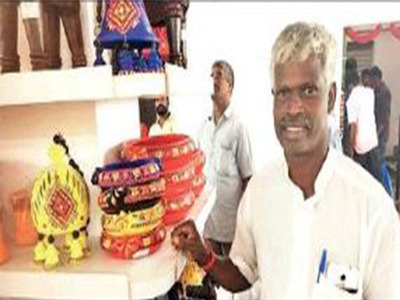
The famous Villianur Terracotta works with huge statues of horses and elephants caught the eyes of many visitors at the shop on the first day. “We’ve been practising this artwork for many years now but after the GI tag was given to us, it gave more confidence and pride,” said artist V K Munuswamy. Because of the GI tag, he could take his art to Geneva, he added.

Ravi Kumar, an industrialist, said: “This is a unique store with products ranging from fruits to ornaments.”

source: http://www.timesofindia.indiatimes.com / The Times of India / Home> News> City News> Bangalore News / TNN / May 11th, 2018

Bengaluru girls to represent India at Jr NBA World C’ships in Orlando

Bengaluru's girls basketball team, who will represent India at the Jr. NBA World Championship in Orlando, Florida in August
Bengaluru’s girls basketball team, who will represent India at the Jr. NBA World Championship in Orlando, Florida in August

Bengaluru :

Several weeks of preparation and hard-fought wins over some of the country’s best teams has finally paid off for a bunch of talented young women basketball players from Bengaluru, who will now represent India at the Jr. NBA World Championship to be held near Orlando, Florida, in August.

After a gruelling three-day league phase, the city girls overcame favourites Kerala 47-41 in the semifinals and then sealed a 41-38 comeback win over Chennai in the Reliance Foundation Jr. NBA National Finals at the NBA Academy in Greater Noida on Wednesday. Among the boys, Delhi defeated Kolkata 81-71.

Both Bengaluru and Delhi teams, along with international teams from Africa and West Asia, Europe, Mexico, Canada, Asia Pacific, China and South America will take part in the first-of-a-kind global youth tournament for U-14 cagers which will be held at the ESPN Wide World of Sports Complex near Orlando from August 7-12.

The National Finals featured the country’s top eight boys and girls’ teams from Bengaluru, Chennai, Hyderabad, Delhi, Kolkata, Kerala, Mumbai and Punjab, based on their performance during the Reliance Foundation Jr. NBA Programme held in January. The programme consisted of several individual skills contests and 5v5 competitions and following the city finals in March, each city picked its 10-member All-Star teams (boys & girls) for the National Final.

“The competition was tough, we were facing some of the best in the country. But the girls were confident. We had a good preparatory camp in the run-up to the tournament,” coach Prasanna Venkatesh told TOI on Wednesday. “In the league phase, we finished second behind Chennai and therefore faced Kerala in the semifinals. Kerala, with their tall players, were tough but we still beat them in the end by six points.”

In the final, however, facing old nemesis Chennai was not going to be easy. “There were some nerves because we had lost to them earlier in the league phase and at the 2017 Sub-Junior Nationals,” Sunishka Kartik, one of the team’s top performers, said.

Trailing 2-17 after the first quarter, the Bengaluru girls never lost hope and pushed hard to surge ahead at the break and then defend the lead for the win. “Seven of us have played together before for Karnataka so we rallied together as a team, fought hard and defended well. It was a victory to cherish forever,” said the Baldwin Girls’ High School student.

Asked if they had received any cash award for their achievement, Sunishka quipped, “It doesn’t matter. There is no award bigger than representing India.”

Winning squad: Sunishka Kartik, Diya J Kothari (Baldwin Girls’ HS), Smriti Vemula, Vedaa Anand (Greenwood High), Hamsa R, Meghana M (Carmel Convent), Shreya Ashok (Bishop Cotton), Shreya Bose (NPS HSR Layout), Moumita Mishra (Vibgyor High), Nuha Asif Masood (JSS PS). Coaches: Prasanna Venkatesh, Palani M, Jyothi Rao S.

source: http://www.timesofindia.indiatimes.com / The Times of India / Home> Sports News> Others / by Maxin Mathew / TNN / May 03rd, 2018

French Open cups debut in Bengaluru — the home of champions

Adil Kalyanpur and Abhimanyu Vannemreddy, both Bengaluru boys, made their presence felt in international tennis through Rendez-vous à Roland-Garros, a programme that brings together top junior tennis players in the boys and girls categories at the national level.

This year marks the first edition of the Roland-Garros Amateur Series, which kicks off in Bengaluru today (it is on till May 6).

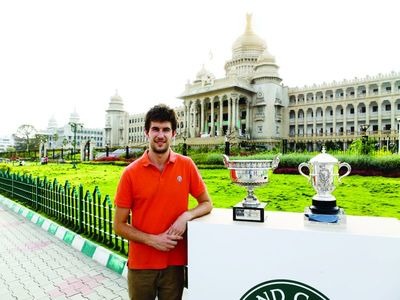
To mark this, the actual French Open trophies — lifted by many tennis greats made their maiden visit to namma Bengaluru. The trophies glistened exclusively for Bangalore Times, on a bright Saturday afternoon, as they took their place in front of the Vidhana Soudha.

AdrianBF30apr2018

Adrien Groscolas, associate international development of French Federation of Tennis, who is also the caretaker of the cups whilst in India, is the only one allowed to touch them — which he can only do after wearing gloves. Only the winners of the trophies can touch them with bare hands.

As Bengalureans gathered to catch a glimpse of the gleaming cups, Adrien filled us in on the protocol that must be followed while handling them, the significance of bringing the trophies to Bengaluru and why French Open officials are looking East.
What is the significance of choosing Bengaluru to host this tournament?
Bengaluru is an important city for us because it has a long history of racket sports and a lot of sports personalities are from here. Rohan Bopanna, last year’s Roland Garros doubles winner, is from Bengaluru, so it made perfect sense for us to come to such a sports loving city.
What is the protocol when it comes to handling the cups?
Only Roland Garros officials can touch the cups, for which we have to wear gloves. Only the actual winners of French Open can touch the trophies with bare hands. Apart from this, people cannot get too close to the cups, to ensure that they don’t get damaged in any way. Also, when we are travelling, the cups fly with me. We buy additional tickets and the cups are seated next to me on the flight, so that I always have my eyes on them. They cannot be carried as a regular luggage.


What reactions do you get from people when they see the cups?
The first reaction is like what we saw during the shoot in Bengaluru — ‘What is this? I know I’ve seen it somewhere, but why would the trophies be here in Bengaluru?’ Once we explain it to people, they realise, ‘Whoa, it’s a big deal to have the actual trophies here, this close to us’. People then think that this is the cup that Rafa has lifted, and that’s something.


How important is it to bring the trophies to Bengaluru now?
It’s an encouragement, first for the young players of the tournament, because the winners will get to fly to Paris and watch the game at Roland Garros. I think it will be an inspiration for them to see the trophies all week long while they battle it out in the tournament. Perhaps, this will be the start of the next Indian actually lifting this trophy. That’s a bit long-term and optimistic, but I am hopeful of India’s chances in the singles matches.


How conducive is Bengaluru to tennis?
In terms of facilities and infrastructure, Bengaluru is certainly one of the better cities. I will definitely speak of Bengaluru as a tennis city, especially since some of the best Indian tennis players are from here. Bengaluru has a tradition of clay courts and our choice to come here is because there are beautiful clay courts here, just like Roland Garros. It is a city that’s very important for tennis.


How important is India as a country for Roland Garros?

We are very interested in India. First, because there are definitely going to be more good players from India in the future. The country already has good players, like Sania Mirza, Mahesh Bhupathi, Rohan Bopanna and Leander Paes, who have all lifted the cup in the doubles category in the French Open. We are optimistic that an Indian will do so in the singles as well. Yuki Bhambri just broke into the top 100 and is going to be playing in Roland Garros for the first time this year. We are very optimistic about India’s chances, which is why we have taken an interest in organising so many events here, to encourage young kids to pick up rackets.


What can these young players expect to gain from this tournament?

The whole point of the tournament is to give young players the experience of playing a Roland Garros event close to their home. Kids who set foot on these courts may think that if they play well here, they have a shot at getting into a Grand Slam event. That’s pretty inspirational, I think. And that’s what gets those kids to come out on the court and give their best. The courts here are beautifully maintained and there is branding as well, just like in Roland Garros. That’s what sets it apart from other tournaments played through the year.

source: http://www.timesofindia.indiatimes.com / The Times of India / News> City News> Bangalore News / by Dhwani Desai / TNN / April 30th, 2018

Book Talk: The Last White Hunter – Mysuru & Hollywood Connection

BookTheLastWhiteHunterBF26apr2018

Title: The Last White Hunter: Reminiscences of a Colonial Shikari, Donald Anderson

Author: Joshua Mathew

Pages: 265 / Price: Rs. 650 / Publisher: Indus Source Books

WhiteHunterBF26apr2018

The jungles of Mysuru had caught the attention of a number of Britishers during the colonial era, particularly during the period of Krishnaraja Wadiyar IV. The royal city was a must in their itinerary for hunting and for witnessing the thrilling Khedda operations at Karapur. Special Khedda operations were arranged for the visiting Viceroys and Princes by the Maharaja. Along with them came the Hollywood film producers.

Films like the Elephant Boy, featuring Mysuru’s Sabu Dastagir and the royal elephant Airavatha and the Harry Black and the Tiger, starring Stewart Granger, Barbara Rush and Anthony Steel were shot in these forests and these films became famous. Increasing hunting activity gave an impetus to the business of taxidermy. Taxidermists like Van Ingens earned international reputation for mounting animals life-like.

Britishers, who had settled down in places like Mysuru and Bengaluru, were lovers of game. They did not miss a weekend opportunity to go for hunting or fishing. Forests and scrub areas were just a few miles away and wildlife was abundant.

However, by mid-1900s awareness towards wildlife began to gain importance. Hunting had to be done by taking a license. Even prior to the introduction of license, hunting of tigers had been banned. The landmark Wildlife Protection Act in 1972 finally brought a halt to even licensed hunting.

Among the White hunters, there were lovers of the forest and wild animals. Donald Anderson and his father, Kenneth Anderson, were two such Britishers who had settled down in Bengaluru, and made frequent trips to the jungles in Karnataka and Tamil Nadu. Though they hunted some animals for sport in the early years, they became lovers of the forest and the wildlife later. That was even before the 1972 Wildlife Act. Kenneth was a conservationist and an author too. His outhouse in the Cantonment had lots of cages that were filled with his pets “including python, a slender loris, hyenas, jackals, geese and iguana, and even a small mugger (crocodile)” in 1960s. They only shot man-eaters which struck terror and carried away cattle in the villages, sometimes harming the life of villagers. The Forest authorities often sought their expert shooting skill to destroy panic creating tigers or panthers.

“In his youth, Dad may have shot a few tigers and panthers for sport, but as he grew older, he only shot when it was absolutely necessary — when he felt that human life was at stake,” says Donald in “The Last White Hunter,” reminiscences of a Colonial Shikari, written by Joshua Mathew.

Lamenting over the loss of a lot of India’s wildlife, Donald says, “I know of high-ranking government officials who shot tigers in the early eighties, from forest department jeeps, with huge flashlights.”

He also bemoans that the genuine love for the jungles and its denizens is not imbibed in those who have been given the responsibility to do so today. “Back in the day, every official would know every bend in the road, every nullah, every rivulet that traversed his kingdom.”

Donald, who began going to the jungles at the tender age with his dad and until his last days with his junior friends, including Joshua, more for the love of it, was the last White shikari.“I am the last heir of the Anderson family. I am possibly the last living Scot from British India, who chose to stay on after Independence. And I am the last of the white hunters for whom the forests of India have provided unimaginable adventure and excitement,” Donald, who remained a bachelor, says.

In his 265-page book, Joshua takes us back to the bygone age by chronicling the life and adventures of both Donald and his dad in a captivating style. He superbly weaves the last white hunter’s life in Bengaluru, experiences in the jungles when he accompanied his father, and later went with his friends hunting tigers, panthers and small game. He gives a graphic account of their thrilling encounters with wild elephants, and angling trips to catch and release back into the waters the famous mahseer in the Cauvery, Donald to become a record holder by catching a 104-pounder in 1989. He also describes how Donald acted as a stunt double in the Hollywood film, Harry Black and the Tiger that was shot in the Bandipur forest in 1958.

“The Last White Hunter” is an extraordinary story of Donald’s life from 1934 to 2014, when he passed away in penury. It is a book all those who love the jungles and the life in the days of the Anglo-Indians must read.

email:gourisatya@rediffmail.com

source: http://www.starofmysore.com / Star of Mysore / Home> Feature Articles / by Gowri Satya, Senior Journalist / April 26th, 2018

US-based Analog Devices opens new facility in Bengaluru

US-based technology company Analog Devices (ADI) on Wednesday unveiled its new state-of-the-art facility for nearly 600 Bengaluru-based staff who are part of ADI India.

Bengaluru:

US-based technology company Analog Devices (ADI) on Wednesday unveiled its new state-of-the-art facility for nearly 600 Bengaluru-based staff who are part of ADI India.

The new facility, which houses one of ADI’s top three global design centres, will focus on developing and selling technologies and solutions for the global automotive, industrial, healthcare, consumer, Internet of Things (IoT), security, communications, and energy markets, the company said in a statement.

“We have been aggressively investing in our global facilities. This investment in ADI India will better position us to accelerate growth and impact for ADI,” said Yusuf Jamal, Senior Vice President of ADI’s Industrial, Healthcare, Consumer, and IoT Solutions and Security Group.

ADI India started as a three-person product development centre in 1995.

Today, ADI India is a global development centre, working collaboratively across ADI businesses at every stage of product development as well as providing the supporting software.

“As we move into this new facility, we plan to expand our university relations programme work with reputed academic institutions, which includes fellowships, sponsorships and internship opportunities, through additional partnerships and talent acquisition from engineering colleges across the country,” said Sai Krishna Mopuri, Managing Director, ADI India.

ADI India plans to hire software, systems engineering, and IC design and development engineers both at the experienced and entry levels.

source: http://www.telecom.economictimes.indiatimes.com / ET Telecom from The Economic Times / Home> Telecom> Latest Telecom News> Industry / by IANS / April 25th, 2018

Bengaluru-based saxphonist Raman to perform in the city

SaxophonistRamanBF23apr2018

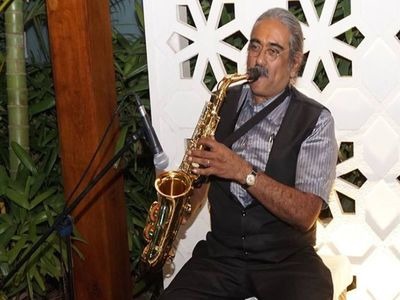
One of Bengaluru’s most well-known saxophonists, Raman is all set to perform this week in the city.

Raman has recorded and toured with many international and national artistes like Fleetwood Mac’s Jeremy Spencer, Vision Authentique, Jazz revivals, Chronic Blues, Tribal Chaos, East West encounter and more.

He is known for jazz, Indo, retro and Bollywood music and has a solo set up where he mixes his sax with his own electronic music and has people listening, singing along and dancing the night away.

Watch him perform at 1Q1 on April 25, 8 pm.

source: http://www.timesofindia.indiatimes.com / The Times of India / News> Entertainment>  Kannada> Music / April 22nd, 2018

National portal to share research facilities soon

The institutions that have the equipment will provide access to researchers through an online reservation system.   | Photo Credit: Reuters
The institutions that have the equipment will provide access to researchers through an online reservation system. | Photo Credit: Reuters

Easy access to expensive equipment

Soon researchers in any college or institution and research organisations can check, reserve and have easy access to even expensive research equipment and facilities anywhere in India, thanks to the efforts by the Centre for Nano Science and Engineering (CeNSE) at the Indian Institute of Science, Bengaluru.

The centre is in the process of collating information about scientific and research equipment and facilities available at academic institutions and research organisations across the country.

Online reservation

The portal — Indian Science, Technology and Engineering Facilities Map (I-STEM) — will soon become operational. The government green signalled the project last month.

The institutions and organisations that have the equipment and facilities will provide access to researchers for both academic and non-academic work through an online reservation system.

‘Many benefits’

“This initiative will have many benefits. It will provide access to researchers to any equipment or facility that has been procured using public funds, the equipment will be better utilised and it will avoid duplication of expensive equipment as much as possible,” says Dr. Sanjeev Kumar Shrivastava of CeNSE and one of the two researchers who came up with this idea. “Sharing expensive equipment can bring down the cost of doing research in India.”

Putting to rest the fear that this initiative may come in the way of premier institutions which are just coming up from procuring essential equipment, Prof. Navakanta Bhat, chairman of CeNSE and the principal investigator of the I-STEM project, says: “Each institute will need certain equipment that is absolutely necessary and essential for regular use. It is not at all the intent of this initiative to stop such institutes from procuring equipment but to ensure that each instrument is better used.”

“We are trying to replicate the Indian Nanoelectronic Users Programme (INUP) model at CeNSE and IIT Bombay that has been in operation since 2008 to provide access to sophisticated device fabrication and analytical equipment to any academic researcher in the country. I-STEM is inspired by our positive experience with INUP,” says Dr. S.A. Shivashankar, visiting professor at CeNSE and the other person who is the brain behind this initiative.

The idea of starting a national network was shared with Dr. R. Chidambaram, former Principal Scientific Adviser.

The proposal was formally sent to the government in November last year.

source: http://www.thehindu.com / The Hindu / Home> Science / by R Prasad / Chennai – April 19th, 2018

Lessons in war

With World Heritage Day just gone by, here is a crowdfunded project to disseminate information amongst children of Bengaluru about their city’s contribution to World War I

German troops manning a machine gun post from a trench at the Vistula River in Russia during WWI

If something has to be for the community, it has to be with the community or better still, from the community. This is the concept ReReeti, an outfit that works with museums. This is the centenary year of World War I, with events being mounted across the world. ReReeti, too, is prepping for an interesting project. With White Pepper – Black Pepper: India in WW1, ReReeti wants to raise awareness amongst children in the city about Bengaluru’s contribution to the global war fought over 30 nations between 1914 and 1918. To raise funds, ReReeti is looking for contributions from corporates through CSR but it also experimented with crowd funding.

It kept a target of IRs. 1 lakh and on the website www.smallchange.ngo, asked people to donate anywhere between IRs. 201 to IRs. 3001. The target was achieved in 10 days. “Of course, the entire budget is IRs. 30 lakh but we wanted to get the community involved. We wanted to see if the people felt a need for such a discourse and with their response, it seems they do,” says Tejshvi Jain, Founder-Director of ReReeti.

Bengaluru can certainly do with some more light on its connection with the First World War because there is very little known about it. Through the project, interesting facts such as around 1.5 million Indian soldiers fought in the First World War, Bangalore Torpedo, a path-clearing device invented by the Madras Sappers being in use even today and many more will be brought out.

WWIBF02apr192018

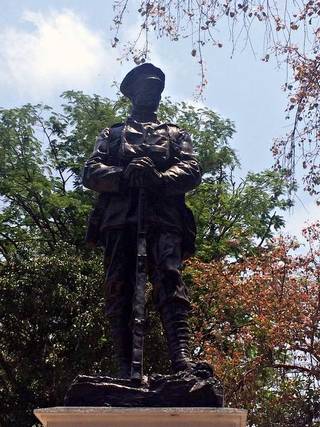
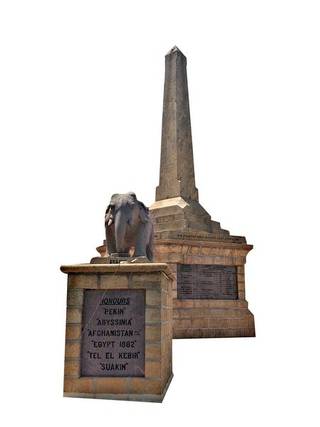
“The State of Mysore didn’t just send troops but also money and animals but so little is known about it. There are WWI monuments inside St. John’s complex like a cenotaph and statues of unknown soldiers inside the National Military Memorial in Vasanth Nagar. This project will be all about people, places, events, science and warfare and popular culture,” explains Jain.

CenotaphWW1bf19apr2018

The project has three components — travelling exhibition, online archival source and lesson plans on WWI. From August 2018 onwards, the exhibition co-curated with students, will travel to around 12 schools across the city. The exhibition will be experiential and at the same time have loads of information to share. The online archival source is being envisaged as a one-stop shop for all the content related to the World War.

_______________________________

The legend of Grey Mule
  • According to Jain: ‘The Grey Mule’ was enlisted in 1891 and saw 31 years of service. He served in Egypt and Palestine between 1915 – 1918. While returning in 1921, many mules were sold in Egypt but Colonel Bassett interceded and obtained special permission to bring him back. On returning he was pensioned and allowed to roam free in the lines as an honoured war veteran. During the 150th anniversary reunion, he headed the march past of pensioners accompanied by the same sapper who had worked with him 33 years back. He wore his colours and got a standing ovation. It was his last parade. He passed away in 1933. He was buried in the unit lines at the Regimental Centre (Bangalore). His hooves were used to make ink stands – 2 in Bangalore (Regimental mess and Monkey House) and 2 in UK.
  • ____________________________

Very little is out there about India’s contribution to WWI and whatever little is there is scattered. The aim is to bring all the links under one roof to make the information accessible. The lesson plans are about storage for anyone across the world to access the information.”

Jain was inspired during her Art Think South Asia Fellowship in the UK where she saw communities getting involved to engage with local histories.

source: http://www.thehindu.com / The Hindu / Home> Entertainment> Art / by Shailaja Tripathi / April 19th, 2018