Category Archives: World Opinion

Neeharika Panda’s dream come true

NiharikaMPOs04jan2018

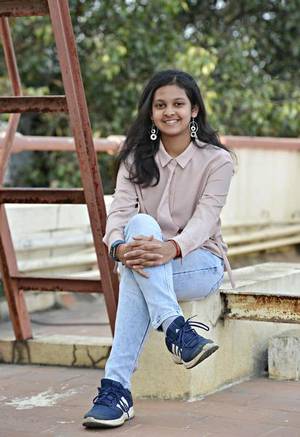
Teenage songster Neeharika Panda promises to make a sound impact at Carnegie Hall next year

Having dreams as a teenager is one thing. Actually making it come true is another matter altogether. For teen singing sensation Neeharika Panda though, it was all just waiting to happen.

Having won the first place in the American Protege International Music Talent Competition Fall 2017, the young vocalist from Bengaluru is heading to Carnegie Hall next year to stake her claim on the global platform for singers.

When she got the news, Neeharika says she was euphoric. “I was thrilled at getting this opportunity to perform in front of thousands of people at Carnegie Hall and showcase my talent.”

Her entry for the event was the version of ‘Jamaica Farewell’ by Don Williams and she will be singing the same in her performance on April 1 next year. “Although Harry Belafonte is the original composer, I’m paying tribute to Don Williams since he passed away this September.”

She continues: “I like this song a lot. I used to sing it in sixth grade and perform in the apartment we live in and in school. The song touches my heart. Whenever I listen to the song, it reminds me of Harry Belafonte journey. Personally, I have a deep connection with the song. I love country music and it fills my heart in a special way.”

So what does she have in store for her audience? Neeharika says: “I hope they are happy with what they have heard and take life lessons from the song. ‘Jamaica Farewell’ talks about never giving up. It’s a song of hope and I hope it reminds them that no matter what obstacle comes their way, they can find a way out.”

Looking back, the youngster says she’s been in love with singing since she was 11. “I have, till now, not received any personal training in singing. I only went for keyboard classes from fifth grade.”

Her earliest memory of music is her mother singing songs by Lata Mangeshkar. “I grew up listening to classical music and that was my earliest inspiration. I soon started singing too and my parents encouraged me to give professional singing a shot. Since then, I’ve been honing my singing skills. My parents and friends have constantly supported me and helped me give this my 100 per cent.”

The ninth grader from VidyaNiketan School in Hebbal, says she manages to easily juggle between her passion for music and studies. “Whenever I find time after school, I commit it to singing. Music freshens and motivates me. So after singing, I feel more prepped up to study.”

While she loves to sing rock, pop, jazz and even classical, Neeharika’s heart is in folk. “I love singing in the folk style. It has a wide repertoire and I’d love to experiment with it.”

While almost everyone in the list of winners in the American Protege International Music Talent Competition has a mentor, Neeharika is one of the only ones without one. “That is quite a feat in itself. I think since I’m one of the very few in the list without a mentor, it’s great to have made it by myself. Of course, I do plan to get professional training soon.”

She also credits Bengaluru for playing a vital role in shaping her music. “Bengaluru is a city that encourages music. I listen to a lot of radio since some of my favourite songs are on air. It is also amazing to be in a city that has a league of entertainers. The environment is encouraging and competitive and the audience is always supportive.”

Hoping to be a fulltime singer in the future, Neeharika reiterates that she would love to get personal training first. “I want to keep learning and never stop.”

Ask her what’s next on her bucket list and she shoots back a long list. “My priority is to upload my videos on YouTube. I would like to compose music and also form my own band,” she says adding, “I hope to become popular worldwide. Of course, I’d love to keep playing and singing. It’s equally important to master an instrument – you can’t do without it.” To all the teens like her out there, she encourages: “Give your best, never give up on yourself and keep perusing your goals.”

source: http://www.thehindu.com / The Hindu / Home> Entertainment> Music / by Allan Moses Rodricks / January 02nd, 2018

A doctor who gets a kick out of fighting

Meet a doctor, who recently won an MMA bout at the Rampage Fighting Championship in Malaysia

Twenty-five -year-old Kajal is an Ayurvedic medicine graduate from Mysuru. She is not someone you would associate with an argument, let alone a fight. In fact, last year she started going to a gym in the hope of putting on some weight, as she “was underweight”.

But this December, she surprised everyone by taking part in the Rampage Fighting Championship, Malaysia. She was picked for an MMA (Mixed Martial Arts) bout in the 56 kg flyweight category against a local girl. And, she won the 3-round contest in the 2nd round on a technical knock out. Her opponent had no reply to her relentless punches. That is a far cry from the general perception of Dr Kajal Naresh Kumar.

Now, instead of mending bones and prescribing medicines, this doctor is keen to pursue her passion in the cage (the fighting arena of MMA bouts)

Her relatives are trying to understand how Kajal, a budding doctor, transformed into a fierce fighter in a matter of months. She played tennis and was into skating, but fighting was not something her family ever associated her with. Nevertheless, they were rooting for her when she was throwing punches at her Malaysian opponent. The win was the icing on the cake.

It all started when Kajal joined a gym in April 2016, where she was fascinated by those practising kick-boxing. She was hooked and joined kick-boxing classes in June. Her trainer, Samith Bhat, says, “She expressed an interest in learning kick-boxing. She is a sincere pupil and regular for classes. So, I asked her if she would like to compete.”

Kajal’s first fight took place in the club in November 2016.

Samith says, “When she took a few punches, she did not back off. She went right back into the fight and I knew she was a fighter in her heart.”

The doctor won the bout. Later she participated in the National kick-boxing championship in Patna in December 2016, organised by the Kickboxing Federation of India. The event had over 1,500 participants — men and women — in various categories. Kajal won the gold in kick-boxing in the 56 kg category that had 10 participants.

More contests followed and her first MMA bout was held in April 2017.

But while her bouts were giving her a high, her family was getting uncomfortable seeing her return home with bruises.

Anyone who has watched an MMA fight will understand that the only protection for fighters in this full-contact combat sport —that allows striking and grappling — is a pair of gloves.

However, the family did not put hurdles in her path. In fact, the first time she lost a fight, her parents and siblings rallied around her.

Samith says, “Kajal is good. She is now a member of Team Genesis, which I formed to participate in domestic bouts.” The sport has a huge following in the North-East. However, in India, MMA is a niche sport and is not officially recognised by the Government. Bouts are organised and overseen by enthusiasts and fans.

As of now, the country has few fighters, but the number is growing. The size of the crowd is also increasing. The events are being covered by local television channels, which is helping popularise the sport and draw crowds to contests.

However, this sport is not all about fighting. Suraj Shetty, who runs the Grounds Sports Fitness in Mangaluru, says, “People who come to me focus on fitness. Most are in the 25 to 35 age group. For such people, after a hard day’s work, it is a good stress-buster. Some women too joined my classes for fitness and realised some of the techniques can be employed for self-defence. Some companies have even organised classes for their employees — for fitness and self-defence.”

Samith adds, “Muay Thai, Jiu Jitsu, kick-boxing and MMA come as a breath of fresh air for people who were put off by dumbbells, barbells and weight plates. It is also about correct posture. The age range in my classes is 15 to 40. Actually, one of my pupils is 41.”

Kajal is eyeing the ultimate prize — participation in the Ultimate Fighting Championship (UFC), which is one of the most high-profile contact sports events, thanks to the real fighting.

Her inspiration is fellow fighter and Team Genesis member Basavesh — a 25-year-old, who a clinical psychologist in Mysuru. He started much before Kajal and is now a veteran of several bouts and contests. The young man is among those aiming for the UFC too.

So next time, you visit a hospital or travel by a BMTC bus, you might be tempted to take a closer look at the body and posture of a doctor or the conductor. People like Kajal make you wonder if there is a fighter underneath every uniform.

source: http://www.thehindu.com / The Hindu / Home> Life & Style / by Dhiraj Shetty / January 10st, 2018

Monogram of Jain inscriptions getting ready in Hassan

A team of 10 epigraphists has so far copied about 138 stone inscriptions from various monuments.

The ASI has launched a project to copy them and make a monogram to spread awareness among people about their historical significance. (Photo: DC)

Hassan:

In an attempt to conserve the ancient stone inscriptions found  in Vindhyagiri, Chandragiri and other monuments of Shravanabelagola, a popular Jain pilgrimage centre in Hassan, the Archaeological Survey of India (ASI) has launched a  project to copy them and make a  monogram to spread awareness among  people about their historical significance. A team of 10 epigraphists has so far copied about 138 stone inscriptions from various monuments, including Vindhyagiri, also called Doddabetta. It’s believed there are around 500 such stone inscriptions in Shravanabelagola.

Speaking to Deccan Chronicle, Superintending Archaeologist, ASI, Bengaluru Circle, Moortheeswari said the monogram of stone inscriptions  would be released during the much awaited Mahamastakabhisheka of Bahubali in February.

“Whatever is written in stone will be brought to the people’s attention through the monogram to help them understand its historical significance and keep them from damaging them,” she explained.

One of the epigraphists on the ASI team revealed that some of the inscriptions were in Kannada, Tamil and Marathi.

A few spoke about   the practice of Sallekhana or fast unto death that was practiced here in ancient times, he adds.

Tracing the origin of  the stone writings, he says they appear to have been first made on palm leaves before they were chiselled on the rocks of  Doddabetta, Chikkabetta and other monuments.

source: http://www.deccanchronicle.com / Deccan Chronicle / Home> Nation> Current Affairs / by Girish M B, Deccan Chronicle / December 24th, 2017

What do the inscription stones of Bengaluru say?

An inscription stone at Dasarahhali | Photo Credit: Uday Kumar

An early eco-friendly king, women warriors, a battle for Bengaluru: inscription stones that tell such tales and more

Last month, I was at the iconic red-brick building of the Government Museum on Kasturba Road in Bengaluru behind which an exhibition called Inscription Stones of Bangalore was under way. On display were 28 large posters of inscription stones found in various parts of the city.

I had a task to do — ‘estampage’, a process of ‘lifting’ the inscriptions from the stone on to a piece of paper for a clearer read.

Royal writ

‘Estampage’ is a purely Indian term used by epigraphists, explained T.S. Ravishankar, former director of the Epigraphy branch of the Archaeological Survey of India. He had come to attend the show. The tablet I was working on was found just two months ago in a farm near Whitefield. The inscriptions were in Tamil. Another stone tablet in front of me was from Kattigenahalli, close to Yelahanka. It had inscriptions in old Kannada or Halegannada.

Stones02BF17dec2017

Aerospace engineer and history enthusiast Vinay Kumar is part of the citizen-led project, Bangalore Nagarada Shila Shasanagalu, which had organised the exhibition. According to Kumar, inscriptions like these are records of the city’s history, its culture, economic activity, regimes and language.

The inscriptions give a very good idea of the evolution of language. “From the second half of the 5th century, the inscriptions were in Halmidi, the oldest known form of the Kannada language,” said Ravishankar. The oldest existing Kannada inscription on a Veerakallu or ‘hero stone’ from Bengaluru dates back to about 750 CE.

It was found in Krishnarajapuram, a busy neighbourhood, as part of a temple compound’s wall. The inscription lay hidden under layers of paint. Constant exposure to heat from bonfires had caused the tablet to break into pieces. Fortunately, the part of the stone with the inscription survived and was shifted to the museum.

It read: “When Sripurusha Maharaja was ruling … Mareya … pierced and fell.” This refers to the Western Ganga dynasty ruler, Sripurusha, and the veera here is Mareya. The script is notable for the long, rectangle-shaped characters from the Ganga dynasty period. In some 600 years, these characters would evolve into the artistic, rounded characters of the Hoysala period.

Going, gone

For Kannada language fanatics, Kumar has a revelation. “The existing stone inscriptions on Kempe Gowda I (feudatory ruler under the Vijaynagara empire), who established the city of Bengaluru, are all in Telugu.” And inscription stones found within an area of 20-30 kilometres in the city are in Kannada, Tamil and Telugu.

The most celebrated inscription from Bengaluru is the one dating back to 890 CE and recording the death of Buttana Setti, son of Nagatara, in a battle in Bengaluru. It is one of the earliest instances of the mention of the city. The battle it talks of — the one between the Gangas, who were Jains, and the Nolambas, who were Shaivites — is significant, as it led to the decline of the Jain kings and the founding of a new line.

Recently, there has been another discovery of tablets with Tamil inscriptions in one of the city’s oldest temple, Madivala’s Sri Someshwara temple. Dated to 1247, the Chola period, they refer to ‘Vengalur’, the Tamil name for Bengaluru. Now historians believe that when Kempe Gowda established the city, he borrowed the name from a place that already existed in the 9th century.

Stones03BF17dec2017

Then there are records of the economic activity of the times. Imagine getting tax exemption for maintaining a neighbourhood lake. That is what an inscription found at Vibhutipura says about the king who waived taxes for residents who had constructed a tank in the area and maintained it.

One of the earliest mentions of women is of the daughter of King Nagatara, Thondabbe, who took a vow to fast until death after the battle of Bangalore. A stone tablet found in Hoskote shows a woman warrior fighting and dying on the battlefield.

About 150 such stone inscriptions of Bengaluru find a mention in Epigraphia Carnatica, a set of books on the epigraphy of the old Mysore region compiled by Benjamin Lewis Rice, the director of the Mysore Archaeological Department, between 1894 and 1905.

Of the stone inscriptions he documented, barely 30 remain.

Backup plan

Whenever Kumar and other enthusiasts like Dhanpal M. reach a site after consulting Epigraphia Carnatica, the local people usually talk of having seen the (now missing) stone as recently as a decade ago.

“Development!” Dhanpal laughed, “Everywhere they have ‘developed’ sites on which people build their homes without caring about these stones.”

Dhanpal is a BMTC bus driver who is passionate about the city’s history. He decided to scour Yelahanka, a Bengaluru suburb, for inscription stones. “Superstition is the main reason why in some places the stones remain untouched and in some other places are destroyed,” he said. For many, the myth that something untoward will happen to the person who reads the inscriptions is powerful enough to get the stones destroyed. There is also the belief that the inscriptions talk of hidden treasures. In the process of unearthing the ‘treasure’, the stones are often dug up and thrown away. Hero stones have a better chance of survival since they are worshipped.

Preserving the inscriptions is a challenge. The stones abandoned on roadsides and in dump yards can be cleaned and installed in safe locations close to where they were found.

This ensures that local people don’t lose their connect with the past as recorded in these stones. Shifting the inscriptions to museums is an option only when there is a real threat to their survival.

At the museum, I met Harish Pawaskar, a jeweller who started making 3D models of inscriptions using Reflectance Transformation Imaging technology. He showed me how to scan the QR codes on the printed posters with a smartphone.

This makes the 3D models pop up with details about the inscription. “By creating 3D models, we have all the information and details required to recreate any of the inscriptions physically in case anything gets destroyed in the future,” said Kumar, also a part of the project.

In a country notoriously indifferent to preservation, such projects are reassuring. More so for a city that seems quite intent on forgetting its past.

The freelance writer believes that everything has a story waiting to be told.

source: http://www.thehindu.com / The Hindu / Home> Society> Field Notes / by Jayanthi Madhukar / December 16, 2017

Nokia goes native in Bengaluru

NokiaBasavannaKF03dec2017

Perhaps for the first time, a multi-national corporation has decided to give itself a desi touch and named its facilities in Bengaluru after two Kannada philosophers. The Finnish telecom network equipment giant Nokia has named its recently inaugurated R&D facilities here after 12th century icons Basavanna and Allama Prabhu.

Nokia, which has presence in more than 170 countries, named its facilities after the philosopher poets “to create awareness of Basavanna and Allama to foreign employees and foreign visitors.” The centre, Nokia’s largest global R&D site, currently employs more than 6,000 engineers.

Speaking to The Hindu on Saturday, Vinayak Andangoudar, Head of Location Development, and Rajesh K, Financial Controller, of Nokia, Bengaluru, said there was “a lot of enthusiasm among employees” about these Kannada philosophers.

“After consultations and discussions with employees, we decided to name facilities after Basavanna and Allama,” said Mr. Andangoudar.

“We have over 6000 employees in our R&D and there are a good number of Kannadigas. Visiting foreign employees inquire about the two philosophers after naming the two halls after Basava and Allama,” said Mr. Rajesh.

Minister for Information and Technology Priyank Kharge inaugurated a new R&D centre at the Manyata Technology Park here.

Appreciating company’s decision, Mr Kharge tweeted: “Kannada philosophers seem to have positively impacted the IT industry with their thoughts. The new Nokia facility have collaborative spaces named after our Philosopher poets Basavanna & Allama.”

source: http://www.thehindu.com / The Hindu / Home> news> States> Karnataka / by Nagesh Prabhu / Bengaluru – December 03rd, 2017

Around the world in 80 days

Flying high: Captain Audrey Deepika Maben and her daughter Amy Mehta with their aircraft at the Jakkur Aerodrome in Bengaluru on Wednesday.

Woman, daughter to fly 50,000 km to garner support for women’s empowerment

In Jules Verne’s Around the World in Eighty Days, Phileas Fogg and his valet take steamers and trains and even an elephant while in India to win a bet with £20,000 at stake. Flying instructor Captain Audrey Deepika Maben and her 19-year-old daughter Amy Mehta are driven by a different goal as they get ready to fly around the world in 80 days in a motor glider: to spread awareness on women empowerment.

They will cover 21 countries and 50,000 km to garner support for the We! Udaan scholarship for underprivileged girls who want to fly.

K. Moses Chalai, Joint Secretary, Ministry of Women and Child Development, congratulated the mother-daughter duo and also read a message on behalf of Menaka Gandhi. He said the expedition would be a great example of the Beti Bachao, Beti Padhao campaign.

The expedition

Talking about the expedition, Captain Audrey said the it was very dear to her as it would help young girls around the country realise their dreams of flying. “This expedition is only one part of our mission. The larger goal is to encourage women across the country to take up flying,” she said.

She explained that this expedition would be a challenge as they would have to land for washroom breaks and prepare their bodies to accustom to tough conditions during their monthly cycles.

The expedition, in its planning stages now, will be finalised in the next two months. They plan to travel across 21 countries with 70 to 90 landings in between, which may vary depending on prevalent weather conditions and re-fuelling. They will fly eastward towards Japan, Russia, Alaska, North America, Greenland, Europe, Pakistan and back to India. As the motor glider requires fair weather and as Captain Audrey only has a daylight flying licence, they will be flying around 5-6 hours per day.

Training routine

As part of her training routine, Captain Audrey, a mother of three, works out everyday and has regular physical training. She is also following a strict nutrition plan along with yoga and meditation. The initiative is undertaken by an entertainment channel in collaboration with the Ministry of Women and Child Development and Social Access Communications.

source: http://www.thehindu.com / The Hindu / Home> News> Cities> Bengaluru / by Ashwini Raj / Bengaluru – November 30th, 2017

Pankaj Advani waltzes to an 18th World title

Cruise control: Pankaj Advani was at his fluent best as he outclassed Amir Sarkhosh.

Sarkhosh fails to mount challenge

Pankaj Advani dished out another superb performance to outclass Iran’s Amir Sarkhosh in the final and claim the IBSF World snooker championship here on Monday.

Advani’s deadly attacking game coupled with a phenomenally tight safety play helped him secure his 18th World championship title with a 8-2 win over Sarkhosh at the Al-Arabi Sports Club.

The best-of-15 frame final witnessed Sarkhosh pocketing the first frame easily. The Iranian looked strong and focused in the second frame too but a missed green pot gave a lifeline to Pankaj as he seized the opportunity with both hands and drew parity.

Pankaj never looked back from there as he raced to a 5-2 lead, though Sarkhosh came with a century break to win the sixth frame, and after the break, wrapped it up with three straight frames.

The result:

Pankaj Advani bt Amir Sarkhosh (Irn) 8-2 (19-71, 79-53, 98-23, 69-62, 60-05, 0-134, 75-07, 103-4, 77-13, 67-47).

source: http://www.thehindu.com / The Hindu / Home> Sports> Other Sports / PTI / Doha – November 27th, 2017

Bengaluru company’s bracelet helps save premature babies

Bengaluru :

Divya Sharavana delivered her second baby, Ritiksha, 20 days early. After 10 days in the neonatal wing of St Philomena’s Hospital, the child was discharged with a bracelet around her wrist.

“One night, the orange light on the bracelet started flashing with an alarm and we rushed the baby to the doctor. She was suffering from hypothermia —a condition when body loses heat faster than it produces — and gastrointestinal infection. She could be saved because of the device,” says Divya, who lost her first baby to complications.

Ritiksha is two years old now, and healthy. She owes it to Bempu, the bracelet that saved her by beeping when her temperature plummeted. The brain behind the innovation is Ratul Narain, 33, a Stanford University alumnus with a master’s degree in biomechanics. The device is manufactured by Bempu Health in Bengaluru.

Team Bempu's device was recognized as one of the 25 best innovations in 2017 by Time magazine
Team Bempu’s device was recognized as one of the 25 best innovations in 2017 by Time magazine

10,000 Bempus have been used across the world

In India, one in three newborns suffers from low birth weight or is under 2.5kg. This is one in 12 in developed countries,” Ratul Narain says.

A made-in-India hypothermia alert device for newborns, Bempu has been recognized as one of the 25 best innovations in the world in 2017 by the Time magazine. Invented and manufactured by Bempu Health in the bylanes of Langford Road in Bengaluru, Bempu weighs 8gm. Worn by a newborn with low birth weight, it flashes blue light if the temperature is normal. If the temperature goes below 36.5-degree Celsius or 97.7

Fahrenheit, it flashes orange and rings an alarm alerting it’s time for immediate attention, either warming the child up or giving Kangaroo mother care.
Some 10,000 Bempus have been used across the world and 1,000 of them donated to government hospitals ever since it entered the market in early 2016.

Before developing the device, Ratul spent a year at hospitals in Karnataka, Uttar Pradesh, Rajasthan and Gujarat to understand neonatal complications. “Among babies with low birth weight, infections can occur at home. Up to 15% of low-weight newborns discharged from government NICU would die at home due to complications like infections and hypothermia. The significant cost of facility care for the baby was, therefore, lost at home. That’s what made me work on a lowcost solution,” says Ratul.

The device priced Rs 2,500 can be used for four weeks without replacing its battery. To avoid cross-infections, it is suggested not to pass it on to a second user. Ratul’s research was facilitated by grants from various countries and institutions, including USAID, UKAID, Bill and Melinda Gates Foundation. Bempu is now being used in Pakistan, Papua New Guinea, Togo and Ghana through Unicef initiatives.

source: http://www.timesofindia.indiatimes.com / The Times of India / News> City News> Bangalore News / by Sunitha Rao  R / November 27th, 2017

East Parade Church : Eight Columns of Faith

EastParadeChurchBF27nov2017

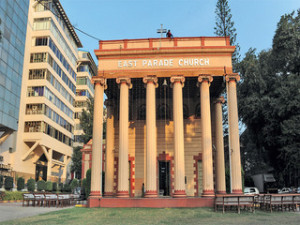
One of the oldest churches in Bangalore, the East Parade Church, was built by Wesleyan Methodist missionaries for British soldiers stationed in Bangalore Cantonment. In England, the Wesleyan Methodist Church was formed as a breakaway sect from the Church of England.

The present church building was raised in 1865, with an inscription dated October 6, 1863, marking the laying of the foundation stone. The church was the earliest church built by the Wesleyans in Mysore district.

The Wesleyan Tamil Mission in the Bangalore Cantonment was established in 1821.Elijah Hoole of the Wesleyan Mission started a small school measuring 30 feet in length and 13 feet in breadth. Tamil services were started in the small school. However, in 1822, the Wesleyan Mission was suspended and the missionaries were transferred. In 1826, the mission resumed again but this time a stable in the Mission compound had to be used as a church.

The founder of the church in its present form was a gentleman called Thomas Hodson. A Wesleyan Missionary who served in India, Hodson was an extraordinary person. He arrived in India in 1829 when he was 25. He had spent three years in Calcutta learning Bengali and he was posted suddenly to Bangalore. The church was apparently dissatisfied by his performance in Calcutta because they decided that ‘results had not come up to their expectations’ (read numbers of conversions were inadequate). Before moving to Bangalore, Hodson wrote a long letter to the church committee mentioning that he had spent three years in learning Bengali and now he had to start again and learn Kannada. Hodson also suggested that preaching was not the only job of the Missionaries; teaching and education were just as important.

He came to Bangalore in 1833 and was stationed in Bangalore for almost three years. He was apparently a linguist of repute, being fluent in Bengali, Tamil and Kannada. A renowned Kannada scholar, he wrote a book on ‘An Elementary Grammar of the Kannada, or Canarese Language’ in 1864.

Hodson appears to have been a bit unhappy in Bangalore because he found that his time and efforts were taken away in preaching to the British and European officers, and he could not concentrate on the local population. He returned to England in 1843 due to ill health and came back to India in 1853 as Chairman and Superintendent of the Wesleyan Canarese Mission in the Mysore District. He left India in March 1878 and died in England in 1882.

In his description of Bangalore, Hodson describes two portions of the city. The Cantonment was where the soldiers lived and Tamil was the primary language. In the native town or petah, Kannada was the predominant language. Not surprisingly, Hodson appears to have concentrated his efforts on the Tamil speaking population rather that the people in the petahs. In 1834, Hodson purchased about 20 acres of land, just outside the Bangalore Petah which was where the United Mission School and Unity Buildings stand today. The first building to be constructed was the Wesleyan Mission Chapel, the predecessor of the present East Parade Church. The Wesleyan Mission Chapel was built in front of the Wesleyan Mission House, and could accommodate nearly 300 people. Located at the heart of the Cantonment, it was raised for the Tamil and the English congregations. The cost of raising the chapel was met by subscription by local Europeans. It was also reported that a ‘native who have received many honours from Lord William Bentinck’ contributed £100 towards raising the chapel.

Walker, one of the missionaries who served at East Parade Church; the cover of Thomas Hodson's book
Walker, one of the missionaries who served at East Parade Church; the cover of Thomas Hodson’s book

The location of the church was striking. In front of the chapel was a wide esplanade, with trees lined up as an avenue, about a mile long. The esplanade was the erstwhile South Parade Road, now Mahatma Gandhi Road. The road to the right of the chapel was the present Dickenson Road which led to the Madras Army barracks. There was a large parade ground which covered the entire area from Cubbon Park to the present day Dickenson Road. The East Parade Church was constructed to the east of the parade ground and so perhaps there was no controversy in naming the church.

The annual report of the Wesleyan Mission of 1903 describes the East Parade Church as “…this lofty, roomy building is capable of accommodating 700 people. It is looked upon as the Cathedral of Methodism in the Province. The Church building has a number of unique features. The massive Corinthian columns, all eight in number, stand as sentinels at the entrance of the Church. These columns lend the whole structure its character. Another welcome feature of the building is that unlike other large churches in Bangalore it has no columns or pillars inside the church obstructing the view of the altar.”

Today, the East parade Church continues to serve two pastorates. These are the East parade Tamil and the East Parade Malayalam pastorates of the Karnataka Central Diocese. Thomas Hodson would probably be proud of the fact that the Church which was built primarily for the Tamil speaking population of the cantonment continues to serve the same function today.

source: http://www.bangaloremirror.indiatimes.com / Bangalore Mirror / Home> Bangalore> Others /  Bangalore Mirror Bureau / by Siddharth Moorchung & Nikhil Moorchung / November 26th, 2017

Scientist patents target chemo delivery system

Bengaluru :

An Indian scientist has claimed a breakthrough in reducing the side-effects of chemotherapy by creating a drug delivery system that will target only cancer cells and leave healthy cells unharmed.

DrRajahBF26nov2017

The patented system – contained in a whole-body device called Cellular Focused Resonance Nano-Permeabilisation or Cellforn – says Dr Rajah Vijay Kumar, can deliver chemotherapeutic molecules directly to the cancer cells. Dr Kumar, who has more than 30 inventions to his name, is the director and chief scientific officer at Bengaluru’s Centre for Advanced Research and Development.

Chemotherapy is one of the best options available for treating cancer but its severe side-effects are a separate battle. “Actually the cargo is good but the delivery is bad. That is where my team decided to intervene,” he said.

 Cellforn could make drugs 10 to 70 times more effective’

We decided to do something about the transportation and delivery system of molecular cancer treatment. Our work began in 2008 and now we have Cellforn,” Kumar said.

Cellforn creates temporary nano pores that can receive drugs, allowing delivery to the cell membrane of the cancer tissue, identified with pretreatment proton density evaluations. “All drugs contain hydrogen atoms that bond with other molecules. The nucleus of the hydrogen atoms (containing only protons) in the drug are like bar magnets, they have specific alignments. Tissues too have protons that have the same alignment as the drug. Cellforn reverses the alignment of the hydrogen protons in the tumour tissue, spins it opposite to that of the drug molecule, attracting it to the sensitized tumour tissue,” Kumar explained.

Simultaneously, Cellforn creates temporary receptors or holes induced by fast radio bursts(FRB) that is timed and delivered to target lesions. Concentrations of target drugs like carboplatin and paclitaxel, for example, are delivered based on their molecular weight. The whole body device that delivers the precisely planned FRB houses specialized antennae and delivery mechanisms.

“Almost the entire drug payload is delivered to the tumour, and minimal to the healthy tissue. Hence, there will be very little or no adverse side-effects,” he said.

Having got a US patent in April this year, Kumar claims his precision-targeted drug delivery system is market-ready. “A few regulatory formalities are still pending. I think we will go into production in nine months,” he said.

Kumar claimed that Cellforn could make drugs 10 to 70 times more effective as they can be highly localized and used in vivo (on tissues and organs inside the body) and noninvasively.

Cellforn also prevents the cancer tissue from developing immunity to the drug. “Cellforn also controls chromatin, a group of macromolecules that holds the genetic information within cells. Chromatin can make cancer cells resistant to treatment. But chemotherapy administered with Cellforn will not make the cancer tissue develop resistance to the cancer cytotoxic drug,” he said.

source: http://www.timesofindia.indiatimes.com / The Times of India / News> City News> Bangalore News / by Chethan Kumar / TNN / November 26th, 2017