Category Archives: World Opinion

Mangaluru : Manipal Alumnus gets Global Fame

Kartik Mandaville has wide experience working with start-ups

Kartik, 26, spoke at RecTech 2017 in Barcelona, one-of-a-kind forum

At 26, Kartik Mandaville, chief executive officer (CEO) and founder of SpringRole — a machine learning-based recruiting software in Bengaluru and Los Angeles — is the youngest to address the RecTech 2017, the only conference focused on innovation in recruitment advertising and technology outside of the US.

The event offers a one-of-a-kind forum for senior executives in publishing and technology companies that offer talent acquisition solutions.

The conference focussed on mobile transformations, “total candidate focus”, programmatic advertising, artificial intelligence and machine learning.

Held from May 17-19, it played host to an impressive group of recruitment experts and influential speakers from around the world.

Sharing his experience with Bangalore Mirror, Kartik Mandaville said it was a wonderful experience to share the stage with leaders from top companies in the USA and Europe. “Moreover, I was probably the youngest there. There was immense learning from the conference, being part of the panel and conducting the workshop. I must admit, I was nervous, but the workshop was well received and I was surprised to find a queue of people waiting to talk to me, which was humbling. Mostly we discussed about the future of recruitment – how artificial intelligence is going to help in the process and make it convenient for HR (human resources) managers,” he said.

More than 100 high-level executives from recruitment advertising and tech companies attended the conference, mainly from Europe, the US, Latin America and Africa.

Mandaville is a serial entrepreneur who also serves as senior technical advisor at Science in Santa Monica, California, and other companies.

He graduated from Carnegie Mellon University (CMU) with Masters from the Language Technologies Institute focussing on big data, machine learning, natural language processing and BioTech.

Mandaville has wide experience working with start-ups. At Science, he worked with early-stage start-ups to architecting out their technology, building the team and scaling.

He built the Science India team having 40-plus software engineers and product working across the portfolio companies.

Before joining CMU, he was a full-stack developer working at Shareaholic on the product distribution channel and different web properties. As a student at Manipal University, he launched ‘Autobudder’ in 2010 for Facebook, an application that automatically wishes friends on their birthdays.

The following year, he was part of the team that launched ‘Let Me Know’, a unique portal that helps students across India find opportunities of various kinds such as internships, workshops, seminars, conferences, tech-fests, literary events and much more.

source: http://www.bangaloremirror.indiatimes.com / Bangalore Mirror / Home> News> State / by Deepthi Sanjiv, Bangalore Mirror Bureau / May 23rd, 2017
Making brain surgeries more cost-effective

BrainsurgeryBF25may2017

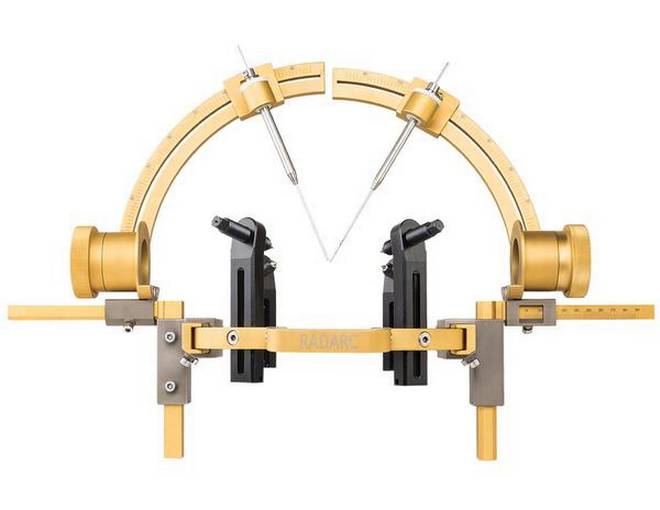
Bengaluru doctor designs low-cost stereotactic head frame

In brain surgeries, precision is everything — a shift of a few millimetres can make the difference between a successful surgery and putting a patient in coma. One device that improves the accuracy of neurosurgery is the stereotactic head frame, which provides a 3-dimensional coordinate system to help surgeons get the precise location of a nerve or tumour in the brain.

However, the device currently used is prohibitively expensive, costing between ₹75 lakh to ₹1 crore. A city-based doctor has designed a low-cost stereotactic frame which can be used to operate on both sides of the brain at a time, unlike conventional frames currently used in hospitals.

The frame designed by Murali Mohan, senior neurosurgeon with BRAINS Sparsh Hospitals, is made of medical grade titanium and costs one-third the current price. Engineers Sharath Bhat and Sadashiv Bhat of the Mahalasa Medical Technology, Bengaluru, developed the device.

Dr. Mohan’s inspiration was the late Balasubramaniam Ramamurthi, known as the father of Indian neurosurgery.

The frame which is CE marked (it conforms to European standards) and is pending patent, is currently being used by a doctors in around six to seven hospitals in Bengaluru and Hyderabad for biopsies and deep brain simulations.

source: http://www.thehindu.com / The Hindu / Home> Sci-Tech> Health / by Cynthia Anand / Bengaluru – May23rd, 2017

Bengaluru girl bags Diana Legacy Award

Nikhiya Shamsher, who won the Diana Legacy Award, with Prince William, Duke of Cambridge (R) and Prince Harry

Her crusade for better education , especially for under-privileged children, has won 14-year-old Nikhiya Shamsher from Bengaluru the Diana Legacy Award. The award was given away last week by Prince William, Duke of Cambridge and Prince Harry at the St Jame’s Palace, UK.

In December 2015, Nikhiya realized there are many children who do not have access to basic school supplies.Often entire classrooms of children share a single textbook, and many walk barefoot to school. While more children were attending school, she heard stories of bright young students dropping out because of poor educational foundation.

Yearn to Learn, the project spearheaded by Nikhiya, has, so far, set up 15 science laboratories which are benefiting 3,500 students from various schools. Nikhiya started her e-commerce website – http:www.knicnacs.com -to raise funds for her laboratory projects. Recently , she also funded the education of 25 blind children.

Inspired by Diana’s words -“Carry out a random act of kindness, with no expectation of reward, safe in the knowledge that one day someone might do the same for you” – the award, which marks 20 years since her death, recognizes young students who have socially impacted people through their actions. The award identified 20 winners as legacies of the princess.

Nikhiya was the only Indian among 20 winners rep resenting countries like the United Arab Emirates, UK, US, Canada, Belize, among others. This year, 12,000 social changemakers were nominated for the award. “The award has strengthened my believe in my project, giving me the confidence that I am doing the right thing,” said Nikhiya.”The benefit of this recognition is that a lot more people would now be interested and serious about the cause I’m working towards.”

Asked why she was so keen on bringing about a change in the education space, the teen said: “Because it is the single most important solution to all our issues.” Meeting the royal family was a unique experience for Nikhiya, who wasn’t quite expecting the award.

“The royal family was extremely encouraging and gave us the confidence that we were doing the right thing and keeping alive Princess Diana’s tradition,” she said, adding, “None of this would have been possible without the support of my parents and my school (Greenwood High).”

Her father Dr Shahid Shamsher, a trichologist, said: “We want her to follow the path she desires. She has this innate sense of responsibility and always keeps herself occupied and we know that she’ll go a long way.”

Added Niru Agarwal, trustee, Greenwood High: “At a tender age like hers, to think about the welfare and education of the downtrodden and selflessly work for it is noteworthy . She is a role model to her peers. Her qualities of kindness, compassion and service are truly admirable.”

In addition to the Diana Legacy Award, Nikhiya’s photo with information on her projects and services have been hosted at an exhibition at Althorp House, the final resting place of Princess Diana. Bengaluru

The Global Inclusion Award

Nikhiya was the sole winner from India at the Global Inclusion Awards, held in Berlin on May 3. She was chosen from among other contenders for the Global Winner of the Outstanding Youth Economic Citizenship Award 2017. The event was hosted by Germany’s G20 Presidency and Child and Youth Finance International, Germany.

source: http://www.timesofindia.indiatimes.com / The Times of India / News> City News> Bangalore News / by Deepika Burli / May 25th, 2017

Molecule discovery offers Ithope for Parkinson’s cure

Bengaluru :

City scientists have found a new molecule that can enhance the efficiency of the autophagy process in brain cells, that can significantly reduce their degeneration, which is the cause of diseases like Parkinson’s.

The scientists have initiated procedures to patent the process of discovery and the molecule itself -a potential drug -both of which have already been peer reviewed by international scientists.

Autophagy is our body’s housekeeping mechanism: a process where healthy cells clean up toxic proteins, preventing them from aggregating and killing the cells. While research on autophagy first emerged in the 1960s, a lot of serious work has happened in the past decade or so. In fact, the 2016 Nobel Prize for physiology or medicine went to Japan’s Yoshinori Ohsumi for his work in autophagy.

A major reason for diseases like Parkinson’s -which don’t have a cure yet -is aggregation of toxic proteins and inefficient autophagy or the complete lack of it, thereby resulting in the death of brain cells (neurodegeneration).

The new molecule, 6-Bio, discovered by scientists from the molecular biology and genetics unit (MBGU) at Jawaharlal Nehru Centre for Advanced Scientific Research (JNCASR), acts an autophagy modulator.”It (6-Bio) is capable of restoring autophagy and aid clearance of toxic protein aggregates, which otherwise form clumps and kill neu rons (brain cells),” said Ravi Manjithaya from MBGU.

Lead author of the paper S N Suresh

Unlike most other cells in the body, neurons aren’t easily replaceable, which means that once they are lost, they cannot be recovered. The research was led by Manjithaya and the lead author of the scientific paper was S N Suresh, a PhD student at MBGU under Manjithaya. Aravinda Chavalmane and Shashank Rai also contributed to the research.

What does 6-BIO do ?

The molecule enables neuroprotection by autophagy. It augments the efficiency of the autophagy process by enhancing the basal level (the speed at which autophagy happens). “Simply put, it quickens the process of cells taking bad proteins, which have formed clumps, to the cleanroom,” Manjithaya said. The research found a popular protein called GSK-3 Beta (a glycogen synthase protein) doesn’t allow autophagy to take place at a fast pace in brains cells affected by Parkinson’s and other similar diseases. “Our molecule removes this and quickens the process of autophagy,” he said.

Tests and publishing

The findings were published in Autophagy, a scientific journal edited by autophagy scientist Daniel J Klionsky.”Before sending them for peer review and publishing, we conducted tests in our lab, which were positive,” Manjithaya said.
Bad proteins which were found to cause neurodegenerative diseases were produced in yeast, which reacted in the same way as our brain cells. “The proteins began to form clumps and kill the yeast. We then introduced 6-Bio into the yeast and saw if it could prevent the death of the cells. It worked,” Manjithaya explained. A large part of Nobel laureate Ohsumi’s work on autophagy involved experiments on yeast.

Following this, the team tested 6-Bio on a mouse whose brain cells behaved like those of patients with Parkinson’s, and the results were positive again.

They teamed up with James Chelliah and Abhik Paul from JNCASR’s Chelliah Lab and Phalguni Alladi, Vidyadhara DJ and Yarreiphang Haorei from Nimhans. Researchers said the discovery is not a magical cure for Parkinson’s but a breakthrough that can help find a therapeutic solution.

source: http://www.timesofindia.indiatimes.com / The Times of India / News> City News> Bangalore News / Chethan Kumar / TNN / May 23rd, 2017

PIO doctor to open application of stem cell research in Nitte

Mangaluru :

UK-based orthopaedic surgeon, Dr Anand A  Shetty will start a clinical application of stem cell research in the city along with Nitte University. This will help in curing cancer and other related ailments.

Dr Shetty, who hails from Asode near Koteshwara in Udupi district, was honoured with the ‘Outstanding Clinical Excellence’ award by the UK’s House of Lords this year. Dr Shetty is winner of a host of awards including the prestigious Hunterian Surgical Medal and Hunterian Professorship for 2017 awarded by the Royal College of Surgeons of England for his research on stem cells in particular cartilage repair. Only four Indians have received this award so far.

A knee surgeon and director of stem cell research at Canterbury Christ Church University, Dr Shetty’s main interest lies in stem cell research, cartilage transplant, accelerated bone healing, and robotics in minimally invasive surgery.

In an exclusive tete-a-tete with TOI, Shetty spoke about his future plans for India especially the coastal city. “I began my research on stem cells around three decades ago when it was still in its very nascent stage. I got into cartilage and bone repair area. The biggest breakthrough was in 2000, where we did the first bone transplant surgery in the UK. To get such facility to India, with help of Nitte University, we set-up a multi crore facility in Deralakatte campus three years ago and a similar lab set-up in Hubballi for Dharmasthala hospital,” explained Dr Shetty.

He adds in the second phase his team wants go for cloning. “We want to clone high-milk yielding cow and pig for meat production. To start the process, we want to have clinical application in five years or by 2020 in Mangaluru,” he asserted.

Indian physicians, Dr Shetty says are most respected and trusted in the UK. If a British citizen has a health issue, he first tries to see an Indian doctor. “Racism did exist when I first entered the profession the 1980s. It changed in 1996 when the Labour government came to power,” he adds.

Apart from his surgical innovations, Dr Shetty is also the first surgeon to use robotics in arthroscopic knee surgery and gel-based cartilage repair surgery in the UK.

source: http://www.timesofindia.indiatimes.com / The Times of India / Home> News> City News> Mangalore News / by Kevin Mendonsa / TNN / May 20th, 2017

Bengaluru doctor wins international award for role in fight against tobacco

Cancer specialist US Vishal Rao of Bengaluru has been honoured with the 2017 Judy Wilkenfeld Award for International Tobacco Control Excellence, for his role in combating tobacco use in the country. Dr. Rao was presented the award on Wednesday at an event organized by the Campaign for Tobacco-Free Kids in Washington D.C.

Dr. Rao’s efforts led to a ban on gutka, chewing tobacco and e-cigarettes in Karnataka. However, the State government recently overturned the ban on chewing tobacco. Dr. Rao is a member of the High-powered Committee on Tobacco Control instituted by he Government of Karnataka. He is also the inventor of a Rs. 50 voice box prosthetic for throat cancer patients whose larynx has been removed.

“With strong government commitment and advocates willing to champion the cause, we can greatly reduce the burden of tobacco use in India,” he added.

“The committee gave the award in recognition of the steps taken towards implementing the Cigarette and Other Tobacco Products (Prohibition) Act, and how Karnataka led the way in this,” said Dr. Rao, speaking over telephone from Washigton. “Another was the implementation of the ban on gutka and chewing tobacco by the Government of Karnataka,” he added.

Dr. Rao said that the battle continued with the recent order from the Food Safety Commissionerate reversing the ban on chewing tobacco. “We have written to the State government that the order contravenes its commitment made to the Supreme Court to ban chewing tobacco and gutka,” said Dr. Rao.

The Wilkenfeld Award was established in honour of Judy Wilkenfeld, the founder of Tobacco-Free Kids’ international program. Dr. Rao is the second Indian to receive the award, the first being Pankaj Chaturvedi of Tata Memorial Hospital in 2013.

source: http://www.thehindu.com / The Hindu / Home> News> Cities> Bengaluru / by Staff Reporter , Cinthya Anand / Bengaluru – May 12th, 2017

NRI doctor from Kalaburagi is Labour Party candidate for UK polls

Bengaluru :

NRI doctor Neeraj Patil has come a long way. Hailing from Kamlapur in Kalaburagi district, he became the mayor of London Borough, Lambeth, and is now a Labour Party candidate from Putney in southwest London. He is contesting for the UK parliamentary elections on June 8.

Patil is pitted against the Conservative Party’s education minister Justine Greening. The latter has been representing the constituency since 2005.

Patil, born and brought up in Kalaburagi, had taken the lead in installing a statue of 12th century philosopher Basaveshwara on the banks of Thames in 2015. Prime Minister Narendra Modi  had unveiled the statue.

He was on the Labour Party’s shortlist to run for the London mayor in 2015. Patil had campaigned for the BJP in the Lok Sabha polls in 2015. He is working as a consultant in accident and emergency medicine in London.

source: http://www.timesofindia.indiatimes.com / The Times of India / News> City News> Bangalore News / TNN & Agencies / May 12th, 2017

Homage to filmmaker Bennurkar

The Centre for Information Education Development Studies (CIEDS) Collective will soon organise a memorial event to pay tributes to Chalam Bennurkar, a pioneer of documentary film making in Karnataka, who passed away recently.

Film societies are also planning to hold a festival of documentaries made by him. The 62-year-old filmmaker was found dead at a pond in Bagur, Chitradurga district.

He had gone missing for a few days and his wife Kalpana had filed a missing person complaint.

Chalam’s Kutty Japanin Kuzhandaigal (Children of Mini Japan), a Tamil documentary on labour conditions in Sivakashi, had won Golden Dove award at International Leipzig Festival of Documentary and Animation Film (Germany) and Citizen’s Prize and Prize of Encouragement at Yamagata International Documentary Film Festival Japan in in 1991. “Through this documentary Chalam took images of land to different platforms across the world. He brought value to the serious documentary films in Karnataka,” says Kesari Harvoo, filmmaker.

Chalam had taken up various social issues, especially about women, through his films. He was instrumental in organising film festival on women’s issues in Bengaluru Film societies in 70s.

He was also known as the voice of trangenders because of his documentary All About Our Famila.

He also worked with Amitabh Chakraborty for Bishar Blues about Bengali Fakirs which undertakes a journey to understand Marfat, indigenous form of Islam in Sufi tradition.

He also made documentary on Kunde Habba, a unique festival of the tribal people in Kodagu and Naave Yeravara on the Yerava community.

source: http://www.thehindu.com / The Hindu / Home> News> Cities> Bengaluru / by Special Correspondent / Bengaluru – May 08th, 2017

Manipal Institute of Technology engineer receives patent for his invention

The Indian patent office has granted patent to the invention of Raghunath Manohar of Manipal Institute of Technology, Manipal University

Manipal :

The Indian patent office has granted patent to the invention of Raghunath Manohar of  Manipal Institute of Technology , Manipal University. His invention – a multi lens system which is a microscope and a component of a telescope – was approved recently. He had applied for it in 2009, and is the only inventor of the device. Earlier, he had received a US patent for ‘Marking Gauge’, for which too, he was the sole inventor.

Giving details about the invention Manohar, deputy engineer (lab), department of Mechanical and Manufacturing MIT said that the telescope has nine lens which form the erecting lens system using nine biconvex lenses of same focal length and diameter 10 cm and 50 mm respectively. The optical system in the apparatus has eight PVC tubes of the required size. This is called the distance tube pieces. The above are slid into a slightly larger PVC container pipe having a collar at one end with a hole at the centre to view the image.

This housing tube has external screw threads cut on it in order to focus and see distant objects clearly. This container tube is now the erecting eyepiece cum compound microscope. To use this as a telescope another bigger tube was used as an objective lens with larger diameter and focal length of 110 mm and 210 cms. This is called the objective tube. This objective tube is fixed to the container tube housing the 9 lens erecting lens system. Thus this now functions as a telescope.

Manohar says that this invention of his has certain advantages over existing microscopes and telescopes: It has a wider field of view about 3 times of existing ones; It can be used as a compound microscope of 80X while some existing ones in addition to giving inverted image give 10X magnification only when used as a simple microscope; This can be made using locally available lenses and PVC pipes; Color free image is obtained due to achromatism of the equivalent lenses which is the characteristic of the optical system.

source: http://www.timesofindia.indiatimes.com / The Times of India / News> City News> Mangalore News / by Kevin Mendonsa / TNN / May 02nd, 2016

Book chronicles journey of unsung heroes of freedom struggle

Bengaluru:

Looking at the accused, the judge thundered: These five men are guilty of being ‘enemy agents’ and have to be hanged by the neck till they are dead. The five subsequently vanished off the face of the earth; there were no records to show where they were killed and buried. This was in 1943.

Cut to 2017: The five men have been resurrected as unsung heroes of the Indian Independence movement in the book titled Unsung Freedom Struggle, brought out by the Karnataka State Archives in Bengaluru on Tuesday. The book is based on the judgment delivered by special judge E E Mack (the then district judge in Ballari) on April 1, 1943 under the Enemy Agents Ordinance (Madras) against the five: V Mohammed Abdul Khadir, S A Anand alias Thanu Pillay, S C Bardhan, Boniface B Pereira and Fouja Singh.

These five men, along with 14 others, had been charged on two counts — for conspiring against the British empire by colluding with the Japanese government and for entering India as enemy agents of the Japanese government.

Historian Ko Chennabasappa, who has written the foreword, stated: “This case has been a well-guarded secret; it is not known to historians or the outside world. It is for the first time that this sacrifice for the country’s freedom is coming to light.”
The 19 accused were working in Malaya and Singapore when they were picked up by the Japanese army (following the fall of Singapore on February 15, 1942) to go to India and spy on the British. They were enrolled into the Malaya’s Swaraj Institute, a front for espionage training, where the Japanese tried to generate patriotic feelings in these men.

However, the British Empire was of the view that the Japanese adopted an insidious policy of preferential treatment towards Indians in order to capitalize and exploit the latter’s nationalist feelings for expansion of their military domination under the cover of a new order in East Asia. The Japanese employed Indians working in Malaya as Fifth Columnists.

The 19 men landed in India in three groups: While one group got off a Japanese submarine and arrived in two rubber boats at Tanur on the Malabar coast on the night of September 27,1942, another group comprising three men arrived in two rubber boats at Okhamadi village on the Kathiawar coast two days later. The rest entered India by land. However, some of the members were picked up the British military following suspicion and, subsequently, the cover was blown away.

While the five were convicted as they maintained they had arrived in India to gain independence, the rest were acquitted as they claimed they came to escape from the Japanese. The five martyrs included a muslim, a christian, two hindus and a sikh.

source: http://www.timesofindia.indiatimes.com / The Times of India / News> City News> Bangalore News / TNN / May 03rd, 2017