Category Archives: World Opinion

B’luru’s under-17 footballers emerge champions in england

Forty footballers underwent an intense six-day training session at the Manchester City Football Academy with the leading club’s coaches

Bengaluru :

A Bengaluru Under-17 football team has emerged champions in a tournament in England, against three Indian and one British school teams. The 16 students from different schools were playing at the first edition of Premier Explore Cup 2016, organised by a UK-based travel company Premier Explore.

A former English Premier League player Darren Sean Barnard selected teams from four cities — Kolkata, Mumbai, Bengaluru and New Delhi. Barnard, who is now a manager and a coach, was a wing back and midfielder from 1989 until 2010, notably in the League for both Chelsea and Barnsley.

Forty footballers underwent an intense six-day training session at the Manchester City Football Academy with the leading club’s coaches. The boys also toured and played futsal at St George’s Park Centre, run by one of the oldest football associations in England. Another highlight, of the eight-day experience, was playing at City of Manchester Stadium (also known as Etihad Stadium). This is the third-largest stadium in Premier League.

Mohammad Dhaisam was the Bengaluru team captain. One of the two students selected from Ebenezer School, he says, “The coaches had come to Bengaluru in the beginning of this year for selection… All the teams played well in the tournament.” Kolkata was the toughest contender, according to the students. They were the runners-up.

Kirthan Shaker from Delhi Public School says that day one of coaching in Manchester was revelatory. “We realised that we lacked coordination,” he says. But they defeated the English team. “The second match against Mumbai was an easy win,” says Kirthan. “Then we were confident of winning.”

It was a “life-changing experience” for Anirudh Madhava Mugalihal, a student of Jnanaswikar PU College. He took his first flight, for this trip, and says, “They treated us like professionals… I learned discipline and how to deal with things.”

The students underwent coaching in India first. The brothers Maahir Aszaskazi and Raashid Aszaskazi who run Bangalore Soccer Academy trained eight students for the tournament for eight days. Maahir says, “It was just a basic coaching of how to attack and defend yourselves… The first two to three classes were focused only on fitness and team-building exercises as there were students from different schools.”

Next year, the company plans to organise a tournament with eight Indian cities including Hyderabad, Pune, Chennai and Kerala.

source:  http://www.newindianexpress.com / The New Indian Express / Home> Cities> Bengaluru / by Akhila Damodaran / August 13th, 2016

Star this week : Tennis Official : Sagar Kashyap

SagarKashyapBF13aug2016

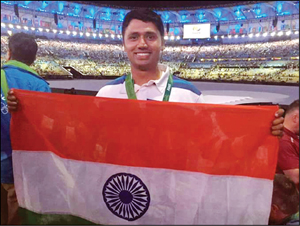
Any tennis official’s dream is to officiate in the Olympics tennis events and also be part of the Olympic Games. Our city’s Sagar S. Kashyap is in Rio De Jeneiro as a Tennis official and is officiating in the ongoing Tennis events in the Olympic Games-2016. Twenty eight-year-old Sagar achieved a milestone in 2015, when he officiated as a line umpire in the men’s singles final between Novak Djokovic and Roger Federer at the Wimbledon Grand Slam Tennis Championships at the all England Club’s Courts on July 12, 2015. Sagar became the youngest Indian to officiate in the Wimbledon Championships final. Today, he is officiating in the Rio Olympics as part of the ITF Tennis Officials’ team. He is our ‘Star This Week.’

He is the only Mysurean official other than Mysuru-born US-based athlete Vikas Gowda who are doing our city and nation proud at the Olympic Games in Rio.

In Wimbledon Championships-2015, Sagar served as a line umpire along with another Indian referee Abhishek Mukherjee from Kolkata. This was the first time that two Indian officials were selected to officiate in a Wimbledon Championships men’s final. He is the first official from Karnataka to officiate in the Wimbledon final and the third Indian to be selected to officiate in the final of the Wimbledon Championships.

Sagar, a former national ranked tennis player and an Engineering graduate from Mysuru, fascinated by the game, took up officiating in smaller tourneys in Mysuru and Bengaluru in 2007. Sagar passed the International Tennis Federation’s Level-1 Exams in 2008. Later, he passed the ITF Level-2 exams and became the youngest White Badge official in the country, making him eligible to officiate at the highest level.

Sagar started officiating in ITF Tournaments and gradually was chosen for bigger tournaments. He got an opportunity to officiate in the ATP Chennai Open, WTA Sunfeast Open and ATP Kingfisher Open Tennis Championships.

In 2009, he got an opportunity to officiate as a line umpire in the Wimbledon championships qualifying rounds. In 2010, the British Lawn Tennis Association invited him to officiate in the main draw of the Championships. Since then he has been a regular in the Wimbledon Championships.

He was awarded as the Best performing Tennis Official by the ITF in 2015-16.

Sagar, after being in the circuit for seven years travelling to officiate from one championship to another, intends to climb greater heights in officiating various tournaments across the globe.

source: http://www.starofmysore.com / Star of Mysore / Home> Sports News / August 07th, 2016

A home that housed 4 generations of Genius

Many years ago in Madras, reclining on an easy chair and chewing on a piece of clove, R.K. Narayan (RKN) quite uncharacteristically said: “Although I have built the Mysore house brick by brick, I carry no emotions, no nostalgia about it… In life one has to move on, you can’t simply dwell in the past,” recalls RKN’s grand-nephew, the journalist-turned-corporate manager Chetan Krishnaswamy, who recaptures life as it used to be at 15, Vivekananda Road, Yadavagiri, Mysore – 570020, in this writeup…

by Chetan Krishnaswamy

I don’t quite remember the details now, but oddly, that muggy afternoon, I thought I detected a streak of nostalgia beneath the veneer of cold pragmatism and bravado.

RKNarayanHouseBF12aug2016

The true magnificence of RKN’s sprawling bungalow on 15, Vivekananda Road in Yadavagiri, Mysore, lies in the lively people who inhabited, or were associated, with it throughout its 60-plus years of existence.

In 1948, the scrubby land measuring 180 x 120 was bought from a local Shetty at the rate of around Rs. 2 per square yard. Narayan’s older brother R.K. Pattabhi had a share in it, too.

By this time, Narayan had already established himself as a writer and was attracting global acclaim.

Mysore’s famous Chief Engineer Shama Rao (who had built the famous Krishna Raja Sagar [KRS] Hotel and after whom a string of buildings are named in Mysore’s Vontikoppal, including the shopping complex on 3rd Main Road called Shama Rao building), who was retired by then, was given the contract to construct RKN’s house in 1949.

Narayan designed a large, roomy home that would accommodate his brothers, their wives and their children. By this time, the cartoonist R.K. Laxman, the other famous sibling, had already flown the coop and was building his reputation in distant Bombay.

The extended family which resided at Door Number 963, Lakshmipuram, comprised brothers R.K. Srinivasan and Pattabhi and their families apart from Narayan’s daughter Hemavathi (RKN’s wife Rajam had passed away suddenly in 1939).

Reigning over the household was Narayan’s mercurial mother Gynanambal — expert cook, chess champ and tennis player, all rolled into one.

The house was completed in 1952, with the griha pravesha being a grand affair. Among the guests was Soma, a blind mystic who lived atop Chamundi Hill and who had taken a liking for the family. On one occasion, the gifted Soma through his clairvoyant powers had accurately traced Laxman’s wife Kamala’s missing diamond ring, that had been swept away with the garbage.

And then came the unforeseen crisis: None of Narayan’s brothers were keen to relocate to Yadavagiri from the centrally located Lakshmipuram. This, despite the comforts of a large house.

In light of this new dilemma, Narayan settled into a peculiar routine: Every day after lunch he was driven in his Morris Minor to Yadavagiri by driver Rangappa.

In the unbroken silence of his house, Narayan wrote profusely. This was the phase in which he wrote two of his novels: The Financial Expert and Waiting for the Mahatma.

By about 5.30 pm, after lighting the lamp in the ‘puja room,’ Narayan would be back home in Lakshmipuram for his routine evening walk with brother Srinivasan. Eventually, for about a year, 15, Vivekananda Road was rented out to Henry C. Hart, a Visiting Professor of Political Science from the University of Wisconsin, on a monthly rent of Rs. 200. Hart was in India on a Fulbright Fellowship, with his wife in tow.

Their legacy was an elegant piece of furniture custom made for the house: wooden seating that skirted the entire semi-circular perimeter of the large living room. After many years of service, and in the wake of sustained onslaught from a riotous bunch of kids, that primarily included my cousins, the furniture slowly disintegrated.

One morning, 15, Vivekananda Road, had a surprise visitor.

The flamboyant actor Dev Anand accompanied by Yash Johar (Karan Johar’s father) had dashed to Mysore, after giving a day’s notice to Narayan. The actor was there to negotiate for the filming rights of The Guide.

Narayan’s starstruck nephews were directed to fetch a breakfast of idli-vada and dosas from Seshagiri’s hotel (Hotel Ramya now). After thoroughly enjoying the meal, Dev is said to have whipped out his cheque book and asked “How much?”

RKN feebly said,“I don’t know.”

Dev left after presenting the author with an advance of Rs. 5,000.

Finally, with the daughters of the house married and gone and brother Srinivasan moving out of Mysore in pursuit of government service, a hesitant Pattabhi gave in. Much to Narayan’s relief, Pattabhi moved to Yadavagiri with his wife and mother. Also in tow were Narayan’s young nephews R.S. Krishnaswamy and R.S. Jayaram, both studying at the Mysore’s National Institute of Engineering (NIE).

In 1973, Narayan’s mother Gynanambal passed away.

The large, two-storied house of around 5000 sq.ft. had five bedrooms with attached bathrooms. There was a spacious semi-circular living room with an array of windows that brought in the sunlight.

The dining hall, kitchen, an unusually huge store-room adjoining a ‘puja room’ formed another portion of the expansive house.

A winding, narrow flight of stairs led to Narayan’s airy room on the top floor.

The room was minimalistic, almost spartan in décor. Apart from a single cot, there was this heavy easy chair and a solid walnut table from Kashmir on which rested an assortment of books and papers.

In another corner Narayan displayed his interesting collection of miniature owls, which he had picked up during his travels. On a wooden bracket fixed to the wall rested the Filmfare award (which the writer had won for The Guide) and other memorabilia. That he never thought too highly of this award was another thing.

The room had a modest ante chamber where Narayan tucked away his veena. He played it well.

On the wall of his room was a framed picture of his late wife Rajam. He would regularly place a string of jasmine flowers on the frame every day. The room opened up to a cosy balcony, which was Narayan’s favourite spot. He sat there, hours on end, writing, watching the flitting birds and squirrels on the frangipani tree that majestically arched into the compound, scattering its canopy of green.

Sometimes he would meditate and recite a version of the Gayatri Mantra sitting here. Narayan had revealed to my aunt Rajani, Jayaram’s wife, that this particular Mantra was a revelation that was relayed to him from another spiritual plane.

The other room, which usually accommodated guests and other relatives who were on an extended stay, had an unusual revolving wooden shelf, which originally belonged to Narayan’s academic father R.V. Krishnaswamy Iyer. The shelf creaked and groaned under the weight of the thick hardbound classics, some of which were rare out of print editions.

The house had a garage which at one time held Narayan’s Mercedes Benz, a gift from a publisher which he subsequently disposed off. There were also two make shift ‘sheds’ that in the later years were used to park the other automobiles in the house.

In 1987, after Pattabhi’s death, Narayan travelled into Madras and the US, periodically coming into Mysore. From 1991 onwards, he started living in Chennai owing to his ill health. For many years, the empty house was taken care of by Narayan’s driver Krishnamurthy.

Sometime in early 2000, the house was leased out to the cousin of a very powerful Congress party politician. The influential tenant used it as an office-cum-residence, altering certain facets and progressively destroying the old world charm of the house.

At one point, he stopped paying the rent and refused to move out. The family seemed helpless…

One fine morning, suitably galvanised by Narayan’s son-in-law Chandrasekaran, who lives in Chennai, I strode into the house determined to take on the truant tenant.

After making us wait for a long time, the kurta-clad man came down and spoke to us in the most unfriendly manner, clearly indicating that he would leave the house when he felt the need to do so.

I left the house quite disappointed and reported the conversation back to Chandrasekaran. In a few months’ time, good sense prevailed and the man left the house but in complete disarray.

Today 15, Vivekananda Road, which stood forlorn, almost ghostly for years waiting patiently, uncomplainingly, for that fresh gust of wind to breathe again, has finally seen the light of the day with the Karnataka Government converting it into a museum. Now, once again one can hear the echoing laughter, the quibbles and the genius of four generations of an uncommon family that it has nurtured.

source: http://www.starofmysore.com / Star of  Mysore / Home> Feature Articles / August 06th, 2016

Raman Fellowship to JSS S&T Varsity Professor

DrMahanandBF05jul2016

Mysuru  :

Dr. B.S. Mahanand, Associate Professor, Department of Information Science and Engineering, JSS Science and Technology (JSS S&T) University, has received the Raman Fellowship from University Grants Commission, Government of India, to pursue post-doctoral research at the prestigious Harvard Univer- sity, USA. He left for Harvard University today.

His research at Harvard University focuses on identifying imaging biomarkers responsible for Alzheimer’s disease and other dementias. He will be developing advance procedures for tracking of Alzheimer’s as well as towards understanding of the mechanisms that cause the disease. Dr. Mahanand has researched on a unique amalgamated area of engineering and medicine; the detection of Alzheimer’s disease using machine learning approaches.

In his previous achievements, Dr. Mahanand was awarded with Visiting Research Fellowships at Helsinki University of Technology, Finland (2007); Nanyang Technological University, Singapore (2012) and Visiting Scientist at National Magnetic Resonance Research Centre, Bilkent University, Turkey (2015).

He is also conferred with Best Ph.D Thesis Award (2012-13) from Karnataka government’s Board for IT Education Standards. His visit to Harvard will help JSS S&T University in creating avenues for interdisciplinary and user-oriented research, development of joint research and faculty exchange programmes.

source: http://www.starofmysore.com / Star of Mysore / Home> General News / July 30th, 2016

Star this week : Talented TT Player : Ullas Naik

UllasNaikBF05aug2016

Table Tennis is a global sport which is popular in the world sporting scene. It needs excellent hand and eye co-ordination combined with skill and physical fitness to excel in the higher level. Mysuru has always been producing talented players who have gone on to represent the country and the State in different events in this popular sport.

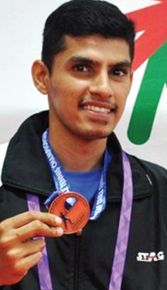
One such talented table tennis player is our city’s youngster Ullas Naik, who has made every-one proud with his feats by representing India in the World Deaf Table tennis Championships 2016 held at Samsan, Turkey, from July 18-24, 2016 and won the men’s doubles bronze medal teaming up with Tanuj Mukherjee. An excellent performance in the world arena by this youngster from our city is a fit choice for this week’s ‘Star This Week.’

Ullas Naik, 24, is the son of Udhayshankar and Prafulla, who reside in Saraswathipuram, Mysuru. Ullas Naik who cannot hear from a young age, took up to Table Tennis in 2002, when his mother took him to Umesh Urs, the chief coach at the Harsha Table Tennis Centre in Kuvempunagar.

Umesh has been coaching him since then giving him all the needed encouragement and is responsible for his improvement in the sport.

Ullas Naik, a II year B.Arch. student at the University School of Design at the Manasagangotri, Mysuru, representing India in the World Deaf TT championships 2016 at Turkey from July 18-24, 2016, won bronze in the men’s doubles. Earlier in 2013, he had represented India in the Deaf Olympics in Bulgaria and in 2006 had represented India in the Friendly International Tournament at Pakistan and won gold in the men’s singles event.

Earlier, Ullas Naik, did his Diploma in Architecture in JSS Ploytechnic and was encouraged to the maximum by HOD Chandrashekar to pursue his sporting interests.

Ullas also takes part in the State Ranking TT Championships when he finds time now and earlier was regularly taking part in the Championships from time to time and has won medals.

He has been supported and encouraged well by his parents, coach Umesh Urs (HTTA), the Mysuru University and PG Sports Centre in continuing to play this sport in the highest level.

Ullas Naik intends to continue playing this sport and aims to perform well in the National and International level for the country. This multi-talented lad needs to be encouraged and hope he goes on to achieve greater laurels in this sport in the days to come.

source: http://www.starofmysore.com / Star of Mysore / Home> Sports News / July 31st, 2016

Re 1 initiative helps the poor build dreams, brick by brick

The house of gardener Sampangi, which was built using the funds collected under the Rupee

Bengaluru:

For over 30 years, 44-year-old Sampangi and his wife and three daughters lived under a leaky roof which they called their home. “The roof would leak every time it rained and we’d have to shift clothes and electronic items to one corner of the house. The house would shake whenever there’s heavy wind,” the gardener recalled.

Today, Sampangi lives in a two-bedroom home with a garden and three dogs that he found abandoned on streets. His eldest daughter is now married, while his two younger daughters are school students. A photograph of Japanese volunteers from NGO Habitat for Humanity, who constructed the house, is displayed on top of the TV shelf, and his eyes light up whenever he sees the people who made this possible.

“As my children got older, my wife and I would talk about building a better home. We had even begun saving some money from the meagre amount we earned. But four years later, we were left with only about Rs 1 lakh,” he said.

Things changed for the better when he met a person from the Habitat for Humanity, through whom he learned about interest-free loan. The rest, is history.
Rupee for change

What can you do with Re 1 is a question that everyone asks. Apparently, you can build houses.

Habitat for Humanity has tied up with 20 schools in Bengaluru. Students, parents and teachers contribute Re 1 per day towards funds to construct houses for people from low-income group. In the past two years, the NGO has raised Rs 10 lakh which has gone into constructing 14 houses in Nagenhalli, Byrathi, Bagalur, Yerapanahalli and other parts of the city. Students, through the volunteer build programme, are also assisting in renovation activities.

India faces a shortage of about 6 crore housing units, said Rajan Samuel, managing director, Habitat for Humanity India.
12 lakh in need of houses

“In Karnataka alone, over 12 lakh people don’t have a decent home while 49% of the population does not have access to a toilet. The Centre has introduced policies like ‘Housing for All’ to provide adequate shelter to each and every family by 2022. The state government too has undertaken measures to provide affordable homes to the poor and to redevelop slums. About 70% per cent of the urban housing need is in the affordable segment and this is where Habitat for Humanity is working,” he said.

In Karnataka, the NGO is building 74 homes and 123 toilets for the low income, marginalized people, he added.

According to him, in most cases, women bear the brunt of lack of housing or toilets.
Learning experience for students

While lives of people like Sampangi or Kaliyamma, who recently moved into her newly constructed two-bedroom home are being transformed, student volunteers are learning as well.

“Recently, our students painted a government school as part of the volunteer build programme and they were surprised to see a blackboard. Most of them have seen white boards in classrooms, but never a blackboard on which chalk is used,” said Asha Samuel, faculty incharge of CAS at Canadian International School.

“These activities help them grow. They come back realizing that there are so many things that they take for granted and so many things they should be grateful for,” she said.

Poor women bear the brunt

Women and girls from the lower income families live in highly unsafe and substandard conditions without access to basic sanitation. Majority of them suffer from poor health since they do not have the liberty to relieve themselves when required and have to wait till dusk to go out and defecate. Owning a house with proper sanitation facilities is a deep desire of all poor women across the country. By providing access to decent housing and sanitation facilities, Habitat for Humanity India intends to improve health and provide security for the whole family

– Rajan Samuel, managing director, Habitat for Humanity India

source: http://www.timesofindia.indiatimes.com / The Times of India / News Home> City> Bangalore / Merlin Francis / TNN / July 31st, 2016

Pages from History : Dr. S.R. Rao: A World Class Archaeologist from Karnataka

by Prof. A.V. Narasimha Murthy, former Head, Department of Ancient History & Archaeology, University of Mysore

Dr. Shikaripura Ranganatha Rao, popularly known as Dr. S.R. Rao all over the world, has made not merely Karnataka but our country proud by his contributions to Indian Archaeology, art and culture. It was my good fortune that I was his contemporary and I have learnt a lot from him and his works. Added good fortune is that I have been asked to deliver the third Dr. S.R. Rao Memorial Lecture at Bengaluru arranged by his daughter Dr. Nalini Rao, a Distinguished Professor of World Art in one of the American Universities. This is not an ordinary achievement indeed!

If my memory is right, Dr. Nalini Rao prepared her thesis under my guidance and I am proud of such a brilliant student. Now she has taken the initiative to arrange Dr. S.R. Rao Memorial Foundation for Indian Archaeology, Art and Culture where our Central Minister Ananth Kumar will inaugurate the photo exhibition at Bengaluru (Mythic Society) on Sunday, 24th July 2016.

About Dr. S.R. Rao: Born in 1922 at Anandapuram in Shimoga district, he received BA (Hons) and MA degree from Mysore and Nagpur Universities. Mysore University awarded the D.Lit degree to him for his magnum opus Lothal and Indus Civilisation. After retiring from the Archaeological Survey of India (ASI), he met Jawaharlal Nehru, our first Prime Minister and apprised him of the Indus civilisation. Nehru shrugged his shoulders and said that Harappa and Mohenjodaro have gone to Pakistan and what will you do sitting in India. Dr. Rao had a stock reply: But now I have discovered Lothal in Gujarat which is a better maritime site than Harappa.

Immediately Nehru saw that Dr. Rao was conferred with the Jawaharlal Nehru Fellowship. Dr. Rao did not turn back. He researched and wrote the book Lothal and Indus Civilisation. Though lot more research has been done now even today it is considered as the most authentic book on Lothal. When he discovered the dockyard, the first of its kind in the ancient world, he did not like to presume things on his own. He invited technical experts who examined the Lothal dockyard and said that large ships could come down to Lothal and proved that Indus people participated in international trade during that period, which is more than 5,000 years old. The world of scholars were astonished at this great discovery.

Another special feature of Indus sites was the occurrence of small, square or rectangular clay seals which generally had an animal and a pictographic label writing above. Scholars all over the world tried to decipher this script, but nobody could give a satisfactory reading. Dr. Rao also tried to decipher the script by following a scientific methodology and learnt ancient scripts of Babylonian and Assyrian and began comparing the letters. Many scholars had presumed Indus civilisation to be Dravidian and tried to read the script as early Tamil. By this time it was known that Indus civilisation was the creation of the Aryans themselves. Without any presumption

Dr. Rao prepared a concordance of all the symbols found on the Indus seals and analysed them. He found that certain symbols occurred very frequently. Thus he came to the conclusion that Indus people were evolving an alphabet from picture writing. This gave him certain readings like pala, mahapala, baka, mahabaka etc. Thus he showed that they were proto-Samskrita and not Dravidian.

David Diringer, the greatest authority on ancient scripts exclaimed that Dr. Rao has hit the nail on its head. The Russian and Scandinavian scholars agreed to the suggestion of Dr. Rao. Dr. Walter Spink of Michigan University hailed the readings of Dr. Rao’s Indus script. It could safely be said that nobody has improved upon the readings of Dr. Rao. Many scholars suggested that this work deserves a Nobel Prize. Thus Dr. Rao’s contribution to the study of Indus Valley civilisation has not been surpassed by anybody. He was hurt when Dr. Mortimer Wheeler who become the Director-General of ASI wrote a book titled ‘2,500 years of Pakistan’ and even a school child knows that Pakistan was born in 1947. Thus he tried to give a false boost to Pakistan.

Another important contribution of Dr. Rao was the inauguration of under-water archaeology, known as Maritime Archaeology. He may be called as the founder of this branch of study in India. ASI did not show much interest in this branch. Without the active support of the government, he swung into action with the help of corporates interested in it. Many people thought that Krishna’s Dwaraka was a literary bunkum and was based upon myths. But Dr. Rao disagreed with this and went to Dwaraka (Bet Dwaraka) and with the help of deep sea divers went down to the bottom of the water. He collected lots of pottery and other artefacts which were in use at Dwaraka during Lord Krishna’s period and the scholars all over the world were greatly impressed by this. The devotees of Sri Krishna expressed their gratefulness to Dr. Rao for this great discovery. With assistance and guidance from National Institute of Oceanography, Goa, Dr. Rao opened up a new branch to trace the rise and fall of maritime civilisation. This led him to take interest in ancient as well as modern ship-wrecks. Apart from all these, Dr. Rao took interest in murals of Ajanta, Ellora, Badami, Lepakshi, Padmanabhapuram, Mattancherry and traditional paintings of Karnataka. He also gave more interest to conservation of monuments and also beautified the surroundings by gardens and lawns.

Yet another achievement of Dr. Rao is the formation of a Circle Office at Bangalore (Mid – Southern Circle) which was given the responsibility of maintaining monuments in Karnataka. Thus Hampi, Shravanabelagola, Pattadakal, Aihole and other places flourished well under his guidance. When he was in Hampi, he found a stone image of a saint and immediately he identified it as that of Purandaradasa. A workaholic, Dr. Rao did not take any rest and worked hard to spread the message of India through archaeology, art and architecture. When he passed away, condolences poured in from scholars all over the world.

source: http://www.starofmysore.com / Star of Mysore / Home> Feature Articles / July 23rd, 2016

Travel Fellowship for City Doctor

DrHanumanthacharBF28jul2016

Mysuru :

Dr. Hanumanthachar Joshi (in pic), Principal, Sarada Vilas College of Pharmacy, Mysuru, has been awarded the prestigious Travel Fellowship Award by Alzheimer’s Association, USA. Travel Fellowships are awarded to young scientists who make exceptional contributions to Neuroscience Research, especially Alzheimer’s disease.

He has been invited by the Association to present a research paper on “Cerebro-protective effects of Gangetin alkaloids on sodium nitrite induced hypoxia and ethanol induced neurodegeneration” at Alzheimer’s Association International Conference at Toronto, Canada, from July 24 to 28.

Dr. Joshi is working in the areas of drug discovery for management of neuro-degenerative disorders, particularly for Alzheimer’s disease. He is also invited by Department of Psychology, Ryerson University of Toronto, Canada, to deliver a guest lecture on management of Alzheimer’s disease and associated complications.

source: http://www.starofmysore.com / Star of Mysore / Home> General News / July 22nd, 2016

For him, the battle continues

Bezwada Wilson.
Bezwada Wilson.

The Magsaysay Award winner says India still has over two lakh manual scavengers

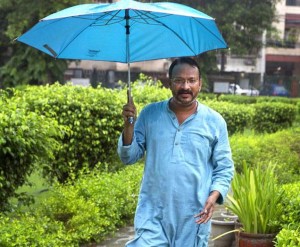
Fifty-year-old Bezwada Wilson, national convenor of the Safai Karmachari Andolan (SKA), was declared one of the six recipients of the 2016 Ramon Magsaysay Award by the Philippines-based award foundation, in Manila on Wednesday. Recognised for his efforts to eradicate manual scavenging, Mr. Wilson told The Hindu that India still has over two lakh manual scavengers who needed to be rescued, according to a nationwide survey by the SKA.

The award citation recognises Mr. Wilson’s work in “asserting the inalienable right to a life of human dignity”. Of the estimated 600,000 scavengers in India, SKA has liberated around 300,000, the citation notes.

Hailing from a Dalit family in Kolar, Karnataka, Mr. Wilson said his first brush with the local authorities over the abominable practice was in 1986-87, when he saw poor Dalit women cleaning human waste in the public latrines of Kolar Gold Fields. His own family members had been manual scavengers for generations.

“It was a big town, and in those days KGF was known to be the most electrified town after Tokyo,” he said. Yet, the town lacked public toilets with running water. Moved by the plight of the women who had to clean them every day, Mr. Wilson decided to petition the local town municipality to improve facilities. In 1986, he sent a complaint about dry latrines to the authorities and, when it was ignored, he sent the complaint to the Prime Minister, threatening legal action, the award citation notes. As a result, the town’s dry latrines were converted into water-seal latrines and the scavengers transferred to non-scavenging jobs.

Despite his 32 years of activism, Mr. Wilson says challenges remain in putting an end to the practice. “No thorough survey has been conducted as yet to enumerate manual scavengers though State governments have been promising one since 2010,” he said. Expressing scepticism over the implementation of the government’s flagship Swachh Bharat Abhiyan, he said the scheme did little to address the plight of manual scavengers and only sought to build more and more toilets.

Mr. Wilson formed the SKA as a network of activists in 1993. A PIL he filed in the Supreme Court, naming all the States, Union Territories, and relevant government departments as violators of the 1993 Manual Scavenging Prohibition Act, produced positive results. In 2014, the SC ruled in his favour demanding that all States ban manual scavenging and even fixed a compensation of Rs. 10 lakh for families of scavengers who had died on the job.

“In 2014, we gave the Centre a list of 1,073 people who had died while cleaning sewers, but the families of the dead are yet to be compensated fully. Only 36 people from the families of dead sewer cleaners have been compensated, but they did not get the full amount prescribed by the court,” he said.

Our Special Correspondent from Bangalore adds:

Practice still rampant in Kolar

In the hometown of Bezawada Wilson, who has been honoured with the Ramon Magsaysay award for 2016, manual scavengers are not hard to find.

The century-old mining set-up at the Kolar Gold Fields (KGF) saw thousands of people — primarily from Dalit communities — being brought in to deal with night waste. Mr. Wilson’s father was among those brought from Andhra Pradesh to KGF.

Though mining operations ended in 2001, the prohibited practice continues in the town where dry latrines are abundant.

The government claims that there are only 82 manual scavengers in KGF. This is disputed by activists and government officials who peg the figure at 800 families — making it the highest density of manual scavengers in Karnataka.

“While more than 12 criminal cases have been filed across the State for manual scavenging, there is little clarity on the prevalence of the banned practice. A 2007 survey threw up a figure of 15,375 manual scavengers. This is clearly under reporting, says Narayana, Chairman of Karnataka State Commission for Safai Karmacharis.

“The number is higher than 25,000,” he alleged. “We have sought a re-survey, but government officials are looking at their list and claiming that the number has reduced.”

The announcement of the Magsaysay award for Mr. Wilson did not trigger celebrations in KGF. Much of his activities have been in Andhra Pradesh or at the national level.

source: http://www.thehindu.com / The Hindu / Home> News / Vidya Venkat / Chennai – July 27th, 2016

Book Talk : A. Kiran Subbaiah

City’s Multifaceted Sculptor

SculptorBF26jul2016

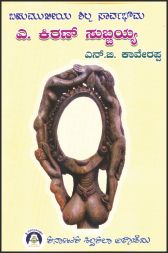
Title : Bahumukhiya Shilpi Sarvabhouma A. Kiran Subbaiah

Author : N.B. Kaverappa

Pages : 100 (including 20 pages of pictures)

Price : Rs. 100

Publisher : Ila Mudrana, Bengaluru

by Dr. Prakash Padakannaya

Recently I attended a book release function at Kalamandira where a Kannada book entitled ‘Bahumukheeya Shilpa Sarvabhowma A. Kiran Subbaiah’ was introduced and officially released in the presence of several artists, Academy officials, and art lovers of Mysuru. The book was authored and designed by N.B. Kaverappa, a well-known artist and founder of Bharani Art Gallery in the city. Karnataka Shilpakala Academy, Bengaluru, celebrating its 20th anniversary, is the publisher of this unique book.

I am not an expert on sculpture art but I was curious about the book and also the sculptor as I had heard many remarkable things about Kiran Subbaiah’s work from the author. After the function, I bought a copy of the book availing 50% discount offered on the book releasing day.

The book, though runs into only 71 pages, is very well designed with attractive cover page and several illustrative quality pictures without which the descriptions would have been incomplete. The editorial comments by L. Shivalingappa and preface by the author provide the necessary background for the book. The author, who knew A. Kiran Subbaiah personally for the past three decades, has been very successful in presenting the life and work of this extraordinarily talented sculptor and his magnificent sculpture in a lucid yet scholarly way.

The book has been divided into two parts. The first part, ‘inside the sculptor’s life’ deals with the life sketch of Mr. Kiran Subbaiah while the second part, ‘inner turmoil beneath the external looks of sculptures’ describes major works of the sculptor with illustrations. The first part narrates the innate aptitude that Mr. Subbaiha had from childhood for sculpturing; and his extraordinary and eventful yet dedicated saga of what he has accomplished in the field so far.

His passion for sculpturing was ignited when he visited Beluru-Halebidu temples during his college days. His prodigious skill was exemplified by the fact that he could master the entire syllabus of five year diploma course in sculpture at Chamarajendra Technical Institute, Mysuru, in just one year. It is irony that such a prodigy was forced to leave the Institute after three years of basic training (he was not allowed to go for advanced course by his supervisor though the same teacher in later years pleaded him to apply for the lecturer’s vacancy, which Mr. Subbaiah turned down). Such incidents also testify how creativity and dedication triumph over all odds.

Mr. Subbaiah’s perseverance and diligent experimentation in sculpturing with all kinds of stones made him probably one of the greatest contemporary sculptors of our land. Hailing from Kodagu, today he owns a museum of sculpture ‘Shilpanikethan’ in Mysuru, which houses hundreds of wonderful stone sculptures carved by him.

The author makes a sincere attempt at highlighting the sculptures sculpted by Mr. Subbaiah, in terms of both breadth and depth of sculptor’s creativity, in the second part of the book.

The illustrations of his work presented in the book demonstrate that Mr. Subbaiah is as proficient with traditional style as with contemporary and modern style. Normally a sculpture has only a front view. But Mr. Subbaiha has mastered the art of carving multifaceted or many-sided sculptures using a single stone (the same piece may depict one image when seen from front and a different image when seen from sides or back). It is like four different sculptors carving four different sculptures on four sides of a stone! This is an astounding feat by any standard!

Mr. Kaverappa describes the way Mr. Subbaiah goes about creating these multisided sculptures. It seems when Mr. Subbaiah has a piece of stone in front of him ideas keep running and he visualises them in his mind first. Then he makes a rough sketch directly on the stone and begins carving. When he has multiple ideas and icons in his mind’s eye, he first whittles all of them coarsely on the stone. Then, he starts the fine work simultaneously on all of them till they attain their proper shapes. Again, at the end he would start fine finishing work concentrating on one of them at a time.

The book also gives an account of a master piece in making, the most wonderful work of art by Mr. Subbaiah, the stone sculpture of ‘Lord Adishesha’ displaying 135 hoods with a special pedestal. When completed, this pedestal will also depict 45 snake Gods with different poses carved on it. Presently, Adishesha deity at Pashupathinatha temple in Nepal holds the world record with 108 hoods. Adishesha that Mr. Subbaiah is making with 135 hoods a height of 4 feet and 3 inches without the base (5 feet and 1.5 inches with the base) shall get that name and fame. Shree Yanthra, Om Yanthra, and Gayathri Manthra have been engraved on the back side of this unique statue. This statue carving took three years till now. It seems another 6-8 months’ hard work is required to finish the intricate carving of the main statue and the pedestal. According to Mr. Subbaiah, once he starts this arduous task, he has to devout at least 8-10 hours per day for this work for several months!

The author of the book has sprinkled some of his own observations on the work of Mr. Subbaiah throughout the book. One of them is related to the artists who have influenced Mr. Subbaiah. Kaverappa has mentioned the influence of Henry Moore, one of the greatest modern sculptors of 20th century, in Mr. Subbaiah’s creations. He has also rightly observed that five-sided sculptures (five in one) are not viable as a visual treat as it actually disturbs the composition of the sculpture as a whole. One cannot miss ubiquitous presence of ‘shringar rasa’ (flavour of erotic/ romantic love) in most of the contemporary sculptures of Mr. Subbaiah.

Editor of the book, L. Shivalingappa, in his foreword comments that depiction of shringar rasa theme in Mr. Subbaiah’s sculptures is a lot more powerful than words can explain. Mr. Subbaiah himself acknowledges that ‘…the female nude form…from time immemorial… has caught the fancy, imagination, liking and admiration of a vast majority of mankind, artists, sculptors and writers’ (page 19). Mr. Subbaiah is no exception!

The book gives us a list of multisided sculptures done by the sculptor since the year 2008, list of recognitions conferred, and a list of glossary along with the direct contact address of the sculptor at the end for the benefit of readers and art lovers. Some of the colour reproductions of original work are also excellent.

When I finished reading the book, I felt that there is a genius sculptor, probably one of the best in the country, living amongst us in ‘namma Mysuru’ without getting due recognition (may be it does not matter to Mr. Subbaiah). I do hope that this book will help people of Karnataka to know and feel proud of the genius sculptor in Appaneravanda Kiran Subbaiah. Both Karnataka Shilpakala Academy and N.B. Kaverappa should be commended for their great service to the art and culture of Karnataka by introducing this master sculptor and his works to the public. It is a must read book to all those interested in sculpture art.

About the author of the book

Author of this book, Nellamakkada B. Kaverappa (in pic.) is an eminent senior artist of Kodagu living in Mysuru. He is well-known as the founder of Bharani Art Gallery, the first private art gallery in the city that he established in 1994 with a noble purpose of promoting visual art. Artists who like to exhibit their work are given the gallery for free of rent and also an independent guest room to stay (also free) for the duration of the expo. Artists from neighbouring States as well as other countries such as Australia and Finland have exhibited their paintings in Bharani Art Gallery.

Mr. Kaverappa has immense interest and actively involved in creative visual art (multihued) and literature. As an artist, he has been part of many Karnataka Kala Melas. He exhibited his ‘Creation’ series of oil paintings at Ahmedabad, Gujarat and ‘Dance of Kodavas’ at India International Centre, New Delhi. He has been honoured by Karnataka Kodava Sahitya Academy (in art field), Kodava Samaja Bangalore and Kodava Samaja, Mysuru. His oil portrait of legendary ‘Haradas Appacha Kavi’ is the most authentic one and is displayed at Kodava Samaja Bangalore as a gift. He is also a frequent writer in Kannada and Kodava periodicals. He has translated two books for Karnataka Lalithakala Academy.

source: http://www.starofmysore.com / Star of Mysore / Home> Feature Articles / July 20th, 2016