Born in Hassan, Aluru Seelin Kiran Kumar, well-known as A.S. Kiran Kumar, is a renowned Indian space scientist and Chairman of Indian Space Research Organisation (ISRO). He has held several techno-managerial positions at ISRO since 1975. In his capacity as Associate Director and subsequently as Director of Space Applications Centre, Ahmedabad, he steered the design and development of microwave, communication, navigation payloads and their application activities.
In recognition of his contributions, he was conferred with Padma Shri award by the President of India in 2014. ISRO’s Individual Service Award in 2006 and Performance Excellence Award in 2008 Bhaskara Award of Indian Society of Remote Sensing in 2007 to name a few. Star of Mysore (SOM) caught up with A.S. Kiran Kumar for a brief interview during his recent visit to Vidyavardhaka College of Engineering in city. Excerpts:
SOM: Can you tell us about recent achievements of ISRO?
Kiran Kumar: I am really pleased to say that country’s prestigious organisation ISRO has been very active in contributing memorable and laudable achievements for the societal needs. The two great achievements are successive launching of Chandrayaan-1 and Mars Orbiter Mission (MOM). In addition to these accomplishments, I wish to strongly mention that ISRO has been responsible for the development of three-tier imaging system for many satellites, ocean colour instruments by using push broom technology, high resolution stereo imaging system for Cartosat-1, sub-meter resolution optical imaging sensors and meteorological payload channels. India is expected to move ahead of other nations to become a premier nation in the world in all spheres. For this to happen, people should acquire knowledge and harness skills for the societal benefit.
SOM: How do you think satellites and space technology will benefit the common man?
Kiran Kumar: There are nearly 35 satellites providing communication, navigation and information to the planet Earth. Today, we are in a position to generate digital television model for India, where information is very resourceful for various application. This is helping in planning infrastructure and providing information on tunnels and railway tracks for effective construction. The State and Central Governments are also making use of space technology for planning and monitoring activities. In future, technology will help the farming community for agricultural purpose.
Space technology has been benefiting the fisherman and saving Rs. 15,000 crore approximately for the government annually. Additionally, technology is saving precious lives by predicting cyclones and other natural calamities. We must emphasise on adopting technology based on innovations and discover solutions for the specific problems with ease.
SOM: There has been a misconception that studying engineering is better or preferable compared to basic sciences. What is your opinion or suggestion on this?
Kiran Kumar: It is shocking to hear such things. I believe that the misconception is mainly in parents or adults which has to be completely erased and to do that there is a need for creating awareness on the significance of pure or basic science authoritatively.
Without the comprehension of elementary sciences — Mathematics, Physics, Chemistry and others — the learning process for a student will be incomplete and he/she will never understand the technological aspects or its advancements.
SOM: Sir, can you tell about the future projects or plans of ISRO?
Kiran Kumar: ISRO has been extremely active and ambitious from four decades. With the able guidance of Dr. Vikram A. Sarabhai, Dr. Homi J. Bhabha, Dr. A.P.J. Abdul Kalam and Dr. Satish Dhawan, this organisation has accomplished many achievements.
I believe that, the next year or by 2018, Chandrayaan-2 may be launched. Chandrayaan-1 and MOM have been successful and been sending very good information to the earth station. Astrosat has been functioning effectively. We have been keenly working for the design and development of Aditya, an ambitious venture for Sun during 2018 or 2019.
[This interview was done by Prof. S.A. Mohan Krishna, amateur Astronomer and Associate Professor, Vidyavardhaka College of Engineering, Mysuru, on behalf of Star of Mysore]
source: http://www.starofmysore.com / Star of Mysore / Home> General News / May 18th, 2016
Christoph Bertrams, Director of Max Mueller Bhavan, Bengaluru, in conversation with Senior Journalist N. Niranjan Nikam.
The cultural exchanges between two countries give the participants an opportunity to understand the rich heritage, history, life and culture of the respective places they visit. Goethe Institut – Max Mueller Bhavan in the country is one such phenomenon that is doing great service in this direction since the last 60 years. The Director of Max Mueller Bhavan, Bengaluru, Christoph Bertrams was in city with a group of ten artistes from Germany visiting many cultural places like Rangayana, Folk Museum in Manasagangotri and Pottery Makers in Doora village. Senior Journalist N. Niranjan Nikam caught up with Christoph, the friendly, warm, outspoken German, who has understood India and has a good perspective about the country. He spoke to ‘Star of Mysore’ (SOM) about the history of Max Mueller Bhavan, the Indian and German Culture and about the cultural exchanges. Excerpts. —Ed.
By N. Niranjan Nikam
SOM: You have been the Director of Max Mueller Bhavan, Bengaluru, for the last five years. How has your experience been?
Christoph Bertrams: In my former career in Latin America, it was a different experience. I am here in an Asian country for the first time and it has been an interesting experience. Since we work in the area of culture, we had no support from the Government in India whether it is the Central or the State Governments. ICCR (Indian Council for Cultural Relations) hardly supports us. But this was not the case in Latin American countries where the governments would support us with public funds. Here we do get some private funding. All cultural life depends on a few individuals. It is a great experience to work with such people.
SOM: In Bengaluru, what is your experience like?
Christoph: Bengaluru is a production hub. It is very active culturally and there are a few wonderful artistes like Pushpamala and Sheila Gowda. They work in Bengaluru but have their shows in Delhi and Mumbai. Surekha Sharada, the former Chief Curator of Bangalore Metro Art Centre (in the MG Road Metro Station) and Aisha Abraham have also been a great source of support for us. We had created an exhibition with them about the First World War and the Indians participating in it. These two were the two Indians who worked with us. It was a great success. You can work with talented artistes and produce art.
SOM: It is very fascinating to read about Max Mueller, a German Indologist and Sanskrit scholar born almost 200 years ago. Can you throw some light on him?
Christoph: Goethe Institut is there in 140 countries in the world and six in India. There is only one exception and that is India where it is called Goethe Institut — Max Mueller Bhavan; in all other countries it is just Goethe Institut. That is because of the enormous respect Max Mueller had for India and this is what he had to say about your country:
“If I were asked under what sky the human mind has most fully developed some of its choicest gifts, has most deeply pondered over the greatest problems of life, and has found solutions of some of them which well deserve the attention even of those who have studied Plato and Kant, I should point to India.’’
The Indian colleagues also feel strongly about the link with Max Mueller and they want this name to be there forever. It is a very good Institut.
SOM: Do you find any similarities between German and Indian cultures?
Christoph: (Smiles). It is much easier to argue what is the difference than similarities between the two cultures. Both are very strong cultures and, of course, the Indian culture is the older one. Therein lies the main difference. What is similar is the confluence of cultural activism. For instance, if one goes to a Film Festival what one looks at is the biggest festival with the biggest stars in attendance. It is not quality here but only quantity. But our film festivals are different. Of course there are both good and bad things when one talks about culture.
Again lots of time fusion is not possible. When they try it — for example, a jazz musician plays with a Sitarist and it is called fusion music. According to me fusion becomes confusion.
SOM: A group of ten people from different backgrounds like puppetry, theatre artistes, curator and photographer have all come together. How much do they learn from such exchanges?
Christoph: This time it is called “Spot on bangaloREsidents.” We bring those people to India who have never been here before. They are all selected through a very strict selection process. Each time we receive about 200 applications. After the selection they all arrive together on a Sunday. If they say that they have a performance on Monday in Germany and after that they will come they are not allowed. These people are first introduced into the cultural life of the city. Take Paul Affeld who represents a vibrant combination of hip hop and puppet theatre as witnessed by his famous band “Puppetmastaz.” He has come here to see what Indian puppetry has to offer.
SOM: Indian puppetry has a great tradition and he will have a lot of takeaways.
Christoph: Yes that is true. He will interact with the puppet masters as his interest lies in the theatrical development between classical acting, puppetry and dance. They have visited Rangashankara where they have interacted with Arundathi Nag. Jagruthi theatre is another place where Paul has gone.
These chosen few stay with the Indian hosts and there are 25 of them in the list in Bengaluru and it is increasing. This is how the exchange of knowledge takes place between Germany and India. However, it is sad that in India there is no government funding at all for such activities.
SOM: Having been with Goethe Institut for 25 years how much of its philosophy have you imbibed?
Christoph: The thing I learn most whichever country I go to is the culture of that place. As I told in the beginning Indian culture is very old. The main objective of mine is to learn about this first. Both Bengaluru and Mysuru are culturally very vibrant. During our visit here, we learnt about the visual arts. We visited Rangayana and interacted with the artistes there. The puppetry show which we showed is a bit different from what is shown here. The children in the Chinnara Mela participated very enthusiastically. Though the way we talk to children and the way they are controlled here are a bit different. In the evening we all attended a party hosted by the international artiste N.S. Harsha, who is from your own place, where we again met some great artistes, writers, architects, graphic artistes and the interaction was very good.
This is why we are rotated in our jobs. If I stick to one place I will not learn anything much.
SOM: What is it about Goethe Institut that is unique? Because, it is said, the falling of Berlin Wall makes a turning point for Goethe Institut. (This question is answered by Maureen Gonsalves, Programme Coordinator who is travelling with the team).
Maureen Gonsalves: Earlier East and West Germany had different cultures. After the fall of the Berlin Wall this has more or less disappeared. However, as an outsider I feel that there could be some differences still there. Coming to the Goethe Institut, there is a lot of emphasis on exchange programmes.
We do not fund but support the cultural exchanges to create or facilitate and enhance the culture milieu. It is a give and take. Germany has a budget for Goethe Institut.
SOM: Many Indian students are going to Germany for further studies. What is it that attracts them? Do they have to learn German to study in Germany?
Maureen Gonsalves: One of the main reasons is Germany has no tuition fee. They just have a small semester fee and living expenses. Economically it is attractive. However, now it is not entirely true as a few Universities are charging tuition fees. Their standard of education is very high. Master’s courses are in English. Only under-graduate courses are in German. I know of students who do not speak a single word of German, who have passed out and come.
SOM: Can you throw some light on the controversy regarding replacing German with Sanskrit in CBSE schools after a MoU having been signed with Kendriya Vidyalaya Sangathan?
Christoph: I am not aware of it and hence I do not want to comment on it.
SOM: Great thinkers and philosophers have come out of Germany. In spite of this it has been responsible for two World Wars?
Christoph: This is the big conflict we feel, as Germans. As the well-known German Philosopher, Sociologist and Composer Theodor W. Adorno known for his critical theory of society has said, “To write poetry after Auschwitz is barbaric,” a dictum he strongly believed in and which is a part of post-war Germany’s struggle with history and culture.
source: http://www.starofmysore.com / Star of Mysore / Home> Feature Articles / May 11th, 2016
At the invitation of Maharaja Nalwadi Krishnaraja Wadiyar, he came to Mysuru and took charge as the second Vice-Chancellor of a nascent University in 1920.
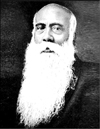
Brajendranath Seal was a renowned Bengali humanist-philosopher and a Brahmo-Samaj intellectual.
by Dr. S.N. Bhagirath
In 19th century Bengal, Sir Brajendranath Seal was responsible for the paradigm shift in Brahmo philosophy from liberal Theism to secular humanism. He was a true renaissance man and a polymath. He graduated from the University of Calcutta with a post-graduate degree in philosophy in 1884. He published his first major work “New Essays in Criticism” in 1907. In 1915, Calcutta University conferred a doctorate degree on him for his thesis “The Positive Sciences of the Ancient Hindus.” He taught in several institutions like City College – Calcutta, Morris College – Nagpur, Krishnanath College – Berhampur and Victoria College – Cooch Behar. In 1906, he was invited to address the ‘International Congress of Orientalists’ in Rome. In 1911, he went as a delegate from India for the first ‘Universal Race Congress’ in London.
In 1913, he was offered the King George V Professorship of Philosophy at the University of Calcutta. He also collaborated with Nobel Laureate Rabindranath Tagore in establishing Vishwa Bharati University at Shantinikethan. He was also appointed by national poet Rabindranath Tagore as the first Vice-Chancellor of Vishwa Bharati University. He was at the helm of Mysore University as a Vice-Chancellor for nearly 10 years from 1920 to 1930 and he quit this post because of ill health.
In 1926, the British Government in India honoured him with a Knighthood. During his stay in Mysuru, Sir Brajendranath Seal authored a textbook on Indian philosophy and a definitive biography of Raja Ram Mohan Roy. His further studies on ancient Hindu scientific philosophy led him to contribute a chapter in Prafulla Chandra Roy’s “History of Chemistry in Ancient India.” His publications were noticed abroad and in 1902, his candidacy was seriously considered for a professorship in philosophy at the University of Cambridge.
In 1936, Sir Brajendranath Seal who was bed-ridden and almost blind completed his magnum-opus “Quest Eternal.”
When he was a student at Scottish Church College, Narendra Dutta [Swami Vivekananda] was also pursuing his higher studies there at that time. Sir Brajendranath Seal describes the future Swami Vivekananda as:
“Undeniably a gifted youth, sociable, free and unconventional in manners, a sweet singer, the soul of social circles, a brilliant conversationalist, somewhat bitter and caustic… an inspired Bohemian but possessing what Bohemians lack, an iron will”
On 8th August 1927, Sir Brajendranath Seal laid the foundation stone of Intermediate College, Mysuru. Later this College came to be known as Yuvaraja’s College (under University of Mysore) offering Science courses. This historic occasion was graced by Sir Mirza Ismail, the then Divan of Mysuru State. The most surprising coincidence on this occasion was the presence of Motilal Nehru and Mahamahopadyaya Sidhanti Shivashankar Shastry. Sri Nalwadi Krishnaraja Wadiyar, the Maharaja of Mysuru, conferred upon Sir Brajendranath Seal the title of “Rajatantra Praveena.”
Sir Michael Sadler, former Vice-Chancellor of University of Leeds, declined the Vice-Chancellorship of Mysore University in 1920, but he strongly recommended the name of Sir Brajendranath Seal as a suitable candidate by writing these words:
“I know of no one in respect of the range and depth of scholarship and originality of mind, who can be equal to Brajendranath Seal either in the East or in the West.”
Brajendranath Seal worked very hard for the development of University of Mysore. His health deteriorated and he suffered a paralytic stroke in 1930. He went back to Calcutta to live in retirement. He died in Calcutta on 3rd December 1938. It is only befitting that we remember him in the Centenary year of University of Mysore.
[email: bugs2beatles@gmail.com]
source: http://www.starofmysore.com / Star of Mysore / Home> Feature Articles / May 09th, 2016
Dr. Wolfgang Messner, Professor of International Management at MYRA School of Business in Mysuru, has won the Emerald Literati Network Awards for Excellence-2016.
The International Emerald Literati Awards, for the past 23 years, reward outstanding contributions to scholarly research. Dr. Wolfgang developed a new indicator to measure the actual effectiveness of intercultural communication and collaboration. His research paper published in the International Journal of Managing Projects in Business won him the award.
A highly-accomplished academician and researcher, Dr. Wolfgang has authored seven books, including Winning the Right Job, Making the Compelling Business Case and Globalization of Professional Services. He has been associated with MYRA for the last 3 years and teaches elective courses like Making the Compelling Business Case, Customer Service Management, Intl. Business Management and Intercultural Competencies for working in Intl. teams to the Business Management students at MYRA.
source: http://www.starofmysore.com / Star of Mysore / Home> General News / May 08th, 2016
The All India Tennis Association (AITA) has selected city’s senior tennis player of Income-Tax Department R. Nagaraj has been selected to represent India in the 50-years Men’s Senior World tennis Championships to be held at Helsinki from June 19 to 24.
K.G. Ramesh, Jayanth Khade and Nagaraj in the 50-year age group and Mayur Vasant, Sudharshan Rao and Yogesh Shah in the men’s 55-year age group have earned selection.
The selection trials for the Indian team was held at MSLTA, Mumbai last week.
source: http://www.starofmysore.com / Star of Mysore / Home> Sports News / May 07th, 2016
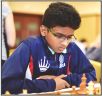
S.N. Jatin (sitting second from left) is seen with (from left) his parents Vani and Nagabhushan, younger brother S.N. Nitin and grandfather D.M. Nagesh.
Today a majority of youngsters fancy only one sport; cricket. But, to this World Champion, chess was his calling. Having taken to chess around 8 years back, S.N. Jatin, won the gold medal in the World Amateur Chess Championship in Under 1700 rating category held in Greece recently. Jatin’s mother N.H. Vani, first put his younger son S.N. Nitin for the chess coaching camp. Later, Jatin also joined the classes. He found the game interesting and slowly developed his game. He recently won a bronze medal in the 5th National School Chess Championship in the U-15 boys category. This feat earned him a place in the team representing our country in the Asian School Championship to be held at Tehran in Iraq in the month of June, 2016. Jatin is also preparing for the Commonwealth Chess Championship to be held in Sri Lanka during August this year.
Jatin spends around 6-8 hours every day in front of his laptop practising chess and getting to know about new moves and his probable opponents in future tournaments. During his free time, he plays the flute to calm his mind. Jatin travelled to Bengaluru frequently for his advanced chess coaching class from IM Shivanand. Later, he joined the coaching classes conducted by M.P. Ajith to prepare for the Amateur World Chess Championship which yielded him a good result.
Jatin credits chess for helping him excel in his studies. Speaking to Star of Mysore, he said that the game had helped him immensely in scoring well. “Though I don’t study for long hours like others, I still manage to score 90 percent. This is possible only because of chess. It has helped me improve my concentration level,” he said.
Jatin has been amply supported by his father S.I. Nagagbhusan and his mother N.H.Vani in all his endeavours. Nagabhusan runs a small scale industry in Bannimantap. Speaking to Star of Mysore, Nagabhushan said that he was happy with Jatin’s achievements. But he also expressed his unhappiness over chess players not being recognised despite their achievements.
“We have spent around Rs.1.75 lakh for Jatin to take part in the tournament held at Greece. But, till date none of the Government agencies or private organisations have come forward to extend help. Unfortunately, it is only cricket that matters in our country,” he said.
During the world championship, the players from other countries were sponsored by their respective Governments, but it was only Indian chess players who had to bare all their expenses including the flights tickets, accommodation etc. Despite not helping the players financially, the All India Chess Federation (AICF) made sure the players wore the jersey given by the federation that too after collecting Rs. 3,000 from each one of them.
The t-shirt, shoes, socks and jersey provided by the AICF were of sub standard quality which cannot be used. But the federation has rules which make it compulsory for players representing the country to wear the jersey provided by them which only helped shame the country in front of players from other nations.
Jatin’s mother Vani, who is proud of her son’s achievement, expressed that despite being the first person to win a gold medal for the country in the World Amateur Chess Championship, Jatin’s achievements have gone unrecognised so far. She said that despite writing a letter to the AICF for help, the only reply from the federation was that it had no objection with Jatin participating in the event but it could not help him financially. Vani also said that chess is not at all recognised in the country and added that one of the persons in a government department told them that chess is not a sport, it was just a mind game!
Chess being an expensive game in terms of coaching and travelling, many of the chess players are in a dilemma on continuing with the game as there is no recognition or financial help. It is time for the authorities to supporting the game which originated in India to produced more world champions.
source: http://www.starofmysore.com / Star of Mysore / Home> Feature Articles / by S.N.Venkatnag Sobers / May 07th, 2016
M.P. Ajith is seen with his mother T.D. Padmavathi
It is not easy for any sports person to make a comeback after staying away from the game for a long time. But when a player decides to do so, he/she is sure to come out with flying colours. At the age of 30, this Chess Champion we are about to introduce wouldn’t have dreamt of winning a silver medal in the Under 2000 rating at the Amateur World Chess Championship, especially after being away from the game for almost six years. The chess player we are talking about is none other than our city’s own M.P. Ajith. Having come from a poor family background, Ajith has struggled a lot to rise to this level. In fact, he has been borrowing money to participate in national level tournaments. Just to inform the uninformed, Ajith had to mortgage one of his aunt’s gold chain to book his flight ticket to Greece apart from getting sponsorship from a few individuals and a company.
by S.N. Venkatnag Sobers
This 30-year-old chess champion has been playing for more than 20 years. He has a unique style of attacking his opponent which is considered to be rare among chess players. Ajith, who has won many tournaments, in fact had to stop playing chess for six years since 2008. Playing chess for many years and winning tournaments did not get Ajith the deserved recognition and this forced him to quit the game and try his luck with other sports such as athletics.
Ajith, along with practising for athletics, also started running a stationary shop, when his father M.R. Prakash passed away suddenly in 2013. Since then the family has been struggling to lead their lives. With no proper job to cater to their needs, Ajith and his mother Padmavathi, have been living in a small house in T.K. Layout.
Speaking to Star of Mysore, Ajith said that he lost all his money in repaying his father’s loans. They even had to sell his mother’s gold jewellery to stay afloat.
“My father went to Dubai to make some money during 1994 and came back in 1996. A person, who got close to my father, took money from him assuring him a partnership in an LPG agency. After taking the amount the person never returned and later we got to know that this person was a conman. Dejected because of the loss, my father fell sick and died. Later, I had to clear all his loans. I have even had to sell many of my trophies and medals for meeting our daily needs,” he added.
After having endured a lot of hardship, Ajith made up his mind to return to Chess in 2014. On his comeback trail, Ajith faced a lot of stiff challenges which he overcame. He won the National Amateur Chess Championship in his category at Nagpur in 2015 before heading to Greece where he won a silver medal.
Ajith said that he decided to take to chess again after seeing an announcement of cash rewards by the State Government for talented sports persons. Having won the silver medal in the Amateur World Chess Championship, will the State Government recognise his achievements? Only time will tell.
Today, Ajith continues to coach young kids who have taken up Chess. Though he wants to quit coaching, as it affects his preparations for future tournaments, Ajith has no other option. He also has no computer or laptop, which is essential for his preparation. Ajith borrows a laptop from his students to practise.
In fact, S.N. Jatin, who won the gold medal in the World Amateur Chess Championship in Under 1700 was coached by Ajith for the past three months. Ajith has been looking for sponsorships as he is focused on taking his game forward and becoming a Chess Grandmaster. Such sports talents must be encouraged and brought to the limelight.
source: http://www.starofmysore.com / Star of Mysore / Home> Feature Articles / by S.N.Venkatnag Sobers / May 07th, 2016
Meet the other Murthy from Jayanagar in Bengaluru -Arun Murthy. No relation of N R Narayana Murthy, also a Jayanagar resident. But the 35-year-old’s life, in some ways, is moving along the same extraordinary lines of the Infosys doyen.
Arun Murthy is one of the founders of one of today’s hottest Silicon Valley startups – Hortonworks. Yes, named after the elephant in Dr Seuss’ ‘Horton hears a who!’ The company, founded in 2011, has become the fastest ever software venture to touch $100 million in revenue – in just 4 years. Salesforce did it in 5, Palo Alto Networks and Workday in 6, Informatica in 7 and Splunk in 8, according to Barclays Research.
In 2014, when it went for an IPO, it touched a billion dollars in valuation. The valuation has dropped since then, but recent revenue numbers are again pushing the share price sharply up.
Murthy’s one of the tech brains behind Hortonworks. He started coding when he was just 10. From an early age he was fascinated by Go – the 2,500-year-old game that’s exponentially more complex than chess; in March, a computer system, built by Google, for the first time beat a Go grandmaster. Murthy would play this abstract strategy board game for hours on end.
He also had an entrepreneurial streak in him. When he was still in school, he read an article on Michael Dell in Readers’ Digest. He was inspired by that to assemble and sell computers. “I would go to Avenue Road (the hub for electronic items) and buy computer parts, assemble them and sell them to friends. By the time I was 16-17, I was making more money than my parents combined. I would also develop websites for doctors and lawyers,” Murthy told TOI on a visit last week to Bengaluru, where his mother still resides. Murthy went on to do engineering at RV College of Engineering, one of Bengaluru’s best private engineering colleges, and, on graduation, joined Yahoo’s R&D centre in the city. He was part of the small team at Yahoo that was then beginning to develop Hadoop, the open source software framework used to store and process vast quantities of data and which has become all the rage in enterprises today given the avalanche of data they have to deal with.
While working on Hadoop, Murthy and his colleague Owen O’Malley took on the Sort Benchmark challenge of sorting 100 terabytes (TB) of data in a particular order. The first attempt set a new record and when someone else beat that record, they did it again in 2009 and that record stood for several years. The Sort Benchmark home page records Murthy and Owen’s accomplishment at 0.578 TB per minute. “It’s the most amount of fun I have had in my career,” said Murthy.
In 2011, Murthy and seven others, most of them from Yahoo’s Hadoop team – five of them Indians – came together to found Hortonworks, a venture to further develop Hadoop and support it for clients who adopt it. They thought of `Horton’ because Ha doop bore the logo of an elephant. They convinced Yahoo co-founder Jerry Yang that it may be the best way forward for them, and Yang was excited enough to get Yahoo to participate in the initial investment in Hortonworks.
Among the other Indian founders, Suresh Srinivas was also in Bengaluru and had studied at NIT Karnataka. Devaraj Das studied at BITS Pilani and IISc Bengaluru, Mahadev Konar graduated from IIT Bombay. Sanjay Radia, who grew up in Uganda and Canada, is the oldest among them, having held senior positions at Sun Microsystems before moving to Yahoo to be an architect of a Hadoop project.
In 2014, the year Hortonworks went for its IPO, Fortune Magazine ranked Murthy among its 20 Big Data All Stars – “20 extraordinary people who we think are the best at connecting the dots, digging deep, and discovering the information that will transform the way businesses operate.”
Fortune noted Murthy at Yahoo had helped develop a sort of OS for Hadoop, called YARN, that lets users plug many applications into the system to store all sorts of data. “I have two kids at home.YARN is sort of my third,” Murthy told the magazine.
He is also a Murthy and has a lot in common with legend NR Narayana Murthy: Tech entrepre neurial streak, a house in Jayana gar, and looking into the future.
Arun Murthy, 35, is a product of RV Engineering College and a big-data star, write Shilpa Phadnis and Sujit John. He is a cofounder of Hortonworks, one of Silicon Valley’s hottest startups which was the first to clock $100 million in revenue in just four years. In 2014 when the company went for an IPO, it touched a billion dollars in valuation.
source: http://www.timesofindia.indiatimes.com / The Times of India / News Home> City> Bangalore / Sujit John & Shilpa Phadnis / TNN / May 06th, 2016
Dr Sampat Shivangi, a 1962 batch alumnus of Kasturba Medical College (KMC), Manipal is in the news once again as a street in the US state of Mississippi has been named after him for the services rendered to local community there. The Dr Sampat Shivangi Lane was formally named on Saturday in recognition of Shivangi, eminent Republican from the state. Dr Shivangi conveyed news of street being named after him Dr M Ramdas Pai, Chancellor, Manipal University.
Dr Ramdas Pai as per a communique shared by Manipal University on Monday, in reply wrote: “I am glad to have your e-mail of 24th instant and to know that a street in Mississippi has been named after you. It is indeed a great recognition of your services to the community. My congratulations to you.” Dr Pai said, “It is indeed a joyous moment for Manipal University. All of Manipal (University) is proud of the great work Dr Shivangi is doing in the US”
Phil Bryant, state governor reappointed him for second sever-year term to board of Mississippi’s department of Mental Health. In June 2014, he became first Asian-American to become chairman of the Board which has close to a billion dollar budget with staff strength of over 8500. From 2005-2008, Dr Shivangi served as adviser to US secretary of health and human services. He is the founding president of American Association of Physicians of Indian origin in Mississippi.
He is also the past president and chair of the India Association of Mississippi.
source: http://www.timesofindia.indiatimes.com / The Times of India / News Home> City> Mangalore / by Jaideep Shenoy / TNN / April 25th, 2016
S.N. Jatin, a resident of Yadavgiri in city, won the World Amateur Chess Championship held at Greece yesterday. Jatin, who participated in the U-1700 ranking, scored a total of 8.5 points from 9 rounds to emerge as the world champion.
Jatin defeated players from Mongolia, India, Israel, Romania, Russia and other countries to win the coveted title becoming the first player from the State to win the tournament.
A student of the JSS Public School (SJCE campus), Jatin is also a trained flautist. Jatin’s father Nagabhushan runs a small scale industry in Bannimantap and Vani, his mother is a teacher. Meanwhile, M.P. Ajith, a resident of T.K. Layout, who participated in U-2000 ranking category, won the silver medal.
source: http://www.starofmysore.com / Star of Mysore / Home> Sports News / Thursday – April 28th, 2016