Category Archives: World Opinion

Advani pockets 14th World title

India’s most successful cueist Pankaj Advani today added another feather to his cap by winning the IBSF World Billiards Championship after outplaying his opponent in the final to take his world title count to 14 here.

AdvaniBF27sept2015

Advani, 30, left the spectators spellbound with his prolific play and indisputable mastery over the 3-ball game, demolishing Singapore’s Peter Gilchrist by 1168 points.

On lifting his 14th world crown in style, the Indian ace said, “I was determined to get even with Peter (Gilchrist) after losing the point format final to him. A productive chat with my sports psychologist brother Shree and a good night’s sleep did the trick. We discussed my strategies and mental approach the night before the big final and it all panned out perfectly.”

Bengaluru’s ‘Golden Boy’ was in roaring form and appeared keen to not only defend his Time format world title but also avenge his loss of the Point format championship to Gilchrist, which happened under a week ago.

In the opening visit, Advani fired in a quick century (127) to take the initial lead. Failing to capitalise, Gilchrist handed over an opportunity to the Indian star and it was taken full advantage of.

The 2015 6-red snooker world champion showed his fine prowess in billiards by smashing in two back-to-back triple centuries (360 and 301), making the match a foregone conclusion in the first hour itself.

With a comfortable 700-point lead, India’s posterboy of cuesport continued to add insult to injury with breaks of 284, 119, 101 and 106 in quick succession to extend his lead to 1100 points at the halfway mark of the 5-hour final.

On resumption in the second half, Advani continued to punish his opponent with two more centuries but a spirited fightback by the Singaporean in the form of a big double century (284) along with a couple more centuries reduced his deficit.

But Advani was not quite done yet. He continued his devastating form with some aggressive scoring. The last nail in the coffin was a fluent and flawless 430 break that was unfinished as the match reached the end of its 300 minutes duration.

Advani has stamped his authority yet again in billiards at the world level for a few years now. After annihilating England’s Mike Russell in the final of 2012 edition of the Time format, Advani went on to win twin titles in both Point and Time formats in 2014.

The champion further added, “I’ve been on the move last couple of months competing in many tournaments back to back, in both snooker and billiards. The stint started with winning the world 6-red snooker championship and ended with this world title in billiards making it a very satisfying phase of the year for me.”

Result:

Pankaj Advani (India) defeated Peter Gilchrist (Singapore) 2408 – 1240 (final of Time format)

Breaks: Pankaj Advani (127, 360, 301, 284, 124, 101, 106, 171, 114, 430*)
Peter Gilchrist (102, 156, 249, 107, 198).

source: http://www.deccanherald.com / Deccan Herald / Home> Sports  / PTI / Adelaide – September 27th, 2015

Belagavi foundry cluster bags one more UNIDO project

Belagavi :

One more project has been sanctioned to the Belagavi Foundry Cluster (BFC) on behalf of United Nations Industrial Development Organization (UNIDO) and Bureau of Energy Efficiency (BEE) in the union power ministry.

Project is about promoting energy efficiency and renewable energy in energy intensive foundry units in Belagavi. Project aims at implementing energy efficiency practices and technologies, besides providing renewable energy options to help achieve higher energy performance to foundry industries.

In this regard, team from UNIDO will be visiting BFC on Friday. The team lead by Ayumi Fujino, representative of UNIDO and regional director for South Asia.

source: http://www.timesofindia.indiatimes.com / The Times of India / News Home> City> Bengaluru / by Ravindra Uppar, TNN / September 24th, 2015

Manipal university team help discover four exotic atomic nuclei

Manipal :

Researchers from Manipal Centre of Natural Sciences (MCNS) at Manipal University in collaboration with GSI-Giessen, Germany have discovered four new atomic nuclei to be added to the chart of the nuclides. The study focuses on developing new methods of synthesis for super heavy elements. The newly discovered, exotic nuclei are one isotope each of heavy elements berkelium and neptunium and two isotopes of the element americium.

H M Devaraja, a PhD student at MCNS, participated in experimental work along with an international team of researchers at GSI Helmholtzzentrumfur Schwerionenforschung. Other participants included scientists from Justus Liebig University Giessen, Germany, Japan Atomic Energy Agency, Lawrence Livermore National Laboratory, USA and the joint Institute for Nuclear Research in Russia. The results are published in Physics Letters B.

Apart from discoveries themselves, first proof of the new technique for production of these exotic nuclides will pave way for a new generation of exciting experiments at the frontiers of experimental physics. It is a proud moment indeed for the team and the collaboration. I expect that continuing investigations will uncover many more surprises as our team explores previously unknown areas and extends the chart of the nuclides, Dr Bhat said.

Gottfried Munzenberg who initiated the Giessen-GSI-Manipal collaboration together with Mohini Gupta expressing happiness at the discoveries, said “Synthesis of new isotopes in nuclear transfer reactions is milestone in search for new methods for SHE synthesis, the principal research goal of our collaboration”. Mohini Gupta, director, MCNS said, “Now that we know this method is viable, interpretation and prediction is two other important aspects of the discovery.”

Newly discovered isotopes have fewer neutrons and are lighter than previously known isotopes of the respective elements. To date, the known Periodic Table comprises over 3,000 isotopes of 114 chemical elements. According to scientific estimates, more than 4,000 additional, undiscovered isotopes should also exist. “By using this method, we have succeeded in generating many different atomic nuclei at once,” says Dr Sophia Heinz who headed the experiment at GSI.

source: http://www.timesofindia.indiatimes.com / The Times of India / Home> City> Mangaluru / TNN / September 16th, 2015

Strategic crude oil caverns await their day in the sun

CrudeOilBF14sept2015

Mangaluru, the only port city in Karnataka, is already in the world map for its educational institutions, medical colleges, birthplaces of five banks (including four nationalised banks), the only refinery in Karnataka, and for the lone urea manufacturing facility in Karnataka — among many other firsts.

Now, as the work on the underground rock caverns for strategic storage of oil is almost complete, coastal districts Dakshina Kannada and Udupi are in the news again.

While oil major Royal Dutch Shell is said to be in talks to lease India’s new strategic oil caverns at Permude (near Mangaluru in Dakshina Kannada district) and Padur (in Udupi district), the authority concerned — Indian Strategic Petroleum Reserves (ISPRL), a wholly owned subsidiary under Oil Industry Development Board (OIDB) of the Union Ministry of Petroleum — is taking all steps to speed up the work on both the projects to meet the December 2015 deadline.

In fact, out of the three underground rock caverns in India, one is in Visakhapatnam (9.75 million barrels capacity, which is ready for commissioning), while the other two are in Permude (11 million barrels) and Padur (16.12 million barrels). In all, 36.87 million barrels of crude (five million tonnes). The three facilities will be able to store crude for 12 days in case of emergency.

As on date, if all refineries in India are put together, they will be able to store crude oil for only three days of consumption. Hence, when the three facilities are commissioned, India will be able to store crude for 15 days of consumption, much less compared with developed nations which store crude oil for up to 90 days of consumption in their underground caverns.

At both the sites, underground work is almost over. What remains are electrification and laying of pipelines. Awaiting completion are pipeline work extending to nearly 4 km (of the 12 km) from shore to Permude, and 34 km (of the total 36 km) from Permude to Padur. The existing, 17-km-long  pipeline from mid-sea mooring system to seashore, presently being used by Mangalore Refineries and Petrochemicals (MRPL), will be used for shipment of crude oil to ISPRL caverns as well.

The beginning

It may be recalled that the government of India proposed to construct the underground cavern storage at Mangaluru based on the detailed feasibility report prepared by Engineers India (EIL) along with Geostock Engineers, France. SKE&C, part of the $138.7-billion South Korean SK Group, with vast experience in the construction of such caverns, tied up with Karam Chand Thapar (KCT) for the execution of the project worth Rs 403.5 crore.

In case of Padur, there are two underground rock cavern divisions, each with 8.6 million barrel capacity worth Rs 375 crore each. While one is being constructed by SKE&C-KCT, the other is being constructed by Hindustan Construction Company (HCC). Work on both cavern divisions is complete and has been sealed a few months ago.

While the work on the underground rock cavern in Mangaluru began in April 2009, the work on the Padur caverns began in May 2010.

tnam, Mangaluru, and Padur are Rs 1,178.35 crore, Rs 1,227 crore and Rs 1,693 crore respectively, and the total cost of all three projects is Rs 4,098.35 crore.

The compensation bug

When contacted, Karnataka Industrial Area Development Board (KIADB) Special Land Acquisition Officer Dase Gowda said that nearly 1,250 notices have been issued to provide compensation for owners of the land through which the 48-km-long pipelines would pass through.

Though 1,250 notices have been issued, the affected persons/families are only 600 (400 in DK from 17 villages, and 200 in Udupi from seven villages) as notices have been issued to all the persons whose name appears on RTC (rights, tenancy, and crop inspection) documents in the proposed land through which the pipeline passes. Interestingly, only 40 persons/families have availed the compensation in DK and 12 persons/families in Udupi district so far, amounting to Rs 55 lakh (out of the Rs 2.5 crore released in the first phase).

“While many could not claim compensation due to lack of documents, improper documents, or lack of documents on inheritance, others want more compensation,” Gowda said. He claimed that the compensation provided in the case of ISPRL pipeline is 10-fold of what is usually paid in such cases. This was done to expedite the pipeline work, he said.

“Under Right of Use (RoU), landowners are free to grow any crop, including paddy, ragi, vegetables, or do any other activity except construct permanent structures (homes) and plant saplings which could grow into huge trees. Though only 10 per cent of market value is given as compensation for RoU, it has been now raised 10-fold. Despite this, many are not coming forward, perhaps due to misguidance by a few leaders,” he rued.

To another query, Gowda said that if the persons concerned fail to accept the compensation, the only other option was to deposit the amount in court as it is a national project. Owners can move court whenever they want settlement, he said.

When contacted over phone, ISPRL Chief Executive Officer Rajan K Pillai said the special purpose vehicle (SPV) is trying its best to complete the project by December 2015. When pointed out that as on date, hardly 10 per cent of persons/families have availed the compensation and work on the pipeline could be started only after that, he said he is trying his best. “We have given the deadline to the contractor and we hope to complete the project by December 2015,” he said. Sources in the district administration, however, said that the completion of the pipeline may be delayed by a few more months, though nothing is impossible.

Once all the work is completed, attention would turn to filling up these three caverns with 36.87 million barrels of crude oil. By some estimates, it will cost more than Rs 25,000 crore. Considering the fact that oil prices are ruling low at present, the speedy completion of the project and quick purchase of crude oil would save a tidy sum for the exchequer.

source: http://www.deccanherald.com / Deccan Herald / Home> Supplements> Economy & Business / by Ronald Anil Fernandes / DHNS – September 14th, 2015

SJCE students win prize at PACE Forum, Brazil

 From left: Prof. V. Basavaraj, SJCE- PACE Coordinator and Dr. K. Chandrashekara, SJCE - CIC Project Mentor, along with the students of SJCE, seen receiving the award from Dr. Delia J. Valles Rosales (extreme left), Professor & PACE- CIC Coordinator, New Mexico State University
From left: Prof. V. Basavaraj, SJCE- PACE Coordinator and Dr. K. Chandrashekara, SJCE – CIC Project Mentor, along with the students of SJCE, seen receiving the award from Dr. Delia J. Valles Rosales (extreme left), Professor & PACE- CIC Coordinator, New Mexico State University

Mysuru :

The “iREACTOR” project by the students of Sri Jayachamarajendra College of Engineering (SJCE), Mysuru, won the II prize in Pace Global Annual Forum held in Sao Paulo, Brazil. It was a Collaborative Innovative Challenge competition in University of São Paulo, Brazil.

The students involved in this project were Aniketh Mohan Rao, Abhiram Madenur Venkatesha, Suraj Handithavalli Purushothama and Vadiraja Mysore Nagendra. This project was guided by Dr. K. Chandrashekara and mentored by Prof. V. Basavaraj.

“A Comparative FEM Analysis of Tribological and strength characteristics of composites of PF and ER matrices reinforced with GF and other filler materials with commercially available Brake pads” won the III prize for outstanding poster preparation and presentation. The students involved in this project were M.N. Vadiraja and Mohan Kumar. This project was guided by Dr. K. Chandrashekara and mentored by Prof. V. Basavaraj.

In addition, 1 CIC project, 2 CIC poster presentations and 2 Technical paper poster presentations were presented by SJCE in the Global Forum, which consisted of 65 globally recognised PACE institutions from all around the world, five of which are located in India. A total of 5 students participated in the Siemens NX Basic certification training programme in the Forum and Srikanth of I&P and Mohammad Anshad of Mechanical Engineering cleared the NX Certification exam and they were awarded the Basic NX trainer certificates by Siemens PLM software, USA.

Further, the students of SJCE who participated in RSMS (Reconfigurable Shared use Mobility System) project as TEAM 6 with other Universities — PES University, Bangalore, MSRUAS, Bangalore, Wuhan University of Technology, China, Michigan Technological University, USA and ITAM, Mexico — prepared a prototype model of RSMS which is a four -wheeler vehicle with the provision of reconfigurable and shared use mobility system.

SJCE students Srinidhi Bukkapatanam, Nikhil Somashekar Murthy, Vijayeendra Rao Harnall Padmanabh, Suraj Handithavalli Purushothama and Srikanth Nanjundaswamy participated in this project. RSMS project was sponsored fully by General Motors and PACE consortium. This project was guided by Prof. V.Basavaraj and Dr.R.Srinidhi and mentored by Dr. V. Ramesh.

SJCE PACE Coordinator Prof. V. Basavaraj along with project mentor Dr.K. Chandrashekara with 13 students of SJCE attended the PACE Global Forum and received these awards.

This is the 5th consecutive time that SJCE has excelled at the Forum.

source: http://www.starofmysore.com / Star of Mysore / Home> General News / Monday – September 14th, 2015

‘We want to solve unmet medical needs’

Stempeutics Research is India’s leading regenerative medicine (stem cell) company. B N Manohar, its MD and CEO, recently sat down with Deccan Herald’s Georgy S Thomas to explain how regenerative medicines give hope to people who have no other options. Excerpts:

ManoharBF12sept2015

What are stem cells?

The human body is made up of three categories of cells: germ cells, somatic cells, and stem cells. Somatic cells, which have two copies of each chromosome, make up most of the human body. There are 220 types of somatic cells. Germ line cells are any line of cells that give rise to eggs and sperm. The rudimentary stem cells normally transform into somatic cells. But for some reason, some stem cells are still found as leftovers in adults. They have the ability to regenerate other cells. Also, stems cells can be allogenic, which means your stem cell can go to anyone in the world; whereas your blood cannot be of use to others without a match.

When was your company formed?

In 2006.

Who are the promoters?

Manipal Group, initially. Subsequently, in 2009, we entered into a strategic alliance with Cipla. Manipal  Group is well known in education and healthcare. What we are doing is novel product development. So we felt the need to have a good pharma partner. Cipla owns 49 per cent equity, and Manipal Group is the 51-per cent majority partner.

How much capital have you raised?

So far around Rs 200 crore. Every quarter, I raise funds from the promoters in proportion to their equity stake.

What are your revenues?

Zero. Today we are still a pre-revenue company and we are likely to generate revenues in this financial year. So far we have been spending money to develop this product for about eight years.

What is the difference between biotech and stem cell technology?

Traditional medicines are derived from chemicals. Biotechnology makes use of biology: you have vaccines, then gene therapy, cell therapy, and tissue engineering. That’s how the whole  field is advancing. Ours is a part of biotech, but in a niche area.

Which is the biggest stem cell firm?

There are different biotech and pharma companies entering the stem cell area. The biggest pure-play stem cell company is probably Australia’s Mesoblast. It is not making much of revenues (AUD 23.75 million) yet, but the market value of the listed company is more than a billion AUD, probably in recognition of its potential.

Do you have any competitors in India?

In India, there is Reliance Life Sciences. But it is not focused like us in bringing out a New Biological Entity or NBE. Our NBE is MSC or mesenchymal stromo cell.

How many drugs are you working on?

We are working on only one drug called Stempeucel. Unlike chemicals, stem cells are multipotent. Like the embryonic stem cell which can turn into any of 220 different somatic cells, our MSC derived from bone marrow is pluripotent, meaning it can do multiple jobs in our body.

Which stage is this drug in?

Stempeucel has completed pre-clinical safety tests in animals, and Phase-1 and Phase-2 trials in more than 200 humans. We have now moved the drug controller general of India (DCGI) to directly go into production and marketing by skipping Phase-3. DCGI is actively considering it.

In pre-clinical trials, we had to prove the drug’s safety and efficacy. The safety trials were done at National Institute of Nutrition (NIN), Hyderabad, and Syngene, Bengaluru. While we were doing this, being the first to attempt an NBE in India, we chose to work with DCGI to form a regulatory framework.

Is there a regulatory framework now­­­­­?

It is there now. Over a period of 7-8 years we worked with the DCGI to create the framework.The guidelines have been published and feedback has been received from the public. Now Parliament will have to amend the Drugs and Cosmetics Act to bring in the changes.

What disease is Stempeucel targeting?

We are focusing on a condition called CLI or critical limb ischemia.

What is it?

Like a heart attack, it is known as leg attack. The arteries get blocked, you will have severe pain and will not be able to walk. Even when you sit, there will be severe pain and any ulcers won’t heal because there is no proper blood flow. Ultimately, it may lead to amputation. More than 10 million people suffer from CLI in India.

Is Stempeucel an injection?

Yes. We give around 40 injections around the leg in a one-time administration, and also around the ulcer.

How many milligrams?

Each one is 0.5 ml, and 2 ml around the ulcer. We have measured at the six-month interval and seen dramatic results. So based on this we went to the government to fast-track the approval process. Something similar to the orphan drug designation (ODD) and ATMP (advanced therapy medicinal product) processes in Europe. Incidentally, we have received both ATMP and ODD approvals.

It seems you have received some patents too. What are they all about?

The patents are for our novel process in making the NBE. We have applied in 18 countries and has so far received patents in seven countries — the US, Australia, China, New Zealand, Singapore, Japan, and South Africa.

How much will a Stempeucel vial cost?

We are yet to finalise the price. For instance, one 100-million cell vial of stem cell drug Prochymal by US company Osiris costs about $15,000. Our goal is to reduce the price to between $2,000 and $3,000.

How many employees are there in your organisation?

Currently 39. The mix is seven PhD biotechnologists, 30 scientists, two medical doctors.

Do you need a fresh infusion of funds?

We are looking for a strategic partner. After receiving ODD and ATMP approvals, we have been asked to do a pivotal trial in Europe. It costs up to $30 million to do even a simple clinical trial there. So we need a bigger partner, preferably a pharma.

What is your five-year goal?

Ultimately, our goal is to provide solutions for major unmet medical needs. For that, we have to be financially strong as well. We hope to become a $100-million company in five years.

source: http://www.deccanherald.com / Deccan Herald / Home> Supplements> Economy & Business / by Georgy S Thomas / DHNS – September 07th, 2015

Pathologists working out global plan in city

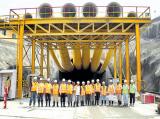
Leading plant pathologists and bio-technologists of the world have assembled in Bengaluru for consultations on evolving a global action plan for a strong bio-security system. About 200 scientists from 20 countries have put their heads together at a four-day international symposium on Phytophthora being organised by the Kasargod-based Central Plantation Crops Research Institute (CPCRI) at the Indian Institute of Horticultural Research here from September 9 to 12.

CPCRI Director P. Chowdappa told The Hindu that the proposed action plan would have measures to prevent the spread of plant diseases from continent to continent and country to country.

source: http://www.thehindu.com / The Hindu / Home> News> Cities> Bengaluru / by Special Correspondent / Bengaluru – September 11th, 2015

V Commonwealth Games : Dhruthi bags grand Double

Mysuru girl Dhruthi T. Venugopal and Sasi Kumar Mukund seen in the winner’s podium with the Indian flag after they clinched the Mixed Doubles title in the V Commonwealth Games 2015 tennis event held at Samoa Islands on Thursday.

Samoa :

Mysuru girl Dhruthi T. Venugopal, representing India in the V Commonwealth Youth Games 2015 at Samoa Islands, won a grand double by clinching the girls singles and mixed doubles titles on the concluding day of the tennis championships on yesterday.

Top-seed Dhruthi won the girls singles title beating Lesedi Jacobs of Namibia 6-3, 6-0 to win the gold. Dhruthi completed a fine double when she teaming up with India’s Sasi Kumar Mukund won the mixed doubles title with a 7-6 (4), 6-3 win over the Scottish pair of Louie-Ada Mccelland and Ewen Lumsden in the final.

Sasi Kumar Mukund continued his fine run as he also won the youth boys singles gold with a 6-1, 6-2 win over Ewen Lumsden of Scotland in the final.

Incidentally, Dhruthi had beaten Violet Apisah (Png) 6-2, 0-6, 6-2 in the youth girls singles semi-finals. In the quarter-finals, Dhruthi got the better of Joely Lomas of Wales 6-1, 6-3 to progress further.

Daughter of Venugopal and Vanamala Venugopal, residents of Mysuru, Dhruthi is a product of the Mysuru Tennis Club. Presently, she trains under former India Davis-Cupper Nandan Bal at Pune.

India made a clean sweep in the tennis event by winning three golds in three events they participated.

source: http://www.starofmysore.com / Star of Mysore / Home> Sports News / Friday – September11th, 2015

B’luru lab to co-develop Ebola drug with Public Health England

(Representative Image)

Bengaluru :

Nine months after two novel compounds or drug candidates for Ebola from the Jawaharlal Nehru Centre for Advanced Scientific Research (JNCASR) were shortlisted among 20 globally by the Public Health England (PHE), one of them has made it to the final three.

And having realised the potential, PHE, which built and commissioned the first bio-safety level (BSL)4 facilities in the world (1976), designed the world’s first Class III safety cabinets, and used them to co-discover and characterise the Ebola virus, has signed a memorandum of understanding with JNCASR to co-develop the drug.

This contribution to the world from Dr Jayanta Haldar and two of his students–Chandra Dhish Ghosh and Mohini Mohan Konai–will be the first serious one from a developing nation.

The two drugs which were shortlisted, codenamed NCK-8 and D-LANA-14, were lead candidates from two classes of peptide mimics (a molecule global researchers have created to fight the virus) with high activity against a range of multi-drug resistant bacteria and malarial parasites, including clinical isolates.

TOI was the first to break the story in its December 20, 2014 edition under the title “Drugs for Ebola likely to have an Indian connection”.

Speaking TOI on Tuesday, Haldar said: “After extensive trials, one of them along with another from PHE proved to be very active in in-vivo (guinea pig) tests, which has prompted PHE to sign the MoU. From here on we will be working together and we hope to bring out a drug soon.”

Haldar while refusing to still disclose the exact materials used in NCK-8 and D-LANA, reiterated that they are made in three steps with easily available and inexpensive starting materials which do not require any difficult conditions for synthesis.

Dr Seshadri Vasan of PHE had said in December that PHE has a track record of scientific innovation and development, and the funding from Wellcome Trust will allow it to utilise our experience and expertise to assist in the fight against Ebola.

source: http://www.timesofindia.indiatimes.com / The Times of India / Home>City> Bengaluru / by Chethan Kumar, TNN / September 08th, 2015

Indian e-mail tech start-up strikes it big

The Strike team which won the regional round of Seedstars World competition.

Wins Swiss-based Seedstars World regional competition

Strike, a start-up which helps people do research inside their Gmail App, has won the regional round of Seedstars World, a global start-up competition.

Based in Geneva, Switzerland, and founded by Alisee de Tonnac and Pierre-Alain Masson, the competition is supported by the venture builder Seedstars. It promotes, connects and invests up to $1.5 million (Rs 9.9 crore) in start-ups in emerging markets, ranging from Shanghai to Cairo.

The Strike team will now travel to Geneva in March 2016 and win up to $500,000 (Rs. 3.3 crore) in equity investment. It will compete with regional winners from 55 countries as part of the Seedstars World final event in front of top investors and an international jury.

“We have developed a global product in India. Seedstars’ network will help us to target almost every market in the world,” said Aishwarya Jain, 25, chief executive at Strike. “It is rare to find product start-ups getting funded by venture capitalists in India.”

Mr. Jain cofounded Strike last September along with Akshay Katyal, his former colleague at tech company HackerEarth. The start-up has developed a technology that provides insights to users about people while checking mails on mobile. For example, how they look like, where they work, their social profiles and public updates. The start-up aims to provide all the public information about anyone through its app.

Ten start-ups from different parts of the country pitched their ideas to an audience of angel investors and industry experts at the one-day event held in Bengaluru on Saturday.

“Strike, by its unique idea of giving an outlook of personalities of people with one tap on your phone, has won the chance to represent India,” said Mahesh Bhalla, president at gift card tech firm QwikCilver. Mr.Bhalla was one of the jury members at the event.

EventsHigh, a local event discovery platform that brings all the events and things to do in a city, was placed second in the competition. The firm was founded by former WalmartLabs engineers Nikesh Garera, Arvind Batra and Parag Sarda last year. Another start-up, SayPay Technologies, co-founded by Ramsyam Missula was placed third in the competition. The firm enables users to make bill payments and online purchases on their mobile device by using their voice.

Last year, Scandid, a Pune-based shopping technology start-up, won the regional round of Seedstars World. The venture enables shoppers do price comparison by scanning the product barcodes with their mobile phones.

source: http://www.thehindu.com / The Hindu / Home> News> Cities> Bengaluru / by Peerzada Abrar / Bengaluru – September 08th, 2015