Category Archives: World Opinion

City Professor for Intl. Conference

Dr. Srikanta, Assistant Professor, Department of History, Maharaja’s College, will present a research paper titled ‘Srirangapatna-shifting parametres of trade and commerce – 1595 to 1800 AD Article Study’ at the 13th Annual International Conference on ‘History and Archaeology: From Ancient to Modern’ to be held at Athens in Greece from June 29 to July 3.

source: http://www.starofmysore.com / Star of Mysore / Home> In Brief  / Sunday – June 28th, 2015

Star this week : Talented tennis player: Dhruthi

Tennis is a global sport and Mysore has been producing talented tennis players from time to time who have gone on to represent the country in different levels.

DhruthiBF04jul2015

One such player who has made her mark in the International level in the junior girls section is city’s Dhruthi T. Venugopal.

She has represented India in the junior level and presently taking part in the women’s circuit. Dhruthi has been consistently performing well in the ITF Tournaments.

Recently taking part in the $10,000 ITF Women’s Tennis Tourney in Grand Baie La Croisette Mary Pierce Indian Ocean Series in Mauritius from June 22 to 28, 2015, Dhruthi performed well. Teaming up with Snehadevi S. Reddy of India, she won the runner-up spot in the women’s Doubles event. Ilze Hattingh & Madrie Le Roux beat Dhruthi and Snehadevi 6-2, 6-4 in the final and clinched the title. Dhruthi is our ‘Star This Week.’

In the Women’s Doubles semi-final Dhruthi and Snehadevi beat Stamatia Fafalicou (Ger) & Jasmin Jebawy (Ger) 6-1, 6-0 to progress to the title round.

In the Women’s Singles, third seeded Dhruthi lost to South Africa’s Madie Le Roux 2-6,2-6 in the first round.

Dhruthi has been performing well in the International ITF circuit and National level tournaments. Dhruthi is the daughter of Venugopal and Vanamala of our city who encourage her to the maximum. Dhruthi trains in Pune and is coached by Sandeep Kirtane. Dhruthi is presently ranked No. 6 in the country and No.2 in the State in the women’s section.

She has represented India in the junior section and has also played in the Australian Open Junior Girls event. Dhruthi is an attacking player with a double handed backhand and is quite consistent in her performances in the women’s ITF circuit representing the country.

source: http://www.starofmysore.com / Star of Mysore / Home> Sports News / Sunday – June 28th, 2015

City girl breaks world record

City girl breaks world record

Bengaluru girl Rebecca Taylor has sealed her place in the Guinness Book of World Records.

Rebecca has made the largest tealight candle, which is 5’5″ in diameter.

The previous record-holding candle measured 3’3″ in diameter.

“I had applied for the record on June 1, 2014, but got the confirmation only on June 27 this year,” said the 27-year-old cartoonist.

Rebecca took five hours to make the candle through a unique process called hand moulding, in which semi-hot wax is sculpted into different shapes.Each petal of the pink rose-shaped candle is unique in shape and size, and measures one-and-half to two feet.

“This is an amalgamation of my love for nature and passion for the arts. However, it turned out to be a Herculean task to work on a candle of this magnitude.

It took me a lot of time to understand the behaviour of the wax and work in various temperatures,” she added.

source: http://www.timesofindia.indiatimes.com / The Times of India / Home> Life & Style> People / by Stuti Agarwal, TNN / July 02nd, 2015

Beyond the hurdles

MeghnaBF25jun2015

It’s not everyday that a student from Bengaluru wins laurels in sports on an international level. Meet Meghna Shetty, a final-year B.Com student of St Joseph’s College of Commerce, who recently took part in the Asian Junior Athletic Championship and emerged triumphant.

The athlete came second in the 100 metres hurdle competition of the event that was held in Taipei, Taiwan and terms the experience as an amazing one. “It was my first international competition and I saw so many athletes and learnt a number of different exercises from them,” she recalls.

Meghna started training at the age of ten. “I always loved sports and entered the field thanks to my mother. At first, I was not that serious about athletics and would just train in the mornings. But later, I thought I should start competing and now, I have been hurdling for ten years,” she adds.

Ask her about her daily routine and she says, “I start my day at 5.45 am and train till 7.30 am. Then after college, I train once again between 4 pm and 6.30 pm.”

Is it hard to balance it with her academics? She answers, “I have been managing it with my studies for ten years now. So the practice actually helps me focus better. I know that the little time that I have in the evenings is all that I have to study properly.” However, during exams, it does get challenging. “I am not off from training at that time and sometimes, even I am injured or exhausted from training, I can’t take a break,” she notes.

Meghna feels that there are plenty of talented sportspeople in the country, yet India is unable to make a mark worldwide in sports due to less exposure.

“Just like how the cricket team is sent for different tournaments abroad and appreciated when it wins, all sportspersons should be sent for more international competitions and given a chance to showcase their talent abroad,” she explains.

source: http://www.deccanherald.com / Deccan Herald / Home> Supplements> MetroLife / by Deepa Natarajan Lobo / DHNS – June 11th, 2015

Resurrecting Roerich

The first phase of Roerich Estate restoration work has been completed. Bangalore Mirror has the first pics of the internationally renowned artist’s dwelling

A few metres away from the house are the huge  tombstones place
A few metres away from the house are the huge tombstones place

Russian ambassador Alexander Kadakin’s primary concern when he landed in the city in January was the beautification of tombstones of Russian artist Svetoslav Roerich and actress wife Devika Rani. His visit to Tataguni Estate – the residence of the couple on Kanakapura Road – came at a time when the state government was restoring a part of the property.
And now the first phase of Roerich Estate restoration work that kicked off about a year ago has been completed. The tombstones are spruced up, the quaint cottage where the couple lived has been restored without disturbing the aesthetics, a five-acre rose garden has been laid and the property has come alive. The Phase I work has cost the government Rs 2 crore.

Abode of an artist
The stone building has been restored along with its old charm with the stone left exposed in its original state. Some repairs on the flooring, painting of the building, a fresh coat of polish on the red-oxide flooring, etc gave the house the traditional look.
A few metres away from the house are the huge tombstones placed. The couple’s names are written in Russian apart from English and Kannada.
The pathway leading up the tombstones is done up with granite, with steps. The walkway along the estate and into the wild has been cleaned up. The lake, that once was alive is dead now and the Lake Development Authority is taking up work on clearing out the natural vents to the water body from the adjacent catchment, that have been blocked.
“Due to rampant constructions in the adjacent areas and reckless earth filling up, water from the natural source has been blocked and the lake has dried up. LDA is now opening up the blocked channels and this monsoon, the lake should see some water,” says Manu Baligar, the chief executive officer of the Roerich and Devikarani Roerich Estate Board, which functions under the state government’s revenue department.
On the bund of this lake Roerich couple spent their evenings, Baligar said. The bench has not been altered, unlike the other fancier benches on the bund. The five acre land opposite the house has been turned into a beautiful rose garden.
The 468.33 acre estate is rich with fauna, has sandalwood trees and Bursera plantation from which the couple extracted linoloe aromatic oil. The sprawling plantation regularly has elephants and leopards as its uninvited guests. So much so, Kadrappa, one of the labourers is always armed with a sickle and escorts the guests into the wild with his weapon. Kadrappa, has been a loyal at the estate since 25 years and has seen Svetoslav and Devikarani in their last stages, before they shifted out of the estate and moved into a five-star hotel following ill health.

With a touch of Van Gogh

After a long drawn legal battle at the Supreme Court, against property encroachment, the state government set up the Board in 1996 to protect the heritage left behind by the renowned artist. While a lot of antique jewellery reportedly went missing from the house after the death of the couple, the government moved Roerich’s 241 paintings from his studio in the house to Venkatappa Art Gallery which is now under lock and key. “In the second phase of work, there is a project to set up a world-class art museum on the lines of the Van Gogh Museum in Amsterdam. We have asked the archaeology and museums department to come up with concepts. This will be a cultural centre and once the work is completed, all the Roerich paintings from Venkatappa Art Gallery will be shifted here,” Baligar told Bangalore Mirror.

source:http://www.bangaloremirror.com / Bangalore Mirror / Home> Bangalore> Others / by Kushala S, Bangalore Mirror Bureau / June 23rd, 2015

Indian origin scientist to get Russia’s highest tech award

St Petersburg :

B Jayant Baliga, a US-based Indian-origin scientist, is being awarded Russia’s top technology award in recognition of his work as a major development in energy management which brought about huge increase in efficiency and major savings.

B Jayant Baliga, a US-based Indian-origin scientist, is being awarded Russia's top technology award. (Representative image)
B Jayant Baliga, a US-based Indian-origin scientist, is being awarded Russia’s top technology award. (Representative image)

The award will presented to Professor Baliga and Shuji Nakamura on Friday by Russian President Vladimir Putin at a ceremony here.

Nakamura, a Nobel Laureate, is being recognised for his work on blue light emitting diodes (LEDs). In Russia, the Global Energy Prize is known as the electronics equivalent of the Nobel Prize.

Professor Baliga invented the digital switch or the insulated gate bipolar transistor (IGBT) while working at General Electrical research & development centre in New York state in the US in 1983. The IGBT switches energy hundreds of thousands of times a second, raising the efficiency of any equipment manifold.

“Every equipment from your refrigerator to lights to motor vehicles has the need to use energy efficiently. If you take away the IGBT today, almost everything will come to a standstill,” Baliga told a visiting IANS correspondent on the eve of receiving the award.

Scientific American magazine called him among the ‘eight heroes of the semiconductor revolution’, and President Barack Obama awarded him the highest American technology prize last year and he is the 2014 recipient of the IEEE Medal of Honour, a rare distinction.

Professor Baliga, who now teaches to the North Carolina university as ‘distinguished university professor’, said that the IGBT that his invention combines two streams of electronics and electrical engineering and has possibly saved the world around $24 trillion dollars by raising efficiency, according to one detailed calculation.

“I got zero out of it. But then I did it all for humanity.”

Of course, says Prof Baliga, that he did make some money when he started three companies, but these were financed by venture capitalists who exited with enormous profits at the right time.

He says every motor today is at least 40 percent more efficient, the light bulb like the CFL better by almost 75 percent and a motor vehicle saves over 10 percent fuel because of his invention. He has written 19 books and over 500 papers in peer-reviewed journals.

Baliga passed out of IIT Madras before going to the US for his MS and PhD after electrical engineering after which he joined GE where he spent over 15 years.

After his ‘switch’ was invented, several of his colleagues told him that it would not work, and many scientists said he would fall “flat on his face”. But he said it stood the test of time.

The chairman of GE at that time, Jack Welch flew down especially to meet him when he heard what it could do. GE used the switch in the several of the equipments it sold, including medical devices.

A US citizen since 2000, he now has very little connection with India and does not travel to his home country much, especially after his parents and parents of his wife passed away. But, says Prof Baliga, an invention like his is unlikely in India, because it needs huge research infrastructure to be in place from universities to industries.

He feels, that India has a potential which has not been fully used, although in software “it has made great strides”.

Could a Nobel be on its way in the future? “I used to say no way,” but with so many recognitions and this “global prize where I am being feted with a Nobel Laureate, who knows”, he says. His regret though is that India does not know much about him.

“Top scientists that I meet always ask me, why has India not recognised your achievement?” And with characteristic modesty, Baliga told IANS, “I tell them that perhaps my country does not know about what I did.”

source: http://www.timesofindia.indiatimes.com / The Times of India / Home> NRI / IANS / June 18th, 2015

Bengaluru becomes a magnet for MNCs, startups again

Traffic can be a nightmare at peak hours. Many roads are pot-holed. Experts warn of an inevitable water crisis. But still companies and people are moving to Bengaluru like never before. Some estimate that an investment of over $1 billion has been proposed in the past 18 months.

The availability of a young, technologically skilled population is driving not just many of the world’s biggest brands but many of India’s tech-based startups to move or expand into Bengaluru. The trend is accelerating as the world gets redefined by new technological phenomena such as smartphones, social media, artificial intelligence, et al.

Bengaluru accounts for more than a third of the over 1,000 global inhouse centres (GICs) – facilities that combine technology development with back-office functions – of MNCs in India. But the spate of new announcements of GICs over the past 18 months suggests a fresh urgency. Some of the proposed investments are massive.

US oil and gas major Exxon Mobil, one of the world’s biggest companies, is making a $400-500 million (Rs 2,500 crore-Rs 3,150 crore) investment in Bengaluru to establish a technical and business support services centre. Derivatives marketplace CME Group, which handles 3 billion contracts worth approximately $1 quadrillion (that’s 1 followed by 15 zeros) annually, is said to be setting up a GIC in Bengaluru.

JCPenny, the leading American apparel and home furnishing retailer, L Brands, makers of lingerie brand Victoria’s Secret, and Lowe’s, the US-based home improvement and appliance store chain, have established technology captive centres here recently. Payments technology company Visa is establishing an inhouse R&D centre in Bengaluru that will hire 1,000 people over the next three years. Payments solutions major Network International, wholly owned by Emirates NBD Bank, is looking to hire 300 people in the city to set up a GIC.

British Telecom is leasing out 1.2 lakh sqft of office space in the city and is expected to hire 600 engineers over the next 18 months. Wells Fargo, the largest US bank by market cap, is said to be expanding its technology back office in Bengaluru with a fresh lease deal for 1 million sqft.

It’s been no different with many domestic startups. Entrepreneurs who started their ventures elsewhere in the country, are making Bengaluru their new home. Others, like Snapdeal, may not have shifted their base, but their big new R&D expansions are in Bengaluru. As Snapdeal says, for the scale of hi-tech talent they now need, there’s no option but to come to Bengaluru.

Lalit Ahuja, co-founder of ANSR Consulting, a firm that’s helping Fortune 500 companies establish strategic offshore captive centres in India, says Bengaluru has the right mix of talent, and contextual business expertise.

Sejal Shah Gulati’s tryst with Bengaluru has turned out to be longer than she expected. The managing director of Time Inc India – publisher of over 90 magazine titles including Time, People, Sports Illustrated, InStyle, and Real Simple – moved to Bengaluru from New York to set up a wholly owned subsidiary of Time that would do circulation, web and tablet analytics, among other things. It has 550 employees, and Gulati says the plan now is to more than double the headcount to 1,000-1,200 in the next 12-18 months. The focus is on technology and analytics talent. Despite the broken infrastructure and traffic snarls, Gulati felt welcomed in this city of immigrants. “I didn’t expect to stay so long. It was a very soft-landing for me. And how can I not mention the ideal weather,” she says.

Nasscom Product Council chairman Ravi Gururaj says: “E-commerce and consumer internet firms, technology back-office and R&D centres of MNCs, apart from the IT services firms and the plethora of startups, make the city very unique.”

Aditya Rao of Localoye says he faced problems in hiring when he was in Mumbai, and he found it difficult to get Bengaluru folk to shift to Mumbai. So, when the startup secured funding from PE firm Tiger Global, he shifted his base to Bengaluru.

Harshvardhan Lunia, cofounder and CEO of Lendingkart, an NBFC that lends short term working capital to sellers on e-commerce platforms, says there is no good pool of big data talent outside of Bengaluru. Hence his shift from Ahmedabad, though he continues to spend time in that city too.

Bengaluru has talent gaps, in areas like product management, software architecture, and user design. And this is pushing some companies to import talent from Silicon Valley. But Sharad Sharma, cofounder of software product think-tank iSpirt, says Bengaluru will be the first city to close the demand-supply gap in these areas. “The Institute of Product Leadership and IPMA (India Product Management Association) are attacking the product management gap.

Hasgeek and Zinnov are addressing the architect gap. And a number of players, including Shristi, are addressing the user design expert gap. MNC R&D captives are rapidly building technical career tracks for these specialists,” he says.

There are also signs that road infrastructure – the bane of Bengaluru – is improving. Chief minister Siddaramaiah on Saturday launched the first of the new high-quality TenderSure roads, built in collaboration with external expertise. If this governmental spirit sustains, Bengaluru could look forward to a remarkable hi-tech future.

source: http://www.timesofindia.indiatimes.com / The Times of India / Home> Business> India Business / by Shilpa Phadnis & Anand J,  TNN / June 21st, 2015
Bengaluru misses Charles Correa too

CharlesTELAN19jun2015

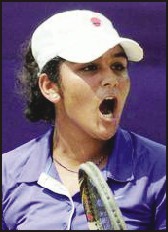
The Hyderabad-born architect had strong links with Bengaluru too.

“One has to open up to the skies… only then will your buildings look up to light and ventilation in a scientific way,” renowned architect Charles Correa, who passed away at 84 in Mumbai yesterday, had said during one of his visits to Bengaluru.

He had many ideas on art and architecture and their role in shaping the building environment and urban landscape at large, particularly public spaces of Bengaluru. He passionately combined old-world charm and new age design philosophies that spoke of his strength to retain green values. His book, “A Place in the Shade” strongly exhort habitats to “respond to the overriding parameters of climate, culture and financial resources”.

He was known for his forthright comments on changing Mumabai’s landscape and bringing in local sensibilities into its architectural make-up. The Hyderabad-born architect had strong links with Bengaluru too.

Some of Correa’s buildings well-known in Bengaluru are the Jawaharlal Nehru Science Centre, off Jakkur, his own house that he built for his daughter at Koramangala where Fab India presently operates from, and the renowned LIC Tower or the Vishweshwaraya Centre where his exposed concrete work comes into reference even after 40 years of its historic handling for architects today.

He had strong views on the laying of Metro on M.G. Road. “The track on M.G. Road should have gone underground; or at least the elevated part should have been in steel instead of the ugly concrete expressions with gigantic pillars running all along,” Mr. Correa had said in an interview with The Hindu.

He, however, wanted the metro running elevated especially on the Vidhana Soudha Road. “Although I haven’t studied the buildings and the flow pattern near the Vidhana Soudha, it could have proved a heavenly addition to be above-ground. I can visualise the rail running 20-feet above the ground in steel, this gossamer being a typical contemporary narrative adding to the drama amidst the traditional looking State Assembly and the Karnataka High Court,” he had said.

Architects mourn death

Well-known architect Nagaraj Vastarey says about Correa: “There would never be a masterly figure as him in architecture anymore. Correa, apart from Balakrishna Doshi, was a point of reference to most of us growing up as architects.” Mr. Vastarey explained that in those days studying architecture was different as there wasn’t much of theory, but practical buildings from Correa meant lessons to all of us for references.”

Says architect Sandeep J. of Architecture Paradigm, “Correa rode the architectural world like a colossus, leaving behind a trail of master-pieces that are hard to match. The very aura around the man indicated that you were in the presence of a master architect, making you think twice before you decided to start a conversation.”

We have many architects who create wonderful forms and also those who create great spaces. “Charles Correa stands tall in Indian architecture as a creator of both form and space, as could be seen in Bharath Bhavan, Bhopal,” says Architect Sathya Prakash Varanashi. “His sense of scale, colour and visual aesthetics compliment the overall design, which together resulted in projects like Jawahar Kala Kendra in Jaipur, adding a new dimension to the history of modern architecture in India.”

Mr. Varanashi explained that Correa did not experiment with innovative structures or international styles, which possibly helped him to perfect his ideas across varied building locations and types. Alternately, he explored each project without getting stuck to the earlier projects, to the extent where one building appears totally different from the other. The Bengaluru projects Vishweshwaraya Tower opposite Vidhana Soudha and Jawaharlal Nehru Center for Advanced Studies may not even appear as designed by same architect. Correa had a mind that never got stuck, letting him explore designs like very few world architects could.

Those who have frequented the earlier Fab India showroom in Koramangala, Bengaluru have walked into the house which Correa designed for his stay in Bengaluru! “The fact that a house gets the new avatar as a shop, without losing its spirits, shows the flexibility with which the house has been conceived,” said Mr. Varanashi.

The early buildings of Correa, including the famous Gandhi Smarak Sangrahalay at Sabarmati Ashram, synthesized his international exposure with the local contexts, charted a new road map for architecture in India. His fluency in dealing with residential houses – from LIC Colony in Bengaluru to Kanchanganga Apartments in Mumbai – shows a variety very few architects have been able to even think of.

source: http://www.thehindu.com / The Hindu / Home> News> Cities> Bengaluru / by Ranjani Govind / Bengaluru – June 17th, 2015

A new world, in photos

Youngsters in the mahout community look at the camera. Photo courtesy: CLIC Abroad Foundation

CLIC Abroad is an initiative for American students to immerse themselves in India and take back an understanding of our similarities and differences.

The best way to learn about a country and its culture is to live in the community and follow their daily life, and even better, photograph them to take stories back to friends at home. Students from American high schools have had several such experiences in India, living in States as diverse as Assam to Karnataka, through CLIC Abroad or ‘Children Learning International Cultures’, an organisation founded by travel writer and photographer Bhaskar Krishnamurthy from Karnataka.

Bhaskar Krishnamurthy. Photo courtesy: CLIC Abroad Foundation

Bhaskar has lived through many photography experiences, including, he says, an ULFA militant kidnapping in 1999 before he moved to the U.S.A.! “Photography is often seen as an elitist thing. I didn’t want it to stay that way,” says Bhaskar, explaining how he involved the local communities of Augusta, Georgia, where he lives, in photography festivals. Based on the success of those projects, the engineer felt it was a great idea to do something like this in India. So in 2009, he, along with friends set up CLIC Abroad, with the idea that children from America and people from India mingle at photography workshops held within communities here and together build and narrate stories. Most visits last about 12 days.

“The first camp we had was in Bodoland; after initial hiccups, over 5,000 rural people participated in the rural photo exhibition. My focus is on education through visual representation and empowerment through participation,” he reiterates. A product of SIT Tumkur, Bhaskar studied mostly in various parts of rural Karnataka and then moved to Bengaluru.

“Till date we have brought down over 100 American children studying in classes nine to 12. Just last month was our latest venture where a group of students from the Abraham Baldwin Agricultural College lived with elephant mahout communities in Karnataka in Dubare, Sakrebylu, and Aane Chowku (Nagarhole), talking, among other things about the gaps between conservation and the man-animal conflict,” says Bhaskar. CLIC Abroad currently has a tie up with about eight high schools and colleges in America.

“The idea is to understand the dynamics of the community, and figure out how best to participate or help,” adds Bhaskar, giving examples of how sometimes students donate something as simple as shoes and socks which children in remote India don’t have to wear to school. On the other hand, they helped light up an entire village that didn’t have electricity, using solar lamps. The students raise their own funds or save up to pay for their trip.

Shelby Evans, a 20-year-old communication student, says of her recent trip to Karnataka: “Rural, where I’m from, and ‘rural’ in India were very different. Farms were smaller, crops were unusual, and the farm equipment was handcrafted. However, while I found the landscape and the culture to be incredibly different, the people were kind and hospitable. The kindness here is not unlike the kindness of the Southern (American) hospitality, I find at home. It was comforting for me to see that kindness across the world.” Her classmate Austin Morris got to straddle two worlds – riding elephants, coming across King Cobras, and then visiting schools and interacting with children across age groups and seeing how they learn.

Thomas Grant, assistant professor of journalism at Abraham Baldwin Agricultural College, in an email response, says: “My students and I couldn’t begin to understand India until we had travelled there. In CLIC Abroad, what students get is a chance to touch and feel India in a way that no movie or book ever can. It allows young people from both nations to embrace their similarities and understand their differences in a personal way. I could never teach this. In Coorg, we came to understand India’s relationship with nature. In America, nature is often something to be dominated. If a wolf eats a sheep, the farmer is allowed to shoot it. But in Coorg, we saw wild elephants trampling through coffee estates, yet the farmer was not angry with the elephant. He wanted it to leave, but he wouldn’t harm it. We talked to two girls whose mother had been killed by an elephant, yet they wished no harm on the elephant.

They merely wished that that the elephant would be moved far away. This respect for nature was one of our most incredible takeaways from India. Indians have learned to live with nature, and Americans could learn much from that.”

For details look up www.clicabroad.org

source: http://www.thehindu.com / The Hindu / Home> Features> MetroPlus> Society / by Bhumika  K / June 17th, 2015

Belagavi’s tower clock to fall silent

Belagavi :

A British-era tower clock here will be silenced forever to enable widening of a road.

Looking to widen Kalmath Road to 45 feet under its master plan, the Belagavi City Corporation has instructed authorities of the Pioneer Urban Cooperative Bank to raze the %part of the building where the tower clock stands. The bank authorities have secured a week’s time to do so.

The clock on the bank’s building on Kalmath Road sounds its bell every half an hour. Residents of surrounding areas, like %Kalmath Road, Ganapati Galli and Maruti Galli, have an emotional attachment with it. The clock helps some manage their schedules.

The building was constructed 110 years ago. In 1939, the bank management awarded the contract to manufacture the clock to Mumbai’s Swadeshi Electric Clock Company. A large bell from John Tailor Company was fitted into the clock 75 years ago.

The bank has employed a person to wind the clock once a week, and to maintain the tower.

Speaking to STOI, bank manager D R Jadhav lamented that the antique will soon become part of history.

In 1940, the management spent around Rs 40,000 on constructing the bank building. Now, the bank pays a like amount %as property tax, the manager said.

source: http://www.timesofindia.indiatimes.com / The Times of India / Home> City> Bengaluru / by Ravindra Uppar, TNN / June 14th, 2015