Category Archives: World Opinion

India, UK to collaborate on cancer research

CancerResearchBF15mar2015

The United Kingdom’s Medical Research Council (MRC) and India’s Department of Biotechnology (DBT) have entered into a 3.5-million pound agreement, under which the Bengaluru-based National Centre for Biological Sciences (NCBS) will work with the University of Cambridge to unearth the multiple causes of cancer.

While the UK’s MRC is keen on application-based research, the NCBS has also been pursuing a similar research line. All the prime research bodies from both the countries have been invited to set up their best teams on cancer research. This project will be carried out under the MRC-DBT Joint Centre for Cancer Biology and Therapeutics. The World Health Organisation (WHO) estimates that the number of new cancer cases will rise by about 70 per cent over the next two decades.

Describing the joint effort, Prof K Vijay Raghavan, secretary, Department of Biotechnology, said, “The Department of Biotechnology, Government of India, is delighted to partner with the MRC in creating research centres that will address the vexing challenges in medicine, through quality science and collaboration.”

Dr Mark Palmer, MRC director of International Strategy, has put the collaboration in perspective. “With a 100-year history of strategic international collaboration, the MRC scientists today work with researchers in more than 100 countries. We know diseases don’t recognise international borders and that addressing health problems around the world demands a global response. These partnerships between excellent scientists in India and the UK is a key part of our international effort to pool expertise and resources, and deliver research that will make a real difference to global health.” On his NCBS page, Dr Sudhir Krishna has written that cervical cancer, a major cause of female mortality in the developing world, is caused by high-risk human papillomaviruses.

“Papillomavirus belongs to the family of small DNA tumour viruses and the study of these agents has been extraordinarily influential in driving key concepts in cancer biology. Our laboratory for over two decades has been interested in the signals that complement the function of papillomavirus oncogenes (for review see Malliekal T. et al., Oncogene 2008) and our focus has been on the role of Notch signaling.”

Tumours
Krishna has also said that in recent times, it has been found that unique sub-sets of cells with enhanced tumorigenic functions and resistance to conventional therapy, drive many tumours. “The origin and nature of such cellular heterogeneity is of enormous clinical significance. However, even in extensively characterised tumours like human breast cancers, no clear consensus has emerged on the biological features including plasticity, differentiation status, mechanism of induction or evolution of metastatic characteristics in such subsets.”

source: http://www.deccanherald.com / Deccan Herald / Home> City / by Prashant GN / DHNS – Bengaluru , March 15th, 2015

Mysuru firm develops critical technology for missiles

Bengaluru :

On March 13, 2013, India had to destroy its nuclear-ready cruise missile Nirbhay which was on its first flight trial. The reason: Nirbhay deviated from its intended course, sparking fears. The kind of damage and loss such incidents can cause in the absence of a self-destruct mechanism is grave. Yet India doesn’t completely posses the software and intellectual property for such technology.

As the Prime Minister’s Make-in-India campaign gains pitch in the defence sector, the DRDO has found a reliable partner in Kaynes Technology, a Mysuru firm.

A senior DRDO official said the company has developed an Electronic Safe Arm Fire Systems (ESAFS) ballistic missile actuator unit, which is being evaluated by DRDO’s missile teams for integration into various platforms.

Kaynes’ system consists of two processor cards and one communication/connector card that carries the commands, and facilitates relay control.

“Not only can the missile be self-destructed after launch, it also has a feature wherein it destroys itself upon recognizing unauthorized access,” the official explained. Apart from the self-destruction feature, the system also helps prevent tampering and is able to function in most conditions.

“It’s thermal, humidity, vibration and shock-compliant,” he added.

Kaynes vice-president (business development) Lt Col (retd) Sharath Bhatt said: “I can’t comment on the technology as it’s sensitive and DRDO is evaluating it. Only DRDO can speak about it.”

“What such technologies mean is that India will have its own intellectual property in critical areas and will not have to depend on other countries,” Bhatt added.

source: http://www.timesofindia.indiatimes.com / The Times of India / Home> Business> India Business / by Chethan Kumar, TNN / March 02nd, 2015

Newbie no more

AshaBhatBF02mar2015

Newbie no more

AshaBhat ​ returned to her alma mater, RV College of Engineering, for the first time after being crowned Miss Supranatural in Poland last December. The 22-year-old was in college for the inauguration of 8th Mile, the college fest.​ Like a true beauty queen, she was thankful (and less nostalgic, unlike an alumnus) and talked about her days as a newbie in college three years ago. Apparently, the lady “didn’t know anyone” and “approaching the teachers was always difficult”. Oh, that’s the story of 99 per cent of the student population. Of course, things have changed for Bhat in the last four months. Along with the crown came attention (and new found confidence to approach old teachers), which she said was all new to her. “But nice.”

Lit lite

THE Lahore Literary festival which concluded last week was a resounding success. Lahoris queued up by the hundreds to cock a snook at the terror threats and hear some excellent panel discussions. Your diarist, a guest of the festival, was particularly delighted to see the re-emergence of two ladies of a certain vintage into the limelight. We spotted Meher Tarrar, she of the Shashi Tharoor fame, hobnobbing with the Indian contingent. In her heyday, Tarrar had acted in a film or two and her journalistic avatar was a fairly recent one, we were told. The other woman, Tehmina Durrani, of equal renown, was not to be physically espied but was very much a guiding spirit behind the LLF. Those with long memories might recall her as the author of My Feudal Lord, a pulpish bestseller that recounted her years of abusive marriage to powerful Pakistani politician Ghulam Mustafa Khar. With that one book, she became something of an icon on both sides of the border. Tehmina has since moved on. She is now married to Shahbaz Sharif, Pakistan prime minister Nawaz Sharif’s brother who is also the chief minister of Punjab and a great patron of the LLF. Tehmina, whose taste in men clearly runs to the powerful kind, has told her friends that even though Sharif has married again, she is treated well. Phew!

Hair matters

Doppelgangers, they are — Michael Antony Dias of Mad Orange Fireworks and musician Vasu Dixit of Swarathma. People talk to Dias thinking he is Dixit and vice versa. Blame it on their almost identical funky sky-scraper hairdo. While the duo has a hearty laugh over the mistaken identity, people around them are left confused. Perhaps, a haircut would help. But that’s asking for the moon, isn’t it? Especially when it concerns these two.

Tailpiece 

If the diarist were Srinivasan Narayanan, former director of Mumbai Film Festival, the diarist would be doing cartwheels now. The prestigious Sundance Institute has partnered with Drishyam (Narayanan’s baby), a production company, for the Sundance Institute screenwriters lab that will be held in Goa from April. After films like Margarita, With a Straw and Umrika (won the audience award in the world cinema dramatic category at Sundance this year; and from Drishyam’s stable) and Masaan came out of Sundance Screenwriters Lab, one can only think of the gems that will emerge after the Goa Lab. 2015 seems like a good year for Indian cinema.

source: http://www.bangaloremirror.com / Bangalore Mirror / Home> Columns> Code 560 / Bangalore Mirror Bureau / March 01st, 2015

KMC doctor Dr Narasimha Pai makes it to FACC fellow

Mangaluru :

Dr Narasimha Pai, Associate Professor in the Department of Cardiology, KMC Hospital Ambedkar Circle, here has been made fellow of the elite panel of American College of Cardiology (FACC).

The certification and citation will be officially presented to him at the annual convocation of the college on March 6 in San Diego, California.

“KMC Hospital Mangalore is proud to have Dr Pai on the panel of consultants in Interventional Cardiology. We congratulate him on his achievement” said Dr Anand Venugopal, Medical Superintendent.

Every year, the American College of Cardiology recognizes selected cardiologists from around the world, based on their long term contribution to the field of Cardiology, and inducts them as a fellow of American College of Cardiology (FACC). American College of Cardiology is the foremost professional society, representing heart specialists in the UD and throughout the world. Based on their outstanding credentials, achievements and community contribution to cardiovascular medicine, those who are elected to fellowship can use fellow of the American College of Cardiology (FACC) as a professional designation.

Fellow of the ACC generally are adult cardiologists, paediatric cardiologists, cardiovascular surgeons, researchers and academicians or specialists in the cardiovascular – related field.

Candidates are selected to the elite panel of FACC based on letters of sponsorship from other fellows or faculty, who attest professional competence and commitment to excellence that are at par with the best international standards.

source:http://www.timesofindia.indiatimes.com / The Times of India / Home> City> Mangaluru / by Stanley Pinto, TNN / February 27th, 2015

Netherlands beckons pioneering 9th grader

Ahalya Saraswathi Bhat

Ahalya Saraswathi Bhat J, a class nine student of Vittal Jaycees English Medium School, has developed a working model for preparing medicinal charcoals used in Ayurveda by slow pyrolysis using Masi Maker technology.

Speaking to Bangalore Mirror, she said medicinal charcoals known as Masi Kalpana in Ayurveda, is prepared by partial burning of medicinal herbs and has greater use in preparing medicinal oils, ointments and pastes. They exhibit wound-healing, anti-poison properties apart from working as adsorbents in clinical terms.

Ahalya developed a new working model named as “Masi Maker” using the principle of slow pyrolysis using stainless steel. Pyrolysis is a thermo-chemical decomposition of organic material at elevated temperatures in the absence of oxygen. It involves the simultaneous change of chemical composition and physical phase, and is irreversible. The working model “Masi Maker” consists of three chambers – the heating chamber for creating heat, charring chamber for charring medicinal herbs and the bio-oil outlet, to express any bio-oils produced.

Ahalya’s project that was demonstrated at the regional fair at Belagavi, secured the gold medal. The event was organised by the Science Society of India. At the national-level fair held at Chennai on January 10, 2015, the project secured the silver medal. Five students from the State have been selected to attend the International Environment & Sustainability Project Olympiad (INESPO) in the Netherlands from May 31 to June 4. Ahalya is the daughter of Dr Ganapathi Bhat Jeddu and Dr Manorama B Bhat who are both Ayurveda practitioners.

source: http://www.bangaloremirror.com / Bangalore Mirror / Home> News> State / by Deepthi Sanjiv, Bangalore Mirror Bureau / February 08th, 2015

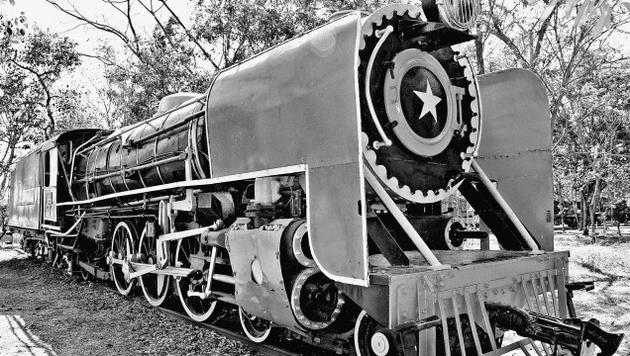
Mysore Rail Museum expansion under way

The rail museum in Mysuru is yet to become popular among tourists despite a collection of steam locomotives, rail wagons, and coaches.—Photos: M.A. Sriram

A sound-and-light show showcasing history of Railways is being planned

The rhythm of the steam locomotive conjuring up images of belching smoke and shifting tracks will come alive at the Mysore Rail Museum, which is poised for expansion.

The authorities are planning a sound-and-light programme complete with the history of the railways as part of the renovation plan.

“We have Rs. 1 crore with us while the cost of expansion is around Rs. 4.62 crore. We are awaiting the release of additional funds to take up the project, which has already been approved by the Railways,” said Rajkumar Lal, Divisional Railway Manager, Mysuru.

Rajkumar Lal,Divisional Railway Manager, Mysuru

But, expansion work has already begun in the earnest. A wooden metre gauge vintage wagon from Banapur (Hospet) of Hubballi Division has been shifted to the Mysore Rail Museum. The central workshop staff here have rebuilt and provided an under gear for the wagon,” Mr. Lal said.

In addition, two wagons of a rail bus, which was operating on the Shivamogga –Talaguppa route, have been added and so has a diesel locomotive.

A senior engineer involved with the project said they have already acquired heritage furniture from different divisions and they are being repaired for display at the museum. A steam-operated crane will be procured from Bhusaval in Maharashtra and narrow gauge coaches from Nagpur, he said.

RailBF24feb2015

Our vision is to make it a star attraction for tourists visiting Mysuru. The Additional Secretary, Tourism, Government of Karnataka, has evinced keen interest in the development of the museum and has promised aid, the official said.

In what maybe the first of its kind in the country, a touchscreen device providing comprehensive details of the Railways, the divisions, locomotives, trains, rolling stock etc. will be kept at the museum, he added.

source: http://www.thehindu.com / The Hindu / Home> News> National> Karnataka / by R. Krishna Kumar / Mysuru – February 01st, 2015


Tragedy and Triumph … …An inspiring story

In Black & White

by Vikram Muthanna

Recently, Mahesh Ballal, the owner of Rock Salad, was in SOM office to place an advertisement for his company’s 21st anniversary. Along with him was a boy, more noticeable for his oversized black thick-rimmed glasses, like from the 1970s. He seemed timid and geeky, yet confident and calm. The boy looked familiar, so asked Mahesh about him. It turned out his name was Nikhil Ravishankar. I immediately knew who he was. He was the son of Copywriter Ravishankar, who also ran an advertising agency. I also knew that Ravi had died a year ago of colon cancer at a young age. I expressed my condolences to the young boy and asked him how he was doing. What followed was a story that is a testament to the power of human spirit. A story of tragedy and triumph. A story that I had to share with my readers. So here it is:

NikhilBF22feb2015

Nikhil, from a poor Brahmin family, but enriched by priority for education, loves reading and words. Just like his father. By the time he was in the 6th, he had already become the National Junior Scrabble Champion. He won the championship twice. When he was in 10th, he participated in a competition called ‘Intel Iris,’ a science fair for high school students across India where they had to submit an original paper. Nikhil wrote a paper on a subject he enjoyed … words. His paper was called “Linguistic Impact,” brought about by new wave of technology. He won a gold medal for it! And was short-listed for the International Intel Iris. Unfortunately, he didn’t make it there. But this subject sparked in him an interest in Psychology and after his 10th, he chose to study in St. Aloysius College, Mangalore, as only they had a Psychology combination with the subjects he wanted.

Four months into his studies, a phone call would change the young boy’s life forever. Nikhil got a call informing him that his father was diagnosed with 4th stage colon cancer. He had to quit college and return home to care for his father as everyone else in his family had deserted them.

Soon they sold whatever they had left to raise money for the treatment. With no funds, Nikhil stopped going to college. But knowing well that education is the only way out, he registered to the ‘National Institute of Open Schooling’ (a government body that recognises home-schooled students) and began ‘home-schooling’ himself. This, he says, he did for three reasons — first, he didn’t have money for college fees; second, he could finish his studies in one year and get a job to support himself and three, he could stay home and take care of his father as no one else was there to.

But he also had another, fourth reason: home schooling gave him time to find a way to save his father — cancer research.

So apart from his formal studies, Nikhil started reading research materials on cancer. While doing so, he came across a book by the Indian-born American physician, Siddhartha Mukherjee’s Pulitzer winning book, ‘The Emperor of All Maladies: A Biography of Cancer.’ Inspired, Nikhil delved into information on cancer. After all, his father’s life was at stake.

Soon he found a mentor in Dr. Shreedatta Hebbar of Sai Guru Clinic and then Dr. Anil Thomas, who was treating his dad at Preethi Centre for Oncology where Nikhil shadowed the good doctor and collected more information about cancer patients.

He soon realised that his knowledge was not enough to understand all the research material he was reading. So Nikhil registered to study the free online course material from MIT (Massachusetts Institute of Technology) in Biology and Chemistry. But unfortunately, all the research did not help him save his dad and Ravi passed away in April last year leaving behind a 17-year-old Nikhil with no money and no home. Except a cycle, which is his primary mode of transport even now.

Luckily, one of his father’s relatives gave Nikhil a room on the terrace of the family home, which he shares with his older brother, who is studying at CAVA. Noticing Nikhil’s interest in research and academics, his father’s friend Mahesh Ballal bought the boy a laptop. Nikhil, to support himself and help his brother, got a job at The Hobby Place teaching scrabble and did some copywriting for his father’s old clients.

Soon self-schooled Nikhil’s PUC results came out and he had done well. He decided he wanted to be a doctor and started preparing for CET. But then still obsessing over his father’s death, Nikhil changed his mind. He says, “I realised doctors could not save my father. Only researchers can, so I decided that I wanted to be a research scientist.” So instead of writing his CET, Nikhil decided to go to the United States, where research is given high priority.

That’s when he remembered some boys he had met during the Intel Iris science fair talking about SAT, an exam taken after PUC to get admission in American Universities. He also found out that if he scored well he would get a full scholarship.

And so with the little money he had saved up, he paid his SAT exam fee and started studying. Study hard he did and it reflected in his scores. The maximum score in SAT is 2400 and Nikhil scored… 2400! A perfect score! The SAT exam is taken by over 20 lakh students across the world and Nikhil is one of the 400 who got a perfect score! All this from a boy with no one to care, no money and no formal schooling!

Yes, hard work and focus can make you achieve the impossible, but humble Nikhil says, “Sir, I had no other way, this was my only ticket out.” Now Nikhil has secured admission to the most elite Universities in the US. He has got admission to MIT, Stanford, Harvard, Princeton, Caltech and Brown.

Even better, all of them offered Nikhil a full scholarship and a monthly stipend. But MIT went one step further; they offered him an air ticket to fly to USA to study in their University. Americans sure know how to reel in talent.

So Nikhil didn’t have to spend a pie, all he had to do was pack up and leave. But he chose not to! Why?! He says, “earlier I did not know, but Columbia University has the best research programme. So I waited for one year to apply as I missed this University the first time round.”

In this gap year, inspired by an American High School boy, Jack Andraka, who had produced a research paper on ‘Pancreatic Cancer,’ Nikhil too wanted to write about his own research on ‘Colon Cancer.’ He also decided to work on a home screening kit for colon cancer. Which he says if his father had, his cancer could have been diagnosed earlier and treated.

Nikhil had read that people with colon cancer have blood in their stool but it is not visible. So when the patient comes in for a colon check, the cancer is so advanced that it’s too late to treat successfully. Now, Nikhil wanted to find a way to pick out blood in stool.

So once again from his meagre earning, he set up a small lab in his room with test tubes, beakers and a few chemicals. He began testing stools. When asked how he collected stool samples, he says with a grin, “I shat for science” and added, “I tested my own stool.” All the trying yielded no result until one day, when he was watching his favourite show CSI (Crime Scene Investigation) on his computer he saw that in the show, the Police were using a method called ‘Kastle-Meyer Test’ to find blood at a murder site. Nikhil adopted this test, tweaked it over and over again, so the test would not confuse animal blood and certain vegetable enzymes with human blood. Soon he realised that by adding a chemical called ‘Dimethyl Sulfoxide’ he could isolate only human blood.

He also found that this had met his three criteria for a home colon cancer screening test — specific, sensitive and cheap. It was specific to colon cancer, it was sensitive to human blood and it was indeed cheap, costing just Rs. 20 ! Nikhil causally mentioned about this kit to his friend, who replied “then may be you must patent it.” And so Nikhil did. He got three provisional patents on his home colon cancer screening kit!

Nikhil then sent his research paper on the screening kit to various authorities across the world and heard back from one Prof. Tyler Jacks, Head of Oncology at MIT, who was amazed by Nikhil’s research. Now, Nikhil has been invited to speak about his research at MIT in June this year. The conference has a few eminent speakers who are professors and physicians, Nikhil will be the youngest speaker there ! When asked if he is excited, he says “Yes, but I’m more excited that I will be meeting Siddhartha Mukherjee whose book inspired me, he too is a speaker at the conference.” Surely the boy from Mysore has come a long way in such a short time and in such demoralising circumstances. So obsessed is Nikhil about research that when he was trying to find information on cancer, he could not get enough as the hospitals throughout the world did not have a central information sharing system. So he came up with an idea called ‘HealtherNet.co’ an interface that connects hospital records from across the world. The idea was good but Nikhil did not know anything about computer programming. So, he put across the idea to a friend he had met in a discussion group about SAT exams. That boy was good with computers and he agreed to do the basic programming. The website was up and could run a few simple tasks. But they needed money to develop such a big idea and they put up their project on crowd funding sites. And behold one day he got a call. It was from none other than Eduardo Saverin! The man who partly owned Facebook with Mark Zuckerberg! Soon Eduardo had a video chat with Nikhil and expressed his desire to fund the project. As of yesterday, Nikhil has a very tempting offer letter from Eduardo. When as

ked if he will take it, Nikhil says, “it’s tempting, but I want to go to Columbia or MIT for research. And we may just keep our project open source so it’s free and benefits all.”

Now, while Nikhil is cycling all over our city for work and research, in June he’ll be flying business class to USA to present his paper at MIT and in August will be leaving for USA to pursue his dream of being a research scientist at Columbia or MIT. Yes, one more brain drains. But this story is truly inspiring especially in these times when parents obsess over expensive schools and tuitions as guarantee of excellence. It once again proves passion and focus beats all.

Nikhil’s story is a case of the triumph of the human spirit. The story of a young boy whose formal education was cut short by tragedy, a boy who was deserted by his close ones, a boy left orphaned and in penury, yet undeterred, he educated himself and with focus and passion pulled himself out of what would have buried most of us.

He did not sit on any excuses, he did not ask for compassion, he did not get any reservation, but he ran with his passion and now will fly high in his chosen profession, unfortunately it will be in another nation.

It is also a story of love. The love of a son for his father that inspired him and took him on a path to find a cure. A cure, that could, one day save the lives of millions of fathers, so they don’t end up with broken homes like Nikhil.

SOM has a column called ‘Mysureans Making Us Proud…’ We are sure, we’ll see Nikhil there soon. But then… he already has made us proud. Godspeed Nikhil. Your father would be proud of you…just as we are.

e-mail:vikram@starofmysore.com

source: http://www.starofmysore.com / Star of Mysore / Home> Feature Articles / Monday – February 16th, 2015
Flavour of Japan in Bengaluru

An artiste performing at the Japan Habba in Bengaluru on Sunday.— Photo: Sudhakara Jain / The Hindu

The audience were enraptured while the famous Kannada song Anisuthide yaako indu from the filmMungaru Male was being performed. What was unusual about this was it was being performed by Kuboki Kazumasa, who is Japanese. They cheered on enthusiastically as Japanese women and children danced to famous numbers from Hindi film Hasee Toh Phasee .

The audience was even more enthralled and captivated when Japanese nationals staged a humorous drama on marriages in India in Kannada.

This was at the 11th Japan Habba organised here on Sunday. Organised by Bangalore University along with Consulate of Japan, Bengaluru, The Japan Foundation, New Delhi, and other Japanese organisations. The aim of the habba was to promote Indo-Japanese relations, besides creating opportunities for people to learn more about Japan.

As part of the habba, several cultural events were organised, including Bharatanatyam and Mohiniyattam performances by the Japanese, and Odori, a traditional Japanese dance, performance by Indians. Japanese martial arts — Aikido and Ninjutsu — were also demonstrated.

This is what attracted Rohan Jain, a BPO employee from Mumbai, to come down to the city. “I was mainly interested in cosplay (costume play) and it was an interesting experience,” he said. The habba also featured lip-smacking delicacies from Japan.

source: http://www.thehindu.com / The Hindu / Home> News> Cities> Bengaluru / by Staff Reporter / Bengalurua – February 16th, 2015

U.S. to help modernise Indian veterinary disease forecasting system

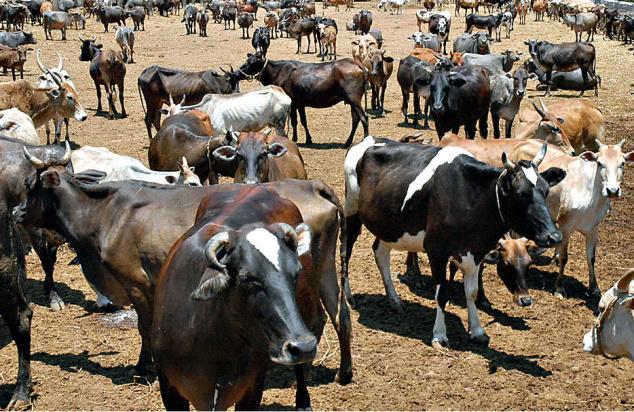
Veterinary diseases cause a huge impact on economy as the country suffered a loss ofRs. 23,000 crore owing to foot and mouth diseasealone in 2013–14.— File Photo M.A. Sriram

In a bid to prevent thousands of crores of losses being suffered due to veterinary diseases, the country is set to strengthen and modernise its veterinary disease surveillance and forecasting system with expertise from the United States of America, which has one of the best veterinary disease surveillance systems in the world.

Under this initiative, the U.S.-based Centre for Disease Control and Prevention (CDC) will train Indian veterinarians as well as medical doctors, according to H. Rahman, Director of Bengaluru-based National Institute of Veterinary Epidemiology and Disease Informatics, which is coordinating such efforts to strengthen and modernise the system.

Though a formal memorandum of understanding in this regard is expected to be signed in September, the preliminary rounds of training have already begun by the CDC. “The CDC has given preliminary training here to two batches of veterinarians and medicos from different States,” Dr. Rahman said. In all, the CDC will impart four rounds of trainings at different levels. This will cover a range of issues such as disease surveillance, collection of disease samples, validation, case studies, and epidemiology (the study of disease pattern and its health impact on population in certain geographical area), he said. Those who undergo the training would be used as trainers for imparting skills to others.

The training is being imparted to medical doctors also as some of the veterinary diseases impact the health of human beings too, he said.

The modernisation will help forecast the incidence of major diseases well in advance besides contributing to development of a strong infrastructure support for preventive measures, he said.

Veterinary diseases cause a huge impact on economy as the country suffered a loss of Rs. 23,000 crore owing to foot and mouth disease alone in 2013–14.


Center for Disease Control and Prevention to train veterinarians as well as medical doctors

source: http://www.thehindu.com / The Hindu / Home> News> Cities> Bengaluru / by B. S. Sathish Kumar / Bengaluru – February 15th, 2015

Bags best Research Publication Award

DrSureshaBF08feb2015

Mysuru :

Dr. B. Suresha, Professor, Department of Mechanical Engineering at the National Institute of Engineering (NIE), Mysuru, has been selected for the Best Research Publication Award instituted by Vision Group on Science and Technology, Department of IT, BT and Science & Technology, Government of Karnataka for the year 2014-15.

His research publication titled ‘Investigation of organo-modified montmorillonite loading effect on the abrasion resistance of hybrid composites’ has bagged the award.

This award is being given to recognise and encourage quality research publications in Science and Engineering by the faculty members serving in University Departments, Colleges and Research Institutions in the State. This award carries a prize money of Rs.25,000 and a citation.

source: http://www.starofmysore.com / Star of Mysore / Home> General News / Monday , February 02nd, 2015