Category Archives: World Opinion

Multi-Faceted artist Late M. Veerappa

The Saga of Mysuru Toys across the Globe

VeerappaBF28dec2014

 Down The Memory Lane

by K. Vijaya Kumar, Former Jt. Director of Information & Publicity

This is a fascinating story which comes back to my memory where a grandfather starts manufacturing wooden toys for tiny-tots and school children of Mysuru way back in 1930s and his grandson carrying them later across the global market for the children of various other countries.

The other day, my long time friend V. Praphulla Chandra sent me a book on his father M. Veerappa in Kannada published by JSS Granthamala and released by Suttur Swamiji recently (author: L. Shivalingappa). Though this small book attaches importance by terming Veerappa as ‘Founding Father of Painting Vachanas’ (which depicts the gist of a Vachana) with many of his such paintings in print, it narrates his multifaceted art life which mainly includes wood-based handicrafts. Veerappa had also served as Assistant Superintendent of Chamarajendra Technical Institute (CTI), being an old student of the Institute in 1918-20.

An artist-turned-craftsman: Though Veerappa started his career as an artist after doing his Master’s at JJ School of Art in Bombay, by opening Bombay Art Studio in Mysuru, an opportunity given by Charles Tod Hunter (British), who was Personal Secretary to Krishnaraja Wadiyar, turns him manufacturing educational and play toys for children in 1930s. Charles also used to carry a few toys as gift to children in his country when he would visit during Christmas. Dewan Sir Mirza Ismail also had appreciated these toys, suggesting some modifications.

I remember to have seen him in his small toy shop opened in the first floor of a building (above R. Krishnaswamy Stationery Stores) by the side of Chamundeshwari Talkies on Sayyaji Rao Road.

Encouragement by Kamaladevi Chattopadhyay: The turning point, perhaps, was in 1959 when Kamaladevi Chattopadhyay, the then Chairman of All India Handicrafts Board, visited his Mysuru Toys Company in V.V. Mohalla. Impressed with the works of Veerappa, the Board encouraged its further growth.

By then, the Government of India had already sponsored Veerappa for a training in lacquer art and art of packing in Japan. The letters he wrote to his son late V. Gowrishankar, describing vividly his experience starting from his ship journey from Calcutta Port to Tokyo and the dedication of Japanese to their work and way of life was published later as a book titled ‘Sayonara Japan’ (so popular, it found three editions— 1959, 64, and 69).

Mysuru Toys Factory on Nanjangud Road: The Mysuru Toys Company founded by Veerappa in 1935 with production centre on Kalidasa Road in V.V. Mohalla, grew over the years as his son V. Praphulla Chandra and grandson Satish P. Chandra, a Master’s Degree holder in Business Management from Princeton, USA, established a factory in eighties on Nanjangud Road near Kadakola, extending its wing to manufacturing houseware products along with wooden toys, exporting them abroad. Now the factory is closed.

UNICEF for toys and IKEA for housewares: Having found Mysuru Toys conform to the International Safety Standards, UNICEF wanted them to be supplied globally for children. Similarly, the popular housewares company of Sweden, IKEA started purchasing home furnishing commodities to be sold in their outlets. I was pleasantly surprised to come across Mysuru Toys in a store in Canada where my son lives (Burlington, Ontario) during one of my visits.

Best Export Award: Satish Chandra got the Best Export award three times given by All India Toys Manufacturing Association besides being selected for a foreign trade in wooden toys to North America and Europe. He has now settled in Bengaluru and owns Global Tech Park (P) Ltd.

Endowment in memory of Veerappa: V. Praphulla Chandra’s family have recently established an Endowment in the name of M. Veerappa at JSS Mahavidyapeetha, to honour an outstanding artist every year — one year under fine arts and another year under handicrafts alternatively — calling it ‘Artist M. Veerappa Award’ with a cash prize of Rs. 68,000 (Veerappa lived for 68 years).

The adage ‘Artist is mortal but art is immortal’ applies to the art of Veerappa, who had attained the single-mindedness and concentration as an artist par excellence. One can find his paintings in the State Archaeology Museum in Wellington Lodge, ‘Chitralaya,’ a private gallery, his earliest residence now renovated on 6th Main, 6th Cross, V.V. Mohalla where his another grandson Gowrishankar Sanjay lives. Another grandson, Santosh Shivanna is running a showroom called ‘Woodlife’ nearby on Adipampa Road, where adjoining Veerappa’s another son, my friend M.V. Subramanya (formerly of Perfect Industries, Printing Division) lives.

e-mail: kumarkv59@gmail.com

source: http://www.starofmysore.com / Star of Mysore / Home> Feature Articles /  Monday , December 22nd, 2014

Danish Architect Mogens Thiesen in city

Mysuru :

The Danish Architect Mogens Thiesen will be in Mysuru from Dec. 22 to Dec. 30. Mogens Thiesen was working for the Danish Government during The Danish Mysore Project in the early sixties. He was the Architect at the project between the Indian Government and the Danish Government.

Mogens Thiesen will be visiting The Danish Mysore Project and his former staff living in Mysore.

Mogens Thiesen will also celebrate his 80th birthday together with his old friends in Mysore and his oldest son, daughter-in-law and four grand-children.

source: http://www.starofmysore.com / Star of Mysore / Home> General  News /  Monday , December 22nd, 2014

First international puppet fest from Jan. 1

100 artists will be participating in the event being organised by Dhaatu Puppet Theatre

What to expect

* Conferences: 9 am to 1 pm;

* Short performances: 2.30 pm to 4.30 pm

* Spectacular performances: 5.30 pm to 8.30 pm

* The curtain-raiser Puppet Show will take place at NGMA on December 30, 5 pm

* Puppet Parade on January 1 from 10 am. It will go through M.G. Road, Church Street and reach Metro Rangoli walkway.

* Films of puppets from Jan 1-4 at Rangoli theatre.

* Inauguration of puppet performing space at Dhaatu, Banashankari on January 1, 3.30 pm

* A Dhaatu bus stop on K.R. Road with permanent puppet exhibits. Inauguration on January 1, 4.30 pm

* KIA houses two puppet installations

* Participants include Prof. Katia Legeret of Paris-8 University; Prof. Claudia Orenstein from Hunter College, New York; Dimitri Jaganeau from Brussels, Belgium; Dadi Padamjee, President, UNIMA.

* ‘Vijayanagara Vybhava’ by Dhaatu, directed by Anupama Hoskere, would have 72 puppets tracing the performing arts of Karnataka from Tretayuga. January 4, 7.30 pm JSS auditorium

source: http://www.thehindu.com / The Hindu / Home> News> Cities> Bengaluru / by Ranjani Govind / Bengaluru – December 27th, 2014

Indo – Sri Lanka Inter-Club swimming contest

Mysuru :

Association of Integrated Mysore Swimmers (AIMS) has organised Indo-Sri Lanka Inter-Club Swimming contest for the first time in Mysuru on Dec. 23 at the University Swimming Pool.

The competition will be conducted in five categories — I category: 9-10 years; II category: 11-12 years; III category: 13-14 years; IV category: 15-17 years and V category: Above 18 years of age. 26 swimmers from Sri Lanka will also participate in the contest.

For details, contact S. Sundaresh, Secretary-AIMS, on Mob: 98454-77929, according to a press release from the Assn.

source: http://www.starofmysore.com / Star of Mysore / Home> Sports  News /  Sunday , December 21st, 2014

‘There is no place better than Karnataka for Tourism,’ says Dr. B.R. Shetty

DrShettyBF21dec2014

by S. Kenneth Shishir

SOM met Dr. Shetty on Friday, who was on a brief visit to the residence of former Secretary (Forests) to the State Government A.C. Lakshmana, on KRS Road in city who is the friend of Dr. Shetty’s brother Sachidananda Shetty, a resident of Mangaluru and had a short talk about his visit and projects he has taken up here. Excerpts…

SOM: Sir, is Karnataka a place for tourism?

Dr. Shetty: Of course, there is no better place than Karnataka for tourism.

SOM: Have you taken up any projects here?

Dr. Shetty: Yes, I have given a proposal to the Government of Karnataka for a project to supply water to Jog falls near Sagara in Shivamogga, especially during summer when the volume of water is reduced and the falls does not attract tourists. I have plans to supply water under his project on all 365 days to attract more tourists there. Speaker Kagodu Thimmappa has taken interest in the project and if the government approves the proposal, I will go ahead with it.

SOM: Have you planned to open a hospital in India?

Dr. Shetty: Yes, I have acquired a 220-bed hospital in Trivandrum in Kerala State and will be doubling its capacity. In central Raipur I have acquired a majority stake in an orthopaedics hospital as I want to expand it across India to serve Indians. My plan is to offer affordable health care in smaller cities and create a 12,000-bed hospital infrastructure in five years.

SOM: How is the medical sector doing in India?

Dr. Shetty: The medical sector in India is doing very well. The country can be developed as a medical tourism place also. We have the best doctors here.

SOM: How are Indian workers doing and being treated in UAE?

Dr. Shetty: Indian workers in UAE are doing good, well paid and well respected.

SOM: You have taken up many missions to help the downtrodden and the poor. What is your mission in life?

Dr. Shetty: My mission in life is to serve the community, by way of my professional ventures and personal pursuits.

Going from clinic to clinic selling drugs to doctors, loading cartons, hoisting barrels on his shoulder and climbing staircases was the first idea of Dr. Bavaguthu Raghuram Shetty popularly known as Dr. B R Shetty, Chief Executive Officer of NMC Healthcare, UAE Xchange and Neopharma, while working in the UAE in the early days.

Born in Kaup, Udupi in 1942, Dr. Shetty served as the Vice-Chairman of the Municipal Council in Udupi, where he worked towards the cause of providing proper sanitary facilities, building concrete roads, schools, underground drainage and septic tanks for people to lead a better and healthier life.

In 1973, he set foot in the desert land of the United Arab Emirates (UAE) to pursue his ambitions armed only with a clinical degree in Pharmacy and was able to start, build and succeed at multiple businesses over the years and today, his business empire is spread across the globe.

In UAE, Dr. Shetty who noticed the deficiency for basic clinics in the region, established New Medical Centre (NMC), a small pharmacy cum diagnostic clinic and became successful. Today, Dr. Shetty is the proud visionary behind 15 healthcare facilities which cater to more than one million patients annually. He has also come to the aid of regions hit by natural calamities and other adversities.

Dr. Shetty who is also interested in the tourism sector has taken up many projects to develop certain places as tourist destination with extraordinary infrastructure.

Some of the awards Dr. Shetty has won in recognition of his service are: the Padma Shri by the Government of India, Pravasi Bharatiya Samman Award, Order of Abu Dhabi, by the Government of Abu Dhabi and Forbes Middle East Top Indian Leaders in the UAE award to name a few.

source: http://www.starofmysore.com / Star of Mysore / Home> General  News  /  Sunday , December 21st, 2014

He will grow with a remote-controlled leg

Bengaluru  :

This 10-year-old cancer patient from Sri Lanka has his limb remote-controlled. To ensure that he doesn’t undergo surgical procedures often, doctors have increased the length of the magnetic metallic implant on his left leg through remote-control. The implant was placed after a cancerous tumour was removed from his knee.

Binura Lakvindu from Colombo, who was diagnosed with bone cancer, underwent surgery at BGS Global Hospital, Bengaluru, recently.

“For Binura, we have implanted the expandable prosthesis that has an in-built magnetic disc, gear box and a telescoping rod. The growth anticipated from that bone was calculated and the prosthesis was designed accordingly. He has to visit the hospital once in three months and place his leg in a magnetic coil, and the limb will be lengthened by 1 mm in 4 minutes. The required length will be achieved without additional surgeries. Binura will have limb growth up to 14 to 15 years,” said explains Dr Srinivas C H, consultant, orthopaedic onco-surgeon, who operated on Binura.

He developed pain in the knee in July, 2014. “We noticed him limping and avoiding cricket, his favourtite sport. We consulted a local physician who prescribed him medicines for pain. But the pain didn’t subside and a month later, we noticed swelling above his knee. An orthopaedic surgeon in Colombo suggested that this could be a tumour in his thigh bone and advised treatment in Bengaluru,” says Mallikarachchige L R, Binura’s father.

HOW DOES IT WORK

When the prosthesis is placed in the magnetic field, it leads to rotation of the magnetic disc at 16,000 rpm (revolutions per minute). The telescoping rod moves, resulting in expansion of the prosthesis. The tailor-made implant was imported from the UK to suit the unique specifications of Binura. This technique is tried only on paediatric cases with bone cancer.

source: http://www.timesofindia.indiatimes.com / The Times of India / Home> City> Bengaluru / by Sunitha Rao, TNN / December 19th, 2014

Bangladesh war : Victory Day Today

A War Record — All for a bottle of Scotch !

December 16 is celebrated as ‘Victory Day’ because on this day in 1971 a spectacular victory was achieved by India under the able political leadership of the then Prime Minister Indira Gandhi with brilliant military leadership provided by the Chief of Army Staff, Field Marshal SHFJ Manekshaw. This victory not only liberated erstwhile East Pakistan (present Bangladesh) but handed over the most humiliating defeat to Pakistan. Pak Army in the East surrendered unconditionally and India took 93,000 Prisoners of War who were released only after Shimla Agreement.

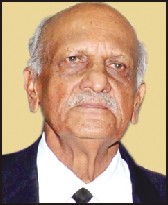
Maj. Gen. C. K. Karumbaya, SM (Retd.), now a resident of Mysuru, had the honour of taking part in this war, as part of 2 Corps, 4 Mountain Division, in the Western segment of Bangladesh which was defended by 9 Pak Division. Here is an account of the pursuit operation of 5 Maratha L I (Royals), under Maj. Karumbaya’s command which is considered as a post-Independence war record as the longest and fastest. Now read on. —Ed
MajGenBF21dec2014

by Maj. (later Maj. Gen.) C. K. Karumbaya, SM

It was a proud moment for our Bn, 5 Maratha L I (Fifth Royal) when our GOC Maj. Gen. M. S. Brar, PVSM, presented us a bottle of Scotch whisky, which he had promised during the height of the Bangladesh Liberation War. The occasion was the gala victory dinner for the officers of 4 Mtn. Div. (Red Eagle Division) at Jessore Cantonment. A proud moment indeed.

Mission with a Bait: I took over the command of Fifth Royal after our CO, Lt. Col. J. P. Torpy, VSM, was wounded in the battle of Elangi and evacuated on Dec. 6, 1971. On Dec. 8, we were ordered to move North to Jhenida and link up with 41 Mtn. Bde. I reached Jhenida at about 1100 hrs on Dec. 8 with B Coy commanded by Maj. P. K. Chatterjee, VrC, D Coy commanded by Maj. Shri Ram Singh and A Sqn 45 Cav (PT76) less two tps commanded by Maj. Batra. The rest of the Bn with a Coy of 7 Punjab (SCOTS APCs) who were placed under command were trailing behind as the APCs had problems traversing swampy areas.

Jhenida was still being mopped up by the troops of 41 Mtn Bde. On arrival, I was briefed by 41 Mtn. Bde. Commander, Brig. A. H. E. Michigan, MVC in the presence of GOC, Maj. Gen. M. S. Brar and my own 62 Mtn. Bde. Commander, Brig. Rajender Nath. I learnt that Pak 57 Bde. after its defeat at Jhenida was carrying out an orderly withdrawal towards Magura where HQ of Pak 9 Div. was located. Magura was a strategically located medium sized town. It was 30 km away from Jhenida and connected by a good concrete road. It was a communication centre with excellent roads connecting Khustia in the North, Kamarkhali-Faridpur in the East and Jessore and Khulna in the South.

My Bde. Commander then ordered me to lead the advance of the Bde. and instructed me to be cautious and take all precautions. Thereafter, the Div. Commander stressed the importance of the mission and said half in jest, “Karumbaya, 50 (I) Para Bde is also advancing towards Magura from Jessore and if your Bn succeeds in capturing it earlier than them, I shall present you with a bottle of Scotch!”

I was willing to take the above bait because the morale of Pak Army was in their boots due to a series of setbacks they had suffered earlier on. In contrast our own morale was sky high with our outstanding success, especially at Suadih. This psychological advantage had to be fully exploited.

Calculated Risk and Unorthodox Formation: I took a calculated risk. I used the tanks at my disposal aggressively and unconventionally. Instead of making the tanks move cross country on either side of the road axis (which could have slowed down our speed of advance and made the tanks vulnerable to any nuisance mines which enemy may have placed), I put them all in a road formation with about a 100 yd interval between each tank. I made my D Coy, R Gp and part of B Coy to ride piggy-back on the tanks and drive with full speed towards Magura. I ordered other coys to follow with whatever vehicles they could muster and the balance to march on foot to catch up.

The vanguard Coy Commander, Maj. Shri Ram Singh was in the second tank with Sqn 2IC, Capt. Metha. I followed in the fourth tank with the Sqn. Commander, Maj. Batra and FCO from the Medium Regt. I instructed Maj. Shri Ram Singh to keep watching the area in front and engage suspected delaying positions with prophylactic fire while on the move to scare the enemy. He was not to get bogged down dealing with small batches of enemy stragglers who would be taken care of by follow up troops. I kept a careful watch of the area in front with binoculars glued to my eyes so that we did not fall into a trap as cautioned by the Bde. Commander. As a commander, I realised that I should mix audacity with caution. The occasion certainly called for more audacity and willingness to take calculated risks.

Advance turns into pursuit: The advance (or pursuit) commenced at 1300 hrs and progress was very rapid as though we were in a road race! I was inspired by Field Marshal Rommel, who led his famous Afrika Korps in the deserts during the Second World War! Ironically, our Red Eagle Division had played a prominent part in his eventual defeat. On the way we saw some Pak stragglers running away from the main axis, but we pressed forward relentlessly and reached the outskirts of Magura at 1515 hrs. Infantry and tanks quickly got into assault formations for attack.

The enemy was taken completely by surprise. We were heavily shelled in which one of our artillery OP officer’s jeep was directly hit by a shell and all occupants were killed including the officer.

Capture of Magura: To our great relief, A and C Coys and SKOTS APCs (with their deadly machine guns) started trickling in. The enemy was in total disarray. They fled, leaving behind their 9 Pak Div. Operation Room complete with maps, Quarter Guard with their national and 29 Baluch Regimental flags, kotes full of weapons, ammunition dump (estimated to be about 300 truck loads) and ordnance stores, intact. They had started to make preparations to blow up their ammunition dump with a 6 hr delay fuse which would have been devastating had they had time to activate it.

Pursuit continues: We continued the pursuit beyond Magura towards Kamarkhali, leaving behind C Company and Pioneer Platoon to guard the captured stocks and the prisoners that we had taken in the process. At last light we observed enemy troops crossing a canal after demolishing a culvert on the road about 6 kms ahead of Magura. They were subjected to heavy machine gun fire from our newly arrived APCs and the enemy replied with 105 Howitzers. We firmed in there at night and waited for the tail to catch up.

Pursuit up to Kamarkhali next day: We the Fifth Royal continued to lead the Divisional advance next day, that is on Dec. 9, at first light. The PT 76 tanks and APCs had to be unfortunately left behind due to demolished culvert over sharp banks but the Bn in true Patton style continued the advance on foot at light infantry speed. We reached Kamarkhali Ferry area on the banks of Madhumati river which was about 24 km away by 1130 hrs and firmed in.

Pak defences at Madhumati and their concept of Operations: Pak troops had taken up hasty defences on the East bank of the Madhumati river. Their morale was naturally low due to pressures put on them by us. The Pak Army was mainly road bound whereas we were able to move cross country on man pack basis. Their strategy was to fall back from their forward defences by taking successive delaying positions to their strong points in the rear. The Pak plans that might have looked impressive on paper had gone awry on the first day itself. We had learnt with experience that the enemy was highly sensitive to any outflanking moves as they were afraid of their withdrawal routes being cut off by us.

The Madhumati river was about 300 ft wide and 30 ft deep; but we did not consider it as an insurmountable obstacle. The PT 76 tanks had the ability to swim, ferry troops and stores. In addition, my Bn. had gained expertise in crossing rivers with our own expedients. All ranks knew swimming. To top it, the locals were too willing to carry us across in their own country boats — after all, we were a liberating Army fighting for their freedom.

Disappointment: To our great disappointment, the tanks and APCs which we had left behind near the demolished culvert were withdrawn from us and allotted to 22 Rajput (7 Mtn. Bde.) who were operating in Khustia Sector and we were ordered to stop further advance and firm in at Majai near Kamarkhali. We were ordered not to attempt crossing the Madhumati river.

Thus, our long pursuit ended on the banks of Madhumati abruptly. I felt that instead of pulling out troops from us, if the higher ups had only reinforced us to exploit our success, the 2 Corps Operations would have been a lot speedier and even more spectacular.

Our achievements: I have turned the pages of post-Independence military history books in vain to find out if any other unit of the Indian Army had carried out as long and as rapid a pursuit operation during war as my Battalion. According to Col. Afridi, the Col. Staff of 9 Pak Div. who was taken as PW at Faridpur and remained in our custody, our lightning advance resulted in GOC 9 Pak Div. (Gen. Ansari), who had moved from Jessore to Magura on the first day of the war, losing all control over his brigades. His 107 Bde. (Brig Makhmad Hayat) was forced to withdraw southwards towards Khulna and his 57 Bde. (Brig Manzoor) was hemmed in at Khustia instead of falling back to Madhumati-Faridpur through Magura as visualised earlier.

Perhaps the circumstances were highly favourable to us or the offer of Scotch Bottle promised by the GOC was too tempting to resist; but the fact remains that we in the Fifth Royal are proud of the extremely fast pursuit operation we carried out not only to capture Magura, the HQ of 9 Pak Div; but after capturing it, pursue the enemy much beyond it up to the banks of Madhumati, till ordered to halt.

I am happy to note that the Scotch Bottle, its contents having been emptied on the day of the presentation itself, is now beautifully decorated, mounted and displayed in our Officers’ Mess along with the Pak flags which we captured at Magura.

source: http://www.starofmysore.com / Star of Mysore / Home> Feature Articles /  Tuesday , December 16th, 2014
Winning matters

Partha Varanashi from Puttur becomes first Austswim presenter, aims to boost standards

Partha02BF13dec2014

Partha Varanashi, a 29-year-old from the state, has become India’s first Austswim presenter for swimming and water safety.

With this accreditation under his belt, Partha can coach swimmers in India, instead of a representative from Australia visiting the country. This achievement is part of an initiative by former Indian Olympian Hakimuddin Shabbir Habibulla to improve swimming training standards .

Under the programme Winning Matters, Austwim, Australia’s national organisation for the teaching of swimming and water safety provided professional and systematic training to swimming teachers from across India.

Ceri Weeks, a representative from Austswim, conducted the courses in Mumbai, Bengaluru and Mangaluru.

“With Austswim making its presence felt in India, swimming training is expected to get a whole new dimension. Training is going to be holistic and systematic with a strong foundation. The curriculum is vast, which includes child psychology, behaviour patterns and safety and candidates have to under go online tests. There is a 200page manual and there is an option to interact online,” said Partha, who has received a soft copy of the accreditation and will travel to Australia for the actual presentation.

Partha who trains about 40 budding competitive swimmers at the Balavana swimming pool in Puttur and who was responsible to teach 900 students of a swim school in South Australia before returning to India two years ago, said this was just the first lap.

“Since I worked in Australia, I know the standards. The journey has just begun. In India, the focus is only on competitions, while Austswim focuses on technique. The change will not happen overnight. It may take years like it did in Australia, but I am confident that Austswim will bring in changes in swimming standards of India,” he said.

Partha was the Mangalore University’s champion swimmer for three years (20032005). He was also a threetime national Indian swimming finalist, South Australian Masters Swimming record holder (2009) and has over ten gold medals won in Aussie Masters, SA event in the year 2009 and 2010 and coached and trained over 900 swimmers in Australia.

source: http://www.bangaloremirror.com / Bangalore Mirror / Home> Sport> Others / by Deepthi Sanjiv, Bangalore Mirror Bureau / November 26th, 2014

Setting Aussie standards in Mangalore pools

While pursuing a Masters degree in Adelaide, Partha won over 10 gold medals in Aussie Masters

A 28-year-old who resigned from an organisation promoting swimming in Australia to join his family business near Mangalore is trying to raise standards in the locality.

Partha Varanashi is an accomplished swimmer. He was the Mangalore University champion from 2003 to 2005 and a three-time finalist in national swimming contests. While pursuing a masters degree in plant biotechnology at the University of Adelaide, he became South Australian Masters Swimming record holder in 2009 besides winning over 10 gold medals in Aussie Masters.

Working as the swimming coaching coordinator at State Swim, an organisation promoting swimming in South Australia, he went on to coach over 900 swimmers in Australia.
In June, 2012, he returned to India to join his parents’ bio-technology venture — Varanashi Farms — that is into production of organic manure in Adyanadka, Bantwal taluk, about 60 kilometres from Mangalore.

 
As he was winding up in Australia, Paul Mason, owner of State Swim, advised him to start a swimming pool or an academy in India. Inspired by these words, Partha set up the Varanashi Swimming Academy. He says, “In India, a swimming pool is seen as a white elephant. Hence I did not have to put in much effort when I decided to take Balavana Swimming Pool in Parladka, Puttur on lease.” But Partha was not satisfied running the academy. He dreams of taking Indians up to Australian swimming standards.

 
Towards this end, he approached eight schools in Puttur and Vittal with a proposal to coach their students. Vivekananda School in Puttur showed interest in his dream and has now decided to introduce swimming classes from this academic year.

 
Partha says, “Students from Std V to IX will have one swimming class a week from June-July. Every student will get 30 classes a year. We are expecting at least 1,000 students to participate.”

source: http://www.bangaloremirror.com / Bangalore Mirror / Home> News> State / May 12th, 2013

India’s Asha Bhat wins ‘Miss Supranational 2014’ title

Asha Bhat, after being crowned in Warsaw, Poland.

India’s Asha Bhat has won the beauty pageant  ‘Miss Supranational 2014’, becoming the first Indian to receive the title.

Asha competed with contestants from 70 countries at the event held in Warsaw, Poland last night. Looking dazzling in a beautiful Gavin Miguel gown, Asha was crowned by the outgoing Miss Supranational, Mutya Datul from Philippines.

“I am ecstatic. It’s an unbelievable feeling and I couldn’t feel more proud. I am happy to have won this title for my country. I am extremely thankful to the Miss India Organization for giving me this wonderful opportunity to prove myself. Now, I am just waiting to come back to my country and meet my family and friends who supported me throughout my journey,” Asha said after her win.

She will be also rewarded with USD 25000.

Earlier in the competition, Asha won the title of ‘Miss Talent’ by giving a sizzling Bollywood  fusion performance, choreographed by Khush Numa Daruvalla on songs like ‘Kajrare’, ‘Yaar Na Mila’ and ‘Dhol Baaje’.
Asha was also seen competing for various sub-titles like Best National Costume, Miss Best Body, Miss Fashion Show, among others.

source: http://www.dnaindia.com / DNA / Home> News> World / Agency:PTI,  Place:New Delhi / Saturday – December 06th, 2014