Category Archives: World Opinion

Indian scientists find key to PTSD

Bengaluru-based researchers have found that a tiny almond shaped region in the brain is responsible for post-traumatic stress disorder, a discovery that could lead to a potential cure

Post-Traumatic Stress Disorder (PTSD), a condition of persistent mental and emotional stress occurring as a result of injury or severe psychological shock, typically involving disturbance of sleep and constant vivid recall of the experience, with dulled responses to others and to the outside world.

For the first time in the history of neuroscience, two scientists from National Centre for Biological Sciences (NCBS) in Bengaluru have conducted a detailed study on why and how one suffers from PTSD. They have pinpointed precise roles played by certain neurons in the part of the brain called amygdala, an almond-shaped structure located deep inside the brain, which acts as the centre that controls emotions and stores memories of fearful experiences.
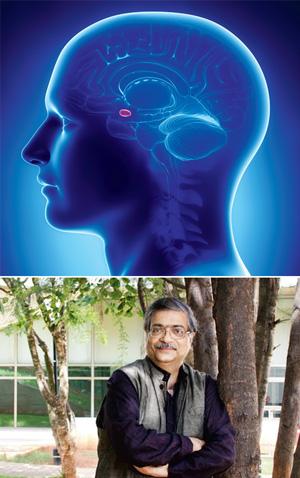
Top: An illustration showing the location of the amygdala in the human brain/  Below: Sumantra Chattarji lead author of the Nature Neuroscience study
Top: An illustration showing the location of the amygdala in the human brain/
Below: Sumantra Chattarji lead author of the Nature Neuroscience study

In doing so, they have unraveled the so-far mysterious reasons behind the fear and precisely how that fear develops to make way for PTSD. The research, which appeared on Nature Neuroscience Web site, has paved the way for scientists the world over to study ways to reverse PTSD or even develop medical aids to cure the condition – a boon for many victims of sexual or child abuse, accidents, or soldiers/ combatants who are commonly afflicted by this condition.

NCBS neuroscientist, Sumantra Chattarji and his student Supriya Ghosh, discovered that PTSD sets in when individual neurons in the amygdala lose their capability to discriminate between dangerous and safe stimuli. They found that this happens when the danger stimuli is particularly intense, as in a life-threatening situation.

In normal circumstances, they found, most of the neurons are able to detect the safe signals; but when the danger levels are much increased they lose their capability to discriminate between danger and safety. This results in such neurons sending danger signals even when faced with a safe stimulus.

They also identified the precise biochemical signaling mechanism inside the amygdala neurons which caused fear and PTSD – cyclic adenosine monophosphate (cAMP)/protein kinase A (PKA) signaling. This potentially serves as a target for designing new treatments against PTSD, said Chattarji.

Chattarji and Ghosh conducted experiments on live rats, the amygdala and the neural functioning of which are similar in humans.

The two neuroscientists now plan to conduct research on the mechanism of reversing PTSD, apart from hoping that researches are undertaken to develop drugs, having identified the precise biochemical signaling mechanism that causes PTSD.

source: http://www.punemirror.in / Pune Mirror / Home> Others> Scitech / by Nirad Mudur / December 02nd, 2014
City neuroscientists decode the anatomy of fear

Discovery by NCBS could help find therapy for post traumatic stress disorder

Decades after the Vietnam war, a US army veteran recounts the intense flashbacks he still gets of the battlefield, triggered by something as innocuous as a thunderclap: “I am back in Vietnam. It is the middle of the monsoon. My hands are freezing and yet I am sweating… Suddenly I see my buddy Troy, his head on a platter, sent to our camp by Viet Cong,” he says in a well-documented case study.

Now, two city-based neuroscientists have decoded the anatomy of fear and show how sometimes this vital and primal response to danger can go completely awry, morphing into post-traumatic stress disorder (PTSD) seen often in soldiers and also in people who have been in near-fatal situations: sexual assault, natural disaster or accidents.

A study published in Nature Neuroscience, by Sumantra Chattarji and Supriya Ghosh, neuroscientists at National Centre for Biological Sciences, reveals how a certain set of neurons in the amygdala (the brain’s emotional hub), which once distinguished between safe and dangerous stimuli, begin responding even when there is no sign of threat.

For the experiment, the researchers trained rats to distinguish between two sound frequencies. One frequency was accompanied by a foot shock and the other was not. “When the shock was elevated, we found that one set of excitatory neurons that once responded only to the sound associated with a shock now began firing indiscriminately even to sound not accompanied by a shock,” said author Prof. Chattarji.

The scientists also found that a certain bio-chemical pathway — cAMP–PKA — was activated during this process of generalised fear. “This opens up neuronal and biochemical targets for therapies for PTSD, and this will be our next stage of research,” Prof. Chattarji said.

source: http://www.thehindu.com / The Hindu / Home> News> Cities> Bengaluru / by Divya Gandhi / Bengaluru – December 02nd, 2014

Intl. Conference on Contemporary Computing begins at SJCE

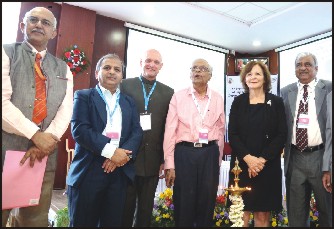
Dr. V. Prakash, Director R&D with Innovation, JSS Mahavidyapeetha, Dr. B.G. Sangameshwar, Joint Director (Academic), JSS Mahavidyapeetha, Gerd Hoefner, Managing Director and CEO of Siemens Technology and Services, B.N. Betkerur, Executive Secretary of JSS Mahavidyapeetha, Prof. Nadia Magnenat, Director, Institute for Media Innovation School of Computer Engineering, Nanyang Technological University, Singapore and Dr. Syed Shakeeb-ur-Rehman, Principal, SJCE are seen at the three day International Conference on ‘Contemporary Computing and Informatics’ that began at SJCE this morning.

Mysuru :

Prof. Nadia Magnenat, Director, Institute for Media Innovation School of Computer Engineering, Nanyang Technological University, Singapore, this morning inaugurated the 3-day International Conference on ‘Contemporary Computing and Informatics’ at the Golden Jubilee Hall of SJCE organised under the aegis of SJCE and the Department of Master of Computer Applications of SJCE.

Gerd Hoefner, Managing Director and CEO of Siemens Technology and Services was the chief guest. The keynote address was delivered by Dr. V. Prakash, Director R&D with Innovation, JSS Mahavidyapeetha.

B.N. Betkerur, Executive Secretary of JSS Mahavidyapeetha presided. Dr. B.G. Sangameshwar, Joint Director (Academic), JSS Mahavidyapeetha, Dr. Syed Shakeeb-ur-Rehman, Principal, SJCE and Dr. M.P. Pushpalatha, Head, Department of MCA, SJCE were present.

source: http://www.starofmysore.com / Star of Mysore / Home>  General  News  / Thursday , November 27th, 2014

Traditional tile, modern style

MangaluruBF03dec2014

Eco-friendly red tiles are unique to Mangaluru. Located at the confluence of two rivers Phalguni and Netravathi joining the Arabian Sea, the region has great deposits of high quality laterite clay which spearheaded the tile industry.

India’s first tile factory was established in Mangaluru in 1860 by Plebot, a German missionary. Christened ‘The Basel Mission Tile Factory’, it was situated on the banks of River Netravathi at Morgan’s Gate and was a pathbreaking venture that gave the world the famous Mangaluru tiles.

These tiles are unique in design and can withstand heavy rain. The aesthetic structure of the tile allows ventilation during summer. Eco-friendly and roughly one third the cost of a concrete roof, these tiles were once the most popular choice. Earlier wooden support beams and rafters formed the base of the roof. Now, iron anglers have replaced the wood.

The British preferred these tiles for their government buildings. The unique design of these tiles and their capacity to drain rainwater without seepage and clogging caught the attention of the famous architect Fredrick William Stevens who used them while constructing the Chhatrapati Shivaji Terminus in Mumbai. The tiles are exported to Myanmar, Seychelles, countries in the Far East, European countries like Spain and Portugal, East Africa, Sri Lanka and even Australia.

Good old days

Easy access to firewood due to close proximity to the Western Ghats, availability of cheap skilled labour and the existence of port in Mangaluru are the major factors that led to the rapid development of this industry. It reached its peak in the 1960’s and 1970’s. With such favourable conditions, the tile industry flourished and led to the emergence of many more tile factories in the region. Abundant deposits of clay both in Gurupura on the banks of Phalguni River and in Bantwal on the banks of Netravathi River further facilitated the growth of the industry so much so that the region had more than 112 factories churning out these marvels in red clay.

Process of preparation is highly skill- based. The clay is first placed in a mould and shaped to exact measurement. Then, the company logo is stamped on the wet mould and the extra clay is taken off.

The tile is then sent to the furnace to be baked and glazed. Once ready, the tile weighs 2kg to 3kg. The red colour is due to the high iron compound found in the lateritic clay. Quality of the clay gives necessary strength to the tiles. In Mangaluru, we can see century-old buildings still sporting the original tiles.

In fact, there are quite a few heritage buildings in Mangaluru that showcase these classic tiles. Office of the Deputy Commissioner, Government University College at Hampankatta, historical churches of Mangaluru like the Rosario Cathedral, the famed St. Aloysius College and many other old buildings stand witness to the durability of these tiles. The striking red colour of these rooftops against the backdrop of swaying coconut palms are beautiful visions that should not be missed.

A sad decline

The speedy momentum of the tile industry slowed down when the concept of high-rise apartments came into picture. Owing to rising costs, the local preferences shifted from eco-friendly tiles to RCC roofing. Factories that produced 25,000 tiles per day now manufacture only about 15,000 tiles.

Non-availability of skilled labour and scarcity of clay also haunt the industry. The first quality tiles are in demand for ethnic homes but second and third quality tiles don’t have many takers.

These ethnic tiles that remind one of homely abodes with coconut trees must be preserved for posterity.

source: http://www.deccanherald.com / Deccan Herald / Home> Supplements> Spectrum / by Hazel Colaco / DHNS – December 02nd, 2014

City Kick-Boxers bag medals at Brazilian Jiu Jitsu and Submission Wrestling Championships

Seen in the picture are the medal winners and participants of championships (standing from left) Madhusudhan, L. Srihari, Suleman, N. Vinay, M. Rakesh, Coach Vikram, C. Chethan, Naveen Shetty, Aditya Bhat, M.J. Chethan and Mohammed Zulkharnain. (Front row from left): Sidhan Changappa, Naveen Kumar, Prakyath Bhat, G. Rajesh, Nachappa, Chidambaram and Amit.

Mysuru , (KS) :

15 grapplers and mixed martial arts fighters attached to the Academy of Martial Science, Mysore, affiliated to Mysore District Muay Thai Association and Associacao Fernando Pacheco De Brazilian Jiu Jitsu, Brazil, won three gold, three Silver and three Bronze medals at the Sub-continental Brazilian Jiu Jitsu (BJJ) and Submission Wrestling championships held at Bangalore recently.

Results : Chidambaram: 55 kg class: 1 Silver and 1 Bronze Medal, Naveen Shetty: 55 kg class: 1 Gold and 1 Silver Medal, Bhasur Sharma: 60 kg class: Bronze Medal, Krishna: 77 kg class: Bronze Medal, C. Chethan: 85 kg class: Silver Medal and Sumanth Subrahmanya: 85 kg class: 1 Gold and 1 Silver Medal.

source: http://www.starofmysore.com / Star of Mysore / Home>  Sports News  / Wednesday , November 26th, 2014

US lizards set to get city treats

Silkworms from Bengaluru will soon be reared in the US as pet food for lizards and other reptiles

SilkwormBF25nov2014

A US company will be importing silkworm eggs from Bengaluru to grow them as pet food. A professor from the University of Agricultural Sciences (UAS) is felicitating the initiative and earlier this month helped in selecting the ideal way to farm mulberry plants in Louisiana, US. The silkworms will not be used for producing silk but become feed for exotic pet lizards in the US.

Dr BL Chidananda, an associate professor at the department of animal sciences, visited insect breeder ‘Mulberry Farms’ which are setting up the first silkworm breeding centre in Ringgold, Louisiana. It is the only company in the US to be granted permission by the US department of agriculture to import the silkworm eggs from India.

Speaking to Mirror, Chidananda said, “Mulberry cultivation was in troduced to the US in the late 18th Century. It was cultivated in Louisiana, Florida and California, but it never took off. Now this company that produces pet foodd wants to grow silkworms, especially for pets like lizards and other reptiles. Since silkworms are domesticated they can be reared for pet foodd. However, the problem with the whole thing is the mulberry plant, which is the sole food of silkworms, they do not grow well in the US due to the extreme weather. The company tried to grow mulberry in California but found it very uneconomical.” Chidananda has suggested growing mulberry for silkworms in polyhouses. Chidananda did the needful by studying the weather patterns in the farm at Ringgold, Louisiana.

“I have suggested cultivation of mulberry in poly-houses for six months of the year. It cannot be done in winter. Poly-house cultivation of mulberry will not be economical in India. Unlike India, the mulberry leaves will not be fed fresh to the silkworms. They will be ground into dry powder and used as feed for silkworms later. For six months, the plants will be pruned and capped.This is the way Bengaluru silkworms will be reared in the US very shortly.”

The company is already into insect farming and grows cricket and armyworms.

Silkworm pupae are indirectly and directly consumed by people as well. In some places in India, silkworm feed is replacing fish feed in poultry. Chidananda said, “Littleknown is the fact that pupae are also a delicacy in some parts of India.”

source: http://www.bangaloremirror.com / BangaloreMirror / Home> Bangalore> Others / by Shyam Prasad  S , Bangalore Mirror Bureau / November 24th, 2014

Gandhiji’s Harijan Weekly ‘Mirror of his Soul and Voice ‘

Down the memory Lane

by K.Vijaykumar, Former Jt.Director of Information & Publicity

My donation of its New York published 19 Volumes to Journalism Department

While reading the other day a unique initiative of Mysore Librarians and Information Scientists’ Association giving away 2,000 used books to 38 educational institutions (books received by donors) at a book exhibition held in University Library, Manasagangotri, my particular attention was drawn at the donation of three volumes of Gandhiji’s Harijan Weekly published by Navajeevan Trust received by one Tirumala Rao, was given away to the University Library itself.

My donation of 19 volumes

This news drew my memory back to mid nineteen-ninety, when I donated my prized collection of 19 volumes of Harijan Weekly (18th volume missing) published by Garland Publishing Inc., New York and London in 1973 to my Alma Mater Journalism Department in Manasagangotri. Prof. Usha Rani, who was heading the Department, arranged a function in the Department where Prof. M. Madaiah, the then Vice-Chancellor (he was senior in Maharaja’s College in our student days) received the volumes. This shows the importance given to Gandhiji’s Harijan.

Earn Ph.Ds on Harijan

I still remember Prof. Madaiah advising journalism students that they can earn Ph.Ds by studying Harijan Weeklies vis-à-vis Gandhiji’s journalism. The journal which was started in Feb. 1933 (suspended in between 1940-42 by the government and continued again till 1956) with 955 issues running into 8,400 pages, has been published by Garland Publishing Inc., New York and London in 1973 with a brilliant 25 page introduction by Joan V. Bondurant, Professor of Comparative Politics, University of the Pacific.

Views Paper instead of News Paper

Views Paper instead of News Paper

Gandhiji himself referred Harijan as ‘Views Paper’ instead of ‘News Paper.’ He writes in his autobiography ‘Experiment with Truth’ (Part IV Chapter 15) thus: “I realised that the sole aim of Journalism should be Service. The newspaper Press is a great power… It can be profitable only when exercised from within.”

He writes earlier in 1925 when he started a weekly ‘Young India’ in South Africa — “I have taken up journalism not for its sake but merely as an aid to what I have conceived to be my mission in life.”

Gandhiji — A Peerless Communicator

Gandhiji is described as a ‘Peerless Communicator’ but we can tell that he is a ‘Peerless Journalist’ too by running the following papers in his life time:

1. Indian Opinion (From South Africa in four languages)

2. Nava Jeevan (Gujarati Weekly)

3. Nava Jeevan (Hindi)

4. Young India (English Weekly)

5. Harijan (English Weekly)

6. Satyagrahi (Man-script)

7. Harijan Bandhu (Gujarati)

8. Harijan (Urdu)

9. Harijan Sevak (Hindi)

With these multiple journals, Gandhiji can be termed as a model journalist (of newspapers of his time with rich contents in them).

NOTE: As I was writing this column, I came to know that Sri Ankegowda, a remarkable book-lover, who has established a rare rural library in a village near Pandavapura, has been chosen for Rajyotsava award. Calling him to congratulate, I enquired whether Harijan finds a place in his library. To my joy, he immediately said yes. That is Ankegowda’s library with rich collections of rare books in that ‘Pustaka Mane,’ in a village. Congratulations Ankegowda.

Acknowledgement: I have to acknowledge the help rendered by Sri C.P. Ramasesh, Mysore University Librarian and staff, for scanning the facing page and introduction page of Harijan that are appearing with this article.

e-mail: kumarkv59@gmail.com

source: http://www.starofmysore.com / Star of Mysore / Home> Feature Articles  / Sunday , November 16th, 2014

Wildlife enthusiasts capture the ‘unsung story’ of Bhadra

Bengaluru  :

Braving mating tigers, crocodiles in water, bison moving around huge trees and pythons slithering on grass, a team of wildlife enthusiasts from Bengaluru have captured the beautiful flora and fauna of the Bhadra tiger reserve.
The Unsung is the first documentary film on the forest spread across Chikmagalur and Shivamogga, which was declared the country’s 25th tiger reserve in 1998.

According to Prashanth S Nayaka, director and team leader, the 37-minute documentary narrates an untold story of a silent movement deep inside one of the most pristine jungles of Karnataka. “Besides showcasing the untainted beauty of Bhadra, the film follows the footsteps of forest guards who protect the reserve with dedication and passion.”

The team members are Pradip Shastry, CJ Anil, Hulivan Nagaraj, Prashanth Nageshappa, Vinod Reddy, Sharath and Chethan.

“It was tough making a movie covering 500 sqkm of forest. We started our work in October 2013 and completed it in May 2014. We worked for nearly 122 days shooting, facing tigers and elephants deep inside the jungle. We had to shoot at night for several days. Usually, tigers moved at nights as they are nocturnal. There were snakes on our way also. We saw an Indian rock python, bears, gaurs and many other animals,” says Prashanth.

The documentary has also captured the beautiful streams, rivulets, waterfalls, thick clouds, humming of birds, bamboo and teak trees that thrive under the watchful eyes of the forest department.

The original name of the area was Jaagara valley, but changed to Bhadra wildlife reserve in 1974.

Today, 36 anti-poaching camps protect the tiger reserve, with jeeps patrolling day and night and forest watchers covering nearly 15 km on foot. “Once, I noticed a tiger at very close range. I did not know what to do. I just stood still and stared at it for five minutes. It quietly left,” recalls Govindaraj, watcher, anti-poaching camp.

The film has commentary in English (Pradeep Shastry) and Kannada (Prakash Kumar). The music has been composed by C J Anil.

According to Prashanth, the film aims to create awareness among public about the need to protect forests and animals. “We have not taken money from anyone for the project. The team members pooled in money and spent nearly Rs 1.5 lakh. We plan to screen the documentary in schools and colleges. The intention is to convey the message that guarding forests is as important as guarding our nation.”

QUOTE

They have done a nice documentary on the problems faced by frontline staff in forests. The focus of the film is different from what one generally does. They have brought out a CD and we are ready to distribute copies in schools and colleges. It is a fine attempt.

—Vinay Luthra | principal chief conservator of forests (wildlife), karnataka

source: http://www.timesofindia.indiatimes.com / The Times of India / Home> Environment> Flora & Fauna / GS Kumar, TNN / November 09th, 2014

MELANGE: HIDDEN HISTORIES – Retaining its old glory

Named after the patron saint of Scotland – St. Andrew – the church was originally home to the Scottish regiment in the cantonment area with Scottish customs. Photo: Sampath Kumar G.P. / The Hindu

Entering its sesquicentennial year, St. Andrew’s Church is still a symbol of the spirit of the people of Bangalore – enduring, strong and rooted in tradition amid modernisation

A lot has changed in Bangalore over the years. But, one prominent edifice in the city’s landscape that has retained its old glory is St. Andrew’s Church. Surrounded by a canopy of trees on the lush Cubbon Road, you may breeze past this massive monolith without much ado, only catching a fleeting glimpse of its magnificent clock tower amid the trees, but nestled in the heart of this church is a history as vibrant as the city itself.

Celebrating its 150th anniversary this year, the foundation stone for St. Andrew’s Kirk (as it was called back then) was laid on November 22, 1864 by Lady Grant, the wife of Lieutenant-General Sir Hope Grant, the then Quartermaster-General of Her Majesty’s Forces. Designed by engineers Major Sankey and R.C. Dobbs, the building was completed and opened for worship on November 18, 1866, within a period of two years at an overall cost of Rs. 45,000, including the land.

Named after the patron saint of Scotland – St. Andrew – the church was originally home to the Scottish regiment in the cantonment area with Scottish customs, classical Scottish square dancing, western music and other traditions. After the complete independence of the churches with the formation of Church of South India, St. Andrew’s Church joined the C.S.I. in September 1959.

Walking into the compound, you will discover one of Bangalore’s most well-preserved structures in true classic gothic architectural style with brick red finish and long windows. The ambience gives the vibe of entering a Victorian era, reflecting the Scottish Presbyterian roots the church has. The first thing that catches your eye is the 90-foot belfry tower that houses the church bell that has been ringing at 9.30 a.m. every Sunday for 149 years and the clock, installed in 1893, that chimes every quarter hour.

A botanical paradise, Andrew’s harbours over 30 species of trees, including the Nile Tulip, Jacaranda, Ashok Tree, Rain Tree among others and also shelters a host of migratory birds that can be spotted perched on the tree top canopy surrounding the church. The real breath-taker is the massive 25-foot stain glass painting that welcomes you behind the altar.

Hand-painted by artist Alex Ballantine from Scotland and set up in the diamond jubilee of Queen Victoria in 1897, the magnificent creation depicts Abraham, Moses, Kind David and Prophet Isaiah from the Old Testament, the Apostles Andrew, Peter, Paul and John, a burning bush, the symbol of the Church of Kirk with alpha and omega, above which is Lord Jesus Christ.

Presbyter-in-charge Reverend Sanjay Samuel Ayer says St. Andrew’s has an identity of its own. “The structure of the building and the worship format has not changed. Some of the original Presbyterian traditions have been upheld while some are intertwined into the C.S.I. Despite the modernization in Bangalore, Andrew’s is still maintaining its heritage value. The challenge for Andrew’s is to hold on to its strong foundation in tradition and adapt to modern times.”

Another hard-to-miss part of the church is the 800-odd pipes-fitted pipe organ. Built by Peter Gonacher in 1864, the pipe organ was installed at the church in 1881 and is one of the few well-maintained pipe organs in the country.

When St. Mark’s Cathedral was damaged by fire in 1923, it was St. Andrew’s Church which accommodated the congregation till the cathedral was rebuilt in 1927. Known to many as a giving church, Andrew’s, even today, supports several socio-development projects with a congregation that believes in reaching out to the needy.

The church runs a school for slum children, supports mission fields and has in the offing the setting up of a senior citizens’ home and a pre-school on its premises.

Andrew’s has had a series of celebrations heralding in its sesquicentennial year, including concerts and special services and will have more programmes and a carnival soon. “We are privileged to have enjoyed this building for the last 150 years. The congregation members are highly committed to the church and love to maintain its tradition. We hope to carry this legacy forward and ensure the church and its heritage continue to flourish and endure for generations to come,” adds Rev. Sanjay.

The church has English and Kannada services and special prayers and meetings all through the week.

Call 25591874 or visit St. Andrew’s Church for more details.

source: http://www.thehindu.com / The Hindu / Home> Features> MetroPlus> Society / by Allan Moses Rodricks / Bangalore – May 23rd, 2014

World Record in Mysuru

* Indian batswomen set world record with 275 runs for 2nd wicket partnership in Women’s Cricket.

* India comfortably placed at 357 for three in 138 overs.

Indian Batswomen M.D. Thirushkamini (left) and Punam Raut crossing over for a run during the second day’s play of India Vs South Africa Women’s Test Match played at SDNR Wadiyar Stadium.

Mysuru :

Mysuru entered the cricket record books with India’s batswomen, M.D. Thirushkamini and Punam Raut, setting a world record for the second wicket partnership on the second day of the first Test match between India and South Africa at the SDNR Wadiyar University Platinum Jubilee Stadium in city this morning.

The duo added a record 275-runs for the second wicket before losing Punam Raut at the score of 283 in 121.1 overs. Punam was dismissed for a well compiled 130 (355b, 18x4s) by leg-spinner Dane Van Niekerk.

Thirushkamini and Punam bettered the previous record of 235 runs set by Betty Snowball (189) and Molly Hide (110) of England vs New Zealand at Lancaster Park, Christchurch at New Zealand on Feb. 16,1935.

When we went to the press, India were comfortably placed at 357/3 in 138 overs with M.D. Thirushkamini batting on 167 (22x4s, 1x6s) and Harmanpreet Kaur batting on 9 (2x4s). Skipper Mithali Raj scored 37 runs before getting out.

source: http://www.starofmysore.com / Star of Mysore / Home> General News / Monday , November 17th, 2014