Category Archives: World Opinion

For the record

Ask Rahul Murali Krishnan (23) to subtract 100-digit numbers and he takes less than one minute — 54.89 seconds to be precise.

Rahul Murali Krishnan

Bengaluru :

Ask Rahul Murali Krishnan (23) to subtract 100-digit numbers and he takes less than one minute — 54.89 seconds to be precise. Krishnan, who is pursuing a post-graduate diploma in risk management from Global Risk Management Institute in the city, was recently recognised by Spain-based Official World Record Organization for ‘Fastest 100 Digits Subtraction Ever’.

Krishnan was introduced to abacus at the age of 8. “So I never really had a problem in solving math problems,” he says. Krishnan also learnt techniques and shortcuts that helped in solving math problems. The idea of registering for a record came when he watched a show about a world record event. “I was excited to see people achieving something unique in different fields.

I wanted the same for myself,” he says. “I started with 30 digits, and kept pushing myself. Finally, I decided to target 100 digits. The next problems were speed and accuracy.” Initially, it took him over three minutes to solve a 70-digit problem. “But with practice, I was able to increase my speed and accuracy,” he says.

source: http://www.newindianexpress.com / The New Indian Express / Home> Cities> Bengaluru / by Express News Service / June 29th, 2020

Hubballi railway platform in Karnataka to be world’s longest

Passengers move to board Hubballi-Jodhpur Shramik Special train, at Hubballi railway station. DH FILE PHOTO

The Hubballi railway station will have the world’s longest platform within one year when the existing 550-metre long Platform No 1 will be extended to 1,400 metres.

Platform No 1 of South Western Railway’s Hubballi railway station which is an inspection carriage line, is being converted into a full platform of 1,400-metre length and 10-metre width. Presently, Gorakhpur in Uttar Pradesh has the longest platform in the world at 1,366 metres.

The Hubballi yard has five platforms, and trains can be dispatched in one direction only at the same time. The Hubballi yard is being remodelled to increase the number of platforms from the existing 5 to 8. This work is being done as part of the Hubballi-Bengaluru line doubling project.

A third entrance is coming up for the station too.

The cost of the works is Rs 90 crore for yard remodelling, signalling, electrical, building work and other works. Work on the project has began and will be completed in the next one year, said SWR chief public relations officer E Vijaya.

source: http://www.deccanherald.com / Deccan Herald / Home> State> Karnataka Districts / by DHNS, Hubballi / June 04th, 2020

Microsoft’s venture fund sets up office in Bengaluru

Representative image/Credit: AFP Photo

Microsoft’s venture fund M12 on Wednesday said it has set up an office in Bengaluru that will bolster efforts in pursuing investment opportunities.

The Bengaluru office joins the M12 network that includes San Francisco, Seattle, London, and Tel Aviv.

The local office will pursue investment opportunities across the region, focusing on B2B software startups in the sectors of applied artificial intelligence, business applications, infrastructure, security, and vanguard technologies, a statement said.

M12 seeks to invest in disruptive enterprise software startups in the Series A through C funding stages, targeting both local and cross-border solutions, it added.

“The new office is a step forward in M12’s long-term commitment to the Indian startup ecosystem,” it noted.

M12 has already been remotely investing in India since 2019 and its portfolio includes names like Innovaccer and FarEye.

“Typically, we see the greatest hurdles in a startup’s journey as they scale from local success to global challengers, and then again when they go on to become category leaders,” M12 India Lead Abhi Kumar said.

He added that both inflMicrosoftection points require specific and deep organisational strength, proven talent, GTM partnerships, and global investors.

“M12 is proud to be co-located in the region, and to bring experience and resources that will help startups successfully navigate these inflection points,” he said.

Post-investment, the startups in M12’s portfolio can elect to work with the fund’s Portfolio Development team.

M12’s portfolio companies are actively supported through connections to Microsoft’s go-to-market resources, access to Microsoft technology and internal thought leaders, co-marketing opportunities, and engagement with engineering teams to explore product integrations, the statement said.

Set up in 2016, M12 (formerly known as Microsoft Ventures) has invested in 90 companies.

source: http://www.deccanherald.com / Deccan Herald / Home> City / by PTI / June 10th, 2020

ITC Infotech supports John Hopkins University in COVID-19 Control Study

The project team from Johns Hopkins is working with ITC Infotech’s Digital Experience (DX) team to further enhance the user interface and user experience (UI/UX) of the COVID-19 Control data collection App.

Tracking the spread of the coronavirus is an ongoing challenge. But researchers at Johns Hopkins University are conducting a study that uses an app to collect information that can help localise potential COVID-19, clusters and flare-ups.

COVID-19 Control – a Johns Hopkins Bloomberg School of Public Health approved institutional review board (IRB) study, is a new surveillance tool for COVID-19, based on self-reported body temperatures and, optionally, other symptoms, from users around the country using a user-friendly app.

By using spatial science analytics applied to these data they will identify anomalous increases in body temperatures and generate real-time, pre-clinical, risk estimates of potential COVID-19 outbreaks.

The project team from Johns Hopkins is working with ITC Infotech’s Digital Experience (DX) team to further enhance the user interface and user experience (UI/UX) of the COVID-19 Control data collection App.

ITC Infotech’s DX experts are helping the team from Johns Hopkins fast track UI/UX enhancements to drive higher adoption by introducing more user-friendly features.

“Data from this app will allow us to map and identify hot spots of fevers across the United States, potentially indicating emerging outbreaks of COVID-19 before health care or testing is sought. That information can be key in our efforts to control and mitigate the spread of the virus,” said team member Frank C. Curriero, a professor in the Department of Epidemiology and director of Spatial Science for Public Health Center at the Bloomberg School of Public Health.

“The COVID-19 Control data collection App by Johns Hopkins University is very well-timed, as stay-at-home and shelter-in-place restrictions start getting lifted. We are happy to collaborate with the team from Johns Hopkins University, especially during this unprecedented crisis when industry-academia collaboration is critical,” said Sudip Singh, CEO & Managing Director, ITC Infotech.

This syndromic surveillance tool will allow healthcare systems and government agencies to potentially pre-empt outbreaks and better deploy resources to mitigate consequences. Acquiring data directly from individuals rather than hospitals/laboratories greatly reduces the delay in identifying new outbreaks of the disease and expands basic monitoring of health, he further said.

source: http://www.thehindu.com / The Hindu / Home> Sci-Tech> Health / by Special Correspondent / Bengaluru – June 11th, 2020

Kannada’s first journal

The editor of Mangaluru Samachara, which started in 1843, was Hermann Mogling, a christian missionary

Mangaluru Samachara is the first printed newspaper/periodical/journal in Kannada language. The first issue of this journal was published on July 1, 1843. It was known popularly as Kagada (Kagada in Kannada is paper) This was being published every fortnight, on the first and 15th of every month. Hermann Mogling was the editor of this fortnightly and is known as the father of Kannada journalism.
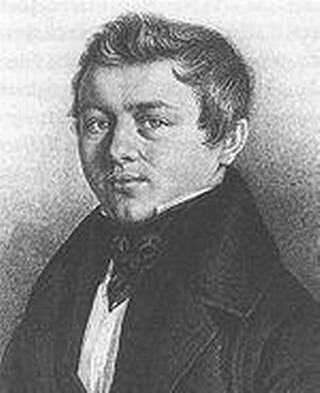
MoglingBF06jun2020

Mogling who was a Christianity missionary at the Christianity Religion Preaching Camp was known as an a servant of Christ. Coorg, Dharwad and Mangalore were the areas of his fieldwork. Mogling was in India from 1836 to 1860. Though he was offered a well-furnished bungalow by the highest Christrian order, he did not accept it and was staying in a hut. He travelled the entire Karnataka by foot and mingled with common folk. He had renounced life of and lived in tiny villages in a very simple way. He had acquired profound knowledge of Latin, Greek, German, Sanskrit and Kannada languages.

Born on May 29, 1811 at Franch Hyme, Germany, Mogling was awarded a doctoral degree in 1834 at the young age of 23. He worked in the field of Textual Criticism, Journalism, Reformation of Scripts, Folklore, Publication, Christianity and Education in Kannada. He has reformed Kannada script and has published Dasara Padagalu in 1850, and Rajendranaame in 1857 in the reformed script. He has edited and published in 1851, Kannada Bharatha of Kumaravyasa, the magnum opus of Kannada language. All these three books are printed in Litho Press. In addition to the above three books, he has edited and published Chennabasava Purana and Kannada Gadegalu (1847), Jaimini Bharatha (1848), Torave Ramayana (1849), Basava Purana (1851), Coorg Memories (1852), and Tulu Padthangalu. He has translated some portions of Kannada Bharatha and 12 Dasara Keerthanegalu into German Language. Apart from these, he has written many books on Christianity. Besides, he has published a Kannada Almanac (Ephemeris) for the year of Christ 1858, known as Kristashaka 1858, Kannada Panchangavu.

MangaluruSamachara01BF06jun2020

This fortnightly Mangaluru Samachara, which came as a first issue on July 1, 1843 from Mangalore, stopped its publication in 1844 and the 16th and last issue was published on February 15, 1844. All the 16 issues were printed from the Basel Mission Litho Press which belonged to Evangelical Mission, Mangalore. This same journal was published as Kannada Samachara from Bellary commencing from March 1, 1844 till it stopped in January 1845. Mangaluru Samachara was priced one pie, and under its mast head it said: ‘This paper is available for sale in Yajamana Appanna’s house which is opposite to Kotvalara Katte.’ It is also available at the school where Mogling works, near Taluk Office, Mangalore.

Writing about the content of the journal, he says: News of the Town, Government Orders, News of all States, New Surprise/Strange News, Other/others happenings, preachings, Stories, Authentic news sent by readers, Proverbs, and Songs of Purandaradasa. These are the classification of news items being printed in the Journal. Each issue contained a moral story from Panchatantra, and Mogling believed that the Journal should only publish truth, it should cater to the needs of all sections of society without compromising, and the journal should give good but not cheap entertainment. Interesting thing is the Journal improved qualitatively from issue to issue.

“Mangaloreans and native people are interested in hearing and telling stories and news. Since news is mostly distorted, it was decided that genuine news should be collected, and it should be priced low.”
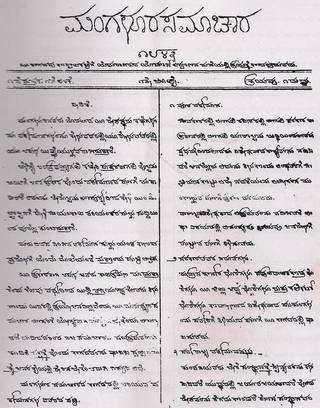
MangaluruSamachara02BF06jun2020

In the last issue of Mangaluru Samachara, Feb 15, 1844, Mogling says that “people from Mangalore, Mysore, Tumkur, Bellary, Shimoga, Hubli, Sirsi and Honnavara subscribed to the journal. Henceforth, it will be printed in Letter Press at Bellary. People from all corners of the Kannada State can read this paper easily and clearly. In addition to this, people will get space to write and send more News, History, Educational Lessons and good sayings.” Next issue itself was Kannada Samachara, which ran till about Jan 1845.

source: http://www.thehindu.com / The Hindu / Home> Entertainment> Art / by K. S. Madhu Sudhana / June 06th, 2020

Move over NASA, IISc builds ventilator in just 60 days

Indigenous prototype

A ventilator developed by IISc

A crash-course programme by the Indian Institute of Science (IISc) to develop a new ventilator model has resulted in a proof-of-concept prototype some 60 days later.

The development has been compared to a similar ventilator programme by the National Aeronautics and Space Administration’s (NASA) Jet Propulsion Laboratory (JPL), which churned out a working, high-pressure prototype in 37 days.

“What both projects have in common is utilising engineering know-how for different applications,” said Dr Gaurab Banerjee, of the institute’s Electrical Communications Engineering (ECE) Department and one of the core members of the development team.

Dr Banerjee insisted that the invention, dubbed “Praana” took just 35 days from the drawing board to the prototype stage. “The initial days of the project were spent ensuring that we could replicate ventilator mechanics,” he said.

But where the JPL device has a lifespan of three to four months, the IISc team said their unit is intended as a full-fledged alternative to existing ventilators.

“The technology will be transferred to interested manufacturers,” the IISc team said, adding that the new unit would probably be priced between Rs 1.5 and 2 lakh per unit. Existing commercial machines cost between Rs 5 to 7 lakh.

Before that happens, however, the unit still has to pass compliance tests to ensure that it stands up to field use.

Worst-case scenario

But is such a project needed? When the team first began their work, there was a serious shortage of ventilators in the country. According to the Ministry of Health and Family Welfare, the country had roughly 14,000 ventilators, out of which 734 were in Karnataka.

The situation has now changed with a Bharat Electronics Limited (BEL) spokesperson telling DH that the company is already churning out ventilators against a 30,000-unit order.

The IISc team, however, pointed to the recent surge in cases in Karnataka and in Mumbai, coupled with observations that the pandemic could rebound in winter, as a sign that we are not yet out of the woods.

“We will have this completely indigenous technology, built mostly out of water filter automotive parts, ready if things get worse,” they said.

The project began in the penultimate week of March, with staff from both the ECE and the Department of Aerospace Engineering, and joined over the internet by volunteers.

source: http://www.deccanherald.com / Deccan Herald / Home> City> Top Bengaluru Stories / by Akhil Kadidal / DHNS, Bengaluru / June 03rd, 2020

Biocon’s partner Mylan receives favourable ruling for device in U.S.

Clears hurdle for patenting Biocon’s Insulin Glargine.

Biocon Ltd. today announced that the U.S. Patent and Trademark Appeal Board (PTAB) ruled in favour of Mylan, Biocon’s partner in inter-partes review (IPR) proceedings, finding all challenged claims of Sanofi’s Lantus SoloSTAR device patents unpatentable. The PTAB found three claims of patent unpatentable, and two claims to be patentable. However, Mylan and Biocon previously obtained a covenant not to sue from Sanofi on the patent and therefore this ruling does not impact Biocon and Mylan’s ability to commercialise Semglee (Insulin Glargine) upon final approval from the U.S. Food and Drug Administration.

The PTAB also found Sanofi’s proposed amended claims for the ‘486 and ‘844 patents unpatentable. Dr. Christiane Hamacher, CEO and Managing Director, Biocon Biologics, said, “We are extremely pleased with the U.S. PTAB’s ruling in favour of our partner Mylan for four device patents of Sanofi’s Lantus SoloSTAR. This strengthens our resolve to provide high-quality, affordable Insulin Glargine to diabetic patients in the U.S. and generate savings for their healthcare system. Our partner’s New Drug Application (NDA) for Semglee is under active review by the U.S. FDA and this favourable ruling further clears the path for the anticipated launch of our Glargine in the U.S. in mid-CY20..”

Last month, the PTAB held the sole challenged claim of another Lantus SoloSTAR device patent as unpatentable and in March, Mylan and Biocon announced that a U.S. court found the asserted claims of the ‘844 patent not infringed by Mylan’s Insulin Glargine product and invalid for lack of written description. Sanofi’s formulation patents were previously affirmed to be invalid by the Federal Circuit.

“The positive IPR developments are greatly encouraging as we believe greater competition in the U.S. insulins market will help rationalise the cost of therapy and generate savings for the healthcare system. Once approved and commercialized, our co-developed Semglee will expand access to insulin therapy. Lantus is a long-acting insulin used to treat adults with type-2 diabetes and adults and pediatric patients with type-1 diabetes for the control of high blood sugar. Our partner, Mylan’s New Drug Application (NDA) is under active review by the U.S. Food and Drug Administration.”

Sanofi sells the product in vials (Lantus) and as a disposable injection pen (Lantus SoloSTAR®). Sanofi’s total IQVIA sales for the 12 months ending March 31, 2020, were approximately $1.71 billion for Lantus 100 Units/mL and about $4.32 billion for Lantus SoloSTAR.

source: http://www.thehindu.com / The Hindu / Home> Business> Industry / by Special Correspondent / Bengaluru – June 01st, 2020

Capgemini’s Delaporte to take over as Wipro CEO and MD

Thierry Delaporte.
Thierry Delaporte.

Frenchman had spent 25 years with the consulting firm

Wipro Limited on Friday appointed Thierry Delaporte as its new CEO and MD. The appointment is effective from July 6.

In a regulatory filing, Wipro said: “Until recently, Thierry Delaporte was the chief operating officer of Capgemini Group and a member of its group executive board. During his 25-year career with Capgemini, he held several leadership roles including that of the CEO of the global financial services strategic business unit, and head of all global service lines. He also oversaw Capgemini’s India.”

Mr. Delaporte will be based in Paris and report to chairman Rishad Premji. The company’s current CEO and MD Abidali Neemuchwala will relinquish his position on June 1.

Commenting on Wipro’s new French connection, global analysts who know Mr. Delaporte, say: the new leader comes with a strong finance background and he will be able to bring operational and financial discipline at Wipro. They also said that culture too won’t be a big challenge for Mr. Delaporte as he worked with several companies of diverse cultures, although culture fit’ is a major `concern’ and `criteria’ for CXO selection for many family-driven businesses in India as well as globally.

Thierry is a global leader and has worked with multiple cultures, across different types of companies. He has experience in the international environment and worked in similar types of company cultures,’’ said Ray Wang, principal analyst, founder and chairman of Silicon Valley-based Constellation Research Inc,. Commenting on the appointment, Peter Bendor-Samuel, CEO, Everest Group, said, “[Mr.] Thierry is an interesting choice for Wipro, signalling its move to be a true multinational and global player. [Mr.] Thierry faces many challenges as he assumes Wipro leadership; the biggest amongst them is to get Wipro back to industry-leading growth. To achieve this, he must increase accountability, and streamline decision making.”

Phil Fersht, CEO and chief analyst at London-based HFS Research, said, “He is an ambitious business leader with a strong finance background. He will bring strong operational and fiscal discipline to Wipro and has a lot of energy and leadership capabilities.”

As per analysts, everything has quickly changed, in a post pandemic world, including market realities, business challenges, customer needs and work culture and with these also changed the role, priorities and focus of global tech leaders.

On the priorities in front of Wipro’s new leader, as per analysts, the challenges going forward are to bring the vast elements of Wipro together onto accounts. There are many opportunities for multiple teams to work with clients at the same time and gain synergies.

This requires a relook at how industries are organised as they get collapsed post pandemic. For example, manufacturing, retail, and distribution are very similar today just like telecom, media, entertainment, and technology. Those collapsed value chains will change how companies like Wipro service these industries,’’ added Mr Wang. According to Mr. Fersht, Thierry has an immediate challenge of creating a renewed strategy for Wipro and bringing in some new leadership in various areas. “He will likely look to restructure the firm as it seeks to develop a “digital workplace” delivery model for the post-COVID environment that caters for intense cost pressures, remote staff and rapid transformation that many clients demand.”

source: http://www.thehindu.com / The Hindu / Home> Business> India / by Mini Tejaswi / Bengaluru – May 29th, 2020

Bengaluru-based gardener’s idea makes way to France

Deepthi Chandra B made two visits to France in January and February to carry out the execution of her design, which is now open to public till November 1 this year.

Garden designed by Deepthi Chandra BGarden designed by Deepthi Chandra B. (Photo| EPS)

Bengaluru :

Deepthi Chandra B’s fairytale moment came complete with a castle. The city-based landscape architect was among the 20 winners at an international garden festival, which takes place in the castle of Chaumont sur Loire, Blois, near Paris.

“There were 400 entries from across the globe and this is the first time an Indian team won in 28 years,” says Chandra, who adds that other winners this year belonged to Belgium, Germany, the Netherlands, Italy and USA. She made two visits to France in January and February to carry out the execution of her design, which is now open to public till November 1 this year.

The theme for the 2020 edition of the festival was Return to Mother Earth. For her submission of the design, which Chandra called Dharitri: The Garden of Mother Earth, she decided to rely on something that would represent Indian culture, borrowing ideas from the harvest festival. The entrance to the 2,000 sq ft space begins with a walkway of bamboo and flowers one would normally use for worship, like rose and jasmine.

“These are also flowers that are used extensively by the French perfume industry,” explains the 30-year-old. As the view opens up, the visitor notices a circular water body, which was inspired by the Rig Veda’s concept of “Father sky and mother earth being complementary,” says Chandra, adding, “This way, one can see the reflection of the sky in the water.” The small pond is surrounded by step terraces that double as benches for visitors to take in the view. This part of the design was inspired by Indian paddy fields.

“If you climb them you can get a top view of the garden. The pathway finally leads to the exit point thereby completing the Pradakshina path as seen in Indian temples, thereby paying tribute to the sacredness of Mother Earth,” she says.

Chandra’s first visit to France in January involved a meeting with the local contractors. During her second trip, her architect friend Chandrakanth GM, accompanied her to execute the design. Besides a slight language barrier, the duo also had to brave temperatures as low as 7 degrees Celsius while constructing the garden.

“But we also got to see the transition to spring, which came with beautiful views of cherry blossoms,” says Chandra, adding that all the teams getting together for meals was a good cultural experience. “The culture there was different. They construct everything themselves. It was nice to see the other winners coming in with their friends, family and neighbours to build the garden together.”

source: http://www.newindianexpress.com / The New Indian Express / Home> Cities> Bengaluru / by Express News Service / May 24th, 2020

Mysuru-Born UK Doctor Gets Accolades In COVID-19 Fightback

DrSankeerthanaBF05may2020

Indian doctors have often been referred to as the backbone of the United Kingdom’s National Health Service (NHS), with an estimated 60,000 medics from India working for the State-funded health service.

It is doctors like Mysuru-origin Sankeerthana Subramaniam who are the ones leading the fight against COVID-19. The frontline in this war has a few thousand doctors of Indian origin. Some of these people were born in India but migrated in search of the UK dream after completing professional education.

They still have strong family connections in the country of their birth. And, naturally, they have to share the risks associated with their profession. Dr. Sankeerthana Subramaniam has come to the limelight at the Torbay Hospital, South Devon’s main hospital, managed by the Torbay and South Devon NHS Foundation Trust. She has treated many COVID-19 patients and has got appreciation from both patients and her team of senior doctors.

Over the past few decades, thousands of Indian doctors and nurses have moved to the UK. They serve in remote areas where British doctors refuse to go. Second and third-generation doctors of Indian origin here have specialised in key areas such as emergency medicine and pulmonary diseases. They are now at the frontline of treating the COVID-19 pandemic in hospitals even in remote areas.

Agrarian roots

Dr. Sankeerthana is the daughter of Shivasubramaniam and Vasanthi who have an agrarian background. The couple resides in K.Hemmanahalli village near Bogadi in Mysuru Taluk. The family still depends on agricultural income for sustenance. Dr. Sankeerthana completed her MBBS in 2015 from JSS Medical College, Mysuru and worked at the JSS Hospital till 2017.

Later she migrated to the United Kingdom and joined Torbay Hospital. After the COVID-19 pandemic, Devon has emerged as the worst affected area for the Coronavirus outbreak. Devon and Torbay Councils have reported hundreds of deaths and thousands of patients in intensive care units at many hospitals and healthcare units.

DrSankeerthana02BF05may2020

 Professionalism and commitment

Doctors at Torbay Hospital are fighting a relentless battle against the killer virus. “There is a lockdown till the end of May and there is a sense of fear among people here. Our team has been following professionalism and commitment to this noble profession and we have been saving lives and I am proud to do this service,” Dr. Sankeerthana told ‘Star of Mysore’ over phone from her hospital.

On the attacks on doctors and healthcare workers in India, she said, “I have seen on TV and have read in newspapers that doctors are being attacked in India and patients are showing unruly behaviour in hospitals. This is sad. Doctors, especially Indian doctors, have great respect in foreign soils like in the UK and the USA. It is very unfortunate that they are treated shabbily and their lives are threatened in their own country.”

Concerned parents

During the course of conversation, Dr. Sankeerthana said that her parents are concerned about her health and well-being. “Every day my mother Vasanthi calls me and asks me to take care. She is worried and asks about the work environment,” she said.

Dr. Sankeerthana stays at a distance of 9 kilometres from the hospital. “For doctors and nurses who stay far, the hospital has provided daily transport and accommodation. Sometimes I work for 8 hours and sometimes it stretches to 16 hours. All the doctors and healthcare staff have to compulsorily take a shower inside the hospital and then leave to their homes,” she says.

United as a team

“We work as a united team here and there is no barrier of nationalities and seniorities. We constantly exchange ideas and discuss always with an ultimate aim to make the patient comfortable,” she says.

Back in Mysuru, her teachers recall that Dr. Sankeerthana was a studious girl. “She was my student in PUC at De Paul International Residential School and Junior College. I am proud of her achievement and it is a matter of honour for all of us,” said Dr. Mamatha Sathyanarayana, a faculty at De Paul.

source: http://www.starofmysore.com / Star of Mysore / Home> Covid-19 Feature Articles / by M.Y. Yogesh Kumar / May 04th, 2020