Category Archives: World Opinion

Former foreign secretary Venkateswaran cremated in Bangalore

Last year when he found himself in the news again for a crucial incident that occurred in his life in 1987, former foreign secretary A P Venkateswaran, ever the gentleman, refused to go back in time and dwell on his sacking as foreign secretary by Rajiv Gandhi.

“I believe that grave digging is not at all a pleasant task,’’ he said when his 1987 sacking through a press conference by Rajiv Gandhi was compared last year with Congress leader Rahul Gandhi’s tearing up of an ordinance cleared by the UPA cabinet at a press conference in New Delhi.

The 85-year-old former foreign secretary who carried himself with great dignity died at a private hospital in Bangalore on Tuesday and was cremated in the city on Wednesday.

Despite an illustrious career spanning 35 years in the diplomatic service, Venkateswaran’s career was highlighted by his ignominious exit as foreign secretary in January 1987 when Rajiv Gandhi snubbed his foreign secretary for making contradictory statements on a proposed visit to Pakistan.

“You will be talking to a new foreign secretary soon,” Rajiv Gandhi told a Pakistani journalist who raised the question of contradictory statements coming from the Prime Minister and his foreign secretary at a press conference where A P Venkateswaran was also present.

Following the snub at the press conference Venkateswaran quit the Indian Foreign Service. “My resigning was a spontaneous action since I have always believed that life without honour is no living at all. I felt that the statement (by Rajiv Gandhi) was an arrogant attempt to try and humiliate, when all the facts were on my side like his impending visit to Pakistan for a SAARC summit,’’ Venkateswaran said last year when he was dragged into the limelight again.

Venkateswaran was considered among India’s best foreign officials while in service. In a letter he wrote to the diplomatic corps when he took over as foreign secretary to Prime Minister Rajiv Gandhi on April 30, 1986 stated that it was necessary for the country to perceive the work of the IFS as being invaluable. “We might flatter ourselves that we are doing something extremely valuable for the country, but unless it is also perceived as such by our countrymen, they might well conclude our contribution is not worthwhile…” he said.

Last September when asked to draw comparisons between his own situation and the one involving Rahul Gandhi, Venkateswaran only commented to say that ‘history repeats itself first as a tragedy and then as a farce.’

After his exit from the IFS, Venkateswaran, who hailed from a Palakkad Iyer family, had settled down in Bangalore and set up the Asia Centre, a think-tank on Asian affairs comprising former diplomats and academics.

source: http://www.indianexpress.com / The Indian Express / Home> Cities> Bangalore / by Johnson Abraham / Bangalore – September 04th, 2014

City Professor for Intl. meet at Johannesburg

ProfKantappaBF06sept2014

Mysore :

Prof. C. Srikantappa, UGC-Emeritus Scientist at DoS in Earth Science, University of Mysore, will be attending the International conference on “IMA-1024 – Delving Deeper – Minerals as Mines of information” to be held from Sept. 1 to 6 at Johannesburg, South Africa.

This conference will be held once in four years in different parts of the world and nearly 1800 Geologist from across the world will be attending this meeting.

Prof. Srikantappa will be presenting two of his research papers — One on the presence of CO2-rich and alkaline fluids in Precambrian high-grade metamorphic rocks from Satnur-Halagur area in Karnataka and another paper is on the role of alkaline fluids (NaC1 and KCL) which are responsible for U-mineralisation in Gogi, northern Karnataka which is going to be one of the biggest U-mining area in India as per AMD-DAE.

Prof. Srikantappa is the Secretary of Mineralogical Society of India with its headquarters at DoS in Earth Science, University of Mysore. He is also working as the Council Member of International Mineralogical Association (IMA) representing Asia. He is representing India at IMA General Body meeting at Johannesburg.

Prof. Srikantappa is one of the well-known Geoscientist in the country, working on the origin and evolution of oldest rocks belong to Precambrian period in south India. He is the only teacher from University of Mysore who had been awarded the prestigious Alexander-von-Humboldt Fellowship from Germany and UNESCO Fellowship at UK. He has guided 15 Ph.D students and has published nearly 120 research papers. He has presented several research papers at International conferences held at France, Germany, UK, USA, Italy, Spain, Australia and Sri Lanka.

Prof. C. Srikantappa was instrumental in establishing a permanent K-SET center for lectureship and UGC-NET center at University of Mysore in the 2010.

source: http://www.starofmysore.com / Star of Mysore / Home> General News / Septmeber 01st,  2014

Seven Myra students selected for study-abroad programme

MyraBG02sept2014

Mysore :

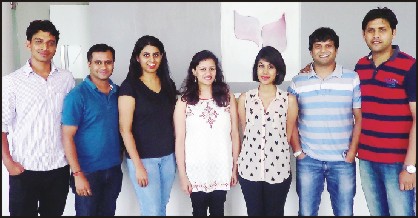
Seven students of MYRA School of Business, Yelwal, have been selected to study one semester at Católica–Lisbon School of Business and Economics in Portugal.

As part of its state-of-the-art programmes, MYRA School has a Study-Abroad Programme, to provide students a greater understanding of cross-cultural trade and business practices and to promote cultural interchange of ideas.

MYRA has established global partnerships with global business schools namely W. P. Carey School of Business in the US, Católica–Lisbon School of Business and Economics in Portugal and University of Washington Bothell School of Business, USA.

The seven students who have been selected to study at Catolica Lisbon School of Business and Economics in Portugal are: S. Bharat, Navin Kumar, M. Rituja, Ragini Sharma, Surya Vadhana, Ashutosh Kar and Chankey Agrawal. They will be studying Finance and Marketing courses for one semester.

source: http://www.starofmysore.com / Star of Mysore / Home> General News  / August 27th,  2014

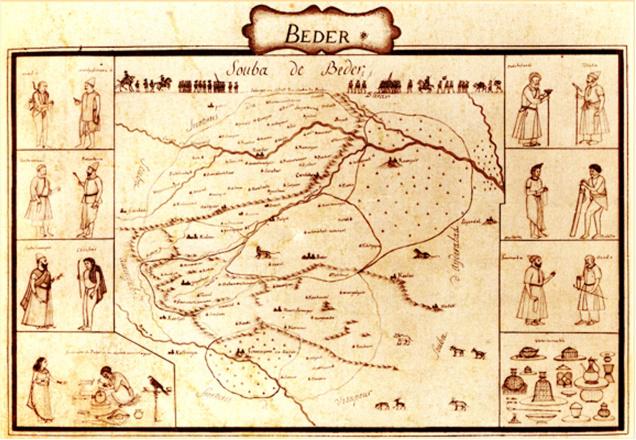
LINK TO THE PAST – Ancient map of Bidar unearthed in London

Historian and painter Rehman Patel says illustrations on the political and social history of India are included on either side of the map. / The Hindu

The map is included in an atlas produced by Colonel Jean Baptiste Gentil, Military Adviser to the Nawab of Awadh Shuja-ud-Daula

In exciting news for historians, an ancient atlas, which includes a map of Bidar, prepared by French officer Colonel Jean Baptiste Gentil, Military Adviser to the Nawab of Awadh Shuja-ud-Daula (1763 to 75), was found tucked away in the India Office Library at London. The map shows Bidar, which was once a capital city of the Bahamani Kingdom and an educational centre with historical importance.

Historian and painter Rehman Patel, who reproduced the map, said that in the interests of preserving the historic post and throwing more light about the history of the Bidar and its cultural heritage, the State government should put pressure on the Union government to bring it back to India and place it in Bidar.

Illustrations

He added that Col. Gentil had utilised the services of local artists to produce a series of illustrations on the political and social history of India.

Dr. Patel pointed out that illustrations were included on either side of the map. They reveal the representatives of different Sufi orders and thick forests with drawings of wild animals. These drawings also include Bidri craftsman and the different wares that were produced in Bidar. The bespectacled artisan at the bottom left of the page is portrayed as engraving a floral pattern on the side of a globular huqqa, with his wife and pet parrot looking on.

The illustration is reinforced by having a caption: ‘Fabrique de Beder ou on incruste en or et argent’ (Beder workshop for inlaying in gold and silver).

At the bottom right corner, there is a drawing of the types of wares produced: ‘vases incrustes’, or ‘inlaid vessels’. These include a globular huqqua on a stand, a bell-shaped huqqua, spittoons, boxes, a ewer and wash basin.

Reference to Bidriware

Dr. Patel said so far, the earliest unambiguous reference to Bidriware was in the Chahar Gulshan, written in Persian in 1759 AD. This includes a statistical account taken, on internal evidence, from an earlier compilation of about 1720 AD.

Book II of the Chahar Gulshan is ‘an account of five Subhas (administrative divisions) of Deccan’, one of the five being Bidar, referred to by its Bahmani and Mughal names. A manuscript in the British Library has the following passage: ‘The subah of Mohammadabad called Zafarabad (Bidar).

Bidar was also known from an illustration in an atlas produced in Faizabad, Uttar Pradesh in (1770 AD) under the Nawab of Awadh (Oudh) Shuja-ud-Daula, who ruled from 1754-75 AD. During this period, Bidar was under the control of Muhammad Ghauth Saif-ud-Daula, but he died shortly after his appointment, and his brother Saif Jang Najm-ud-Daula Bahadur became the governor in his place.

Dr. Patel said that enquiries at the office of the Deputy Commissioner in Bidar revealed that the district administration did not have a copy of the manuscript and the atlas produced by Col. Gentil.

source: http://www.thehindu.com / The Hindu / Home> News> National> Karnataka / by T. V. Sivanandan / Gulbarga – September 01st, 2014

Wakefield firm praised by Clegg for Indian office expansion

DEPUTY Prime Minister Nick Clegg praised the drive and innovation of a Wakefield firm as he opened its base in India.

The Sheffield Hallam MP held up Group Rhodes’ new purpose-built facility in the country’s hich-tech capital Bangalore, as a shining example of special relationship between UK and Indian companies.

Around 50 to 60 UK jobs are expected to be created with the facility, a 30,000 sq ft joint venture south of Bangalore with Indian firm, MEU Engineering, which makes cutting tools for the aerospace sector.

In recent years, the company has secured a number of lucrative contracts, including a deal to supply forging presses to Asia and around a third of the company’s £20m turnover, is linked to international markets.

It hopes to secure other work in the Indian aerospace sector.

Mr Clegg, who unveiled the base during a three-day trade visit to India, said: “India is at a major crossroads in its economic destiny, and Bangalore is a shining example of how technological expertise can be harnessed to create a powerhouse for growth.

“This city is among the top ten preferred locations for entrepreneurs in the world, and home to more start-ups than any other city in India.

“What I see in Bangalore is that India’s prowess in aerospace and hi-tech is growing fast. This is fertile ground for UK and Indian firms to do business, and that’s been proven by the deals done today by UK companies setting up shop here in India.”

Group Rhodes is one of Europe’s largest manufacturers of special purpose machinery for advanced applications in sectors such as aerospace, metalforming, heavy ceramics, composites, environmental and deep-sea oil and gas.

Group Rhodes managing director, Mark Ridgway, said: “It is a great honour that the Deputy Prime Minister has agreed to inaugurate the Rhodes India facility. The Government has been very supportive of the advanced engineering sector in the UK.

source: http://www.yorkshireeveningpost.co.uk / Yorkshire Evening Post / Home> Business News / August 28th, 2014

Bangalore’s sacrifices

Peace-loving Bangaloreans even planted bombs, burnt police stations and post-offices and threw stones at the men in Khaki. When Britons used cavalry, Bangaloreans strewed ragi (millet) on the roads to make the horses trip.

Bangalore City has geared up to celebrate 60th Independence Day. Sale of the Tricolour was brisk. Manekshaw parade ground will witness a colourful march-past and cultural show by various contingents and schoolchildren. Politicians will unfurl the Indian flag, while busy bees have a holiday this week.

On this occasion, Deccan Herald dug into the past to explore the role played by the city in the freedom movement. Getting the information was a tough task. However, H Sreenivasaiah, a freedom fighter, who is a ready reckoner when it comes to giving the history of the freedom struggle, offered a lot of details to this paper.

It is amusing to imagine the ‘cosmo city’ in swadeshi mode, when khadi was the dress code (unofficial) and Vande Mataram was the hit song. Peace-loving Bangaloreans even planted bombs, burnt police stations and post-offices and threw stones at the men in Khaki. When Britons used cavalry, Bangaloreans strewed ragi (millet) on the roads to make the horses trip.

Some freedom fighters brought out underground newspapers. Interestingly, the newspaper was typed at a Commerce Institute that was right above the police station in Malleswaram and the police, unknowingly, guarded the publication office. Students used to drop the newspapers in houses after 11 pm to ensure that they were not caught by the police. Law provided for three years’ rigorous imprisonment if caught for the offence, says Sreenivasaiah, who brought out underground newspapers.

Some students, who worked in government offices as temporary clerks, stole rubber stamps from the offices to dispatch the newspaper to government offices. 
The freedom fighters also had their own underground radio station in a village near Kengeri. Some engineers, who worked at Government radio stations, had helped to set it up and operate. Mahatma Gandhi’s call for non co-operation in 1920 had received good response. Schools and factories started by British were closed.
Mr Sreenivasaiah, who is also Chairman of Karnataka Gandhi Smaraka Nidhi, recalled that National college, Basavanagudi, was started as a swadeshi college.

During Quit India Movement (1942), when most of the senior leaders were put behind the bars, students held the reins. Bangalore was no exception. Students and labourers held rallies, processions and public meetings.
Chikkalalbagh (Tulsi Tota), Bannappa Park, Malleswaram Grounds and a school compound in Ulsoor were the usual meeting places for the young feedom fighters, recalls C N Narasimhaiah, another freedom fighter.

K Hanumanthaiah, H S Doreswamy, Vasanthaiah, Kunthala, K S Krishna Iyer and many more came forward to lead the movement. Students used to gather at Central College (near the Tower) in the presence of the police and used to sing Vande Mataram and other patriotic songs. Today’s Bangalore Education Society (school in Malleswaram) was among the usual places for flag hoisting. There was a tall flag pole at today’s KSRTC Bus Station at Majestic (then Dharmambudi Tank and later Subhashnagar), says N Kasturi Rangan (Neelathahalli Kasturi), a freedom fighter.

Firings and lathi charges were common scenes during those days. Many went to jail and many sacrificed their lives. The freedom movement gained the momentum in Bangalore after the police firing at Binny Mill, killing four workers in 1926, freedom fighter M Somashekaraiah recalls.

Many leaders including Mahatma Gandhi, Sardar Patel, Acharya Kriplani, Ashok Mehta and Rajendra Prasad visited Bangalore. Mahatma had come to the city 14 times. In 1934, Mahatma Gandhi was on ‘Harijan Tour’ to mobilise funds. At Malleswaram ladies club, he just touched his ears, nose and hands, when ladies touched his feet. And, in response to it, all the ladies, removed their jewellery and donated them to him. Kumara Park was Gandhi’s prayer meeting venue and today’s Gandhi Bhavan was the place where he used to take a walk. He stayed at Nandi Hills for over two months and at Kumara Krupa Guest House for over a month.

Gandhi Jayanti was celebrated in a big way in 1942 at Bangalore and unspent Rs 125 was used for setting up Gandhi Sahitya Sangha with 25 books. It has 10,000 books on Gandhian and national literature today, Mr Sreenivasaiah says.

AT A GLANCE
According to Karnataka State gazetteer, 10 people died in police firings at City post office, Balepet circle and Cottonpet in 1942. Tippaiah (15), Appaiah (16), H R Srinivasan (16), Narayanachar or Narayana Das (35), Subbasing Ramasingh (25), Ponnuswamy (16) and four others died in the incident.

In another firing, Thimmanna Das died near Mysore Bank Square. According to freedom fighters still alive, there were many more deaths in Bangalore during the freedom struggle. But most of them were not recorded.

source: http://www.archives.deccanherald.com / Deccan Herald / Home> City> Detailed Story / Wednesday – August 15th, 2014

Star this week : Tennis champ : C. Vasisht

VasistBF29aug2014

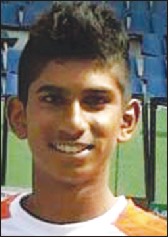
Tennis is a global sport and Mysore has been producing talented tennis players from time to time who have gone on to represent the country in different levels. One such player who has made his mark in the National and International level in the junior boys section is city’s C. Vasisht. A trainee at Davis Cupper Prahalad Srinath’s Tennis Academy, Vasisht won the National Under-18 Boys singles title in the Adidas National Junior Tennis Championships 2014-15, played in Chennai on Saturday. In the finals, Vasisht beat Nitin Kumar Sinha of West Bengal 6-2,3-6,6-1 and won the National title. He also won a grand double by clinching the U-18 Boys Doubles title with Mysore lad S. D. Prajwal Dev. He is our “Star This Week.

C. Vasisht, a Mysorean, presently trains with Mysorean and Davis cupper Prahalad Srinath. Vasisht is ranked No. 2 in the State in the Under-18 Section and No.19 in the country. Encouraged by his parents, he has been performing well in the National and International circuit. A former trainee at the R . Nagaraj’s Tennis Centre in Mysore, Vasisht is making a steady progress in the junior ranks in the country.

Vasisht has made all Mysoreans proud with his feat of being crowned as the National Junior Tennis Champion. Vasisht Cherukku of Karnataka, the new National Junior Champion with 6-2,3-6,6-1 triumph and Nitin Kumar Sinha of West Bengal, the runner up, provided the right climax at the Championship.

Playing three positive sets, both players displayed excellent ground strokes and mobility. Vasisht broke Nitin twice with strong returns and held the serve to lead 4-1. Nitin then served to reduce the lead. But he was no match for Vasisht as the latter wrapped up the set at 6-2.

In the second set Nitin broke Vasisht in the fifth game to take a decisive lead. He broke his opponent again in the ninth game to win the set 6-3 and level scores.

In the third set, Vasisht served crisply and returned accurately to run up a 4-0 lead and go on to win the set 6-1 and the title.

Vasisht also won the boys doubles title pairing with Mysore lad Prajwal Dev. In the doubles final the duo beat Nenwani Anurag and Venkata Gnana Bhaskar 6-2, 6-2.

Vasisht has represented India in the junior ranks and has been making steady progress in the ITF tournaments in the circuit both in India and abroad. He aims to work hard under the guidance of his coach and with the support of his parents, intends to reach greater heights in this sport in the days to come.

source: http://www.starofmysore.com / Star of Mysore / Home> Sports News / August 24th,  2014

Pages from history : The gold coins of tirumala

by Prof. A.V. Narasimha Murthy, former Head, Department of Ancient History & Archaeology, University of Mysore

Who has not heard of Lord Venkateswara of Tirumala at Tirupathi. Perhaps he has become the most popular Hindu deity in the whole world. Money-wise he is the richest god in India. He is so rich that he supports the entire town, its administration, colleges, guest houses, feeding thousands of devotees daily in an unprecedented manner. The Lord of Seven Hills has become international as can be seen with people from all over the world having darshan of the Lord, may be for two or three seconds.

For this glorious three seconds, pilgrims wait for hours together in the queue. These pilgrims offer gold, silver and cash into the hundi or offer box. These boxes get filled up almost daily. They are emptied, the coins are counted and stacked in treasury safely. Thus thousands of bags of gold and silver coins were stacked and kept in the T.T.D. Treasury. At that point of time, the authorities decided to get all these gold coins examined by ancient coin experts, generally referred to as numismatists. It was my good fortune that I was asked to be the leader of a team of experts to examine gold coins deposited in the ‘Srivari hundi.’ This was conveyed to me through a young epigraphist Dr. Muniratnam Reddy and we began the work. Soon I realised that one life is not sufficient to complete the work and as a pilot project selected about 1,200 gold coins for our study. They were photographed, studied, notes prepared and the first volume of these coins has been published. Subsequent volumes are in preparation.

It is interesting and puzzling to find that the earliest gold coin in this collection was a Roman coin minted by emperor Nero who ruled from 54 to 68 AD. The present gold coin of 7.6 gms in weight has a bust of Nero with writing in Roman script. The next coin from the chronological point of view belongs to Gangas of Talkad. These coins contain on the obverse (main side) a decorated elephant and a floral design on the reverse. The next issues belonged to the Hoysalas. The famous king Vishnuvardhana defeated the Nolambas and assumed the title ‘The conqueror of the Nolambas’ (Nolambavadigonda) and minted gold coins to commemorate this victory. These coins contain Goddess Chamundi on the main side and the writing Nolambavadigonda on the reverse. Such coins being found in Tirupathi hundi shows that devotees from Karnataka had visited Tirupathi at least 800 years ago. There is a single coin of the Alupa dynasty which ruled in South Kanara in the ancient times. It has a fish symbol and writing in Nagari.

The Vijayanagar Kings had very close relations with Tirumala from the beginning. This is reflected by the discovery of gold coins of Vijayanagar Kings like Harihara I, Harihara II, Devaraya I, Devaraya II, Krishnadevaraya, Achyutaraya, Sadashivaraya and Kings of the Aravidu dynasty such as Srirangaraya, Venkatapatiraya, etc. More than 350 gold coins of the Vijayanagara dynasty have been found in the hundi. The most interesting are those of Krishnadevaraya representing Balakrishna on the obverse. Coins of Achyutaraya have Gandabherunda on the obverse. Coins of King Sadashivaraya have seated Siva and Parvathi on the main side. The coins of Aravidu Kings are highly interesting. They contain Lord Venkateswara under an arch holding sankha, chakra and gada in his hands. They contain on the reverse the writing ‘Sri Venkateswarya namah’ (salutations to Lord Venkateswara). In fact Krishnadevaraya performed Kanakabhisheka to Venkateswara by minting special gold coins which contain the portrait of Lord Venkateswara on the main side. All these gold coins represent close relationship of these rulers with Tirumala.

Consequent on the downfall of the Vijayanagara empire, Nayakas of Keladi became important. Their capital Ikkeri assumed importance. Keladi rulers followed the Vijayanagara pattern in minting gold coins. Sadashiva Nayaka minted gold coins which became famous as Ikkeri Varahas. They contained on the obverse Siva and Parvathi seated; Siva holds a trident in his right hand and a deer in his left. The reverse has the writing Sadashiva in Nagari script.

Then we enter into the era of Mysore Wadiyars who ruled from 1399 AD till the modern period, when it was amalgamated into the independent union. Only one coin of Chikkadevaraja Wadiyar has been found which has dancing Balakrishna on the main side. All the remaining coins belong to Krishnaraja Wadiyar III. These coins have on the main side seated Siva and Parvathi while the reverse has the writing Sri Krishnaraja in Nagari. It is of interest to note that about 200 gold coins of this King have been found in the hundi showing that pilgrims from the Mysore State were visiting Tirumala in large numbers.

Princely States of Jaipur and Jodhpur are represented by three gold coins. Many Ramatonka gold coins (tokens) with Sri Rama, Sita, Lakshmana with Hanuman have been found in this collection. South Indian Kings minted small gold coins called panams or fanams. They are very tiny and contain one or two symbols. They are also referred to as Viraraya Panams. Such Panams minted at Coorg, Thanjavur and Travancore have been found in this hundi.

Many gold coins issued by Muslim dynasties arrest our attention. Eleven coins of Akbar have been found here which are circular and square in shapes. They contain good calligraphic writing and are very elegant. Aurangazeb is represented by three gold coins in this collection. They have writing ‘Badshah Aurangazeb Alamgir.’ They have writings on both sides. 84 gold coins of the Asaf Jahi dynasty belonging to different Sultans have been seen in this hundi. They represent dates from 1803 to 1915 AD. This includes the last Nizam of Hyderabad.

110 gold coins of Haidar Ali have been found in this collection. All of them belong to only one type; they contain on the obverse seated Siva and Parvathi while the reverse side has the Persian letter ‘he’ on a granular surface. Siva holds a trident in his right hand while the left hand holds a deer. The other hand is on the waist of Parvathi. It is worth noting that Haidar though a follower of Islam did not hesitate to mint gold coins in Hindu tradition which his son Tipu did not follow. 40 coins of Tipu are found in this collection which belong to Ahmadi, Sultani, Faruqui and fanam denominations. Arcot Nawabs are represented by two gold coins which have Lord Venkateswara on the main side.

Then we come to the early modern period represented by East India Company. They established mints at Madras, Bombay and Calcutta. To please the Hindus they minted pagodas with Lord Venkateswara with Sridevi and Bhudevi on either side. They became famous as Three Swamy Pagodas. Another type has Lord Venkateswara with a star at the reverse. Then came queen Victoria type of coins which contained the bust of the queen with her name on the main side and reverse showing a lion moving in front of a palm tree. Indo-Dutch coins contained Lord Venkateswara on the main side.

In addition to these local coins, the hundi contained, gold coins of foreign countries like Great Britain, France, Spain, Germany, Italy, Venice, Netherlands, Austro-Hungarian monarchs, USA, Iran and Turkey. It is amazing how these gold coins came to the Tirumala hundi. Perhaps Indians living in these foreign lands might have visited Tirumala as devotees and offered the currency of their countries to Lord Venkateswara. At any rate the gold coins are spectacular in Tirumala hundi. That is the greatness of Lord Venkateswara of Tirumala Tirupathi.

source: http://www.starofmysore.com / Star of Mysore / Home> Feature Articles / August 24th,  2014

World Konkani Centre institutes two awards after Vishwa Konkani Sardar

Mangalore :

World Konkani Centre, Shakti Nagar here has announced two annual awards in name of ‘Vishwa Konkani Sardar’ Basti Vaman Shenoy who completed 80 years recently. The awards are constituted to recognize outstanding contributions by Konkani-speaking individuals or organizations managed by Konkanis in fields such as education, governance, social service, health care, science, journalism, literature (Non Konkani), performing arts, industry, and so on.

There are separate awards for men and women and are constituted as part of ‘Vision TVM’ which dreams of one strong Konkani community by 2020. Both awards carry a purse of Rs1 lakh apart from a citation. The nominee can be an individual/individuals/institution. Mother tongue of nominee should be Konkani and age of awardee should be more than 18 years. Self nominations are allowed by individuals and institutions.

In case of Institutions, the same should be managed by Konkani people and founders should be Konkani speaking. In case of an institution it should be in service for a minimum period of five years at the time of considering its nomination for the award. For nominations forms, log on to www.vishwakonkani.org and send it to the chairman, BVS Vishwa Konkani Seva Puraskar Selection Committee, Vishwa Konkani Kendra, Konkani Gaon, Shakti Nagar, Mangalore – 575016 before September 15, a communique from WKC states.

source: http://www.timesofindia.indiatimes.com / The Times of India / Home> City> Mangalore / by Jaideep Shenoy, TNN / August 23rd, 2014

Legendary yoga guru B.K.S. Iyengar passes away

BKSIyengar25aug2014

Pune :

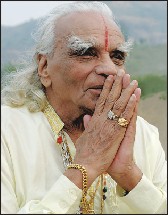
The world renowned legendary Yoga Guru Bellur Krishnamachar Sundararaja Iyengar (96), popularly known as B.K.S. Iyengar, passed away at a private hospital here at about 3.15 am today following poor heart functioning and difficulty in breathing.

A recipient of Padma Shri, Padma Bhushan and Padma Vibhushan awards, the Yoga Guru was ill for three weeks prior to hospitalisation but refused to get himself admitted and was treated at home by his family physician. He was even put on intravenous fluid at home.

His family members finally persuaded him to get admitted after his condition worsened. Though he was admitted to the hospital on Aug. 12, his condition had deteriorated a lot by that time. He was put on non-invasive ventilator for a day but he refused to undergo intensive treatment and hence, he was taken off the ventilator.

Iyengar’s heart muscles had become very weak following which there was less amount of blood being pumped by the heart, according to doctors. Last rites will be held later today.

Profile

Bellur Krishnamachar Sundararaja Iyengar (96) was born into a poor Iyengar family at Bellur, Kolar District in Karnataka and was the 11th of 13 children of Krishnamachar, a school teacher and Sheshamma.

His father died when he was only nine-years-old. As a result, he went to live with his brother in Bangalore. His childhood was further marked by serious illnesses including malaria, tuberculosis and typhoid along with malnutrition.

At the age of 15, Iyengar moved to Mysore to live with his eldest sister and her husband T. Krishnamacharya, an accomplished yogi and Sanskrit scholar, who ran a yoga school in the Mysore Palace and introduced Iyengar to some of the basic yoga postures (asanas) as a method to improve his health.

At the beginning, Iyengar struggled from day-to-day which gradually paid off, as he mastered some of the postures and as a result, his health improved.

In 1937, after two years of study, Krishnamacharya asked Iyengar to go to Pune to teach yoga where he arrived nearly penniless, knowing no one and speaking little English. Iyengar’s only way to make a living was by teaching yoga. With limited experience and almost no theoretical knowledge, he decided to practice with determination.

In the beginning, he would train himself as many as 12 hours each day, usually surviving on only stale bread and tea. Sometimes, he would suffer great pain through incorrect technique, often having to place heavy weights on his body to relieve the aches. However, refusing to give up, he gradually developed a deep personal understanding of the techniques of each posture and their effects. More yoga students began to seek him to learn yoga.

In 1943, he married Ramamani, to whom he had been introduced by his brothers and together they raised five daughters and a son. Both his eldest daughter Geeta and his son Prashant have become internationally-known teachers in their own right. The other children of B.K.S. Iyengar are Vanita, Sunita, Suchita and Savita.

Slowly they worked their way out of poverty and gradually Iyengar’s fame as a yoga teacher spread. In 1952, world renowned violinist Yehudi Menuhin became a student of yoga during a visit to India. Menuhin then arranged for Iyengar to teach in many cities in Europe and he made his first visit to the United States in 1956.

In 1975, Iyengar established the Ramamani Iyengar Memorial Yoga Institute in Pune, in memory of his departed wife, where he resided and taught yoga till his end. By that time, his eldest children, Geeta and Prashant, had also started teaching yoga under his guidance. The Institute quickly became an international centre, attracting thousands of people from all over the world.

Iyengar attracted his students by offering them just what they sought — which tended to be physical stamina and flexibility. He conducted demonstrations and later, when a scooter accident dislocated his spine, he began exploring the use of props to help disabled people practice Yoga. He was awarded Padma Shri in 1991, the Padma Bhushan in 2002 and the Padma Vibhushan in 2014. In 2004, Iyengar was named as one of the 100 most influential people in the world by Time magazine.

B.K.S. Iyengar condoled

Mysore Zoo Executive Director B.P. Ravi, who spoke to SOM, condoled the death of the Yoga Guru and said that B.K.S. Iyengar was an animal lover and he was an inspiration to many across the globe. He said that whenever Iyengar visited Mysore, he never failed to visit the Zoo. He never used to talk unnecessarily but used to speak with his eyes, he said and added that very recently his family members had come to the Zoo and had adopted two tiger cubs. With his demise, the Zoo lost a great animal lover and the world lost a legendary Yoga exponent.

Sharath Jois, grandson of K. Pattabhi Jois, who is running Shri K. Pattabhi Jois Ashtanga Yoga Institute at Gokulam in city, in his condolence message, said that an era has come to an end. Iyengar’s contribution for yoga was immense and the yoga community across the globe has lost a legend.

source: http://www.starofmysore.com / Star of Mysore / Home> General  News / August 20th, 2014