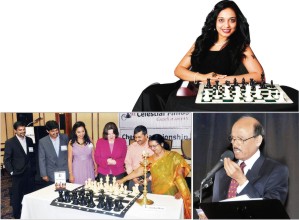
Mysore girl Kavyashree Mallanna, a former Karnataka State Women’s chess champion and National level player, now settled in Boston, USA, is the Founder and Director of Celestial Minds ( A Chess Coaching Centre) and one of New England’s top chess players.
by our Sports Correspondent
A 14-time Chess champion in various catego ries in Karnataka for a decade, Kavyashree pursued her higher studies in California, during which, she acquired United States Chess Federation ‘Expert’ level rating after winning Kolty Chess Club Championship in year 2000.
Chess is a mind game and Mysore has always been producing talented players from time-to-time who have gone to represent the country and the State in different levels.
Mysore girl, M. Kavyashree is one such player who has done Karnataka and Mysore proud with her feats in playing chess from 1989-2000, and won different titles in the State and National levels. Chess remained a part of her life either as a player or as a teacher when she started Prema Chess Lab ( 2003) to train the local talents. Presently she coaches children and chess players of all ages in the United States and also conducts tournaments from time-to-time.
She is the daughter of Prof. Mallanna and Prof. K.R. Premaleela, who are residents of Mysore. Her younger sister Kavana, who is also in the US, is a National level chess player and a former State champion.
Kavyashree went to United States to pursue her higher studies California and after completing her studies, started a chess club (Prema Chess Lab) in 2003 which she renamed in 2012 as ‘Celestial Minds.’
Kavyashree took up to chess at a very young age encouraged by her mother Prof. K.R. Premaleela. She learnt the basics of chess from her mother and senior local chess players initially and later moved on to chess books.
She went on to play chess in the district level and then represented the district in the State level tournaments and went on to win State championships in different age categories (from 1989 to 2000).
Chess, according to Kavyashree, helps an individual to develop lateral thinking, handle multiple tasks, have a holistic view & approach, and balance a situation in a good manner. It is also very helpful for academics.
She loved chess and one fine day quit her IT career and took up to her passion of coaching chess.
Her company ‘Celestial minds’ promotes both music and chess. Love for music is a blessing from her father Prof. S. Mallanna and love for chess is a gift from her mother. Her parents’ hobbies helped Kavyashree find an expression and in balancing a highly competitive career be it chess or IT.
Every September, Kavyashree, through her club conducts tournaments, which gets good response. On the occasion, a musical programme by her father captivated the audience with his songs. Kavyashree’s mother gave away the trophies to the winners.
Kavyashree intends to pursue her passion and love of promoting the game of chess through her club and aims to produce talented players in the days to come. This Mysore girl has made everyone proud with her feats in US and hope she scales greater heights in her coaching career in the days to come.
source: http://www.starofmysore.com / Star of Mysore / Home> Feature Articles / January 27th, 2014
Biocon with Mylan eyes emerging markets for first joint drug.
Bangalore-based bio-pharmaceutical company Biocon on Saturday launched the world’s first biosimilar (developed in an organism) Trastuzumab injection for the treatment of breast cancer here. This is the first drug developed by Biocon in partnership with US-based generic drug maker Mylan . The new drug, CANMAb, will be used to treat HER2-positive advanced breast cancer.
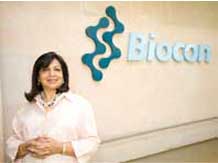
Kiran Mazumdar-Shaw, chairperson and managing director, Biocon, said the company would also launch the injection in other emerging markets. The CANMab injection will compete with Roche’s Herceptin . Herceptin’s global sales were $6.4 billion in 2012 and Indian $21 million.
The drug has been jointly developed out of five molecules with Mylan, since a partnership was signed in 2009. Mylan will also launch CANMab under a different brand in India.
The injection is available in 150mg and 440mg doses at Rs 19,500 and Rs 57,500, respectively. The 440mg dose costs a fourth less than competing drugs, Mazumdar-Shaw said.
Biocon has set up a factory in Bangalore to make the new injection for itself as well as Mylan. Mylan will source its requirements from Biocon for both Indian and developed markets, a senior company official said.
Biocon entered into partnership with Mylan for joint development of a series of drugs for the treatment of various cancers in 2009. At present, four other drugs are under development, of which will begin clinical trials later this year, said Abhijit Barve, president (research and development), Biocon.
Mazumdar-Shaw said breast cancer was the most prevalent cancer among Indians and CANMAb would offer a cheaper option. About 150,000 new patients are diagnosed with breast cancer every year in India, of which nearly a fourth of the cases are HER2-positive and eligible for treatment with CANMAb. Lack of cheap treatment has limited the extent of HER2 testing and it is believed that the proportion of HER2-positive patients is probably higher, she said.
“Biocon intends to make a significant difference in the treatment paradigm for HER2-positive breast cancer in India by enhancing access to more affordable treatment with CANMAb, which offers the same level of safety and efficacy as the reference product. The launch of CANMAb in India is an important milestone for our biosimilars programme and demonstrates our ability to deliver on our promise of affordable innovation with a high quality, world- class product,” the Biocon chief said.
Biocon aims to capture about 15 per cent of the market for anti-breast cancer drugs in India in a year. The market is estimated at Rs 130 crore a year, set to double in 2014.
source:http://www.business-standard.com / Business Standard / Home> Companies> News / by BS Reporter / Bangalore – January 18th, 2014
Dr. Arun Srinivas, Senior Interventional Cardiologist, Professor & Head, JSS Hospital, was awarded the prestigious Fellowship of the European Society of Cardiology (FESC) at the ESC meeting held in Mumbai on Jan. 17 & 18.
Dr. Arun Srinivas was awarded the Fellowship for his outstanding services and experience in Interventional Cardiology for over 25 years.
He has the distinction of having pioneered and introduced interventional cardiology services in city 12 years ago.
He has treated more than 50,000 patients and performed over 20,000 angiography and angioplasty procedures, valvuloplaties, congenital heart disease device closures, pacemaker/ICD implantations and peripheral arterial inter- ventions.
Dr. Arun Srinivas is one of the senior-most Interventional Cardiologists in Karnataka and has obtained fellowship in Coronary Interventions & Pediatric Cardiology from Royal Melbourne Hospital, Australia and Peripheral Vascular Interventions from Miami Vascular Institute, Florida, USA.
source: http://www.starofmysore.com / Star of Mysore / Home> General News / January 22nd, 2014
India’s Mangalore Refinery and Petrochemicals has made its first purchase of Argentina’s Escalante crude , two sources with knowledge of the tender award said, in another sign trade routes have been redrawn by the US shale oil boom.
The purchase was for loading in end-February or early March and trader Glencore will deliver a one million barrel parcel at prices flat to dated Brent, the sources said.
“If they are getting South American and Caribbean grades through spot tenders this means these grades are available at cheaper rates than their competitors in west Africa and the Middle East,” said an Asian oil trader.
“Voyage time for a cargo from South America to India is about a month. This could be the begining of South American grades gradually showing up in state refiners’ oil purchases,” he said.
It is the first time MRPL has purchased any Latin American grade.
MRPL, which operates a 300,000 barrels per day refinery in Southern India, aims to buy as much as 40,000 bpd of Latin American grades in the next fiscal year beginning from April 1, Vijay G Joshi, its refinery director said on Wednesday.
Rising US shale oil output is re-routing the flow of Algerian, Latin American, Canadian and West African crudes, which used to flow regularly to the United States.
India’s biggest refiner Indian Oil Corp last year bought one million barrels of Canadian White Rose through a spot tender, becoming India’s first state-run refiner to buy Canadian oil .
Indian refiners are seeking to diversify their oil sources as Western sanctions over Tehran’s nuclear programme squeeze imports from Iran, once India’s second-biggest supplier. Supplies from Libya and Sudan have also been disrupted.
Escalante is a medium sweet crude with a density of 24 API degrees, extracted from the basin with the same name in southern Argentina by Pan American Energy, controlled by British BP.
source: http://www.articles.economictimes.indiatimes.com / The Economic Times / Home> News> International> Business> World News / Home> Collections> Indian Oil Corp / by Reuters / January 16th, 2014
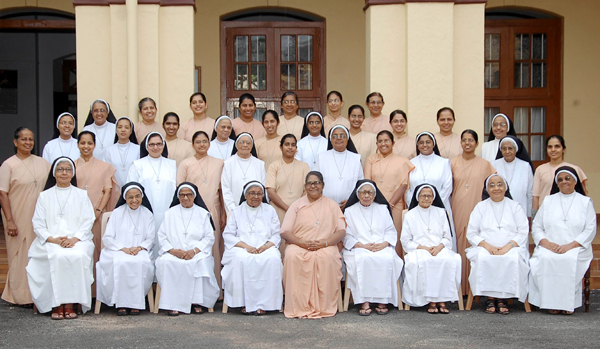
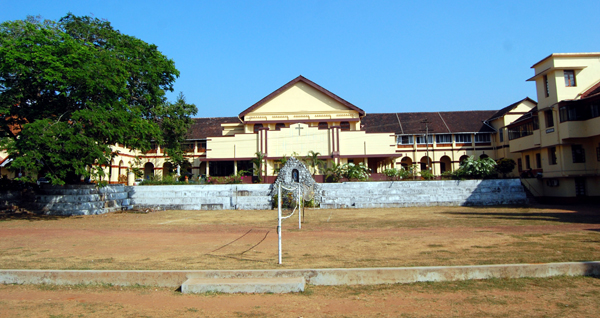
St Agnes Convent, Bendore is all set to celebrate the centenary of its Foundation Day (1914-2014) with a public function on Sunday January 12. The Convent was started in 1914 in order to reach out for the education of girls in the suburban area around Kadri and Kankanady. St Ann’s School, Bolar started by the Sisters of the Apostolic Carmel, founded by Mother Veronica of the Passion, an English woman, in 1870; St Mary’s School, Falnir started to accommodate the increasing number of students; and Victoria Caste School, Dongenkery, Kodialbail (later shifted to Ladyhill) started at the persistent appeal of GSB Community for the education of their daughters, were the only three schools in South Canara district, to impart quality education exclusively for girls, in the much valued medium of English.
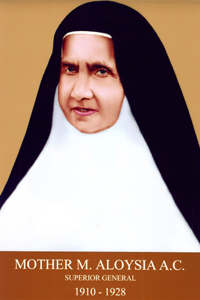
Mother Aloysia, the second Superior General of the Apostolic Carmel after five years of assiduous search and negotiations for some twenty different sites between Kankanady and Kadri, including a plot of “Hulli Mulli” an arid area, and the surrounding plots, which were inhabited by sixteen proprietors in clustered huts and cottages measuring twelve acres of land, were bought on June 29, 1913.
February 8, 1914 was a memorable day in the history of the Apostolic Carmel when Dr Paul Perini, Bishop of Mangalore blessed the whole property and laid the foundation for St Agnes Convent, the residence for the Sisters to carry out their service to women through education. The next day a Secondary English Medium School, as it was called then, was opened with Classes I and II. There were 80 pupils on roll. A week later, an elementary school was opened for the poorer children with 46 pupils on roll. Since then the campus has grown with St Agnes School started in 1914, St Agnes College (the first college in India by an Indian private Management), St Agnes Special School for the Mentally Challenged started in 1970, as the Centenary Memorial of the establishment of the Apostolic Carmel. As the sisters of St Agnes Convent celebrate the hundred years of prayer and service on 12th January 2014, we remain ever grateful to God in transforming the Hulli Mulli Hill into an Educational hub, a light house, a city built on the hill where hundreds of students have been educated and enlightened over the past hundred glorious years and sent out to the wide world as the ambassadors of St Agnes to proclaim to all people that God is our Strength.
The concluding function of the Centenary of St Agnes Convent will be held on January 12. The Centenary Mass will be celebrated by Dr Aloysius Paul D’Souza, Bishop of Mangalore, with a large number of priests concelebrating with him at St Agnes College Auditorium. The Open Air public function that follows will have the Bishop as the president, Dr Sr Agatha Mary, Superior General of the Apostolic Carmel will be the chief guest, Sr Linette, Provincial Superior, J R Lobo, local MLA and Flavia Agnes, alumna, St Agnes and legal and social activist from Mumbai will be the guests of honour. A documentary on the history of St Agnes Convent and a dance drama on the life and times of Mother Aloysia, the founder St Agnes Convent will be the highlights of the programme. The former Superiors of the Convent will also be felicitated. Among the Centenary projects will be the poor students’ fund to be initiated.
St Agnes Convent – Centenary Celebrations
(1914 – 2014)
“Foremost in the roll of Indian women educationists stands the name of Mother Aloysia of the Sacred Heart, the second Superior General of the Apostolic Carmel. Almost a pioneer in the west coast field of education, she has for half a century and more laboured with untiring energy to raise the intellectual standard of our girls to the highest accepted grade.”
This was the tribute paid by J B Machado, Secretary of the Indian Christian Civic League, Mangalore, for the achievements of Mother Aloysia, in the field of education when nominated for the Kaiser-i-Hind, Gold Medal I Class award from the British Administration, in recognition of her services. We are presenting this valiant woman and her band of committed sisters, who founded St Agnes Convent, Bendore, Mangalore as we are poised to celebrate the Centenary of its establishment and that of the school, St Agnes School. The lamp that was lit by Mother Aloysia at St Agnes in the year 1914 has been kept burning for the past hundred years by every sister who lived at St Agnes with the oil of love, prayer, sacrifice and service.
Old Primary School
St Agnes in 1921
‘The Rest’ where St Agnes Special School was started
Mother Veronica, nee Sophie Leeves, an English woman was chosen and called by God to found a “Carmel for the Missions” in India towards the faith formation of the Catholics and the education of the young girls along the west coast. The dream of education that Mother Veronica harboured in her heart when she was serving in Calicut as a sister of St Joseph of the Apparition, “…all along the coast the young girls are entirely without any means of instruction…”, was realized when she started the Apostolic Carmel in France in 1868 and the three sisters trained by her arrived in Mangalore on 19th November 1870. Mother Marie des Anges, French by origin was the First Superior General and was called the Nurturing Mother while the one who shaped the Apostolic Carmel education was Mother Aloysia nee Mary Pia Rosario. The pioneering of quality education for girls thus belongs to the Apostolic Carmel with the starting of St Ann’s Convent and School in 1870, at Pandeshwar, Mangalore preceding even a school of this caliber for boys’ education which happened only in 1880.
In the first decade of the 20th century, St Ann’s High School flourished and St Mary’s, Marjil, the offshoot of St Ann’s, to accommodate the growing number of students and the Victoria Caste School at Dongerkery, Kodialbail, (later shifted to Ladyhill) the outcome of the persistent appeal of the GSB community for the education of their daughters were the only schools in South Canara district, to impart education exclusively for girls, in the much valued medium of English. These schools were nearer the central location of Mangalore. At this time, Mother Aloysia, who was elected as the Second Superior General and who was literally the brain behind the three schools, with her wide vision and deep apostolic spirit saw the need for extending the facilities to a larger number of girls by opening a school for girls in Bendore, the suburb and an underdeveloped area away from the township at Bolar. After five years of assiduous search and negotiations for some twenty different sites, a plot of “Hulli Mulli”, an arid area belonging to the ancestors of Sr Julia’s and the surrounding plots which were inhabited by sixteen proprietors in clustered huts and cottages measuring twelve acres of land, were bought on June 29, 1913.
February 8, 1914 was a memorable day in the history of the Apostolic Carmel when Dr Paul Perini, Bishop of Mangalore blessed the whole property and laid the foundation for St Agnes Convent. The next day a Secondary English Medium School, as it was called then, was opened with Classes I and II. There were 80 pupils on roll. A week later, an elementary school was opened for the poorer children with 46 pupils on roll. Mother Aloysia chose St Agnes as the patron saint of the convent and of all the institutions on the campus with the motto “God is our strength”. Young girls desirous of studying in English medium flocked to St Agnes Convent from Udupi, Kallianpur, Kundapur, Karkal. Mulki, Kinnigoli, Belthangady and other surrounding villages. The original old cottages were fitted up as dormitories and a boarding house was started.
Realizing that girls from their sheltered homes would hardly dare to go as far as Madras, Mother Aloysia envisioned higher education for girls. July 2, 1921 was another day of significance in the history of St Agnes when a college was started under her dynamic leadership and far sighted vision. St Agnes First Grade College was the only one for women in South India and the first in the whole of India to be run by an Indian private management. To meet the ever growing demands for admissions that came in from the rural areas a temporary “L” shaped building was put up on the plot closest to the road. This block stood for 82 years when more spacious buildings came up to accommodate the growing number of students.
Mother Theodosia another woman of caliber and a dynamic personality with practical experience took charge as Principal in 1934. She took the initiative of introducing Science into the Intermediate Course, an option till then not available to women. By adding subjects such as Mathematics in 1936, Natural science in 1937 and Chemistry in 1939, the college gradually blossomed. Through the years under the leadership of Principals and faculty with dynamism and commitment, St Agnes College has grown with several more courses and programmes. In 2007 St Agnes College obtained academic autonomy. Soon after, the Post Graduate Programmes were introduced and another block was erected for the same.
The Intermediate Course was changed into Pre-University in 1955 and at the same time St Agnes College parted ways from Madras University with the re-organization of states and was affiliated under Mysore University. In 2001 St Agnes Pre-university College was bifurcated and was accommodated in a new building.
The year 1970 was a landmark in the history of the Apostolic Carmel, the year of the Centenary of the establishment of the Apostolic Carmel in India. The pioneers of girls’ education in Mangalore had fresher avenues to explore and the education of children with disabilities was found to be the best Centenary Memorial to fill this void in Mangalore as there was no provision for the education of children with disabilities, in particular, the mentally challenged children. St Agnes Special School, the first school for the mentally challenged in the district, was inaugurated on August 4, 1970 with five children, in ‘The Rest’, a cozy house on St Agnes Convent premises with the motto, ‘In Love We Grow’. In 1973 the children were shifted to the premises opposite St Agnes Convent in the new building that was constructed.
The mission of the sisters of St Agnes Convent in educating the youth from Kindergarten to Post graduation has attained fruition where 5330 students illumine the campus today not merely aspiring towards academic excellence but very importantly using the many opportunities for strengthening faith and values of the students. Besides educating the youth, the sisters offer humane services to the society, the local church and the society at large in every possible way. In 1998 the Apostolic Carmel Association (ACA) was started for the purpose of sharing the spirituality of the congregation with lay people.
With heads bowed and hands folded in gratitude to God, as we, the sisters of St Agnes Convent celebrate the hundred years of prayer and service on January 12, we remain ever grateful to God in transforming the Hulli Mulli Hill into an educational hub, a light house, a city built on the hill where hundreds of students have been educated and enlightened over the past hundred glorious years and sent out to the wide world as the ambassadors of St Agnes to proclaim to all people that God is our Strength.
source: http://www.daijiworld.com / DaijiWorld.com / Home> Top Stories / by Sr M Lydia, St.Agnes Convent / Mangalore – January 09th, 2014
Soon, alternative medicine and two-wheeler emergency care units may be used to tackle cardiovascular disease – the world’s largest killer.
According to the World Health Organisation (WHO), the disease accounted for 30 per cent of deaths around the globe in 2013.
A team of medical professionals from India and the USA have come up with the dual approach.
“Since cardiovascular disease is a lifestyle disease, it can be prevented with the right diet and lifestyle. Alternative medicine, that is the use of herbs, naturally derived materials and non-pharmacological tools, has demonstrated significant benefits in prevention of cardiac diseases directly or indirectly,” said Dr Naresh Shetty, president, M S Ramaiah Memorial Hospital, at a symposium held here on Wednesday.
The MS Ramaiah Medical College (MSRMC), Narayana Health, The Institute of Trans Disciplinary Health Sciences and Technology and University of Illinois have taken the initiative to partner with the local community, clinics, and community health workers to provide mobile healthcare services to patients using two-wheelers.
“Traffic and accessibility to the patient is critical in emergency situations. We have proposed the two-wheeler model of emergency care so that the paramedic can carry the required medicine and equipment to the patient,” said Dr Arunachala Ramesh, head of the department of emergency medicine at MSRMC.
“The focus is to develop preventive emergency medicine strategies for highest risk individuals. Patients identified in the highest risk category will receive more intensive healthcare that utilises ambulance, paramedics and health worker home visits,” Dr Shetty explained.
source: http://www.newindianexpress.com / The New Indian Express / Home> Cities> Bangalore / by Express News Service – Bangalore / January 09th, 2014
Infosys’ former board member TV Mohandas Pai will deliver a lecture on “How to make India a $10-trillion economy”. PTI
Day before Infosys Q3 results were unveiled, it has been revealed the company will brainstorm its future strategic direction in Mysore, in a three-day annual summit to be held during January 11-13.
The internal event will host former directors, board members, investors, key customers, foreign analysts and academicians. Former board member TV Mohandas Pai will deliver a lecture on “How to make India a $10-trillion economy” while co-founder Nandan Nilekani will talk on “Handling large projects.”
The other key non-Infosys executive will be Vishal Sikka, member of the executive board at SAP, who will speak on innovation. Sources indicated that former independe-nt director Deepak Satwale-kar and co-founder K Dinesh are also expected to attend the event called STRAP 2014, add-ing “the idea is to get all the key people together from Infosys across the globe and provide a networking platform.”
There has been a growing disquiet in the manner in which the over $7-billion IT-services firm was drifting away from a highly competitive Indian IT landscape, with growth lagging its peers’, and losing its status as the bellwether of the industry.
The annual strategy and the action-plan meet will focus on the IT major’s roadmap and the preliminary understanding of the overall demand environment. Traditionally, the event is held in Mysore but, last year, it was held in Bangalore.
source: http://www.financialexpress.com / The Financial Express / Home> Economy / by fe Bureau / Bangalore – January 10th, 2014
1) Satish N. Chandra 2) The silver team: Staff of Ag Flex Technologies Ltd.,
by S. Kenneth Shishir
Mysore :
Most of us are unaware that silver has been used as anti-microbial agent in our daily lives without realising this. For example, the silver plates our elders used to eat their meals in, silver tumbler for con-sumption of water. If we look around Silver has always been referred to in a positive aspect; Every cloud has a silver lining; Silver bullet; think silver etc.
We all know that silver is a soft, white, lustrous transition metal, which possess the highest electrical con-ductivity of any element and the highest thermal conductivity of any metal. The metal which occurs naturally in its pure, free form (native silver) is used in manufacturing jewellery and other articles.
During Medieval times, from Romans to Persians and even our own Raja of Jaipur used to carry water in silver containers. They used silver in one form or the other to help in keeping themselves healthy.
But in recent years, silver is being used in medical sector and is used as disinfectant and micro-biocides and for burn care as creams and ointments. While many medical anti-microbial uses of silver have been supplanted by antibiotics, further research into clinical potential continues due to presence of many anti-biotic resistant bacteria. Silver is an inherently immune Noble metal to virtually all pathological bacterium found including MRSA, VRE, Acinatobacter, etc.
Action of silver against bacteria is multi-pronged attack. First, it cleaves the cell wall then disrupts the breathing mechanism of bacteria. Finally it binds to the DNA assuring total kill of the bacteria and no chance of resistance to silve.r
City based industry Ag Flex Technologies Ltd., an ISO 9001-2008 Export oriented unit at Hebbal Industrial Area in city has been into this process since many years and is now supplying silver coated materials to Industries manufacturing health care products such as wound dressings, therapy socks for regular wear and Diabetic wear and other textiles related products.
Satish N. Chandra, CEO and MD, Ag Flex Technologies Pvt. Ltd. who, along with his brother N.S. Prasad started the industry in city in 2008 and the industry was fully functional in the year 2009. It took them over 3 years to get various approvals from their customers who have been testing it continuously to assure themselves of the quality and longevity of the products which are branded as Flexsil.
Satish, speaking to SOM said that they started the industry in Mysore as it was the home town of his father and because of availability of natural resources and smart interactive labour.
He said that our goal is to bring commonsense science using the most commonly used delivery medium in the world -textiles. The focus of our group of highly dedicated scientists and innovative business development team is application based product line, from healthcare to home goods with everything in between cutting across Consumer, Industrial and Institutional arenas.
He said that they were trying to put science to work by creating sustainable silver solutions which was essential for better, safer and healthier life of the people.
Ag Flex offers a wide range of innovative products and services through its silver metalized fibres and yarns for markets including Military, Health Care, Consumer and Home Products.
He said that silver coated yarns used in the manufacture of socks and sportswear inhibits the growth of odour causing bacteria and neutrali-ses odour causing ammonia. It is also used in surgical dressings because of its anti-bacterial and anti-fungal properties. A clinical trial is being undertaken at a multi- specialty hospital in city. The silver coated yarn is now being used in the sportswear of cyclists to prevent odour, fungal and bacterial infections due to sweat.
Satish said that many multi-national companies were working with them and they would release the products soon.
Some of their major clients are Toyota, Yamaha and Panasonic in Japan and their manufacturing partners for socks are in Turkey and Bangalore. Currently, tests are going on at a prominent University in Japan for checking flow of blood in lungs to determine if lungs are working well. This will help immensely as there is no need for X-ray, Doppler, etc. which are momentary tests. With this new technology one can be monitored round the clock to see lung function. Their aim is to have multiple sensors using the very conductive Flexsil products to help get a 3D view of the lung function. This indeed will be a real game changer for pulmonary diagnosis.
Ag Flex also plans to use similar technology to monitor blood sugar levels without invasive actions. This is something down the line but certainly on the radar of Ag Flex. The conductive properties of Flexsil are also used for various anti-static applications and for what is called as “Electro Magnetic Interference (EMI) Shielding.” This will enable one to be protected against harmful radiation from various electronic devices. For example, for pregnant ladies EMI Shielding inner-wear will be offered to protect the foetus from being exposed to dangerous radiation from every day appliances to instrumentation. This effect was shown by wrapping a mobile phone with Flexsil and when one tried to call the number the phone was “not-reachable” though the phone was very much on. Once the fabric was removed the phone functioned normally.
All these products can sustain laundry cycles and yet maintain their efficacy. Ag Flex has tested data after 100 commercial laundry cycles without dimini-shing the properties. Hence they say that their product is good for the life of the finished goods.
Besides manufacturing silver coated yarn the company also supplies silver in other forms too. Actimist, a sanitizer spray which also uses silver and will be available in the market soon. Test data from Japan shows reduction of anti-biotic resistant bacteria called as MRSA, E.Coli and Salmonella by 99.99999% in one minute. This is something Ag Flex is very proud of since this is their proprietary technology and can be used on any hard surfaces at home, hospitals, public places and even on one’s hands as sanitizer. Actimist also controls offensive odours without perfumes as perfumes may cause allergic reaction to many individuals.
Ag Flex also makes metalized foam (sponge) which is used for both anti-microbial and EMI Shielding applications. These foam when metalized with Silver are so unique that when you cut the foam you can see the silver coating uniformly even in the inner layers of the foam
Ag Flex also houses a beautiful garden where they have flowers, fruits and vegetables using treated water from process. The water used in highly purified as their process requires this. For this, they use complex and multi-step purification process. As they make very good water they also use the same for their drinking purposes.
Inside the tank Satish showed SOM a silver metalized sleeve which has helped in keeping the water fresh even when not used for many days.
Satish said that the mission at Ag Flex Technologies is to be a world class silver solution provider for anti-microbial and conductive applications and is committed to achieve this goal by being environ-mentally responsible and offering innovative products in an ethical manner.
source: http://www.starofmysore.com / Star of Mysore / Home> Feature Articles / January 18th, 2014
Facebook has acquired Little Eye Labs, a Bangalore-based start-up, according to the company’s announcement on 8 January.
The company builds mobile app analysis tools for app developers and testers.
“This is Facebook’s first acquisition of an Indian company, and we are happy to become part of such an incredible team,” the company said on its website.
The acquisition price has not been disclosed. However, TechCrunch reports Facebook paid between US$10 and $15 million to acquire the Indian startup.
According to the company, Little Eye Labs was founded about a year ago by a bunch of program analysis geeks who wanted to build better tools for Mobile developers. They were later backed by GSF and VenturEast Tenet Fund.
The company had released their official version of Little Eye for Android in early April last year.
“The entire Little Eye Labs team will move to Facebook’s headquarters in Menlo Park, California,” the company has stated. “From there, we’ll be able to leverage Facebook’s world-class infrastructure and help improve performance of their already awesome apps. For us, this is an opportunity to make an impact on the more than 1 billion people who use Facebook.”
Current customers of Little Eye will receive further information on plans to offer a free version of Little Eye until June 30, 2014, the company has assured.
source: http://www.pcadvisor.co.uk / PC Advisor / Home> News / by Zafar Anjum, MIS Asia / January 10th, 2014
The recent announcement that Facebook has acquired Bangalore-based start-up Little Eye Labs making it the social networking giant’s first acquisition in India put Bangalore in the global map as the start-up capital of the world.
With costs of setting up start-ups becoming a challenge in the erstwhile capital of the Bay Area in California and given the barriers to immigration and cost of talent, Bangalore is all set to capture this position in the next decade.
Bangalore has a huge talent pool of technology geeks — maybe the largest concentration anywhere in the world who work for global giants like IBM, Microsoft, HP, Dell, Infosys, Cognizant and Wipro to name a few, not to mention the captive technology development centers of large corporate giants like Levers, GE, Samsung, Fidelity and others. Bangalore also plays host to many global product companies for support and research & development of their solutions.
The Bangalore ecosystem is a city chugging against all odds, totally unplanned and living in perpetual chaos with unabated construction being the norm with dust and debris and slow moving traffic.
But Bangalore scores on its climate and wonderful and hospitable locals who welcome people of any nationality with open arms — it used to be called the Garden City but today it can be called as the city of technology. Its Bangalore’s cosmopolitan outlook for more than hundred years that make it the city of choice and has transformed it as the destination for technology in the world.
Bangalore was a technology capital of India long before the advent of information technology companies, it had the first Indian Institute of Science set up here more than 100 years ago, and boasts of the first aircraft factory, the first telephone factory, the first transformer factory, the first modern earth moving equipment factory, the first soap factory, the first electronics factory for defence, the first aeronautical laboratory, first battery powered car and the central power research institute and has many more firsts to its credit.
Given this pedigree Bangalore has the credentials to be the global capital of technology start-up companies of the world and the gold rush has already started. On any Friday evening you can find at least people from a score of different countries putting their plans and thoughts to test at the numerous pubs of Bangalore.
More business and entrepreneurial ideas emanate in the pubs of Bangalore being the capital of Kingfisher India’s largest selling beer. There used to the Beer Drinker’s Association of Information Technology (BAIT ) kicked off by Pradeep Kar, the early poster boy of the technology industry in Bangalore in the mid-90s and the person who brought Bill Gates to Bangalore in another formative era.
If you are not a beer drinker, the locals say you can throw a stone and will hit a Cafe Coffee Day locally known as CCD. The area of Koramangala the residential capital of technology entrepreneurs in Bangalore has a CCD within a 500 meter radius. CCD is another hot place when you want to have a sober meeting and exchange of ideas at a low cost and global ambience. Many companies have taken birth on a tissue paper provided by CCD when they serve your cup of coffee.
All the venture capitalist companies have their operations in Bangalore, even NASDAQ has its Asia office in Bangalore. So realizing funding and value for the start-ups in Bangalore is a breeze whether you want to list at the NASDAQ or exit by selling to another larger player — you can choose the option of cashing in on your efforts.
The local Government provides incubators along with Nasscom, Microsoft provides incubation and number of other companies encourage start-ups within their campus.
So if you have an idea there is not dearth of fructifying your dreams to reality. There there is TIE which is active and not to mention the Open Coffee Club (http://occbangalore.org/).
Bangalore will have one of the best Metro links in Asia and it is a pleasure to travel above street level and reach your destination quickly while the traffic snarls under your feet.
If you have the entrepreneurial urge and the courage and grit to make a difference to the world technology landscape it is time for you to pack your bags and head to Bangalore.
Remember the locals like it to be called as Namma Bengaluru and if you learn a few words of Kannada before you land, your ability to blend will be easier.
Welcome to Bangalore – the Technology Start-up Capital of the World!
source: http://www.informationweek.in / Information Week / Home> News Analysis> Software / by LS Subramanian / Information Week – January 09th, 2014