Category Archives: World Opinion

Bengaluru’s connection to Nobel prize in Economics deepens

2013 ELINOR OSTROM AWARDEE – HARINI NAGENDRA

Bangalore ecologist Harini Nagendra is a 2013 Elinor Ostrom awardee, instituted in the name of the 2009 Nobel Prize winner.

For Bangalore-based ecologist Harini Nagendra, whose name has just been announced as a winner of the 2013 Elinor Ostrom award, it is a bittersweet moment.

Harini Nagendra and Dr. Ostrom at Kaikondrahalli Lake. Pic: Priya Ramasubban.

The award has been instituted in the name of Elinor Ostrom, the USA-based scholar who received the Nobel Prize for economics in 2009 for her long standing body of work on the governance of the commons. For Harini, Elinor was, apart from being one of the most brilliant, incisive and deeply humanistic scholars, a very dear friend, collaborator and mentor with whom she worked closely for 12 years. Says Harini, “The award (being) in Lin Ostrom’s name, and is a great honour.” Elinor passed away just a year ago in June 2012.

The very first 2013 Elinor Ostram Award  on Collective Governance of the Commons goes to eight individuals and organisations from around the world, including Harini. The award is given by a consortium of 15 international organizations including the UNESCO Man and Biosphere programme, Resilience Alliance and the International Association for the Study of the Commons. Harini will receive the award at IASC conference in Mt. Fuji, Japan, in early June.

The award has been given at end of a process in which experts and an awards council received many candidates and carefully evaluated them in three consecutive rounds.The other laureates are: Foundation for Ecological Security, the Open Spaces Society, Grupo de Estudios Ambientales A.C., Harini Nagendra, Ben Cousins, Charles Schweik, Eduardo Araral and Michael Cox.

Elinor Ostrom had a deeper connection to Bangalore. She had been herself studying lakes in the city and had deep insights into the way forward for citizen action on lake preservation. She passed away in Indiana, United States, mid last year after a short and intense battle with pancreatic cancer. During her trip to Bangalore in February 2012, she visited Kaikondrahalli lake on Sarjapur Road . Kaikondrahalli lake was restored through a collaborative effort by local communities and the BBMP, was one of the sites of research for Harini.

The consortium notes on its website that the Elinor Ostrom award is “to acknowledge Ostrom’s legacy for scholarship and policy-making while making it accessible to wider and more varied audiences, within and outside of the academia”. It also wants to promote academic research on the commons, collective action, and related institutions, as well as its application to the understanding of the governance of different types of commons. The website adds that the awards were also instituted to “multiply the impacts of Ostrom’s proposals on scholarship and policy-making, making her legacy a living one.

For her part, Harini has authored articles in Citizen Matters on environmental issues of Bangalore, and her July 2011 article chronicling the city’s green battles in detail is still an important read for those who want to understand how the city communities have been standing up to grave threat of losing lakes and green spaces to unregulated urbanisation.

She is currently a scholar at Bangalore-headquartered Ashoka Trust for Research in Ecology and the Environment or ATREE, and is also holds an Asia-level research position at Indiana University.
Harini, 41 studied at Bishop Cottons Girls School, Bangalore and National Public School Indiranagar. After her BSc from St. Joseph’s College of Arts and Science, she completed MS in Biological Sciences and PhD in Ecology from Indian Institute of Science. The mother of a 5 year old and National Geographic Conservation Trust grantee has said, “If anything I can do, in collaboration with others, can make the smallest dent in the situation-the likelihood of a better world for my daughter’s generation is worth it in and of itself.

source: http://www.bangalore.citizenmatters.in / Citizen Matters, Bangalore / Home> City> People / by News Desk / Citizen Matters – May 24th, 2013
Karnataka’s popular Mavalli Tiffin Rooms to open first restaurant in Singapore

Bangalore, (ANI) :

Decades ago, elderly Bangaloreans used to take their morning walk around the Lal Bagh Fort, and at the end of it, visit the Mavalli Tiffin Room, known more popularly as MTR, for their breakfast. On some days, the Tiffin Room used to be full and one had to wait in a queue.

One could see persons belonging to the rich, middle and lower middle class waiting in the queue, waiting for their turn. There were no reserved tables. Till the end of the last century, Bangalore used to be a ‘fanless’ city, leave alone air-conditioning.

A good breakfast, for a Bangalorean, cost hardly a couple of rupees. It used to be rounded off with a warm glass of coffee.

The demand for MTR cuisine became so pressing that it had to prepare packed ingredients at their ‘factory’ near Bangalore. The packed food became a major attraction following the ‘research’ done by the Defence Research Laboratory in Bangalore in the sixties to ensure that the Indian soldier serving in far-flung posts along the northern border could have healthy food.

When MTR could prepare more food that was demanded by the armed forces, it decided to market the same in retail across India. Today, you can buy from the shelf, the ingredients for ‘Idli, Upma, Sambhar, Vada, Gulab Jamun and Kheer, to name only a few.

While other Tiffin chains, like the Woodlands, Dasaprakash, Udupi Hotels, the Sagar Ratna, Naivedyam, Ananda Bhavan and Sarvana Bhavan, to name a few, opened their branches all over India and abroad, the MTR did not. It is news now that the chain is opening a branch of the MTR Tiffin room in Singapore of all places.

Indian food consists of a wide variety of regional cuisines native to India, and given the range of diversity in soil type, climate and occupations, these cuisines vary significantly from each other and use locally available spices, herbs, vegetables and fruits.

Indian food is heavily influenced by religious and cultural choices, and the cuisine is popular not only among the large Indian diaspora, but also among the mainstream population of North America and Europe.

Apart from Europe and North America, Indian cuisine is also popular in South East Asia, because of its strong historical influence on the region’s local cuisines.

Indian cuisine has had considerable influence on Malaysian cooking styles and also enjoys strong popularity in Singapore.

It, therefore, comes as no surprise that Karnataka-based Mavalli Tiffin Rooms, known more popularly as MTR, which has been serving authentic South Indian food, is opening its first restaurant in Singapore on May 26.

India’s High Commissioner to Singapore, T.C. A.Raghavan, will be the chief guest at the opening ceremony of the restaurant  that is located at 438, Serangoon Road, opposite the Sri Sininivasaperumal Temple.

Mavalli Tiffin Rooms (MTR) was started in 1924. It was set up near Lalbagh Fort, Bangalore, by two brothers-Yajnanarayana Maiya and Ganappaya Maiya, who came down from from a place called Parampalli, near Udupi, Karnataka.

In 1936, Ganappaya Maiya decided to go back to Parampalli and Yajnanarayana Maiya assumed full charge of the restaurant .

It was originally called ‘Brahmin’s Coffee House’, but the name was changed when it was shifted to a bigger premises in 1960.

In 1950, Yajnanarayana undertook a European tour to see for himself how restaurants in other parts of the world functioned.

The cleanliness and hygiene there opened his eyes. He resolved that MTR would adhere to the same standard of cleanliness.

He distributed small booklets on health, proper eating habits and recipes. He introduced the system of opening up of the kitchen to the scrutiny of any customer who was interested.

In 1968, Yajnanarayana Maiya passed away and the restaurant was taken over by his nephew, Harishchandra Maiya.

1n 1976, at the height of the Emergency in India, the government called five of the most well known restaurants in Bangalore, including MTR, and told them that they had to reduce the prices of food at their restaurants according to government approved rates, to bring it within the reach of the common man.

The prices of the items were to be the same in all restaurants. Some restaurants paid up, others started compromising on the quality, but MTR did neither.

It kept the quality of the food as high as ever and put up a board stating the losses for the day outside the restaurant.

This practice continued for 16 days, and on the 16th day, MTR downed its shutters, and opened a small departmental store next to the hotel, from where it sold mixes for rava idli and other items.

The restaurant opened again after the emergency was lifted.

The food safety and quality assurance policies of MTR are their commitment to excellence.

Raw ingredients are selected after a careful process of quality checks and satisfying various food science attributes before the processing begins in their kitchen.

The preparation of food in MTR’s kitchens is based on traditional recipes complimented with food technology principles to blend old world charm of traditional Indian food with swift processing and consistent taste.

With the storage and supply chain dynamically based on “KAIZEN” principles, the following are the USPs of MTR – finest ingredients; all food freshly prepared; no preservatives added; no mono-sodium glutanate (MSG) and no use of eggs or reused oil. (ANI)

source: http://www.newstrackindia.com / News Track India / Home> Society / by ANI / Bangalore  – Thursday, May 23rd, 2013

Puttur’s Rashmiparvathi wins gold in SWEEP Olympiad at Texas

Puttur : 

Rashmiparvathi from Puttur has  won a gold medal in the International Sustainable World Energy Engineering  Environment Project Olympiad-2013 for her science project. The event was held at Houston, Texas, USA from May 8 to 12.

rashmiparvathiBF27may2013
Rashmiparvathi who has secured 93 per cent in her PUC exam, wants to pursue studies at the Indian Institute of Science, Bangalore.

 
A team   including Rashmiparvathi, Ayush Panara from Rajkot, Nambirajan Konar, Kushal Suvarna, Dhanyeshwari and Manoj Kumar from Mumbai had participated in  I-SWEEP, an international science fair that focuses on energy, engineering, and environmental projects fair. The team also won two silvers and one bronze medal.

 
Rashmiparvati was earlier in the news when she won a gold for her invention of remedy for skin ailments, made of a salt from coconut palm petiole.

source: http://www.mangaloretoday.com / Mangalore Today / Home> Main News / by Mangalore Times News Network / Puttur – Monday, May 19th, 2013

Whose history is it anyway?

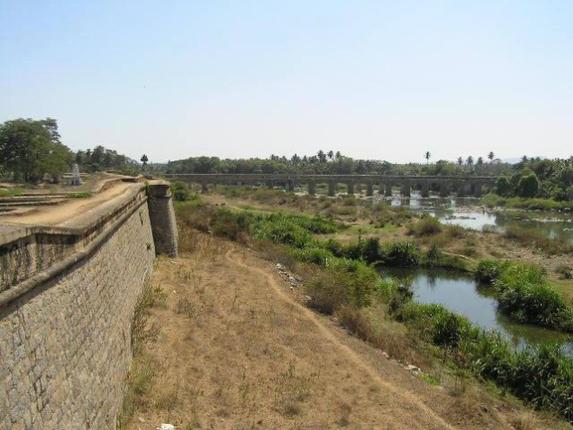
Srirangapatana Fort./  Photo: M.A. Sriram / The Hindu
Srirangapatana Fort./ Photo: M.A. Sriram / The Hindu

While the nation quibbles over polarised perspectives of Tipu Sultan, whose death anniversary was on May 4, precious reminders of his reign cry out for attention.

Over two centuries after the fall of Srirangapatna (old Seringapatam), the legend of Tipu Sultan lives on in hitherto undiscovered manuscripts and art works and fresh controversy. Every now and then, some new discovery is made, adding to the mystique that surrounds the Sultan and giving fresh momentum to the debate about how we should perceive him.

While we quibble over our polarised perspectives, a crumbling fort and other precious reminders of this important chapter of our history cry out for attention. The deteriorating paintings on the walls of the Daria Daulat Bagh (Tipu’s magnificent Summer Palace), the encroachments in and around the fort and the sorry state of the Rocket Court are only a few examples of our neglect. The amazing sense of history one gets in Srirangapatna, where tumultuous events once unfolded, is hard to replicate. But do we have the will and the resources to maintain our heritage and showcase it more effectively, both for ourselves and for the world?

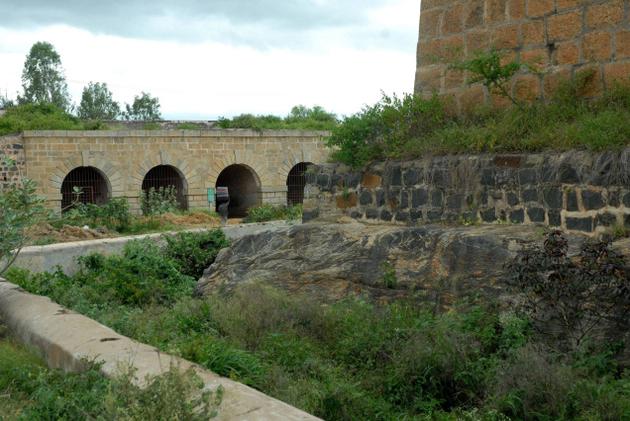
Tipu's fort at Srirangapatna /  Special Arrangement / The Hindu
Tipu’s fort at Srirangapatna /
Special Arrangement / The Hindu

Whatever the answer may be, a series of recent events in different corners of the globe would appear to suggest that interest in Tipu will always be alive. Earlier this year, the Archaeological Survey of India made what officials described as the most “sensational archaeological discoveries” in the history of Srirangapatna. The five interlinked underground tunnels, found very close to Tipu’s Palace, open up new possibilities for research.

A discovery no less exciting was made less than a year ago in the U.K., where a detailed record of the spoils seized by the East India Company after the Fall of Srirangapatna, surfaced for the first time. No one knew where these precious historical records lay or how they landed up in a second-hand bookshop before being bought by the collector who took them into Sotheby’s for evaluation and auction.

Among the treasures described in these papers is the only known sketch of Tipu’s lost throne. The most exquisite ornament of this spectacular gold-covered throne, a bejewelled huma or bird of paradise over the canopy, is part of the royal collection. Of the tiger head finials, now known to have been 10 — and not eight, as previously thought — only four have been seen so far. The whereabouts of three became known only when they were put up for auction; the fourth is exhibited in a castle.

From time to time, Tipu objects — housed in castles, manors, bank vaults and cottages — emerge to go under the hammer at Christie’s, Sotheby’s and Bonham’s. Parallel to this activity is another, an emotional journey, undertaken by the other stake-holders in Srirangapatna’s past, descendants of the British and French — settled in countries like the U.K., Canada and Switzerland, who have visited Srirangapatna and carried out the restoration of their ancestors’ graves. In 2008, Charles Baillie — former Chancellor of Queen’s University and a descendant of Col. William Baillie who was defeated by Hyder Ali and Tipu Sultan in 1780 in the Battle of Pollilur — visited the Colonel’s mausoleum for the first time. The tomb has since been restored by his family with the help of a grant from the British Association for Cemeteries in South Asia.

The Garrison cemetery, once off the tourist itinerary, is seeing more visitors following its renovation by the de Meuron family of Switzerland. The Regiment de Meuron, raised in Switzerland in 1781, served the East India Company in the Mysore Campaign of 1799.

Tipu’s capital has its share of mystery for the French too. Recently, a former French diplomat who visited Srirangapatna in an effort to trace the graves of the French soldiers who’d died there during this period — “for my country” — had to return unsuccessful.

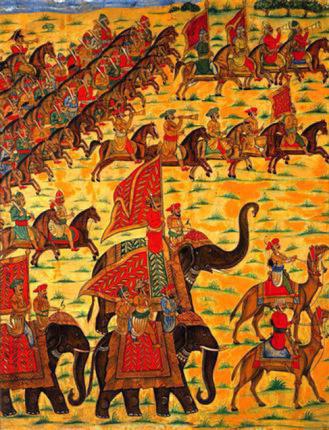
An even deeper mystery shrouds the death of General Lally who fought the British army on Tipu’s side at Pollilur in 1780. Some French scholars have concluded that he could have died in India in 1790, or in 1799, at Srirangapatna at the time of Tipu Sultan’s death. But there is no evidence to support their claims. General Lally figures prominently in the enormous mural, depicting the Battle of Pollilur that decorates both sides of one of the main doorways of the Daria Daulat Bagh. Pollilur has been described as ‘one of the greatest calamities that has ever befallen British arms’. It was also the last time an Indian prince was able to inflict a crushing defeat on an imperial power.

A depiction of the Battle of Pollilur. / Special Arrangement / The Hindu

The figure of Tipu Sultan continues to fascinate the West, where an industry of scholarship has grown around him. In recent years there has been a marked shift from the earlier view, largely shaped by accounts from British sources — the official historians, for example, and soldiers who fought at Srirangapatna, of Tipu as “a monster, pure and simple”. Noted British scholars have, in their different ways, attempted an evaluation of the Sultan that moves away from this one-dimensional appraisal of Tipu as a fanatic. Nor do they flinch when it comes to describing their own excesses during this time. Anne Buddle recognised his patronage of the arts and curated two major exhibitions devoted to Tipu, first in London in 1990, and second, The Tiger and the Thistle Exhibition, at the National Gallery of Scotland, Edinburgh, 1999. Ten years ago, a BBC crew was on location in Srirangapatna, filming forWellesley: The Iron Duke, a lavishly constructed TV series hosted by the late historian Richard Holmes. Contrast their pride in this chapter of our shared history with our own apathy towards it.

Srirangapatna has all the makings of good theatre — the towering figure of the king undone by treachery, a fierce battle and the river that runs through its history like a leitmotif. The area around the Mysore Gate on the ramparts of the Srirangapatna Fort has reportedly been selected for a sound-and-light show focussing on the life and times of Hyder Ali and Tipu Sultan. But the wheels of officialdom grind slowly, so it may be quite some time before this and other projects on the anvil for the fort and this historic city take off.

In the meantime, the enormous potential of the place as a tourist attraction continues to be squandered tragically and there are worrying portents. Witness the slow erosion of Mysore’s legacy as a Maharaja’s capital with high-rise buildings mushrooming next to heritage structures in the heart of the city.

While tourism is unquestionably one of the drivers of our economy, in Srirangapatna, preserving our national heritage is the greater compulsion now. It’s time all discussions on whether Tipu Sultan was a cruel tyrant or a far-sighted ruler were relegated to the academic world, where they belong. Like it or not, he is a part of our history and we owe it to posterity to preserve the historical treasures of Srirangapatna.

source: http://www.thehindu.com / The Hindu / Home> Features> Sunday Magazine / by June Gaur / May 04th, 2013

Biocon to launch psoriasis drug novel biologic in July

New Delhi  :

Biotechnology major Biocon  plans to launch in July its novel biologic drug Itolizumab branded as ‘Alzumab’ to be used for the treatment of chronic plaque  psoriasis  in the country.

“We plan to launch  Alzumab  (Itolizumab) in July this year in the country. It is a novel, first-in-class biologic for the treatment of psoriasis,” Biocon Chairman and Managing Director Kiran Mazumdar- Shaw  told agencies in an interview.

It will be manufactured at the company’s Biopharma manufacturing facility at Biocon Park in Bangalore, she added.

Psoriasis is an inflammatory auto-immune skin disease that follows a typical relapsing and remitting course with the disease affecting two to three per cent of the total population in the country.

“The market for such a drug is huge in India as the disease affects quite a number of people,” she added.

The global market for psoriasis treatments is estimated to cross USD 8 billion by 2016, Biocon said.

The company had received marketing authorisation for Itolizumab from the  Drugs Controller General  of India (DCGI) in January, 2013.

“We also plan to extend the clinical development of the drug for other auto-immune diseases like rheumatoid arthritis , multiple sclerosis and vitiligo in future,” Mazumdar-Shaw said.

The company has also completed a pre-IND (Investigational New Drug) meeting for Itolizumab with the  US Food and Drug Administration  as it plans for a global clinical development of the new medicine.

This is company’s second novel biologic developed in India. BioMab EGFR, an anti-cancer monoclonal antibody being the first.

source: http://www.articles.economictimes.indiatimes.com / The Economic Times / Home> News> News By Industry> Healthcare/Biotech / by PTI / April 28th, 2013

Infosys bags 5-year deal with European company

Bangalore : 

(Infosys has signed a five-year…)

Infosys has signed a five-year agreement with RWE Supply & Trading (RWEST), a leading European energy trading house, to provide technology services to “transform its trading operations to create business efficiencies and drive growth from new markets and commodities”.

Central to the agreement is an ‘innovation and gain-share’ model supported by a joint investment framework to identify and implement innovative business and technology projects that will deliver measurable benefits to RWEST, the Bangalore headquartered IT major said in a statement.

The agreement highlights include consulting and technology services for applications transformation and business platforms, and transition to a managed services model for application management, it said.

Marcus Schaper, Head of IT at RWEST, was quoted as saying: “Infosys was able to offer us a full range of technology services coupled with a strong track record supporting energy and financial trading systems. They brought commercial flexibility and a long-term perspective to create a compelling case for our dynamic business.”

Kush Sharma, Head of Utilities at Infosys in Europe, said: “We are confident that this association with RWEST will enable strategic growth through the transformation of their trading platform. We will help them use savings  generated to make investments  that can drive operational efficiency and, more importantly, competitive advantage”.

source: http://www.articles.timesofindia.indiatimes.com / The Times of India / Home> Tech> Tech News / PTI / April 02nd, 2013

Mathematics wizard Shakuntala Devi passes away

Bangalore : 

Legendary Mathematics wizard Shakuntala Devi, dubbed as the world’s fastest ‘human computer’ and who made complex mental calculations as a child prodigy, died at a hospital here today following respiratory problems.

Devi, who has enthralled fans with her prowess for decades, was 83.

“She passed away at Bangalore Hospital,” Shakuntala Devi Educational Foundation Public Trust Trustee D C Shivadev told PTI. Doctors declared her dead at 8.15 a.m., he said.

Devi was hospitalised a couple of weeks ago for critical respiratory problems, Shivadev said. “She developed heart and kidney problems later,” he added.

A household name in India, Devi cast a spell adding a 16-digit number with another one and multipliying the result with an equal array of numbers almost instantaneously, finding the cube root of the resultant and pops up with an answer in just about the time taken for a wink.

Devi, who had no formal education and who simply picked up reading and writing, had the ingenous ability to tell the day of the week of any given date in the last century in a jiffy.

“God’s gift. A divine quality,” is how Devi had once felt of her unique distinction that began showing visibility since the age of three. She has been quoted as saying that none in her family showed any signs of the same head for figures. “Not even remotely, although my dad was a stage magician.”

Rated as one in 58 million for her stupendous mathematical feats by one of the fastest super-computers ever invented-the Univac-1108-, Devi believed in using grey cells to silicon chips.

Born on November 4, 1929, Devi figured in the Guiness Book of World Record for her outstanding ability and wrote numerous books like ‘Fun with Numbers’, ‘Astrology for You’, ’Puzzles to Puzzle You’, and ‘Mathablit’

Hailing from a simple orthodox Kannada Brahmin family, Devi’s father was a circus performer who did trapeze, tightrope and cannonball shows. He had rebelled against becoming a temple priest.

Devi was also an astrologer and gave remedies purportedly based on date and time of birth.

It was while Devi was playing cards with her father at the tender age of three that he found his daughter’s calculation abilities. It turned out that she beat him not by sleight of hand, but by memorising the cards.

At the age of six, she demonstrated her calculation skills in her first major public performance at the University of Mysore and two years later, she again proved herself successful as a child prodigy at Annamalai University.

However, despite apprehensions in some quarters, Devi did not lose her calculating ability when she turned adult like other prodigies such as Truman Henry Safford.

In 1977, Devi extracted the 23rd root of a 201-digit number mentally. In the same year in Dallas, she competed with a computer to see who gives the cube root of 188138517 faster and she won.

On June 18, 1980 she demonstrated the multiplication of two 13-digit numbers 7,686,369,774,870 x 2,465,099,745,779 picked at random by the Computer Department of Imperial College, London. She answered the question in 28 seconds flat.

This event is mentioned in the 1995 Guinness Book of Records.

“Why do children dread mathematics?”, she was once asked.

“Because of the wrong approach. Because it is looked at as a subject,” pat came her reply.

“Mathematics is life, you have math in everything, right from time to your date of birth to the food you eat and the air you breathe,” she states. The right age to train children in mathematics is six, says Shakuntala, who sparkled at three.

source: http://www.thehindubusinessline.com / Business Line / Home> News / by PTI / Bangalore, April 21st, 2013

India-based Firms Break New Ground in Hiring

Wipro and Tata have found success in recruiting thousands of workers in a short period of time. So how do they do it?

U.S. companies struggling to land top talent outside their home countries could learn a lesson from Wipro  and Tata Consultancy Service . Both companies are huge global technology service providers based in India that recruit thousands of new young employees every year, so their recruiting teams are constantly thinking about how to attract and retain the best people.

In fiscal 2012, Tata recruited 70,400 employees around the world, including 32,263 fresh hires from college campuses, according to its annual report. And the company’s attrition rate was just 12.2 percent. In comparison, corporate India reported an average attrition of  19.3 percent for 2012 , according to Aon Hewitt’s Annual Salary Increase Survey.

The key to successfully hiring so many employees is to look beyond pedigrees, and focus on finding smart people who can be trained to do the job, says Prasad Menon, chairman of Tata Quality Management Services, which provides business excellence training and structure to all Tata companies.

Tata recruits candidates from hundreds of colleges every year, and they are not all “tier one” schools, such as the prestigious Indian Institutes of Technology, Menon says. But that doesn’t matter. “The students at these schools are no less intelligent. They just haven’t received the best training.”

Menon’s attitude speaks to what some call  ” The India Way” of leadership . Wharton School management professor Peter Cappelli and others have noted that India-based firms have traits including a tendency to seek holistic engagement with employees and to improvise amid complex, volatile business conditions.

Tata assumes most recruits will come to the company with skill gaps, so it created a six-month training program that covers everything from engineering and technical skills to teamwork, leadership and other soft skills. “The training enables youngsters from less-privileged background to be as good if not better than those from elite universities,” he says, “and it makes them very loyal to the company.”

THE BENEFITS OF AVERAGE

When companies open themselves up to candidates from lower-ranking schools, they also have a better opportunity to fit employees to the corporate culture, says Abhijit Bhaduri, chief learning officer and head of corporate human resources development for Wipro, the $7.3 billion multinational information technology provider headquartered in Bangalore. Wipro has more than 140,000 employees, and hired 13,000 employees last fiscal year.

“We understand the value of engagement,” Bhaduri says of Wipro’s hiring process. “It doesn’t matter if someone comes from a second-rung college. We look at whether the person will enjoy the type of work we offer and our culture.”

Bhaduri is the author of Don’t Hire the Best: An Essential Guide to Picking the Right Team, which talks about the importance of assessing personality and culture fit along with skills and education when recruiting.

He urges Wipro recruiters to use behavioral interviewing to determine whether candidates will be happy in a role—not just whether they have the right technical qualifications. “IQ and GPA have a limited impact on a person’s success,” he says. “Excellence comes when they enjoy what they do.”

Like Tata, new recruits at Wipro participate in an extensive training program. Wipro puts new hires through an eight-week program called Campus to Corporate. “They all come with different skills and degrees of recall,” he says. “This program gets them all on a common platform.”

Wipro’s training center can accommodate 4,000 people per day, and Bhaduri’s team offers a catalog of voluntary and mandatory training courses employees can take to improve their technical, communication and leadership skills as they move up the corporate ladder. Such access to training and career opportunities helps Wipro keep attrition down, and it transforms candidates with even the most mediocre academic training into valuable, long-term employees. Wipro reported an annual attrition rate of 14.4 percent as of April 2012.

“Global sourcing is a very difficult challenge, Bhaduri says, “but when you look beyond labels, you find the people who will be a good fit for your company, and those are the ones you want to stay.”

However neither company has a perfect record with respect to employees. Tata recently agreed to pay $29.8 million to settle a class-action lawsuit over wage disputes by Indian employees working in the United States. The lawsuit claimed Tata deducted taxes from their India-benchmarked salaries then forced them to turn over their U.S. federal and state tax refunds to the company. The settlement will be shared among 12,800 employees.

Both firms have also been accused of underpaying employees, although Bhaduri says that other aspects of the corporate culture help to attract and retain the best employees. “Salary is always important to everyone … but workplaces cannot compete on salary alone,” he says. He argues that the ability to work with talented people and to take on challenging projects motivates employees as much as salary. “The opportunity to grow one’s skills is an important driver for many.”

Sarah Fister Gale is a writer based in the Chicago area.  Comment below or email editors@workforce.com  

source: http://www.workforce.com / WorkForce / Home> Featured Articles / by Sarah Fister Gale / April 02nd, 2013

LISAA School of Design launches its Second School in Bangalore

New Delhi:
 Lisaa is a premier French design school based on founding principles of French design and aesthetics with multiple schools located in Paris, Nantes, Rennes and Strasbourg.  In India, Lisaa School of Design established its first institute in 2011 in Gurgaon. This has been followed by the recent launch of its second institute in Bangalore in March 2013, which saw Bollywood actress Nargis Fakhri add her Midas touch to the star studded affair.
Ms. Nargis Fakhri had this to say “I am immensely pleased to be associated with this launch. Before a lot of students would go overseas to gain that much required work experience due to which we had missed out on many good talents. Thanks to Lisaa School of Design, Bangalore, students can gain the same expertise and skills sitting in India. I extend my heartiest congratulations to Lisaa Bangalore and wish the management all the very best for this venture.”
Lisaa School of Design, Bangalore is the city’s first ever branch of the acclaimed Paris based French design school. With a far sighted vision for quality education in design, Creo Valley has ventured to bring forth Lisaa School of Design, a globally reputed institute in the creative field of design to Bangalore.
Lisaa School of Design partners with world renowned universities such as the Rochester University and over 50 design schools globally. In addition, it has an association with prominent brands like Eurodisney, BNP Paribas, Louis Vuitton Moet Hannessy (LVMH), Saatch & Saatchi, and Christian Dior just to name a few.
source: http://www.indiaeducationdiary.in / India Education Diary / report by India Education Bureau, New Delhi / Thursday, April 04th, 2013

Doha: Dr B M Hegde to grace Bunts Qatar first Annual Day event

Doha :

The stage is set for the first-ever Annual Day celebration of Bunts Qatar to be held on Friday April 5 at 4.30 pm at Al Jazeera Academy.

Padma Bhushan Dr B M Hegde will be the chief guest. Guests of honour will be Chidanand Naik, general manager of Pallonji Qatar, Sarvotham Shetty, president UAE Bunts, and K D Shetty, chairman, Bhavani Shipping lines.

BuntsQatarBF11apr2013

Within a short span of time, the association has become known for its charity and social works in Qatar, apart from sports and cultural activities. Former president of Tulu Koota Qatar and managing director of Advanced Technical Services M Ravi Shetty was elected its first president. It aims to extend every possible help to the needy members of the community, with motto of ’unite for a good cause and support the needy’. With this in mind, every year Qatar Bunts will be honouring one personality for his or her service to the community in Qatar.

The event will included dances, songs and skits by the members of the Forum. The first edition of the Association’s souvenir ‘Gari’ will also be released on the occasion.

Those who have contributed to the community will be presented mementos. Also, the Outstanding Community Service Award will be present.

Chief guest Padma Bhushan Dr B M Hegde will be felicitated by the Association, so also the guests of honour.

Orchestra by guest artistes will also add charm to the occasion.

ProfBelleBF11apr2013

About Dr Belle Monappa Hegde

Prof Belle Monappa Hegde is a physician par, excellence, an astute clinician and a teacher in the true Guru tradition. Prof Hegde’s encyclopaedic knowledge, brilliant oratorical skills and natural instinct to teach have endeared him to generations of students and teachers across the globe.

Prof B M Hegde was born on August 18, 1938, to V Shankar Hegde and Chandravathi. After his early education at Hiriadka and Udupi, Prof Hegde proceeded to Madras for his medical education. Through out his tenure as a medical student at Stanley Medical College, Madras, Prof Hegde was a brilliant student and had received a Gold medal and a special prize in surgery from Madras University. He did his MD (Medicine) from Lucknow University with scholarship of Govt. of India. Subsequently, he went to England on Commonwealth Fellowship and had passed the Membership of Royal College of Physicians of UK examination. He then underwent advanced training in Cardiology at Harvard Medical School, Boston under Nobel Laureate Bernard Lown; and at the National Heart and The Middlesex Hospitals in London under Late Walter Somerville and Late Richard Emanuel. He is now the Fellow of all Royal Colleges and the American College of Cardiology.

Prof Hegde started his teaching career as a tutor in 1962 in Manipal. He then served the Kasturba Medical College, Mangalore and Manipal for 45 long years, occupying with distinction the posts of professor of Medicine, director PG studies, principal, dean, pro, and vice-chancellor of Manipal University.

Prof B M Hegde’s academic brilliance has been recognized globally. He is affiliate professor of Human Health (University of Northern Colorado); and former professor of Cardiology (The Middlesex Hospital Medical School, University of London). He is also the chairman, State Health Society’s Expert Committee, Govt of Bihar. He has been the visiting professor to number of universities in India and many countries abroad.

Prof Hegde has been the recipient of numerous National and International Awards. To name a few: Dr B C Roy National Award for being an Eminent Medical Teacher, Dr J C Bose Award for Life Science Research, Pride of India Award from the US, Distinguished Physician of India Award from A P I, Healer of Mankind Award (from Symbiosis University, Pune), Vaidya Ratnakara award, Karnataka Rajyothsava Award among many others. Prof Hegde has been examiner for the MRCP (UK) and MRCPI (Dublin) examinations. Prof Hegde’s monumental contributions to the art of bed, side clinical examination regarding “how to detect early splenic enlargement”, “auscultation for mitral valve prolapse” and “how to assess the second heart sound with the stethoscope correctly” have been published in prestigious medical journals, such as, The Lancet, The German Tribune, The Practioner and the JRCP (London) over the years and two of these have been cited in the American College of Physicians book on Bed side diagnosis.

Prof Hegde is a prolific writer and his articles are frequently published in various magazines and newspapers and his talk shows are sought after in the electronic media. Prof Hegde has penned nearly 35 books and over 3,000 articles in lay press. During the last decade, Prof Hedge along with 15 world renowned scientists, some of them Nobel Laureates, has been publishing a journal titled “Journal of the Science of Healing Outcomes”, of which he is the Founder Editor, in, Chief. Late Prof Rustum Roy, considered to be the father of nanoscience, was Prof Hegde’s mentor and had helped Prof Hegde to start the journal. Professor Hegde’s service to the society through Bharatiya Vidya Bhavan and its activity are legendary.

In 2010, Prof B M Hegde was conferred the prestigious Padma Bhushan Award by the President of India. Professor Hegde’s dear wife, Late Malathi Hegde, was his conscience keeper. They have three children,  two doctor daughters, an engineer son, sons in law, daughter in law and three grand children. They are a close knit family.

In recognition of his outstanding contributions as a dedicated teacher in the true Guru tradition, a physician par excellence, original researcher, a medical philosopher, and an able administrator, the Sri Venkateswara Institute of Medical Sciences (State University) presented Professor B M Hegde the award of the Honorary Degree of Doctor of Philosophy (PhD Honoris Causa) in 2011.

He was the first Bunt and the first medical doctor from Karnataka to be awarded the Padma Bhushan.

source: http://www.daijiworld.com / Home> Top Stories / Media Release / Wednesday, April 03rd,2013