Category Archives: World Opinion

Low-cost indigenous swab for coronavirus testing developed

Representative image/iStock

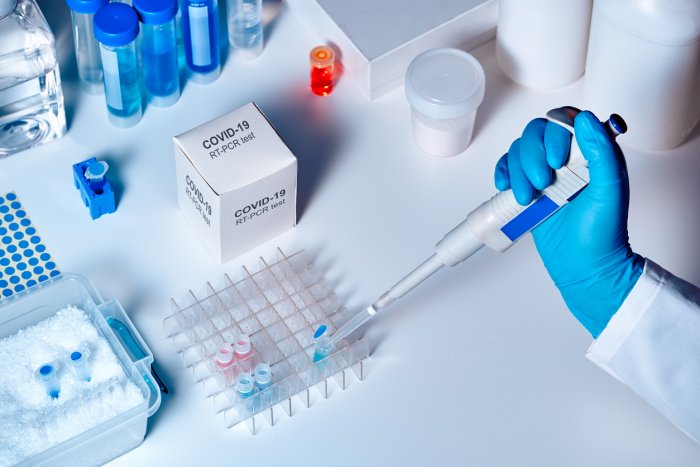
A team of researchers has developed a low-cost indigenous prototype of polymer swab which can be used for collection of samples for coronavirus testing.

If it is approved for production, the country will not need to depend on imported swabs, said Dr Milind Kulkarni, a senior polymer scientist with Pune-based Centre for Materials for Electronics Technology (C-MET) on Saturday.

“We import testing kits and polymer swabs primarily from Italy, Germany and the United States. But due to import restrictions and international lockdown, we could soon face a shortage of these kits,” said Kulkarni, who led the project.

It was a joint project of C-MET (which comes under the Ministry of Electronics and Information Technology), SRI Research FOR Tissue Engineering Private, Rangadore Hospital, Indian Institute of Science (IISc), Bengaluru and Additive Manufacturing Society of India, he said.

As per the guidelines of the Centre for Disease Control and Prevention, polymer swab is used for collection of a sample from the upper respiratory tract of a patient.

To develop prototype of the swab, the researchers used a speciality polymer from polyester family and a rod made up of Polypropylene, Kulkarni said.

“Prototype samples are ready to go for further sterilization and clinical trial and testing,” he added.

Dr K N Shridhar, urologist from Rangadore Hospital in Bangaluru, had given the responsibility to develop the polymer swab to CMET, Kulkarni said.

“Dr Shridhar will conduct testing of the swabs by tying up with a lab which is approved by the Indian Council for Medical Research in Bengaluru,” he added.

CMET has developed two types of swabs which are required to collect samples, he said.

One is nasopharyngeal swab (NP swab) which is used for collecting nasal secretions and other is Oropharyngeal swab which is used for collecting throat samples, he said.

Once samples are taken, the swab is inserted into a tube of Universal Transport Media (UTM). Kulkarni said that as it is a one-time use kit, India will need millions of such swabs to collect samples in the days to come.

The swabs developed by his team could cost a third of the price of imported swabs, he said.

“Using a special automated machine, 1000 to 2000 swabs can be made in one minute,” he claimed.

The number of coronavirus infection cases in the country had crossed 3,250 as of Saturday late afternoon.

source: http://www.deccanherald.com / Deccan Herald / Home> Science & Environment / by PTI, Pune / April 04th, 2020

NIT Karnataka produces hand sanitizers

The social initiative led by Arun Isloor, professor and head of the department, was launched by NIT-K director K Uma Maheshwar Rao.

Hand sanitizers.

Hand sanitizers.(AFP file)

The chemistry department of National Institute of Technology-Karnataka (NIT-K) here has started producing hand sanitizers in view of its shortage in the market after the coronavirus outbreak.

The social initiative led by Arun Isloor, professor and head of the department, was launched by NIT-K director K Uma Maheshwar Rao.

The raw materials needed for this product were provided by the institute.

It has plans to produce 5,000 bottles of sanitizer containing 70 mm each.

The sanitizers already manufactured were distributed to Suratkal police station, health department, petrol bunks and employees of NIT-K, including the security staff.

Isloor said the product has been manufactured conforming to high standards set by the World Health Organisation.

source: http://www.hindustantimes.com / Hindustan Times / Home> Education / by Press Trust of India, Mangaluru / April 04th, 2020

Bengaluru startup launches home screening kit for COVID-19

Representative image. Credit: AFP Photo

Bengaluru-based startup firm Bione Ventures Pvt Ltd, a B2C platform for genetic and microbiome testing, has launched a rapid at-home screening kit for COVID-19 that delivers results within minutes. The company said it will make available the product for sale on their platform within a week.

“We are importing this screening kit from one of our partners in the US, which has secured USFDA approval for the product. In India, we have secured certification from the Indian Council of Medical Research (ICMR). The screening kit can provide respite from the impending fear of the COVID-19 contagion,” Surendra K Chikara, a genomicist and founder of the company told DH.

The simple point-of-care home screening kit renders quick results, without having to step out in the wake of the lockdown. It will foster timely detection of the disease while acting as a preventive tool for others in proximity to the user, by isolating the carrier immediately, he said.

The kit is likely to be priced between Rs 2,000 and Rs 3,000 depending upon the global supply, to increase its affordability for the masses, he said.

COVID-19 screening test kit is an IgG & IgM-based tool which takes 5-10 minutes to deliver the results. Upon receiving the kit, the user is required to clean the finger with an alcohol swab and use the lancet provided to finger-prick. The cartridge provided reads the results from the blood sample thus obtained, within 5-10 minutes, the company said in a statement.

Bione was founded in 2019 in Bengaluru by Dr Surendra K Chikara, who was among the pioneers in bringing NGS sequencing in India.

The company is well-equipped to supply 20,000 kits per week and intends to build its manufacturing facilities in the coming months to cater to the demand, he added.

source: http://www.deccanherald.com / Deccan Herald / Home> Business> Business News / by Mahesh Kulkarni / DHNS, Bengaluru / April 02nd, 2020

COVID-19: IISc team building ventilator prototype using local parts

A benchtop test setup of a ventilator prototype being built by IISc scientists and volunteers at IISc’s High-Speed Wind Tunnel Complex.The prototype is created out of components from the Indian automotive and RO filter industry. The white canisters contain air and o2, which are mixed in the blue cylinder. The control circuitry is composed of PCL board and Raspberry Pi. The medical test lung is for experimentation testing only. (Photo courtesy IISc Project Praana Team)

As the clamour for medical ventilators reaches a fevered pitch amid the escalating COVID-19 crisis, a group of IISc scientists and students have been working night and day to develop a high-quality indigenous ventilator which makes use of sensors and parts sourced from the local automotive and RO water filter industries.

“The idea is to circumvent a shortfall of internationally imported components which are holding up the mass manufacture of ventilators in the country,” said Associate Professor Gaurab Banerjee of the Indian Institute of Science’s (IISc) Electrical Communication Engineering Department, a brainchild behind the invention.

“In a worst-case scenario, about 0.006% of COVID-19 cases will require critical care with access to ventilators. For a population of 130 crores, this translates to about 70,000 patients,” he added.

The prototype is designed to make use of materials which are readily available in India and in large numbers such as pressure sensors used in cars and solenoid filter valves in Reverse Osmosis (RO) water filters.

According to the team, the plan is to take a pressurised mixture of medical-grade oxygen and compressed air, and mix it using food-grade containers and tubing found in domestic RO water filters. A programmable logic controller (PLC) board and a Raspberry Pi computer will control the air pressure, the oxygen composition and flow characteristics.

The challenges have been steep. At the heart of ventilator technologies are mass-flow sensors and controllers which accurately tell you (and control) how much oxygen is flowing through and what volume of oxygen the patient is inhaling in one breath. These are commonly imported from Switzerland.

The team said it has now duplicated that technology using automotive-grade sensors and solenoid valves by using basic principles of fluid mechanics and gas dynamics and has verified the results experimentally.

“By using these checks, we are able to work out what this oxygen concentration should be and what the flow rates are,” explained Associate Professor Duvvuri Subrahmanyam, of IISc’s Department of Aerospace Engineering who said that similar flow physics is at play in high-speed flight and rocketry.

The prototype, which has been in development for 14 days, is expected to be completed by the end of April. Professor Banerjee explained that the team has set itself five milestones before the prototype can be deemed complete.

“On Friday, we completed the second milestone, which was to combine pneumatics and an industrial controller to time-cycle air-flow,” he said.

Among those reportedly evincing interest in mass manufacturing the prototype is Bharat Heavy Electricals Limited (BHEL). The team clarified that they were ready to transfer the technology free of cost to any interested parties.

source: http://www.deccanherald.com / Deccan Herald / Home> City> Top Bengaluru Stories / by Akhil Kadidal / DHNS, Bengaluru / March 30th, 2020

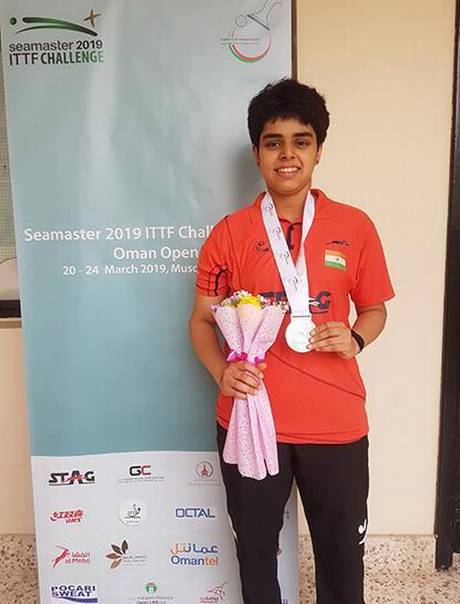
Silver for Archana

Archana Kamath.
Archana Kamath.

Indian paddler Archana Kamath clinched a silver medal in the under-21 women’s singles section of the Seamaster ITTF Challenge Plus 2019 Oman Open table tennis tournament, at Muscat.

Ninth-seed Archana reached her first under-21 international final, where she lost to Japan’s top-seed Satsuki Odo of Japan 11-7, 11-8, 11-6.

Couple of upsets

Archana caused a couple of upsets en route to the summit clash, taking out second-seed Valerie Shcherbatykh of Russia 12-10, 11-7, 11-9 in the round-of-16, and fourth-seed Mariia Tailakova of Russia 6-11, 5-11, 11-2, 11-6, 11-9 in the semifinal.

source: http://www.thehindu.com / The Hindu / Home> Sport> Other Sports / by Sports Bureau / Muscat – March 23rd, 209

KIA’s 2nd runway marks first landing

A SpiceJet flight lands on the south runway at Kempegowda International Airport in Bengaluru on Thursday.

The much-awaited second runway, New South Parallel Runway (NSPR), at Kempegowda International Airport (KIA), saw its first landing on Thursday, March 20. According to a release by Bangalore International Airport Limited (BIAL), SpiceJet Flight SG497 landed on the newly built run way at 9:41 am on Thursday.

“With regulatory clearances, the south runway is now equipped to handle both arrivals and departures. BIAL is working with various stakeholders to commence rehabilitation project of the North Runway (old runway),” a BIAL spokesperson said.

In the first week of December 2019, the new runway became operational after an Indigo flight took off. However, the KIA did not get clearance from DGCA and other agencies to use the runway for landing as some compliances were pending.

The new runway is 4,000 m in length and 45 m in width, powered with LED airfield lighting, which is a is part of the KIA’s ₹13,000-crore expansion project. Once the operation on the new runway stabilises, the existing old runway will be upgraded.

BIAL had said that the new runway would be operated as per CAT I specifications and later would progressively evolve to CAT III B specifications, which would operate flights even in inclement weather, fog and low visibility.

source: http://www.thehindu.com / The Hindu / Home> News> States> Karnataka / by Staff Reporter / Bengaluru – March 20th, 2020

Bhadravathi excavations reveal megalithic past

Periodic and ongoing excavations in various sites of Shivamogga district have revealed a rich megalithic past that dates back anywhere between 1,200-1,000 BCE.

A Menhir found in Hosananjapura village, Bhadravati taluk

Bhadravathi :

Periodic and ongoing excavations in various sites of Shivamogga district have revealed a rich megalithic past that dates back anywhere between 1,200-1,000 BCE. Apart from Tirthahalli and Hosanagara taluks, the recent discovery of Menhirs (standing stones) in a forest land in Bhadravathi taluk shows this rich past and the need to preserve and take pride in it. Megaliths are usually found in Peninsular India and many are still waiting to be excavated.

When TNIE visited this spot in Bhadravathi taluk -– the Menhir was found in one corner located inside a patch of forest land with a fence around it. The local people are unaware of such a pre-historic site in their vicinity — – the 7.5-foot-tall stone has stood the test of time amid changing land patterns and urbanisation. Although yet to be radio-carbon dated,  it is estimated to be more than 3,000 years old. Around this standing stone one can also see a big natural rock which means it must have been cut on this.

According to Shejeshwar R, Assistant Director, Department of Archaeology, Museums and Heritage, Shivamogga, there have been discoveries of megalithic sites in the Malnad region and this particular Menhir was found inside a forest land just next to the VISL land in Hosananjapura village in Bhadravathi taluk.

“The Menhir has been in existence for a long time amidst the villagers and earlier settlements and is in fact, a burial stone. Menhirs usually slant towards the right side. There is also a big natural stone in the same place and we need to study this site in detail,” said Shejeshwar R, Assistant Director, Department of Archaeology, Museums and Heritage, Shivamogga.

Megalithic structures are usually monuments built of ‘great stones’ either for burial purpose (such as dolmen, cists or burial chambers) or having commemorative or ritualistic associations.
However, there are many questions regarding the usage of Menhirs by the ancient people.  It clearly shows even in those days that people were attached to one place and further, used to follow some kind of ritualistic or ceremonial lifestyle.

These stone structures were put together without using any kind of binding material. They were usually away from human habitations and therefore, have usually been found in forests. He says there is a large group of 26-30 standing stones at Baise in Hosanagara taluk. These have been well researched and studied. Researchers have concluded that one of the stone alignments showed it may have been an ancient astronomical observatory.

Another important finding has been at Arehalli in Tirthhalli taluk inside a forest area. In fact,  the discovery of megalithic sites in Malenadu region is considered significant as it reveal the complexity of the megalithic culture in the South.

source: http://www.newindianexpress.com / The New Indian Express / Home> States> Karnataka / by Meera Bharadwaj / Express News Service / March 19th, 2020


FOC-Standard LCA Tejas takes to skies on maiden flight in Bengaluru

K A Muthana (Retd), Chief Test Flying (Fixed Wing), the aircraft took-off from HAL Airport at around 1230 hours, the Bengaluru-headquartered defence PSU said in a statement.

LCA Tejas. (File | EPS)

Bengaluru :

Tejas, the first Light Combat Aircraft in Final Operational Clearance-standard (SP-21) took to the skies for its maiden flight here on Tuesday, the Hindustan Aeronautics Limited said.

Piloted by Air Cmde. K A Muthana (Retd), Chief Test Flying (Fixed Wing), the aircraft took-off from HAL Airport at around 1230 hours, the Bengaluru-headquartered defence PSU said in a statement.

It was airborne for 40 minutes.

This flight signifies exemplary teamwork between various stakeholders of the LCA Tejas programme such as HAL, Directorate General of Aeronautical Quality Assurance, Centre for Military Airworthiness and Certification, Indian Air Force and Aeronautical Development Agency, HAL CMD, R Madhavan said.

“HAL achieved the momentous feat within a record time of 12 months after the release of Drawing Applicability List (DAL) and SOP (Standard Operating Procedure) by CEMILAC”, the statement said.

“This would pave the way for the production of remaining 15 fighters from FOC (Final Operational Clearance) block, which are planned to be delivered during the next financial year”, it said.

The FOC aircraft are equipped with advanced features such as Air-to-Air refuelling and Beyond Visual Range (BVR) missile system.

“It imbibes a lot of manufacturing improvements which were based on the operational feedback of LCA IOC (Initial Operational Clearance) fleet with IAF”, HAL said.

source: http://www.newindianexpress.com / The New Indian Express / Home> Nation / by PTI / March 17th, 2020

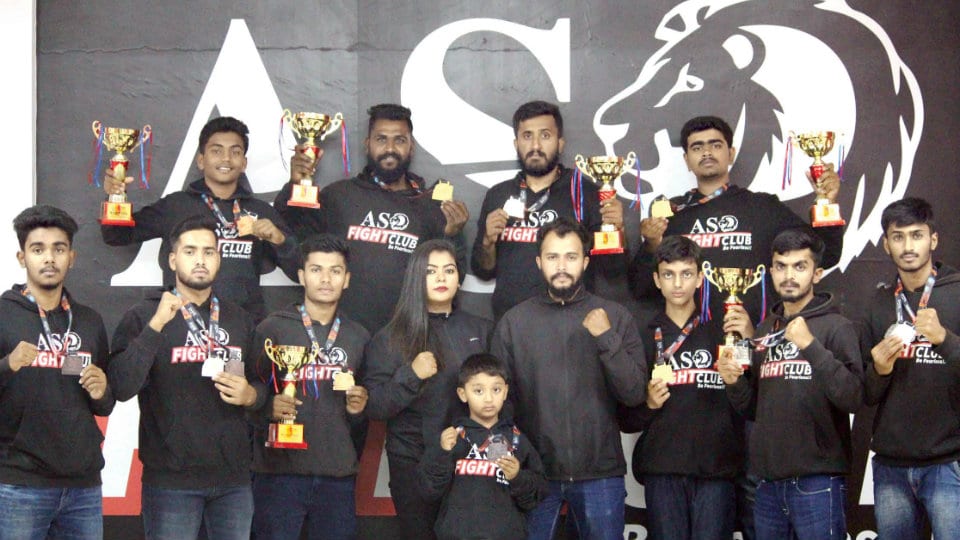
City Kickboxers Shine At Intl. Championship

KickboxersBF03mar2020

The following kickboxers of ASD Fight Club, Mysuru, have bagged medallist the WAKO Indian Open International kickboxing Championship held at Talkatora Indoor Stadium in New Delhi recently:

K.P. Abhishek – Gold Medal in 81 kg in K1; M. Srivatsav – Gold in 60 kg in K1; Ritvik Nagabhushan – Gold in +94 kg in Kick Light and Gold in +94 kg in Light Contact; A. Ranjith – Gold in 84 kg in Kick Light and Bronze in 84 kg in Light Contact; Sidharth Gowda – Gold in -47 kg in Light Contact and Silver in -47 kg in Kick Light; B.T. Tejas – Gold in -63 kg in Light Contact and Silver in -63kg in Kick Light; S. Tarun – Silver in -63 kg in Light Contact and Bronze in -63kg in Kick Light; H.M. Srihari – Silver in -57 kg in Light Contact and Bronze in -57 kg in Kick Light; Suhas – Silver in -79 kg in Kick Light and Bronze in -79 kg in Light Contact; T.P. Dushyanth – Bronze in -25kg in Point Fighting; D. Pruthvi – Bronze in -74 kg in Kick Light.

Over 700 athletes participated in this mega event and countries like Jordan, Kazakhstan, Iran, Ukraine, and Nepal took part in the Championship.

The WAKO International Referee Seminar was held during the Championship and 8 kickboxers of ASD have been qualified as an WAKO International Referee and Judges. They also received there Black Belt during the occasion

source: http://www.starofmysore.com / Star of Mysore / Home> Sports / March 02nd, 2020

IISc.’s biochemistry department turns 100

Established in 1921, it is one of the oldest in India and Asia

The Department of Biochemistry of the Indian Institute of Science (IISc.) stepped into its centenary year in 2020. Established in 1921, it is said to be one of the oldest departments not only in India, but in all of Asia. Around 850 students have graduated from the department so far.

P.N. Rangarajan, Chairperson, Department of Biochemistry, told The Hindu that the major achievement has been its students, many of who are now leaders in industry and academia. “One of them J. Padmanabhan – alumni and faculty – became the director of IISc. M.R.S. Rao went on to become the president of the Jawaharlal Nehru Centre for Advanced Scientific Research, and Ram Rajasekharan became the Director of CFTRI-Mysuru,” he said.

The department has planned a major conference and alumni reunion in December, as well as a centenary lecture series that will be held almost every month. On the IISc.’s Open Day on Saturday, it is organising an exhibition highlighting its past and current activities.

Prof. Rangarajan’s own research has led to the development of the hepatitis B vaccine. “At least four vaccines are currently in the market. The hepatitis B component in these vaccines came from the lab of the Department of Biochemistry,” he added.

In a recent issue of the journal Current Science, Prof. Rangarajan lists out the progression of research in the department. This includes ‘research of societal relevance’ in the early years which resulted in the development of methods for conversion of municipal waste into organic manure and fluoride removal from drinking water, to name a few.

The article makes note of key contributions in basic research such as the identification of yeast chromosomes and nuclear membrane.

Ongoing research

At present, a novel drug combination for extremely drug resistant and multi-drug resistant TB, as well as new blood-based biomarker signatures of host genes for diagnosis of tuberculosis and for detecting response to anti-tubercular therapy are being developed, he told The Hindu. “A novel inhibitor of DNA repair enzyme called SCR7 has also been developed in our laboratory. It has the potential to develop as a cancer drug,” said Prof. Rangarajan.

source: http://www.thehindu.com / The Hindu / Home> News> Cities> Bengaluru / by K.C. Deepika / February 28th, 2020