Category Archives: Arts, Culture & Entertainment

The chronicles of Hatworks

HatworksBoulevardBF04jul2018

This boulevard on Cunningham Road offers a blast from the past

Do you sometimes wish the world of Narnia were real? That there was an ordinary door you could walk through into an strange, wonderful world? Well, something similar happens on Cunningham Road. The Hatworks Boulevard seems nothing more than a billboard on the outside but when you walk in, you discover a whole new world.

Hatworks01BF04jul2018

Initially, the home of the Maneckjee family, now a cottage and a commercial space for various stores which deals in clothing, beauty, crafts, desserts and art, this bungalow is over 200 years old. Stone pathways paralleled with luscious greenery, high roofs of Burma teak, French windows, tall original wooden door frames, Italian floor tiles moulded into fleur patterns are some of the architectural elements that makes this place a walk to remember.

Hatworks02BF04jul2018

Rishad Minocher, oldest grandchild and one of the owners of the colonial-era house, says: “This is my family’s ancestral home. The property belongs to my grandfather who went to the UK to study hat making and returned to set up the business.” The imperial hatworks specialised in making hats for the armed forces, polo and horse riding, and also for the Maharaja of Mysore.

They were the pioneers in making the sola topee in India, which provide the wearer protection from the sun. They also made skull caps, velvet hats and other kinds of headwear, he adds.

“My grandfather was the first to develop the pre-tied Mysore peta donned by the Maharaja of Mysore” says Rishad. The business continued until the early 80s. In 2004 Imperial Hatworks was changed to Hatworks Boulevard.

“I am a firm believer that the house has a life of its own,” Rishad says. The Minochers have done their best to preserve the building. The original stone gate posts, high-raised Mangalore tiled roofs and a blue roof are some of the elements preserved. The tiles used here have also been used in the Mysore Palace and the Bowring Institute as well.

The house also boasts of the Poliphone, an ancient musical instrument, preserved as a show piece. There are some grand old trees at Hatworks Boulevard including mango, banana, raintrees, gulmohar and tamarind.

Where we discover hidden and not so hidden nooks and crannies of the city

source: http://www.thehindu.com / The Hindu / Home> Life & Style> Homes and Gardens> Spaces / by Beaulah Sahana A / June 18th, 2018

Karnataka man eats 3kg ragi balls, wins competition for 9th time

Eregowda swallowed six ragi balls.

Mandya :

Fifty-four-year-old Meese Eregowda is the talk of the town after he ate a mind-boggling three kg of ragi balls, which are also called ragi mudde. It is to be swallowed along with Nati Koli Saaru (country chicken rasam).

Ragi mudde, meaning ‘lump’ (flour) is a wholesome meal in Karnataka and the Rayalaseema region in Andhra Pradesh.

Eregowda won a trophy along with Rs 5000 prize money at a competition held at Mangala village of Mandya district in Karnataka. The event was held at Anjaneya Swamy temple premises.

Eregowda has won this competition for ninth time.

Eregowda – from Arakere village of Srirangapatna  in Karnataka – swallowed six ragi balls (three kg in total) in 20 minutes and was declared winner, while Suresh who ate 2.75 kg (5.75 balls) was declared runner up and got Rs 3000. Ramamurthy ate 2.5 kg and got Rs 2000 as prize. Nandish, Karasawadi Shankaregowda, HD Yogesh, Nagesh each ate five ragi balls and got Rs 1000 each.

Sixty-five people participated in this district-level Ragi ball eating competition, where the lone woman competitor Jayamma of Siddakalehalla ate two ragi balls.

source: http://www.timesofindia.indiatimes.com / The Times of India / Home> News> City News> Bangalore News / by Channamade Gowda / Vijaya Karnataka / July 02nd, 2018

Remembering an icon who strove for harmony in society

Santa Shishunala Sharif (right) and his guru Govinda Bhat strived hard for unity and brotherhood between the two religions.

Stage is set for the bicentenary celebrations of Santa Shishunala Sharif from tomorrow

The stage is set for the bicentenary celebration of Karnataka’s Kabir — Santa Shishunala Sharif from Tuesday. The legendary 19th century saint, mystic minstrel poet, philosopher and social reformer had strived for communal harmony and traversed across the region (which now forms part of Karnataka carrying his messages through songs accompanied by his ‘Ekatare’ (a single string instrument).

Considered to be the first sufi poet in Kannada literature, Sharif lived between 1819 and 1889, offering his ‘Tatvapada’ (moral poems) in Kannada. While historians differ over Sharif’s date of birth — some believing he was born in March while others saying it was July 3, 1819 — the celebrations are starting on Tuesday. “Though historians and researchers differ over the birth date, they are unanimous in their opinion that Sharif breathed his last on the day that he was born that is July 3. As 2018 marks the beginning of the bicentenary year (completing 199th year and beginning of the 200th), it was decided to celebrate,” said Mahesh Joshi, a descendant of saint Govinda Bhat, the Sharif’s guru.

Sharif was born in Shishuvinahala in Shiggaon taluk to Imam Hazarat Saab and took Govinda Bhat as his guru. Both strived hard for unity and brotherhood between the two religions. Even now, both Hindus and Muslims can be seen worshipping Sharif at the temple in Shishuvinahala. Interestingly, Sharif was known to compose poems in accordance with the situation and sing them to spread his philosophy. Though Sharif never wrote down his compositions, his poems were passed by word of mouth to the future generation.

Filmmaker T.S. Nagabharana made Santa Shishunala Sharif in 1990 based on Sharif’s life, whose preachings are likened with those of Kabir of north India. The film starring Girish Karnad, Sridhar, and Suman Ranganath went on to win the Nargis Dutt Award for Best Feature Film on National Integration, besides winning multiple awards at the State level.

It was the efforts of Lakshminarayana Bhatta and various sugam sangeet artists who popularised the soulful poems of Sharif in the southern part of Karnataka, where he was less known. Recently, Raghu Dixit also contributed to popularising his poems.

Programmes

The celebrations is being organised by the Saint Shishunala Sharif and Guru Govinda Bhat Foundation, in association with the Department of Kannada and Culture and other cultural organisations. Former Prime Minister H.D. Deve Gowda will be inaugurating the function. A special music and dance programme based on Tatwa Padas of both Sharif and Govinda Bhat, ‘Tatvarasayana’, will be held at Ravindra Kalakshetra. To mark the occasion, the Department of Posts will be releasing a special postal cover.

source: http://www.thehindu.com / The Hindu / Home> News> States> Karnataka / by Muralidhara Khajane / Bengaluru – July 01st, 2018

Kempegowda Jayanti celebrated in Bengaluru

KempegowdaJayantiBF29jun2018

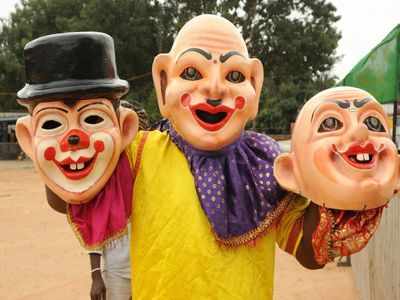
The city recently witnessed riot of colours and traditions in Palace Grounds as folk artistes from across the state performed during the Kempegowda Jayanti  celebrations.

Several traditional and folk artistes were present and performed traditional art forms like Hulivesha and mask show at the event.

source: http://www.timesofindia.indiatimes.com / The Times of India / Home> News> City News> Bangalore News / TNN / June 28th, 2018

Bengaluru turns the spotlight on German play scripts

GermanPlaysBF29jun2018

And the stage is set for the newest edition of German Spotlight in Bengaluru.

Over the past four years, this arts project has facilitated a lot more than just a cultural exchange between India and Germany. It’s a discourse between actors, directors and playwrights of two countries that aims at helping the audience “discover the fact that people around the world have more in common than we think”.

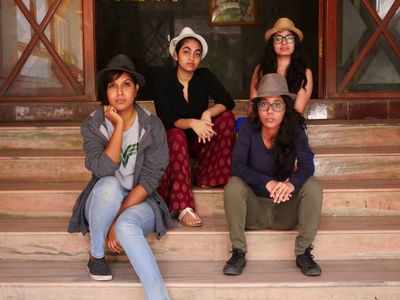
A collaboration between Sandbox Collective  band Goethe-Institut/Max Mueller Bhavan, the 2018 edition of the initiative will showcase English translations of four German plays in the form of dramatized readings.
Debosmita Dam, who is spearheading the project alongside Nimi Ravindran, says, “German Spotlight is a cultural exchange of a different kind. The scripts chosen for the dramatized readings are written by contemporary German playwrights, who are quite excited about their work being presented to the Indian audience. Although there is no set theme for the readings, the stories – which are made accessible through an online bank at Goethe-Institut – are interesting and quite relatable.” In the past, some of the German Spotlight scripts had been staged as full-length theatre productions in the city.

Laced with interactive sessions before and after the act, dramatised readings have been quite popular among theatre lovers of all age groups in the city. “It’s a curious storytelling format that the audiences usually find to be more engaging than watching a play at an auditorium, as they can almost visualise the scenes and be part of the experience,” adds Debosmita, who is also directing one of the four acts, titled Norway Today.

The show is opening on June 30 with the reading of Peer Pleasures, directed by Karen D’Mello. Speaking about the experience, she says, “Rehearsed play readings give a lot of freedom to the actor as well as the director to explore varied modes of acting within the performance. It’s a flexible format – something like the experience between writing a short story and a novel. Cut to Peer Pleasures, although it’s a German script, the story holds universal relevance. The plot is set in 2006, when SMS was the preferred mode of communication. It was fun to work around the basic emojis of that time.” The cast of this play includes artistes Honey Raza, Nisha Abdulla, Pranay Pandey, Sneha Ram, Vishnu Narain and Sunayana Premchander.

The four plays…

Peer Pleasures – directed by Karen D’Mello
The play is about six university students struggling to find their way through their dreams, their longing for love and their insecurities in the quest for something permanent.

Nightblind – directed by Kanchan Bhattacharyya

It deals with issues of familial discord, friendship and abuse in a relationship from a young and urban viewpoint.

The Jazz Conductor – directed by Lekha Naidu

The play speaks of music and war and hope. It brings to life the romance and nostalgia of the Jazz age, love for theatre and the good-old family amid unspeakable horrors.

Norway Today – directed by Debosmita Dam

This story is essentially a conversation between two young people, who belong to a generation where most of their interactions happen through technology.

source: http://www.timesofindia.indiatimes.com / The Times of India / Home> News> City News> Bangalore News / by Reema Gowalla / TNN / June 29th, 2018

Samsung R&D Institute-Bangalore Becomes ‘Champion for Local Markets’, Wins Zinnov Award 2018

Samsung R&D Institute – Bangalore (SRI-B) has been recognized as the ‘Champion for Local Markets’ at the prestigious Zinnov Awards 2018.

The awards recognize achievements of Indian R&D centres and honour stalwarts in the technology space. SRI-B is Samsung’s largest R&D centre outside South Korea.

The jury deemed SRI-B as the winner based on parameters such as its vision, initiatives, implementation and impact in the local market.

Under Samsung’s ‘Make for India’ initiative, SRI-B has been developing several India-specific innovations by understanding Indian consumers’ lifestyle and pain points. As part of this program, SRI-B has developed innovations for various B2C, B2B and Business to Government products.

“It is imperative to understand the challenges and pain points that Indian consumers face in their day to day lives and provide suitable technology solutions. Samsung has recognized this early on and has been continually innovating along this path to empower Indians and their businesses under its ‘Make for India’ program,” said Dr. Aloknath De, Chief Technology Officer, SRI-B.

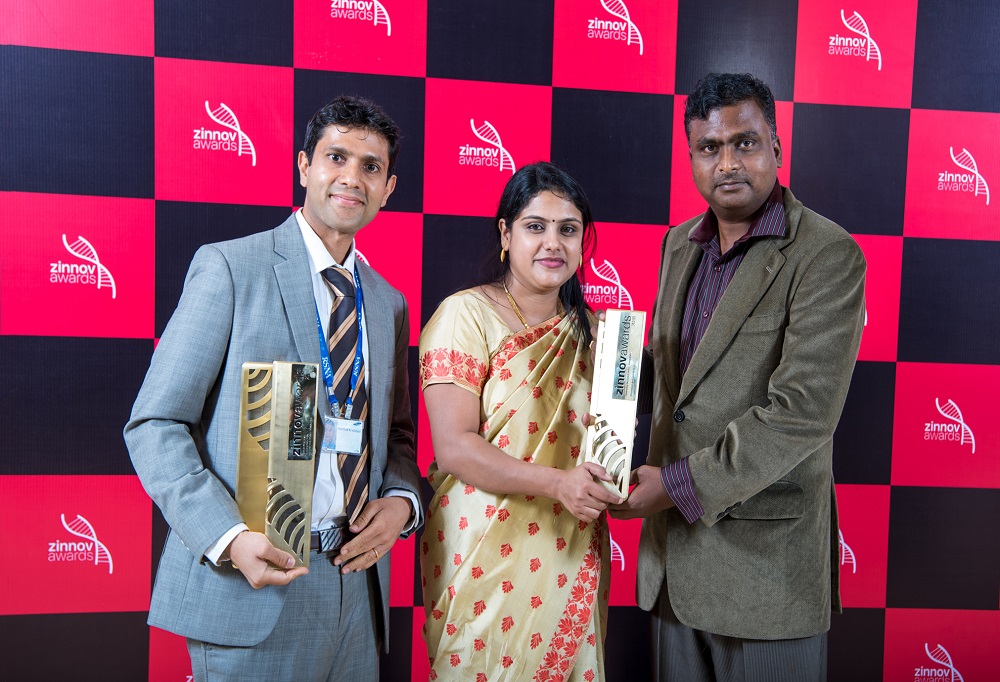
Samsung R&D Institute – Bangalore (SRI-B) has been recognized as the ‘Champion for Local Markets’ at the prestigious Zinnov Awards 2018. Karthik Krishnan (Left) with the ‘Technical Role Model (Middle Level)’ Award and Madhupa Chowdhury and Sundar Srinivasan with the ‘Champions for Local Markets’ Award won by SRI-B.

SRI-B has more reasons to celebrate this year at Zinnov Awards 2018 as Karthik Krishnan, who is a member of the Health and Medical Equipment (HME) Team at the R&D centre working on Medical Imaging and Visualization Technology, won the award for ‘Technical Role Model (Mid-level)’. He was awarded for his capability to influence others within SRI-B as well as beyond, to follow a technical career path.

“I am elated to have won this award from Zinnov as it is a testimony to the vibrant ecosystem that we are able to work within and create new technology. I would like to thank my team for all their support through the years, as well as SRI-B which has given me the opportunity to collaborate with others in our ecosystem and build my technical skills,” said Karthik after winning the award for ‘Technical Role Model’.

Over the last three years, SRI-B has introduced several products and services for its Indian customers. When Bixby Voice came to India with the Galaxy Note8, it was optimized for India by the SRI-B team to understand English in Indian accents. The device was also embedded with a feature that recognized text messages written in Hindi with the S-Pen and converted the message into Devanagari script. Engineers at the R&D centre had recently developed the Social Camera mode that was launched in the Samsung Galaxy J7 Max Smartphone. The Social Camera mode allows users to instantly edit and share photos and videos directly to social media sites from their camera app. SRI-B has also developed the Samsung Tab IRIS, which is the first commercial IRIS integrated tablet to be approved by UIDAI for Aadhaar and KYC verification.

This is the 9th year of the Zinnov Awards and the fourth consecutive year that SRI-B has won a Zinnov Award. SRI-B has won the Zinnov Award for ‘Great Place to Innovate’ in 2017, ‘Center of Excellence’ in 2016 and ‘Design Thinking’ in 2015.

source: http://www.news.samsung.com / Samsung Newsroom / Home> Brand> People & Culture / June 25th, 2018

A Practice That Cures But Leaves A Scar

Rootcure01BF28jun2018

Mysuru:

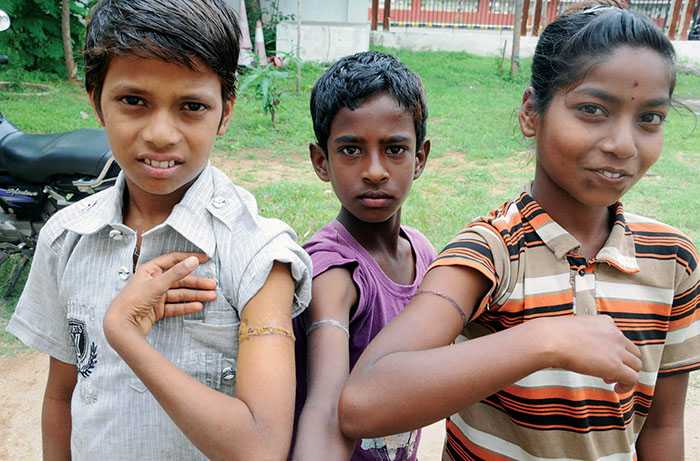
Here is a case that sounds as if it has come straight from Ripley’s Believe It Or Not TV show. A root from jungle is heated and tied to the arms of children suffering from jaundice, severe stomach ache and other ailments in the belief that Goddess Yellamma cures the pain and trauma. And believe it or not, according to patients who have undergone this painful practice, it actually cures!

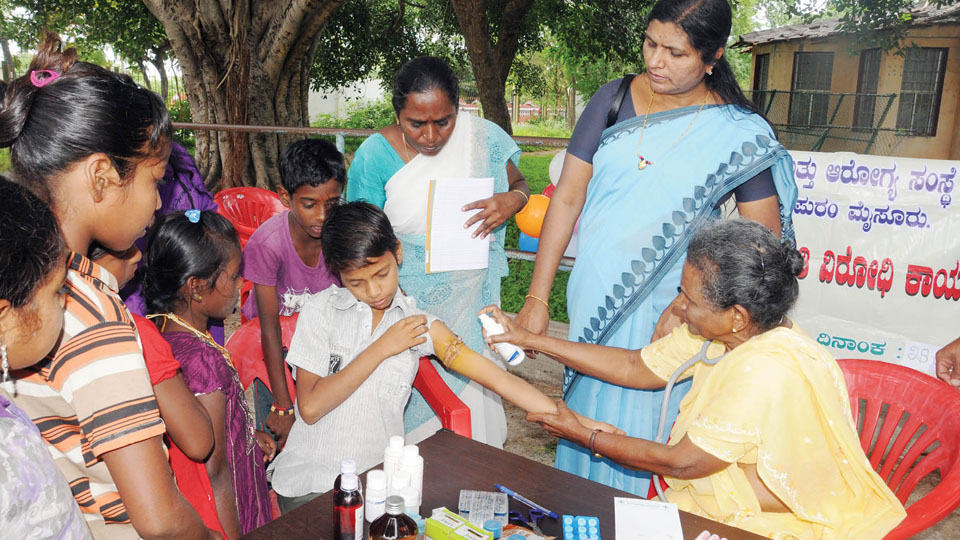
This practice came to light when volunteers from Rural Literacy and Health Programme (RLHP) were conducting physical examination as part of ‘Anti Child Labour Day’ event organised by RLHP at Bal Bhavan at Bannimantap this morning.

The volunteers came across at least eight to nine children who bore a deep round scar on their arms. So deep was the scar that the RLHP authorities were shocked to see the wound and they applied medicines after cleaning them.

When the volunteers questioned the children about the scars, they told them the scars were caused after a treatment for jaundice. Later, it was discovered that a certain community that resides behind Srinivasa Talkies at Bannimantap have been practicing astrology, collecting hairs to sell as wigs and curing ailments using roots since 20 years.

One of the community members, speaking to SOM said, “Hundreds of parents come to us with their suffering children. We then assess the ailment and get a special root from the forest, heat the root and tie it tightly around the arms of the children who are sick. Later, we wrap the root with a cloth and sprinkle water.”

Rootcure02BF28jun2018

“The root is tied for 24 hours and after that the ailment is cured. By the grace of Goddess Yellamma, so far our treatment has not failed and parents are happy that their children are cured,” he said. Many adults in that area were seen with these scars as they had undergone this treatment when they were children.

Dr. Christida Pais of RLHP who noticed this at the Bal Bhavan event expressed shock that even in these modern times, certain beliefs are being followed even by educated class. “These scars are permanent and there is no way to remove them except surgery. We will visit this particular area and educate the people about modern medical system,” she said.

Women and Child Welfare Department Deputy Director K. Radha who was informed about this practice by volunteers said, “I will visit these practitioners and conduct awareness programmes within a week.”

source: http://www.starofmysore.com / Star of Mysore / Home> News / June 28th, 2018

This century-old bandstand in Bengaluru hosted the best of regimental bands

BandstandBF28jun2018

Bandstand

England witnessed the brass band movement in the 1800s at the peak of the industrial revolution. Musical ensembles using a standardised range of brass and percussion instruments were in demand among the working classes. The latter appreciated cheap and good entertainment. By the late 1800s, as industries expanded and working-class numbers rose, brass bands became very sought-after in that country.

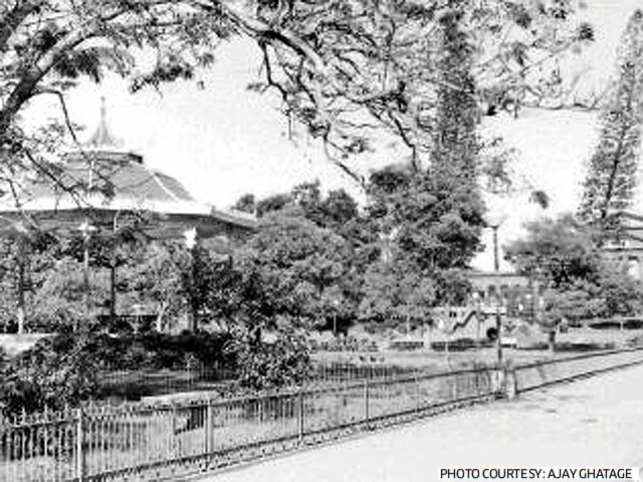
It did not take long to reach the colonies. Bengaluru’s bandstand came up in the 1870s. According to the Mysore Gazetteer (1897), there was a double-pillared, ground-level bandstand near the Bowring Institute. Then, around 1914, a proposal was mooted to demolish it and construct a bandstand inside the Cubbon Park. An ornamental, eight-pillared iron structure was imported from Walter Macfarlane & Co in Glasgow.

“Shipping such ornate structures from England was a way to show British strength and dominance in the colonies,” said Poornima Dasharathi of Unhurried.in, who conducts heritage walks in the Cubbon Park. “The bandstand hosted the best regimental bands and catered mostly to the soldiers and residents in the civil and military station here.”

Initially, the bandstand was located in a rose garden. Officially inaugurated in 1918, the Mysore Infantry Band performed there every Wednesday and Saturday, while the Madras Pioneer Group performed on the fourth Thursday of every month. The latter also put up a grand show there in 1927 to commemorate the silver jubilee of Nalwadi Krishnaraja Wadiyar’s rule. Even the Royal Air Force band played here.

Soon, the popularity of the bandstand increased and it became difficult to accommodate the crowds that turned up for the performances. At the suggestion of prince Jayachamarajendra Wadiyar, a music aficionado himself, it was shifted to its current location in front of the State Central Library. “According to old Anglo-Indian residents of the Cantonment, patriotic songs and Kannada music played at the bandstand post-Independence,” said Dasharathi.  Performances were organised by the Bangalore Municipal Corporation every weekend. “This died down in the 60s because many other venues of entertainment started mushrooming.”

 The bandstand soon dilapidated because of neglect. Two years ago, the horticulture department decided to restore the physical structure to its former glory. It also collaborated with the Bal Bhavan and the Department of Kannada and Culture to organise 6 am to 6 pm cultural events on Sundays. Mahantesh Murgod, deputy director of horticulture (Cubbon Park), said: “We have made arrangements to accommodate 100 people. So far, our slots are running full.  Music and dance engage beautifully with visitors in the park.”

source: http://www.economictimes.indiatimes.com / The Economic Times / Home> Magazines> Panache> City Life / by Divya Shekhar, ET Bureau / June 28th, 2018

Madivala lake transforms into biodiversity park

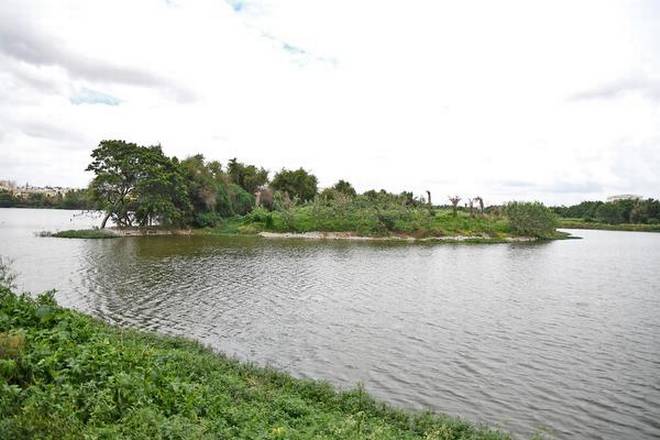
An island has been created in the lake as a nesting ground for birds and reptiles. | Photo Credit: G_P_Sampath Kumar

The 272-acre green space in BTM Layout has been under development since 2016

From just another lake in the city with a walking path along the bund to a biodiversity park, Madivala lake has undergone a massive transformation over the last two years. The 272-acre park in BTM Layout, which was under development since the end of 2016, is now home to many native species of flora and fauna. It is set to be inaugurated in the coming months.

The transformation was the result of a proposal by the Karnataka Knowledge Commission to develop the lake into a unique biodiversity park. Recently, Chairman of the Karnataka Knowledge Commission Dr. K. Kasturirangan met Chief Minister H.D. Kumaraswamy requesting him to inaugurate the park.

At present, only parts of the park, which is maintained by the Forest Department, are open to the public.

Under the project, an open butterfly park, conservatory of insectivorous plants and orchids, cycad and palm grove, herbal garden, island ecosystems and a scented garden are among the features that have been developed.

Professor C.R. Babu, Professor Emeritus, Centre for Environment Management of Degraded Ecosystems, University of Delhi, who is spearheading the project, said the park is being developed with an underlying theme to recreate self-sustaining ecosystems with native flora and fauna. It’s a one-of-its-kind park in south India, focusing on creation of the entire ecosystem of flora and fauna, unlike a botanical garden, where the focus is on flora. A biodiversity park offers ecological services like retention of groundwater and prevention of floods, he explained.

Officials said their idea was to make the park not only a place where citizens could relax and get a breath of fresh air, but also make it a place where people, especially children, could come to learn about native flora and fauna.

Butterfly park

Among the prominent features of the park is an open butterfly garden, developed by collecting plants from forests in and around Bannerghatta National Park, Cauvery Wildlife Sanctuary, and Kanakapura region. Around 132 plant species of both nectar and larval host plants have been nurtured to create a breeding space for butterflies. So far, around 40 species of butterflies belonging to five families have been spotted within the butterfly garden, officials said.

Orchids and carnivorous plants

Another significant feature is a collection of nearly 30 species of orchids, 20 Nepenthes pitcher plants, 25 varieties of succulents, ferns and aroids. Developed in separate temperature-controlled enclosures, they are being planted to educate public about the different species of flora. That apart, about 50 species of rare, endemic and threatened (RET) plants native to the Western Ghats have also found space in this park.

Islands and birding area

The park is also being developed to attract birds. Nearly a 100 fruit-bearing plants from 10 species have been planted to attract frugivorous birds, such as bulbuls and parakeets.

An island has been created in the lake as a nesting ground for birds and reptiles.

With the creation of this island, the lake area has been expanded by 10 hectares. This has enhanced the capacity of the lake to hold an additional 250 MLD of flood water during the monsoon. This would prevent flooding of areas surrounding the lake, Prof. Babu said.

According to project coordinator Dr. Padmavathi, there are a lot more features in the offing, which will be developed eventually. These include a rainforest ecosystem, swamp forests and wetland systems.

This project came about after Karnataka Knowledge Commission, in 2015, submitted a recommendation to the government to establish a biodiversity park at Madiwala lake on the lines of the Yamuna Biodiversity Park in Delhi. The government allocated Rs. 24.72 crores for the same and Karnataka Lake Conservation and Development Authority (KLCDA) was chosen as the nodal agency.

Proposal for management

The Knowledge Commission has urged the State government to create a separate board to manage the park. “The park requires maintenance. Having a dedicated board will help in the upkeep of the park,” said Dr. Padmavathi. Also, while the KLCDA was in charge of the project, with the wrapping up of the Authority, the project work was slowed down. Officials are now hoping that the park would be handed over to a dedicated management, which could take care of the maintenance work.

source: http://www.thehindu.com / The Hindu / Home> News> Cities> Bengaluru / by Shruthi H.M. / June 25th, 2018

Book on oldest known love story in Mangaluru released

‘L affaire,’ a literary work based on a love story which is known to have taken place in Mangaluru during 12th century AD, was released at St Aloysius College Auditorium in the city on Tuesday.

The book, written by Yenepoya Deemed-to-be-University Dean Dr G Shreekumar Menon, depicts the life of Jewish trader Abraham Ben Yiju, who had his origin in Tunisia and a Nair woman Aashu from Kannur in Malabar region.

Speaking about the work, Dr Menon said that Yiju landed in Mangaluru in 1132 AD for spice trade. He came across Aashu, who was a slave at a household in Mangaluru during the rule of Alupa ruler Alupendra.

Yiju released Aashu by paying money to her owner and freed her from slavery by marrying her. Yiju also set up a brass factory in the region. They were blessed with three children. Among them, two passed away.

Following clashes in Tunisia, Yiju was forced to leave Mangaluru, to his hometown. Whereabouts of Aashu after this incident are not known properly. Yiju passed away on August 11, 1156, he explained.

Letters by Yiju were preserved by his daughter. The letters were found in Cairo Genizah, the Egyptian Synagogue attic. They were kept intact as Yiju had written the letters with a mention of God.

According to Jewish tradition, any work that has God’s name inscribed in it, should not be torn away. The marriage certificate of Yiju and Aashu is among these letters.

The documents are now preserved in Russia.

Authors like Rabbi Mark Glickman and Amitav Ghosh have authored books based on the available documents, Dr Menon said.

Menon stated that the marriage of Yiju and Aashu completes 888 years in 2020 and requested the mayor to build a memorial for the couple.

Mayor Bhaskar K presided over the programme. Dean Dr B H Shripathi Rao, St Aloysius College Principal Fr Pravin Martis, Author Bharathi Shevgoor and actor Sahil Rai were present.

source: http://www.deccanherald.com / Deccan Herald / Home> States> Mangaluru / DHNS News Service, Mangaluru / June 26th, 2018