Category Archives: Arts, Culture & Entertainment

He walks the talk

Suchendra01BF28jun2018

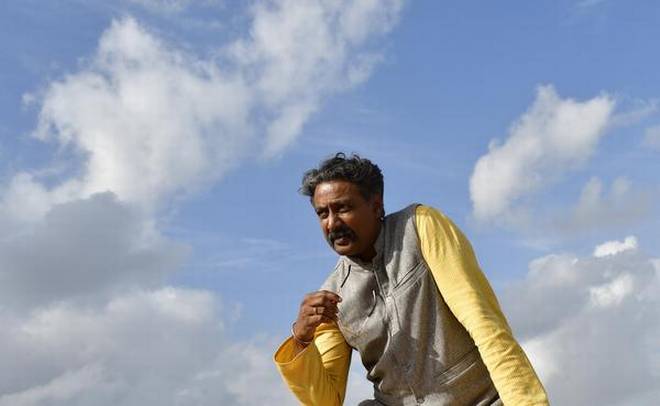
Actor-director Suchendra Prasad will now be making documentaries for the United Nation’s Development Programme

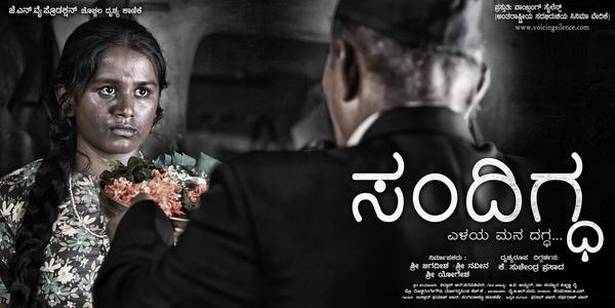
If you meet Suchendra Prasad, you will know that he has a great sense of humour. Behind that serious façade lives a clown. Everything he does, be it picking up a coffee mug and sipping from it, can keep you in splits. So you would think here is a funny man who can make one of the funniest films ever, but no. He prefers to make serious, educative films such as Prapaatha and Sangdhigdha. While the former talks about the first aeroplane made by an Indian, the latter is about child rights.
Suchendra02BF28jun2018

He justifies his choice saying, “I always felt there were enough people to make others laugh and that there were few who were touching upon certain subjects. So I decided to make use of the powerful medium of cinema to communicate those ideas meaningfully. For me, cinema means to present ideas that are not being touched upon and those that needed in-depth research. What others ignored became my forte. This was our means to voice issues that had been silenced. So we started documenting tradition, heritage, people, language,” says the actor, who is now in the news for being a part of the United Nation Development Programme (UNDP). He will work with various NGOs with UNDP, chronicle their efforts in areas of their work and make documentary films of various lengths.

“This happened by chance. UNDP has a centre in Bengaluru and are into development activities. We approached them to see if they would be interested in associating themselves with Sangdhigdha. As the discussion progressed, they asked me to document their works here,” explains Suchendra, who adds that he and his team have started their leg work and the project is a part of UNDP’s probono scheme. “It will be my contribution and I will not get any monetary benefit.” He looks forward to this as it will be his “way of contributing to UNDP. We have begun with farmer’s and women entrepreneurship. The documents, which will become their property, will be used by UNDP during their presentations or as study material.”

Where does that leave his films? “It should not affect my career as I will need a month’s time for each document,” states the actor-director, who is not new to world of documentation. He has been involved making documentaries for the past two decades with his own guild – Voicing Silence, formed in 2000. “It is an international guild for documentary makers. We have 46 filmmakers from across the globe as members,” beams Suchendra who has till date organised three International documentary film festivals.
Suchendra03BF28jun2018

Voicing Silence has covered ancient history, culture, farming, women entrepreneurship, Sanskrit, health issues, AIDS, ICAP (Indo-Canadian AIDS Project), budget and its policies, biographies especially of those who have turned centenarians. These are uploaded on YouTube.

He tries and does everything differently. His latest film Sangdhigdha has not yet got a theatrical release, but Suchendra has been going to various schools, educational institutions and child rights organisations to screen it. “We will eventually release the film. As of now, the focus is on making the film reach out to as many people – parents, Child Rights Commission, those in authority and so on. The film talks about child rights and how we have distorted them in our country. We have many safe guarding tools these days, yet, the rights have been violated. Instead of releasing the film in theatres, I dream of taking the film to every home.”

The film is being screened at various international film festivals across the world and Suchendra is thrilled that “Maneka Gandhi watched the film and has commended our efforts.”

What next? He reveals, he is currently working on a full-fledged Sanskrit film titled Tatraapi which means “even there. Vishnu Sharma has written the Panchtantra with moral stories, which will be juxtaposed with reality and contemporary ideas in my film. I want to tell people that Sanskrit is not dead but can be used effectively to communicate. In fact, there are five states in India that have Sanskrit as their official language. Most scriptures have been written in Sanskrit too.”

He is not worried about finding actors as “there are umpteen actors who are fluent in Sanskrit. He adds that the film will have subtitles so that everyone can understand the film. “We are looking for the right producer. Once that happens, the project will take off.”

Commercially and professionally too he has quite a few films to look forward to. There is Kannadakkagi Ondannu ottiMMCHBeega and Chemistry of Cariappa to name a few. In some, you will see him in his comical avatar.

source: http://www.thehindu.com / The Hindu / Home> Entertainment> Movies / by Shilpa Sebastian R / June 21st, 2018
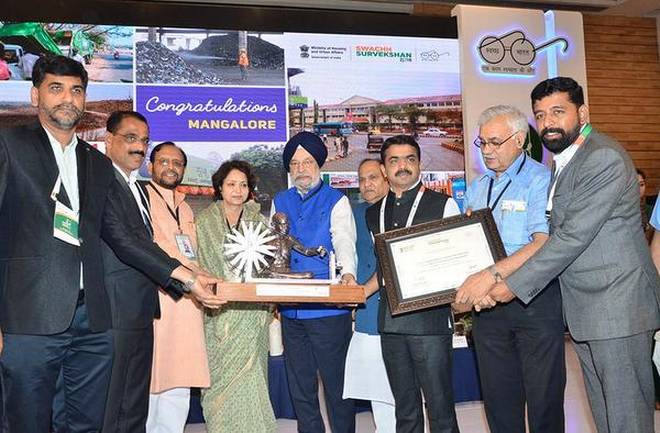
Award for Mangaluru City Corporation

Mangaluru officials receiving the award from Union Minister for Housing and Urban Affairs Hardeep Puri in Indore, Madhya Pradesh, on Saturday. | Photo Credit: Supplied

The Mangaluru City Corporation received ‘India’s best city in solid waste management’ award under the categories of cities having a population between three lakh and 10 lakh under Swachh Survekshan 2018 at Indore, Madhya Pradesh on Saturday.

Union Minister for Housing and Urban Affairs Hardeep Puri presented the award at a function.

Bhaskar K., Mayor, Mohammed Nazir, commissioner of the city corporation, Naveen R. D’Souza, chairman, Standing Committee on Health and Education, and Madhu S. Manohar, Environment Engineer at the corporation, received the award. Mangaluru was among the 23 cities selected in the country for the national award under different categories.

The survey by the Union Ministry of Housing and Urban Affairs assessed 4,203 urban local bodies under the aegis of the Swachh Bharat Mission (Urban) between January 4, 2018 and March 10, 2018. The survey team was in Mangaluru for four days in February, 2018.

The on-field survey for Swach Survekshan had been conducted by an independent agency and the data for ranking the cities were collected through direct observation, citizen feedback and service-level progress..

source: http://www.thehindu.com / The Hindu / Home> News> Cities> Mangaluru / by Special Correspondent / Mangaluru – June 23rd, 2018

Family plots

Mysuru :

About a quarter of a kilometer from the Bengaluru-Mysuru Highway, on the banks of the Cauvery, lies a cemetery. At the gates, there are the words “Garrison Cemetery, Seringpatam(sic), AD 1800, Latest Burial. 1860” Inside, neat rows of memorials – brick and mortar, washed with lime and shell, stand on the grass.

VidhyalakshmiBF24jun2018

Though it’s not as well known as other popular tourist destinations at the scene of Tipu Sultan’s last stand, the cemetery sees a few visitors everyday. There, as they walk along the memorials, they would meet Vidhyalakshmi, the caretaker, who makes sure that the gravestones are kept clean and well maintained. She also takes care of the guest book, an analog custom that seems quaintly appropriate to the place.

Some of the graves are those of the members the Meuron regiment, who fought in the fourth Anglo Mysore War (1799) – where Wellington faced off against Tipu Sultan for the final time.

The Meuron Story

Charles-Daniel de Meuron was the eldest son of a tanner and merchant. In 1755, at the age of seventeen, he joined the Swiss Régiment de Hallwyl. He saw several engagements in the seven years war and rose from ensign to the rank of colonel in 1778, fighting, among others, the English.

In 1781, at the behest of the French, Meuron created his own, eponymous unit. After an eventful period in the Cape of Good Hope, Meuron returned to Europe to retrieve his arrears from his employers, the house of Zeeland. However, with the situation in Europe getting even more tangled as a result of the French Revolution, Meuron decided to get closer to the British, who he saw as the rising power in Europe and around the world. In 1798, the Meuron joined the British, and his regiment – two battalions of five companies of infantry – became part of the British army.

The Meuron regiment distinguished in the Anglo-Mysore War, and Wellington, in an 1805 letter, wrote, “I had under my command for some years the Swiss Regiment de Meuron, which, for good conduct, discipline, and other military qualities, was not surpassed by the English Regiments”.

Meuron himself died in 1806, a lieutenant general in the British army, but his regiment lived on, moving from India to America, where it took part in the war of 1812, and was finally disbanded in 1816.

The soldiers from the Meuron regiment who fought in the fourth Anglo-Mysore War were buried in the Garrison Cemetery and later, their family members who stayed on in India.

Restoration

Almost two centuries later, in 2002, a descendent of de Meuron returned to Mysuru. Louis Dominique de Meuron, along with his wife Monique, was looking for traces of his famous ancestor. At this time, the Garrison Cemetery was in poor shape. According to a report “dense growth of vegetation (was) hiding many of the tombs and making it almost impossible to even tread on some parts of the site. Some tombs were found to be either totally or partially demolished”.

Louis Dominique de Meuron became determined to do something about the restoration of the cemetery. The couple met conservation architect Ravindra Gundu Rao from Mysuru and commissioned him to undertake the restoration of the cemetery. The project proceeded with the approval of Karnataka’s Department of Heritage, with the then director, Venkatesh Machaknur, taking a personal interest in the restoration. The late MS Nagaraja Rao, who was the former Director General of the Archaeological Survey of India, together with Dr Gayathri, the retired Deputy Director of the Department of Archaeology and Museums, were also members of the advisory committee.

For Gundu Rao, this was “one of the most cherished endeavours” he has undertaken. The project involved a total umber of 12-18 masons, craftsmen and other skilled workers. The restoration was carried out using mostly materials available in the late eighteenth century – lime from a local quarry, brick, jaggery syrup and tree gum. The restoration was completed in 2007.

The Next Generation

Over the past decade, the de Meuron family have remained involved in the upkeep and maintenance of the Garrison Cemetery. Louis Dominique and Monique have passed on, but their son Jean-Léonard and daughters Sophie and Héloïse, have maintained their connection.They have funded the employment, as caretakers of the cemetery, of the late Nagaraj, for about four years, and over the last six years, to date, Vidhyalakshmi, local residents of the Island Town.

And with the passage of time, the weeds have grown, and invading monkeys and falling tree branches have started to damage the restored graves. The de Meurons have decided that it is time for another, smaller, restoration project. Ravindra Gundu Rao, because of his knowledge of the project – and his own personal connection – is contributing time and expertise on a voluntary basis. “Because the affection and consideration I’ve received from the family, this project is a labour of love for me. Within a month of us taking up the restoration project in 2007, Louis Dominique passed away. I had just sent him the first progress report. It was as if this was his last mission in life”, says Gundu Rao.

Revival

The graves need constant maintenance. “ Due to the climatic conditions – the summer and monsoon, especially – the structures tend to deteriorate,” says Gundu Rao. “The tombs are in various styles including obelisk, a Rotunda, Casks, in addition to the conventional Christian forms, while some are even of the Hindu ‘Brindavan’ type. We have to use traditional methods of restoration along with the original materials which were used back in the day for their construction to ensure we consistency”.

Gundu Rao is full of praise for the support given by the de Meuron family. “There are 309 tombs and only nine of them contain de Meuron regiment and family members but they have taken it upon themselves to maintain all the tombs,” he says. He is also critical of the lack of support by the government. “Unfortunately we had to wait for the family to trace the cemetery and protect it while it should have been the duty of our State and the public to preserve it. If it were listed as a protected State monument by the concerned organization, it would do wonders for the cemetery,” he says.

“It is a challenging project. Since the brick and mortar structure is over two centuries old, we must use materials such as lime mortar, natural additives, traditional techniques and tools for the restoration work. Due to weathering, the plastering has been damaged, cracks and fissures which pose an immediate threat to the structure are being looked into,” says Malavika M Murthy, an architect who is supervising and assisting Ravindra Gundu Rao on the project.

Family Matters

The close involvement of the de Meurons is a powerful motivator for the people involved in the project, says Murthy. “They contribute their inputs at every stage and that motivates our team and pushes us to give the project our best. Seeing their emotional connection, the project has become emotional for us too,” she says.

“I am fortunate to be part of such a project which has so much history and emotions associated with it. If we don’t save our heritage, the future generations will be unable to understand the significance and importance of heritage,” notes Nanjundaswamy N, a supervisor at the project site.

“We, as lovers of Indian heritage, find particular interest in (the cemetery’s) conservation because of our family history. Over the last few years, we have supported the ongoing general upkeep of the cemetery through the caretaker, first late Nagaraj, now through Vidhyalakshmi. We strive to keep up the condition that our father, Louis Dominique de Meuron, in collaboration with the Department of Archaeology, Museums and Heritage of the State of Karnataka, achieved in 2007 with their major restoration project,” says Jean-Léonard de Meuron.

So, if you ever find yourself on the road to Mysuru, it may be well worth your while to take a short detour and walk among the graves of the Swiss soldiers who fought and died valiantly in a faraway land. Take a look at the memorials, sign the guestbook and, most of all, remember to tip the caretaker.

source: http://www.timesofindia.indiatimes.com / The Times of India / News> City News> Bangalore News / TNN /  by Shivendra Urs / June 24th, 2018

Hebbal stone inscription found on road could be Bengaluru’s oldest

Hebbal stone inscription

Bengaluru :

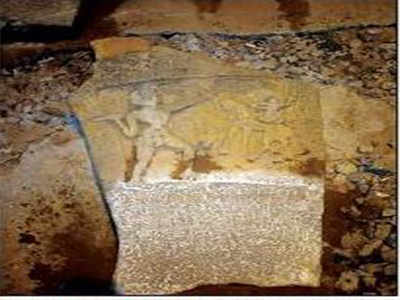
A hero stone  with engraved inscription at the bottom, which was discovered at Hebbal recently, could be the oldest such inscription found in the city till date.
Experts who have analysed the writing on the stone say the inscription belongs to the 8th century and could be older than the KR Puram inscription  which dates to 750AD and is the oldest known inscription so far. As highlighted by TOI, a few stone installations were saved by a group of youngsters from getting bulldozed for road work at Hebbal a few weeks ago.

Epigraphist and historian PV Krishnamurthy, who analysed the inscription on the hero stone said it is in poorva Halegannada (pre-old Kannada) language. Krishnamurthy said it belongs to the times of Ganga dynasty ruler of Sripurusha, who ruled between 730AD and 770AD. “This is one of the oldest inscriptions of Bengaluru. However, officials from the Archaeological Survey of India (ASI) will be able to throw more light on the exact period ,” he added. Gangas are one of the oldest dynasties to have ruled Karnataka region.

Rajeeva Nrupathunga, founder of Heritage Revival Hub, whose team played a major role in saving the inscription, said they discovered four stone structures on the roadside near Maramma Temple, Hebbal, which were about to get buried under a heap of gravel. One of them was a stone with inscriptions belonging to the 17th century (1689) and the same has been recorded in Epigraphia Carnatica by Benjamin Lewis Rice.

Apart from this, another hero stone and two other stone installations called yantrada kallu were also found.

On Wednesday, while relocating the hero stone to a safer place, we discovered an inscription underneath. It came as a surprise even for epigraphists as inscriptions aren’t found below hero stones,” he added.

Rajeeva said the inscription is rare as it has not been recorded anywhere till now. “We checked Epigraphia Carnatica by Benjamin Lewis Rice, which has records of around 9,000 inscriptions in Old Mysore Region, including Bengaluru. But we did not find a mention of the Hebbal hero stone inscription . Rice has recorded 150 major inscription in Bengaluru region, but not this one,” he added.

By Thursday evening, Rajeev and team, in coordination with the local administration, shifted the hero stone and the other structures to a nearby BBMP land to keep them safe.

When Hebbal was PerboLala Nadu he discovery of the inscription shows that Hebbal as a place existed in the 7th to 8th centuries. The inscription has a name, PerboLala Nadu, meaning a big town or a province with a big lake. According to Rajeeva and team, this could be the earlier name of Hebbal.

Rajeeva said the inscription and the hero stone are in honour of a man who died while saving the province from attack. “It also has the name of a local ruler called Pelnagattara. A relative of the man who died installed the hero stone and engraved the related details below it. The inscription further says that PerboLala Nadu was the administrative province of around 30 villages,” he added.

Heritage enthusiast Swaminathan Natarajan described the development as a great discovery. “A simple looking hero stone has such history in it. I hope this discovery will reenergise the ASI’s interest in saving and conserving the heritage of our city,” he added.

KR Puram inscription
The inscription at KR Puram dates back to 750AD, as recorded in the Epigraphia Carnatica by BL Rice, and is one of the oldest-known Kannada inscriptions in Bengaluru. This one too mentions the name of Ganga dynasty ruler Sripurusha. The script in the inscription is similar to the Halmidi one found in Hassan in 1936.

source: http://www.timesofindia.indiatimes.com / The Times of India / Home> News> City News> Bangalore News > Civic Issues / by Rohith BR / TNN / June 23rd,2018

Shivamogga woman is Mrs. India Universe

Manisha Varun, winner, Dazzle Mrs. India Universe 2018, with her husband M.V. Varun and grandparents M.V. Suryanarayan and Chayadevi in Shivamogga on Monday.

Manisha Varun, from Shivamogga city, who won the Dazzle Mrs. India Universe 2018 pageant, has said she would like to work for the empowerment of and prevention of atrocities against women.

Ms. Varun won the title in 25-35 years category. She hails from Hosapete and is married to Varun V. Malur, an arecanut merchant from Shivamogga, who is also an active member of Round Table India organisation. They have two children. Along with her husband, she had conducted sessions on gender sensitisation and awareness programmes on providing access to education for girls at various schools and colleges in Shivamogga. The pageant’s theme was ‘Stop violence against women’.

Ms. Varun told presspersons here on Monday that external appearance alone was not enough to win beauty pageants. The comprehensive personality of the contestant, including the physical, emotional and intelligent faculties are considered. As many as 26 women from various parts of India took part in the competition. Ms. Varun was among the five selected for the final round that was held in Colombo, Sri Lanka, on June 14.

As part of the preparation for the competition, she underwent four months of rigorous training in physical fitness, communication skills, appearance, and etiquette.

source: http://www.thehindu.com / The Hindu / Home> News> States> Karnataka / by Staff Reporter / June 19th, 2019

Sahitya Parishat to host first Halegannada Sahitya Sammelan

Three day-convention on the ancient language will be held at Shravanabelagola

For the first time in the century-old-history of the Kannada Sahitya Parishat (KSP), a three-day convention will be held on Helagannada, which according to linguists evolved around the 3rd century. This convention is timely, given that research and studies on the classical Kannada language are gaining momentum in various institutions.

The convention will be held at Shravanabelagola, the Jain pilgrimage centre, from June 24 to 27. “Though sessions on Halegannada were held as part of larger conventions on Kannada, this is the first time that a full-fledged convention is being in held in the history of the KSP,” said, Manu Baligar, president of KSP.

S. Settar, historian and author of Halegannada: Lipi, Lipikara and Lipi Vinyasa — a monumental study of Kannada script, literature, and scribes — has been chosen as the president of the convention. Mr. Shettar will be taken in a procession from Chandragiri Chikabetta to Chavundaraya Mantapa.

The convention will be inaugurated by former Prime Minister H.D. Deve Gowda and Dr. Shettar will deliver the presidential address. Noted scholars, including Hampa Nagarajaiah, president of the Kannada Development Authority; S.G. Siddaramaiah, sanskrit scholar; professors Mallepuram Venkatesh, Chandrashekar Patil, Baraguru Ramachandrappa, Purushottam Bilimale, and P.V. Narayan will participate in the convention.

There will be sessions on 11th century literature: Management of violence and non-violence; Revisiting of Kannada classical literature; relevance of Halegannada; and study of Adikavi Pampa and Ranna, one of the earliest and great Kannada poets. As many as 16 poets are expected to participate in the poetry reading session, which will be held on the inaugural day.

This Halegannada sammelan is an attempt to awaken the present generation to Halegannada literature. “Papers presented at the convention will be compiled into a major work in Kannada by the KSP by next year,” said Mr. Baligar.

According to noted scholar Hampa Nagarajaiah, “Kannada language has branched off from the Proto-Dravidian family of languages in as early as the 5th century BC. Making Shravanabelagola the venue is more meaningful and appropriate, as it serves as a laboratory for the evolution of Halegannada literature.” Underlining the need to make Halegannada an integral part of studies for higher education curriculum, Mr. Nagarajaiah said since historical events were documented in ancient Kannada, it becomes pertinent to read works written in that language.

source: http://www.thehindu.com / The Hindu / Home> News> States> Karnataka / by Muralidhara Khajane / Bengaluru – June 15th, 2018

Flaneur in the city

Writer Shoba Narayan | Photo Credit: S_R_Raghunathan

Author Shoba Narayan on her relationship with Bengaluru and what makes it ‘home’ for her

My first encounter with Bengaluru happened in the 80s when I was still a student. I would visit my cousins in Rajaji Nagar. At that time, Bengaluru seemed like a small town with good weather, lovely people, greenery and all the clichés. All those things that old-timers in the city hark back to are true.

I moved to the city in 2005. Even then, the city seemed liveable. My children began their schooling here. I think the drastic changes started happening when the construction of the metro began, though it is a positive step.

I find the people of Bengaluru are genteel in the sense of being welcoming. Even the auto drivers are more polite, you can walk into a shop and look around and leave, without the shopkeeper saying something rude. People have more of a ‘live and let live’ attitude, they speak multiple languages, which is good for an immigrant like me. The sad part, however, is that I am learning Kannada only now. I love the weather, parks, and flowering trees, with different blooms at different times. I love the fragrance of the Millingtonia Hortensis (Indian cork tree), also known as the tree jasmine.

The best part about Bengaluru is that it is enough of a South Indian city, for what we expect from one, with some sense of civility and cleanliness. At the same time, it is enough of a cosmopolitan city for global citizens to feel at home.

Seasonal Summer fruits for sale in Bengaluru | Photo Credit: G_P_Sampath Kumar

As an author, I find there are many Bengalurus, as it should be, in every great city. The Bengaluru that interests me is that of the vendors who walk the street. The jamun season is here and in Malleswaram, you’ll find baskets of litchis and jamuns, the way they are arranged, in pyramids, is so beautiful, as are the santhes and melas of averkkai, and the seasonal flowers in the city market. I like how when you walk into Russell market, you will find English vegetables on one side and Indian vegetables on the other. In the Dharmaraja Koil street intersection, you will find a woman who knows the benefits of different greens. This is the Bengaluru I am interested in, it provides a lot of fodder for anyone who wants to write about it.

Cubbon Park | Photo Credit: V Sreenivasa Murthy

And of course, there are the milk ladies and the milkmen. Even yesterday, I saw a man on a bicycle carrying milk in aluminium pails. They are ubiquitous in my neighbourhood, around Ulsoor . They are part of a way of life that I find hard to replicate in other cities.

The changes I have hoped to see in the city are already happening. Most writers have this element of ‘flaneur’ where they walk around the streets to get inspired. It is nice to see that public spaces such as Church Street, are being remodeled for pedestrians. I feel this is still a pedestrian-friendly city, where throngs walk on the streets. I would like this writerly aspect to grow.

A view of fruits shops at Russell Market in Bangalore   | Photo Credit: Bhagya Prakash K
A view of fruits shops at Russell Market in Bangalore | Photo Credit: Bhagya Prakash K

I began as a reluctant Bengalurean. Those who grow up in one location all their lives, leave a little bit of their hearts behind. I always thought of Chennai as home. Now Bengaluru is my home, where I take NRIs out for shopping, go to Avenue road for street food, to CTR or Vidyarthi Bhavan for good morning dosas, walk around Ulsoor lake, go birding in Lalbagh or Cubbon park. The process by which a city becomes ‘home’ is when every place is associated with a memory. I have so many associations with the city. I have spent so many afternoons at the tennis association, hanging around while my daughter learned tennis. I have gone rock climbing at the Kanteerava stadium, I have signed up for 10k runs.

What I regret is not being engaged in the vernacular circles, which I was not able to do because I can’t read and write in Kannada. On the positive side, there is enough fodder for writers (in English) in Bengaluru, from lit fests to spaces such as Atta Galatta or initiatives such as The Great Indian Poetry Collective. One has the chance to listen to inspiring talks at several venues from The Bangalore International Centre to the National Gallery of Modern Art. One can choose to be part of the community of writers if one so chooses, people here are inclusive, accepting and welcoming.

The fact that I have got by for 10 years, communicating in Tamil, until I learned Kannada, says something about the city.

As told to Harshini Vakkalanka

This column features the city through the eyes of a prominent Bangalorean

source: http://www.thehindu.com / The Hindu / Home> News> Cities> Bengaluru / by Harshini Vakkalanka / June 13th, 2018

Seed swap, a growing trend among green thumbs

Sharing a passion: A file photo of participants at a seed swap event organised at Cubbon Park in Bengaluru.   | Photo Credit: Special Arrangement
Sharing a passion: A file photo of participants at a seed swap event organised at Cubbon Park in Bengaluru. | Photo Credit: Special Arrangement

From virtual connection on social media to physical meet-ups, urban gardeners are slowly but surely warming up to the idea

Sharing food, or even ingredients, is common. Now, however, the growing number of people who share a passion for growing their own food also share an essential component of what they produce: the seeds.

Right from virtual connection on social media to physically meeting, residents of the city are slowly but surely warming up to the idea of seed sharing.

This exercise not only ensures higher germination rates and less dependence on commercial sellers, but also gives novices in the field a chance to learn first-hand from the experienced on how to go green and organic, they say.

Good response

After organising its first Seed Swap in 2017, the Backyard Factory is back with another swapping event this month. “The first seed swap event was well appreciated. We had posted information about the event on Facebook and a good number of people turned up for the event at Cubbon Park. The idea was to let people bring excess seeds from their produce and share them with people who are interested in growing their own food. It was a mutual exchange. What was surprising was most of the participants were young gardening enthusiasts,” said Lincy Inder, who conducts kitchen gardening workshops for schoolchildren.

This time, the event will be held on June 30 at Cubbon Park, and Ms. Inder expects even better participation than the last time.

While meetings are very essential for seed sharing, another group also makes good use of social media to share seeds with the community. Members of Grow Your Own Food, a Facebook community, put up details of excess seeds available with them on social media. Others can contact the group if interested. The members meet once in two months for a seed swapping event at Lalbagh.

“Whatever we grow, we save the seeds for ourself and to share with others,” said Suresh Rao, a member of the group.

Mr. Rao said the best thing about seed sharing is that there is 100% guarantee of the seeds germinating. “It is not the case with store-bought seeds. We usually share tomato, brinjal, gourd, and all types of greens during the meets,” he said. The group also promotes heirloom seeds by sharing them.

Explaining how the members store the excess seeds for sharing, he said, “It is quite easy. From two tomatoes, 100 seeds can be obtained, which can be saved for the next season. One brinjal has around 200 seeds. Though the seed saving technique for each variety differs, it is not rocket science. During the meet-ups, we share the concepts with newcomers,” Mr. Rao said.

Another city-based group, Oota From Your Thota, which encourages people to grow their food organically, also organises seed swaps among members regularly.

A common practice

While urban gardeners are just getting used to the idea of seed sharing, the practice is common among farmers, said Hemanth, farmer and member of the Facebook group Bangalore Gardening. “In our farming community, seed sharing has always been a common practice. It helps reduce farmer’s dependence on commercially sold seeds and saves a lot of money,” he says.

The Horticulture Department too gives away seedlings instead of just seeds to anyone interested. “After monsoon, we distribute the excess seedlings to interested people for free. Most are tree seedlings. In a year, at least 5,000 seedlings are given away,” said M.R. Chandrashekar, Deputy Director, Lalbagh.

source: http://www.thehindu.com / The Hindu / Home> News> Cities> Bengaluru / by Sarumathi K  / Bengaluru – June 11th, 2018

Stamping home the message of orchid conservation

M. Lokeshwara Rao
M. Lokeshwara Rao

For many, retirement can pave away for new opportunities and give time to pursue forgotten hobbies. M. Lokeshwara Rao, retired Principal Chief Conservator of Forests in Nagaland who was the director of the Indian Council of Forestry Research and Education in the city, is highlighting the destruction of a species of flowering plant and the ways to conserve it. And he is doing this not as a forest service official, but as a philatelist.

Mr. Rao, who retired in June last year and lives in Bengaluru, always liked collecting stamps. “As a child, I used to collect whatever stamps I could. But once I got selected as an IFS officer, I had to give up the hobby as there was no time to pursue it. Now, after retirement I have all the time I need,” he said.

The theme he has chosen is orchids.

“Orchids are only found in the Western Ghats region and in the northeastern regions of the country. I am fascinated by them. It is no secret that we are losing forest cover. I wanted my stamp collection to represent this,” said Mr. Rao, who within a few months of starting his collection won a bronze medal at the IMPEX-2017 contest held by the Philatelic Society of India.

Silver medal

In May this year, he was awarded a silver medal at the Rocky Mountain Stamp Show in Denver, United States, for his exhibition on ‘Orchid distribution, its habitat destruction and conservation’.

At the exhibition, he displayed orchid stamps from 65 countries. “The first orchid stamp was released in 1909 by countries in the Caribbean Islands. Now I am collecting stamps representing national parks,” said Mr. Rao, who during his service was recognised for his efforts to save the Amur falcon.

He is now getting ready for his next international exhibition, in Macau in September.

source: http://www.thehindu.com / The Hindu /Home> News> Cities> Bengaluru / by Staff Reporter / June 09th, 2018

Women scale Himalayan heights

Chasing the thrill: The all-woman team of trekkers on the expedition to Mount Baradasar Pass in the Himalayas.

27 women from Karnataka trekked to Mount Baradasar Pass in a fortnight

They had heard exciting tales of trekking in the snow-capped peaks of the Himalayas, but were apprehensive whether they could embark upon one such expedition in view of the freezing temperatures and alien terrain.

But, a total of 27 women from different parts of Karnataka successfully pulled it off by completing a trekking expedition to Mount Baradasar Pass in the Himalayas recently.

Adventure groups Tiger Adventure Foundation (TAF) and Mountain Goat organised a trekking expedition to the Himalayas exclusively for women. During the fortnight-long expedition, the women – between 13 and 65 years of age – passed through various camps in the Himalayas before reaching the summit of Mount Baradasar Pass situated at a height of 14,500 ft on the border of Uttarakhand and Himachal Pradesh.

TAF’s D.S.D. Solanki, an adventure enthusiast, who has been organising trekking expeditions for more than two decades, said the recent expedition to Baradasar Pass by women was the first of its kind in the adventure history of Karnataka. After undergoing endurance training for three weeks, the trekkers – hailing from Shivamogga, Madikeri, Hassan, Chickaballapur, Mysuru and Bengaluru – assembled in Mysuru and left for the expedition on April 17. They reached Dehradun on April 20, where acclimatisation and orientation programmes were held at the Sankri base camp.

For Anitha Arunakshi, a housewife, who had only seen hailstones accompany rains in Mysuru, the huge hailstorm that rocked Dhal Dhal Ridge camp during the expedition was an experience of a lifetime. The entire camp site turned white after the hailstorm, she said. In Devabasa camp, the trekkers experienced large amount of snowfall, submerging them in knee-deep snow. “With snow all around, it was bliss,” said Pratibha Garla, a dentist from Mysuru.

The trekkers reached the summit of Baradasar Pass on April 26 at 10.38 a.m. and hoisted the national tricolour. They spent a few minutes on the peak enjoying breathtaking visuals of different mountain peaks, besides the valleys.

The team returned to Mysuru on May 2.

Suma Mahesh, past president, Inner Wheel Club, Mysore Central, said she was able to complete the expedition and experience the thrill of trekking after overcoming her initial apprehensions.

Riya Solanki, 13, who recently trekked to the Everest Base camp situated at a height of 17,590 ft, was another member of the camp.

Before embarking on the expedition, the trekkers, whose team was named ‘Nari Shakti’, took part in Josh Run and took out an awareness rally on voting rights in Mysuru.

source: http://www.thehindu.com / The Hindu / Home> News> States> Karnataka / by Special Correspondent / Mysuru – June 06th, 2018