Category Archives: Arts, Culture & Entertainment

A peep into the past! Private heritage homes in Bengaluru are opening their doors to guided tours

Bengaluru  :

Within a radius of one kilometre in Basavanagudi are a string of old bungalows, each with a story to tell. One century-old house was built by former Mysore dewan MN Krishna Rao while another stately structure belonged to M Mahadevan of the Survey of India. Two homes nearby belonged to freedom fighter Nittoor Srinivasa Rau and HAL’s former financial director CV Srinivasa Rao.

Telling their stories and what they mean to the city are a bunch of historians who, with help from the present owners of these homes, are organising tours around them.

 “This makes people aware why it is important to conserve private heritage and what it takes to maintain them. By listening to homeowners, people connect better to the city’s past,” said Mansoor Ali, whose Bengaluru By Foot has guided over 750 people through these homes so far.

 Awareness about private heritage is much needed. According to the Indian National Trust for Art and Cultural Heritage (INTACH), private structures are among the most poorly conserved in Bengaluru. In the past 30 years, the city has lost 75% of its heritage homes, with only 129 out of 510 surviving today. While the Revised Master Plan 2031 has included and listed these buildings, the provisions are far from robust.

Malleswaram resident Vardan Chakrapani said that opening out his 82-year-old Arcot House only increases his family’s sense of pride. His grandfather AL Munirathnam was an engineer for the Shivanasamudra hydroelectric project.

Likewise, MR Narendra, grandson of dewan MN Krishna Rao, is happy to indulge tourists with stories and souvenirs of his ancestor. “These are like-minded people who appreciate the value of the old Madras-tile roof, rosewood staircase, teakwood furniture and lime-mortar building. It’s all about giving them a new perspective about old homes.”

Marvelling at a colonial home from the outside gives no glimpse of the travails of its owners, the leaky pipes and crumbling roofs, said Poornima Dasharathi, whose organisation, Unhurried, also organises walks in the city. “Most homeowners are often pestered by real estate sharks. These last-remaining structures survive only because of individual will power. Owners must have a helping hand in a robust legislative framework that recognises, protects and provides some monetary concession.”

 Arjun Chaudhary, an instructional designer at Manipal Global Education, who took a guided tour recently, said these homes also give an insight into how homes could be built in a sustainable and ecofriendly way. “Preservation legislation is easier said than done. But the government must make a genuine effort to categorise them and allocate funds.”

source: http://www.economictimes.indiatimes.com / The Economic Times / ET Home> Magazines> Panache / by Divya Shekhar, ET Bureau / June 05th, 2018

‘Tree Man’ of Channapatna spent earnings to create urban forest

Bhoohalli Puttaswamy

“How many saplings you have planted so far to build a green tomorrow? If you have planted any, it is commendable. If not even a single, plant at least one and nurture it. There is only one earth and we all should strive to preserve it for the future generations as well as our better tomorrows.” – This is the advice of Bhoohalli Puttaswamy to whoever he meets.

The 63-year-old retired history lecturer from Bhoohalli of Channapatna taluk is popularly called the ‘Tree Man of Channapatna’. In a little over 11 years, he has single-handedly planted around 4,000 saplings on barren lands, roadsides and government land. He has also involved students in planting over 500 saplings in and around Channapatna.

One of the tree parks created by environmentalist Bhoohalli Puttaswamy in Channapatna. He has planted over 4,000 saplings at different parts Channapatna taluk in Ramanagaram district since 2007.

Tree parks

The sexagenarian has converted 3.5 acres of barren land at Bhoohalli into an urban forest by planting nearly 500 saplings of varieties of native species. He created ‘Jeeveshwara Vana’ with 500 saplings next to Mahadeshwara Temple on Channapatna-Sathanur Main Road, and ‘Vidyarthi Vana’, next to Jeeveshwara Vana, with the involvement of students of various colleges. While he created ‘Kavi Vana’ near Bhoohalli with around 1,000 saplings, he increased the green cover with varieties of saplings at Kempegowda Layout in Channapatna.

It all started with an effort to prevent encroachment of a government land at Bhoohalli, he said.

Speaking to The Hindu on Monday, Mr. Puttaswamy stated that some influential elements eyed the government land at Bhoohalli years ago and began exercises to grab it. Upon learning of this, Mr. Puttaswamy rushed to the village and trying to save the land, alerted the villagers about the incident and later planted saplings. “Nearly 800 grown trees are there now,” he said.

IRs. 18 lakh

Environmentalist Bhoohalli Puttaswamy working at Jeeveshwara Vane at Channapatna of Ramanagaram district.

Mr. Puttaswamy claimed that he had spent nearly ₹18 lakh to plant saplings, and has been spending ₹15,000 a month to nurture them. “I hire tankers for watering the saplings during summer,” he said.

According to Rudreshwar, a folk enthusiast from Ramanagaram, the Tree man has spent most of his retirement benefits and earnings on planting saplings. “Mr. Puttaswamy mobilises students and volunteers, digs pits himself, plants saplings and nurtures them,” Mr. Rudreshwar, who is also a close aide of Mr. Puttaswamy, said.

Retired principal

Mr. Puttaswamy retired a few ago back as the Principal of the Government First Grade College of Channapatna, after serving for 32 years. He has penned 12 books on various issues.

source: http://www.thehindu.com / The Hindu / Home> News> States> Karnataka / by M. T. Shiva Kumar / June 05th, 2018

Bengaluru: Hearing impaired woman covers 8,300km on bike

DRIVEN BY PASSION: Archana Timmaraju embarked on the tour to motivate the hearing impaired

______________________________

HIGHLIGHTS

  • Hearing impaired Archana Timmaraju is back in Bengaluru after completing a 8,300km bike ride to Ladakh.
  • Born with 40% hearing ability, Archana has been facing difficulties and disabilities in her speech.

_________________________________

Bengaluru :

She may be hearing impaired but that hasn’t stopped her from being adventurous. Archana Timmaraju, 33, is back in the city after completing a 8,300km bike ride to Ladakh .

Hailing from Andhra Pradesh, Archana studied in St John’s School, Bengaluru, and later did her masters in metal sculpting from Karnataka Chitrakala Parishath. Other than sculpting, Archana also teaches art at Mallya Aditi International School.

“I started riding at 21 and haven’t looked back since. The aim of this tour — Journey to Inspire — was to motivate the hearing impaired and encourage more women to ride bikes,” she said.

Archana was accompanied by her friend and colleague Daniel Sundaram, a geography teacher, on the journey that began on April 29 and culminated at Freedom Park on May 29. She rode a Royal Enfield, while Daniel was on a KTM bike.

When asked about Archana’s feat, her mother Sita Mahalakshmi said: “We were not scared at all.Archana made video calls to us every day and shared her location live so we knew where she was. I am extremely proud of her.”

Born with 40% hearing ability, Archana has been facing difficulties and disabilities in her speech. She can hear to a certain extent with help of an aid. Archana, with Daniel, has also founded a community, Silent Expedition, for bikers,with special emphasis on those with disabilities.

source: http://www.timesofindia.indiatimes.com / The Times of India / Home> News> City> Bangalore / TNN / June 02nd, 2018

He played guitar as Bengaluru doctors fixed his brain circuits

Taski Ali's brain surgery lasted for two hours, according to doctors
Taski Ali’s brain surgery lasted for two hours, according to doctors

Bengaluru :

A 31-year-old Bangladeshi computer science engineer, who was operated for a rare neurological disorder in a city hospital two weeks ago, was strumming his guitar during the procedure.

Taskin Ali was suffering from guitarist’s dystonia, which rendered his left hand numb. The two-hour brain circuit surgery to tackle the disorder was performed in Bhagawan Mahaveer Jain Hospital on May 17.

Ali first noticed the problem in 2013 when he was playing guitar for no less than 10 hours a day. He worked in a company that developed video games and his job was to provide background music for the games.

“I used to find it difficult to move my left hand fingers while playing the guitar but that was my bread and butter. I thought I should practise more and increased it to 14 hours a day. But my condition only worsened. I was not able to play guitar at all,” Ali told TOI. Soon, his condition was diagnosed as Guitarist’s Dystonia in Dhaka but he was told that there was no treatment for the same.

In 2017, Ali read a Times of India report about a surgery conducted in Bengaluru on a guitarist suffering from the same disorder. He got in touch with Dr Sharan Srinivasan, consultant neurosurgeon at Jain hospital who had conducted the surgery. He also got in touch with the guitarist, Abhishek Prasad, who had undergone surgery.

Ali sold one of his guitars and other music equipment to raise money for the surgery that cost him Rs 2.25 lakh. Ali didn’t inform his parents too and landed in Bengaluru with his uncle on May 14.

Guitarist’s dystonia occurs due to abnormal and involuntary flexion of muscles because of rigorous use. “We usually do not extensively use the last two fingers of the hand, especially left. But that’s quintessential for the guitarists. No CT scan or MRI scan can show the problem,” says Dr Sharan.

Ali was put on local anaesthesia during the surgery. He played the guitar, Dr Sharan and and Dr Sanjiv CC, a movement disorder neurologist, operated on him.

“Through a 14 mm insertion to the brain, we burnt 9.3 cm of the ‘problematic’, ‘misbehaving’ circuit the brain. We made eight burns for 40 seconds each and parallelly checked the movement of the fingers in his left hand as he played the guitar. These extremely challenging surgeries improve the quality of life. Throughout the surgery a special MRI scanning was done and we used a software for precision,” Dr Sharan explained.

The disorder is said to affect one percent of musicians, especially guitarists. “For musicians suffering from this problem, fingers do not coordinate with each other. The problem is resistant to medical drugs and surgery is the only option,” said Dr Sanjiv.

Ali said he was conscious of his finger movements throughout the surgery. “I was unable to even hold a cup of coffee in my left hand or flip a coin. Now, I have to retrain my left hand fingers for my regular work,” he said.

Ali’s parents landed in Bengaluru on Wednesday. They were shocked to learn that their son had to undergo a brain surgery to fix the problem in his hand.

source: http://www.timesofindia.indiatimes.com / The Times of India / Home> News> City News> Bangalore News / by Sunitha Rao R / TNN / June 01st, 2018

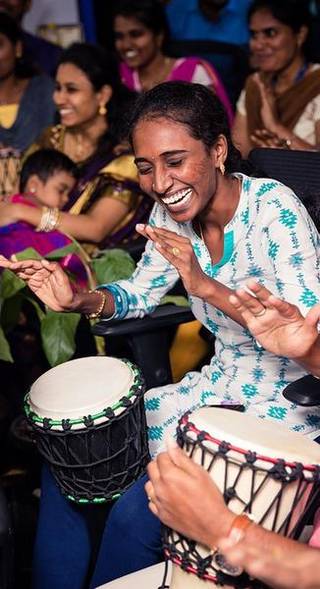
This 11-year-old CEO heads an initiative that organises drum circles

SB Sharan
SB Sharan

With Drum Circle, the age barrier is lifted and everyone comes together to make music, says SB Sharan

When SB Sharan hands his business card, he does it with the confidence of someone who has done it before. Still, he is not your regular CEO: firstly, he is a grade IV-level drummer at the Trinity School of Music, and secondly, he is all of 11. In January, Sharan started his company Drums Circle, an initiative to build community harmony through percussion.

Sharan heads drum circles at corporate team building sessions and other events and parties; he plays — and teaches others how to play — djembes, bongos and shakers. “Playing drums in sync builds a feeling of togetherness and also helps relieve stress and anxiety,” says Sharan.

What does he know about stress and anxiety? “Not much,” he laughs but adds, “Playing drums has helped me develop better concentration and listening.” Most of all, he credits drums with breaking barriers and spreading happiness. “Take any gathering, you’ll see that there are children, elders— all busy among themselves. But with Drum Circle, the age barrier is lifted and everyone comes together to make music.”

DrumCircleBF31may2018

It’s surprising that drums became Sharan’s passion, given how scary his introduction to them was. “The memory of my first private drums class still horrifies me. I was just five. My teacher had long curly hair and I used to think he was a ghost,” he sheepishly admits. He quit soon after, only to join another class when he was eight. This talent for drumming translated into a business through Kidspreneur, a school for helping children run companies. His first event was with 15-20 children his age and his first corporate event was for OptiSol Business Solutions.

“The first time, I felt very shy. Nobody listened to me,” reveals Sharan. “The problem was that everyone was busy playing on their own.” Getting people to drum in sync is a skill that he has mastered over several events. He recalls the latest one he performed at, “I was heading a drum circle in an orphanage in Kolathur. The people there told me that two of those kids would rarely laugh. But while playing the djembes, they did.”

Sharan is serious about his business: with the name of his company already printed on half his clothes. “We are in talks with drummer Sivamani to act as Sharan’s mentor in Mumbai,” says Mohana Lakshmi, founder of Kidspreneur. Sharan started out with buying 10 bongos via crowd-funding. Today, after seven events, his collection has increased to 70 djembes and eight shakers; costing a sum of over ₹2 lakh. Four of those events were ticketed at ₹650 per head.

The invisible hand behind all of this is Sharan’s father, who helped him with the financial aspect when crowd-funding was not enough; Sharan promises to repay him. Sharan’s father has actively gotten contacts and promoted his son on social media because of his work in the event management field. “He is with me every step of the way,” says Sharan, “He’s my best friend and more.”

For details and bookings, log on to www.drumscircle.in or call 9790701816.

source: http://www.thehindu.com / The Hindu / Home> Entertainment> Music / by Sweta Akundi / May 30th, 2018

‘Museums promote cultural heritage’

Students of History Department at Government College and employees of Government Museum, Kalaburagi, and others took part in a function to celebrate International Museum Day, here on Friday.

“Museums collect, preserve, archive and display elements of our past and have a story to tell. The collection displayed at the museums could do with more attention,” observed Manjula Chincholli, Department of Post Graduate Studies and Research in History, Gulbarga University.

Emphasising the need to involve students in museum and archaeology studies, Dr. Chincholli added that visiting museums should be a part of the curriculum for history students. The task to draw in more people is not managed by increasing the number of objects or artifacts, but by a regular communication between people and scholars and the museum, she added.

Sarvodaya Shivaputra, head of History Department, Government College Kalaburagi, said that museums must promote exhibitions that are topical and challenging.

“They must broaden their scope and not restrict themselves solely to objects and materials in their collections. Museums must show leadership in the promotion of the heritage of the nation.”

Later, S.S. Wani, convener for INTACH, took the students around the museum and explained the significance of the artefacts.

source: http://www.thehindu.com / The Hindu / Home> National> Karnataka / by Staff Reporter / Kalaburagi – May 19th, 2018

Bewitched by Bengaluru

PriyankaUpendraBF30may2018

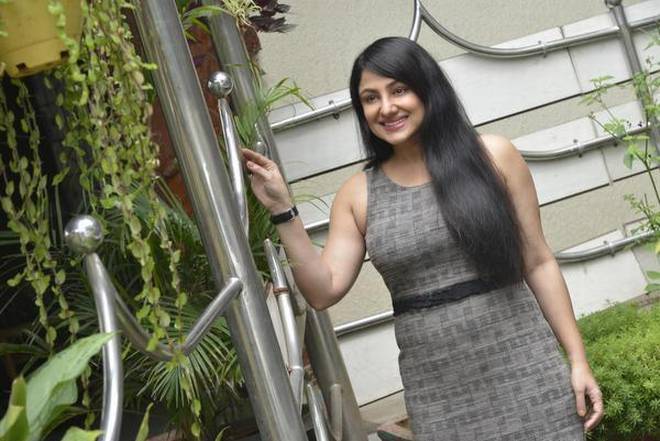
Actress Priyanka Upendra talks about what she loves and hates about this city

I moved to Bengaluru after my marriage in 2003 and have been living in Banashankari ever since. We never moved from here. The one thing I remember about Bengaluru is that it was very green when I first came here and there was hardly any traffic. It was a lot easier to get around and the weather was cooler. Sadly, over the years, the city has changed so much. Traffic has increased, trees have been cut down in the name of development and the population has increased drastically. I see an influx of people in every part of this city. There are people everywhere and I find the city is getting crowded everyday. No matter where you go, you will see people and more people everywhere – be it at parks, lakes or restaurants.

Our residential area had so many empty sites when I first moved there. Now all I see is huge commercial complexes. Those days we could hear birds chirp in our garden and our home was also visited by monkeys. Now all we see is concrete buildings and hear traffic snarls. The main road in front of my home is now going to house the metro. So, more trees are being cut down to make the new flyover. It is good to have the metro as it connects places and cuts down on traffic. What’s heart breaking is the number of trees that have been cut down to accomplish this project.

There are also many ups in namma Bengaluru. One is the numerous Bengali associations that have come up. When I moved here, there were hardly any Bengali associations or Durga pujas. Now you are treated to so many Durga pujas happening in and around our city. We also have so many options of the festive food. Initially, I would travel all the way to the Ulsoor Bengali Association. Now I go to the one on Bannerghatta Road as it is closer home. I have always loved Bengaluru and the various festivals that are celebrated here.

I love the food we get here. The typical uppittu, the Bengaluru breakfast places like MTR, Kamat and Halli Thindi. I specially love the Davangere benne dose. I love the people of this city. I find it to be a nice cosmopolitan crowd, which is calm and friendly.

We have people living in harmony – be it a software engineer from outside, the typical Bengalurean or the expat – they all blend in well, each with his/her own culture and lifestyle.

The city has many options when it comes to entertainment. You can take off to Koramangala, Sadashivanagar or Basavanagudi, and you sure will find something unique to that particular area when it comes to food, culture and people. If you go to Whitefield you will get that ex-pat experience, at Gandhinagar, you get the old Bengaluru charm, and so on.

The only thing that bugs me about this city is the traffic situation. I hope it improves and that we plant more trees so that we can enjoy the city as it was. I wish we could take off on long walks amidst the lush greenery that this city was once known for.

(As told to Shilpa Sebastian R)

This column features the city through the eyes of a prominent Bengalurean

source: http://www.thehindu.com / The Hindu / Home> Entertainment> Movies / by Shilpa Sebastian R / May 24th, 2018

Heritage buffs find 13th-century stone inscription in Bengaluru

SLICE OF HISTORY: The inscription bears the name of king Veera Ballala

Bengaluru :

A team of heritage enthusiasts has stumbled upon a 13th-century stone inscription in JP Nagar’s Sarakki in south Bengaluru. Strangely, a major portion of the relic is buried in the foundation of Anjaneya temple and talks are on with the temple trust to recover the same.

Rajeeva Nrupathunga, founder of Revival Heritage Hub (RHH), an NGO, said the inscription bears the name Veera Ballala, who was a king of the Hosyala empire. “The Hosyala dynasty ruled the present Karnataka region between the 10th and 14th centuries. A large portion of the stone, which measures 8×8 ft, is buried in the foundation. Going by the dimensions, it could be the second-biggest stone inscription for the city after the Hero Stone Inscription in Begur, which dates back to 900AD,” he added.

“After speaking to the temple trustee, we learnt that the stone inscription might have shifted to the foundation area during the temple’s renovation about 60 years ago or another makeover the temple went through 15 years ago. The temple has ahistory of over 350 years,” said Prashanth B, a heritage buff.

RHH is in talks with temple authorities to restore the stone inscription so that it can be studied. “There was more than one king by the name Veera Ballala under the Hoysalas. Only after analysing the entire inscription can we say which one it mentions,” said an RHH member.

According to historians, Bengaluru was home to over 175 recorded stone inscriptions in the early 21st century, with some dating back to the 5th century. But 70% of them have either been lost or are in bad shape due to negligence.

source: http://www.timesofindia.indiatimes.com / The Times of India / News> City News> Bangalore News / by Rohith BR / TNN/ May 29th, 2018

75 years of Bengaluru’s famed benne masala dose

The management keeps track of the number of customers each day through a dose lekka . | Photo Credit: V Sreenivasa Murthy

Vidyarthi Bhavan in Basavanagudi has stood the test of time

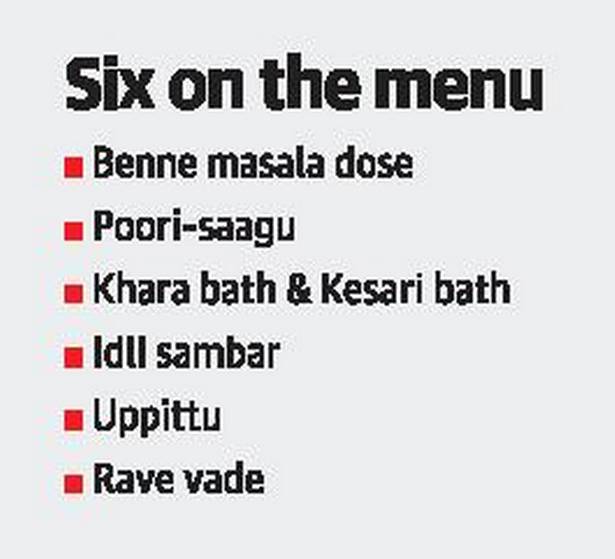
What started as a modest eatery for students has, over the years, become a landmark of sorts. Vidyarthi Bhavan in Basavanagudi has come a long way since it was established in 1943. This year, as it turns 75, the restaurant has managed to stand the test of time, the changing palates of Bengalureans, and the onslaught of newcomers in the food and beverages space offering everything from Mediterranean to Vietnamese cuisine, with its staple six offerings.

To this day, the benne masala dose is the top seller. In fact, the management keeps track of the number of customers each day through a dose lekka. The number is around 1,250 on a weekday, and up to 2,200 per day on a weekend. The other items are poori-saagukhara bath and kesari bathidli-sambaruppittu and rave vade.

The menu has more or less remained the same over the years. One item that disappeared, said Arun Adiga, managing partner, Vidyarthi Bhavan, was the gulab jamun (not in the regular round shape) after the chef who made it from scratch passed away in the 1980s.

The benne masala dose remains the top seller. | Photo Credit: KARAN ANANTH

Changes over the years

The timings have been extended only slightly, closing at 8 p.m. now instead of 7.30 p.m., on popular demand. There are no plans to extend this further though, as the restaurant does not offer meals. The management pointed out that it will have implications on the shift timings of the 28 employees.

The rates, though, have seen a huge change: from ₹1 in the 1980s to ₹46 for a dosa now. This, Mr. Adiga said, was proportional to other overheads.

Their customer base has expanded. “Bengaluru has changed. In the 1940s, when Vidyarthi Bhavan was started, people were conservative about eating out. People who came here were students and people who came to Bengaluru. Now, it is the other way round. People barely cook at home and eating out is the norm. People will search for new restaurants. But, unless you maintain quality, there will not be repeat customers,” he said.

he timings have been changed only slightly. | Photo Credit: V Sreenivasa Murthy

Flip side of popularity

From being an adda of intellectuals, writers and famous personalities, including the likes of Rajnikanth — who apparently comes in disguise, Masti Venkatesh Iyengar, D.V. Gundappa, C. Ashwath and Nissar Ahmed, to becoming one of the must-go destinations for anyone who lives in or is exploring Bengaluru, publicity through media, particularly social media, has expanded its popularity beyond its regular circles and south Bengaluru. But, there is a flip side.

Mr. Adiga said some customers come in with high expectations, and end up disappointed with the way things are, be it the building (the management has brought in some changes, yet kept it like its old self), the fact that they may have to share a table with strangers, or if they are not blown away by the taste of the food.

“Some people ask for the menu. They are disappointed when we tell them that we have only six items to offer. In other cases, even before they have paid the bill, they have reviewed the food on social media and branded it good or bad. But we can’t satisfy everyone, though we try to satisfy at least 90% of the customers,” he said.

VidyarthiBhavan04BF30may2018

source: http://www.thehindu.com / The Hindu / Home> News> Cities> Bengaluru / by Staff Reporter / May 29th, 2018

Archaeologists stumble upon 5th-century wall in Mysuru district

The wall was built to save the then settlement from floods

Bengaluru :

A team of archaeologists recently discovered a 10-ft thick and100-ft deep masonry wall in Mysuru district, which dates back to the 5th century.

The wall, excavated in Talakadu, a desert-like town on the left bank of Cauvery river and located about 45km from Mysuru, was built to save the then settlement from floods, according to experts.

Archaeologist MS Krishna Murthy, who spearheaded the excavation work, said some portions of the wall still stand strong indicating the level of expertise of ancient engineers. “We have excavated the wall up to a length of 15ft. But evidence from the site shows the wall was once 1-km long. It is the largest masonry wall in South India. Historical and archaeological analysis shows it stood strong for at least 1,000 years from the 5th to 15th century,” he said

Murthy, who has conducted extensive excavation work in Talakadu since 1992, made this revelation as spoke on ‘New archaeological discoveries at Talakadu, Karnataka’, at an event organised by the southern regional centre of the Indian Council of Historical Research (ICHR).
The expert said the outer side of the wall bears signs of corrosion, which can be attributed to the continuous presence of river water. “The wall is even more significant as it is mostly built of bricks, clay and mortar as stones were not available in large quantities in the region. It has three layers and an interesting design, which indicates how skilled the people were during that era.It may have been built during the regime of Kiriya Madhava, a ruler from the Ganga dynasty,” he added.

source: http://www.timesofindia.indiatimes.com / The Times of India / Home> News> City News> Mysore New / TNN / My 23rd, 2018