Category Archives: Arts, Culture & Entertainment

Carmelites celebrate 150 years of educating girls

Bengaluru :

In an era when girl children were forced to stay home while their male siblings went to school, three Catholic nuns from France started an institution — now St Ann’s High School — in Mangaluru. The nuns, of the order of Sisters of the Apostolic Carmel, spread their mission of educating the girl child to other parts of the country. Now, 150 years on, over 15 lakh students have passed out from 70 institutions of the Carmelite sisters in Karnataka alone.

DOWN MEMORY LANE: Sr Lydia Fernandes, general councillor, Apostolic Carmel with Sr Mary Susheela, superior general of the order

As the order prepares to kick off its sesquicentennial celebrations (150 years) with an event in Bengaluru on May 5, those now in charge look back with pride on the long and difficult road they have travelled. Sr Lydia Fernandes, general councillor, Apostolic Carmel, revealed the literacy rate on the west coast was abysmally low when they first started out.

“The work of the Carmelite sisters in starting institutions for girl children years ago has helped increase the literacy rate in coastal Karnataka,” says Sr Fernandes. “St Ann’s school was the first to be established in Mangaluru in 1870.”

The order was founded in the latter half of the 19th century by Mother Veronica of the Passion (born Sophie Leeves), daughter of an Anglican minister at the British embassy in Constantinople. “She recognized the need to have quality schools for illiterate girls in India,” said Sr Mary Susheela, superior general of the Apostolic Carmel.

“She founded the active Carmelite order, in Bayonne, France and trained sisters who were sent to India,” added Sr Susheela. “They didn’t know the local language, but children picked up the teacher’s language quickly. We have taught children from all communities.”

St Ann’s counts Kamaladevi Chattopadhyay, freedom fighter and social reformer, Octavia Albuquerque, former MLC, Philomena Peres, former chairperson of the Women’s Commission, and Margaret Alva, former Rajasthan governor and senior Congress politician.

“We were taught everything from needlework and gardening to debating and acting,” said Alva. “They were very good educators, taught us discipline and imparted a strong sense of nationalism. At that time, the students were very diverse and from different communities. But we never had a problem getting along.”

source: http://www.timesofindia.indiatimes.com / The Times of India / News> City News> Bangalore News / by Sunitha Rao R / TNN / May 04th, 2018

Bangalore Times Most Desirable Woman on Television 2017: Shwetha R Prasad

ShwethaBF01may2018

She’s demure, coy and has a very welcoming personality onscreen, which appeals to most viewers of the small screen. Hence, it was natural that Shwetha R Prasad, better known as Radha from Radha Ramana, has won the top slot in Bangalore Times’ 15 Most Desirable  Women 2017.

She caught up with us, talking about work, marriage and more. Excerpts…
You’re Kannada TV’s most desirable woman. Delighted?
Yes. This means that I’m doing good on TV. The project is doing good, people are watching it and liking it — isn’t that desirable! For me, desirability is not only about the appearance, but it is the way you are inside out. That is when you are most desirable — people shouldn’t think you’re fake. When you act, you should really feel like you’re the character. Add to this the attitude you carry both on and off the screen, because everyone is so reachable and accessible through social media. So, people are watching you always.

Radha Ramana has made you one of the most popular actresses on the small screen. What does this serial mean to you?
It feels great to be recognised as Radha. I’m an architect. I never thought I would have a career in acting. I debuted with the serial Srirasthu Shubamasthu. The serial clocked 600 episodes. I didn’t know what to do next. I then decided that I needed to be associated with a channel and show that was doing better than that. I landed Radha Ramana, a serial that was slated to air on prime time and I was sure it would do really good. It has given me a good push and recognition and I owe everyone who made this happen a lot.

Is Shwetha similar to Radha?
I’m like Radha in many ways. Probably, the only thing that would be a little different is the fact that I am more intelligent than Radha in real life (laughs). Also, I don’t meddle in others’ business like Radha does.
People, especially elderly women, do not know Shwetha — they only know Radha. When I go out, these people might be strangers to me, but they know me and meet Radha every single day. I receive so much warmth and familiarity from them. They hug me and speak as if they’ve known me for long and this can be awkward, but I understand that they love my character. When people talk about fame and popularity, I’d say popularity is the love that you get from the people.

Talking about marital status, your acting career began after marriage…
People say that opportunities stop after marriage. But, I’m glad that there are people who don’t mind giving opportunities to married women. They don’t stop saying that you’re married. Ultimately, it is the talent that matters. Whether you’re married or unmarried, it boils down to whether you have what the character requires. I’ve been working with sensible people and that’s what matters
eventually.

Are films on your agenda too?

I’m doing a film now. It is an offbeat film. It might release around July. Again, people have seen me as Radha, a married woman onscreen, so I understand I won’t be offered too many roles in terms of versatility. Or, probably, I haven’t shown them that I can be seen differently. So, the offers have been limited and I’ve been choosy in that. Eventually, when I prove myself on the big screen, like I did on the small screen, I am sure more doors will open for me in recognition of my talent.

Tell us more about your debut film…

In my first film, I didn’t want to do the two-songs-and-one-dance routine. This film, titled Kalbettada Darodekararu, is based on a novel and my character, despite not being onscreen for a long time, has something substantial to offer to the script. I play Kalbettada Kamali, a de-glam role in the film. I’m already doing a de-glam role on TV, but this is much more toned down. So, it made for an interesting choice.

source: http://www.timesofindia.indiatimes.com / The Times of India / Home> News> Entertainment> Kannada> Movies> News / by Sunayana Suresh / TNN / April 28th, 2018

Now Bengaluru’s very own Bicycle Mayor

City will join Dutch programme to promote use of bicycles among urban commuters

Come May, Bengaluru will have its first ‘Bicycle Mayor,’ or BM, with as many as 19 cycling enthusiasts in the city vying for the post.

The winner will get an opportunity to bring together the city’s cycling community and take up advocacy with the government to bring more bicycles onto the roads.

Honorary two-year position

The Bicycle Mayor, an honorary two-year position, is a global programme envisioned by the Amsterdam-based NGO ByCS. The group is targeting a world with 50% of all city trips covered by bicycles by 2030. Bengaluru will be the third city in the country to have a BM, after Baroda and Guwahati.

ByCS has joined hands with the Evangelical Social Action Forum (ESAF), an NGO, to introduce the programme in India. ESAF is one of the organisers of BCOS (the Bengaluru Coalition for Open Streets), which initiated the Cycle Day concept in October 2013.

The applicants for BM include cycling enthusiasts, activists and those who have been actively involved in making Bengaluru bicycle-friendly, said Manju George, Senior Programme Manager, ESAF, Bengaluru.

“The applications were open for ten days and closed on April 23. After May 12, we will make the announcement,” she said.

Cycling enthusiast and activist Murali H.R., involved with several bicycle projects in the city in coordination with the Directorate of Urban Land Transport (DULT), says there is a lot to be done to implement the existing regulations. “We have had DULT and BBMP for over 10 years now. We are partially successful. This [BM] will be a confidence booster for the work that we have been doing thus far.”

Nikita Lalwani, Bicycle Mayor of Vadodara. | Photo Credit: Email Handout

Nikita Lalwani, who was selected BM of Vadodara (Baroda) last year, is working to encourage corporate professionals and students to make use of bicycles regularly. Having represented India at the Bicycle Mayor summit in Amsterdam in 2017, Ms. Lalwani said, “We need to begin by changing the image that cycles have in our society.”

BM of Guwahati Arshel Akhter, who took charge recently, aims to start by working with educational institutions and corporate establishments to set up parking slots for bicycles, and encouraging more people to use bicycles regularly.

source: http://www.thehindu.com / The Hindu / Home> News> Cities> Bengaluru / by Shruthi H M / Bengaluru – April 30th, 2018

English kills the creativity of a bhasha-writer, says Sahitya Akademi president

Sahitya Akademi president Chandrashekhara Kambara | Photo Credit: K. Bhagya Prakash

Sahitya Akademi’s new chief, Chandrashekhara Kambara, hopes for a multilingual and oral revolution

Kannada writer Chandrashekhara Kambara dons many hats. He is a poet, playwright, novelist and critic who has been honoured with the Padmashree, Sahitya Akademi Award, Kabir Samman and the Jnanpith Award. Kambara has been passionate in his advocacy of the regional traditions of art and literature, and of plurality in social structure. Recently elected the president of Sahitya Akademi, when I met him at its regional office in Bengaluru, he firmly defended the Akademi’s autonomy and underlined the necessity of writing in one’s mother tongue.

You are heading this institution at a time when there is a strong feeling among writers and thinkers that freedom of expression is under threat and that the Sahitya Akademi has remained a “passive, powerless body.” How do you view this?

There are many issues involved here, and I shall try to be brief in explaining them. First, the Sahitya Akademi is a non-partisan and non-political institution, and its sole function is to “develop literature and literary culture in all Indian languages and to promote through them plurality and cultural unity of the country.” You cannot expect one institution to do the job of another. Secondly, it is an autonomous and independent body…

Are you sure the Akademi will continue to enjoy autonomy and freedom in future?

I am positive, because the Akademi has inbuilt structural devices for any course-correction needed from time to time.

Can you please explain what those ‘devices’ are?

The Sahitya Akademi came into being through an act of Parliament in 1954, and any major structural changes in it have to be made by Parliament. The Akademi’s office-bearers, including the president and the vice-president, are elected by the members of the Akademi. Also, all the members are chosen by the Akademi on the basis of recommendations from different literary and cultural associations. There is no place for any kind of governmental or external influence.

You have said in an earlier interview, “Revitalising State languages is my top priority.” Can you elaborate?

You see, we have become too dependent on English to the detriment of regional languages. Hence, the priority of the Akademi is to reduce this dependence.

The Akademi organises continuous workshops for people to learn neighbouring languages; it encourages translations directly from one regional language to another rather than through English; in collaboration with universities in different regions, it will get authoritative textbooks, including science texts, in State languages; it is planning to bring out bilingual and multilingual dictionaries; as a representative body, it constantly brings pressure on State governments to make the State language the medium of instruction at the primary level… I can go on and on.

However, the Akademi alone cannot do much in this direction; we expect educationists, writers, and parents to join hands with the Akademi.

Have you ever felt that had you written in English you would have had a larger readership and greater international recognition?

Never, not even for a moment. Had I written in any language other than Kannada, I wouldn’t have been a poet or a playwright. It is as simple as that. You see, English kills the creativity of a bhasha-writer.

Can you explain please?

Think of a child. If she hears a story from her grandmother, she won’t tell the same story to others; she will create newer versions of it each time she tells the story to a brother or friend. But if the child hears the story in English in school, she will tell the same story in the same words over and over again.

In all this, where do tribal languages and oral traditions figure?

They figure prominently. The Akademi has already established the North East Centre for Oral Literature in Agartala, and a Centre for Oral and Tribal Literature in New Delhi. They are designated to preserve our heritage in a systematic way. The Centre in New Delhi launched a major series on ‘unwritten languages’ last year; it has already brought out four works on oral traditions. In addition, the Akademi proposes to archive original oral texts in audio and video formats.

However, we have to understand that orality is not a concrete object; it is a view of life and a way of living. Consequently, the concept of orality also changes with changing times. Similarly, it is impossible to save all spoken and written languages in any country. As long as there are speakers and the language fulfils their needs, it lives; once there are no speakers left, it goes into oblivion.

Who are the ‘implied readers’ of the translations published by the Akademi? How do translations fare compared to works from commercial houses?

First, the ‘implied readers’. Please remember that the Akademi publishes works in 24 languages — that is, an award-winning text in each language is translated into 23 listed Indian languages, including English. This means the translations published by the Akademi are primarily for Indians. If a Kannadiga is knowledgeable today about Mahashweta Devi or M.T. Nair, it is mostly through the Akademi’s Kannada translations. Till date, the Akademi has published over 6,000 books in regional languages.

I don’t have with me the exact sales figures, but since the Akademi’s five zonal centres have sales sections, and since many works get reprinted every year, I presume the books are reaching readers. In fact, I have recently had discussions with the UGC and the Ministry of Human Resource Development regarding Akademi publications; I have suggested that they should persuade State governments to buy them in bulk every year, and distribute them in public libraries. There are also plans to sell our books online.

Often people complain about the quality of translation (especially of English works) in the Akademi publications. True, there is a review system in place, but a reviewer cannot or does not go through every line of the script. Why doesn’t the Akademi appoint competent copy editors as private publishers do?

I haven’t thought about it, but I shall certainly discuss it with my colleagues. Let me add that the Akademi welcomes any feedback, whether suggestions or criticism.

The interviewer is a critic, translator, and former professor of English

source: http://www.thehindu.com / The Hindu /  Home> Books / by C.N. Ramachandran / April 28th, 2018

Neermarga church set for golden jubilee fete

NeermargaChurchBF27apr2018

Mangaluru :

The St Joseph the Worker Church in Neermarga is all set to celebrate its golden jubilee. The celebration of the church, built in 1968, will commence from Saturday and conclude on April 30 with a solemn mass.
According to history of the church, there were around 170 families in the beginning and now it has increased to 470.

The church premises also has a Kannada medium school which provides education to more than 400 children and has served successfully for the last 102 years imparting education to thousands of children.

According to the Rev Fr Anil D’Mello, parish priest of the church, the celebrations will commence from Friday with horekanike being offered by people.

Youth and sports day will be held on the next day. On April 23, the day is dedicated to the sick and elderly, while children’s day will be held on April 24. An all-religion conference will be held on April 25 and 26 will be the day for couples. April 27 will be dedicated to departed souls, while April 28 will be reserved for the church organization. The next is a spiritual day.

The golden jubilee celebrations will be held on April 30. Most Rev Aloysius Paul D’Souza, Bishop of Mangalore Diocese, will be the main celebrant of the jubilee mass, Most Rev Thomas D’Souza, Archbishop of Kolkata, will participate as co-celebrant.

source: http://www.timesofindia.indiatimes.com / The Times of India / News> City News> Mangalore News / TNN / April 20th, 2018

Book Talk: The Last White Hunter – Mysuru & Hollywood Connection

BookTheLastWhiteHunterBF26apr2018

Title: The Last White Hunter: Reminiscences of a Colonial Shikari, Donald Anderson

Author: Joshua Mathew

Pages: 265 / Price: Rs. 650 / Publisher: Indus Source Books

WhiteHunterBF26apr2018

The jungles of Mysuru had caught the attention of a number of Britishers during the colonial era, particularly during the period of Krishnaraja Wadiyar IV. The royal city was a must in their itinerary for hunting and for witnessing the thrilling Khedda operations at Karapur. Special Khedda operations were arranged for the visiting Viceroys and Princes by the Maharaja. Along with them came the Hollywood film producers.

Films like the Elephant Boy, featuring Mysuru’s Sabu Dastagir and the royal elephant Airavatha and the Harry Black and the Tiger, starring Stewart Granger, Barbara Rush and Anthony Steel were shot in these forests and these films became famous. Increasing hunting activity gave an impetus to the business of taxidermy. Taxidermists like Van Ingens earned international reputation for mounting animals life-like.

Britishers, who had settled down in places like Mysuru and Bengaluru, were lovers of game. They did not miss a weekend opportunity to go for hunting or fishing. Forests and scrub areas were just a few miles away and wildlife was abundant.

However, by mid-1900s awareness towards wildlife began to gain importance. Hunting had to be done by taking a license. Even prior to the introduction of license, hunting of tigers had been banned. The landmark Wildlife Protection Act in 1972 finally brought a halt to even licensed hunting.

Among the White hunters, there were lovers of the forest and wild animals. Donald Anderson and his father, Kenneth Anderson, were two such Britishers who had settled down in Bengaluru, and made frequent trips to the jungles in Karnataka and Tamil Nadu. Though they hunted some animals for sport in the early years, they became lovers of the forest and the wildlife later. That was even before the 1972 Wildlife Act. Kenneth was a conservationist and an author too. His outhouse in the Cantonment had lots of cages that were filled with his pets “including python, a slender loris, hyenas, jackals, geese and iguana, and even a small mugger (crocodile)” in 1960s. They only shot man-eaters which struck terror and carried away cattle in the villages, sometimes harming the life of villagers. The Forest authorities often sought their expert shooting skill to destroy panic creating tigers or panthers.

“In his youth, Dad may have shot a few tigers and panthers for sport, but as he grew older, he only shot when it was absolutely necessary — when he felt that human life was at stake,” says Donald in “The Last White Hunter,” reminiscences of a Colonial Shikari, written by Joshua Mathew.

Lamenting over the loss of a lot of India’s wildlife, Donald says, “I know of high-ranking government officials who shot tigers in the early eighties, from forest department jeeps, with huge flashlights.”

He also bemoans that the genuine love for the jungles and its denizens is not imbibed in those who have been given the responsibility to do so today. “Back in the day, every official would know every bend in the road, every nullah, every rivulet that traversed his kingdom.”

Donald, who began going to the jungles at the tender age with his dad and until his last days with his junior friends, including Joshua, more for the love of it, was the last White shikari.“I am the last heir of the Anderson family. I am possibly the last living Scot from British India, who chose to stay on after Independence. And I am the last of the white hunters for whom the forests of India have provided unimaginable adventure and excitement,” Donald, who remained a bachelor, says.

In his 265-page book, Joshua takes us back to the bygone age by chronicling the life and adventures of both Donald and his dad in a captivating style. He superbly weaves the last white hunter’s life in Bengaluru, experiences in the jungles when he accompanied his father, and later went with his friends hunting tigers, panthers and small game. He gives a graphic account of their thrilling encounters with wild elephants, and angling trips to catch and release back into the waters the famous mahseer in the Cauvery, Donald to become a record holder by catching a 104-pounder in 1989. He also describes how Donald acted as a stunt double in the Hollywood film, Harry Black and the Tiger that was shot in the Bandipur forest in 1958.

“The Last White Hunter” is an extraordinary story of Donald’s life from 1934 to 2014, when he passed away in penury. It is a book all those who love the jungles and the life in the days of the Anglo-Indians must read.

email:gourisatya@rediffmail.com

source: http://www.starofmysore.com / Star of Mysore / Home> Feature Articles / by Gowri Satya, Senior Journalist / April 26th, 2018

Tech graduate among 4 devotees to take deeksha

Shravanabelagola (Hassan) :

Twenty-five years ago, her grandfather took sanyasa deeksha in Shravanabelagola and travelled across the country, propagating universal peace and harmony. Charukeethi Bhattaraka Swamiji of the mutt had presided over the event.

Kumari Siddhaini
Kumari Siddhaini

On Wednesday, 29-year-old Kumari Siddhaini, a resident of Sanawad, Madhya Pradesh, disassociated herself from all worldly connections, again in the presence of Charukeerthi Bhattaraka Swamiji in the same place.

After performing various rituals, she was given Mataji deeksha in the presence of thousands of devotees and hundreds of saints. After all the rituals, she was renamed Aryika Mahayashomati Mataji. Her father Ajaykumar said he will also take Sanyasa deeksha.

After completing MTech, Kumari Siddhaini worked as a journalist for a few years. She edited the souvenir of Acharya Vardhamanasagar Maharaj. According to her family, for the past 10 years, she was with the Sangha of Acharya Vardhamanasagar Maharaj and had travelled across the country. As she used social media extensively to propagate Jainism, thousands of her followers from various parts of the country gathered at Shravanabelagola to witness her deeksha programme.

Along with Kumari Siddhaini, Nemichandra Jain, 83, a businessman from Damoh, Madhya Pradesh; Raosaheb Nabukoruche, 75, an agriculturist from Mumbai, and Subhashji Jain, 69, a resident of Kolegaon, Maharashtra took sanyasa deeksha and become munis.

source: http://www.timesofindia.indiatimes.com / The Times of India / News> City News> Bangalore News / by Shrinivasa M / TNN / April 26th,2018

Time travel: Bengaluru history on wheels

Heritage on wheels will take place between April 27 and 29 starting 7.30am.

Bengaluru :

Did you know that Malleswaram had a Maratha connection? Or that Shivaji’s brother Venkoji built the Kadu Malleswaram temple with an inscription that speaks of breaking religious barriers? This and other tidbits of history is what’s in store at a three-day programme, “Heritage on wheels”, beginning tomorrow. Quite literally, the wheels in the event’s title refers to a 20-foot container truck with info panels on the inside.

A conservation architect by profession, Sridevi Changali, the co-founder of Masons Ink, an architecture company often found that people make heritage sound elitist. “Only a few academic circles get to decide the future of ancient structures. We want to change that, and give a chance to ordinary folk, auto drivers, school children, IT professionals to have a say in the matter,” Sridevi says.

Which is how the non-profit initiative came about, where Sridevi promises a large pick of event including a Malleswaram darshan, ancient board games, tracing Tipu’s rocket technology, tent cinema, a temple run heritage hunt, a VV Puram food walk and another walk reflecting the food traditions of the Tamil and Kannada communities in Malleswaram .

On Friday, the opening day of the event, the van will be stationed near Sankey Tank. “We want to make it fun and accessible which is why we have activities in both Kannada and English. For example, we have a bilingual storytelling session to rediscover Karnataka, its people, culture and traditions,” Sridevi adds.

At Thotta Tales, storyteller Soumya Srinivasan will narrate traditional folk stories that have passed on by word of mouth for centuries.“We need to look at heritage in terms of invisible citizens — the birds, trees and animals. I’ve chosen a folk tale called Punyakoti, about a cow who sacrifices herself to a tiger, in exchange for keeping her calf safe. The story goes to show the cow’s integrity. People know these stories but seem to have forgotten them,” Soumya explains, adding that she will also be narrating a fable–Bhaghirathi’s Pond– re-written by Sudha Murthy.

Bilingual storytelling by Ramya Srinidhi, a Basvangudi to Cottonpet story about famous dargahs in Bengaluru, and the mythology behind the Basavangudi Bull Temple by Lavanya Prasad are also part of the line-up. Other events include visiting graves of noblemen associated with Tipu Sultan, flipping through history using images and an interactive session with photographer Peevee, riding cycles in the quest for hidden art by Gathr, and a workshop by Back to Basics, at the end of which you will have created a hand-drawn heritage pocket-map of the city.

So, even if Pallanguzhi, Huli Aadu Aata, Chowka Bhara, Pachisi didn’t ring a bell so far, this show on heritage will ensure that you come away being introduced to these bygone board games.

Heritage on wheels will take place between April 27 and 29 starting 7.30am. While Day 1 will be held at Sankey Tank, Day 2 is at Fort High School, KR Road, and Day 3 at Cubbon Park.

source: http://www.newindianexpress.com / The New Indian Express / Home> Cities> Bengaluru / by Ranjani Madhavan / Express News Service / April 26th, 2018

It’s Bangalore Club’s sesquicentenary!

This year, they turn 150 with much ceremony, as is their custom and continue to be bearers of the city’s history.

The 150-year anniversary will be marked by celebrations that continue through 2018.

Winston Churchill’s questionable commitment to paying his bills was embedded in the history of Bengaluru after his noteworthy visit to the Bangalore United Services Club in the 1800s. This debt was amply repaid by Prince Charles when he visited the place, by which time the BUS club was known to Bengaluru society as the Bangalore Club.

This year, they turn 150 with much ceremony, as is their custom and continue to be bearers of the city’s history. Much has changed, of course and the club’s architecture is now a fusion of the historic and the contemporary with as elite a membership as ever.

Formerly known as the Bangalore United Services Club, it was formed exclusively for British officers in 1868. The building that became the club house had been constructed in the 1850s. Until then, the club was restricted to the British and it was only after Independence that Indian army men slowly began to use the premises.

“We’re always working to balance the old and the new,” says Mr Girish Punja, President of the Bangalore Club, who walked a battery of media personnel through the property on Tuesday afternoon. The club’s military history still has  prominent display, with awards and weapons on display at the Club House. Animal skins and horns pay tribute to the glorious hunting days.

The Burma Bell stands between the Club House and the annexe, another proud piece of history. The stone plaque beside it tells the story of Brigadier Hill, who sold his Polo court and donated the money to the club. The Bell itself is from Burma, where it was struck down by lightning in a temple. “The priests took it to be a bad omen  and left it on the streets. Fortunately, it made its way to the club thanks to Brigadier Hill, who brought it here from Madras.” The vineyards in the lawns alongside are 150 years old – this chunk was preserved and re-installed after the walkway was built.

Of course, modernity had to be acknowledged and Bangalore Club installed what is now one of the city’s oldest swimming pools. The Billiards Room, Gym, squash and tennis courts give members the amenities they need, the library contains 20,000 books and periodicals from around the world.

That’s not all. As Bengaluru struggles with water shortages, sewage problems and encroached lake beds, the Club is the model of sustainability. Their sewage treatment plants see to most of their landscaping needs, leaving so much water in excess that the Club administration has considered sharing it with neighbouring buildings. “It has a capacity of 60,000 litres,” says Mr Punja.

“Neighbours have asked us to share this water with them but our gardeners say it can be used to convert concrete surfaces in the club house into lawns. The gardens are a prized possession and are declared winners every year by the Lalbagh  Horticultural Society.

The 150-year anniversary will be marked by celebrations that continue through 2018.

source: http://www.deccanchronicle. com / Deccan Chronicle / Home> Nation> In Other News / Deccan Chronicle / April 18th, 2018

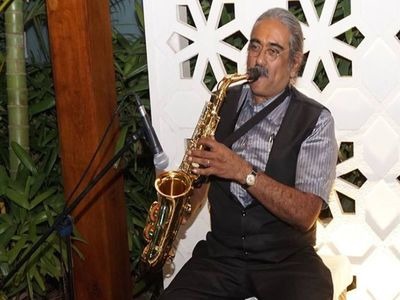
Bengaluru-based saxphonist Raman to perform in the city

SaxophonistRamanBF23apr2018

One of Bengaluru’s most well-known saxophonists, Raman is all set to perform this week in the city.

Raman has recorded and toured with many international and national artistes like Fleetwood Mac’s Jeremy Spencer, Vision Authentique, Jazz revivals, Chronic Blues, Tribal Chaos, East West encounter and more.

He is known for jazz, Indo, retro and Bollywood music and has a solo set up where he mixes his sax with his own electronic music and has people listening, singing along and dancing the night away.

Watch him perform at 1Q1 on April 25, 8 pm.

source: http://www.timesofindia.indiatimes.com / The Times of India / News> Entertainment>  Kannada> Music / April 22nd, 2018