Category Archives: Arts, Culture & Entertainment

Bengaluru: INTACH to restore 110-year-old Fort school

Buildings like Fort High School were built by my ancestors but this heritage isn’t just a family legacy, Wadiyar said.

Mysuru Royal Family scion Yaduveer Krishnadatta Chamaraja Wadiyar inaugurating the restoration work of Fort High School in Bengaluru on Thursday (Image: DC)

Bengaluru:

The 110-year-old Fort High School received a new lease on life on Thursday morning. The Bengaluru Chapter of INTACH will begin restoration work on the building, which was set up in 1907 and constructed in the Mysorean style.

“The restoration will be carried out over a period of one year with a cost of Rs 2.5 crore,” said Meera Iyer, co-convener, INTACH, Bengaluru. Mysuru royal family scion Yaduveer Krishnadatta Chamaraja Wadiyar inaugurated the work on Thursday morning, recalling the contributions of his ancestors, who were patrons of art, culture, education and architecture. “This school represents the Mysorean design that was brought into the architectural vocabulary of buildings erected in the 1900s,” he said.

“As the restoration takes place, it will also inspire the younger generation to appreciate and care our heritage. Buildings like Fort High School were built by my ancestors but this heritage isn’t just a family legacy. It is a legacy of the people and we must celebrate it together,” Wadiyrar said.

A sprawling courtyard in front and numerous other motifs recall a vernacular style of architecture, Meera said. “On the other hand, you have the pillars and the facade, which is very colonial,” she added.

With its slanting roofs and colonnaded facade, Fort High School is one of the oldest buildings in Bengaluru and like other heritage structures, has been facing the brutal onslaught of development.

INTACH’s involvement with the school began back in 2012, when they realised it badly needed restoration. However funding was hard to come by, until a chance meeting with their current sponsor, Basant Poddar.

“We have got permission from the Department of Public Instruction to restore the building,” Meera said.

“All the ideals, wants, aspirations of our collective ancestors, the architects and the governments were poured into constructing those buildings. Preserving and re-invigorating them is important so that we can pass on this heritage to future generations,” Wadiyar added.

Bangalore Club turns 150, to bring out book

Bengaluru  :

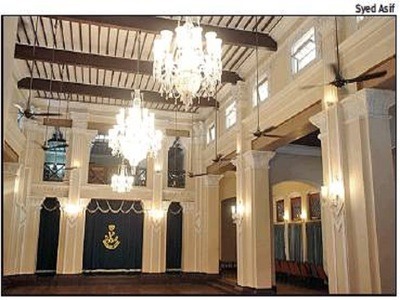
Bangalore Club, the city’s prestigious landmark that carries a heritage tag, has completed 150 years. The club – established in 1868 for senior military and navy personnel – will bring out a book to mark its sesquicentennial. The book is likely to be launched in September/October in conjunction with Services Day to honour the armed forces. The club also has plans to bring out a commemorative stamp to be released by the Indian postal service, said Girish Punja, president of the club. BangaloreClubBF18apr2018
When it was established in 1868, it was known as the United Service Club and was renamed Bangalore Club in 1946. The club currently has a membership of 6,500 people. About 2,000 people are on the waiting list.

The club has taken up several green initiatives. It has set up a sewage water treatment plant and a biogas plant. Over 200kg of wet waste generated every day gets into the pulveriser and further to the biogas plant. The fuel generated is used in the kitchen. The STP has been successful in treating 60kld of water every day; over 30-40kld is reused for its garden. With this, the dependency on fresh water has reduced. The club has also got requests from a neighbouring apartment for the treated water.

The club, located in the heart of the city, is now feeling the pinch of traffic as it has affected members from accessing the facility. “Because of heavy traffic, people living in far-off areas like Whitefield  find entertainment locally these days. The daily footfall is around 250-300, while during certain programmes and events like cricket/footfall matches, it touches around 2,000,” said Dr Thomas Chandy , former president of the club.

The sesquicentennial celebrations began on February 10, 2018 with a concert by violin maestro Dr L Subramanium accompanied by Grammy award winner Ernie Watts on the saxophone, Ritt Henn on the bass and violinist Ambi Subramanium. During the course of the year, the club has planned a number of programmes to celebrate its 150-year history.

Rs 1 crore for projects

The club’s general body has sanctioned Rs 1 crore for projects like tree planting, playing facilities for children in government schools, wildlife initiatives along with some employee initiatives.

source: http://www.timesofindia.indiatimes.com / The Times of India / Home> News> City News> Bangalore News / TNN / April 18th, 2018

11th-century stone inscription found in graveyard

Bengaluru :

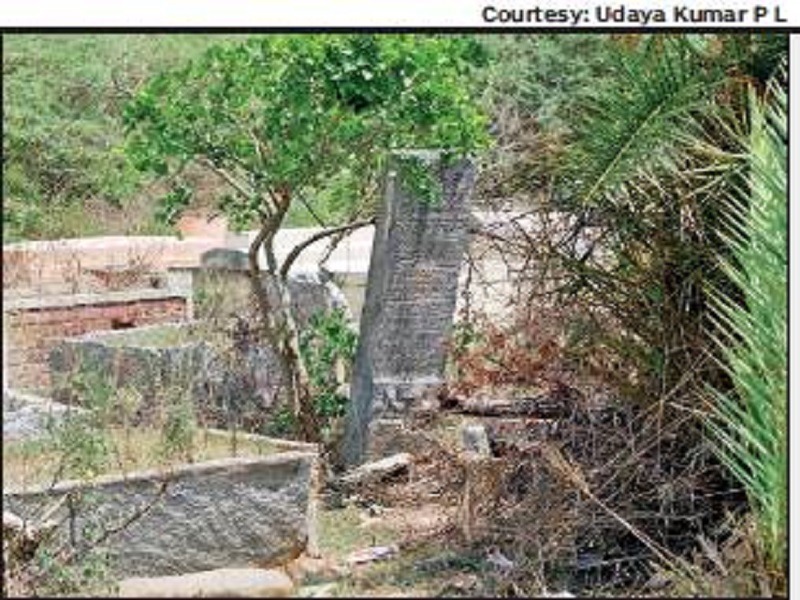
A team of heritage enthusiasts has stumbled upon a stone inscription  dating back to the 11th century. The relic, found in a graveyard in Kadugodi, east Bengaluru, is one of the first Tamil inscriptions discovered in city limits. It bears information on the building of Pattandur Lake (presently located behind ITPL).

InscriptionBF17apr2018
Udaya Kumar PL, who is spearheading the physical verification project, Inscription Stones of Bangalore, said they were surprised to find the stone inscription amid graves. “We were on project rounds and saw the inscription dating back to 1043AD a few days ago. The Tamil text mentions the name of king Rajendra Chola, who in his 32nd year of reign facilitated the building of Pattandur Lake with three sluice gates and even gifted land for the construction,” he added.

According to Udaya, the engraving says the ruler ordered installation of idols of three deities, including goddess Durga and lord Ganapathi. It also warns that those who try to damage the inscription or tank shall inherit the sins of those who have died between the Ganges and Cape Comorin (present Kanyakumari). “He (one who damages the inscription) shall be the husband of his own mother. May the line of him who protects the inscription prosper,” Udaya said quoting the inscription.

Highlighting the importance of the inscription, Udaya said, “Now we know that Pattandur Lake, located about 7km from the inscription site, is more than 1,000 years old and the village with the same name is even older. Further research on the inscription can throw more light on the history of Bengaluru,” he added.

When asked whether the inscription is in its original place of installation or has been displaced to the graveyard, Udaya said site inspection shows it’s the original spot. “There is a Shiva temple right behind the graveyard and there are some stones there. The graveyard could have come up 100 to 200 years ago,” he added.

Pattandur: A lake under threat

 Pattandur Agrahara Lake recently hit headlines, with the high court issuing notices to civic agencies to clear encroachments on the lakebed. Citizens living in its vicinity have been campaigning to revive the waterbody.

Whitefield Rising, a citizen group, in its petition to the court has challenged the BBMP’s plan to construct an 80-feet-wide road connecting Varthur Kodi Road to ITPL Main Road as the proposal poses a threat to the lake’s buffer zone. Citizens say illegal dumping of debris and cutting of trees is rampant in the zone.

source: http://www.timesofindia.indiatimes.com / The Times of India / Home> News> City News> Bengaluru / by Rohith BR / TNN / April 17th, 2018

Film on reservation for women in politics bags Rajat Kamal

Actors Tara and Devaraj in Hebbettu Ramakka. | Photo Credit: Handout E mail

Tulu film makes a mark on the national stage again

In poll season in Karnataka, as coincidence would have it, a Kannada film on reservation for women in politics, starring an actor-turned-politician, got the Rajat Kamal at the 65th National Awards for 2017, announced in New Delhi on Friday.

Hebbettu Ramakka, starring BJP MLC Tara Anuradha, which delineates the issue of political reservation for women, got the honours as the Regional Best Film-Kannada. The film depicts how an uneducated woman’s intelligence, dedication and honesty helps in getting justice to oppressed classes in a village.

An elated Nanjunde Gowda, director of Hebbettu Ramakka, said he was expecting an award, as it speaks about a pan-Indian issue, though he is disappointed about Tara not getting an award.

March 22, a Kannada film by Kodlu Ramakrishna on communal harmony, got the award in the Best Lyrics category for the song ‘Muttu Rathna’ by J.M. Prahlad.

The award came as a surprise for Prahlad. “The song with a Sufi touch had turned popular on YouTube. I am happy with the recognition for the song,” he said.

Again, a Tulu language film made it at the national level. Paddayi, a film directed by Abhay Simha and which is about the culture of the fishing community in coastal Karnataka, bagged the Rajat Kamal for languages outside of the 8th Schedule.

The film is a modern-day take on Shakespear’s Macbeth. Director Abhaya Simha had got national honours for his film Gubbachigalu in 2008. Abhay Simha said the film looks at the question of culture, community living and morality in a neo-liberal context.

source: http://www.thehindu.com / The Hindu / Home> News> Cities> Benglauru / by Muralidhara Khajane / April 13th, 2018

‘Mysore Brothers’ to receive Rama Gana Kalacharya Award

Will be presented on Saturday evening at the Chamarajpet Sree Ramaseva Mandali

The ‘Mysore Brothers’, violinists Nagaraj and Manjunath, have been selected for the Chamarajpet Sree Ramaseva Mandali’s ‘Rama Gana Kalacharya National Award-2018’ to be presented on Saturday for their outstanding contribution to and propagation of Carnatic music.

The child prodigies are sons and disciples of violinist Prof. Mahadevappa. Their first concert for the Ramaseva Mandali was flagged off as teenagers. While Nagaraj accompanied vocalist Maharajapuram Santhanam on his debut, Manjunath had played for flute maestro N. Ramani. Manjunath was by default pushed to play solo when flautist Mali, whom he was supposed to accompany, did not turn up. “I was pushed to the stage for a solo performance at the Mandali by veteran mridangists Thanjavur Upendran and Guruvayur Dorai, who accompanied me,” recalled Manjunath with pride.

“Both Manjunath and me feel blessed to receive this award from the Mandali. Receiving this during the Mandali’s 80th year celebrations makes it more special as our bond started from the time my father Mahadevappa performed for the founder S.V. Narayanaswamy Rao,” said Mr. Nagaraj.

The Mysore Brothers have taken part in prestigious Indian festivals, including the Sawai Gandharva SangithMahotsav and the Tansen Sangith Samaroh, apart from performing at the Sydney Opera House in Australia and the Royal Albert Hall in London, UK. They have taken part in the Bozar music conference in Belgium, Conservatorium Van Amsterdam, and the National Centre for early music-UK, amongst others.

The brothers are looking forward to playing at the Mandali after the award function.

Nagaraj is happy that they will bring in a special raga — Tana-Pallavi — composed by them as a tribute to the Mandali turning 80. Manjunath, who had created a new raga ‘Yaduveera Manohari’ especially for the scion of the erstwhile royal family of Mysuru Yaduveer Krishnadatta Chamaraja Wadiyar during his wedding, will be sharing it for the first time in a public concert.

source: http://www.thehindu.com / The Hindu / Home> News> Cities> Bengaluru / by Ranjani Govind / April 13th, 2018

Tirupati-born ‘Miss Karnataka’ now eyes ‘Miss India’ crown

Bhavana Durgam with her family members at their house in Tirupati. | Photo Credit: K_V_PoornachandraKumar

Say her purpose is to help raise funds to improve schools

She was totally unprepared and was not expecting the crown, but the pleasant touch of serendipity propelled 21-year-old Bhavana Durgam to the summit of ‘Miss Karnataka 2018’ beauty pageant. Buoyed by the result, she has now set her eyes on bagging the ‘Miss India’ title.

Born in Tirupati, Bhavana had her nursery schooling here before moving to Bengaluru along with her parents Durgam Prabhakara Reddy and Krishnaveni. She finished her schooling in Baldwin Girls High School as is now studying Medical Electronics Engineering at BMS College of Engineering, Basavanagudi.

When the opportunity came calling early this year for the ‘Miss Karnataka’ pageant, Bhavana entered the arena untrained, but her typical composure, relaxation techniques practised at home, training in basics of Carnatic music and relaxed communication with peers helped her score brownie points. At 5’10”, Bhavana had never worn high-heeled shoes, but started using one for the first time since it is a primary accessory for ramp walkers. She has also started doing basic make-up and hair-do on her own, which is a prerequisite for the aspirants.

Actress Rakul Preet Singh is providing guidance and tips to the contestants from the five southern States.

Speaking to The Hindu, Bhavana recalled her interaction with children in her immediate neighbourhood. “My friends and I teach underprivileged students under the innovative ‘I teach’ concept,” she said. Her altruistic attitude paid dividends, as Bhavana was selected as the ‘Miss Goodness’ ambassador in a sub-contest held during the pageant. She has acted in a TV commercial with actress Sneha, besides in advertisements for Bengaluru Football Club and a drug company. Her younger brother Bhargava Durgam, an upcoming cricket player, is equally prominent through his leading TV commercials.

With keen focus now on ‘Miss India’ event scheduled during May 21 – June 23 at Mumbai, Bhavana spends half a day at her college and the other half for practice. She is confident that her purpose will ensure her win. “If I win, I will use my brand to help raise funds to improve State-funded schools, not only in Karnataka, but across India,” she signs off.

source: http://www.thehindu.com / The Hindu / Home> News> States> Andhra Pradesh / by A. D. Rangarajan / Tirupati – April 05th, 2018

Bengaluru-based writer chosen for Basavaraju award

Bengaluru-based writer Bilumane Ramadas has been selected for the L. Basavaraju Award for the year 2018.

Kolar’s Dr. L. Basavaraju Pratishthana, founded in memory of scholar L. Basavaraju, is presenting the award since 17 years.

The award will be presented at a function here on April 8, Pratishthana secretary H.A. Purushottam Rao told reporters on Wednesday.

Kannada Development Authority (KDA) chairperson S.G. Siddaramaiah will present the award, he said.

A native of Bilumane in Teerthahalli taluk of Shivamogga district, which is now submerged in the backwaters of Varahi project, Mr. Ramadas worked in the Commercial Taxes Department. He has many literary works to his credit, including several novels.

source: http://www.thehindu.com / The Hindu / Home> News> States> Karnataka / by Staff Reporter / Kolar – April 04th, 2018

Behind the scenes of selecting the Karaga pujaris

The festivities have been marred by controversy for over five years now

Everyone was expecting N. Manu (centre) to carry the Karaga, a floral pyramid, this year. | Photo Credit: K_MURALI_KUMAR

It was announced that this year the Karaga will be carried by 24-year-old N. Manu, which was to be a first for him. But as a massive number of devotees waited patiently, the Karaga pujari (priest) emerged only in the wee hours of Sunday. And, to everyone’s surprise, it was not Manu. A. Jnanendra was carrying the Karaga even though Manu had led all the rituals for the previous nine days. It later emerged that Manu was unwell because of which Jnanendra had to take over.

“We are happy that the Karaga was not stopped. But we have instituted an inquiry into what actually happened that night,” said Rajgopal, chairman of the Karaga Committee.

Incidentally, Jnanendra had earlier challenged Manu’s appointment as the Karaga pujari and the case, which is before a Muzrai tribunal, is expected to come up for hearing on April 27.

Not new to controversies

The Karaga, the oldest festival of Bengaluru, is not new to controversies. It has been marred by controversy for over five years now over who should be the pujari and carry the Karaga.

In 2013, Jnanendra had taken over mid-procession from C.M. Lokesh, amidst allegations by Lokesh that the Karaga was forcefully taken away from him.

In 2016, Lakshmeesha got a High Court order to carry the Karaga, putting a brake to 15 years of Jnanendra and Lokesha being the pujaris. However, he was forced to resign after being allegedly caught practising carrying the Karaga in a private area before the actual festival.

The job is a coveted one owing to the prestige associated with it in the Vahnikula Kshatriya community. The Karaga pujari is also the head priest of the historical Dharmarayaswamy temple. He gets ‘dakshine’ during and immediately after the Karaga procession, which often runs into several lakhs.

Karaga Committee

The annual Karaga festival was being organised by a large ad-hoc committee of community members. “This year, the State government, for the first time, gave a grant of ₹1 crore for the festivities. Hence, the Muzarai Department has formed a Karaga Committee with seven members, who will have a tenure of three years. This committee will streamline the festivities and root out such confusion and chaos,” said Subbanna, a senior community member.

The Karaga Committee, led by Rajgopal, was formed 15 days before the festival this year. “In the short time we got, we tried our best to manage the festival properly. From next year, we will ensure that there is no confusion or controversy over the Karaga festival,” Rajgopal said.

source: http://www.thehindu.com / The Hindu / Home> News> Cities> Bengaluru / by K.V. Aditya Bharadwaj / April 02nd, 2018

Google Doodle celebrates activist and pioneer of the arts Kamaladevi Chattopadhyay

Google Doodle: Kamaladevi Chattopadhyay | Photo Credit: Google Doodle

Kamaladevi participated in the freedom movement

On Tuesday, Google celebrated the 115th birth anniversary of the multi-faceted freedom fighter, activist and promoter of the arts, Kamaladevi Chattopadhyay, with a doodle.

Kamaladevi, who bagged the Padma Vibhushan in 1987 (a year before her death), was a woman of many firsts. She was an active participant in the freedom movement, championed women’s rights, founded the All-India Womens Conference (AIWC), led the renaissance of Indian handicrafts and handlooms, and worked for the development of the performing arts in India.

Born in Mangalore in 1903, Kamaladevi was widowed at 16. She married Harindranath Chattopadhyay when she was 20 and then headed to London where she graduated with a diploma in Sociology. She joined the freedom movement when she returned to India and she eventually became the first woman to run for a legislative seat in India, when she ran for the Madras Provincial Legislative Assembly.

She then founded the AIWC, which did a lot of work for social reform. She was credited for persuading Mahatma Gandhi to encourage more women to march with him during the freedom struggle. In 1930, Kamaladevi was part of Gandhi’s salt satyagraha team and she was later arrested for entering the Bombay Stock Exchange to sell packets of contraband salt.

Post independence, she worked for the rehabilitation of refugees. She then dedicated her life to the promotion of Indian indigenous arts and crafts and theatre. Thanks to her work behind the scenes, several renowned institutions, including the National School of Drama, Central Cottage Industries Emporium, and the Crafts Council of India, came into existence. She later headed the Sangeet Natak Akademi and in 1974 was awarded the Sangeet Natak Akademi Fellowship.

The doodle, created by Finland-based artist Parvati Pillai, salutes Kamaladevi’s contribution to the creative fields. It depicts the various fields she promoted, including the sitar, sarangi, Karthak dance, embroidery and basket weaving.

source: http://www.thehindu.com / The Hindu / Home> News> National / by The Hindu Net Desk / April 03rd, 2018

Suragi by U.R. Ananthmurthy review — the phenomenon called URA

AnanthamurthyBF31mar2018

An irrepressible spirit that cannot be contained within the material body of words

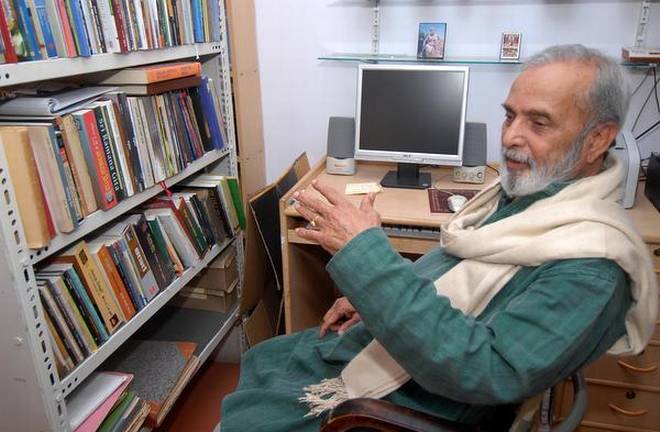
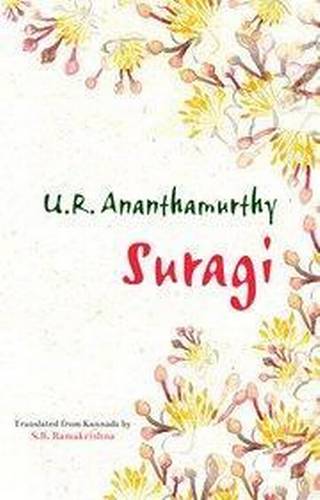
“‘Suragi’… this flower from the Malnad region, which takes me back to my childhood, grows more fragrant as it wilts. At a time when my health is failing, I wish to be like the suragi,” wrote URA in his preface to his autobiography in Kannada, published in 2012. S.R. Ramakrishna, who has distilled the essence of this suragi and made its delicate fragrance waft further beyond Kannada country, has ensured it an ‘afterlife’ through his sensitive translation of the text.

After Tagore, if there was one cultural icon at the national level with a similar kind of reach, it was URA. A master storyteller, URA authored many a modern classic such as Samskara, Bharathipura, and Avasthe, several short story collections, along with a prolific body of writing covering literary criticism and essays on culture and politics. While he had written and spoken about his life, his inspirations, and his politics all along at different venues, his autobiography brings together the varied skeins of his complex and colourful life, complementing his literary landscape.

Critical engagement

If URA was an engaging presence, it was because he was truly engaged with everything — little and big — that was happening around him. And his autobiography bears testimony to this unique feature of his personality.

Ananthamurthy02BF31mar2018

Spread over 10 chapters, the work covers crucial aspects of his life: childhood, student days, domestic life, teaching career, writing and creativity, and his experience as Vice-chancellor of Mahatma Gandhi University, Chairman of National Book Trust and Sahitya Akademi. Not to speak of the controversies that marked his journey as a ‘critical insider’ who kept a strict vigil on his social and cultural world and his side of the story.

While the contents page bravely attempts to arrange his life into these categories, the complexity of his lived experience and the even more complex understanding he has of that life do not allow for a linear, straightforward narrative. And all for the better. What we have is a richly textured narrative which combines experience and reflection, the lyrical and the discursive. The style was the man.

URA’s autobiography bears an organic relation to the intellectual and writer he was. A large part of his writing was already autobiographical, especially his stories and novels, which have drawn heavily from his childhood in Malnad region and his later years in Mysuru.

As Ja. Naa. Tejashree — his collaborator who collated and organised the material — notes, while his experience shapes a particular structure of thought in his creative works, the socio-political world that shaped his experience is foregrounded in the autobiography. Thus the text is best read as a political and cultural biography of his times — its hopes and fears, utopias and dystopias.

Ramakrishna, well-known for his creative translations, has provided a fitting ‘saath’ to URA and his collaborator. Based on his intimate knowledge of URA’s milieu, he plays around with English, using his discretion to leave certain words untranslated.

He has followed the shifting contours of the narrative, comfortably moving from the lyrical to the discursive. However, some rigorous copy-editing, especially of the starting chapters, would have made for better readability.

It is surprising that the translation does not carry the name of the collaborator on the cover page, a feature that marks the original text. The original carries a foreword by URA and another by Tejashree which describe the intent and processes involved in the making of this text, which is crucial to reading it as a mediated text.

Charismatic persona

Also, the Kannada original carries at the end a detailed list of URA’s writings, speeches, papers and presentations, as well as awards and honours, along with dates. Including these features of the original would have made the text an even more useful resource for URA scholars.

Despite the candid effort at capturing his life, one wonders if URA remains outside of his text. Could it be that the narrative is so largely social and outward that his inward, creative self has been subdued?

Or is it that URA’s towering achievements and his charismatic persona are hard to contain in words — like the quote from Eliot that URA uses, “Trying to use words… each venture… is a raid on the inarticulate”?

The man had donned so many hats and combined so many spaces and times in one lifetime that his irrepressible spirit cannot be contained within the material body of words. Perhaps this is why Girish Kasaravalli’s film on him was also titled Ananthamurthy: Not a Biography, but a Hypothesis.

To say that a large part of URA still lies outside of his autobiography is to pay homage to the élan vital of the man who engaged with his cultural and political world with exemplary commitment till his last day. Suragi is successful in gesturing towards this phenomenon called URA.

The writer is a teacher and a translator who works with Kannada and English.

Suragi; U.R. Ananthamurthy, trs S.R. Ramakrishna, Oxford University Press,₹650

source: http://www.thehindu.com / The Hindu / Home> Books> Translation / by Venamala Vishwanatha / March 17th, 2018