Category Archives: Arts, Culture & Entertainment

Monogram of Jain inscriptions getting ready in Hassan

A team of 10 epigraphists has so far copied about 138 stone inscriptions from various monuments.

The ASI has launched a project to copy them and make a monogram to spread awareness among people about their historical significance. (Photo: DC)

Hassan:

In an attempt to conserve the ancient stone inscriptions found  in Vindhyagiri, Chandragiri and other monuments of Shravanabelagola, a popular Jain pilgrimage centre in Hassan, the Archaeological Survey of India (ASI) has launched a  project to copy them and make a  monogram to spread awareness among  people about their historical significance. A team of 10 epigraphists has so far copied about 138 stone inscriptions from various monuments, including Vindhyagiri, also called Doddabetta. It’s believed there are around 500 such stone inscriptions in Shravanabelagola.

Speaking to Deccan Chronicle, Superintending Archaeologist, ASI, Bengaluru Circle, Moortheeswari said the monogram of stone inscriptions  would be released during the much awaited Mahamastakabhisheka of Bahubali in February.

“Whatever is written in stone will be brought to the people’s attention through the monogram to help them understand its historical significance and keep them from damaging them,” she explained.

One of the epigraphists on the ASI team revealed that some of the inscriptions were in Kannada, Tamil and Marathi.

A few spoke about   the practice of Sallekhana or fast unto death that was practiced here in ancient times, he adds.

Tracing the origin of  the stone writings, he says they appear to have been first made on palm leaves before they were chiselled on the rocks of  Doddabetta, Chikkabetta and other monuments.

source: http://www.deccanchronicle.com / Deccan Chronicle / Home> Nation> Current Affairs / by Girish M B, Deccan Chronicle / December 24th, 2017

A museum soaked in history

MuseumBF27dec2017

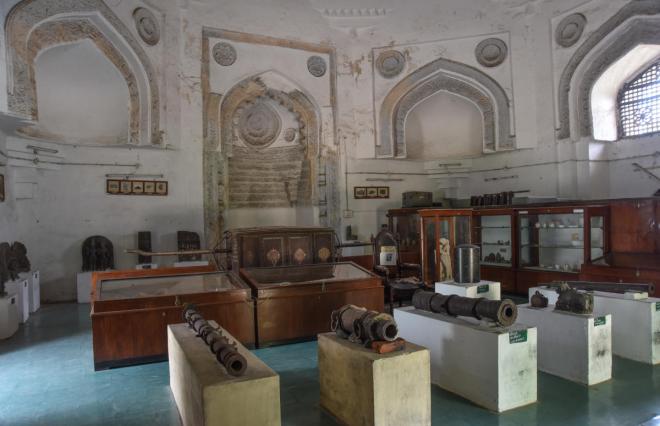
The two domed structures in front of the district hospital on Sedam Road can pass off as one of the many historical monuments that dot the city of Kalaburagi. Historical monuments they are, but they also house the Government Museum, which has many sculptures, inscriptions, palm manuscripts, prehistoric artefacts, terracotta figures, beads, coins, cannons, etc. The well-maintained garden adds to the peaceful ambience of the place.

For centuries, Kalaburagi has been a melting pot of religions like Hinduism, Buddhism, Jainism and Islam. Talking about the history of the museum, Shivakumar, archaeological assistant, Department of Archaeology, Museums and Heritage, said that the State government took a decision to establish a museum in Kalaburagi (then Gulbarga) in 1964 to showcase its rich history. Artefacts from different periods of time and representative of various cultures, from the Maurya Empire to the Rashtrakutas, Bahamanis and the Nizam rule are placed here.

The site

“The two empty 15th-century tombs that were in a dilapidated condition were renovated and turned into galleries. The first tomb is situated on the left side of the entrance and is bigger than the second tomb, situated on the right. The third gallery, a newly constructed building, was inaugurated in 1997. The museum has three galleries now,” Shivakumar added.

Sculptures, several hundred years old, have been neatly placed on the platforms on pathways leading to the galleries. Besides, sculptures of tirthankaras, cannons, veeragallus (hero stones), nishidi stones (erected in memory of those who performed sallekhana to attain nirvana); Sati stones and other stones dating from 10th century to 18th century and those from Chalukya, Rashtrakuta, Hoysala and Vijayanagar periods have been neatly placed on platforms around the tombs. While some of the stones are carved from black stone, others are carved from limestone.

The entrance to the first tomb is flanked by two ancient cannons. A few can also be found inside the tomb. Among many idols and sculptures, a beautifully carved Natyashiva, a 12th century Kalyani Chalukya stone panel, is unique. It depicts Lord Shiva dancing with Shivagana, joined by other gods, and is carved on both sides. The sculpture, said to be part of a temple entrance, was found at Kalgi in Chittapur taluk in Kalaburagi district.

Equally beautiful is the 18th-century idol of Goddess Durga, which was found at Sedam. The Jalashayana Vishnu, a 12th-century stone panel found in Kalaburagi, and the idols of Lord Madhusudana and Shiva-Parvati are exhibited here.

The gallery also houses arrow tips and stone tools from the Neolithic era, including terracotta figures and beads, and pottery items sourced from Maski in Raichur. Palm-leaf manuscripts and models of motifs of the Indus valley civilisation are also on display here.

This apart, the gallery houses the porcelain crockery used by Colonel Philip Meadows Taylor, administrator of Surpur in Yadgir district. The collection includes a 20th-century wooden palanquin, swords, armour and a few brass and copper utensils. In the second tomb, a majority of the sculptures and stone panels are carved from limestone and date back to the first and second centuries. They were found during surface excavations in Sannati in Yadgir district and are said to be the remains of a Buddhist stupa.

Most of the sculptures and stone panels, some with inscriptions in Brahmi script, though damaged, speak volumes about the artistic skills of the sculptors from a bygone era as carving is difficult on limestone. The 12th-century black-stone idol of Lord Parshwanatha, a tirthankara, is unique as it has the carving of mango buds. The idol was found at Harasur in Kalaburagi.

Religion & royalty

In the third gallery, sculptures, stone panels and the remains of the Buddist stupa at Sannati are housed, along with a few modern paintings. A stone panel depicting winged animals with a human face bears testimony to the earliest influence of Egyptian and Mesopotamian civilisations on Indian architecture. There are many stone panels that have the carving of the multi-headed snake.

However, most of them are damaged. A fully intact stone Buddha pada (footprint) with intrinsic carving including dharmachakras is a delight to watch. Among the other stone panels, a royal couple seated with horseshoe archway is a unique exhibit. The museum also has a collection of 100 coins from various centuries. Six of them are gold coins from the Vijayanagar period and 44 silver coins are from the Bahmani Sultanate.

source: http://www.deccanherald.com / Deccan Herald / Home> Supplements> Spectrum / by Rakesh Sama, Kalaburagi / DH News Service / December 11th, 2017

Karnataka : Kundapur lad sets sights on Mt. Kanchenjunga

Harshad Rao
Harshad Rao

This 29-year-old has made a habit out of scaling peaks. On May 21 last year, Harshad Rao summited the Mount Everest at 8.20 am, and is now aiming to scale the Mt Kanchenjunga, which he will be climbing around May next year.

Mt Kanchenjunga (8586m/28,169ft) referred to as the ‘treasure of the snow’ is the highest peak of India. Rao will take the Nepal route and attempt this extremely tough climb. The software graduate will also give his climb a unique tech touch. He will adapt Live Location Tracking (LLT) system during his climb. “This will help track my climb real time on Google Maps. This is going to be done for the first time in civilian Indian mountaineering history,” he said.

The total budget for Rao’s expedition is about Rs 20 lakh and he is currently working on the permissions and logistics for the expedition in form of oxygen, food and equipment. He is practising long-distance running, cycling and yoga. It is going to be a 60-day expedition along with an international team. He will soon be practising in the hyperbaric chamber in Pune.

“I am working towards it mentally and physically. The peak remains unclimbed in this year and in 2016. In 1988, mountaineers from India attempted to climb Mt Kachenjunga, but fell short of the summit. The summit is definitely technically difficult because of the presence of soft snow on its route. The death ratio is also higher than Mr Everest,” he said.

Rao hails from Ardi village of Kundapur in Udupi district. He gave up his job for the sake of the Mt Everest expedition, which was a tough one especially because his oxygen mask developed a leak. He developed an interest in mountaineering after going on treks regularly. He got formally trained from the Nehru Institute of Mountaineering in Uttar Kashi and the Himalayan Mountaineering Institute. In 2009, he climbed the Jaonli peak (6632 mt) and Jogin 1 and 3 in 2011. He had also undertaken a cycling expedition from Pune to Kanyakumari.

source: http://www.bangaloremirror.indiatimes.com / Bangalore Mirror / Home> News> State / by Deepthi Sanjiv, Bangalore Mirror Bureau / December 21st, 2017

Meet real-life Mowgli, darling of monkeys, from village near Dharwad

Langurs, boy can’t live without each other; 2-yr-old brokers peace between 2 troops.

Samarth Bangari of Allapur village in Kundol taluk of Dharwad district plays with wild Langurs. DH photo by Irappa Naikar.

The grey langurs or the Hanuman langurs, as they are called, are often not preferred as pets. While some ‘madaris’ tame monkeys and make them dance to their tunes, the langurs are usually not so friendly.

But langurs are soulmates for two-year-old Samarth Bangari of Allapur village in Kundagol taluk, Dharwad district. He literally eats, sleep and plays with the wild langurs.

The langurs, which are tree canopy dwellers, of this village too cannot live without him. If Samarth doesn’t come to play with them at the break of dawn, the langurs go to his bed, remove his bedsheets, wake him up and ‘drag’ him to play.

It all started six-eight months ago, when the tiny Samarth, along with his mother, went to his maternal grandfather’s village. To stop Samarth from crying, his grandmother gave him a piece of jowar roti to eat. He walked straight out of the house and offered the piece of roti to a langur that was resting on a tree along with its little one.

As Samarth babbled, the mother langur climbed down the tree and took the roti from him. Relatives were wonder-struck when the 18-month-old Samarth did not even flinch when eight to 10 langurs came to him, expecting him to offer something for them too. He stood there with a giggle on his face.

The friendship has only grown ever since. The toddler lifts the young ones in the troop or sometimes hits them. The monkeys have no issues with it.

“Earlier we used to fear for the safety of Samarth. The elders used to rush to his ‘rescue,’ but the langurs would attack us,” said Mallikarjun, Samarth’s father. Many times, the elders have sustained injuries or have been bitten by them in their ‘rescue’ mission. There have been instances where these animals have chased the elders for kilometers. But Samarth has not sustained even a scratch due to the langurs.

Family members tried several tricks to make sure Samarth was out of the reach of the langurs, but failed. They had taken Samarth to another village for a few days, but were forced to bring him back, as the langurs trooped there and ransacked everything in their wasy. They virtually searched every house in the village for Samarth. “The langurs stopped the ruckus only after he returned with them,” said a villager.

The village residents said there used to be two groups of langurs in the nearby woods of Allapur and they had constant fights. This had resulted in losses to farmers and housewives, in terms of crops, utensils or eatables. But now, truce prevails as Samarth has played the perfect peacemaker.

The boy now has a fan following of sorts as people from far and wide are coming to Allapur, to see for themselves this strange but strong bond.

source: http://www.deccanherald.com / Deccan Herald / Home> State / DH News Service / Hubballi – December 03rd, 2017

Sahitya Akademi award for Ashoka, Sreemathi

Noted Kannada critic T.P. Ashok has bagged the Sahitya Akademi annual award for 2017 for his literary criticism work ‘Kathana Bharathi’.

The award carries a purse of ₹1 lakh and a copper plaque which will be presented to him on February 12, 2018, in New Delhi during the Festival of Letters being organised by the Akademi.

Another Kannada writer H.S. Sreemathi has bagged the Sahitya Akademi Prize for Translation 2017 for her work ‘Mahashweta Devi Avara Katha Sahitya – 1 and 2’, translation of short stories of Mahashweta Devi (Bengali).

The award carries a purse of ₹50,000 and a copper plaque.

24 languages

The Sahitya Akademi on Thursday announced its annual Sahitya Akademi awards in 24 languages in New Delhi.

Seven novels, five books of poetry, five of short stories, five of literary criticism and one of play and essays have been chosen for the awards.

The awards were recommended by a distinguished jury members representing the 24 Indian languages and approved by the Akademi Executive Board, said a release.

source: http://www.thehindu.com / The Hindu / Home> News> Cities> Bengaluru / by Staff Reporter / Bengaluru – December 22nd, 2017

Golden jubilee of Kannada’s first Jnanpith

Kuvempu receiving the Jnanpith Award. | Photo Credit: VAIDYA

Though Kuvempu was honoured with the award on December 20, 1968, it was for the year 1967

It has been 50 years since Kannada got its first Jnanpith award. Though it was conferred on Kuppali Venkatappa Puttappa (Kuvempu) for his magnum opus Sri Ramayana Darshanam on December 20, 1968, it was for the year 1967.

He shared the award with Umashankar Joshi, a Gujarati littérateur.

Now, to mark the landmark event, Rashtriya Kuvempu Pratishthana (RKP) has organised a two-day symposium in Kuppali, the birth place of the poet, on December 29 and 30. Writers and critics from across the State will on these two days share their views on Sri Ramayana Darshanam and the other works of Kuvempu.

Kadidal Prakash, RKP secretary, said that the the annual flower show held at Lalbagh this year during Independence Day was themed on Kuvempu Malenadu to commemorate the golden jubilee of Jnanpith for Kannada and Kuvempu. Pusphageethe, a collection of poems authored by Kuvempu on flowers and plants of Malnad, was also released during the flower show.

Kuvempu is the first among the eight recipients of Jnanapith for Kannada and he is the second among the Kannada poets to be revered as “Rashtrakavi.” His poem, Jayabharata Jananiya Tanujate, is the State anthem and his Uluva Yogifarmers’ anthem.

He was the eleventh vice-chancellor of University of Mysore and a university near Shivamogga has been named after him.

His birth place Kuppali near Tirthahalli has become a literary pilgrim centre for many, which is now a museum.

Kuvempu, who contributed to various genres of literature, including, poetry, novel, short stories, plays, literary criticisms, autobiography, translation, and essays has over 70 important works to his credit.

“It would be no exaggeration to say that Sri Ramayana Darshanam is the centre of Kuvempu’s literary output,” says writer and president of Rashtrakavi Kuvempu Pratishthana, Hampa Nagarajaiah. “It is Ramayana epic in modern Kannada in an attempt to make it accessible to the present day,” he added.

Writer Shankar Mokashi Punekar has translated Sri Ramayana Darshanam into English with introduction by literary critic G.S. Amur. RKP has co-produced an 81-volume audio book containing recitations of and commentaries on the work.

source: http://www.thehindu.com / The Hindu / Home> News> States> Karnataka / by Veerendra PM / Bengaluru – Shivamogga,  December 21st, 2017

Kannada film industry all set to break its own record

The number of releases likely to cross the 200 mark this year

The eight-decade-old Kannada film industry, which set a record of sorts last year with the release of 180 films, is all set to break its own record by reaching the 200 mark this year. The number of films released till the middle of December has crossed 190.

It appears that demonetisation and GST have not dampened the enthusiasm of producers.

According to Umesh Banakar, vice-president of Karnataka Film Chamber of Commerce (KFCC), the annual turnover crossed ₹400 crore in 2016 and is likely to touch the ₹500-crore mark this year.

An average of four films were released every week, as against three in the previous year. The highest number (22) of films were released in November while April recorded lowest of eight releases.

However, there is a total mismatch between releases and the success of films at the box office. Success rate stands at a maximum of 10%, which means only 20 of the total films released have recovered their investment. “According to our estimates, the success rate ranges from 3 to 5 per cent. Only a few producers are in comfortable position,” says Mr. Banakar.

He attributes digitalisation for the increase in the number of releases, but regrets that quality is a casualty in this process.

Expressing concern over the trend, veteran actor Anath Nag had recently said that most of the films released in the last two months failed to pull the audience to theatres and producers suffered to the tune of ₹50 crore.

But S. V. Rajendra Singh Babu, President, Karnataka Chalanachitra Academy (KCA), is unperturbed. “There is nothing unusual. Usually, the success rate swings between 7 and 10%.”

While the number of remakes came down significantly, films dubbed from other languages were released without facing much opposition this year. Owing to non-availability of screens in Bengaluru, a few producers released their films in district and taluk centres.

Rajakumara, Hebbuli, Bharjari, Bangara S/o Bangarada Manushya and Mufti did extremely well at the box office while the much-hyped Chakravarti, Mastigudi, Tiger Galli, Upendra Matte Baa, Pushpaka Vimana, Mumbai, Melukote Manja, Veera Ranachandi, Mass Leader and Pataki failed to draw audiences to theatres.

“Quality films have suffered because of the glut, as there are not enough screens to host this volume. Producers are gambling without understanding the ground realities,” regrets Surappa Babu, Secretary, Karnataka Film Producers’ Association.

However, young and talented directors continued the trend of defying the myth that only a stellar star cast can ensure success with films including Ondu Motteya Kathe, Shuddhi, Kempiruve, Dayavittu Gamanisi and Urvi.

source: http://www.thehindu.com / The Hindu / Home> News> Cities> Bengaluru / by Muralidhara Khajane / Decembr 17th, 2017

Army pays tribute to 2 martyrs

Bengaluru :

The Army on Monday in augurated the Mahendra Nath Mulla Hall and Vasanth Block at the Selection Centre (South) in Bengaluru, dedicated to martyrs Captain Mahendra Nath Mulla and Colonel Vasanth Venugopal. Their busts were also unveiled.

According to a statement issued here, Mulla is remembered in the Navy for his sacrifice in the 1971 Indo-Pak War. He was commanding INS Khukri, a 1,200-tonne anti-submarine frigate, which was deployed to hunt down a Pakistani submarine. Vasanth was commanding the 9 Maratha Light Infantry deployed on the LoC in the Uri sector.

On July 30, 2007, upon receiving information of terrorist infiltration, he led a contingent and intercepted the terrorists. On July 31, he rallied his men to flush out the terrorists; he engaged them from close quarters killing one terrorist, but was injured and eventually died.

source: http://www.timesofindia.indiatimes.com / The Times of India / News> Chennai News> Bangalore News / TNN / December 19th, 2017

Marching to the beat of their homeland

A video grab showing a women’s battalion of KSRP at a parade in Bengaluru. | Photo Credit: Special Arrangement

Police recruits follow a novel approach of singing patriotic songs during training sessions

The catchy, invigorating opening lines of the classic Kannada film song ‘Apaara Keerthi Galisi Mereva Bhavya Naadidu’ (This is a great land glowing in its fame)rent the air at a most unlikely venue. It was being sung with gusto by 25 to 30 police trainees of the 3rd battalion of the Karnataka State Reserve Police (KSRP) as they marched with synchronised precision at a parade ground in Bengaluru.

The KSRP have adopted this novel approach as part of the rigorous training schedule of its new recruits to ease stress and enhance stamina. What’s more, it helps increase their lung power, which comes in handy in policing.

“Police training is known to be tough and rigorous and on a par with the army. Candidates need stamina and confidence to withstand the training. Music keeps them going and eases the schedule. The objective is to raise their stamina, maintain uniformity, and enhance team effort through discipline,” said Bhaskar Rao, Additional Director-General of Police, KSRP.

The exercise was first tried this October on the special women’s battalion that passed out recently. Candidates were asked to sing popular Kannada patriotic songs, which would go well with the training. The results showed that the recruits felt confident and were ready to go the extra mile, Mr. Rao added.

Singing aloud during the sessions also helped the recruits strengthen their vocal chords, a necessity for them as they are required to speak out loud while on duty to contain any eventuality, such as crowd control or during riots, he said. This practice is carried out during training in both the army and commandos.

“This gives the trainees a feel-good factor and calms the mind, and at the same time, helps in concentration,” said C.R. Chandrashekar, a city-based psychiatrist, pointing out how farmers working in the fields tend to sing songs, and women in villages hum folk songs at work.

source: http://www.thehindu.com / The Hindu / Home> News> Cities> Bengaluru / by Imran Gauhar / Bengaluru – December 19th, 2017

What do the inscription stones of Bengaluru say?

An inscription stone at Dasarahhali | Photo Credit: Uday Kumar

An early eco-friendly king, women warriors, a battle for Bengaluru: inscription stones that tell such tales and more

Last month, I was at the iconic red-brick building of the Government Museum on Kasturba Road in Bengaluru behind which an exhibition called Inscription Stones of Bangalore was under way. On display were 28 large posters of inscription stones found in various parts of the city.

I had a task to do — ‘estampage’, a process of ‘lifting’ the inscriptions from the stone on to a piece of paper for a clearer read.

Royal writ

‘Estampage’ is a purely Indian term used by epigraphists, explained T.S. Ravishankar, former director of the Epigraphy branch of the Archaeological Survey of India. He had come to attend the show. The tablet I was working on was found just two months ago in a farm near Whitefield. The inscriptions were in Tamil. Another stone tablet in front of me was from Kattigenahalli, close to Yelahanka. It had inscriptions in old Kannada or Halegannada.

Stones02BF17dec2017

Aerospace engineer and history enthusiast Vinay Kumar is part of the citizen-led project, Bangalore Nagarada Shila Shasanagalu, which had organised the exhibition. According to Kumar, inscriptions like these are records of the city’s history, its culture, economic activity, regimes and language.

The inscriptions give a very good idea of the evolution of language. “From the second half of the 5th century, the inscriptions were in Halmidi, the oldest known form of the Kannada language,” said Ravishankar. The oldest existing Kannada inscription on a Veerakallu or ‘hero stone’ from Bengaluru dates back to about 750 CE.

It was found in Krishnarajapuram, a busy neighbourhood, as part of a temple compound’s wall. The inscription lay hidden under layers of paint. Constant exposure to heat from bonfires had caused the tablet to break into pieces. Fortunately, the part of the stone with the inscription survived and was shifted to the museum.

It read: “When Sripurusha Maharaja was ruling … Mareya … pierced and fell.” This refers to the Western Ganga dynasty ruler, Sripurusha, and the veera here is Mareya. The script is notable for the long, rectangle-shaped characters from the Ganga dynasty period. In some 600 years, these characters would evolve into the artistic, rounded characters of the Hoysala period.

Going, gone

For Kannada language fanatics, Kumar has a revelation. “The existing stone inscriptions on Kempe Gowda I (feudatory ruler under the Vijaynagara empire), who established the city of Bengaluru, are all in Telugu.” And inscription stones found within an area of 20-30 kilometres in the city are in Kannada, Tamil and Telugu.

The most celebrated inscription from Bengaluru is the one dating back to 890 CE and recording the death of Buttana Setti, son of Nagatara, in a battle in Bengaluru. It is one of the earliest instances of the mention of the city. The battle it talks of — the one between the Gangas, who were Jains, and the Nolambas, who were Shaivites — is significant, as it led to the decline of the Jain kings and the founding of a new line.

Recently, there has been another discovery of tablets with Tamil inscriptions in one of the city’s oldest temple, Madivala’s Sri Someshwara temple. Dated to 1247, the Chola period, they refer to ‘Vengalur’, the Tamil name for Bengaluru. Now historians believe that when Kempe Gowda established the city, he borrowed the name from a place that already existed in the 9th century.

Stones03BF17dec2017

Then there are records of the economic activity of the times. Imagine getting tax exemption for maintaining a neighbourhood lake. That is what an inscription found at Vibhutipura says about the king who waived taxes for residents who had constructed a tank in the area and maintained it.

One of the earliest mentions of women is of the daughter of King Nagatara, Thondabbe, who took a vow to fast until death after the battle of Bangalore. A stone tablet found in Hoskote shows a woman warrior fighting and dying on the battlefield.

About 150 such stone inscriptions of Bengaluru find a mention in Epigraphia Carnatica, a set of books on the epigraphy of the old Mysore region compiled by Benjamin Lewis Rice, the director of the Mysore Archaeological Department, between 1894 and 1905.

Of the stone inscriptions he documented, barely 30 remain.

Backup plan

Whenever Kumar and other enthusiasts like Dhanpal M. reach a site after consulting Epigraphia Carnatica, the local people usually talk of having seen the (now missing) stone as recently as a decade ago.

“Development!” Dhanpal laughed, “Everywhere they have ‘developed’ sites on which people build their homes without caring about these stones.”

Dhanpal is a BMTC bus driver who is passionate about the city’s history. He decided to scour Yelahanka, a Bengaluru suburb, for inscription stones. “Superstition is the main reason why in some places the stones remain untouched and in some other places are destroyed,” he said. For many, the myth that something untoward will happen to the person who reads the inscriptions is powerful enough to get the stones destroyed. There is also the belief that the inscriptions talk of hidden treasures. In the process of unearthing the ‘treasure’, the stones are often dug up and thrown away. Hero stones have a better chance of survival since they are worshipped.

Preserving the inscriptions is a challenge. The stones abandoned on roadsides and in dump yards can be cleaned and installed in safe locations close to where they were found.

This ensures that local people don’t lose their connect with the past as recorded in these stones. Shifting the inscriptions to museums is an option only when there is a real threat to their survival.

At the museum, I met Harish Pawaskar, a jeweller who started making 3D models of inscriptions using Reflectance Transformation Imaging technology. He showed me how to scan the QR codes on the printed posters with a smartphone.

This makes the 3D models pop up with details about the inscription. “By creating 3D models, we have all the information and details required to recreate any of the inscriptions physically in case anything gets destroyed in the future,” said Kumar, also a part of the project.

In a country notoriously indifferent to preservation, such projects are reassuring. More so for a city that seems quite intent on forgetting its past.

The freelance writer believes that everything has a story waiting to be told.

source: http://www.thehindu.com / The Hindu / Home> Society> Field Notes / by Jayanthi Madhukar / December 16, 2017