Category Archives: Arts, Culture & Entertainment

‘My first Bangalore book’

MadhumitaBF9nov2017

Madhumita Bhattacharya says while she enjoys writing about different spaces, she doesn’t like getting carried away by setting either

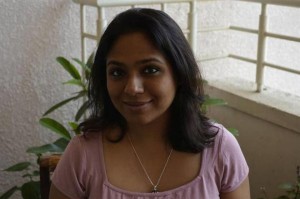
Madhumita Bhattacharya’s Murder at the Temple (Juggernaut) opens on the evening of November 8, 2016. Kavya, a young woman, reaches a small shrine in Banashankari to find the hundi stuffed with notes and the priest dead. What follows are 24 breathless hours as Kavya opens up a can of worms rife with frantic jewellery purchases, money laundering and real estate deals. The 37-year-old Bengaluru based author talks of why she chose the digital space and the importance of setting in a novel. Excerpts

How did Murder at the Temple come to be?

This book started on the night of November 8, as I watched the rug being pulled from under the nation. A panel of officials spent an hour at a press conference repeating themselves, with no apparent clue as to the extent of the chaos it had just unleashed.

Over the next few days, it became clear that not all were equally afraid or helpless. Reports of illegal transactions at jewellery stores across the country grew, and I wondered about the mechanics of it all. Money was deposited in huge amounts in temple cashboxes, and I wondered how it could possibly be returned to the ‘rightful’ owners. How much was happening in the shadows – how much had happened already? The story practically wrote itself.

Why did you choose the digital space?

Speed was important for this one, and old school publishers are not known for quick turn-around times. So I felt Juggernaut would be a great fit. I reached out and they were fortunately very receptive and responsive.

Why a novella?

Also for reasons of speed; the action of the story takes place in 24 hours, and keeping it short and tight seemed the best way to ensure the pace of the narrative kept up with the breakneck speed of the story.

What are the pros and cons of setting the novel in a particular time and space?

On this night and day, it was not as much as a problem as it might have been otherwise. If you remember, in the days following demonetisation, there was a sharp fall in movement on the streets. Otherwise Bangalore traffic would have been a serious plot-killer — there is only so much you can do when you are stuck behind an auto at KR Puram for 45 minutes!

But I enjoy writing about different spaces. This is my first Bangalore book. Each of my books has been set in a different place, and only one of those had a fictional component. My greatest complement was when an old Bangalore hand told me Murder at the Temple captured the city well. It is something that makes me nervous, because I know how much I hate it when authors get their places wrong. I don’t like getting carried away by setting either, but I want just enough of it to set the mood.

Did you have fun with the different locations in Bangalore? Are there specific locations you selected? Why?

I love the chaos of wholesale markets, the old houses, the grand trees. But there is so much more – the dusty barren parks, the random inlets for water tankers… It is the small things that make the difference.

Does Bangalore lend itself easily to crime fiction?

Every place lends itself to crime! Every place has an underbelly – even the most idyllic rural locations have their own dirt, their own politics, their own passions. Crime fiction is a way to access that place of discomfort.

How different is Kavya from Reema?

They are both young women but apart from that, they have little in common. Kavya is lost and alone, Reema is supremely on top of things and connected to her family and her place in the world. Kavya is not a detective, she is saving her own skin.

Do you prefer the first person narrative or third person? Why?

I love both, but first person does leave you confined to the head of one character. In this book, I needed to be free to get into Samar’s head too. To me, they are both the protagonists of this novel.

What next?

I am working on something quite different — a crime novel that is not detective fiction. It is a difficult story for me to write, so I want to take my time.

source: http://www.thehindu.com / The Hindu / Home> Life & Style / by Mini Anthikad Chibber / November 27th, 2017

Rs 85L Space Gallery comes up in Bengaluru

Former ISRO Chairman K Kasturirangan and incumbent  A S Kiran Kumar at the gallery
Former ISRO Chairman K Kasturirangan and incumbent A S Kiran Kumar at the gallery

It is located in Visveswaraya Industrial Technology Museum

A Space Technology Gallery set up in an area on 700 square meters at the Visvesvaraya Industrial and Technological Museum (VITM) will be an added attraction for visitors.

The gallery, the first of its kind in the country, will give a glimpse of space technology, especially India’s space programme. From Aryabhata, India’s first satellite, up to the indigenous shuttle, the air breathing Scramjet engine, till the yet to be launched solar mission Aditya, the gallery has an impressive interactive display showcasing the variety of satellites developed by ISRO.

Inaugurated on Tuesday by ISRO Chairman AS Kiran Kumar, the gallery, set up at a cost of Rs 85 lakh, brings the various facets of space technology in an easy to comprehend way through several interactive and impressive exhibits. There is an interactive display of India’s most popular and successful space programmes – the Chandrayaan-1 and Mars Orbiter Mission.

Also on display is a peep into the life of Wing Commander Rakesh Sharma, the first Indian to go into space, along with a glimpse of the life and works of Kalpana Chawla and Sunita Willams, two Indian-origin women astronauts. Food items like space idli mission developed by the Mysuru-based Defence Food Research Laboratory and which will be consumed by Vyomanauts during India’s human space endeavour are also on display.

Visitors, especially students, can catch a glimpse of how ISRO carries out its launch from its spaceport in Sriharikota as there is a spectacular exhibit of both the launch pads that demonstrates how a rocket is used to launch satellites.

The mission control room explains the way rockets and satellites are controlled and tracked. Major milestones in space technology starting from the Mysorean Rocket to Voyager, which has now reached interstellar regions in outer space, find a place in the gallery. At the satellite imagery station, one can explore images taken by satellites like the glaciers of the Himalayas, Bengaluru Metro Station and many more by waving one’s hand on air.

source: http://www.bangaloremirror.indiatimes.com / Bangalore Mirror / Home> Bangalore> Others / by Bangalore Mirror Bureau / November 29th, 2017

Razed to the ground, but a replica to rise in its place

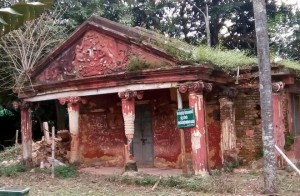
Karnataka : Bengaluru : 13/11/20017 : The front wall of the Krumbiegel-hall has been disfigured with people scribbling on it. The left wall has crumbled and the debris lies uncleared. The four pillars, holding the building together, are barely standing and the Gandaberunda (two-headed mythological bird thought to possess magical strength) has almost faded. The roof has also caved in. Around the structure, wild grass and creepers have grown unchecked. Photo: Ashwini Raj (e-mail handout by Sarumathi)

Plan on to rebuild Krumbiegel Hall in original style, but conservationists are cautious

Days after the 100-year-old Krumbiegel Hall inside Lalbagh Botanical Garden was razed to the ground, the Horticulture Department and the State Archaeology Department are planning to rebuild the heritage structure in its original style.

“A decision has been taken to build a new structure based on the old building. The project will be funded by the Horticulture Department and executed by the Archaeology Department,” said M. Jagadeesh, joint director, Horticulture, Parks and Gardens.

The Archaeology Department is creating a plan for the new building and will give a budget estimate to the Horticulture Department, after which the funds will be released. Meera Iyer, co-convener of INTACH, suggested that instead of replicating the design, the department could hold a competition for city-based architects to design a building that is a fitting tribute. “It is essential to have expert opinion in such an important garden. It’s a public garden, not a private fiefdom,” she said.

Meanwhile, conservationists remain cautious of the move. Architect and author Yashaswini Sharma said if the department plans to build a replica at the same site, it would be against international conservation principles. “It would set a bad precedent and would mean anyone can demolish a historic structure and build a new one in its place. Instead, the Archaeology Department can build a memorial for Krumbiegel.”

Alyia Phelps-Gardiner, Krumbiegel’s great-granddaughter said: “I would really like to be involved in the decision making as the hall was named in honour of my great-grandfather. The site should be a vibrant gift, remembering the history of Lalbagh and the person who contributed to it.”

source: http://www.thehindu.com / The Hindu / Home> News> Cities> Bengaluru / by Staff Reporter / Bengaluru – November 25th, 2017

East Parade Church : Eight Columns of Faith

EastParadeChurchBF27nov2017

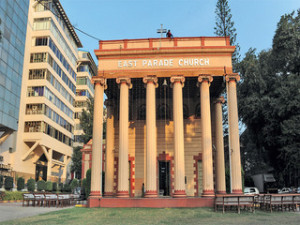
One of the oldest churches in Bangalore, the East Parade Church, was built by Wesleyan Methodist missionaries for British soldiers stationed in Bangalore Cantonment. In England, the Wesleyan Methodist Church was formed as a breakaway sect from the Church of England.

The present church building was raised in 1865, with an inscription dated October 6, 1863, marking the laying of the foundation stone. The church was the earliest church built by the Wesleyans in Mysore district.

The Wesleyan Tamil Mission in the Bangalore Cantonment was established in 1821.Elijah Hoole of the Wesleyan Mission started a small school measuring 30 feet in length and 13 feet in breadth. Tamil services were started in the small school. However, in 1822, the Wesleyan Mission was suspended and the missionaries were transferred. In 1826, the mission resumed again but this time a stable in the Mission compound had to be used as a church.

The founder of the church in its present form was a gentleman called Thomas Hodson. A Wesleyan Missionary who served in India, Hodson was an extraordinary person. He arrived in India in 1829 when he was 25. He had spent three years in Calcutta learning Bengali and he was posted suddenly to Bangalore. The church was apparently dissatisfied by his performance in Calcutta because they decided that ‘results had not come up to their expectations’ (read numbers of conversions were inadequate). Before moving to Bangalore, Hodson wrote a long letter to the church committee mentioning that he had spent three years in learning Bengali and now he had to start again and learn Kannada. Hodson also suggested that preaching was not the only job of the Missionaries; teaching and education were just as important.

He came to Bangalore in 1833 and was stationed in Bangalore for almost three years. He was apparently a linguist of repute, being fluent in Bengali, Tamil and Kannada. A renowned Kannada scholar, he wrote a book on ‘An Elementary Grammar of the Kannada, or Canarese Language’ in 1864.

Hodson appears to have been a bit unhappy in Bangalore because he found that his time and efforts were taken away in preaching to the British and European officers, and he could not concentrate on the local population. He returned to England in 1843 due to ill health and came back to India in 1853 as Chairman and Superintendent of the Wesleyan Canarese Mission in the Mysore District. He left India in March 1878 and died in England in 1882.

In his description of Bangalore, Hodson describes two portions of the city. The Cantonment was where the soldiers lived and Tamil was the primary language. In the native town or petah, Kannada was the predominant language. Not surprisingly, Hodson appears to have concentrated his efforts on the Tamil speaking population rather that the people in the petahs. In 1834, Hodson purchased about 20 acres of land, just outside the Bangalore Petah which was where the United Mission School and Unity Buildings stand today. The first building to be constructed was the Wesleyan Mission Chapel, the predecessor of the present East Parade Church. The Wesleyan Mission Chapel was built in front of the Wesleyan Mission House, and could accommodate nearly 300 people. Located at the heart of the Cantonment, it was raised for the Tamil and the English congregations. The cost of raising the chapel was met by subscription by local Europeans. It was also reported that a ‘native who have received many honours from Lord William Bentinck’ contributed £100 towards raising the chapel.

Walker, one of the missionaries who served at East Parade Church; the cover of Thomas Hodson's book
Walker, one of the missionaries who served at East Parade Church; the cover of Thomas Hodson’s book

The location of the church was striking. In front of the chapel was a wide esplanade, with trees lined up as an avenue, about a mile long. The esplanade was the erstwhile South Parade Road, now Mahatma Gandhi Road. The road to the right of the chapel was the present Dickenson Road which led to the Madras Army barracks. There was a large parade ground which covered the entire area from Cubbon Park to the present day Dickenson Road. The East Parade Church was constructed to the east of the parade ground and so perhaps there was no controversy in naming the church.

The annual report of the Wesleyan Mission of 1903 describes the East Parade Church as “…this lofty, roomy building is capable of accommodating 700 people. It is looked upon as the Cathedral of Methodism in the Province. The Church building has a number of unique features. The massive Corinthian columns, all eight in number, stand as sentinels at the entrance of the Church. These columns lend the whole structure its character. Another welcome feature of the building is that unlike other large churches in Bangalore it has no columns or pillars inside the church obstructing the view of the altar.”

Today, the East parade Church continues to serve two pastorates. These are the East parade Tamil and the East Parade Malayalam pastorates of the Karnataka Central Diocese. Thomas Hodson would probably be proud of the fact that the Church which was built primarily for the Tamil speaking population of the cantonment continues to serve the same function today.

source: http://www.bangaloremirror.indiatimes.com / Bangalore Mirror / Home> Bangalore> Others /  Bangalore Mirror Bureau / by Siddharth Moorchung & Nikhil Moorchung / November 26th, 2017

Femina Miss India 2016 Runner-up Sushruthi Krishna gets engaged

ShrushtiBF26nov2017

Bengaluru beauty Sushruthi Krishna, who made Karnataka proud by winning the fbb Femina Miss India 1st Runner-up title in 2016, has just gotten engaged to her friend and entrepreneur, Bhargav Errangi, in an intimate ceremony in the city. In an exclusive interview with Bangalore Times, Sushruthi tells us about her love story, wedding plans, how she is slowly giving shape to her newly-launched fashion label and why she considers participating in the pageant the biggest turning point in her life. Excerpts:

It all began over a cup of coffee

I was still preparing for the Miss India contest, and Bhargav had just flown in from the US, all filled with ideas to set up his own company here. This was some time in 2015, and we had met at a coffee shop in Bengaluru to discuss a shoot. The conversation went on for 2-3 hours. The shoot never happened, but we clicked. We became good friends, and have ever since supported each other through thick and thin of life. He even came to cheer for me the day

I was crowned Miss India 1st Runner-up. Friendship culminated in love, and we started seeing each other more often. Early this year, we realized that we can take things to the next level. In July, his parents came from Hyderabad to meet mine, and now we are engaged. More than my parents, my grandparents are happy and excited about the wedding, which will take place in March 2018.

No big fat Indian wedding

Just like our engagement ceremony, we want to keep the wedding also as intimate as possible. It will be a simple and elegant affair — more like a get-together for all our family members and close friends who have been part of our journey so far. We both like to sing and dance, so there will be a sangeet and good food. All the rituals will be incorporated, both traditional and contemporary, but everything will be low-key.

The Miss India pageant made me a confident person

Taking part in the beauty pageant changed my life in many different ways. It not only made me a more confident person, but also gave me the inner strength to grow as an individual, follow my heart and execute my roles more responsibly. I have always wanted to do something in the field of design and business. I have an academic background in architecture and have spent a considerable amount of time in the world of fashion. My clothing brand is a blend of my learning from both these fields. I believe in taking risks, and it reflects in my designs and creations.

source: http://www.timesofindia.indiatimes.com / The Times of India / News> City News> Bangalore News / by Reema Gowalla / TNN / November 26th, 2017

Scholar throws light on the origin, evolution of Kannada numerals

A file photo of the pillar inscription in Gudnapur.

‘The earliest inscription in which all the 9 numerals have been engraved is the one at Gudnapur’

While the Halmidi inscription is the earliest known inscription documenting the Kannada script and is well celebrated, a history scholar has sought to throw light on the Gudnapur inscription – another inscription of equal historical importance though one that is not as well known.

This is being done in the light of the Kannada sahitya sammelana that began in Mysuru on Friday.

N.S. Rangaraju, retired professor, Ancient History and Archaeology, University of Mysore, has sought to highlight the origin and evolution of the Kannada numeral as found in inscriptions. He said that in some of the early Karnataka inscriptions, there are instances of a couple of Kannada numericals. “But the earliest inscription in which all the 9 numerals have been engraved is the Gudnapur inscription engraved during the time of Kadamba Ravivarma,” he said.

The proper dating of the engraving of the inscription is not available and as per available records, the date of the Kadamba Ravivarma is 485 A.D. to 519 A.D.

Hence, it might have been engraved in the early 6th century A.D., Dr. Rangaraju said. While the Halmidi inscription if the first and earliest Kannada inscription, the Gudnapur inscription is the first with the nine Kannada numerals and hence is historically significant, he said.

Describing the discovery, he said that B.R. Gopal, an epigraphist and a great scholar, was engaged in field work in 1971 in Banavasi region. About five km from Banavasi is Gudnapur where Dr. Gopal discovered a 16 feet high stone pillar.

“Like the Banavasi inscription of Kadamba Mrigesvarma, this Gudnapur inscription is also engraved from bottom to top and there are 27 lines of writing,” Dr. Rangaraju said.

Pointing out the numerals present in the inscription, Dr. Rangaraju said number 1 figures in line 18; 2, 3, 4 and 5 in the line 19; 6 in line 20, 7 and 8 in line 21 and 9 in the line 22.

source: http://www.thehindu.com / The Hindu / Home> National> Karnataka / by Special Correspondent / Mysuru – November 25th, 2017

Kannada Book Authority to document Karnataka’s publishing history in a book

Mangaluru :

Keen to learn about printing and publishing history of the state? Want to know more about first paper Mangaluru Samachara published in the state? Striving to answer this and other related questions is the Kannada Book Authority with its much vaunted project Kannada Pusthaka Samskruthi: Pustakodhyama Charithre, a book in three volumes that will run in to estimated 1,800 pages or 600 pages per volume, according to its chairperson Vasundhara Bhupathi.

Kannada Book Authority to document Karnataka's publishing history in a book | Mangaluru News - Times of India
Kannada Book Authority to document Karnataka’s publishing history in a book | Mangaluru News – Times of India

With the authority completing 25-years next year, Vasundhara told reporters here that this book will be a perfect gift to all the bibliophiles to cherish the history of the printed work in an era of e-books. The authority has set up a five-member committee comprising M H Krishnaiah, Apparao Akkodi, A V Navada, Ramakanth Joshi and Sujnana Murthy that will document facts about the book with help of regional committees and PhD scholars in state universities.

While one volume will look at books published in 19th Century, the other two volumes will trace history of publishing and printing in Karnataka in subsequent two centuries. Approximating that the work could take the better part of one-year, Vasundhara said the authority is working out the project cost and will approach the state government for funds. “We have set aside a portion of our annual grants to chalk out the working details for this ambitious project,” she said.

Navada, committee member said documentation of any subject is need of the hour. A folklorist of repute, Navada said lot of rich folklore of the state and even the country has been lost to posterity for lack of documentation. “The state has a rich history in the world of publishing starting with Mangaluru Samachara and it is time that this history is captured in the form of a compendium for the future,” he said. The authority will also make available the book in e-format, he added.

source: http://www.timesofindia.indiatimes.com / The Times of India / News> City News> Mangalore News / by Jaideep Shenoy / TNN / November 21st, 2017

Local lad composes Hindi rap on city

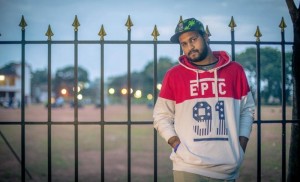
Aaron Pinto aka Prince, 25, a resident of Jeppinamogaru, a Kudla-based youth has now come up with a rap on the city.

Mangaluru :

Drawing inspiration from the local lads of Mumbai and Delhi, among other places, who immortalized their cities by glorifying them through music, a Kudla-based youth has composed a rap on the city.

What’s notable is that the rap ‘Mera Shehar -feat Prince’ is composed in Hindi – perhaps for the first time from Mangaluru – hoping to reach out to the masses across the length and breadth of the country. Songs on the coastal city, brought out in Kannada and Tulu by various artistes, have already garnered good views on the web.
Pinto  said he always liked the idea of giving a desi touch to the west-originated rap genre. This is when he started listening to Indian rappers and soon got influenced by Hindi and Punjabi rap songs. “One day, I stumbled upon ‘Mera Bombay’ by rapper Divine. I got so hooked to it that I wanted my own version of a rap on my city. It took me a few years to realize this, as I had to take care of my career prospects as well. Today, I am happy that my rap on Mangaluru is on the web,” Pinto, who is soon expected to come up with a rap in Tulu, too, said.

Aaron Pinto aka Prince, 25, a resident of Jeppinamogaru, says he jotted down lyrics for the rap a few years ago, when he was employed in the UAE. “I wanted to glorify my city. Hence, I jotted down some lines about Mangaluru. Recently, after I migrated back, I weaved them into a rap,” said Pinto, who brought out the video a couple of months ago on You Tube .

The video, that lasts for 2.46 minutes ,speaks about the city as a whole, its reputation to deliver class-apart actors to various film industries, its scenic beauty, and the kind-heartedness of Mangalureans.

Successful running of Tulu movies overseas, and the frequent visits of stars from the city there, have helped popularize the name of the city across the globe. Little is known about the city in its own country’s north, where Hindi is spoken at large. Pinto also hopes to bring native Hindi speakers a notch closer to Kudla with his rap.

source: http://www.timesofindia.indiatimes.com / The Times of India / News> City News> Mangalore News / TNN / November 21st, 2017

Veteran editor Rajashekar Koti dead

KotiBF25nov2017

Mysuru :

Veteran journalist and editor of Kannada daily Andolana, Rajashekar Koti, passed away following a massive cardiac arrest at a hospital in Bengaluru on Thursday. He was 71.

Famous as ‘Koti’ among readers, he was a socialist know for fearless writings. He is survived by wife Nirmala, son and journalist Ravi Koti and two daughters.

Koti, a native of Huyilagol in Gadag district, graduated from Karnatak University and started his career in journalism with Vishwavani, edited by Patil Puttappa in Dharwad.

Later, he worked as a sub-editor for Prapancha newspaper. Koti came in contact with dalit writer Devanoor Mahadeva, Prof M D Nanjundaswamy, Prof K Ramdas, Nelamane Deve Gowda and others and started Kannada-weekly Andolana and stopped the publication during Emergency.

With support from his friends, he converted his weekly into a daily and managed to have his own printing press. Koti identified himself with dalit and farmers movements and was also active in Gokak and Cauvery agitations. He lived in a dalit colony at Ashokpuram and was the voice of the downtrodden and deprived sections.

Andolana’s circulation crossed 50,000 in Mysuru and later the newspaper started editions in neighbouring districts. His stories on the famous Sathyadev murder case and Veerappan  left a mark among readers.

source: http://www.newindianexpress.com / The New Indian Express / Home> States> Karnataka / by Express News Service / November 24th, 2017