Category Archives: Arts, Culture & Entertainment

Conference on the depth and breadth of Ramayana

With every Yakshagana performance, multiple versions of Ramayana are created on the stage. | Photo Credit: File Photo.

Scholars discuss versions of the epic and their influence on India and Southeast Asian countries

In a Kathakali performance staged in 1780 by Kallaikulangara Raghava Pisharoty, Ravana from the epic Ramayana takes centre stage. Set 10,000 years before Rama’s birth, the dance-drama depicts the story of Ravana’s ancestors, the downfall of the kingdom of the rakshasas, the birth of Ravana, his love for his mother and his great tapasya (austerity) to regain the lost glory of his clan.

The performance portrays Ravana, the villain of Valmiki’s Ramayana, in the most sympathetic light, bringing out the qualities of courage, resolution and strength of character. Rama is nowhere in the picture.

The Malaysian shadow play Wayang Kulit Kelantan draws influence from the oral folk versions of the Ramayana, which travelled beyond the shores of India. The role of Gods and saints is reduced drastically. Wayang Kulit portrays different versions of Ravana’s origin, including the one in which he is born in the heavens and banished to Earth. There he meets Adam and they divide the world among themselves.

These and many other versions of Ramayana and their influence on art, culture and social landscape of India and Southeast Asian countries were revisited by scholars at the two-day international conference on Connecting Cultures: Ramayana Retelling in South India and South East Asia, which was held at REVA University on September 14-15.

Stating that the manifestations of core themes of the Ramayana are complex and in need of detailed research, Dr. Ghulam-Sarwar Yousof from the University of Malaya, Kuala Lumpur, said, “A lot of Malaysian, Thai and Indonesian versions of the Ramayana can be traced back to Krittivasi Ramayan, composed in 15th century Bengal.”

Malini Saran, independent scholar, presented a paper about the discourse on governance and ethics initiated in the first known Ramayana in Java called the Old Javanese Ramayana. “An emphasis on the spiritual and ethical rather than devotional values of Rama’s story in this version allowed imaginative interpretations, with its content and characters used as an allegory for contemporary situations.”

Cheryl Thiruchelvam, a PhD scholar from Universiti Tunku Abdul Rahman, Malaysia, spoke about the emerging art forms, artistic practices, architecture in Malaysia that have origins from versions of the Ramayana. Citing examples of painters Nik Zainal Abidin, Syed Thajudeen and Loo Foh Sang, she discussed how they drew inspiration from Wayang Kulit (traditional puppet-shadow play in Indonesian culture) for their paintings.

Sessions were also held on retelling of Ramayana within the canon of Kannada literature and its multiple interpretations in the Yakshagana of coastal Karnataka.

Dr. Purushottama Bilimale spoke about the 60 episodes of Ramayana created by around 40 authors for Yakshagana performances. “All of these episodes are flexible depending on the time of performance, community and the artistes’ talent. Also versions differ in terms of music, poems and dance. With every Yakshagana performance, multiple versions of Ramayana are created on the stage,” he said.

The conference also deliberated on Ramayana narratives from the Hoysala to Vijayanagar empires, the influence of the epic on sculpture in medieval India such as Pallava and Pandya archaeology and artistic representations throughout India and Southeast Asia.

Before the conference began, participants observed silence for one minute in memory of journalist and activist Gauri Lankesh.

source: http://www.thehindu.com / The Hindu / Home> News> Cities> Bengaluru / by Staff Reporter Bengaluru / September 17th, 2017

Music director, singer L.N. Shastry no more

Music director and singer L.N. Shastry. | Photo Credit: Special Arrangement

L.N. Shastry (46), noted playback singer and music director of Kannada cinema, breathed his last on Wednesday noon. He is survived by his wife Suma Shastry, a noted singer. Shastry was suffering from cancer.

Shastry has sung for over 25 films and his “Kolumande Jangama Deva” for the film Janumada Jodi directed by T.S. Nagabharana brought him name and fame. This song also got him Karnataka State Film Award as Best Male Playback Singer. “Karunaade KaiChachide Node” for the film Malla starring Ravichandran was another of his hit songs.

He was disciple of music directors Hamsalekha and V. Manohar, before he became an independent composer for the film Kanasalu Neene Manasalu NeeneMelody was the last film he composed music for. He has last sung for a song for the film Love in Mandya.

Political leaders and members of the film fraternity condoled the death of the musician, who enriched Kannada cinema through his music.

source: http://www.thehindu.com / The  Hindu / Home> News> Cities> Bengaluru / by Special Correspondent / Bengaluru – August 30th, 2017

Enagi Balappa enriched the silver screen too

Enagi Balappa with the then President Shankar Dayal Sharma. | Photo Credit: Special Arrangement

He had acted on four landmark Kannada films

Enagi Balappa, a towering personality among the professional theatre artistes in the country who passed away on Friday morning, had also acted in as many as four Kannada films and filled life to the characters he essayed.

His first screen appearance was in “Maadi Madidavaru” directed by K.M. Shankarappa in 1974. The film was based on the novel by Basavaraja Kattimani, which depicted the freedom struggle vividly.

He returned to the celluloid after a gap of nearly two decades and essayed the important role in “Sangeetagara Gaanayogi Panchakshari Gavai” directed by Chindodi Bangaresh and produced by theatre personality Chindodi Leela (1995). The film bagged both national and state film awards.

Balappa’s performance in that film attracted attention of film maker T.S. Nagabharana, who offered him an important role in his landmark venture “Janumada Jodi” starring Shivarajkumar. The film, which was based on Gujarati writer Pannalal Patel’s Malela Jeev, got over eight awards.

His last appearance was in “Pareekshe” directed by Ravi Kumar in 2010 when he was 97-years-old. The film focussed on various issues, including education, eradication of AIDS and women’s empowerment.

Condoled

Chief Minister Siddaramaiah condoled Balappa’s death. Describing him as the legendary centenarian of Kannada professional theatre, he recalled Balappa’s contribution to the fields of professional theatre, film and folklore.

Mr. Siddaramaiah said Balappa played an important role in various struggles for the land, including freedom fight, unification of Karnataka and Gokak agitation. Remembering Balappa’s performance in the Jagajyothi Basaveshwara play and women’s roles, he said Balappa used to get into the skin of the character.

Promising to realise Balappa’s dream of protecting collection of Ranga Geethegalu (theatre songs) and setting up of theatre music school, Mr. Siddaramaiah said he would direct the departments concerned to take action on that front.

source: http://www.thehindu.com / The Hindu / Home> News> States> Karnataka / by Muralidhara Khajane / Bengaluru – August 18th, 2017

Archiving the versatile sari

The aim is to create a cultural documentation of the sari.

The Nivi drape, or the one where the pallu of a sari is worn on the left shoulder, is the most common type of sari drape in the country and the world over. But India has hundreds of such drapes, specific to region and culture, that have been forgotten over the years. To document these drapes and create a digital archive, Border&Fall, a city-based digital platform promoting the garment, textile and craft community of India, is making 80 short films as part of its project ‘The Sari Series: An Anthology of Drape’.

Each film will be two minutes long and will show how to drape a sari in a particular style. The archive, expected to be released this fall, can be accessed online for free .

“This project has been an idea for years, but we began proactively working towards it in early 2016. The aim is to create a cultural documentation of the sari through short films, which will give people access to various drapes, and to showcase the diversity and versatility of sari as a garment,” said Malika Verma Kashyap, founder of Border&Fall.

However, Ms. Kashyap said this was not an attempt to “revive” the garment. “The sari is not a forgotten tradition, it is worn my millions of women every day. But many are unaware of the different ways it can be worn. The Boggli-Possi drape from Andhra Pradesh for example is great to behold,” she said.

Some of the other styles to be documented are the Coorg drape, the Kalna Sari drape from West Bengal, Kuchipudi men’s sari drape from Andhra Pradesh, Yakshagana Kase from Karnataka, Purnia drape from Bihar, Warli drape from Maharashtra, and Ranchi Saiko drape from Jharkhand.

Apart from the 80 films, three independent films directed by Qaushiq Mukherjee, Bon Duke and Pooja Kaul will explore the sari’s past, present and future.

Some of the images of the drapes are part of the #WeWearCulture project by Google Arts & Culture.

source: http://www.thehindu.com / The Hindu / Home> News> Cities> Bengaluru / by Sarumathi K / Bengaluru – July 28th, 2017

Peering into the architecture hidden in a thriving market

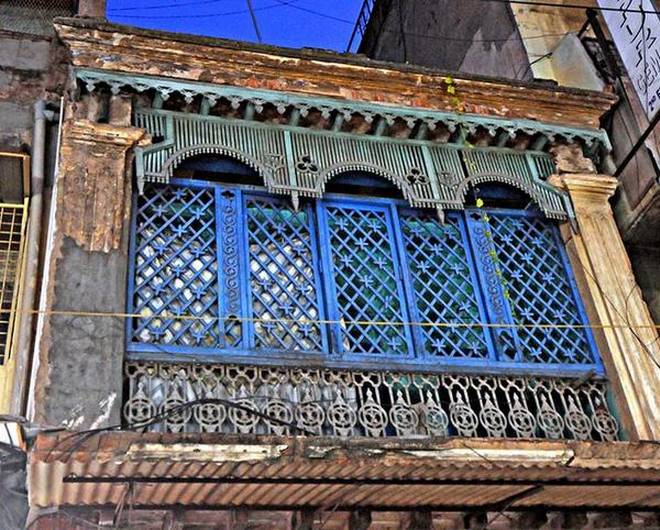
Bengaluru Karnataka 25/07/2017 Old Windows on Avenue Road Bengaluru . Photo: Sampath Kumar G P | Photo Credit: G_P_Sampath Kumar
Bengaluru Karnataka 25/07/2017 Old Windows on Avenue Road Bengaluru .
Photo: Sampath Kumar G P | Photo Credit: G_P_Sampath Kumar

INTACH’s heritage walk on Avenue Road today marks 10 years of ‘Parichay’ project

The cacophony that dominates Avenue Road is something that every Bengalurean knows only too well. The busy road is home to hundreds of shops and buildings. However, it also boasts small islands of period architecture, which are a rich source of knowledge about the city’s heritage.

This year, the historic road will host the 115th ‘Parichay’ Heritage Walk conducted by the Indian National Trust for Art and Cultural Heritage (INTACH – Bangalore Chapter) on Sunday. The walk will also mark 10 years of the Parichay project.

INTACH plans to conduct an ‘architecture walk’ that will give a historical perspective to the dime-a-dozen brick and mortar structures that pack the road. “To have people understand this through the eyes of an architect, we will have Vijay Narnapatti take people to heritage buildings,” said Meera Iyer, co-convener, INTACH.

“The walk will begin at Mysore Bank Circle and end at the Anjaneya temple. On the itinerary are the Rice Memorial Church (named after Benjamin Holt Rice, a missionary of the London Missionary Society), and Manik Mastan Saheb Dargah. The syncretic culture that has thrived for hundreds of years, much before the time of Hyder Ali, continues to flourish on this historic road,” said Mr. Narnapatti.

The thriving marketplace will remain a constant companion during the walk. The area was called Dodda Pete before being renamed Avenue Road.

“Possibly, owing the avenue of trees. We still have British colonial-style buildings here. If the government declares it a heritage road, it would be befitting its history,” said Mr. Narnapatti.

Avenue Road houses some of the best carved facades. Stone was used in most of the buildings, including Raja Market, and in the temple, church, and the dargah. “While stone was used as both a building material and for cladding and flooring, the colonial influences are seen in the windows with small columns on either side, arched windows, and pointed wooden shutters,” he said.

The markers on each of the side streets in stone can be seen even today. “There are remnants of the stone seats installed beneath a cluster of trees that are tucked away in the side lanes that had cobbled stones for a walk path, not visible from the main road,” said Mr. Narnapatti. But in the midst of all this beauty grew a monstrous market that erased most of its architectural heritage, he added.

source: http://www.thehindu.com / The Hindu / Home> News> Cities> Bengaluru / Ranjani Govind / July 30th, 2017

Eternally yours: a rare women’s museum in Bengaluru

Shashwati01BF27jul2017

We have a rare women’s museum in the city. Read on to find out the interesting story behind its birth and its even more intriguing collection

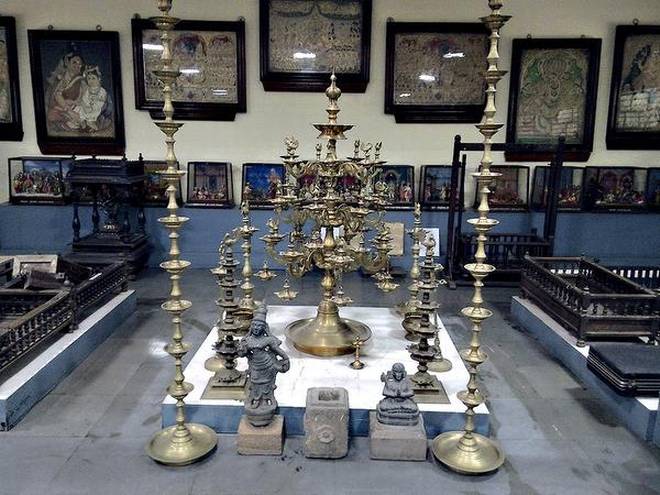
The city nurtures in its womb, little known spaces and unknown treasures an inhabitant can only discover if suitably armed with time and curiosity. Shashwati Women’s Museum is one such gem which needs to be discovered. Its location — nestled inside NMKRV Degree College for women in Jayanagar — makes it even more rare. Shashwati is a word derived from the Sanskrit word Shashwat which means eternal and Chi.Na. Mangala, educationist, journalist, author, visionary wanted to create something for posterity. The founder-principal of NMKRV Degree College for Women in 1973, with her colleagues undertook a padayatra in Bengaluru and Mysuru collecting women-related artefacts. That is how Shashwati Women’s Museum was born.

Shashwati02BF27jul2017

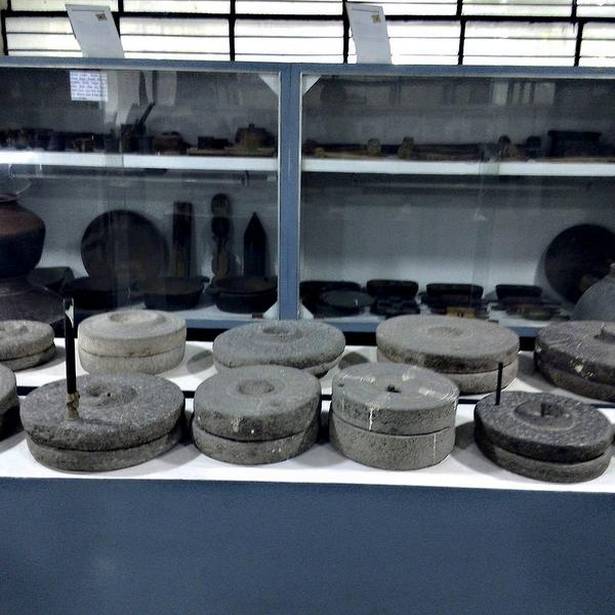
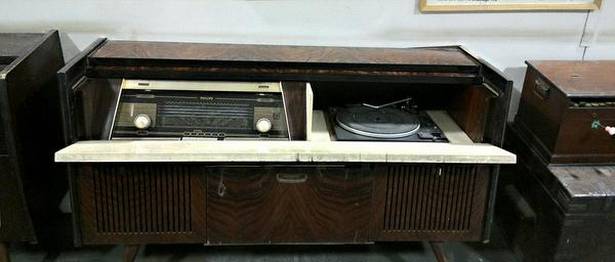
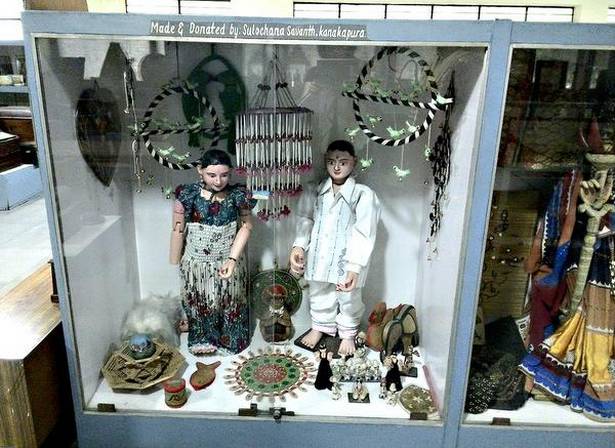
Dioramas, grinding stones, wooden troughs, vessels, radios, typewriters, old gramophones, wooden cradles, objects handcrafted from plastic, paddy, fabric, crochet, jute, photographs, paintings, sculptures in copper, brass and stone make up this museum. “All the items that you see were made and used by women and that is what makes it so rare,” says Vani M.N, one of the oldest serving teachers in the college.

The museum can introduce one to Nanjanagudu Thirumalamba, Karnataka’s first woman writer, journalist and publisher. As soon as visitors enter, they can find a display section dedicated to the iconic personality with her handwritten articles, letters and a few of her personal belongings. “Mangala once wrote an article for a magazine claiming that Thirumalamba was dead. But she later found out that Thirumalamba was alive. Mangala took it upon herself to find her. She eventually found her living in a small house in a village in Chennai. Chi.Na.Mangala felt she had committed a sin and to atone for it, she needed to build something for eternity. She went door to door collecting these items,” reveals the senior teacher.

Shashwati03BF27jul2017

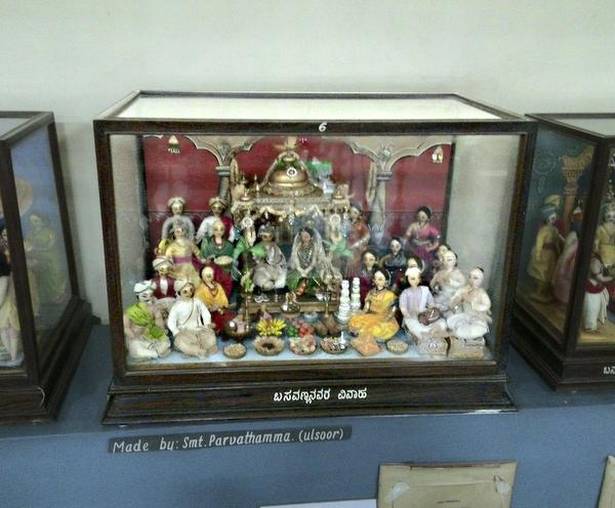
Vani picks a wooden sieve, nut crackers,and dioramas depicting saint-poet Basavanna’s life as well as a 100 year-old paddy tray and a 120 year-old saree with gold threads worn by Mangala’s mother on her wedding, as highlights of the museum.

The nut crackers are truly a delight, especially the ones styled as a Yaksha-Yakshi, or a fish. The dioramas lined at the fag-end of the museum, depicting important episodes from Basavanna’s life, are also significant. With each object clearly stating the name of the donor and creator, the collection becomes credible.

Shashwati04BF27jul2017

If the display and curation were better, the museum could have transformed into an extraordinary space. But the fact is that it is dealing with practical challenges of space.

“The collection hasn’t stopped growing so we have to figure out how to accomodate it. There is a museum committee which has been formed and we have to take certain important decisions regarding these issues, soon it will be a better place. When it comes to a curator, we need someone who will be there with us for a long time. We need a committed person; what we do now is train and pass on the information to a present staff member,” explains Vani, who heads the Department of Journalism and Mass Communication.

Shashwati05BF27jul2017

The museum is not like other museums where visitors can just walk in. One needs permission from the college to visit the space. “It is inside the college and that’s why one needs to be a little cautious but whoever wants to come can call us and see it.

The museum is particularly relevant to the students of the Department of Women’s studies and outsiders undertaking research on gender or anthropology,” adds Vani. The museum is currently closed to visitors due to some construction work.

Shashwati Women’s Museum,NMKRV Degree College of Women,3rd block, Jaya Nagar East, Near Uphara Darshini, Banashankari

Call: 080 2663 7042

source: http://www.thehindu.com / The Hindu / Home> Entertainment> Arts / by Shailaja Tripathi / July 26th, 2017

Young social entrepreneurs share stories, win hearts at CII summit

Bengaluru:

When four youngsters took the stage at the India Innovation Summit on Thursday, the packed hall greeted them with thunderous applause. From a 17-year-old girl who sowed the seeds of her venture in 2015 to a 21-year-old village lad who has gone the extra mile to help distressed farmers, the innovators shared their journeys and success stories at the two-day meet organized by Confederation of Indian Industries (CII).

This app tracks baby’s mental, physical growth

“When I was in class six, school authorities told my parents to get me enroled in a special school. I was 11 when they realized that I was suffering from dyspraxia, a motor disorder caused by damage to the brain. By the time I stepped into class 10, I became an ace coder,” said Harsh Songra, founder of My Child, an app. Featured twice in the Forbes India 30 Under 30 list, he’s been a TedEx speaker too.

Founded in 2015, the app helps parents track the child’s mental and physical development and unusual symptoms from birth to two years. “Today, we connect to over 200 mothers across 140 countries in a month to help them understand their children’s development stages and identify signs of a disorder, if any. The app uses artificial intelligence algorithms. I have also started a content page — We Included — which narrates the tales and travails of the disabled across the globe and sensitizes people,” said Harsha.

Harsh Songra, 21, co-founder, My Child

——————-

A platform which hones communication skills

While chasing the IIT dream, Siddharth Pandiya realized that he was doing no value-addition by becoming another computer engineer. “I left the rat race and started something which I realized is so vital today, a debating platform. My parents always wanted me to develop communication skills,” said Siddharth, who is preparing to join University of California, Los Angeles.

The teenager who just completed PUC from Greenwood High School is the founder of Debate for Change, a forum supported by Google. An avid debater since the age of eight, Siddharth’s aim is to make schoolchildren discuss varied topics with students across the world, hence enhancing their communication skills. “It’s a voice-based platform. One has to meet certain parameters, like the number of debates, to secure a world ranking,” he said, adding, “I’d rather be an aggregator of skills and find the right people to do the right job than a master of all trades. That’s my success mantra.”

Siddharth Pandiya, 18, founder, Debate for Change

——————

This initiative hopes to change mindsets, save resources

Two years ago, when an environmentalist spoke about the impact of wasting resources and degradation of the planet during environment day, classmates Garvita Gulhati and Pooja S chanced upon the idea of a social startup — Why Waste? “The speech got us thinking and we realized we needed to do something,” said Garvita, who was 15 years old then.

“If we drink water from a bottle at a summit and leave it half empty, 14 million litres of water will be wasted in two days? Our initiative intends to change mindsets. I believe we are all tenants on Earth; if we can leave a house spick and span being tenants, why can’t we do that for the planet? We have to stop wasting resources, which are limited,” she said. As part of the initiative, Garvita organizes campaigns to conserve natural resources.

Garvita Gulhati, 17, co-founder, Why Waste?

—————

A tech tool to aid farmers

Hailing from a humble farmer family in a remote Mangaluru village, Ajay Gopi started an agriculture startup in 2015. “I have experienced the agony farmers in our country go through. When about 1,500 farmers committed suicide in Karnataka because of crop failure and debt, I decided to make a difference,” said the collegegoer.

The startup, Teraniru, gives users access to the aquaponics technology, wherein plants grow in soil which sucks the same water in which fish breed. His prototype is functioning since December at the Kaggalipura rural market. “My aim is to do away with middlemen in the agriculture sector. We have to focus on people who contribute to the food chain, otherwise we will not survive,” said Ajay, who is now head of Project DEFY in Mangaluru and a fellow at Ashoka India.

Ajay Gopi, 21, co-founder, Teraniru

source: http://www.timesofindia.indiatimes.com / The Times of India / News> City News> Bangalore News / TNN / July 14th, 2017

Professor brings Punjabi back to Sikhs

Panditrao Dharennavar conducting classes for Sikh children of Gurunanak Nagar in Indi taluk of Vijayapura district. | Photo Credit: Special Arrangement

Dharennavar, a Kannadiga, has been teaching Punjabi to the community in Vijayapura

Back in 2012, Panditrao Dharennavar was in the news for translating Kannada literature into Punjabi. Now, the professor is bringing Punjabi back to the Sikhs in his hometown Indi at Vijayapura district.

Mr. Dharennavar, who teaches sociology at the government degree college in Chandigarh, has turned into an ambassador of the two languages. He teaches Punjabi to Sikh children of Gurunanak Nagar in the taluk, while also translating Kannada works into Punjabi.

Based in Chandigarh for the last decade, Mr. Dharennavar has mastered enough Punjabi to be able to write it. He has translated Vachanas of Veerashaiva saints and social reformers Basaveshwara and Akka Mahadevi into Punjabi.

“When I came here on vacation, I came to know about the colony of Sikhs who have been dwelling here for over 70 years. After being disconnected from Punjab for decades, these people have forgotten Punjabi and speak Hindi and Kannada. They also speak Sikhali, their own language which is similar to Punjabi but has no script,” Mr. Dharennavar said.

That is when he decided to teach Punjabi to the community, mainly the children.

He is happy with the interest shown by the children. “Perhaps it their instinct that makes them learn the language so quickly,” he said.

Ujwal Singh, one of the residents, said that he is grateful to Mr. Dharennavar for having so much concern for the community to teach the language. “We wanted someone to teach us Punjabi so that we could read our religious books. The language also connects us to our roots,” he said.

source: http://www.thehindu.com / The Hindu / Home> News> States> Karnataka / by Firoz Rozindar / Vijayapura – July 12th, 2017

A date with rare stamps

PhilatelyKF12jul2017

Karnataka Philatelic Society to hold exhibition after 10 years

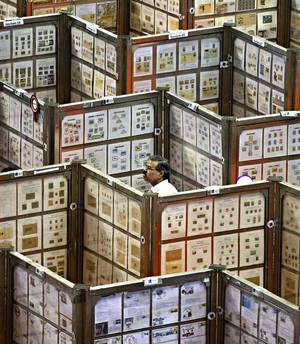
Philately, like letter writing, does not have many takers today. But young and old collectors will participate in an exhibition of rare stamps by the Karnataka Philatelic Society (KPS) from July 14 to 16 at the Rajarajeshwari Kalyana Mantapa, Rajajinagar. The event is being organised by the society after 10 years. Till 2008, philately exhibitions were held regularly by the Department of Posts, too, but they were stopped when participation dipped.

“Most major collectors these days are in the age group of 40 to 60. Not many young people are interested in hobbies such as philately and numismatics. Through the exhibition, we want to revive interest in them,” said Nikhilesh Melkote, general secretary, KPS.

Of the 114 applications the KPS received for the exhibition from Karnataka, Goa, Telangana, Tamil Nadu, and Assam, only 22 were from children or teenagers. “Till a few years ago, many schools encouraged the hobby and had their own clubs, which is not the case today,” Mr. Melkote said.

Sri Krishnan K.L., 17, is among the exceptions — he started collecting stamps when he was eight. “I always tell my friends that philately is about a lot more than collecting stamps. We learn about countries and their history.”

Two schools that have philatelic clubs are also participating. One of them is the Vijaya High School in Jayanagar, which has been running its philately club since 1973. The school also houses a stamp museum. “The idea is to encourage children to take up the hobby. Our students also participate in State and national exhibitions,” said Nirmala B.K., in-charge of the club, and a collector herself.

Selection process

K. Chaitanya Dev, president, KPS, said exhibits for the show are selected by a committee of three senior philatelists. “We check the entry forms and the previous record of the collector. Some exhibits are rejected on the basis of quality, but to encourage young participants, we have decided to allow all the 22 exhibits by them.”

The best three exhibitions in various categories will receive awards. “Depending on the success of the event, we want to make this a yearly affair,” Mr. Dev said.

Games and quizzes will also be organised. There is also a prized lucky dip, the winner of which will get the world’s first ever postage stamp: the Penny Black, issued in 1840 in Great Britain.

The survivor

The society, affiliated to the Philatelic Congress of India, was started in 1975 by Col. L.G. Shenoi and his like-minded friends.

“At that time, three other clubs were already running, including a Youth Philatelic Club. But, they stopped functioning eventually,” said Mr. Melkote, who joined the the Karnataka Philatelic Society in 1977.

Today, the KPS has nearly 600 members, almost a hundred of whom meet once a month at the General Post Office to discuss and exchange stamps.

source: http://www.thehindu.com / The Hindu / Home> News> States> Karnataka / by Sarumathi K / Bengaluru – July 10th, 2017

Bengaluru girl bags three medal at Dance World Cup

VinayaBF11jul2017

Bengaluru :

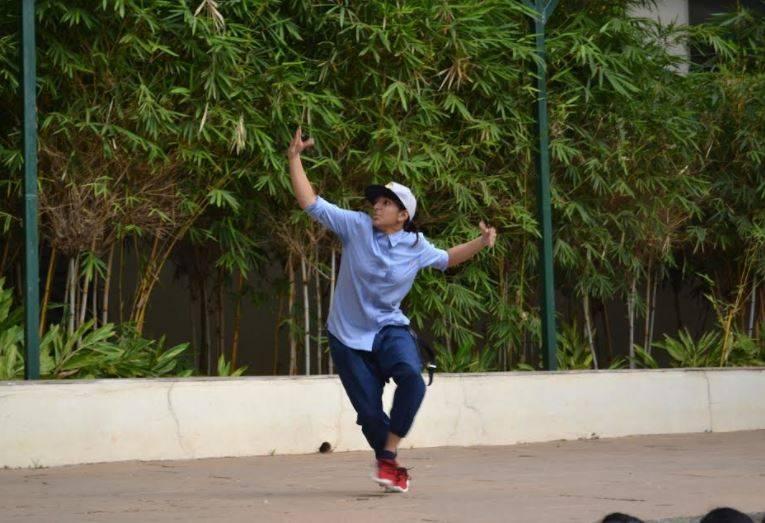
Vinaya Seshan, a grade 10 student of  Inventure Academy , won three medals at the 2017 Dance World Cup held recently in Germany .

The event is considered to be one of the world’s top all-genre dance competition for children and youth. More than 12,000 participants from 47 countries competed in the qualifiers, and over 10,000 from 43 countries made it to the final.

Vinaya bagged gold in the duet category and a bronze each in the hip-hop group and hip-hop solo categories, adding to her haul of three medals at last year’s World Championships. Vinaya danced in Inventure’s formal blue uniform as she considers it to be her lucky charm.

Vinaya’s passion for dance began in Grade 1 and she has been a regular in Inventure’s dance teams and musical productions.

She got her big break when she was selected for Berserk, a week-long dance workshop conducted by the Lourd Vijay Dance School. She was part of their squad that won a bronze in the 2015 World Cup.

Vinaya also plays the tabla, guitar and piano. “Being versatile is important; at the same time finding the right balance is difficult, but achievable,” she said.

source: http://www.timesofindia.indiatimes.com / The Times of India / News> City News> Bangalore News / TNN / July 10th, 2017