Category Archives: Business & Economy

Infosys BPO buys Australia-based Portland Group for AUD 37 mn

Bangalore:

Infosys BPO, the back office subsidiary of Infosys, has acquired Australia-based sourcing and category management services firm Portland Group. The A$37-million all-cash deal is expected to be completed by early January 2012.

According to Infosys, which has often been criticised by analysts and industry watchers for not being aggressive on acquisitions despite sitting on almost $4 billion of cash, the deal will help it establish presence in the Australian market with more offerings in the value-added segment

“The deal will essentially enable us to have a reach into the Australian market. It will enhance our sourcing and procurement capabilities. Infosys’ focus has always been on value-added services and this will add to it,” Swamithan D, CEO and MD of Infosys BPO, told ET.

Portland Group has over 100 employees with a reported revenue of approximately A$31.3 million for the fiscal year ended June 30, 2011. “Portland Group has over 100 procurement specialists with domain expertise and some 40-odd clients. None of them is our clients as of now. The deal will certainly help us intensify our service offerings and take sourcing and procurement functions to a higher level,” he added.

The acquisition is expected to start contributing to Infosys revenue by next quarter. The country’s second-largest IT services firm is seeing a greater role for its BPO business as it transforms itself from an IT services firm to a business solutions firm. According to the company’s executive co-chairman, S Gopalakrishnan, BPO is now leading the sales in many of its new wins where earlier it would have been bundled along with IT services.

Infosys’ BPO business is set to hit the $500-million-mark in revenue this year. “For Infosys, only 7% of business comes from BPO services. But I see that as an opportunity. Traditionally you would have thought that BPO comes later.

But now BPO is leading the sale and everything else gets pooled to BPO,” Gopalakrishnan told ET in an interview last month. According to him, BPO is also gaining prominence as IT services firms move to platforms which have some amount of business processes embedded in them.

Since October, the company has added incentives to its technology sales team if they are able to sell the BPO business as well. So far Infosys’ technology sales team was only responsible for selling IT services.

The last acquisition that Infosys made was also in the BPO business. In 2009, it acquired the US-based McGamish Systems to expand its presence in the insurance and financial services sector. The company signed a $250-million deal with Royal Philips Electronics of the Netherlands and acquired three shared service centres located in India, Poland and Thailand from Philips in 2007.

Portland Group CEO Galvin Solsky said Infosys will provide Portland’s clients with a highly compelling proposition that does not currently exist in the Australian market. “It (the deal) will allow us to offer our clients a truly integrated and globally competitive solution to deliver procurement benefits in the most effective and efficient way possible,” he said in a press statement. Infosys closed down 0.25% at Rs 2,667.35 on the BSE on Tuesday.

source: http://www.articles.economictimes.indiatimes.com/ The Economic Times / Home> Tech> ITeS / ET Bureau / December 21st, 2011

Rs 100 Crore Biotech Park to Be Set Up in Mysore

A Rs 100 crore neutri/neutraceutical and phytopharmaceutical (N2P2) project would be developed in Mysore, according to a key government official. 

The Vision Group on Biotechnology headed by Dr. Kiran Mazumdar-Shaw has recommended sector-specific biotech parks to be set up in tier 2/3 cities of the State and this project is one such to be developed in Mysore, Principal Secretary in the Department of Information Technology, Biotechnology and Science and Technology, M N Vidyashankar told PTI here.

The private partner for development of this project has been selected following a tender process. The state Cabinet has given its clearance. The State Government’s major role in the project is to develop the R & D zone.

“M/s. JSS Mahavidyapeetha are the successful bidders for the project, estimated to cost about Rs 100 crore,” Vidyashankar said.

He said the biotech sector faces talent shortage and to address this, the State Government has initiated the BT Finishing Schools project. As many as 12 educational institutions have been selected by a Committee headed by Dr G Padmanaban to establish such schools, covering Bangalore, Mysore, Manipal, Mangalore and Gulbarga.

“The BT Finishing School concept involves academics for six months and industry internship for six months. The students are assured of a job after they clear the one year Diploma course,” Vidyashankar said.

The students for BT Finishing Schools have been selected through an entrance test and interview conducted by the educational institutions.The course has commenced in September 2011.Regular monitoring is done by a High Level Committee headed by Principal Secretary – Information Technology, Biotechnology and Science and Technology,and Prof G Padmanaban.

The courses and other day-to-day matters are steered by another Committee comprising the educational institutions, it was stated.

source: http://www.news.outlookindia.com / Home> Science & Technology> Mysore / PTI / December 22nd, 2011

Can Himalaya scale new heights?

Ravi Prasad

Lifestyle diseases have boosted the Ayurvedic firm’s performance, but it needs more advertising.

India’s increasing affluence and accompanying ‘lifestyle’ diseases such as diabetes have boosted this Ayurvedic company’s performance, but it needs to do more on advertising and distribution.

Consider this: India has over 61 million diabetics according to the International Diabetes Foundation. By 2030, this figure is expected to cross 100 million. By that time, India will be second only to China in terms of the number of diabetics in the world. This is not all. Cancer is also catching up fast as a killer disease. According to the Indian health & family welfare ministry, some 5.35 lakh patients succumbed to cancer this year. Though marginally higher than the figure reported last year, the signs are clearly not good.

India is rapidly seeing the emergence and growth of lifestyle diseases. As affluence grows, bringing with it a change in dietary habits, ailments such as cancer, diabetes and heart problems are becoming the order of the day. Ironically it is throwing up a myriad of possibilities for the herbal healthcare company, Himalaya, which banks on the science of Ayurveda to develop products. The perception that Ayurveda is also safe in comparison to mainstream allopathy is what makes the prospects of firms such as Himalaya bright, say market experts.

The unlisted, Bangalore-based entity has a turnover of over Rs 1,000 crore. Key verticals — pharma and FMCG — which contribute 60 per cent and 40 per cent respectively to overall revenues are growing at a clip of about 25-32 per cent per annum, according to Ravi Prasad, executive chairman, Himalaya Drug Company, who has been with the firm for well over 20 years now. Under him, the largely pharma company, which was formed in 1930, stepped into the FMCG space in 1999. Considered a close confidant of the low-profile Manal family, who are founder-promoters of Himalaya, Prasad has driven Himalaya’s international expansion into markets such as Russia, Ukraine and Romania. Today, Himalaya products —both pharma and FMCG— are available in over 80 markets including the US, Europe, South East Asia and the Middle East.

Himalaya is also counting on its international markets to drive growth as it seeks to move to the next level in the coming years. The move to step into FMCG over a decade ago, say Prasad, was prompted by the firm’s need to grow. Driving growth in international markets is key now, he says.

Ironically, with the world increasingly moving from largely curative to preventive medication, Himalaya with its herbal heritage finds itself in a unique position: to address medical needs with patented products that are based on good, solid research. “Most Indian pharmaceuticals companies are in the generics space which is largely a volume-driven business. We do not operate in that segment,” says Prasad.

The pharmaceuticals market in India is roughly Rs 56,000 crore, growing at a clip of about 15 per cent per annum. Over 95-96 per cent of the market comprises generics players, who market off-patent allopathic products. Himalaya, in contrast, has opted to build a strong pipeline of herbal products. The journey typically from R&D to final product takes easily about eight to ten years, says Prasad.

Thanks to this, Himalaya has some notable products to its name including Cystone (for people suffering from kidney stones) and Liv.52 (for those suffering from kidney ailments). Liv.52, in fact, is ranked amongst the top ten pharma products in the country, according to market research agency ORG IMS (see chart).

Liv.52 also happens to be among Himalaya’s early success stories. Launched in 1955, the herbal product went on to become one of the most trusted names in liver care. Available in tablets as well as syrups, Liv.52 has a share of close to 46 per cent in its space, and consists of Ayurvedic herbs that helps restore the functional efficiency of the liver (check chart on Liv.52). The drug also acts as a daily health supplement that helps improve appetite and promotes weight gain.

Cystone, the other blockbuster drug in Himalaya’s arsenal, was launched in 1943. It has a share of 40 per cent, and is considered to be effective in tackling the problem of kidney stones in more than 70 per cent of patients (check chart on Cystone). Company executives say that what has worked for both Liv.52 and Cystone, and indeed, all pharmaceutical products under Himalaya, is their recommendation by not just Ayurvedic doctors, but also practitioners of allopathy.

Philip Haydon, chief executive officer, pharmaceutical division, Himalaya, says that it is this recommendation by doctors over the years that helped the company sustain double-digit growth.

The company is keen to replicate this success in other areas such as oncology (cancer-related medication), viral & tropical diseases, stem cell therapy and nutritional products. “These are some areas we are working on,” says Prasad. On the FMCG front, the company is looking to add advanced anti-ageing to its repertoire of products, which includes skincare (facewashes, creams, moisturisers), haircare (shampoos, conditioners, hair oils), footcare, oralcare (toothpastes) and lipcare respectively.

Saket Gore“There are some other vacant spots too in our FMCG portfolio such as hair colour, deodorants and men’s products. But we are not immediately rushing into these segments,” says Saket Gore, chief executive officer, consumer products division, Himalaya.

With a nation-wide presence with facewashes and lipcare, and a regional, mostly south-centric presence in other categories, Gore says that his hands are full at the moment. In face-washes, lipcare and shampoos, which are Himalaya’s most important categories, key rivals include Hindustan Unilever (HUL) and Lóreal respectively. In lip care, for instance, Himalaya is third after HUL and Lóreal, while in facewashes, it stands at number two after HUL, and marginally ahead of Lóreal.

HIMALAYA’S STAR PERFORMERS
Liv.52 Cystone
* Liv.52 was launched in 1955 * Cystone was launched in 1943
* The drug is made from Himsra (Capparis spinosa) and Kasani (Cichorium intybus) extracts * It is the only herbal drug available for treating urinary stones and positive results are recorded in more than 70% of patients
* It is the only herbal medicine to be ranked amongst the top 10 pharmaceutical products in India * The drug is made from Gokshura (Tribulus terrestris), Pasanabheda (Bergenia Ligulata) and Shilapushpa (Didymocarpus pedicellata) extracts
* Backed by 264 clinical trials and one meta-analysis study in infective hepatitis * It has undergone 90 clinical trials and is prescribed by doctors in several countries
* The drug continues to be prescribed by doctors worldwide after 56 years of launch * Cystone tablets (60s) is priced at Rs 80 and Cystone syrup at Rs 70
* Present in over 65 countries around the world
* Liv.52 tablets (100s) are priced at Rs 60 and Liv.52 Syrup 100ml and 200ml are priced at Rs 52 and Rs 75 respectively.


For all this, analysts have an interesting take to offer about Himalaya’s FMCG play. Unlike pharma, which is the backbone of the 81-year-old-company, FMCG is a newer business, launched 12 years ago with Ayurvedic Concepts. The latter was subsumed into the larger Himalaya brand name owing to the heft it carried with consumers. From then to now, the business has grown in double-digits, but remains smaller than the mainstay pharma business. Pharma also lands up sucking bulk of the profits on account of its intensive focus on R&D.

According to Haydon, the pharma division has a three-to-five-year-pipeline of products ready. “Our basket is full,” he says. “There are no dearth of products.”

With a total reach of about 4 lakh doctors worldwide, Himalaya’s pharma business is largely push-driven (that is, driven by medical representatives who hard sell the product to doctors, who eventually recommend or prescribe it to their patients). The FMCG business, on the other hand, is pull-driven (that means it banks heavily on consumers being drawn to products based on aggressive advertising, marketing and distribution).

While Gore declines to give investment details, he does admit that the firm has some miles to go on both brand-building and distribution.

In the south, for instance, the channel of distribution for Himalaya in FMCG is modern-trade (that is, organised retail stores), not traditional trade (that is, neighbourhood or kirana stores). Kirana stores give over 90 per cent of sales to an FMCG company so Himalaya’s limitation to organised retail stores for categories such as shampoos is a clear disadvantage. Its national categories facewashes and lipcare, in contrast, are distributed via both traditional and modern trade. “But FMCG calls for a lot of investment,” admits Gore.

With peers in the space such as Dabur and Emami spending substantially more on both distribution and A&P (that is, advertising & promotion), the task is not easy, say analysts. Adspends as a pecentage of sales for most listed FMCG companies including Dabur and Emami is in the region of about 10-12 per cent. In the case of Himalaya, it is significantly lower, say market experts. Investment in distribution is also lower than peers, say experts. For listed FMCG companies, distribution expenditure as a percentage of sales is about 5-6 per cent of sales, they say.

Gore says that the firm is working on ramping up FMCG distribution largely through modern trade. It also has its own network of 129 retail stores, largely used as information centres than points of sales.” So far this year, we have added eight stores. And we propose to keep this momentum going,” he says.

But with competition only heating up in FMCG, thanks to the entry of new players as well as the actions of existing players, opting to play in a limited geography using limited tools of distribution may not be the best strategy, say analysts. Gore responds by saying that Himalaya’s products remain strong. “The focus for us is there,” he says.

source: http://www.business-standard.com / Home> Companies & Industry / by Vicent Susan Pinto / Mumbai, December 21st, 2011
Exotic varieties of tea in Bangalore

BANGALORE:

In the series of Tea boutiques in India, Golden Tips of Darjeeling has entered the Bangalore market, launching more than 250 varieties of exotic tea.

It was officially launched at the hands of noted Kannada Actress Roopa Shree at Phoenix market city mall.

Speaking at the launch of Tea Boutique, Tea Taster and Managing Director of Golden Tips Tea Company Limited, Madhav Sarda said, ‘In order to create awareness & popularize tea as a health & wellness beverage we have conceived the idea of opening tea boutiques across India.”

The Boutique will not only allow Bangaloreans to taste the finest, purest and freshest teas but also to see, taste and purchase a large variety of Darjeeling Teas which are perceived as the World’s best.

He added,“We wish to invite the residents and corporates of Bengaluru to come, see, feel, smell, sip and enjoy this wonderful beverage.” The store had exotic teas from Darjeeling, Assam Nilgiris and also the speciality Jubilee Tea, Pride of Darjeeling, Second Pick, Queen of Hills and Jasmine Tea to name a few.

source: http://www.ibnlive.in.com / Bangalore / posted December 17th, 2011 / Express News Service / The new Indian Express


Cisco’s New Healthpresence Focuses on Rural India


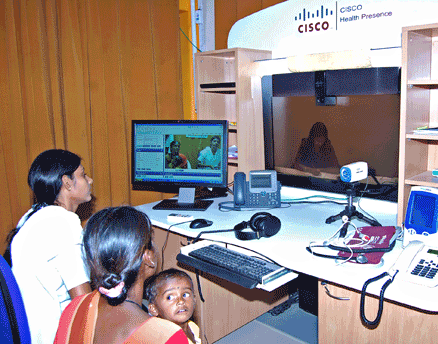
A village woman in K’taka is shown using Cisco’s HealthPresence. (photo courtesy of Cisco)

U.S. technology giant Cisco Nov. 14 unveiled the second generation of its platform for telemedicine, known as Healthpresence, focusing its efforts on India where at least 175 million rural dwellers lack access to any health care services.

Healthpresence allows physicians in several countries to remotely conduct consultations with patients who may be hundreds of miles away. In India, private hospitals, the defense sector and state governments in Karnataka and Madhya Pradesh have signed on to use Healthpresence; the service is already available in 11 districts and can be accessed by up to one million people.

“In India, there’s a huge mismatch between the availability of doctors and where they’re needed,” Vishal Gupta, vice president and general manager of Cisco Global Healthcare Solutions, told India-West by teleconference from Bangalore, where he is based. Patients must often travel hundreds of miles to see a physician, he said, noting that the need for doctors and specialists is most acute in rural India.

“We want to be the ATM of healthcare services,” said Gupta, envisioning Healthpresence kiosks in a variety of rural and semi-urban settings, such as malls.

An earlier version of the product, which was released two years ago, required Cisco’s Telepresence, a high bandwidth platform. But the version of Healthpresence rolled out by Cisco last week can be used on low bandwidth platforms, including desktop computers.

Healthpresence 2.0 features the flexibility to be used across several platforms, from a high-end Telepresence-based system, to a low bandwidth version which is portable and can be used in a mobile medicine van, said Gupta, noting that bandwidth is still an issue in many remote parts of India.

The new version of Healthpresence can be maintained on a server by a service provider who provides repairs and updates to the system, eliminating the need for an in-house IT specialist and lowering the overall cost, said Gupta.

Healthpresence patients sit in a special consulting room – known as a primary health care center – which has a screen allowing them to see their doctor, and specialized diagnostic equipment including a digitized stethoscope which allows a doctor to listen to his patient’s heart and lungs remotely.

A digitized torch and otoscope allow the physician to remotely examine a patient’s ears, nose and throat.

Healthpresence can also be used by specialists.

Sunita Maheshwari, a Bangalore-based pediatric cardiologist and founder of RxDx, which uses Healthpresence to connect to patients in the low-income district of Raichur in northen Karnataka, said Cisco’s product works very well in telemedicine.
“We were skeptical at first, wondering will rural India’s villages accept such technology. But they’re really thrilled because they have a doctor out there for the first time,” the Indian American Maheshwari, who was trained at Yale, told India-West.

RxDx remote clinics provide primary care doctors from 9 a.m. to 5 p.m. on a walk-in basis, and appointments can be made for consultations with specialists. The clinic has a staff of 70 physicians, with a mix of specialties, including pediatrics, and serves about 600 patients a month in Raichur, which is an overnight train journey from Bangalore.

Maheshwari – dubbed the “Queen of Hearts” by India Today magazine – said she hopes to next hook up with practices in remote states such as Bihar to provide Healthpresence services there. She estimated that one-quarter of India’s 700 million village dwellers – 175 million people – currently lack access to any healthcare services.

The Osmania University alumnus said the desktop version of Healthpresence was very scalable and could be used anywhere. “I could be sitting anywhere and treating patients not just in Raichur, but also in Tanzania,” she asserted.

The need for access to healthcare in India has gone up phenomenally with the advent of chronic diseases in the population. The country accounts for 60 percent of the world’s heart disease patients, according to data released last year by the World Health Organization, and is home to 35 million diabetics, the largest number on the globe.

Cancer is also on the rise with almost 400,000 people in India dying each year from various types of the disease. The overall oncology market is growing at about 20 percent per annum, Pradeep Jaisingh, founder and CEO of New Delhi-based International Oncology, told India-West in June.

Gupta stated that the Indian government has shown its commitment to telemedicine, promising to increase funding to public health care.

And in September, Sachin Pilot, India’s young Minister of Communications and Information Technology, unveiled a plan that would lay out 500,000 miles of optical fibre throughout the country, bringing high-speed connectivity to every remote area of India within the next two years.

source: http://www.indiawest.com / News> US Indian / by Sunita Sohrabji, Staff Reporter / December 01st, 2011

New Mangalore Port Handles Record Containers in a Single Voyage

Media Release

Mangalore, Nov 14:

A record qty of 1512 TEUs  handled at New Mangalore Port  in a single voyage in the container vessel- M.V. TAMPABAY  which called at the Port on 9-11-2011.  This is the highest number of containers ever handled at the port from a single voyage surpassing the  earlier record of 1436 TEUs handled on 3-7-2009 from the vessel M.V. ELBE TRADER.  Out of the total 1512 TEUs, 934 were imports and 578 exports.  Major items of import are raw cashew and export consists of coffee, cashew kernels, fish and fish products, candles, etc. M/s Atlantic Shipping are the Feeder Line Operators and M/s Delta Infralogistcs Pvt. Ltd.(HML) the agents of the vessel.

Chairman Dr. P. Tamilvanan has stated that the port is witnessing steady growth in container traffic thanks to the pro-active marketing efforts made by the Port management coupled with the infrastructure addition created during the past few years like expansion of container yards, container handling equipments like reach stackers, increased number of reefer plug points, concretization of roads, simplified documentation system etc.  This has yielded positive results in fostering the container movement to the port from the hinterland which is evident from the fact that from 9646 TEUs handled in 2005-06, it has grown to 40,158 TEUs in 2010-11.  During the current year 2011-12(as on date) 30,454 TEUs handled as against 25,709 TEUs handled during the corresponding period of previous year.

Container traffic at NMPT got a shot in the arm when the first consignment of 40 feet container with Garments/Linen exported through New Mangalore Port on 7-3-2011 in the container vessel M.V. OEL TRUST.  The consignment of 4237 packets of cotton processed garments/linen produced at the Hassan SEZ by M/s Himatsingka Seida Ltd.  has been exported to USA.  This is for the first time garments are handled at the Port.  The Mainline operators are M/s CMA CGM and the handling agents M/s Cargolinks. The total transit time will be 28 days.

Shri P. Tamilvanan, Chairman has attributed the handling of this new cargo, hitherto moving through neighbouring ports, to the pro-active marketing efforts  made by the Port  at various locations of the hinterland during the last few years coupled with the Infrastructure additions made for the smooth handling of containers.  He has added that the above garment unit , which is a 100% export oriented one  is expected to move their entire consignment of export to the tune of 25 TEUs per month through New Mangalore Port.   The container traffic at the Port has crossed 36000 TEUs during the current year(as on date) with a growth rate of 27%.

source: http://www.daijiworld.com / Monday, November 14th, 2011


Natural farming: Lifeline for Farmers

Intl. seminar on zero-budget farming by La Via Campesina


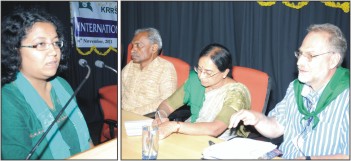
Caption: KRRS General Secretary Chukki Nanjundaswamy speaking at the seminar on natural farming held in city this morning. Picture right shows the pioneer of zero-budget farming Subhash Palekar, Nandini Jairam and Peter Rosset of La Via Campesina on the dais.

Mysore:

An international seminar on self-sustainable, zero-budget natural farming, propounded by international organisation La Via Campesina, was held under the aegis of Karnataka Rajya Raitha Sangha (KRRS) at Rani Bahadur auditorium in B.N. Bahaddur Institute here this morning.

Speaking on the occasion, Subhash Palekar, popularly known as Krishi Rishi, an exponent of natural farming and promoter of the concept of Zero Budget Natural Farming (ZBNF), said that the State Government’s Organic Farming Mission must be closed as it is against the interests of farmers and favours multinationals. He urged the government not to confuse the farmers between natural farming, organic farming and the conventional method of farming.

Pointing out the drought prevailing in north Karnataka region and the continued spells of rain in southern region of the State even during November, Palekar said that it was due to changes in the environment which if unchecked, would lead to disastrous implications.

KRRS General Secretary Chukki Nanjundaswamy, delivering the inaugural address, expressed regret that those in power were least bothered about the farmers resorting to suicide throughout the nation and said that there was a need for authorities to contemplate on why the farmers became entangled in debts and how to bail the Annadatha out of the severe financial constraints which force them to take the extreme step.

Deploring the conventional method of farming, she said that it required huge investments by way of seeds (from company brands claiming to be of superior quality and high-yielding), chemical fertilisers, weedicides, insecticides etc., but fetched no profit either because of crop failure due to vagaries of nature or crash in prices caused by over-production or other reasons.

Chukki termed the State Government’s Organic Farming Mission as capitalist agriculture and called upon farmers to take up pro-farmer agri-practices.

Peter Rosset, a member of La Via Campesina, addressing the gathering, said that the agri-scientists who work within the labs lack first hand experience of farming in the field and hence, their research works go waste.

They need to be practical, keeping in mind the farmers’ limitations and must ensure that their research works reach the farmers and properly implemented. He also deplored the use of hybrids and advocated for natural farming using original breeds. He also spoke in favour of polyculture (mixed farming).

KRRS President K.S. Puttannaiah, Nandini Jairam and farmer delegates from Sri Lanka, Indonesia, Combodia, Scotland, Philippines, Mexico, Korea, Nigeria and Nepal were present.

Natural Farming: It needs no tilling, no fertilisers, no pesticides and no weeding. For about 60 years, Fukuoka Masanobu, Japan’s authority on natural farming, honed methods based on his theories. His book One-Straw Revolution addresses not only natural farming but also causes of environmental deterioration.

Intl. campaign for natural farming

Via Campesina is an international movement which co-ordinates farmers’ organisations of small and middle-scale producers, farm workers, rural women, and indi-genous communities from Asia, Africa, America and Europe.

It is a coalition of over 148 organisations, advocating family-farm-based sustainable agriculture and was the group that first coined the term “food sovereignty” which refers to the right to produce food on one’s own territory. Via Campesina has carried out a Global Campaign for Agrarian Reform since 1999.

Organised worldwide into nine regions, the group has members in 69 countries, with about 150 million members globally. The organisation was founded in 1993 by farmers’ organisations from Europe and Latin America. Its headquarters is in Jakarta, Indonesia. Henry Saragih is the General Secretary.

source: http://www.starofmysore.com / General News / November 06th, 2011


Women who sow innovation

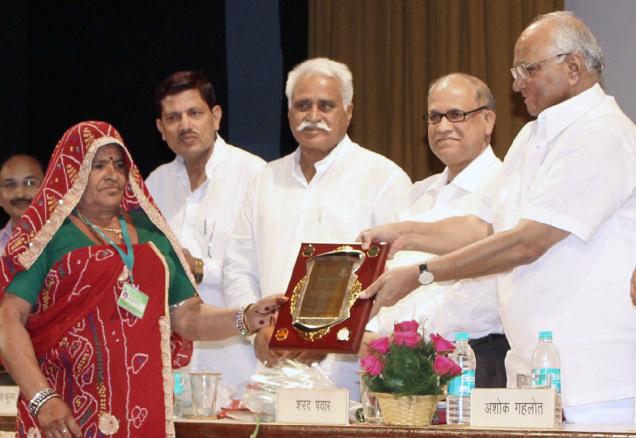
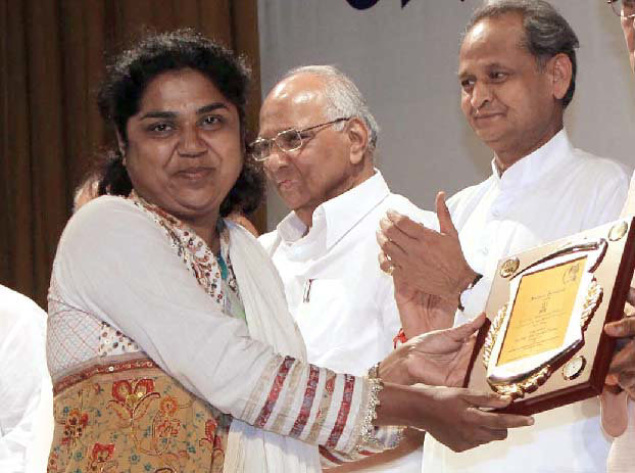
Women farmers shine: Bhagwati Devi, honoured for innovative farming by Union Agriculture Minister Sharad Pawar and Rajasthan Chief Minister Ashok Gehlot. WFS

Laxmi Lokur

Three women farmers were recently felicitated for their scientific approach and acumen.

Laxmi Lokur is 38 and single. “I have no time for marriage,” she says, before moving on to her favourite subject, agriculture, and all the projects she has undertaken to attract youngsters to the field, quite literally.

Laxmi is from Karnataka’s Belgaum district and lives on her 22-acre farm. With her team of eight, which includes three women, she grows organic vegetables and fruits. Her focus is more on sowing, planning marketing networks and utilisation of the by-products of vegetables. She also runs a dairy.

Like Laxmi, Teilang Rani, 30, is also passionate about the land. Although a teacher by profession, she spends about four hours a day in the fields. Her family owns 11 acres in the village of Umden Arka, in Meghalaya’s Ri Bhoi district, on which she and her grandparents grow vegetables and paddy. The family cultivates bamboo on an additional acre. About a decade ago, Teilang began fermenting tender bamboo shoots to make curries, soup, pickles and chutneys, and has now developed this as a business model.

Bhagwati Devi from Sikar, in Rajasthan, has invented a way to protect crops from termites by planting a variety of wood, locally known as safedi ki lakdi.

Their love for agriculture and acumen for innovation recently fetched Laxmi, Teilang and Bhagwati national recognition. They were the only women felicitated alongside 28 other “farmer scientists” from 18 States by the Centre for International Trade in Agriculture and Agro-based Industries (CITA) and the Department of Agriculture, Rajasthan. The Union Agriculture Minister and Rajasthan’s Chief Minister were also present at the function held in Jaipur, where the women were honoured for their innovative practices and scientific research to enhance crop yields, improve seed varieties and scale up soil productivity.

For Teilang, this was only the second time she had ever ventured out of Meghalaya. She lives with her grandparents, husband, sister and an uncle. “Ours is a matrilineal society. I got married in January and my husband came to live with me. He works in a church 80 km from my village and visits me only twice a month,” she says. Teilang teaches English to students from Std V to X, but before going to school, she works for an hour in the fields.

Elaborating on her award-winning business model, she says, “We select 45-60-cm-long tender bamboo shoots for fermentation. These are stunted shoots, which are not likely to produce good quality bamboo for use in construction. The shoots are sliced and immersed in large jugs of water after their sheaths have been removed. They are kept like this for about a month when they ferment. We use this bamboo as pickle, add it to fish or pork curry and even soups.” Teilang has taken her bamboo shoot pickle to village exhibitions and other marketplaces, and makes about Rs 10,000 a year from her produce.

Laxmi, on the other hand, gave up a flourishing bag manufacturing business in Mumbai to return to farming in her native village of Udikeri, nine years ago. “I have two older sisters and a younger brother. In 2002, my father, a health inspector, fell ill. My sisters were married and my brother was busy studying. So I returned home to take care of my ailing father. But even after my father recovered, I decided to stay on. I had lived on our farm with my father since I was three, so I was naturally drawn to agriculture although I had no formal training. Since I wasn’t a particularly good student, I did not complete my graduation, but later explored the possibility of a short-term course in agriculture,” she says.

Laxmi’s family owned about seven acres when she first put her hands to the plough. “For one year, my father came to the fields with me to guide me. I started with a nursery, but we were unable to meet our day-to-day expenses. Then I bought a buffalo to sell milk. The next year, I bought four more. In 2005, I took a loan of Rs 6.4 lakh from the State Bank of India to procure 18 Murrah buffaloes from Haryana for dairy production. Simultaneously we worked on developing vermicompost. By 2006, we were selling vermicompost. Today we grow vegetables, which we supply to Bangalore and neighbouring districts. I have now developed my own marketing network.”

When she realised that seeds were getting too expensive, she started collecting local seeds. Three years on, she has been able to collect 22 varieties of local vegetable seeds. She now owns 19 acres, and has taken another three acres on lease.

She also conducts spoken English classes on weekends. “These are school-going children who come to me for vocational training. I have six boys and five girls as students. Once a month, I even train farmers in innovative farming, in making vermicompost the natural way and on using organic hybrids to increase harvests,” Laxmi says.

She now plans to register a non-governmental organisation and has already decided on the name: Prerna (inspiration). Apt indeed, seeing how she has inspired at least 20 young people over the last nine years to give up business activities and take up agriculture.

Laxmi, Teilang and Bhagwati are women with their hands on the plough and an instinct for the land. In a predominantly agrarian country like India, they can help transform the landscape.

© Women’s Feature Service

source: http://www.thehindubusinessline.com / by Renu Rakesh

It’s all about Honey… HONEY!


Caption:

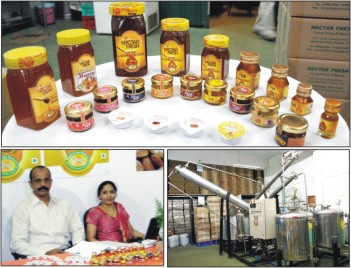
1) Some of the honey, jams and sauces produced by Nectar Fresh. 2) Chayaa Nanjappa with business partner Rajappa at Ahaar expo in Chennai. 3) The entire processing unit consisting of a container to feed honey to the settling unit.

Mysore:

They say ‘fruit of hard work is sweet’ and in this case it is metaphorically and literally sweet. Shall we call this a success story of a lone lady who made it big in the small scale industries sector or the growth of a brand which has today become one of the leading names in the field of honey? It is difficult to describe one without the other as this is the story of a lady who started a honey brand from scratch which has grown to great heights over the years. In this Weekend Star Supplement, SOM introduces its readers to this lady who says ‘If I could make it, then any other lady can

A flavour for every season

History:

Nectar Fresh was launched by Chayaa Nanjappa in 2007 at Bangalore and was backed by Khadi and Village Industries Board. Born on June 20, 1971 at Kodagu, Chayaa says, “I had a gut feeling and wanted to do something connected with my hometown. That instant I knew I wanted to start honey manufacturing and wanted to name it as Nectar Fresh.”

“The plant was doing well in Bangalore but due to some circumstances we had to relocate to Mysore in 2010.

Initially people said that Mysore is a small town and is not feasible for such businesses. But for me Mysore has been a lucky mascot. Most of the major deals were struck after we shifted here,” she says.

The plant was relocated to Kadakola near Mandakalli Airport when Chayaa partnered with Rajappa of MyStore.

Speaking about Nectar Fresh, Chayaa says, “We are one among the top 5 honey manufactures in India and are the only ones who are manufacturing different varieties of honey. Usually the Khadi and Village Board products are not considered as product for the high end markets. But today we have replaced international brands in hospitality sector under the Board. We have used their logo in our brand because it is the Board which has supported us. Also, there is a notion that business is only for the elite class who come from the same background or have the educational qualification for it. But we have proved this wrong. Anyone can do it if they have the survival instinct. Today we employ around 50 persons all over the country and around 20 in our Mysore plant.”

Chayaa, a PG Diploma holder in Mass Communication, underwent specialised training at Central Bee Research and Training Institute, Pune. She is also a member of the National Bee Board and is the first lady to have a honey processing plant in the country.

Process

The company has its mobile vans placed near the fields across India. Hence they are the only producers of a variety of honey in the country. They are also the first brand to launch honey blisters.

“Every month we have different varieties of honey according to the flowering season. This month it is acacia, clover and Himalayan honey,” says Chayaa, adding that lychee honey has the greatest demand.

Although Nectar Fresh has a wide network, it’s manufacturing unit is only at Mysore. The unit produces around 1,000 tonnes a day and is planning to increase it to 4,000 tonnes by procuring more equipment.

Processing plant: First, the honey is loaded into the container. This honey undergoes around 30 microns of filtration. It later undergoes moisture reduction and then again 2 microns of filtration. It is then cooled and sent to settling tanks. This will later be filled in containers and packed.

The brand has also started dealing with jams and sauces to help sick women groups. It aims to provide them with the technical knowhow and quality assurance and in turn market their produce thereby giving them a channel to avoid middlemen.

The processed honey is tested for quality at Pristine Laboratories, Bangalore and also at the units’s in-house laboratory.

Varieties

Nectar Fresh is known for its varieties in honey which include Coorg honey, rapeseed/mustard, eucalyptus, lychee, sunflower, Himalayan, acacia, clover, south Indian etc.

Market and export

Nectar Fresh today exports its produce to the Middle East, Malaysia and Australia. They will be looking forward to capture the US and European markets very soon.

The brand has replaced top international brands in India and today has a monopoly with the five star hotels.

“Previously we were not keen on our own private labeling and would supply in bulk and to the hospitality sector. But now we are entering the retail market also. We are the major suppliers to the Honey Society and are vendors for DFRL in city. Apart from this, ITC, Kerala Ayurveda, Taj group of hotels, Apollo etc., bottle their products here,” says Chayaa.

Mission beyond market

With an aim to be a leader in their business in India, Nectar Fresh is also seeing to offer its service beyond market. Apart from helping women with jams and sauces, they have empowered the locals around Kadakola region by providing them training and employment. They are also backing tribals by sourcing honey from the Sirsi belt.

The company is also associated with various charitable organisations helping girl child and Chayaa herself is a member of many women organisations in the country.

Competition

When asked about their major competitors in the market, Chayaa said “We have replaced many international brands including Australia’s Beerenberg Farm. In India, our major competitors are Kashmir Apiaries and Kejriwal Enterprises.”

Future

The company will soon be launching honey pouches with an aim to make honey available to even the lowest section of the society. The pouches are being prepared with the help of CFTRI. They will also be launching premixes of coffee and tea. The mix, which comes with milk, sugar and coffee/tea powder, can be prepared by just adding to a cup of water. With this the company plans to rule the Indian market and introduce Mysore and Kodagu to international customers.

Work hard and believe in yourself

I am not a feminist. But I support those women who work hard to stand on their feet. Most of the time, laws favouring women are abused and the most genuine cases do not have the privilege to use it. Hence, through our brand we intend to empower such women.

“Believe in yourself and have that never-let-go attitude. The success you achieve through this will give you a lot of self-respect rather than finding easy ways of making money.

“I have faced many hardships while coming this far. As a single woman, it was initially difficult for me to survive in this field. But that did not discourage me. With help from Corporation Bank, the government and of course from my business partner, now sky is the limit for Nectar Fresh. If I was able to achieve so much, then any woman can.”

source: http://www.starofmysore.com / Feature Articles / October 29th, 2011

Azim Premji: The bare-bones billionaire

True to form, Azim Premji has an austere meal in front of him.

It’s not for lack of choice. His company, Wipro Ltd., has laid out an array of decadent pastries, hot drinks and a rainbow platter of fruit for our interview at his new Canadian office. Mr. Premji, India’s third-richest man, has selected seven strawberries and a cup of tea.

Mr. Premji is not like other billionaires. He built his father’s vegetable oil company into a global software empire with operations in dozens of countries, yet he still flies economy class. He walks to work. He does not own a yacht. And in December, he was responsible for the largest lump-sum donation in his country’s history, pledging $2-billion (U.S.) to support rural schools in India.

That generosity is one of the reasons Western media have dubbed him India’s Bill Gates, the Microsoft founder who shares a technological bent and who, like Mr. Premji, dropped out of school. But Mr. Premji is different. For one, he returned to finish his degree in electrical engineering at Stanford University three decades later, a feat he’s quite proud of. For another, his vibe is more professorial than tech nerd.

Mr. Premji has long focused his attention on the developing world, seeing huge potential in major growth markets such as India, China and the Middle East. On this day, dressed in a dapper grey suit and burgundy tie, he is sitting in an office in an industrial area of Mississauga, talking about why Canada now plays such a key role in his company’s growth plans.

Sales here more than doubled in the past year, even before the company ramped up plans and decided to set up the Mississauga headquarters. Wipro aims to double revenue again in the next year. “It’s a reasonably large market. It’s English-speaking. We think it is a country which is economically very stable, growing, and it produces oil, which helps today in terms of having solid growth. And we have underinvested in it,” he says. “We’re taking it seriously now.”

Wipro now has 2,100 workers supporting its Canadian operations in business services, of which 300 are in Canada. It will add at least 100 more jobs in the country this year with its eco-energy division, which aims to manage energy reductions and cut companies’ carbon footprints. It will also branch out into servicing financial, retail and telecom firms in areas such as billings.

Mr. Premji is a journalist’s dream interview: his answers are succinct. He does not stray alarmingly off-topic. He remembers meeting you the year before. He doesn’t pepper his language with jargon.

His business background began with a lurch. At age 21, while studying at Stanford, he got a phone call informing him that his 51-year-old father had died of a heart attack. Azim would have to take over the family’s business – then called Western India Vegetable Products – with annual sales of about $2-million.

At his first shareholders’ meeting, he remembers someone telling him to sell his shares to an older colleague because he couldn’t run such a complex company. Instead, he bought business textbooks and studied them at night. He turned the cooking fat firm into a consumer products company that produced laundry soap and light bulbs. He diversified into information technology – printers and personal computers – and then into global outsourcing.

Today, Bangalore-based Wipro is India’s third-largest information technology exporter. It operates in 55 countries with more than 108,000 employees and sales of about $6-billion. Its businesses range from software and green energy services to consulting and outsourcing. Mr. Premji has a net worth of $16.8-billion, Forbes said this week.

The growth hasn’t come without setbacks. “Many things have failed,” he says. In the mid-1990s, he branched into financial services. “We didn’t understand the depth or the intricacy of the business. And we finally backed off. And we paid an expensive price for that.” What did he learn? “You cannot get into business for the fashion of it,” he says. You need a commitment which is long term and a commitment to leadership, because that’s the only way you build excellence.”

In a country plagued with corruption problems, he has made a public point of never paying bribes. “You can do clean business in India,” he says. “We have found we get better employees because of it, with more pride and more character. We get better partners, because they trust us. And we get more trusting customers because of it.”

Global challenges remain. Inflation is a broad concern – while he doesn’t see hyper-inflation, he is worried about rising prices in emerging markets.

“Messy consequences” from unrest in the Middle East is another worry. Everyone aspires to democracy, to a degree of control over their lives, he says. But in the process, there will be “uncertainty and major stumbling.

“And major frustrations expressed by people over what they’ve inherited.”

Economic clout is tilting towards emerging markets and away from advanced economies, he said in a recent speech at the Davos World Economic Forum. In the next decade, he expects emerging countries will have a $20-trillion economy – much larger than the $15-trillion U.S. economy. That means multinational companies will have to develop affordable products to suit local needs, he believes.

Much of his own attention is shifting. On Dec. 1, Mr. Premji said he plans to transfer $1.95-billion worth of shares to a trust that will fund social initiatives, particularly elementary education in rural India. He now spends 10 per cent of his time on the foundation, and he expects that will grow to a quarter of his time in the next few years.

Mr. Premji won’t say whether he plans to give away all his money, à la Warren Buffett. But he has said the trust is expected to expand “significantly” in the coming years. He sees this as the single best way of improving his country.

Much of Mr. Premji’s efforts are focused on girls – keep them in school, give them a basic education, ensure teachers show up for work, empower female leaders at the village level and you will see better health outcomes and smaller families. “How can you contribute towards building the Indian society and the Indian nation? No better way than to upgrade the quality of young people in school, particularly the schools which are run by the state government in the villages.”

Then, there is the matter of Mr. Premji’s frugality. He has made some concessions in recent years – he now flies business class on long-haul flights, and economy domestically. He used to drive a Ford Escort, then a Toyota Corolla. These days it’s a Volkswagen Skoda Laura. He is still arrives at the office at 6 a.m., works until almost 7 p.m. and toils after dinner and on weekends. He treks in the countryside, alone or with companions, on the weekends to clear his head.

His sister lives in Halifax with her children. Mr. Premji appears to genuinely like Canada – and is impressed with the Indo-Canadian community, which numbers close to a million people and has potential to help strengthen trade ties between the two countries.

“The Indian community in Canada has integrated much better than the Indian community in United States. They’ve become really Canadian at the same time as keeping all their Indian characters and customs and social groups. It’s a very unique blend, I’ve not seen it in this intensity anywhere else. And they’re doing well.”

source: http://www.theglobeandmail.com / by Tavia Grant / for Saturday Globe and Mail / Mar 11th, 2011