Category Archives: Business & Economy

Information centre to create awareness on conservation

The nature information centre near M.M Hills and Cauvery Wildlife Sanctuary.

First such facility to benefit local communities; to be inaugurated today

A nature information centre, focused on creating awareness among local communities as against the conventional practice of catering to tourists, is set for inauguration at Yellemaala village of Kollegal taluk in Chamarajanagar district.

Established by the Nature Conservation   Foundation, it is the first such facility that will benefit local communities, school and college students living on the fringes of the protected areas and forests.

Apart from creating awareness among the public, it will help educate local political and social leaders who have an influence on wildlife conservation, according to Sanjay Gubbi, a wildlife biologist from NCF and the one who has envisaged the concept.

The information centre is named after the tree Terminalia arjuna, called Holematthi in Kannada, and is located on the edge of the M.M. Hills and Cauvery Wildlife Sanctuaries, and is also close to the Biligirirangana Tempe (BRT) Tiger Reserve.

Mr. Gubbi said the centre will have information in Kannada about local flora and fauna, different kinds of wildlife habitats found in M.M. Hills Wildlife Sanctuary, all of which are depicted in an artistic form.

Apart from information on plant-animal interactions, threats to wildlife, relationship between insects and food plants, and other scientific information presented in simple understandable language, it also has games about nature, targeted at children.

As Chamarajanagar district has the highest number of tigers and elephants in Karnataka there are dedicated sections that provide information about these species, in addition to facts about otters, East Indian satinwood tree, edible plants found in the forests and other such interesting information. Behaviour and life cycle of wildlife species are explained in a story format to make it more interesting.

Nature artist Sangeetha Kadur has designed and curated the centre, and many local youths were involved in the project. Chamarajanagar MP R. Dhruvanarayan will inaugurate the centre on Friday.

V. Yedukondalu, Deputy Conservator of Forests, M.M. Hills Wildlife Sanctuary, said the centre will also be used by the Forest Department to promote conservation through outreach programmes.

Since the local community co-exists with animals, share the same landscape, and are dependent on natural resources for their survival, educating them on such issues also makes them stakeholders in conservation which will augur well for environment and wildlife protection, said the official.

This is reckoned to be important as conservation efforts by the forest department cannot succeed without local support.

source: http://www.thehindu.com / The Hindu / Home> News> States> Karnataka / by R. Krishna Kumar / Mysuru – July 06th, 2018

The chronicles of Hatworks

HatworksBoulevardBF04jul2018

This boulevard on Cunningham Road offers a blast from the past

Do you sometimes wish the world of Narnia were real? That there was an ordinary door you could walk through into an strange, wonderful world? Well, something similar happens on Cunningham Road. The Hatworks Boulevard seems nothing more than a billboard on the outside but when you walk in, you discover a whole new world.

Hatworks01BF04jul2018

Initially, the home of the Maneckjee family, now a cottage and a commercial space for various stores which deals in clothing, beauty, crafts, desserts and art, this bungalow is over 200 years old. Stone pathways paralleled with luscious greenery, high roofs of Burma teak, French windows, tall original wooden door frames, Italian floor tiles moulded into fleur patterns are some of the architectural elements that makes this place a walk to remember.

Hatworks02BF04jul2018

Rishad Minocher, oldest grandchild and one of the owners of the colonial-era house, says: “This is my family’s ancestral home. The property belongs to my grandfather who went to the UK to study hat making and returned to set up the business.” The imperial hatworks specialised in making hats for the armed forces, polo and horse riding, and also for the Maharaja of Mysore.

They were the pioneers in making the sola topee in India, which provide the wearer protection from the sun. They also made skull caps, velvet hats and other kinds of headwear, he adds.

“My grandfather was the first to develop the pre-tied Mysore peta donned by the Maharaja of Mysore” says Rishad. The business continued until the early 80s. In 2004 Imperial Hatworks was changed to Hatworks Boulevard.

“I am a firm believer that the house has a life of its own,” Rishad says. The Minochers have done their best to preserve the building. The original stone gate posts, high-raised Mangalore tiled roofs and a blue roof are some of the elements preserved. The tiles used here have also been used in the Mysore Palace and the Bowring Institute as well.

The house also boasts of the Poliphone, an ancient musical instrument, preserved as a show piece. There are some grand old trees at Hatworks Boulevard including mango, banana, raintrees, gulmohar and tamarind.

Where we discover hidden and not so hidden nooks and crannies of the city

source: http://www.thehindu.com / The Hindu / Home> Life & Style> Homes and Gardens> Spaces / by Beaulah Sahana A / June 18th, 2018

A desi keyboard for Indian languages

Guru Prasad with his Ka-naada keyboard for Indian languages | Photo Credit: Special Arrangement

Simulator Guru Prasad has developed a keyboard suited for Indian languages

A small room on a terrace in Uttarahalli, Bengaluru, is bursting with a big idea. It is the office of KaNaada Phonetics Pvt Ltd which has just launched their new product, ‘Ka-Naada’, in April this year.

Ka-Naada (ka-naada.com) is a patented keyboard layout available as both hardware (with a USB cable) and software. It groups letters according to phonetics, creating a more intuitive interface for languages based on the Brahmi (the common ancestor of Indian scripts) script. The keyboard is available in multiple languages: Kannada, Gujarati, Gurumukhi, Malayalam, Tulu, Oriya and more. A user can switch languages, using the keyboard of one script to type in another. The current keyboard requires QWERTY for certain commands, such as the control and function keys. The future version of Ka-Naada will have these commands as well.

A long time coming

The idea was born in 2009 when Guru Prasad — a simulator based in Orlando, Florida — saw children struggling to learn their mother tongues. With a Ph.D in industrial engineering (simulation systems) he is an expert in simulation, network architecture, distributed systems and systems modeling. The QWERTY keyboard, he determined, was unfit for Indian languages. Navigating a keyboard meant for English disrupted ‘native thinking’. He worked predominantly with linguist Professor BVK Sastry at theYoga-Samskrutham University in Florida, and a few others, to find a solution. The Ka-Naada keyboard layout was finalised by 2011, the first prototype was done by 2012 and the first full keyboard, by 2015. It was an uncomfortable square shape, and had to be redesigned to be rectangular.

KaNaada has received funding from associations such as Kannada Praadhikaara and ITBT (Department of Information Technology, Biotechnology and Science and Technology of Government of Karnataka) and design assistance from the Micro, Small and Medium Enterprises (MSME), Centre of Excellence, IISc. They received their patent in 2017.

“The response, particularly, has been very overwhelming,” Prasad says. “It is highly intuitive for users, right from the get go. Children, particularly, are thrilled to use it. I have heard comments like, Maine aankhe band karke, type kiya (I was able to type with my eyes closed), from them. For adults, there were some training issues because they are so accustomed to QWERTY. We are trying to work to come closer to that keyboard ergonomically.” While maintaining their current layout, the company is experimenting with the size and qualities of the keys and keyboard for the most user-friendly combinations.

For Prasad, the most fascinating part of his journey has been reviving the script of his mother-tongue — Tulu. “The language came alive. All of a sudden, we have a user interface for Tulu. It is the same with Kashmiri (in the Sharada script) and for all the other languages that might go out of use. This might be a boon, that we can keep them alive through our children.”

Increase accessibility

The entrepreneur lights up when asked about the potential of his product. It could open up job opportunities for those in the rural areas who do not know English. It could be a key learning device, and he plans on introducing a toy keyboard for children to use, as they learn their mother tongue. It could be used in government offices, for desktop publishing, or by visually-impaired users. It will soon be available in foreign languages, including Malay, Sinhalese, and Nepalese, which are all Brahmi-based.

As his dreams grow, so does his work. Currently, the entrepreneur is juggling production, research and development, and marketing. He receives his supplies from vendors across the country and is co-sharing a production facility in Bengaluru. However, a large machine has been ordered in anticipation of a full-scale production unit. He has now tied up with NGOs and is working with overseas students who come as part of a Youth Ambassador programme to distribute the keyboard in various rural schools in India.

source: http://www.thehindu.com / The Hindu / Home> Sci-Tech> Technology / by Priya Saraff / July 02nd, 2018

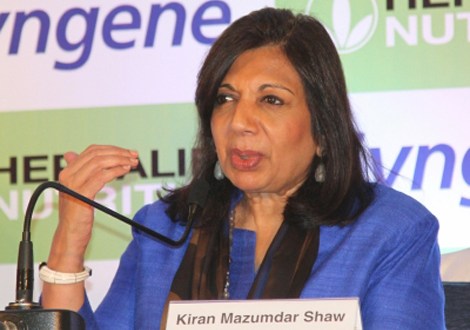
India’s biotech queen Kiran Mazumdar elected to MIT board

KiranBF30jun2018

Bengaluru:

India’s biotech queen Kiran Mazumdar-Shaw got elected as a full-term member of the MIT Corporation, the Board of Trustees of the Massachusetts Institute of Technology (MIT), her company Biocon announced on Thursday.

“I am honoured to be elected as a full-time member of the MIT Board and look forward to contributing to its journey of making a difference in solving challenges of the world,” she said. “Shaw is among the eight members who will serve the five-year term on the Board from July 1,” said the city-based biotech firm in a statement here.

She is also on the board of directors of the US-India Business Council and the board of trustees of the Keck Graduate Institute at California’s Claremont.

Shaw was elected a foreign member of the Royal Swedish Academy of Engineering Sciences in 2006.

source: http://www.nyoooz.com / Nyooz / Home> Bengaluru / by Siyasat / June 29th, 2018

IISc to boost science start-up incubation

Indian Institute of Science (IISc) campus   | Photo Credit: K. Murali Kumar
Indian Institute of Science (IISc) campus | Photo Credit: K. Murali Kumar

Plans to open research park in 3 years

The Indian Institute of Science, founded in 1909 by Jamsetji Tata and former Maharajah of Mysore Krishnaraja Wadiyar IV, plans to open a research park at its Bengaluru facility within the next three years to incubate sci-tech companies.

“Currently the Society for Innovation and Development is incubating about 15 companies,” said Prof. G.K. Ananthasuresh, chairman of the Centre of Biosystems Science and Engineering. “We want to scale it up ten times and the tenders for setting up the facility has already been issued.”

Corporate collaboration

The institute has collaborations with companies such as Tata Consultancy Services, Volvo, Google Inc., General Motors, Microsoft Research, IBM Research, Boeing, Robert Bosch Foundation and Pratt & Whitney. It also works with the Indian Space Research Organisation, Aeronautical Development Agency and Centre for Development of Advanced Computing.

The institute, spread over 400 acres, is home to more than 40 departments.

Of about 12 companies incubated by the Society for Innovation and Development arm, an inter-disciplinary body, include simulators used for endoscopy, microsatellites to access the Internet at lower costs, a medical diagnostic kit and a superwave technology to extract oil from sandalwood.

“Many of these companies employ core technology. There are deep science and deep technology involved and the impact they can create is big,” Prof. Ananthasuresh said in an interview.

“We have years of research behind us and comprehensive research is done before commercialisation.”

Pathshodh, the name for the equipment that uses superwave technology, can also be used instead of needles to inject medicine into patients, Mr. Ananthasuresh said. “It is close to being commercialised.”

“Another example is one project we did with Bellatrix where we used our knowledge to position and propel microsatellites. In Open Water, another project, we produced clean water from a contaminated [sample],” Mr. Ananthasuresh said.

An air-conditioned blanket invented by scientists in the institute enables one to cool “in cycles,” he said. “It is a layered blanket and one does not have to cool the whole room. It is a personalised air-conditioner,” he said.

The Robert Bosch Centre for Cyber-Physical Systems was established in 2011 at the institute as an interdisciplinary research and academic centre to promote research in cyber-physical systems.

Mimyk Medical Simulations, incubated at the centre, had developed the endoscopy simulator for gastroenterologists.

“This centre does works on physical networks where devices talk to each other. It is based on the Internet of Things. We also have an energy centre where work is going on in the field of solar energy. Another area we are focusing on is robotics and autonomous systems.

“A futuristic concept is flying cars. Funding comes from different sources. There are other centres which are doing work on water, agriculture, and healthcare,” Mr. Ananthasuresh said.

source: http://www.thehindu.com / The Hindu / Home> Business> Industry / by Jay Shankar / June 29th, 2018

AZB Bangalore lures ex-NDA Shreya Rao (Nalsar ‘06) to co-head its private client practice

ShreyaBF28jun2018

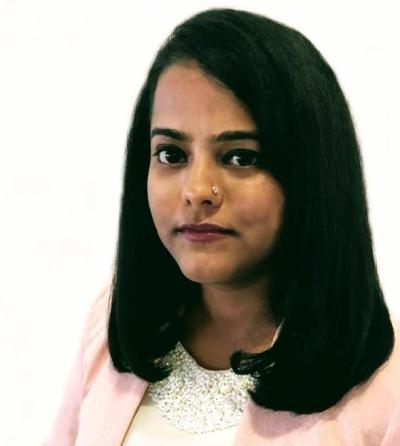
AZB & Partners has hired Shreya Rao , the founder of Rao Law Chambers, as a partner in Bangalore to co-head its private client practice. She will join from 20 June with her team of two lawyers.

She is a 2006 Nalsar Hyderabad graduate with a 2009 LLM from Harvard Law School, working with Nishith Desai Associates from 2006 until 2015, where she eventually led the private client practice and co-led the international tax practice.

In April 2016, she had founded her own boutique private client firm Rao Law Chambers, which specialised in private wealth and tax work.

Between 2009 and 2013, she was also visiting faculty at NLSIU Bangalore, teaching around direct tax and international taxation, and from July 2016 she also began teaching at Azim Premji University in Bangalore as visiting faculty.

“Her arrival will ensure an even greater push for AZB’s private client practice and international tax practice,” AZB noted in a statement.

Her fellow AZB private client co-head is partner Anand Shah.

Private client work has become increasingly interesting – and potentially profitable – for the large Indian law firms, though it remains niche.

Former J Sagar Associates (JSA) senior partner Berjis Desai, for instance, now focuses on private client work, which he explained in detail in our interview in 2017.

source: http://www.legallyindia.com / Legally India / Home> Law Firms / June 14th, 2018

Samsung R&D Institute-Bangalore Becomes ‘Champion for Local Markets’, Wins Zinnov Award 2018

Samsung R&D Institute – Bangalore (SRI-B) has been recognized as the ‘Champion for Local Markets’ at the prestigious Zinnov Awards 2018.

The awards recognize achievements of Indian R&D centres and honour stalwarts in the technology space. SRI-B is Samsung’s largest R&D centre outside South Korea.

The jury deemed SRI-B as the winner based on parameters such as its vision, initiatives, implementation and impact in the local market.

Under Samsung’s ‘Make for India’ initiative, SRI-B has been developing several India-specific innovations by understanding Indian consumers’ lifestyle and pain points. As part of this program, SRI-B has developed innovations for various B2C, B2B and Business to Government products.

“It is imperative to understand the challenges and pain points that Indian consumers face in their day to day lives and provide suitable technology solutions. Samsung has recognized this early on and has been continually innovating along this path to empower Indians and their businesses under its ‘Make for India’ program,” said Dr. Aloknath De, Chief Technology Officer, SRI-B.

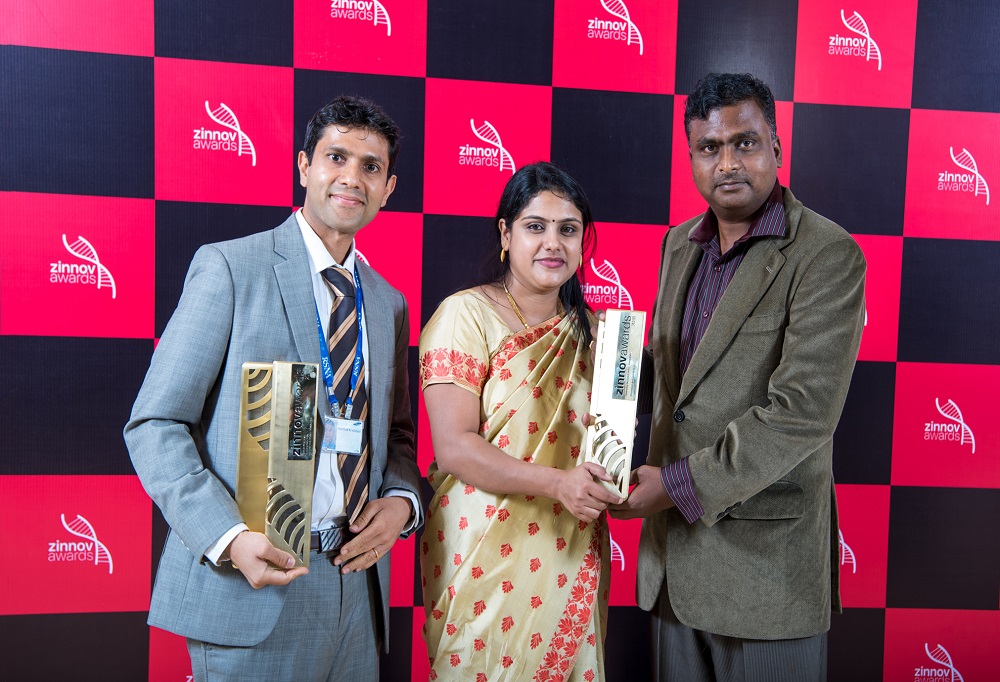
Samsung R&D Institute – Bangalore (SRI-B) has been recognized as the ‘Champion for Local Markets’ at the prestigious Zinnov Awards 2018. Karthik Krishnan (Left) with the ‘Technical Role Model (Middle Level)’ Award and Madhupa Chowdhury and Sundar Srinivasan with the ‘Champions for Local Markets’ Award won by SRI-B.

SRI-B has more reasons to celebrate this year at Zinnov Awards 2018 as Karthik Krishnan, who is a member of the Health and Medical Equipment (HME) Team at the R&D centre working on Medical Imaging and Visualization Technology, won the award for ‘Technical Role Model (Mid-level)’. He was awarded for his capability to influence others within SRI-B as well as beyond, to follow a technical career path.

“I am elated to have won this award from Zinnov as it is a testimony to the vibrant ecosystem that we are able to work within and create new technology. I would like to thank my team for all their support through the years, as well as SRI-B which has given me the opportunity to collaborate with others in our ecosystem and build my technical skills,” said Karthik after winning the award for ‘Technical Role Model’.

Over the last three years, SRI-B has introduced several products and services for its Indian customers. When Bixby Voice came to India with the Galaxy Note8, it was optimized for India by the SRI-B team to understand English in Indian accents. The device was also embedded with a feature that recognized text messages written in Hindi with the S-Pen and converted the message into Devanagari script. Engineers at the R&D centre had recently developed the Social Camera mode that was launched in the Samsung Galaxy J7 Max Smartphone. The Social Camera mode allows users to instantly edit and share photos and videos directly to social media sites from their camera app. SRI-B has also developed the Samsung Tab IRIS, which is the first commercial IRIS integrated tablet to be approved by UIDAI for Aadhaar and KYC verification.

This is the 9th year of the Zinnov Awards and the fourth consecutive year that SRI-B has won a Zinnov Award. SRI-B has won the Zinnov Award for ‘Great Place to Innovate’ in 2017, ‘Center of Excellence’ in 2016 and ‘Design Thinking’ in 2015.

source: http://www.news.samsung.com / Samsung Newsroom / Home> Brand> People & Culture / June 25th, 2018

Madivala lake transforms into biodiversity park

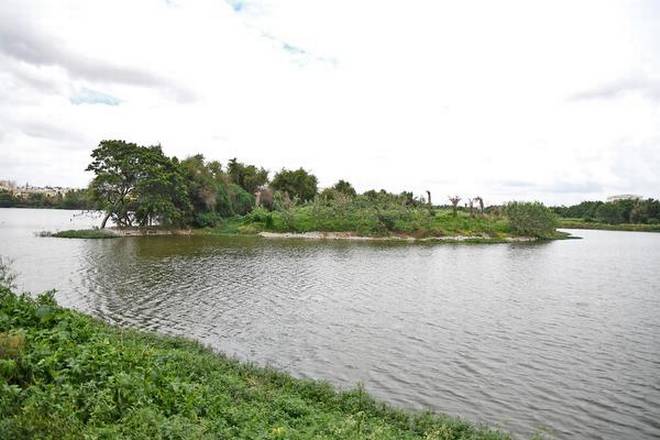
An island has been created in the lake as a nesting ground for birds and reptiles. | Photo Credit: G_P_Sampath Kumar

The 272-acre green space in BTM Layout has been under development since 2016

From just another lake in the city with a walking path along the bund to a biodiversity park, Madivala lake has undergone a massive transformation over the last two years. The 272-acre park in BTM Layout, which was under development since the end of 2016, is now home to many native species of flora and fauna. It is set to be inaugurated in the coming months.

The transformation was the result of a proposal by the Karnataka Knowledge Commission to develop the lake into a unique biodiversity park. Recently, Chairman of the Karnataka Knowledge Commission Dr. K. Kasturirangan met Chief Minister H.D. Kumaraswamy requesting him to inaugurate the park.

At present, only parts of the park, which is maintained by the Forest Department, are open to the public.

Under the project, an open butterfly park, conservatory of insectivorous plants and orchids, cycad and palm grove, herbal garden, island ecosystems and a scented garden are among the features that have been developed.

Professor C.R. Babu, Professor Emeritus, Centre for Environment Management of Degraded Ecosystems, University of Delhi, who is spearheading the project, said the park is being developed with an underlying theme to recreate self-sustaining ecosystems with native flora and fauna. It’s a one-of-its-kind park in south India, focusing on creation of the entire ecosystem of flora and fauna, unlike a botanical garden, where the focus is on flora. A biodiversity park offers ecological services like retention of groundwater and prevention of floods, he explained.

Officials said their idea was to make the park not only a place where citizens could relax and get a breath of fresh air, but also make it a place where people, especially children, could come to learn about native flora and fauna.

Butterfly park

Among the prominent features of the park is an open butterfly garden, developed by collecting plants from forests in and around Bannerghatta National Park, Cauvery Wildlife Sanctuary, and Kanakapura region. Around 132 plant species of both nectar and larval host plants have been nurtured to create a breeding space for butterflies. So far, around 40 species of butterflies belonging to five families have been spotted within the butterfly garden, officials said.

Orchids and carnivorous plants

Another significant feature is a collection of nearly 30 species of orchids, 20 Nepenthes pitcher plants, 25 varieties of succulents, ferns and aroids. Developed in separate temperature-controlled enclosures, they are being planted to educate public about the different species of flora. That apart, about 50 species of rare, endemic and threatened (RET) plants native to the Western Ghats have also found space in this park.

Islands and birding area

The park is also being developed to attract birds. Nearly a 100 fruit-bearing plants from 10 species have been planted to attract frugivorous birds, such as bulbuls and parakeets.

An island has been created in the lake as a nesting ground for birds and reptiles.

With the creation of this island, the lake area has been expanded by 10 hectares. This has enhanced the capacity of the lake to hold an additional 250 MLD of flood water during the monsoon. This would prevent flooding of areas surrounding the lake, Prof. Babu said.

According to project coordinator Dr. Padmavathi, there are a lot more features in the offing, which will be developed eventually. These include a rainforest ecosystem, swamp forests and wetland systems.

This project came about after Karnataka Knowledge Commission, in 2015, submitted a recommendation to the government to establish a biodiversity park at Madiwala lake on the lines of the Yamuna Biodiversity Park in Delhi. The government allocated Rs. 24.72 crores for the same and Karnataka Lake Conservation and Development Authority (KLCDA) was chosen as the nodal agency.

Proposal for management

The Knowledge Commission has urged the State government to create a separate board to manage the park. “The park requires maintenance. Having a dedicated board will help in the upkeep of the park,” said Dr. Padmavathi. Also, while the KLCDA was in charge of the project, with the wrapping up of the Authority, the project work was slowed down. Officials are now hoping that the park would be handed over to a dedicated management, which could take care of the maintenance work.

source: http://www.thehindu.com / The Hindu / Home> News> Cities> Bengaluru / by Shruthi H.M. / June 25th, 2018

Bidar’s officers who became beacons for the entire State

Ordinary people continue to talk about the work of Moudgil, Gupta,Jaffer, Tewari, Singh, and Ghosh even today

Bidar district is fortunate to get good officers known for their out-of-the-box thinking. Munish Moudgil, Harsh Gupta, P.C. Jaffer, Anurag Tewari, Naveen Raj Singh and Ujjwal Kumar Ghosh, to name a few, were not only good administrators leading the bureaucratic apparatus but also people-friendly officers who ordinary folk continue to talk about even many years after they have been transferred.

That many of their unique experiments in the district have grabbed the attention of the political class in Bengaluru who, in turn, adopted them for the entire State considering their effectiveness in improving governance is testimony for their outstanding performance.

When Naveen Raj Singh was Bidar Zilla Panchayat Chief Executive Officer (CEO) between 2003 and 2005, the district witnessed a successful experiment of watershed development through arch-check-dams. A civil engineering graduate, Mr. Singh studied the pressure enduring logic behind Idukki Dam, a double curvature arch dam constructed across the Periyar in a narrow gorge between two granite hills in Kerala, and built the first-ever inclined-buttress check-dam, as it was called, in Bidar applying the same logic.

Considering the reduction of construction costs by half as compared to conventional check-dams and increased life expectancy to around 100 years, the arch-check-dams proved to be a successful model in watershed development at affordable costs. The experiment impressed the State government which issued standing directions to all district to adopt the Bidar model for building smaller check-dams.

Munish Moudgil, who served as Deputy Commissioner in the district between 2005 and 2007, was the man who not only forced the mighty to respect and adhere to the law of the land but also significantly contributed to improving the administration. An M.Tech graduate from IIT Bombay, Moudgil was the one who first conceived the idea of time-bound public grievance redressal system.

He began to hold Jana Spandana, a people-meeting programme, on Tuesdays to address public grievances and put a mechanism in place to see that every grievance is addressed within a stipulated time.

Then, all the other department heads also followed him. Impressed by the initiative, the government adopted it for the entire State under a new name, Sakala.

Then came Harsh Gupta. During his tenure as Deputy Commissioner between 2007 and 2010, Bidar saw multi-front development. He put men on task to identify and protect 96 little-known monuments of historical importance. It was during his tenure that around 1,100 acres of public land encroached upon by private parties returned to government’s possession. His groundwork is undeniable in the famous Bidriware getting geographical indication (GI) tag as he was the one who roped in Cauvery Handicrafts Emporium to train Bidri artisans and get their work globally recognised.

Education was P.C. Jaffer’s cup of tea. During his tenure as Deputy Commissioner between 2012 and 2015, he introduced a series of programmes for improving the education scenario in the district. He selected one efficient teacher from each one of the 1,350 government primary schools and get them trained in English teaching training. Experts from English and Foreign Languages University (EFLU), Hyderabad, with whom he entered into an agreement, trained teachers in two sessions with multimedia teaching tools.

Mr. Jaffer conducted a series of career counselling programmes for spreading awareness on UPSC examinations in the backward district. In one of his important initiatives, he conducted a preliminary test for those aspiring for civil services and selected 12 students — eight males and four females, whom he sent to Delhi for higher-level coaching. Two of them cracked the UPSC exams. His efforts to improve the district’s performance in SSLC and PUC examinations were unlimited.

Anurag Tewari, who succeeded Jaffer as Deputy Commissioner and worked between 2015 and 2017, was Bidar’s waterman. In collaboration with Team YUVA, a civil society group of professionals, he identified hundreds of public tanks and wells that were crying for dredging. The collective efforts paved way for the dredging of 100 tanks and 300 open-wells resulting in increased water storage and groundwater table recharge. In 2016, the then Chief Minister Siddaramaiah, who visited a lake in Aurad, locally known as Deshmukh Kere, which was freshly dredged, was so impressed that he extended the initiative to the entire State under the name of Kere Sanjeevini.

Ujjwal Kumar Ghosh, during his tenure as the CEO of Bidar Zilla Panchayat, put a system in place for ensuring punctuality of teachers in government schools. The system inspired the Education Department to further develop it into an SMS-Based School Attendance Monitoring System and extend it to the entire State.

Anirudh Sravan P. is another promising officer that Bidar could expect the furtherance of the legacy from. Transferred as Deputy Commissioner of the district by Election Commission during the recent Assembly polls, he got recognised as people’s officer within a short period. It is his repeated visits to the district hospital that made it a patient-friendly hospital. Known for his style of working more from the field than from office, he is still talked about in the rural areas of Kalaburagi where he had meaningfully implemented MGNREGA as the CEO of Kalaburagi Zilla Panchayat.

source: http://www.thehindu.com / The Hindu / Home> National> Karnataka / by Kumar Buradikatti / Kalaburagi – June 19th, 2018

Book on oldest known love story in Mangaluru released

‘L affaire,’ a literary work based on a love story which is known to have taken place in Mangaluru during 12th century AD, was released at St Aloysius College Auditorium in the city on Tuesday.

The book, written by Yenepoya Deemed-to-be-University Dean Dr G Shreekumar Menon, depicts the life of Jewish trader Abraham Ben Yiju, who had his origin in Tunisia and a Nair woman Aashu from Kannur in Malabar region.

Speaking about the work, Dr Menon said that Yiju landed in Mangaluru in 1132 AD for spice trade. He came across Aashu, who was a slave at a household in Mangaluru during the rule of Alupa ruler Alupendra.

Yiju released Aashu by paying money to her owner and freed her from slavery by marrying her. Yiju also set up a brass factory in the region. They were blessed with three children. Among them, two passed away.

Following clashes in Tunisia, Yiju was forced to leave Mangaluru, to his hometown. Whereabouts of Aashu after this incident are not known properly. Yiju passed away on August 11, 1156, he explained.

Letters by Yiju were preserved by his daughter. The letters were found in Cairo Genizah, the Egyptian Synagogue attic. They were kept intact as Yiju had written the letters with a mention of God.

According to Jewish tradition, any work that has God’s name inscribed in it, should not be torn away. The marriage certificate of Yiju and Aashu is among these letters.

The documents are now preserved in Russia.

Authors like Rabbi Mark Glickman and Amitav Ghosh have authored books based on the available documents, Dr Menon said.

Menon stated that the marriage of Yiju and Aashu completes 888 years in 2020 and requested the mayor to build a memorial for the couple.

Mayor Bhaskar K presided over the programme. Dean Dr B H Shripathi Rao, St Aloysius College Principal Fr Pravin Martis, Author Bharathi Shevgoor and actor Sahil Rai were present.

source: http://www.deccanherald.com / Deccan Herald / Home> States> Mangaluru / DHNS News Service, Mangaluru / June 26th, 2018